
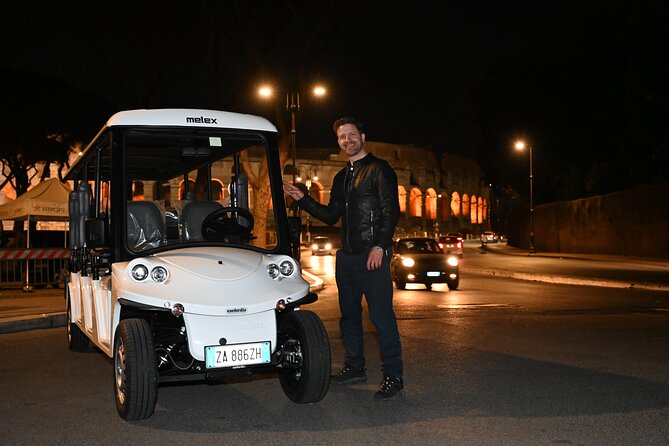
Reviewed · ROME GOLF CART TOURS
Rome- Golden Hour Golf Cart Tour
Golden hour turns Rome into a movie set. This Rome golf cart tour swaps the midday crush for cooler streets, then strings together major sights with smart viewpoints and short guided stops that keep the pace easy. You finish at the Spanish Steps, so you can roll right into dinner without having to backtrack.
I love how the guide, including Domingo, turns monuments into stories you can picture, with clear answers and a good dose of humor. The other big win for me is comfort, a ride that helps you cover real distance fast without burning your legs. The main drawback to plan for is time, you are at each highlight only briefly, and in cooler seasons you may want a jacket since the evening can feel cold.
Key things I’d plan around
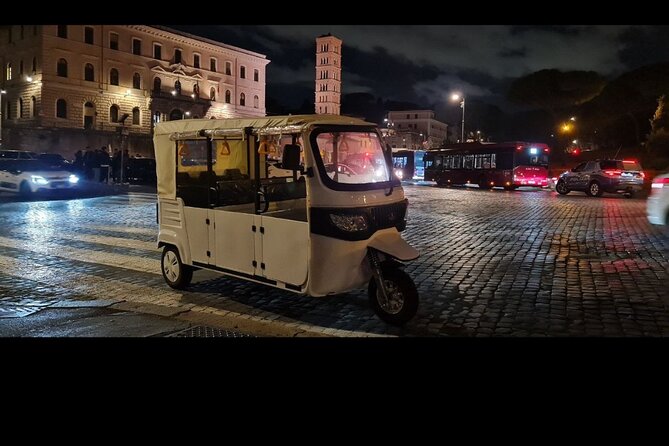
- Small group pace with frequent photo stops, not a rushed bus lineup.
- Golden hour timing for nicer light and less crowd pressure on central streets.
- Domingo-style guiding that explains how each site fits into Roman life and politics.
- Short, focused visits to big hits like the Colosseum, Trevi Fountain, and Pantheon area.
- Know what’s included: Pantheon admission is not included, while Parco Savello is included (but can close in evening winter months).
- Easy routing from Piazzale Flaminio to the Spanish Steps, so your day naturally ends in a lively area.
Why golden hour and a golf cart work in Rome
Rome at dusk feels like the city relaxes. The heat drops, sidewalks ease up a bit, and the buildings start to glow. That matters because this tour is built around seeing a lot without turning it into a long endurance test.
On top of that, a golf cart changes the rhythm. You spend less time “getting there” and more time actually looking. You still walk at key points, but you’re not constantly fighting traffic and huge crowds the way you can on a DIY plan.
Golden hour also helps your photos. From elevated spots like Terrazza del Pincio, the light softens the skyline. It makes the whole “this is ancient and still here” feeling hit harder, even if you’ve seen Rome photos a hundred times.
You can also read our reviews of more tours and experiences in Rome.



Where you start and where you finish (Piazzale Flaminio to Spanish Steps)
You meet at Piazzale Flaminio, specifically piazzale Flaminio 15, right in front of McDonald’s. It’s a straightforward landmark-based meeting point, which is a big deal in a city where streets can feel like a maze when you’re tired.
The tour ends at Piazza di Spagna, the Spanish Steps. Drop-off at your accommodation is not available, even if you request pickup. That setup is great if you want your tour to flow into an evening meal or a relaxed stroll around the Spanish Steps and nearby neighborhoods.
Pickup is available on request for an extra €20 fee, only for accommodations located within central Rome. If your hotel is outside the central area, plan to use the meeting point instead.
The real value: seeing iconic Rome without a full day
At about 2 to 3 hours, this tour is short enough to fit almost any itinerary. You’re not trying to “do Rome” in one shot. Instead, you get a guided hit list of the big monuments plus a few Rome layers that many first-timers miss.
The value is partly the transportation. Moving around Rome during evening traffic can be time-wasting. A golf cart keeps things efficient, while the guide keeps your attention on what matters.
Also, there’s something underrated here: the tour is designed around short stops that you can actually enjoy. You get to look up close, take photos, and hear why a place matters, without feeling like you’re stuck in a long line or dragging yourself between far-apart sites.
The best early stops: Terrazza del Pincio and Piazza Barberini
Stop 1: Terrazza del Pincio (about 5 minutes)
This is your “wow, Rome is huge” moment. Terrazza del Pincio delivers a wide panoramic view over the Pincian Hill area and toward Villa Borghese. It’s a classic viewpoint for a reason: you get context, not just one monument.
Why it’s worth the brief stop: this is where the city starts making sense. You see the scale of Rome and how neighborhoods stack on top of each other. It’s also a smart kickoff because photos taken here look great at golden hour.
Possible drawback: it’s only around 5 minutes. If you want long staring time or a lot of extra photos, you might have to accept that you’ll get quick impressions here and enjoy the deeper details later on your own.





Stop 2: Piazza Barberini (about 1 minute)
This is a drive-by stop area that helps you connect Rome’s grand planning to its ancient roots. You’ll pass by the Triton Fountain area and get a glimpse of how Baroque spectacle sits near ancient echoes.
Practical tip: since the time is short, keep your camera ready, but also listen for the guide’s quick framing. The point isn’t to “study” Barberini, it’s to get the map in your head.
Colosseum and Trevi in the evening glow
Stop 3: Colosseum (about 10 minutes)
The Colosseum is the headline, but the tour’s angle is more than postcard trivia. You get context for why it was so radical, and how it became a symbol of Rome in the centuries after.
Ten minutes is not enough for a full interior visit, but it is plenty for the essentials: orientation, photos, and understanding what you’re looking at from the outside. If you’ve only seen the Colosseum from afar, this is the step that makes it feel real.
Possible drawback: don’t expect museum-style time. This is a “see it, learn it fast, move on” stop.
Stop 4: Trevi Fountain (about 10 minutes)
Trevi is famous for a reason. In the evening, it looks more cinematic because the water catches light and the surrounding area feels more alive without being as punishing as midday.
Ten minutes works well here because you can get your photos, enjoy the energy, and still keep the tour from turning into a long wait. If you hate standing still for long periods, this is one of the better ways to experience Trevi during busier seasons.
Pantheon and Bocca della Verità: the “one ticket, two worlds” combo
Stop 5: Pantheon (about 5 minutes, admission not included)
You’ll stop near the Pantheon, the big Roman temple that still amazes people with its massive dome. The key practical detail: Pantheon admission is not included, so this is more of a brief orientation stop than a guaranteed inside visit.
If you want to go in, you’ll need separate entry arrangements that are not part of the tour. The upside is that even from the outside, the scale and shape land immediately.
Possible drawback: five minutes is short. If you plan to go inside, plan your time smartly for later, because this stop is mostly about seeing and learning, not checking boxes.
Stop 6: Bocca della Verità (about 5 minutes)
This is where Rome gets fun. The legendary Mouth of Truth is tied to the nearby Forum Boarium area, so you get a mix of myth and everyday history.
Bocca della Verità also adds variety because it’s not just “monument after monument.” It’s interactive in spirit, and it’s close to the market zone that helped Rome function day to day.
Parco Savello, Piazza Navona, and Largo Argentina
Stop 7: Parco Savello, also called the Orange Garden (about 10 minutes, admission included)
This viewpoint is made for lingering. From Parco Savello, you get a sweeping city view that feels romantic and calming compared to the busier central streets.
The practical catch: in winter months (October to February), Parco Savello will stay closed in the evening. So if you’re traveling in those months, check the timing expectations with your plans, because you may not get the same evening access.
Stop 8: Piazza Navona (about 5 minutes)
Piazza Navona is Baroque drama built over older Roman structures. The vibe is lively, and the stop gives you a strong sense of how Rome’s centuries reuse space instead of starting over.
Five minutes is enough to orient yourself and understand the layer-cake idea. If you love architecture, you’ll likely want to come back later and wander slowly.
Stop 9: Area Sacra di Largo Argentina (about 3 minutes)
This is one of Rome’s most striking history-versus-life contrasts. The area is linked to where Julius Caesar was assassinated, and today it’s associated with a cat sanctuary.
Three minutes is quick, so don’t expect a full stop-and-stare experience. But it’s a meaningful punctuation point in the route, a reminder that Rome’s stories are still part of daily life.
Piazza Venezia, Monti, and Circo Massimo: Rome beyond the postcards
Stop 10: Piazza Venezia and the Ancient City zone (about 10 minutes)
From this broader city viewpoint, you get close to the energy around Piazza Venezia and see major works tied to Michelangelo, plus the Altar of the Fatherland area.
This stop helps you understand political Rome, not only entertainment Rome. It’s a nice change of pace after the Colosseum and fountains.
Drive-by moments you’ll recognize
As you ride, you’ll pass Piazza delle Quattro Fontane, the church of San Carlino, and the massive Quirinale Palace. The tour frames Quirinale as a former residence of the Pope and later the king, and today it serves as the headquarters of the President of Italy.
Even though these are drive-by details, they matter because you start seeing Rome as a sequence of power centers changing hands.
Stop 11: Rione Monti (about 5 minutes)
Rione Monti is where the tour helps you picture ancient Rome’s gritty core, known historically as Suburra. Today, it’s a neighborhood with centuries-old alleys, and the guide uses it to connect Roman life to what you can still walk through.
You’ll also get a viewpoint over the Imperial Fora area from this zone, which is a great visual payoff.
Stop 12: Circo Massimo (about 2 minutes)
This is a fast look at Circus Maximus, once the huge stadium capable of massive crowds. From here, you can understand how the ancient world used large-scale events as entertainment, politics, and social glue.
Two minutes is just enough to process the size. If you want deeper history, you’ll likely want a longer Rome walk another day.
Forum Boarium and the layered walk near the Mouth of Truth
A key part of the experience happens around the Mouth of Truth area and the Forum Boarium, one of the city’s oldest market districts. Here, the guide points out major points tied to daily commerce and Roman religious life.
You can expect a short focus on sights like:
- Temple of Hercules Victor, a rare circular marble temple
- Temple of Portunus overlooking the Tiber
- Arch of Janus, mysterious and massive
- Theatre of Marcellus, often compared to a smaller version of the Colosseum
- A Renaissance palace built on top of earlier structures, where people still live
Why this portion is valuable: it’s a reminder that Rome is not only emperors, arenas, and fountains. It’s markets, rituals, and reused buildings that stayed useful.
Possible drawback: since the tour is time-limited, the area is a quick orientation. If you want to explore these sites slowly, you’ll have a ready starting point for a follow-up walk.
How the guide makes the tour feel worth it
This tour lives or dies by the guide. The standout theme from the experience is storytelling that feels like it belongs in the street, not in a textbook.
Domingo (mentioned in the experience feedback) is a good example of the style you want. The guide grew up in the area, and that usually shows in how they answer questions. You’re not stuck with scripted facts. You get connections, humor, and the sense that Rome’s history is still understandable if someone explains it the right way.
How you can get more out of your tour:
- Ask a simple question while you’re standing still, like what to notice in the architecture.
- Pay attention during brief stops, because small pauses often contain the most “what am I looking at” explanation.
- If you want photos, tell the guide quickly. Some pauses are more photo-friendly than others.
The cart also helps because you can look between stops without feeling frantic. You’ll likely cover a surprising amount of ground for a 2 to 3 hour outing.
Price check: is $96.23 worth it?
At $96.23 per person, this is not a budget option. But it can be good value depending on how you travel.
Here’s the practical math:
- You’re paying for guided explanation, not just transportation.
- You’re paying for comfort and routing that saves time compared with figuring out everything on your own.
- Most stops are listed as free entry areas, which means your money is focused on the guide and the experience rather than stacking paid admissions.
There are also clear “read this first” points:
- Pantheon admission is not included, so if you want to go inside, budget for that separately.
- Parco Savello is included, but it can be closed in evening winter months.
If you’re traveling with someone who struggles with long walking days, the cart makes the experience easier to enjoy. If you love roaming independently, you might find you would rather spend time on your own after you learn what to look for. But as a first Rome orientation, this tour often makes later visits smoother.
Who should book this golden hour golf cart tour
You’ll likely be happy if you:
- Want to see the main landmarks in a short time
- Prefer fewer crowds and cooler evening temperatures
- Like guided history with humor and quick answers
- Appreciate viewpoints like Terrazza del Pincio and Parco Savello
It might not be for you if you:
- Want long, slow museum-style time at each site
- Expect the tour to include admission everywhere, since Pantheon admission is not included
- Are traveling in October to February and strongly want Parco Savello in the evening, since it can close
Also, the tour has a maximum of 14 travelers, which helps keep it intimate and makes it easier to hear the guide.
Should you book this tour?
If your goal is a guided Rome highlight run in comfortable style, I think this is a smart booking. The combination of golden hour timing, small group size, and a guide like Domingo who can connect details fast makes it feel like more than a checklist.
Book it if you want efficient sightseeing that also explains what you’re looking at. Skip it or adjust expectations if you need long stops or full admissions included. Either way, this route ends where Rome stays fun, at the Spanish Steps, so your evening has a natural landing spot.
FAQ
How long is the Rome Golden Hour Golf Cart Tour?
It runs about 2 to 3 hours.
How much does the tour cost per person?
The price is $96.23 per person.
Where do I meet the tour?
The meeting point is Piazzale Flaminio, Roma RM 15, right in front of McDonald’s.
What time or duration does the tour operate?
The details provided describe it as an evening golden hour tour with a total duration of about 2 to 3 hours, but no specific start time is listed here.
Is pickup available?
Pickup is available upon request for an additional €20 fee for accommodations located within central Rome.
Where does the tour end?
The tour ends at Piazza di Spagna, at the Spanish Steps. Drop-off at your accommodation is not available.
What language is the tour offered in?
The tour is offered in English.
Is a mobile ticket used?
Yes, you receive a mobile ticket.
Is Pantheon admission included?
No, Pantheon admission is not included.
Will Parco Savello be open in the evening during winter?
In winter months (October to February), Parco Savello will stay closed in the evening.
More Tours in Rome
More Tour Reviews in Rome
Not for you? Here's more nearby things to do in Rome we have reviewed












Rome Golf Cart Tours, compared.
 ★ 4.8Imperial City Tour by Golf Cart with Optional TransferFrom $1241,024 reviews
 ★ 5.0Golf Cart Small-Group Guided Tour: Rome City HighlightsFrom $104907 reviews
 ★ 4.8City Highlights Golf Cart TourFrom $45857 reviews
 ★ 5.0Private/Group 4 Hours Golf Cart SightseeingTourFrom $168780 reviews
 ★ 5.0Explore Rome on a Golf Cart: Private TourFrom $83757 reviews
 ★ 4.8City Highlights Golf Cart Tour with Local GuideFrom $71752 reviews
 ★ 4.5Rome by Night: Golf Cart TourFrom $108688 reviews
 ★ 5.0Rome Catacomb & Appian Way Small-Group Tour by Golf CartFrom $107681 reviews
Browse the lists this tour appears in