
Reviewed · TRASTEVERE TOURS
Trastevere Tour
Rome after dark is better on foot. This Trastevere tour mixes nightlife energy with real Roman street-level sights, from the Teatro Marcello area down through the Circus era and toward Bocca della Verità.
I especially like how the guides handle the group. In standout recent tours, Ana Sofía impressed with strong group control and even practical dinner advice, while Iván was praised for passion and for making the Roman and Jewish themes feel human, not textbook.
I also like the route’s mix, Roman big-ticket monuments and smaller street moments tied to honesty, faith, and everyday life. One consideration: the Bocca della Verità moment can involve putting your hand in the mouth, so skip it if you are not comfortable with that.
Key highlights to know before you go
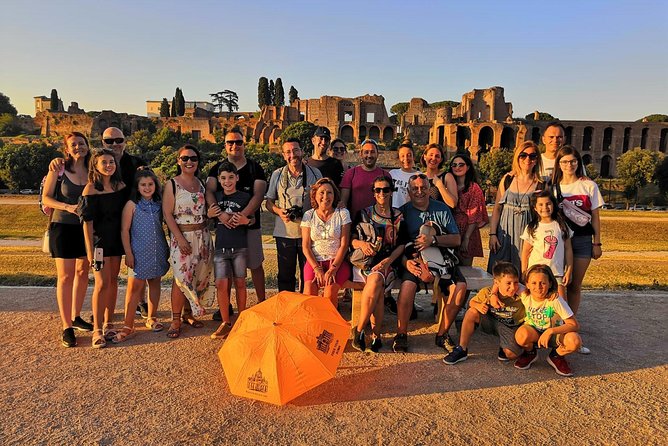
- A night route that connects Circus-era Rome to Trastevere: you move through the city’s older layers in the dark, when landmarks feel closer and stories land faster.
- Bocca della Verità, with a clear honesty moment: you are told not to do the hand gesture unless you feel sure about it.
- Forum Boarium and the port area before Rome: you get a sense of how life worked there long before the city grew into what people picture today.
- Teatro Marcello and the Octavia Portico: you see major Roman architecture while hearing why these names matter.
- Jewish Ghetto history explained while walking: the tour includes the Jewish quarters and then brings the story onward into Trastevere.
- Small enough to feel personal: the group max is 30, and the vibe depends a lot on how the guide keeps attention.
Starting at Teatro di Marcello, when Rome finally slows down
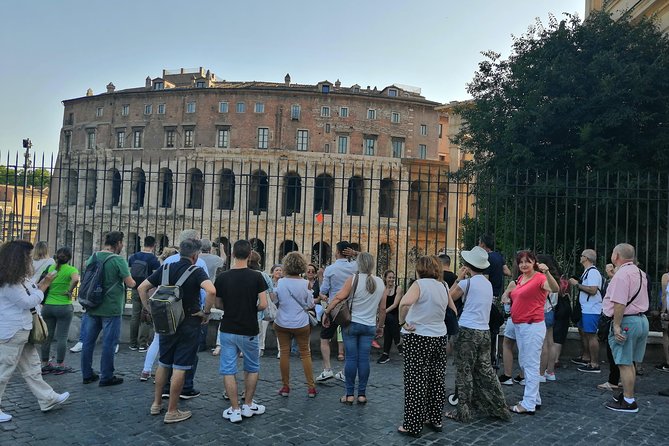
I love how this kind of night walking tour changes your pace. You start at Via del Teatro di Marcello around 7:30 pm, right in the area where Rome’s ancient theater still frames the modern street life. That matters, because at night you can look up, watch light on stone, and hear explanations without crowds pushing you along like a slideshow.
The tour is set for about 2 to 3 hours, which is long enough to feel like you did something meaningful, but short enough that you still have energy for dinner afterward. The meeting point is also practical, and it is described as near public transportation, so you are not stuck planning a complicated commute.
You should wear comfortable shoes. The experience is built around walking between sights, and Trastevere is not a place for flimsy footwear. If you get even slightly restless on long walks, this is the type of tour where a good guide helps you keep momentum.
You can also read our reviews of more tours and experiences in Rome.
Circus-era Rome to Bocca della Verità, the classic night storyline
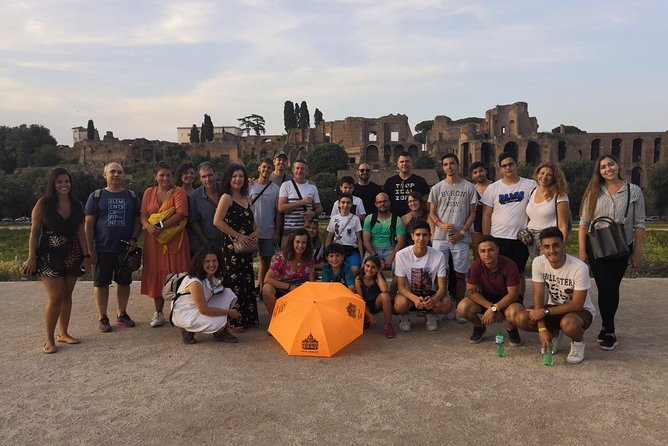
One of the most fun parts is the way the route threads together Rome’s big public entertainment world with a quirky, very memorable stop. The tour crosses what is described as the most important Circus of the Roman era, the place where the major runs of Circus Maximus took place. Even if you do not know your Roman architecture from your Roman politics, the guide’s job here is to give you a map in your head.
After that, the walk heads toward Bocca della Verità. The tour framing is simple and also very specific: there is an honesty element tied to the famous gesture at the mouth. It is also explicitly warned that if you are not 100 percent sure of your honesty, you should not put your hand in.
That advice is surprisingly important. Some people treat it like a joke photo op. Others want the meaning to feel respectful. Either way, you control your comfort level, and the guide’s tone should help you do it without awkward pressure.
If you love “one big photo moment” but also like learning what it represents, this is the kind of stop that hits both needs. It also breaks up the walking rhythm, so you get a mental checkpoint during the evening.
Forum Boarium and the port area, where Rome’s story starts earlier
Another reason this tour works is that it refuses to stay in the postcard version of Rome. You move through the port area where life developed before the founding of Rome, and then into the Forum Boarium, described alongside ancient temples.
In plain terms, this is the tour’s reminder that ancient Rome did not start as a single masterpiece. It started as a place where people lived, traded, and built their routines. The port idea makes you visualize movement, boats, noise, and commerce, not just statues in a museum.
The Forum Boarium part is where explanations can be especially valuable, because temples and ruins can look similar if you are just walking past them. A good guide helps you notice what is different and why people cared. This is also one of the best sections to ask questions, because you can compare what you see outside with how the city functioned.
One practical note: at night, ruins and open spaces can feel bigger and harder to judge for distance. I recommend using the guide’s pacing, not your own “I think it’s only a few minutes” math. The value here is that the guide connects the dots faster than you could on your own.
Teatro Marcello and the Octavia Portico, seeing names that mean something
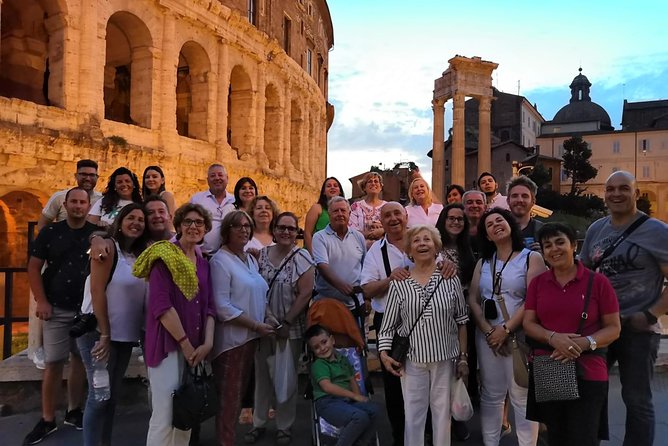
You will spend time around the Teatro Marcello, named after Emperor Octavius in honor of his dead nephew, and also the Octavia Portico, described as made by the Emperor himself. That kind of naming detail might sound academic, but on a street-level walk it becomes a shortcut to understanding.
Here’s what I like about this section: it turns stone into a story you can retell. If you just see a theater from a distance, you might think, Roman big deal, next. But when the guide explains why it is connected to specific figures and why those names stuck, your brain starts to organize the city by relationships, not random facts.
It is also a great moment for the tour’s “history and fun mix” style. You are still walking through real neighborhoods, and the stories are anchored to visible forms. You do not have to imagine what used to be there, because the guide’s job is to show you what you can still recognize.
Drawback to consider: if you are the type who prefers only modern culture and nightlife with minimal Roman references, this section may feel heavier. But if you are happy with a few good stories alongside wandering, this part is one of the tour’s strongest.
Jewish Ghetto history on the street, then onward into Trastevere
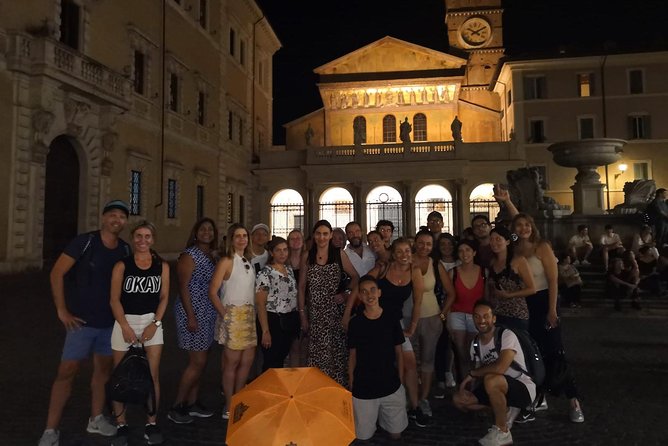
This tour includes the history of the Jews in Rome as you pass through the Jewish Ghetto and then into Trastevere. That structure matters, because it is easy to hear historical context and still feel it never connects to your actual walk. Here, the walk itself is part of the lesson. You are moving from one lived-in area to another, so history does not sit in the past like a frozen exhibit.
From the praise I heard around guides like Iván, the emphasis is on making the topic feel meaningful and approachable. The goal is not just dates and names. It is how communities lived, how identity shaped neighborhoods, and how Trastevere fits into the broader city story. You should expect respectful framing, not a rushed lecture.
A helpful tip for you: in this segment, listen closely at the transitions. When the tour moves from one area to another, it usually signals a change in theme, and that is where the guide tends to connect history to what you can see.
One consideration for your comfort: this topic can be emotionally serious for some people. If you prefer your night tours light and silly only, you might find yourself wanting a shorter, less history-forward route. If you are okay with a thoughtful chapter during your evening, this is a standout part.




Trastevere streets to Piazza Trilussa, ending with the right mood
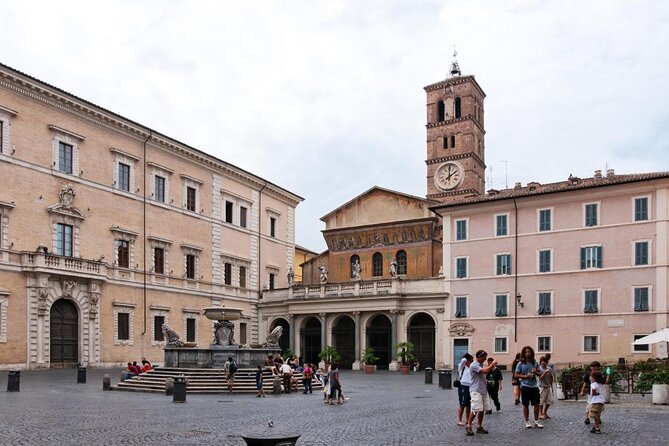
The tour ends at Piazza Trilussa 35, at the Square Trilussa in Trastevere. Ending here is a big deal because it drops you into the neighborhood vibe instead of pulling you back to a transit hub right away.
By the time you reach the end point, you have already seen a good arc: Roman spectacles, a famous honesty moment, port and forum context, then the ghetto and onward into Trastevere. That sequence sets you up to understand why Trastevere feels like it does, because you finish with the walk’s themes still active in your head.
This is also where a good guide can help you keep the evening rolling. In praised examples, Ana Sofía was noted for giving advice about where to eat. Even if you do not follow every recommendation, getting a short list from someone local and engaged can save you time and keep you from ending up at a tourist trap.
Practical expectation: you finish in an area where you can keep wandering on your own. So if you like to extend your evenings, this route gives you a natural launch point.
Price and value: $17.38 for a guided night walk
At $17.38 per person, this is not priced like a museum ticket or a long private tour. What you are really paying for is time with a guide plus a structured walking route that stitches together the city’s less obvious connections.
There is another thing to consider. This experience has the feel of a free tour style format, and one of the key pieces of feedback is that people arriving may have expected a tip-first setup. I would treat that as a heads-up for your mindset: even if you paid in advance, be prepared for a guide-driven format where tips are part of the culture. If that makes you uncomfortable, just know that you can decide how you handle tipping based on your own style.
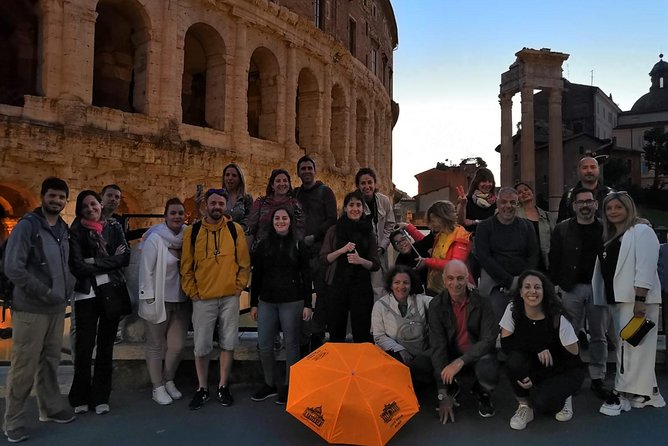
Value also comes from the group size limit of up to 30. A smaller group generally gives the guide better control and makes it easier for you to hear explanations during stops. The top-rated feedback strongly points to effective group management, and that directly affects whether the tour feels worth it.
Booking timing can matter too. The average booking window is about 25 days in advance, which suggests this is not a last-minute gamble if your schedule is fixed. If you are in Rome mid-season or on a tight itinerary, I recommend locking it in earlier rather than hoping you can fit it in spontaneously.
Who should book this Trastevere tour, and what might not fit
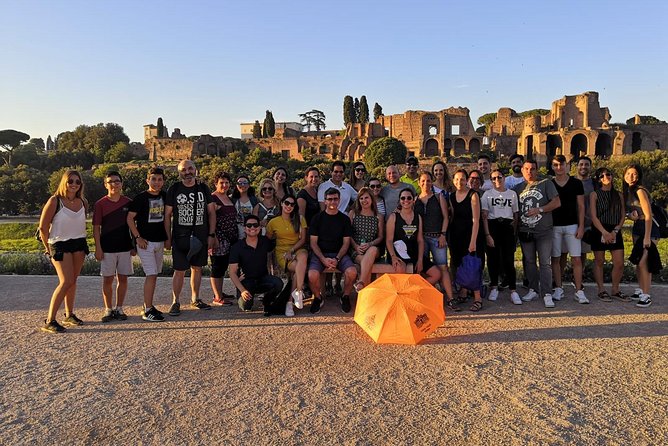
This is a great match for you if you want:
- Night energy in Trastevere, not just daytime sightseeing.
- A walk that connects multiple Roman-era locations with stories that include the Jewish Ghetto.
- A guide who handles a group well, since the experience is paced by what the guide says and when you stop.
It is also a strong option if you like practical add-ons. The best feedback highlights meal advice, attention to the group, and guide passion that keeps the tour moving smoothly.
It might be less ideal if:
- You want only light entertainment with no historical segments, because the route includes significant context.
- You are not comfortable with the Bocca della Verità hand gesture. The tour itself flags that point, so if you would rather watch only, you can still participate in the walk.
- You prefer tours where everything is museum-ticket formal and tightly scripted. This one is walking-first and story-driven.
And one more real-world thought: your enjoyment will depend on the guide and the group mood. The highest praises mention Ana Sofía and Iván specifically, with strong comments about keeping people engaged and sharing thoughtful insights.
Should you book the Trastevere Tour?
Yes, if you want a guided evening that gives you structure and meaning, not just a stroll with occasional landmarks. This tour blends Rome’s Roman-era scale with Trastevere’s night feel, and it includes a history thread tied to the Jewish Ghetto that adds depth without turning the night into a classroom.
If you are on the fence, use two decision filters. First, ask yourself whether you are okay doing a 2 to 3 hour walking experience at night. Second, decide in advance what you will do at Bocca della Verità. Going into that moment calmly is half the fun.
Book it if you like walking, stories, and the idea of moving from big Roman sites into an actual neighborhood atmosphere. Skip it only if you know you want a night with minimal history or you feel uneasy about the honesty gesture.
FAQ
Where does the tour start and where does it end?
It starts at Via del Teatro di Marcello, 00186 Roma RM, Italy and ends at Piazza Trilussa, 35, 00153 Roma RM, Italy.
What time does the Trastevere Tour begin?
The start time is 7:30 pm.
How long is the tour?
The duration is about 2 to 3 hours.
How much does the tour cost?
The price is listed as $17.38 per person.
Do I need a paper ticket?
No. The tour uses a mobile ticket.
How big is the group?
This activity has a maximum of 30 people.
Is it possible to cancel for a full refund?
Yes, you can cancel up to 24 hours in advance for a full refund. If you cancel less than 24 hours before the start time, the amount paid is not refunded.
Are service animals allowed?
Yes, service animals are allowed.
Is it near public transportation?
Yes, the tour is described as near public transportation.
More Tours in Rome
More Tour Reviews in Rome
Not for you? Here's more nearby things to do in Rome we have reviewed








Trastevere Tours, compared.
 ★ 4.8Trastevere or Jewish Quarter Street Food TourFrom $513,839 reviews
 ★ 4.9Trastevere & Campo de Fiori Street Food Walking TourFrom $512,768 reviews
 ★ 4.8Guided Food Tour in TrastevereFrom $1122,266 reviews
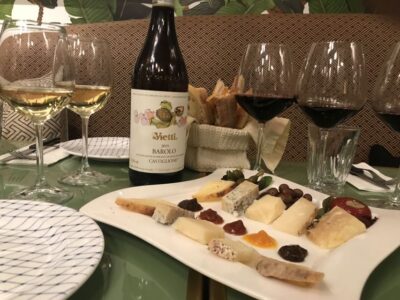 ★ 4.9Trastevere Guided Food and Wine Tour with 20+ TastingsFrom $1461,022 reviews
 ★ 4.8Small Group Trastevere Food Tour with DinnerFrom $132719 reviews
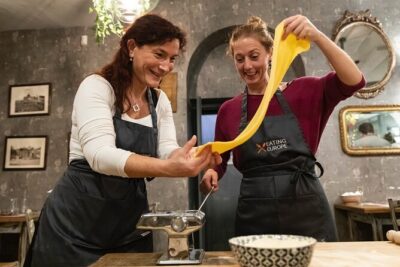 ★ 5.0Rome Trastevere Pasta Making Class with Eating EuropeFrom $100505 reviews
 ★ 4.9Twilight Trastevere Food Tour with Wine TastingFrom $123490 reviews
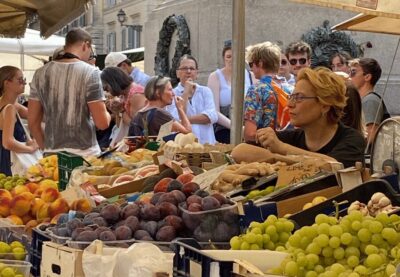 ★ 4.8Food & Wine Tour of Campo de Fiori, Ghetto, TrastevereFrom $81413 reviews
Browse the lists this tour appears in