
Reviewed · COOKING CLASSES
Cook with us in Rome: a Hands-On Cooking Experience 15:30PM class
Rome tastes better when you make it. This 3:30 pm Rome cooking class mixes a small-market start, a short walk through the historic center, and hands-on lessons that leave you with real pasta-making skills for later.
I really like two parts of this setup: you learn homemade pasta with guidance in a small group (max 10), and the meal comes with Prosecco and wine to match what you cook. One thing to consider is that on Sunday, and on afternoon classes, the market stop is skipped, since it is closed.
Key things that make this Rome pasta class worth your time
- Market shopping up front for fresh ingredients before you cook
- Small group size (max 10) so the instructor can correct your technique
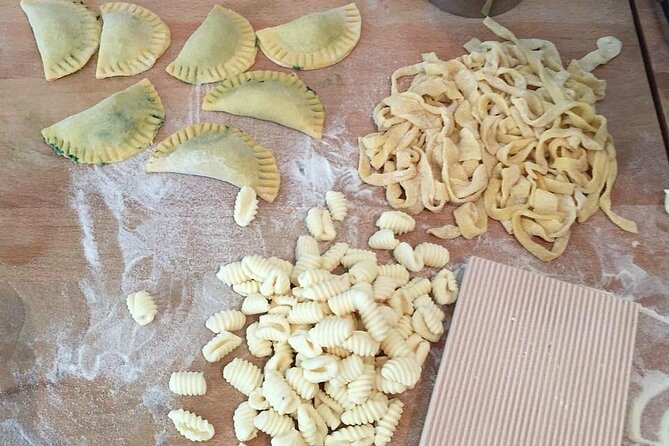
- Three pasta shapes taught hands-on: fettucine, cavatelli, and ravioli
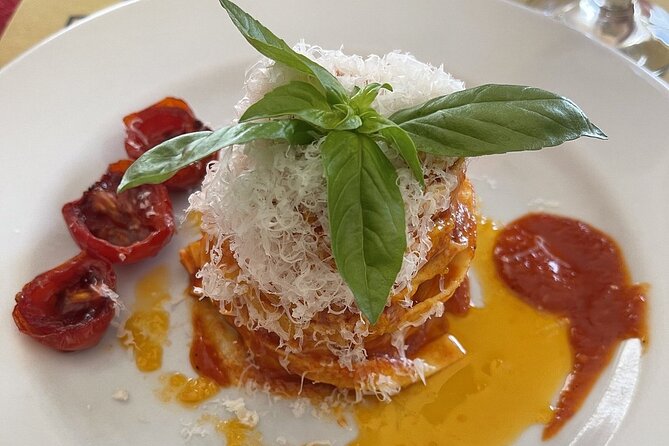
- Antipasto plus 2 pasta sauces so you cook more than just noodles
- Tiramisu for dessert as part of the same lesson
- Prosecco and wine included to pair with the food you make
A 3:30 pm Rome cooking class that starts with shopping and walking
This is an afternoon-focused experience, starting at 3:30 pm and running about 4 hours. That timing is handy if you like doing a food activity without using up your whole day. It also fits families well, since you are not rushing through your schedule in the heat of mid-day.
The class begins at Vicolo di Sant’Onofrio 22, 00165 Roma RM, Italy, and you return to the same spot at the end. Being a loop like this matters in Rome. It reduces the stress of figuring out where to go next while your stomach is already asking for dinner.
You also get a short walk through the historic center on the way to the studio. It is not a long sightseeing block, but it does help you get oriented before you start cooking. I like this balance because you get both atmosphere and action.
You can also read our reviews of more cooking classes in Rome
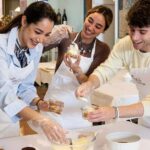
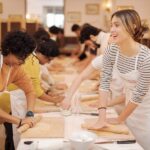
Finding Vicolo di Sant’Onofrio and what the meetup feels like
The meeting point is in a small side street area, Vicolo di Sant’Onofrio, which is typical of central Rome. If you come by public transportation, plan an extra few minutes to get from the stop to the exact address. The tour notes say it is near public transportation, but the final approach is still street-level walking.
When you get there, you can treat it like the start of your “food day” even though it is only an afternoon slot. You show up, meet the group, and then transition into market shopping and cooking. That keeps the energy high and helps you settle in quickly.
The experience is offered in English, so you do not need to worry about cooking terminology getting lost in translation. You also receive a mobile ticket, which keeps things simple on your phone.
The market stop (and why Sundays and some afternoons are different)
Most of the time, you kick things off with shopping at a local market. You pick out fresh produce, then you head toward the studio. This part is more valuable than it sounds, because it anchors everything that follows. When you choose ingredients yourself, you understand what makes them taste good later, even if you recreate the dishes back home.
You should also know the one schedule quirk: on Sunday and on afternoon classes, the market is skipped because it is closed. If you are deciding between days, that is the kind of detail that can change your experience. You will still cook, but you will start the cooking day without that early ingredient hunt.
Practical tip: if you are going on a day when the market is skipped, lean into the walk. Use that time to watch how Rome’s streets connect neighborhoods, then get ready to cook with whatever ingredients the class has already prepared for you.
Handmade pasta lessons: fettucine, cavatelli, and ravioli
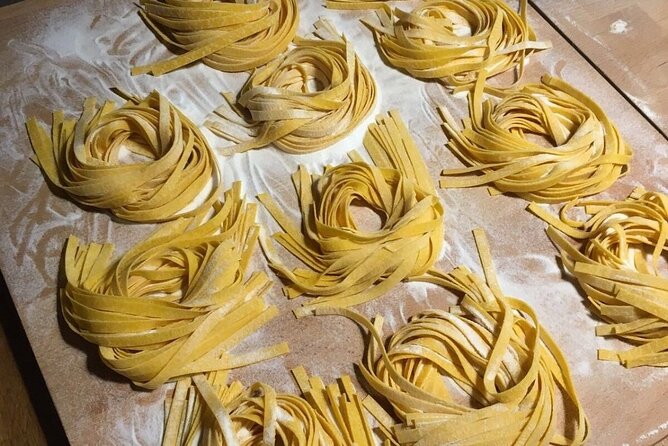
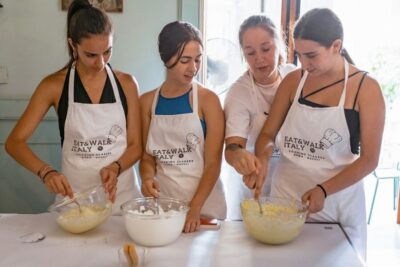
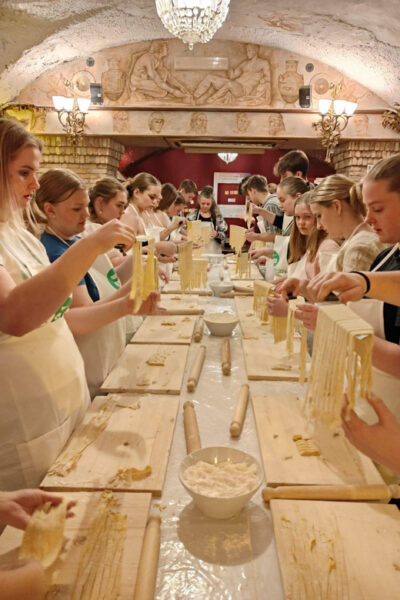
The core of this class is making pasta from scratch. You learn to form fettucine, cavatelli, and ravioli, with hands-on guidance from your instructor. That is three distinct pasta styles, and they each teach a different technique.
Here is why this matters to you as a cook, not just a diner:
- Fettucine teaches you how to get even dough and cut it into consistent ribbons. It is a great confidence builder because you can see progress fast.
- Cavatelli helps you understand shaping and texture, and it is often the kind of pasta that looks simple once you try it and then clicks after you practice a bit.
- Ravioli brings the folding and filling step, where technique matters for sealing and keeping the filling contained.
You are not just watching. You are learning steps well enough to explain them later, and that is a big part of why people rate this class so highly. A small group size (up to 10) helps here, because the instructor can notice what you are doing and adjust you while you work.
At a lesson like this, timing matters. With a 4-hour block, you will likely move from dough to shaping to cooking and eating without long pauses. That pacing helps you stay focused, and it keeps the food fresh and enjoyable rather than delayed.
Antipasto, two sauces, and building flavor like an Italian meal
Once pasta is underway, the class shifts from dough to a full meal plan. You learn an antipasto and how to make two different pasta sauces. This is a smart structure because it turns pasta into a complete dinner, not a standalone dish.
An antipasto matters because it is often where Italian meals start. You learn how to think in courses and flavors, so your final plate looks like you planned it, even though you are cooking it live.
The two sauces are useful because it gives you contrast. One sauce can feel heavier or smoother, while another might be more punchy or textured. Even without sauce names provided, the key is that you will practice making more than one flavor profile. That gives you options when you recreate it at home.
I also like that the class does not stop at “cook pasta.” It trains you to finish a meal. You end up tasting and eating what you made, which is the most honest feedback loop for technique and seasoning.
A few more Rome tours and experiences worth a look


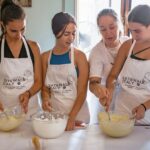
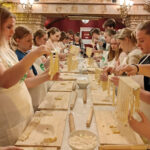
Tiramisu dessert, plus Prosecco and wine with your meal
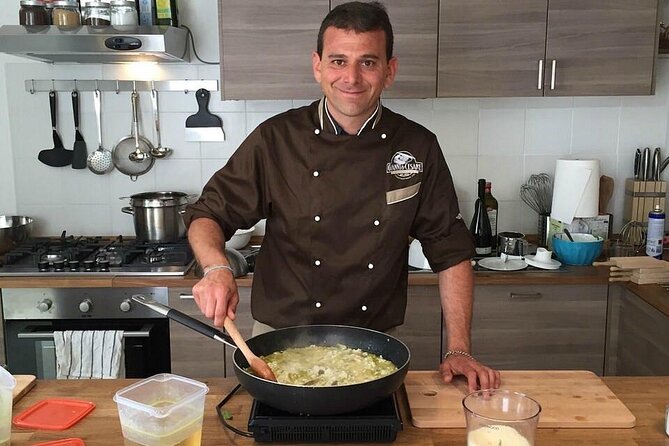
Dessert is tiramisu, taught as part of the same session. Tiramisu can be intimidating in the wrong hands, but a structured class makes it doable. You get to see how the layers come together and how sweetness and texture balance.
This is also where the included drinks become more than a perk. Prosecco and wine are included in the cost, paired with what you cook and eat. When you drink with the meal you made, you taste more than food. You taste the timing, the seasoning, and the balance between course flavors.
For you, that means a couple of things:
- The meal feels complete, not like a snack between cooking steps
- You get a practical pairing experience you can remember, even if you recreate it later with different brands
For many people, this is the moment when the class stops feeling like a lesson and starts feeling like dinner with friends who also happen to be teaching you how to fold pasta dough.
Small group coaching that keeps you on track
The class caps at a maximum of 10 travelers. That smaller size is what makes hands-on instruction work. In a large group, you can end up waiting or copying without feedback. Here, you are more likely to get corrections while you work.
The reviews highlight the host’s patience and how informative the teaching is. That kind of teaching style matters most for pasta, because the difference between good and great often comes down to small, fixable technique points.
I also like the “balance of cooking and watching” idea. Even in a hands-on class, there are usually moments when the instructor demonstrates a step clearly, then you try it right after. That rhythm keeps you from getting stuck and reduces frustration.
And there is a social side. A small, friendly group in an intimate setting makes the cooking feel lighter. You are not just learning, you are also having conversation while you taste and compare notes.
Price value in Rome: what $144.18 really includes
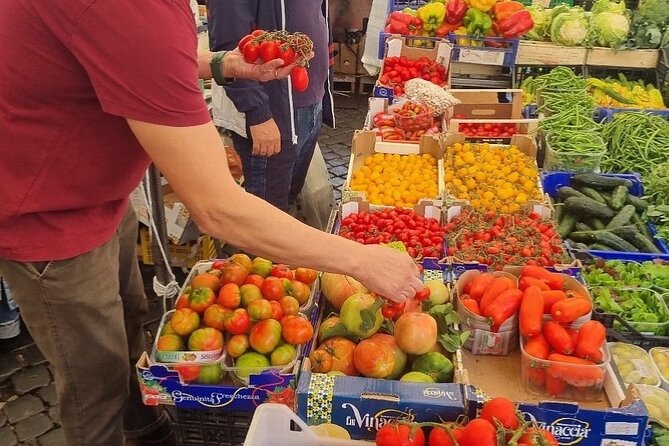
The price is $144.18 per person, and the class lasts about 4 hours. In Rome, a cooking class can range widely, so the key question is what is included.
Here, you get more than a meal:
- You learn handmade pasta (three shapes)
- You make antipasto and two sauces
- You learn tiramisu
- Prosecco and wine are included
- You start with shopping at a local market in most cases
- The group is kept small for real instruction
If you compare it to buying ingredients and trying to learn on your own, the value becomes clearer. Ingredients are not cheap, and the “how” is usually the missing piece. A class gives you technique, structure, and feedback, then ends with you eating the results.
Is it pricey? It can be, yes. But for the combination of skills, food volume, and included drinks, it often pencils out as good value for a special Rome meal where you leave with something more than photos.
Who should book this class, and who might want a different option
This cooking class is a great fit if you are:
- A food lover who wants practical skills, not just tasting
- Traveling with family, since the lesson is family-friendly
- Interested in pasta technique, especially if you like the idea of making ravioli at home
- Looking for an activity that naturally includes wine and a full meal
You might consider a different day or a different class if:
- You strongly want the market shopping portion, and your travel dates fall on a Sunday or an afternoon slot where the market is skipped
- You are looking for a pure sightseeing day, since this is primarily cooking and eating, with only a short historic-center walk
Should you book Cook With Us in Rome?
If you want a hands-on Rome experience where you cook multiple dishes, learn three pasta styles, and actually sit down to eat everything you made, this is an easy recommendation. The small group size, the included drinks, and the full menu approach (antipasto, sauces, and tiramisu) make it feel like a complete evening with skills attached.
Book it if you are the type of person who likes to take home a story you can cook again. If you are flexible on day and you want the market start, aim for a non-Sunday schedule when possible, since the market stop can be skipped when it is closed.
FAQ
What time does the 15:30 pm class start?
The class starts at 3:30 pm.
How long is the cooking experience in Rome?
The duration is about 4 hours.
Where does the class meet in Rome?
The meeting point is Vicolo di Sant’Onofrio, 22, 00165 Roma RM, Italy.
What happens at the start of the experience?
You begin with a local market visit (except on Sunday and some afternoon schedules), then you go on a short walking tour through the historic center on the way to the studio.
What pasta do you learn to make?
You learn to make fettucine, cavatelli, and ravioli.
Do you also cook sauces, antipasto, and dessert?
Yes. You learn an antipasto, two different pasta sauces, and dessert (tiramisu).
Is the class offered in English?
Yes, it is offered in English.
How many people are in the group?
The class has a maximum of 10 travelers.
What drinks are included, and is there free cancellation?
Prosecco and wine are included. Free cancellation is available, and you can cancel up to 24 hours in advance for a full refund.
More Workshops & Classes in Rome
More Cooking Classes in Rome
More Tour Reviews in Rome






Not for you? Here's more nearby things to do in Rome we have reviewed












Cooking Classes, compared.
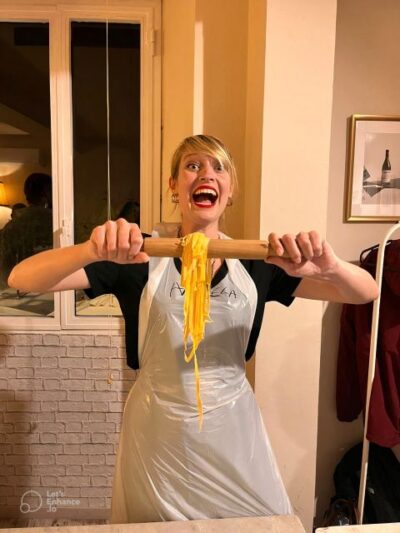 ★ 4.9Pasta Making Class with Wine, Limoncello, and DessertFrom $483,177 reviews
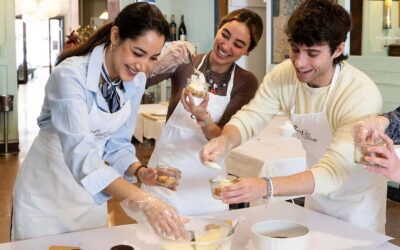 ★ 4.93-in-1 Fettuccine, Ravioli, and Tiramisu Cooking ClassFrom $812,704 reviews
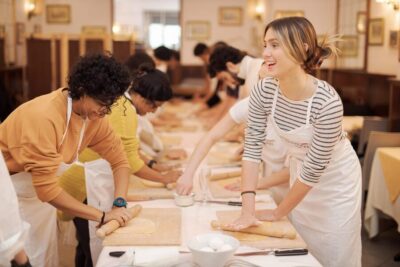 ★ 4.8Fettuccine Pasta Cooking Class in Rome’s City CenterFrom $462,414 reviews
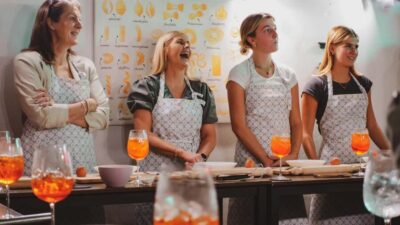 ★ 5.0Traditional Pasta with Cocktails Cooking ClassFrom $1002,374 reviews
 ★ 4.8Fettuccine and Tiramisu Cooking Class with WineFrom $672,013 reviews
 ★ 4.8Pasta & Tiramisu Cooking Class near the Spanish StepsFrom $581,395 reviews
 ★ 4.7Traditional Pizza Cooking Class near Piazza NavonaFrom $461,241 reviews
 ★ 4.9Pasta Making with Wine Tasting and Dinner in FrascatiFrom $35979 reviews
Browse the lists this tour appears in