
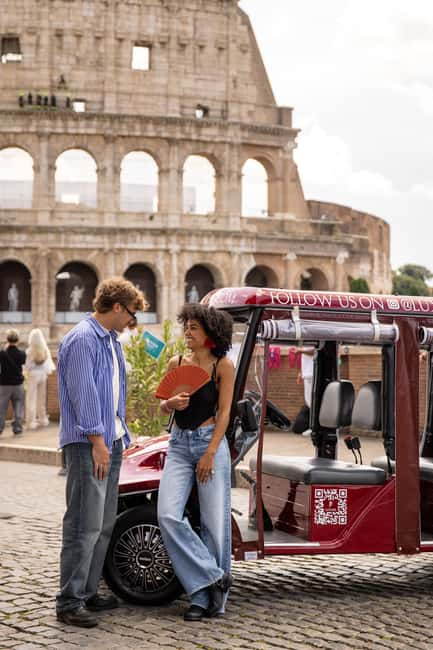
Reviewed · ROME GOLF CART TOURS
Golf Cart Tour: Highlights of Rome
Rome feels different when you glide. This 3-hour electric golf cart loop mixes classic landmarks with quieter lanes you may not reach on foot. You get guided stops, plenty of photo time, and a smooth, eco-friendly way to cover a lot without turning your feet into dust.
What I like most is the pace and variety. You hit big names like Piazza Venezia, the Pantheon, and the Colosseum area, then shift to places many trips skip, like the Jewish Ghetto. It also helps that the guide factor can really matter, and guides like Daniel and Robin (aka Robin Rome) have been praised for keeping things moving through crowds and road closures.
One thing to watch is the time slice. Each stop is about 15 minutes for a guided visit, so if you want long museum-style wandering, you will need to add separate time later. Also, if you choose pickup, Rome traffic can add a wait of up to 20 minutes in some cases.
Key points to know before you go
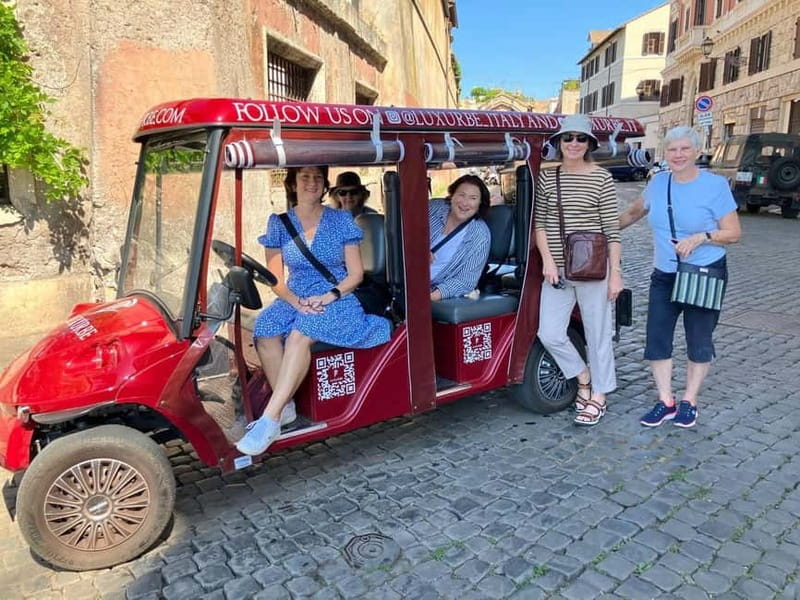
- Electric carts make Rome’s distances feel manageable in just 3 hours
- 15-minute guided stops keep the day moving, with time to take photos
- A guide-led route hits major sites plus areas you might not find on your own
- Headsets are included if needed, which helps in busy streets
- Guides can handle traffic and crowds, with routes adjusted for access
- You end back near Via dei Condotti, so it is easy to roll onward afterward
Start at Via dei Condotti, then glide into Rome’s core
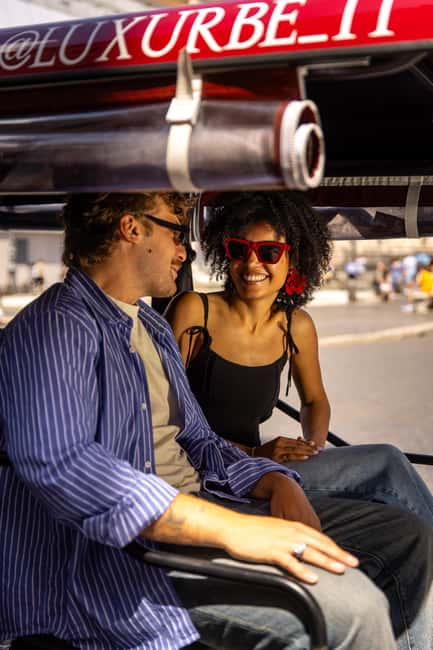
Most tours start at Via dei Condotti 61, 00187 Roma RM, and you finish back at the same area. That is a big practical win. You are not forced into a far-away end point, and you can use the rest of your day in the center.
If you choose pickup, the driver waits outside your hotel. Just plan for a possible delay due to traffic, since Rome can be unpredictable and road access changes fast. In a city like this, that kind of buffer matters more than it sounds.
Once you are on board, the vibe is simple: small, easy seating, low effort, and a driver who handles the streets for you. The electric cart format is ideal when you want a “see the highlights, learn what you’re looking at, keep going” day, without the constant stop-start of walking.
You can also read our reviews of more tours and experiences in Rome.



Piazza Venezia, the Pantheon, and Theatre of Marcellus in 15-minute blocks
The early hits are classic for a reason. You begin with Piazza Venezia, which is a great starting point because it sets the stage for Rome’s layers, from monumental viewpoints to ancient lines you can trace across the city. Expect a short guided orientation and quick context so the rest of the day makes sense.
Next comes the Pantheon. Even if you have seen photos before, a guided stop helps you focus on what matters, like the building’s proportions and why this place has stayed famous for centuries. The stop is guided for about 15 minutes, so it is not a slow, lingering pace. But it is usually enough to get oriented, take a few solid photos, and understand the main ideas your guide shares.
After that, you visit the Theatre of Marcellus. A theatre in a modern city can feel like a puzzle piece. In a short guided moment, your guide can point out what makes it distinct and how Roman public architecture shaped everyday life. This is the kind of stop that makes the tour feel smarter than just a checklist.
If you are the type who hates feeling rushed, this section can feel quick. If you like structure and photos that do not consume your whole day, it works.
The Jewish Ghetto stop: learning how Rome changed over time
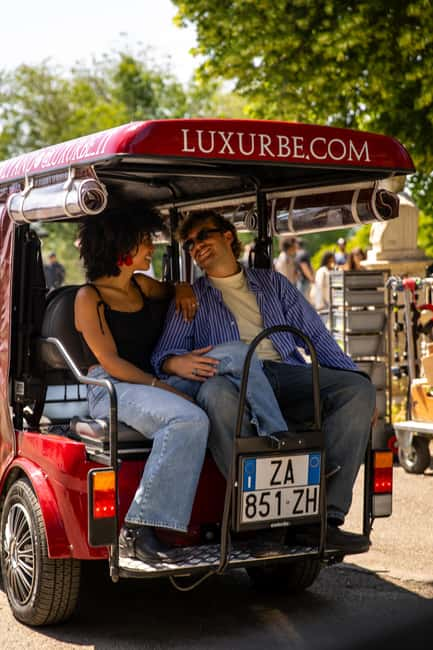
You also get a stop in the Jewish Ghetto area, with guided time built in. This is one of the more meaningful moments on the route because it shifts the story beyond monuments. It helps you see Rome as a city of communities, not only emperors and fountains.
In 15 minutes, you will not cover everything in depth. But the guide-led format can give you just enough framing to understand what you are looking at and why the neighborhood matters. For many people, that perspective is the difference between seeing Rome and understanding it.
If you are traveling with teens, couples, or a multi-age group, this stop is a good “everyone can learn something” moment. It also breaks up the heavy hitters so the day feels less repetitive.
Vatican City by golf cart: what fits into a 3-hour schedule
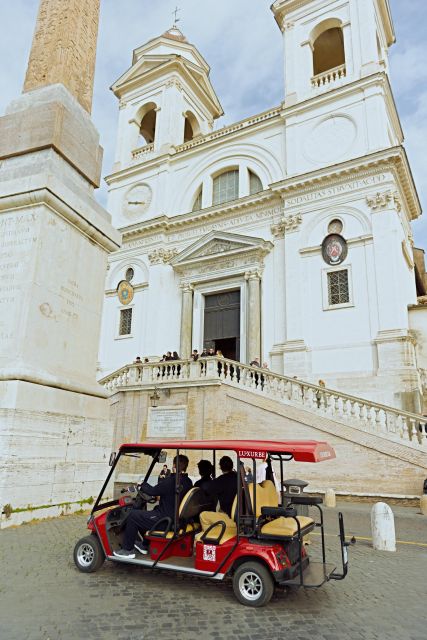
The itinerary includes Vatican City, again with about 15 minutes of guided time at that stop. Getting here by golf cart helps because it reduces transit friction. You spend less time navigating buses, crowds, and long walks, and more time in the actual sightseeing windows.
Now, a reality check: 15 minutes is short. Vatican City is not short on scale. So treat this as a guided orientation plus landmark viewing, not a full Vatican visit. If you want Sistine Chapel-level time, you’ll still want a separate ticketed Vatican plan later.
What makes the stop valuable here is the pacing. You see the big idea, hear the context, and you can decide whether you want to return on your own afterward with more time.
Colosseum, Roman Forum, and Circus Maximus: the big-ticket triangle
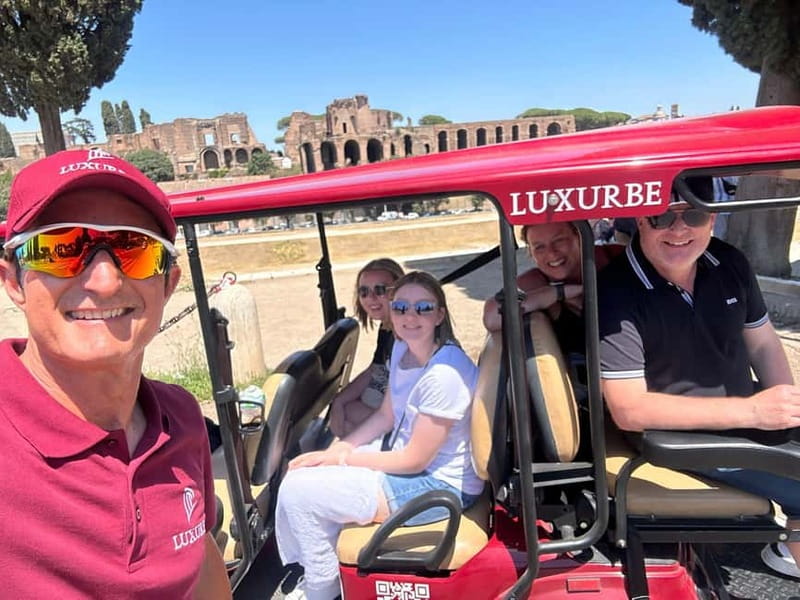
The tour then leans into Rome’s most famous “ancient arena” zone. You stop at the Colosseum, then continue to the Roman Forum, and later visit Circus Maximus.
Why this cluster works on a golf cart day:
- The sites connect in theme.
- You keep moving while the guide’s story is still fresh.
- You avoid losing the whole morning to transit.
At each stop, the guided time is about 15 minutes. That is enough for key takeaways, plus a few photos if you use your time wisely. If crowds are heavy, your guide’s job becomes more about logistics than lectures, and strong guides are good at both. In real-world feedback, guides like Daniel have been praised for keeping the group on track even when traffic, crowds, and road closures try to derail the plan.
Also, Roman Forum and Circus Maximus are sometimes “I know the name, but what am I seeing?” locations for first-timers. A guide in these moments turns the stone into a story. You do not have to be an archaeology expert to appreciate it, you just need someone to point you to the right details fast.






Trevi Fountain and Piazza Navona: photo time that does not steal your whole day
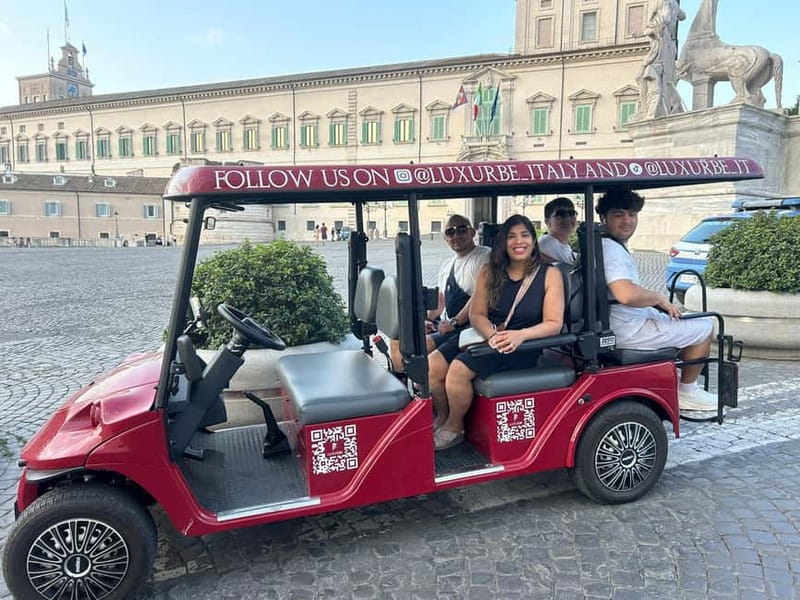
Next up are two of Rome’s most photo-ready stops: Trevi Fountain and Piazza Navona.
The trick with Trevi is timing and focus. With guided time in place, you get a chance to view it and capture photos without the day turning into one long queue-waiting loop. Your guide can also help you make the most of your minutes so you are not just standing there guessing where to stand.
Piazza Navona adds a different feel. It is a public space experience, not just a single landmark. Again, you get short guided time, which is perfect for taking in the geometry of the square and learning what makes it feel so central to Roman street life.
If you are traveling with family or someone who gets tired easily, these stops are great because you can step out, look around, take photos, then regroup quickly. No marathon walking required.
Pincio Gardens and the Trinità dei Monti area for a Rome-ending viewpoint
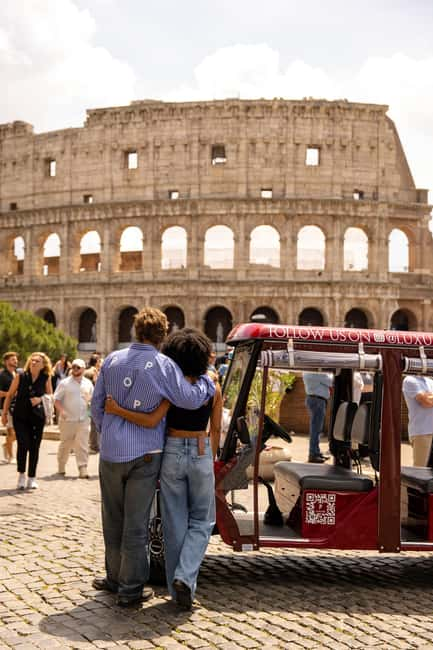
The last stretch includes Pincio Gardens, and the tour description also mentions ending with the Trinità dei Monti area. That combination makes sense, because the Pincio viewpoint zone is the kind of place where Rome looks like Rome. You get an elevated perspective that helps everything you saw earlier click into place.
This is a smart closer. After big ruins, fountains, and squares, a viewpoint lets you take a breath, look out, and connect the city’s scale. It also works well for couples because it gives you a moment that feels less like a sprint and more like a memory.
Then you finish back near the meeting point on Via dei Condotti 61. From there, you can head for dinner in your own time, or use the area to access other parts of the city.
Guides, headsets, and why the photo plan is built in
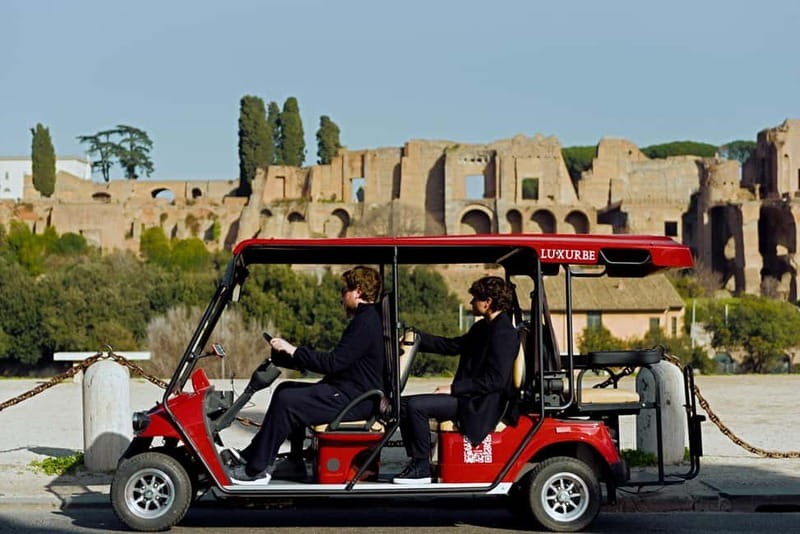
A golf cart tour only feels good if the guide keeps it running smoothly. This one is led by live guides in English, Italian, and Spanish, and headsets are included if required. That matters in Rome, because even a simple explanation can be hard when you are surrounded by traffic noise and crowd chatter.
You also get audio guidance in the same languages. In practice, that gives you a safety net. If you miss a detail during a stop, you can catch it again as the tour moves.
Photos are also part of the deal, which is more helpful than it sounds. When you are focused on seeing, you sometimes forget to take photos. Having guided photo captures takes pressure off.
The best feedback on guide quality is consistent. Daniel has been praised for adapting to closures and still getting the group around, including smaller stops that buses cannot reach. Robin has been praised for tailoring what people want to see and for making sure there was time for pictures, not only fast sightseeing.
That is the difference between a tour that feels like transport and one that feels like a plan.
Price and value: is $90.33 fair for 3 hours of Rome?
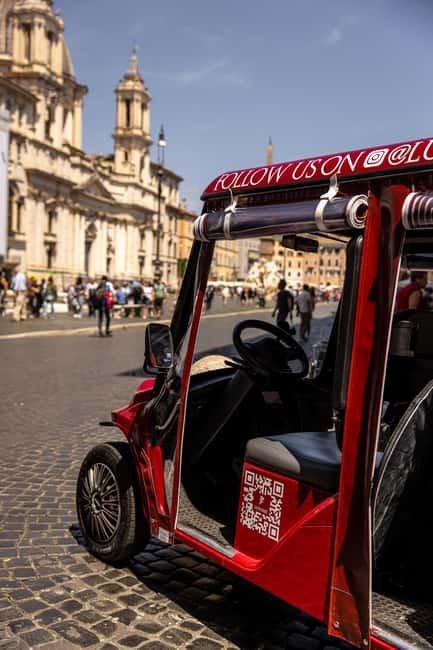
At $90.33 per person for a 3-hour electric cart tour, the value comes from what you avoid:
- Long transit time across multiple neighborhoods
- Fatigue from constant walking
- The stress of figuring out routes and timing your own day
This price includes the electric golf cart, a driver/guide, and hotel pickup and drop-off if you select that option. It also includes photos of your activity and audio or headset support if required.
What is not included is also clear: food and drinks. That is normal for a sightseeing tour, but it means you should plan your next meal slot in advance or keep it flexible.
Is it “cheap”? No. Is it “fair if you want efficiency and guidance”? Yes. If you are short on time in Rome, or you want a low-effort intro that still covers the biggest names, this is a practical way to get your bearings fast.
Who should book this golf cart tour, and who should skip it
This tour suits people who want a guided highlights route without wearing out their legs. It is especially good for:
- Couples who want a fun, photo-friendly way to see multiple sights
- Families with mixed ages where not everyone can do long walks
- Small groups who want a shared plan and a guide to keep things organized
It may not be the best match if:
- You need a wheelchair-accessible format. The tour is listed as not suitable for wheelchair users.
- You want long, independent time at each site. Stops are guided for about 15 minutes.
- You are traveling with pets, baby strollers, or large luggage (not allowed).
- You have very young children, since it is not suitable for children under 3 years.
If your group is athletic and you love walking, you might find a standard walking tour works better. But if you want Rome to feel manageable in a half-day, this cart format is a strong choice.
Should you book this Highlights of Rome golf cart tour?
If your goal is a guided, efficient Rome overview, I think you should seriously consider booking. The route hits major anchors like the Pantheon, Colosseum, and Trevi Fountain, but it also includes story stops like the Jewish Ghetto. The best part is the handling: strong guides, quick context, and enough photo time that the day feels like memories, not just motion.
I would skip it only if you plan to spend hours inside major sites and you dislike 15-minute stop pacing. Also, if you are very sensitive to traffic delays, remember pickup can include waiting time.
Overall, this is a good “get your Rome story going” tour, one that helps you decide what to return to later with more time and less rushing.
FAQ
How long is the golf cart tour?
It runs for 3 hours. You can check availability to see starting times.
Where does the tour start and end?
It starts at Via dei Condotti, 61, 00187 Roma RM, Italy and ends back at the meeting point.
Does the tour include hotel pickup?
Pickup is optional. The driver waits outside your hotel, if you select the pickup option. If you choose pickup and drop-off, traffic can cause a waiting time of up to 20 minutes.
What sights are included?
The route includes Piazza Venezia, Pantheon, Theatre of Marcellus, the Jewish Ghetto, Vatican City, Colosseum, Roman Forum, Circus Maximus, Trevi Fountain, Piazza Navona, and Pincio Gardens (with Trinità dei Monti mentioned as the end highlight).
How long do you spend at each stop?
Each listed stop includes a guided visit of about 15 minutes.
What languages are offered?
The live guide is available in English, Italian, and Spanish, and audio support is also included in those languages.
Is food included?
No. Food and drinks are not included.
Are headsets included?
Headsets are provided if required, and the tour includes audio guidance.
What should I bring, and what is not allowed?
Bring comfortable shoes and weather-appropriate clothing. Pets, weapons or sharp objects, baby strollers, and luggage or large bags are not allowed.
Is it possible to cancel?
Yes. You can cancel up to 24 hours in advance for a full refund.
More Tours in Rome
More Tour Reviews in Rome
Not for you? Here's more nearby things to do in Rome we have reviewed












Rome Golf Cart Tours, compared.
 ★ 4.8Imperial City Tour by Golf Cart with Optional TransferFrom $1241,024 reviews
 ★ 5.0Golf Cart Small-Group Guided Tour: Rome City HighlightsFrom $104907 reviews
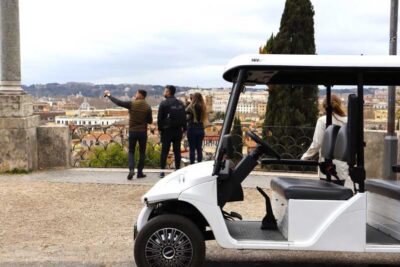 ★ 4.8City Highlights Golf Cart TourFrom $45857 reviews
 ★ 5.0Private/Group 4 Hours Golf Cart SightseeingTourFrom $168780 reviews
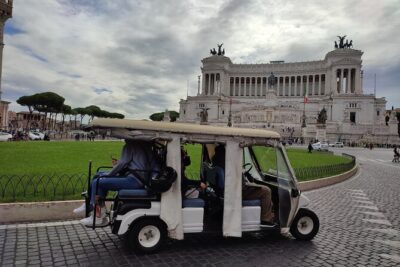 ★ 5.0Explore Rome on a Golf Cart: Private TourFrom $83757 reviews
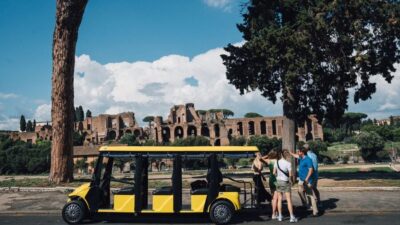 ★ 4.8City Highlights Golf Cart Tour with Local GuideFrom $71752 reviews
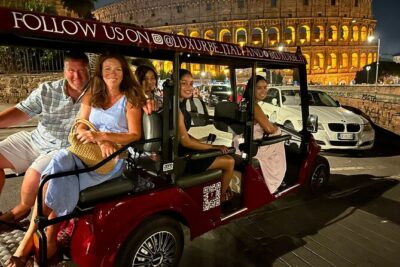 ★ 4.5Rome by Night: Golf Cart TourFrom $108688 reviews
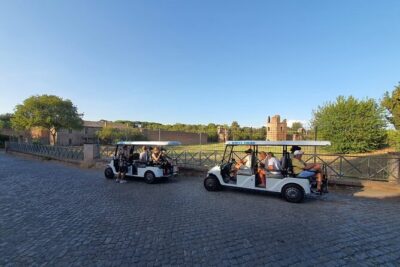 ★ 5.0Rome Catacomb & Appian Way Small-Group Tour by Golf CartFrom $107681 reviews
Browse the lists this tour appears in