
Reviewed · TICKETS
Rome: Catacombs of St. Callixtus Entry Ticket & Guided Tour
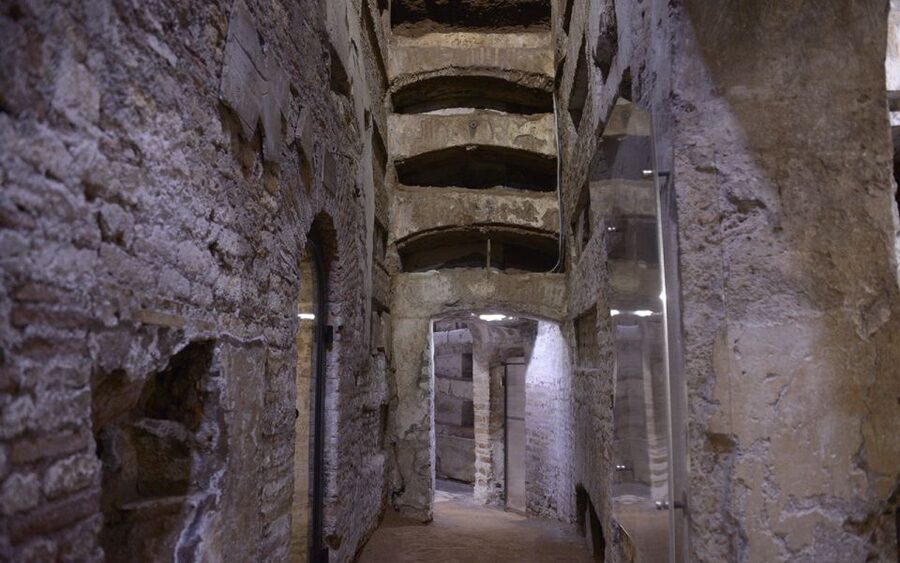
Rome has a hidden world beneath your feet, and this tour gives you context for what you see down there. You get a guided visit to the Catacombs of St. Callixtus, including the famous Crypt of the Popes. It is one of those Rome experiences that feels both historical and quietly personal.
I like that it is a short, efficient 30 minute format that still hits the key rooms, from early Christian burial spaces to Area I. At this price point, it is a good way to get a lot of meaning without spending half your day underground. Plus, many guides stay attentive after the official route ends, so you can ask follow up questions.
One consideration: this is underground and the temperature can feel cold, plus the site is not suitable for people with claustrophobia or mobility impairments. If you hate tight spaces, skip it, or at least think hard before buying a ticket.
Key highlights to look for
- Skip the line with an entry ticket plus a guided walkthrough
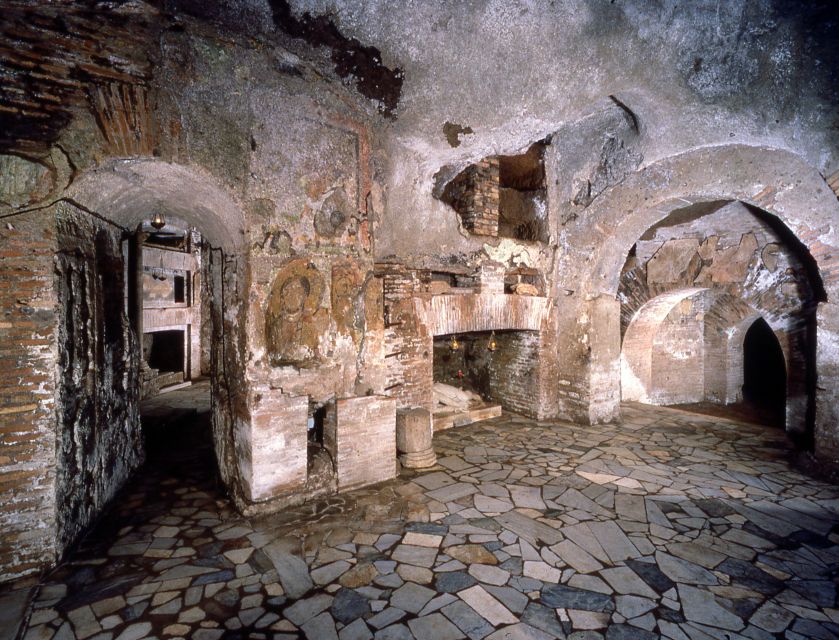
- Crypt of the Popes visit, including resting places of 9 popes and 3 bishops
- Crypt of St. Cecilia and the story of a Roman matron linked to proper burial
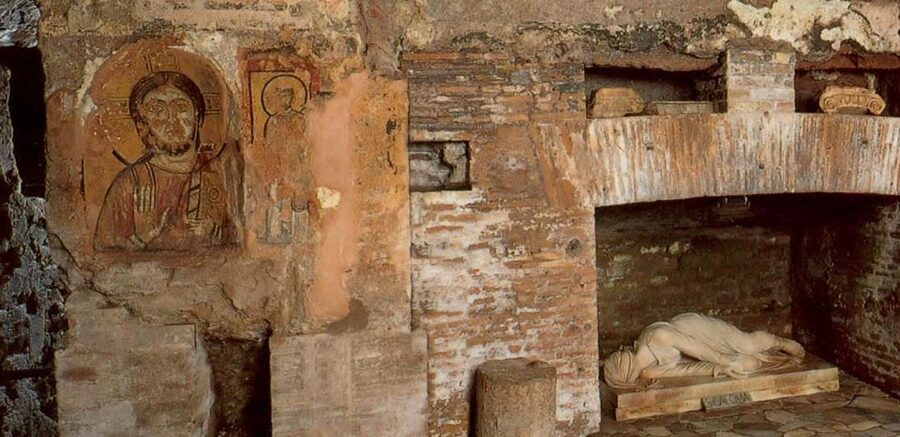
- Oldest frescoes and wall art that help you picture early Christian life
- Area I cubicles of the sacraments, a compact but memorable architectural stop
- Professional, multilingual guides in Italian, French, German, English
Getting Into the Catacombs: Ticket Office and Timing
This tour starts with a simple rule: go straight to the Catacombs ticket office and show your voucher at least 10 minutes before your scheduled time. That early buffer matters because you will be grouped for the guided portion, and Rome sites can be busy and a bit confusing at the curb.
The good part is that this is designed for an easy first step. Your ticket includes entry plus a live guide, and it is marked as a skip-the-ticket-line experience. So you are not spending your best underground minutes queuing upstairs.
Also, give yourself a reality check on location. This is not a quick walk from Rome’s main sights. Plan your transport so you arrive early, not right on time. A few reviews mention the site being a bit out there and the meeting area being easy to mix up, so treat the ticket office as your anchor.
A few more Rome tours and experiences worth a look



What Makes St. Callixtus Special Under the Appian Way
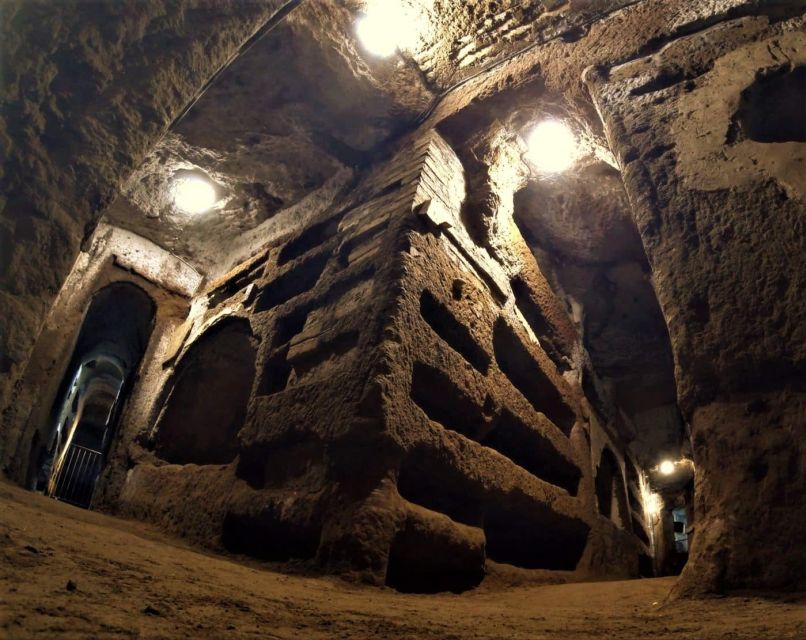
The Catacombs of St. Callixtus are among the largest underground burial sites in Rome’s early Christian world. The whole point of visiting is to understand how Christians organized burial at a time when faith communities were smaller, networks were local, and memorial traditions mattered.
What makes St. Callixtus feel different is the scale. You are told you are looking at a resting place for an estimated half a million Christians, and the setting is literally an underground complex below the Appian Way. That is a huge number, but the guide helps translate it into something human, like how long the cemetery was used and why certain parts became especially meaningful.
And while catacombs are often marketed with spooky vibes, the tone here tends to be reverent and grounded. In the best tours, the guide keeps the focus on burial practice, names of early leaders, and what the artwork meant to the community.
The Guided Route: How a 30-Minute Tour Stays Focused
The tour is built around a tight guided route, and the short timing is part of the value. You get a guided walk through the complex, with the guide explaining what the site is, where its name comes from, and how big it really is.
From there, you move through a sequence of highlights rather than trying to cover the entire underground labyrinth. Expect the kind of pacing where each stop has a reason:
- First, context on the cemetery as an early official burial space for the Christian community in Rome.
- Then, a look at specific, named burial areas and the people associated with them.
- Finally, artwork and a structured area that helps you visualize how memorial and ritual spaces were laid out underground.
It is a good format if you want a meaningful experience without turning your day into a logistics marathon. Reviews also note that the tour can run a bit longer than advertised, but the schedule still stays focused. For many people, that is exactly what makes it feel worth it.
Who this pacing suits best
If you are traveling with teens, you like history but do not want to spend hours underground, or you want a strong single catacomb visit, this timing works well. If you want a slow, self-paced roam through every corridor, you may feel a little rushed. In that case, consider whether a longer catacomb option would fit you better.
Crypt of the Popes: 9 Popes, 3 Bishops, One Big Reason to Go
This is the stop most people remember, and it is easy to see why. The Crypt of the Popes is included in the guided route, and you visit the resting places connected to early church leaders.
You will hear that 9 popes and 3 bishops are laid to rest here. For a visitor, that detail turns the catacomb from a general burial site into a map of names and authority. It also adds emotional weight, because it connects the underground spaces to the leaders people later organized and remembered.
In a good guide-led visit, you are not just staring at walls. You are learning how early Christians marked identity, memory, and community continuity. It helps you look at the crypt and understand why it became a key destination for remembrance.
You can also read our reviews of more guided tours in Rome





Crypt of St. Cecilia: A Story About Burial Care
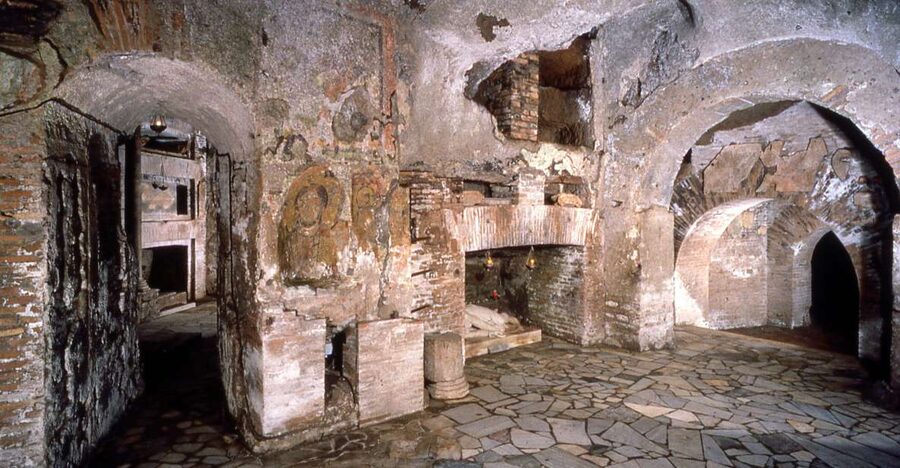
After the Crypt of the Popes, the tour continues to an adjoining room: the Crypt of St. Cecilia. Here you get one of the more vivid stories tied to the site.
You will learn about St. Cecilia, described as a Roman matron remembered for ensuring that many martyrs received a proper burial. For me, this is the moment where the catacombs stop feeling like a concept and start feeling like a lived network. Burial care was not random. It was organized, protected, and culturally significant.
This stop also balances the popes and bishops element. Instead of only focusing on institutional leadership, you hear about how a community supported burial of martyrs. It makes the underground spaces feel less like distant history and more like a response to real danger and real need.
Old Frescoes and Area I: What You Actually Look At Down There
Walls do most of the talking in catacombs, and this tour sets you up to notice them. You visit some of the oldest frescoes decorating the catacomb areas, and the guide explains what you are seeing and why it mattered.
These frescoes are not there just for decoration. They help you connect the visuals to belief, memory, and the way communities communicated identity in a place where life was fragile and privacy mattered. If you like art history, even a little, this is where the catacombs become more than a walk.
Then you reach Area I, where the guide points out the cubicles of the sacraments. Even if you are not religious, it is a strong architectural detail. It gives you something concrete to connect to early Christian ritual and commemoration. It also helps you understand the layout, so the underground spaces start to feel less like a maze.
What you should not expect
There are no promises of dramatic remains or skeletons. What you get is burial spaces, the stories behind them, and the preserved visuals. If you want gore or bones, this is not that kind of tour.
Practicalities: Shoes, Cold Air, No Photos, and Staying With the Group
This is an easy tour to plan badly, so let’s prevent that. Wear comfortable shoes and comfortable clothes. The biggest surprise is temperature. One review notes it can feel about 15 C down in the catacombs. A light jacket is a smart call, even if Rome feels warm above ground.
Other rules are straightforward:
- No photography inside the catacombs.
- No baby carriages.
- The experience is not suitable for people with mobility impairments or those with claustrophobia.
- You need to stay with the group since the visit is fully guided.
That no-photo rule is worth mentally accepting before you go. If you like saving visual memories, plan to take photos outside the site or rely on your notes, because the main indoor moments are off-limits.
Price and Logistics: Is $16 Worth Your Time?
At about $16 per person for entry plus a guided tour, this is one of the better value-priced historic add-ons in Rome. The reason is not just the cost. It is the structure: you are buying a ticket and paying for interpretation, not just access.
The timing also helps. 30 minutes is short enough that you can fit it between sightseeing blocks without losing an entire day. For many people, that is the sweet spot where the experience feels focused instead of exhausting.
There is, however, a logistics tradeoff. This site is outside the central core. Public transit works, but you should plan enough time to arrive early and return calmly. A few reviews recommend using a taxi for the way back, especially if you do not want to gamble on timing after a late visit.
Value math for different traveler types
- If you enjoy guided storytelling, $16 feels fair because the guide adds meaning to what would otherwise be confusing corridors.
- If you only want self-guided exploration, you might feel constrained by staying with the group.
- If you need mobility support or have claustrophobia, the tour is not a good fit regardless of price.
How to Get There From Termini (and the easiest bus strategy)
Getting to St. Callixtus is very doable once you pick the right route.
From Termini Station
- Take Metro A in the direction of Anagnina to San Giovanni.
- Transfer to bus 218 toward Ardeatina.
- Get off at the stop Fosse Ardeatine.
- You should find the entrance in front of you.
Alternative route
You can also go by Metro B and bus:
- Take Metro B toward Laurentina to Colosseo or Circo Massimo.
- Then take bus 118 toward Appia/Villa Dei Quintili to Catacombe di San Callisto.
My practical advice: give yourself extra time the first time you do this. A few people noted the meeting point can be easy to misread, and you do not want to sprint when you are supposed to be at the ticket office 10 minutes early.
Guide Quality: The Human Part of the Catacombs
This tour lives and dies by the guide, and the reviews provide lots of clues about what to expect. Many guides are praised for being engaging and respectful. Some even seem to bring extra depth, like archeological background or a strong ability to explain clearly.
Names that come up in feedback include Arishba, Comfort, Sam, Francesca, Don Sam, and Fr Peter. Across those comments, the common theme is that you are not just walked through. You get context and chances to ask questions at the end.
If you care about getting answers, this matters. Catacombs can raise questions about early Christian community life, burial practice, and why certain rooms were built the way they were. A good guide helps you leave with the basics connected.
Should You Book the Catacombs of St. Callixtus Tour?
Book it if you want a short, well-paced guided look at one of Rome’s key early Christian burial sites, with the biggest highlight being the Crypt of the Popes. At around $16 for entry plus a guide, it is a good value for what you learn and how much time you save.
Skip it if you have claustrophobia, limited mobility, or you strongly dislike cold indoor temperatures and controlled group rules. Also, if you are expecting skeletons or a performance-style tour, set expectations now. This is history and burial tradition, not a spooky spectacle.
If you want one catacomb visit that is manageable in time and focused on meaning, this is a smart pick for your Rome plan.
FAQ
How long is the Catacombs of St. Callixtus guided tour?
The tour duration is listed as 30 minutes.
What is included in the ticket price?
Your booking includes the Catacombs of Saint Callixtus entry ticket and a guided tour.
Is the ticket line skipped?
Yes, the activity includes skip the ticket line.
Where do I need to go for the meeting point?
Go directly to the ticket office of the Catacomb and show your voucher at least 10 minutes before the scheduled tour.
How do I get there from Termini Station?
Take Metro A toward Anagnina to San Giovanni, then bus 218 toward Ardeatina to the stop Fosse Ardeatine. The entrance should be in front of you.
Is photography allowed inside the catacombs?
No, photography is not allowed inside.
What should I wear or bring?
Wear comfortable shoes and comfortable clothes. The site is underground, so a light layer can help.
Is the tour suitable for everyone?
It is not suitable for people with mobility impairments or for people with claustrophobia. Baby carriages are also not allowed.
More Tickets in Rome


More Tours in Rome


More Tour Reviews in Rome
Not for you? Here's more nearby things to do in Rome we have reviewed










Tickets, compared.
 ★ 4.5Vatican: Museums & Sistine Chapel Entrance TicketFrom $38144,003 reviews
 ★ 4.0Hop-On Hop-Off Panoramic Open Bus Ticket 3 Circuits x 1From $2015,405 reviews
 ★ 4.4Vatican Museums & Sistine Chapel Skip-the-Line Entry TicketFrom $4313,838 reviews
 ★ 4.2Vatican Museums & Sistine Chapel Skip-The-Line TicketFrom $4111,708 reviews
 ★ 4.3Vatican Museums & Sistine Chapel Skip-the-Ticket-Line TourFrom $13010,486 reviews
 ★ 4.2St. Peter’s Basilica & Dome Entry Ticket & Audio TourFrom $177,537 reviews
 ★ 4.2Vatican: Vatican Museums Sistine Chapel Skip-the-Line TicketFrom $716,682 reviews
 ★ 4.1Vatican & Sistine Chapel Ticket with Optional Audio GuideFrom $465,405 reviews