
Reviewed · WINE TOURS
Rome: Private Guided Golf Cart Tour with Gelato or Wine
Rome in a golf cart sounds ridiculous, then it works.
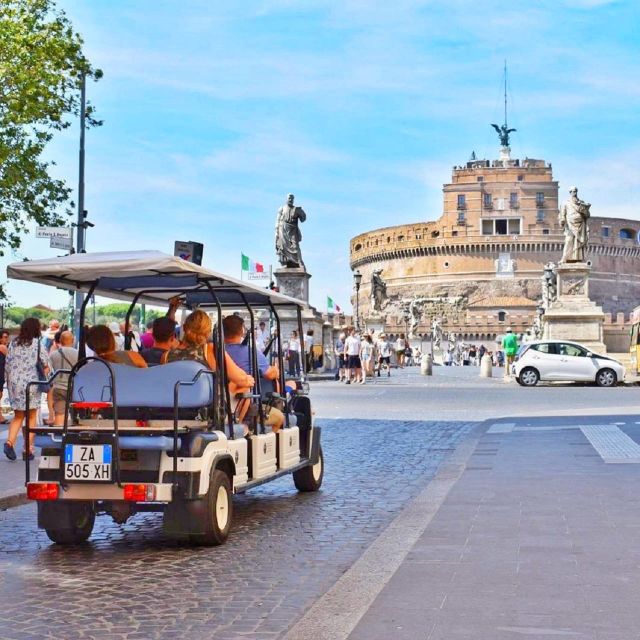
You get a private guided ride past Rome’s signature sights like the Colosseum and Trevi Fountain, with time to actually enjoy them instead of just surviving the sidewalk. I also love that the tour builds in a real food moment, either Roman gelato (made with traditional recipes since 1947) or a wine tasting plus a snack.
The big consideration is that this is an open-air sightseeing experience, with stops focused on what you can see from the cart and brief viewpoints, like the Colosseum and Roman Forum from the outside. Also, it is not a good match for everyone, since the tour is listed as not suitable for pregnant women or people with back problems, and large bags are not allowed.
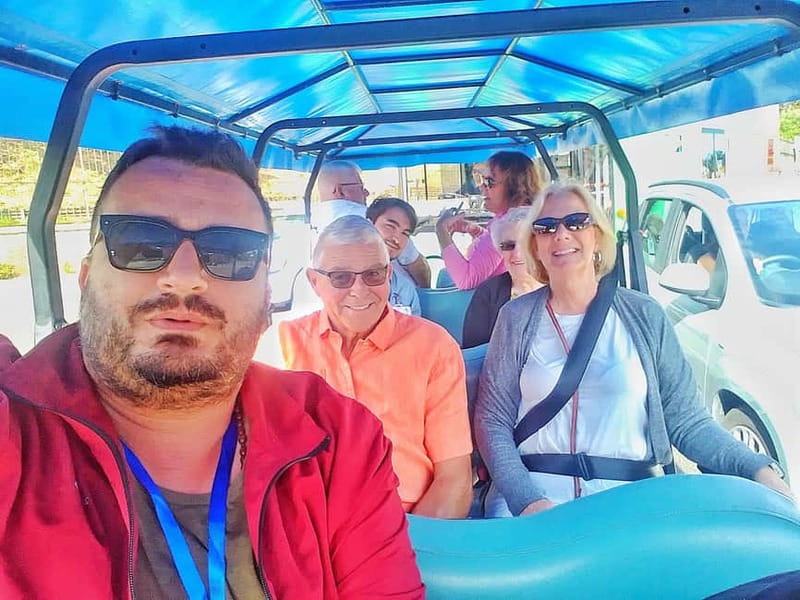
If you like having a local set the pace and steer you away from the usual tourist shuffle, this one is built for that. Guides in this program, like Stephano (Steven), Christian, Matteo, Simone, Allessio, and Cristian, are repeatedly praised for making the day feel personal, funny, and efficient without racing you.
Key things to know before you go
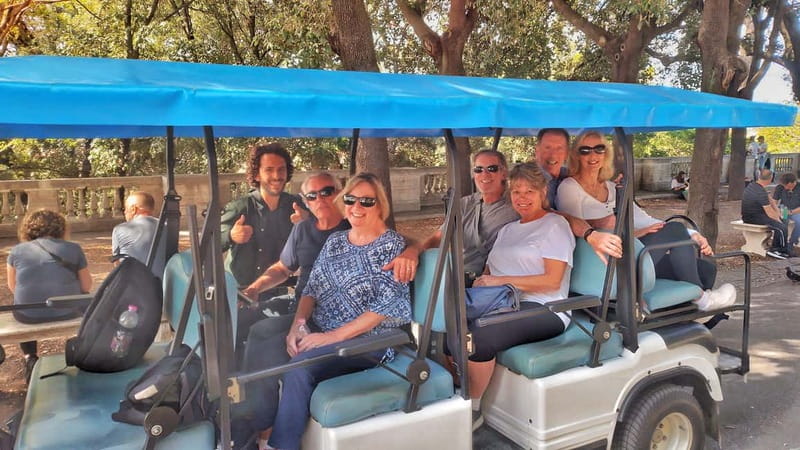
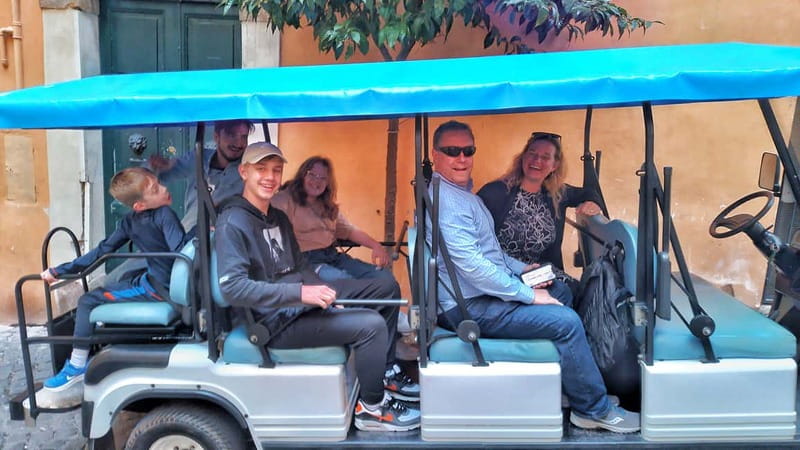
- Private group comfort: Only your party rides together, with the guide running the show.
- Less walking, more Rome: The cart helps you cover huge territory without turning your day into an ankle test.
- Old-school gelato (or wine): Gelato uses recipes tied to 1947, plus there is a snack; wine is the alternative.
- Route flexibility: Guides can adjust the day to your pace and interests.
- Small-street access: You can reach places bigger vehicles cannot.
- Food and restaurant hints: You get suggestions for where locals eat, not just where crowds pile up.
Why a golf cart is a smart way to see Rome
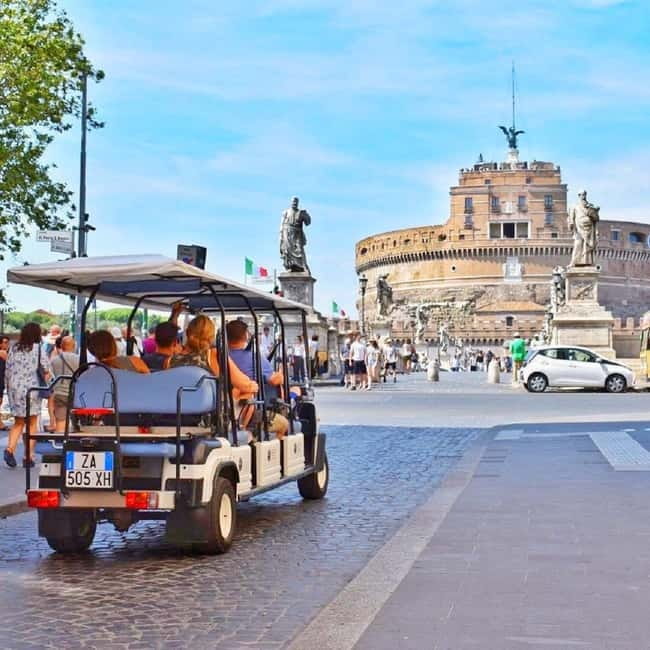
Rome looks best when you slow down just enough to notice details. The problem is that Roman days can turn into long, hot marches between attractions, especially when you are trying to cover a lot in a short visit. A golf cart solves that by turning most transit into an easy roll with guiding built in.
The other win is that Rome is not designed for big vehicles everywhere. A compact cart can thread through areas where buses and larger cars struggle, which means you spend less time stuck and more time seeing. If your goal is to get bearings fast and decide what you want to return to later, this format is efficient in a way that still feels like sightseeing.
You can also read our reviews of more guided tours in Rome
Piazza della Repubblica, the easy meeting point that sets you up
Your tour starts at Piazza della Repubblica, 48, meeting your guide in front of the Anantara Palazzo Hotel Naidi. This is a practical location because it sits in a central part of Rome, and it is easy to reconnect afterward.
You also end back at the same meeting point. That matters more than it sounds. You avoid the stress of coordinating a faraway drop-off, and you can plan the rest of your day with less guesswork.
Colosseum, Trevi, Pantheon: the hits you want without the exhaustion
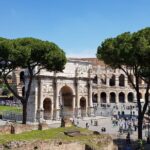
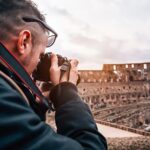
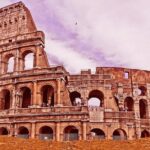
The opening stops focus on getting the greatest-spotted landmarks into your camera and your brain quickly. You will see the Colosseum (outside) and the Trevi Fountain, plus the Pantheon in the same early sweep.
Here is why that works:
- Colosseum first gives you context fast. You see the scale of the amphitheater area, then later everything else feels more connected.
- Trevi is one of those places you want to experience visually, even if you do not spend hours there. With the cart, you can position yourselves and keep the day moving.
- Pantheon is a visual anchor. Even when you are not going in, seeing it within the flow of the route helps you remember it, not just photograph it.
A small drawback: since this is built around a cart route, you should not expect a deep, ticket-by-ticket focus at every monument. Think of it as a guided overview with photo and viewpoint stops, not a replacement for timed-entry museum days.
From Suburra to Orange Garden: Rome’s texture between the big monuments
After the major icons, the route shifts toward the city’s lived-in layers. You will pass through Suburra, see the Orange Garden, and get a view toward Trajan’s Column.
Suburra is especially interesting because it represents Roman street life and neighborhoods rather than just empire monuments. Even if you only catch fragments from the cart route, the guide’s stories can help you place where daily life would have happened around all that stone.
The Orange Garden stop is the kind of break that turns a history route into an actual Roman afternoon. You get a change of viewpoint, and it is a good moment to breathe and take photos without the feeling that you are constantly moving.
Orange Garden is also a clue that your guide is not only running a checklist. The best versions of this tour use the cart to position you for good sightlines, not only for famous names.
Roman Forum outside, Venice Square, Marcellus Theater, and the Insula concept
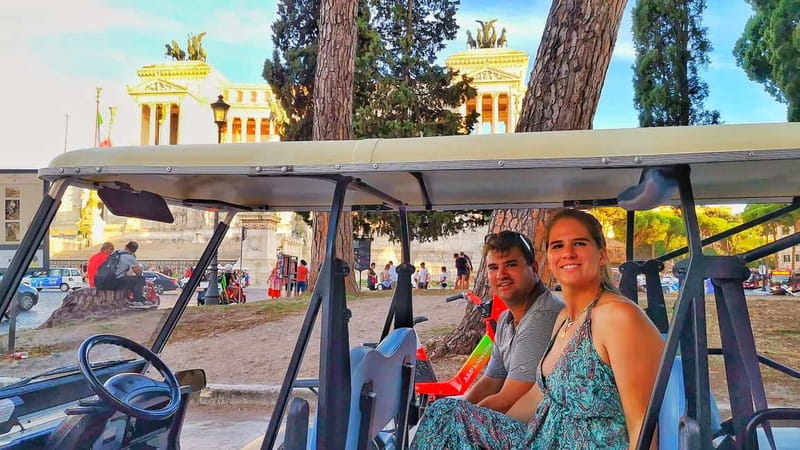
The itinerary includes Venice Square, Marcellus Theater, and the Insula (the first condominium in the world), plus the Roman Forum (outside). Those last few are where your guide can make the tour feel more real.
Why I like this cluster:
- Roman Forum areas are best understood when you connect them to what you see around them. Even from the outside, it becomes easier to picture how the spaces would have flowed.
- Marcellus Theater adds texture. It gives you a sense of how entertainment and civic life overlapped in ancient Rome.
- The Insula is a great brain hook. The idea of early apartment-style buildings helps you think beyond emperors and monuments and toward everyday housing.
Practical note: outside viewpoints can be excellent for photos, but they are not the same as going inside with time to linger. If you want museum-style immersion, plan to pair this cart tour with at least one separate ticketed visit later.
You can also read our reviews of more private tours in Rome

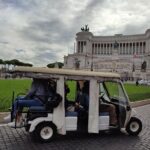
Aventine Hill, Mouth of Truth, and Saint Mary Major: closing with charm and meaning
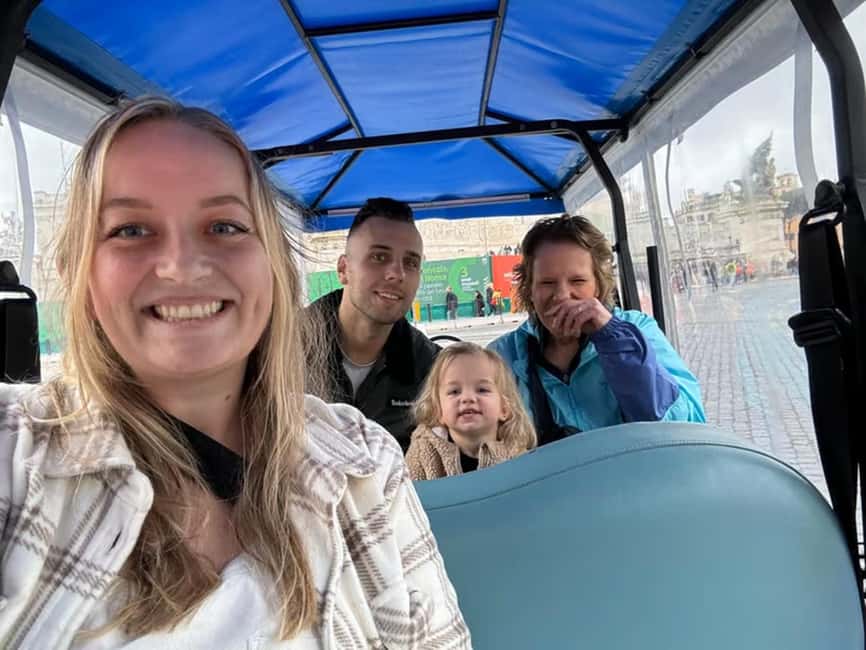
In the back half, the route leans toward two things Rome does well: dramatic viewpoints and iconic cultural moments.
You will visit Aventin Hill, the Mouth of Truth, and the Papal Basilica of Saint Mary Major. This is a satisfying sequence because it shifts from ancient civic spaces to places that feel more personal and human, even when they are famous.
- Aventine Hill works as a breather after the dense concentration of ruins and grand landmarks. It also gives you the feeling of stepping into a quieter Rome.
- The Mouth of Truth is one of those sites people recognize instantly. Even if you treat it as a quick stop, it is memorable because it has that pop-culture visibility plus real history behind it.
- Saint Mary Major is a strong finale because it feels like a living church, not just an outdoor photo set. The basilica is the kind of stop that makes your day feel complete.
If you are the type who likes your sightseeing to end with atmosphere rather than another crowd magnet, this ending will likely feel right.
Gelato since 1947, or wine plus a snack: the food stop that makes it worth it
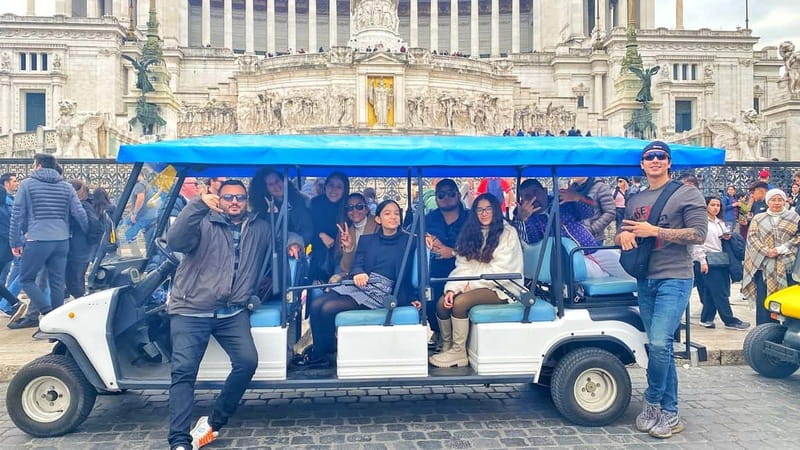
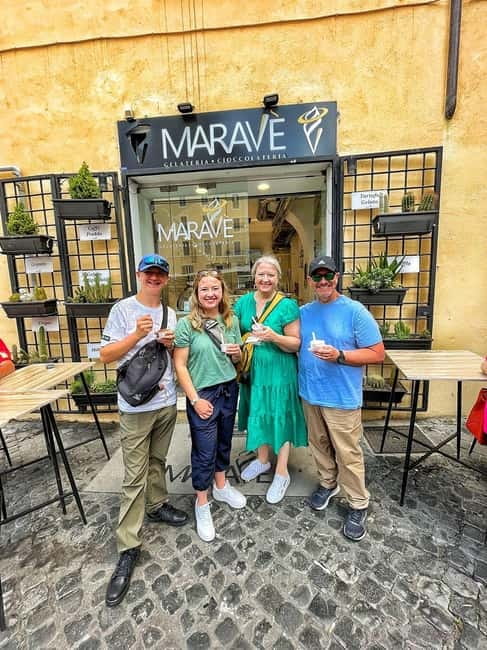
You get a gelato or wine and snack included. The gelato option is tied to Roman gelato tradition since 1947, made with traditional recipes and fine ingredients.
This is not just a random sweet break. A planned tasting does two smart things:
- It interrupts the constant sight overload, so the day resets.
- It gives you a taste of Roman everyday culture, not only monument culture.
If you choose wine, you are also buying yourself a slower pacing moment at the end of the ride. Either way, you leave with a memory that is not only visual.
A practical tip: if you have a sensitive stomach or you tend to get tired quickly, go for gelato and snack rather than heavier wine. You will still feel like you ate well, and you will keep energy for the rest of Rome.
Guides and the art of tailoring: why this tour gets 4.9 stars
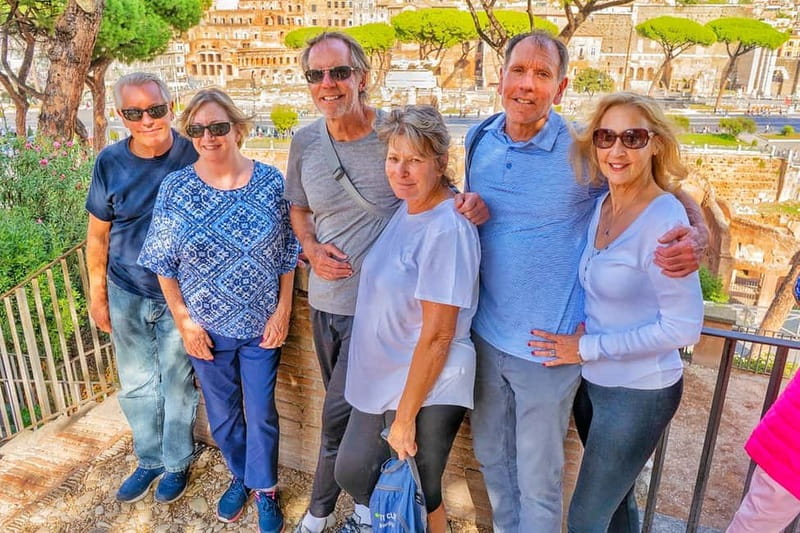
The average rating around this experience is extremely high, and the reason shows in the details. Guides like Christian and Chris are praised for being adaptable and making the day feel personal. Others, like Matteo and Stefano (Steven), are repeatedly mentioned for local insights and for steering the cart to the streets you would not easily find on your own.
This matters for value. A cart without guidance becomes a fun ride, but it does not give you the meaning. With a good guide, the same stops become stories, and you leave with a short list of what to revisit next.
Guides also tend to point you toward places where real Romans eat, and that often means restaurant and food-market suggestions that go beyond standard souvenir stops. Even if your day only includes the included tasting, the recommendations can shape your evening plans.
Combo option: Golf cart plus Vatican Museums, and when to choose it
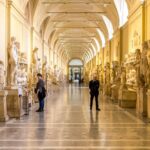
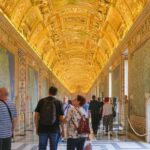
This program lists an option for a Combo Golf Cart + Vatican Museums tour, with a Golf Cart + Vatican Museums format available for travelers who request it. There is also a Sunset style option.
When does a combo make sense?
- If you have limited time and you want a single day that covers two major Rome priorities.
- If you already know you want Vatican Museums but you also want the cart to handle the in-between sightseeing.
One caution: Vatican days involve longer ticket and crowd dynamics. If you are booking a combo, give yourself a little flexibility so you are not trying to squeeze Vatican timing and rest-of-day plans into a too-tight schedule.
Price and value: what you really pay for at about $103 per person
At about $103.38 per person, you are paying for more than transport. You are buying:
- a live guide,
- golf cart transportation,
- gelato or wine plus snack,
- and a souvenir.
So the value is partly logistical. If you are spending energy walking between far-apart zones, you effectively pay twice, once in time and once in fatigue. The cart replaces a lot of that walking with a guided, comfortable route.
It is also value for decision-making. If you are in Rome for a short trip, this tour helps you map where you want to return. That can save money and time later when you plan your museum tickets and your second-day priorities.
Where the price can feel less worth it is if you already love wandering slowly and you have plenty of time to plan self-guided routes. In that case, you might spend less on tickets and skip the guide. But for most people with limited days, this gives a lot of structure.
Who this tour fits best
I think this works especially well for:
- First-timers who want to see the major monuments quickly, then decide what to explore deeper.
- Groups who do not want a bus-rush, but still want expert guidance.
- Travelers who want comfort without giving up the romance of Rome street scenes.
- People with limited mobility who still want to get a sweeping look, since the cart reduces long walking.
It is not a great match if:
- You want fully guided museum-level stops at every landmark.
- You cannot do the limited walking that still comes with short sightseeing pauses.
- You are pregnant or have back problems, since the tour is listed as not suitable.
Should you book this golf cart tour with gelato or wine?
Yes, if your priority is efficient, guided Rome with comfort and you want a built-in Roman food break. The standout strength here is the combination of private guiding, the ability to reach more places than a typical big-vehicle route, and a gelato or wine moment that does not feel tacked on.
Skip it or reconsider if you are chasing ticketed, inside-the-monument time at every stop. This tour is best treated as the foundation day or the overview day, then you go back for the deeper experiences that need longer time.
If you book, do one smart thing: think of the day as a guided preview. Let the cart show you where Rome grabs your attention, then plan your next visit around that list. That is when this kind of tour pays off the most.
FAQ
How long is the Rome golf cart tour?
The duration is listed as 2 to 6 hours, and you should check availability to see starting times.
What’s included in the tour price?
It includes a guide, transportation by golf cart, gelato or wine with a snack, and a souvenir.
Is this tour private?
It offers private or small groups available, and the private version is described as only your group participating.
What languages are the guides?
The live guide is available in Spanish, English, Italian, and Russian.
Where do we meet the guide?
Meet your guide in front of the Anantara Palazzo Hotel Naidi, at Piazza della Repubblica, 48.
Where does the tour end?
The activity ends back at the meeting point, Piazza della Repubblica, 48.
Is luggage allowed?
No. Luggage or large bags are not allowed.
Is the tour suitable for everyone?
It is listed as not suitable for pregnant women and not suitable for people with back problems.
What are the cancellation rules?
Free cancellation is available up to 24 hours in advance for a full refund.
More Guided Tours in Rome
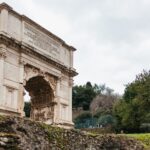
More Tours in Rome

More Tour Reviews in Rome
Not for you? Here's more nearby things to do in Rome we have reviewed






Wine Tours, compared.
 ★ 4.9Pasta & Tiramisu Class with Fine Wine by the VaticanFrom $414,852 reviews
 ★ 4.9Pasta Making Class with Wine, Limoncello, and DessertFrom $483,177 reviews
 ★ 4.8Fettuccine and Tiramisu Cooking Class with WineFrom $672,013 reviews
 ★ 4.8Food Tour with Unlimited Food and Barolo WineFrom $861,883 reviews
 ★ 4.9E-Bike Night Tour with Food and Wine TastingFrom $891,131 reviews
 ★ 4.6From Rome: Bagnoregio & Orvieto Day Trip with Wines & LunchFrom $931,075 reviews
 ★ 4.9Trastevere Guided Food and Wine Tour with 20+ TastingsFrom $1461,022 reviews
 ★ 4.9Pasta Making with Wine Tasting and Dinner in FrascatiFrom $35979 reviews
Browse the lists this tour appears in