
Reviewed · GUIDED
Roamin’ Around Rome Guided Tour
Rome looks different at night. This Roamin’ Around Rome Guided Tour is a 2.5-hour night walk where iconic landmarks glow under the sky, plus you get smart commentary along the way. You’ll cover a lot of ground in a focused loop through Rome’s historic heart, with stops that mix famous names and lesser-seen corners.
Two things I really like are how the route balances big stops with quieter sights, and how the guides keep it moving and understandable. I especially enjoy the chance to learn about places like Palazzo Venezia and Trajan’s Column, then switch gears to spots such as Galleria Sciarra and the underground archaeological area called Vicus Caprarius.
One drawback to plan for is the walking. This tour is not designed for people with mobility impairments, and even if you’re fine on your feet, you’ll want comfortable walking shoes because the night still means steady steps, plus crowding near popular landmarks like Trevi.
Key highlights you should know before you go
- Start by Fontana della Pigna: You meet the guide next to it, holding a branded company flag.
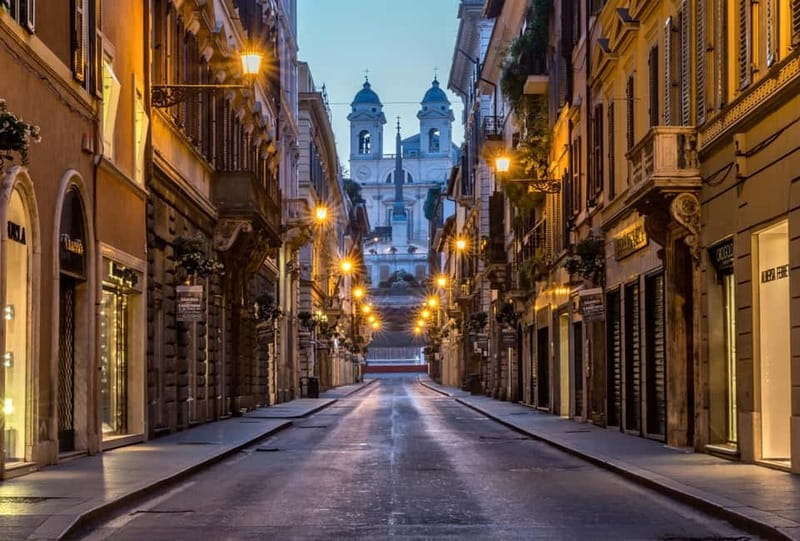
- A guided night loop: You’ll see major landmarks lit up, including Piazza Navona, the Pantheon area, Trevi, and a final Colosseum view.
- Palazzo Venezia and Trajan’s Column: You don’t just pass by, you learn what you’re looking at.
- Galleria Sciarra and Vicus Caprarius: Frescoes and an underground archaeological site add variety beyond the headline sights.
- Church time at St. Ignazio di Loyola: You step inside, not just admire from afar.
- Trevi coin moment: Toss a coin into Fontana di Trevi for good luck and keep your eyes on your timing.
How Rome’s night glow changes what you notice
A Rome day tour can blur together fast. At night, the city’s pace feels calmer, and the details pop more clearly. On this walking tour, you get a guided route that leans into that nighttime magic, so you can actually look at the buildings instead of only snapping photos and moving on.
You also get a practical mix: the recognizable names (Pantheon, Trevi, Colosseum) sit alongside surprises like the fresco-filled corridors of Galleria Sciarra and the underground feel of Vicus Caprarius. That combo matters because it keeps the evening from turning into a checklist. You leave with a clearer sense of how Rome’s layers connect, even when you’re just walking past them.
You can also read our reviews of more guided tours in Rome



Meeting at Fontana della Pigna: easy start, clear orientation
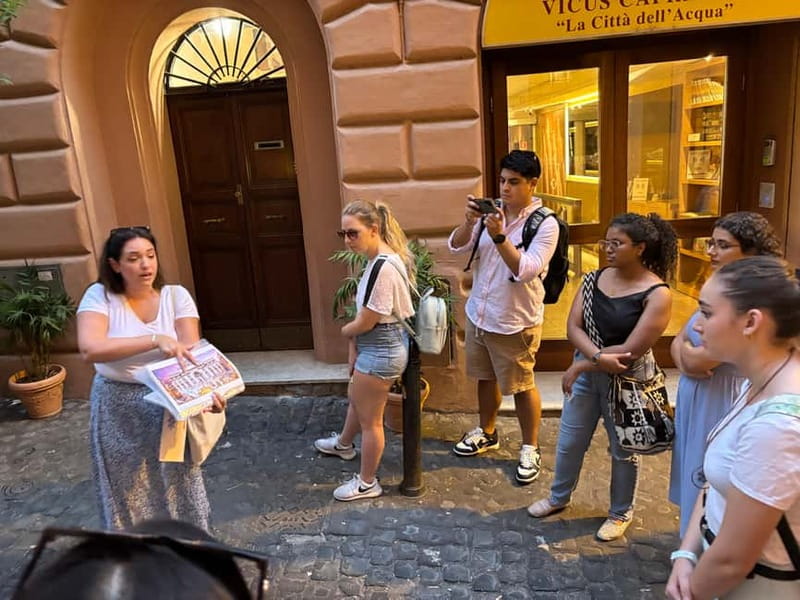
The meeting point is simple to find once you know what to look for. The guide will be next to Fontana della Pigna, holding a branded company flag. This is one of those details that makes the whole experience smoother, because you start already oriented, rather than spending your first 15 minutes wondering where everyone is gathering.
The tour ends back at the meeting point, so you do not need to solve transportation puzzles at the end. That is a real convenience for a night activity, when your energy is running lower and you still want a clean finish.
If you want less stress, arrive a few minutes early, especially if you’re juggling a second language (the tour runs in English and Spanish) or coordinating with a friend.
Piazza Navona at night, then on to Palazzo Venezia and Trajan’s Column
Your evening begins with a focus on Rome’s classic atmosphere. Expect Piazza Navona lit up at night, with the square’s shape and details standing out in the evening light. This matters because Piazza Navona is one of those places that can feel obvious in daylight, but at night it turns into a lived-in setting, not just a stop on your map.
From there, you’ll move toward Palazzo Venezia, where you’ll learn about the building’s history. Passing through this area with a guide helps because the structure is visually strong even if you do not know what to notice. Having someone explain what you are seeing turns a photo stop into a meaningful moment.
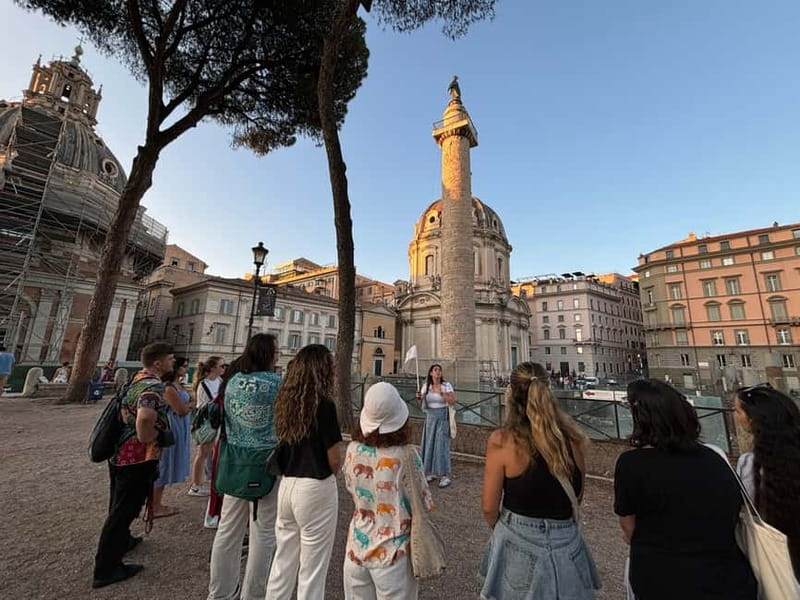
Then you’ll come to Trajan’s Column, described as a monument to Rome’s military triumphs. Again, you are not only looking at a tall landmark. You’re learning enough to make it stick in your mind once you’re done with the walk.
Pantheon in sight: why the night viewing feels different
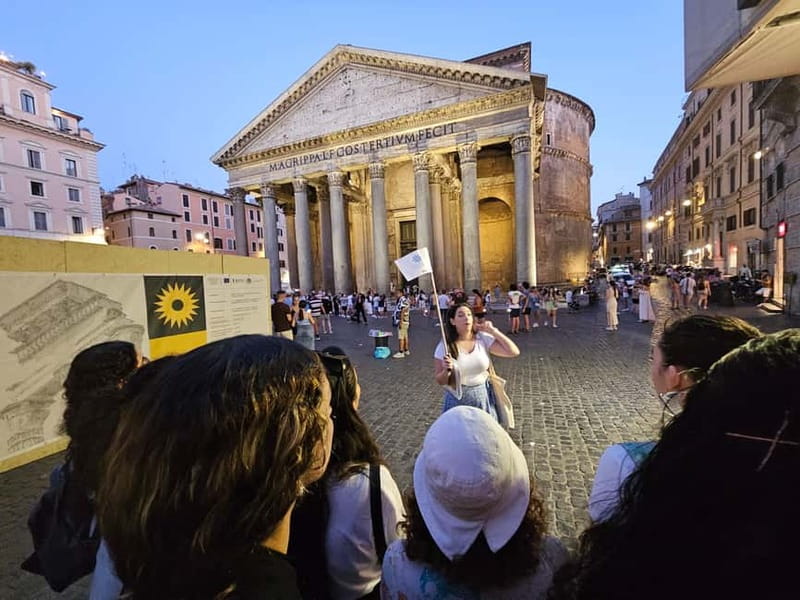
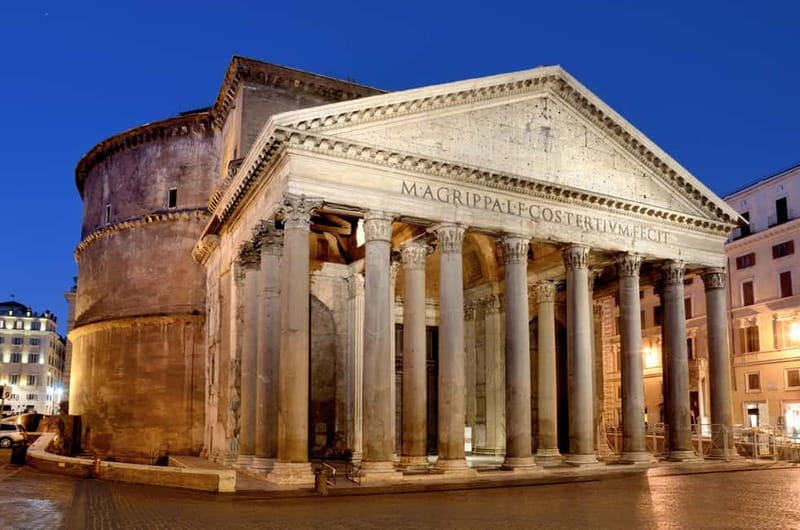
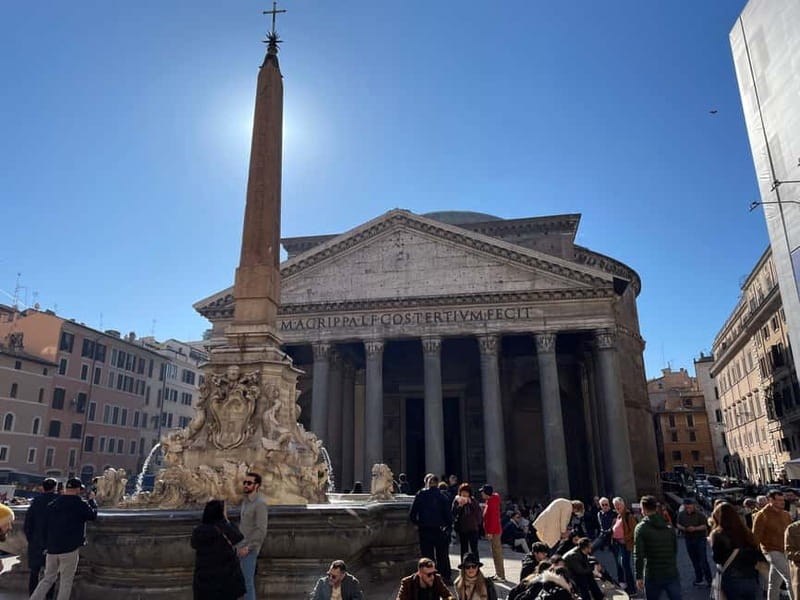
You’ll pass by The Pantheon, which the tour highlights as one of the best-preserved monuments from Rome’s imperial era. Even if you’ve seen pictures, the in-person experience at night can feel more focused. The light helps you see the mass of the building without the midday crush taking over your attention.
The bigger value here is the pacing. This tour does not try to stop everywhere for long periods. You get a sequence of landmark views, with commentary to connect the dots. For first-time visitors, it’s one of the easiest ways to get your bearings fast.
One practical note: the Pantheon area is popular, so keep your camera ready and expect some pedestrian flow. You can still enjoy it, but you’ll want to stay aware of where you stand, especially if you’re taking photos.
Galleria Sciarra and Vicus Caprarius: the evening’s contrast stops
This is where the tour becomes more memorable than a straight-through highlights walk. You’ll get a look at Galleria Sciarra, with its stunning frescoes. Instead of only seeing the famous outdoor landmarks, you’ll spend time looking at artwork and spaces that many visitors miss because they are not on the main postcard route.
Then comes Vicus Caprarius, an underground archaeological site. The underground setting changes your perspective in a big way. Rome is not only about surfaces and silhouettes, it’s also about layers. Seeing an underground Roman site during a night tour is an effective switch: the evening is already about atmosphere, and this adds a physical sense of how the city sits over itself.
If you like variety, these stops are the reason this tour often earns strong marks. You come away with more than just the major hits.





St. Ignazio di Loyola and the Altar of the Fatherland viewpoint
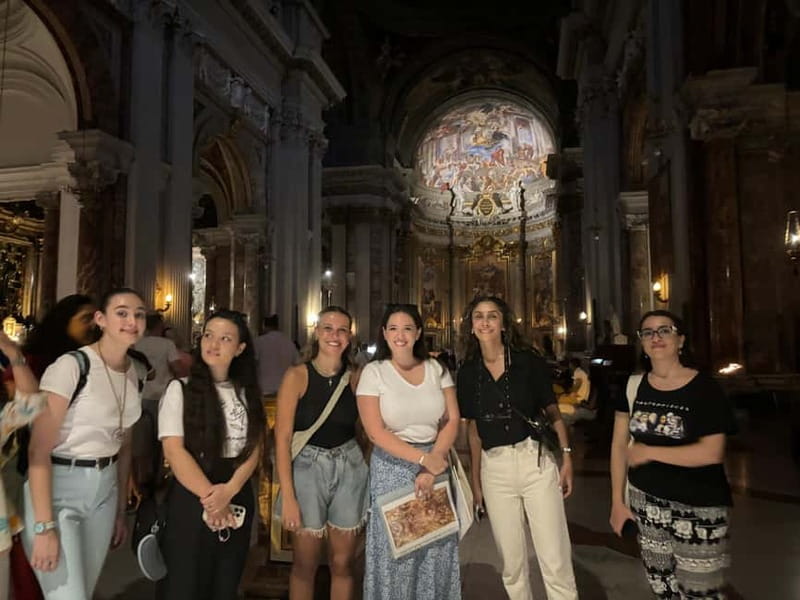
At some point in the route, you’ll step inside St. Ignazio di Loyola, which the tour includes as one of the remarkable churches you can actually enter. That is a meaningful difference from pass-by only sightseeing. When you step into a church, you naturally slow down, and that helps the rest of the walk feel less rushed.
Later, you’ll enjoy panoramic views from the Altar of the Fatherland. Even if you’re tired from walking, viewpoint moments help reset your brain. From there, you can start placing what you’ve seen into a bigger mental map of central Rome.
This is also where a guide earns their fee. When you’re standing at a viewpoint, it’s easy to think you’re just looking around. A good guide helps you connect what you’ve walked past to what you can see from up high.
Trevi Fountain coin toss: the iconic moment, plus how to handle the crowds
No Rome night tour feels complete without Fontana di Trevi. This tour gives you the included moment to toss a coin into the fountain for good luck and, as the highlight puts it, to ensure your return to the Eternal City. It’s a fun tradition, and it’s also practical: it’s a well-known stop where you can synchronize the group and take photos without guesswork.
The real consideration is crowds. Trevi is popular even at night, so expect density around the fountain area. The best move is to keep your position sensible. Do not block others for your shot, and keep your belongings secure, especially in tight spots.
If you care about photos, go slow with your timing. You’ll have the coin moment, then you can take your pictures, and then the guide will move you on. The tour stays tight for a reason, so try not to linger too long.
The Colosseum at the end: a night view that helps tomorrow make sense
The final payoff is the Colosseum, glowing against the night sky. This matters because it’s a classic Rome moment, but placed at the end of the walk it becomes more than a photo. It acts like a finish-line landmark, so the rest of your trip tomorrow feels easier.
When you finish a night tour near the Colosseum area, you’re not stuck wondering where things are. You’ve already connected key sights through an actual walking route. That makes daytime exploring next feel less chaotic.
Also, ending back at the same meeting point helps you transition out cleanly. You can grab a late snack nearby, plan your next stop, or just head back without rerouting mid-evening.
Price and value: what $35 gets you in real terms
This tour costs $35 per person and runs about 2.5 hours. That’s a solid value for a guided night walk that covers multiple major monuments, plus both an art-filled indoor corridor and an underground archaeological stop.
Here’s what you should understand about the value piece:
- You’re paying for a professional guide and a structured walking route through the historic core.
- The tour includes the guided experience, but it does not include entrance fees, and it does not include food and drinks.
- There is no hotel pickup or drop-off, so you’re fully responsible for getting to the meeting point and getting yourself home afterward.
So the way you should think about the budget is: the $35 is for guidance and time, while your extra spending is for anything you choose to pay for onsite and whatever you eat or drink on your own. If you keep expectations realistic, you get good value for the amount of Rome you’ll see in one evening.
The tour also has a strong overall rating, 4.7 out of 5 across 15 reviews, which lines up with the big themes people praise: the guide’s friendliness, clarity, and the social aspect of walking with others.
Guides and the human factor: Pillar and Furio stand out
A night walk lives or dies by the guide. The standout names that show up in positive feedback include Pillar and Furio, both described as kind and helpful, with a strong ability to explain the stops you’re passing.
You feel that in how you move. Instead of just staring at monuments, you understand what they are and why they matter in the bigger Rome picture. That’s what turns a good route into a great evening.
Also, the format naturally includes other people, and that helps if you like meeting fellow walkers. It’s not a private tour vibe, so you’ll share the pacing and the photo moments with the group.
What to bring and how to dress for a comfortable night walk
This is a walking tour, so what you bring matters. Wear comfortable walking shoes. Rome can be hot in summer and cool in winter, so dress for the weather you’ll face after sunset.
Bring a water bottle. Even on a night tour, you can still get dehydrated, especially if you’re walking for 2.5 hours and stopping often for views and photos.
You’ll also want a passport or ID card. The tour notes that a copy is accepted, which is useful if you’re traveling light.
Photography is allowed as long as you’re respectful of people and private property. Audio recording is not allowed, and alcohol and drugs are not allowed.
Who this tour suits best, and who should skip it
This tour is a strong choice if you want Rome’s major sights in a single evening, plus you still want some variety beyond the biggest names. It also works well if you like being guided through the story of what you see, rather than wandering without context.
It’s not suitable for people with mobility impairments or for wheelchair users. Since the tour is a walking route that includes an underground archaeological stop, it makes sense that it would be difficult for anyone who needs step-free access.
If you’re traveling as a couple or solo, you’ll still get the structured flow. If you prefer private attention, this might feel a little group-focused, but that’s the tradeoff for the price and the set route.
Should you book Roamin’ Around Rome Guided Tour?
Book it if you want an efficient, well-guided Rome night walk that hits the essentials, including Piazza Navona, the Pantheon area, Trevi, and an end view of the Colosseum, while adding two standout contrasts: Galleria Sciarra and Vicus Caprarius.
Skip it if you hate crowds or you need a low-walking plan. Also skip if you require wheelchair-friendly access, since the tour is not suitable for wheelchair users.
My rule of thumb: if you’ll feel energized by an evening of walking plus a mix of top sights and less common stops, this is a smart way to spend your time in Rome.
FAQ
How long is the Roamin’ Around Rome Guided Tour?
The tour duration is 2.5 hours.
What is the starting location for the tour?
You meet the guide next to Fontana della Pigna, holding a branded company flag.
Does the tour end at the same place where it starts?
Yes, the tour ends back at the meeting point.
How much does the tour cost?
The price is $35 per person.
Are entrance fees included for the attractions?
No. Entrance fees are not included to attractions.
Does the tour include food or drinks?
No. Food and drinks are not included.
What languages is the live guide available in?
The live tour guide is available in English and Spanish.
Is there hotel pickup or drop-off?
No. Hotel pickup and drop-off are not included.
Is the tour suitable for wheelchair users or people with mobility impairments?
No. It is not suitable for people with mobility impairments or wheelchair users.
Can I record audio during the tour?
No. Audio recording is not allowed.
What should I bring to the tour?
Bring a passport or ID card. A copy is accepted.
More Guided Tours in Rome
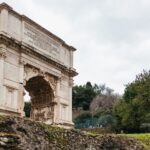
More Tours in Rome

More Tour Reviews in Rome
Not for you? Here's more nearby things to do in Rome we have reviewed












Guided, compared.
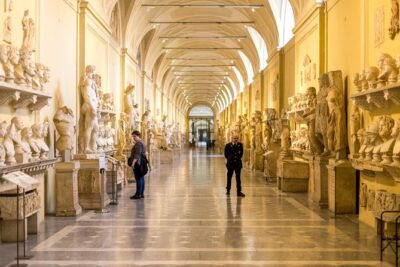 ★ 4.5Vatican Museums, Sistine Chapel & St Peter’s Basilica Guided TourFrom $2239,149 reviews
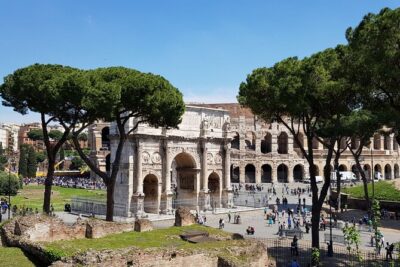 ★ 4.8Colosseum, Palatine Hill and Roman Forum Guided TourFrom $5232,814 reviews
 ★ 4.7Guided Tour of Colosseum, Roman Forum & Palatine HillFrom $5527,897 reviews
 ★ 4.2Colosseum & Forum with Audio Guide App -Optional ArenaFrom $4124,770 reviews
 ★ 4.5Colosseum, Roman Forum and Palatine Hill Guided TourFrom $5923,903 reviews
 ★ 4.6Colosseum, Palatine Hill & Roman Forum Guided TourFrom $5112,703 reviews
Vatican Museums & Sistine Chapel Guided TourFrom $11812,117 reviews
 ★ 4.6Colosseum Arena, Palatine Hill & Forum Guided TourFrom $7310,584 reviews