
Reviewed · COOKING CLASSES
Rome: Five Shapes of Pasta Cooking Class in Ancient Tavern
Five shapes of pasta. One shared table in Rome. You get hands-on skill in a real old osteria turned cooking school, where you learn to make dough, roll it thin, and shape classics like ravioli and tortellini. I like how practical it is, especially the wooden rolling-pin technique you practice before you start cutting and filling.
My other favorite part is the full meal built around your work, with two different sauces, plus prosecco, cheese, and a proper dessert finish with an express tiramisu. The only real consideration: it is about learning and cooking, not a sightseeing sprint, and it is not suitable for people with mobility impairments.
Key Highlights Worth Booking for
- Five pasta shapes from scratch: ravioli, agnolotti del plin, tortellini, cappelletti, and fettuccine
- Rolling thin dough the right way using a wooden pin and hands-on coaching
- Two Italian sauces made and explained during the class
- Small group energy with limited spots (so you actually get help)
- Chef-led fun with names learned and steady, friendly troubleshooting
- Prosecco, cheese, and full meal so you eat what you make
Finding an Old-Osteria Kitchen, Then Getting Your Hands Dirty
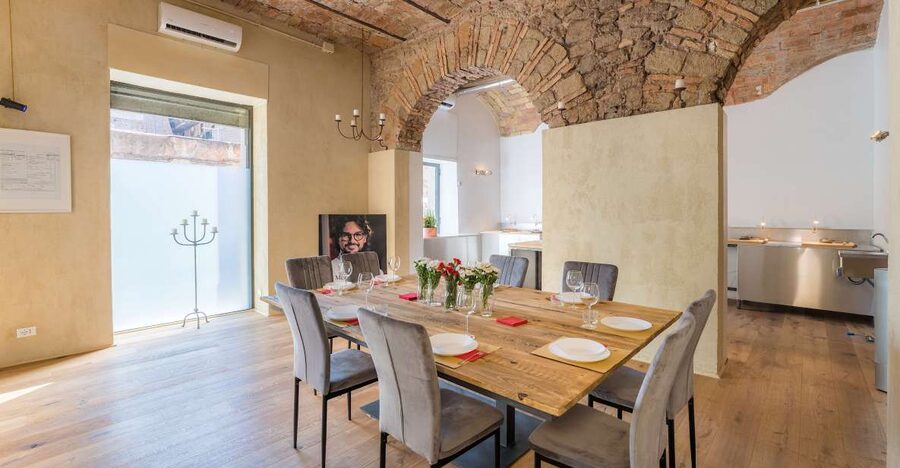
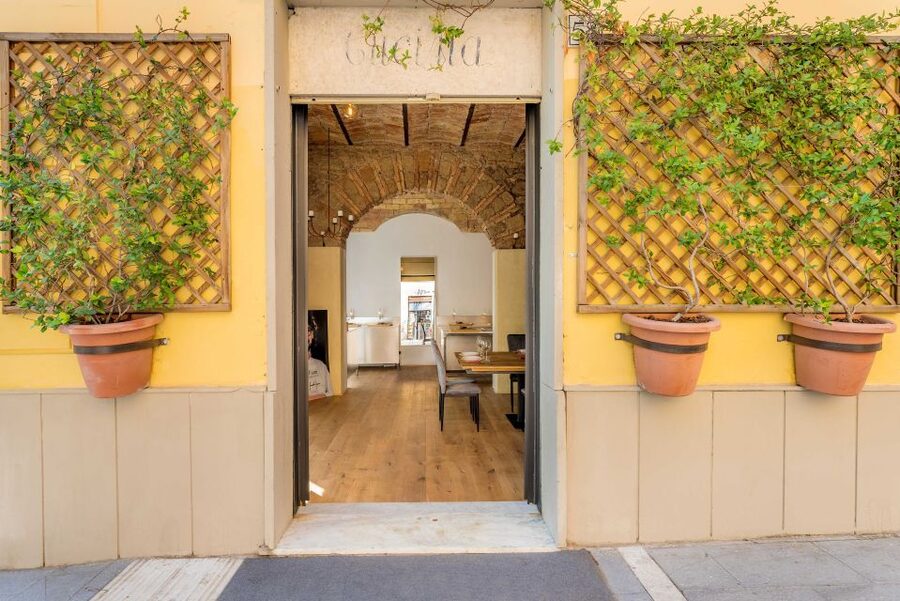
Rome has a way of making food feel like a neighborhood event, not a tourist checkbox. This class starts at an Old Osteria called Cucina, with the original osteria sign in marble right above the entrance. It is a simple setup, but that moment matters, because you walk into a room that already feels like part of the city’s rhythm.
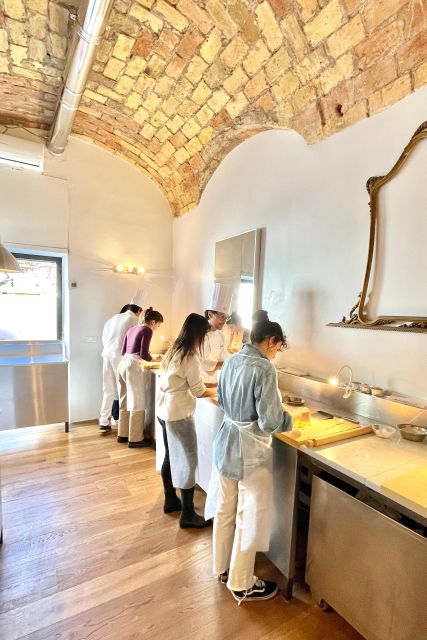
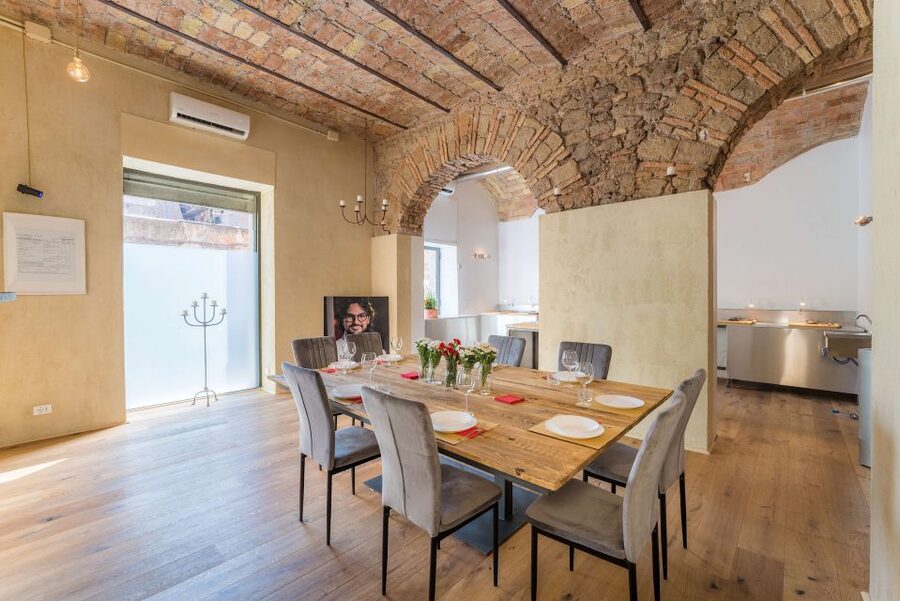
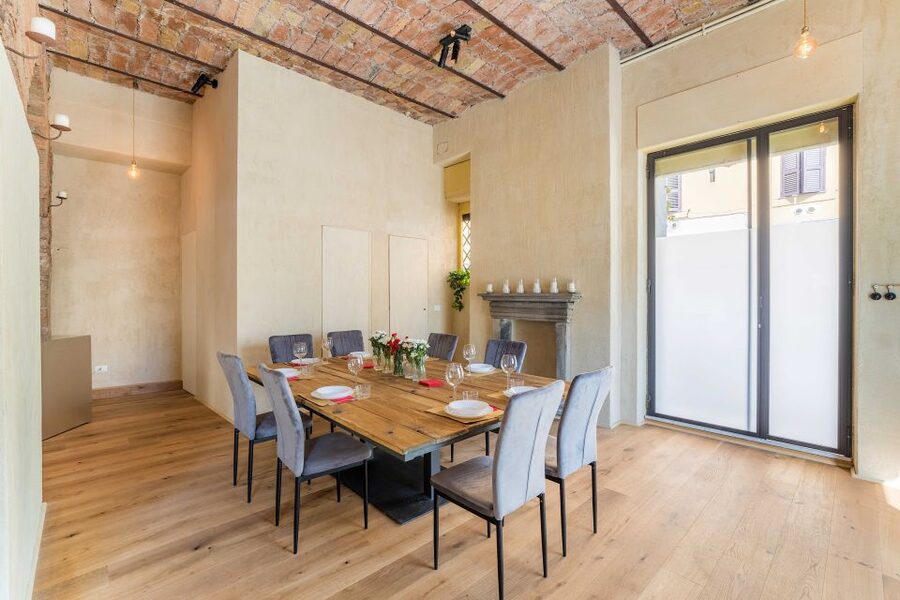
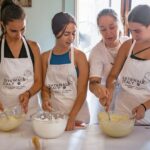
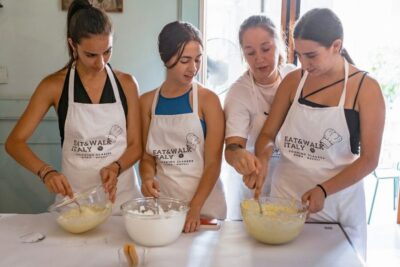
The cooking space is part past, part present. You are in an Antica Osteria founded in the late 1800s that has been converted into a cooking school. That mix is what keeps the experience from feeling staged. You are not just watching someone else do the work. You are learning in a real dining-world environment, with tables set for eating once the cooking finishes.
You will likely meet your chefs and sous chefs right away, and the class tone is usually upbeat. Past sessions have highlighted humor, steady guidance, and quick help when you get stuck. If you want a hands-on food activity where you leave with skills you can repeat at home, this is the right kind of start.
You can also read our reviews of more cooking classes in Rome
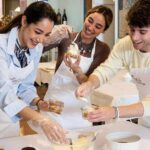
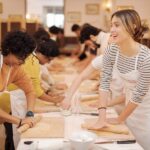
What Happens Over About 3 Hours (and Why the Timing Works)
The class runs about 3 hours, and it is structured like a tight cooking evening rather than a loose demonstration. You can think of it as four beats: prep and dough, shaping multiple pasta types, sauce tasting and a full meal, then dessert.
First, you settle in and get an appetizer with prosecco and Italian cheese. This is not just a snack while you wait. It sets the mood and gets you ready for food-focused attention.
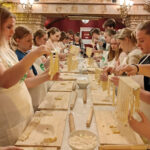
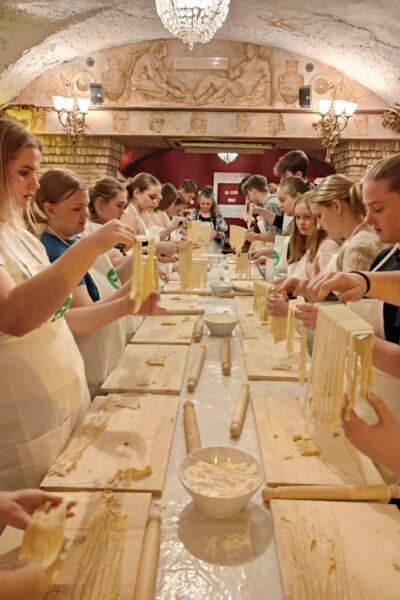
Next comes the main work: you make fresh dough and learn how to roll it into thin sheets safely and accurately. From there, you move into forming five different shapes, which is the heart of the experience. The class keeps you moving, but it still slows down at the moments that matter, like cutting and sealing so each shape holds up.
Then you taste your pasta with two sauce options, along with the meal service, including wine. Finally, dessert is an express tiramisu you prepare and finish with the group. The pacing is why it feels complete. You cook, you taste, you eat well, and you go home with a repeatable process.
Rolling Fresh Dough Thin with a Wooden Pin
If pasta schools had a single make-or-break skill, it would be the rolling. Here, you focus on making a thin dough sheet and using a rolling-pin technique that feels more precise than the casual, home-kitchen approach many people try first.
You roll with a wooden pin, and you practice the mechanics until you understand how to keep the sheet even. That matters because the thinner and more consistent your dough becomes, the easier it is to shape dumplings cleanly and cut ribbons like fettuccine without turning the pasta into a mess.
There is also an emphasis on safe food cutting procedures. That is a practical detail, and you feel it once you start working at your station. You are not just learning recipes. You are learning process.
One more quality point: the kitchen is set up with HACCP certification for food hygiene and safety (2020). For many visitors, that quiet checklist matters more than people expect. It lets you focus on technique instead of worrying about how clean or organized the cooking setup is.
Making Five Shapes of Pasta, Not Just One
This is a five-shape class, which is exactly why it is memorable. Many pasta lessons focus on one format, maybe two at most. Here, you go through a full set of classic Italian shapes: ravioli, agnolotti del plin, tortellini, cappelletti, and fettuccine.
Ravioli
Ravioli is the gateway shape because it teaches you filling distribution and sealing. You learn to portion and then close the pasta in a way that holds during cooking. The goal is clean edges and consistent thickness, not perfection for its own sake.
A few more Rome tours and experiences worth a look



Agnolotti del Plin
Agnolotti del plin tends to feel more delicate, and that’s useful. It pushes you to handle smaller, precise folds and develop finger control. It is a great shape for learning how to work with thin dough without tearing.
Tortellini
Tortellini is all about forming. You get hands-on practice with shaping techniques that make each piece recognizable. The class treats this like a skill you can improve step by step, not something you either instantly nail or fail.
Cappelletti
Cappelletti adds another variation to your shaping toolkit. You learn how a slightly different form changes how you handle the dough and how you structure the finished pieces. By this point, you stop guessing and start feeling the dough.
Fettuccine
Fettuccine is where you switch gears from filling to cutting and finishing. It is satisfying because you can see progress quickly. You go from sheet to ribbons, which is a different way of understanding dough work than dumpling shaping.
A few of the chefs’ teaching moments really stand out in the feedback: they check in, offer constructive corrections, and keep you relaxed while you learn. If you’re a beginner, that combination makes a huge difference.
Two Sauces and Wine, Learning How Food Gets Paired
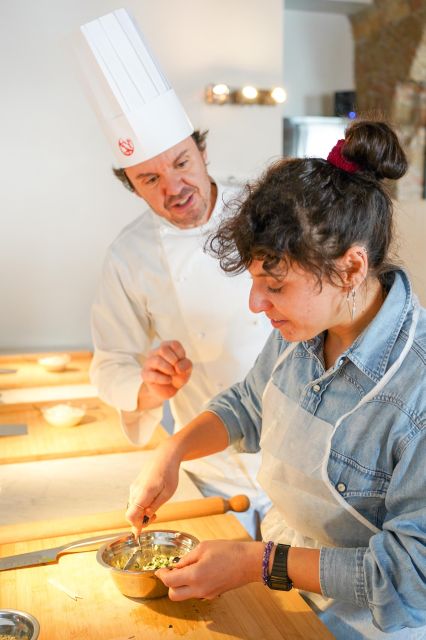
Pasta tastes simple, but sauce pairing is not random. You create and taste your pasta with two different Italian sauces, explained by the chef during the class. Even without getting lost in jargon, you start learning what chefs mean by balance, texture, and how sauce clings to different shapes.
Sauce choice matters most for dumplings. Ravioli, agnolotti del plin, tortellini, and cappelletti are shape-driven, so sauce thickness and grip change the whole experience. Fettuccine also tells you something different, since you taste the pasta and sauce more evenly across the bite.
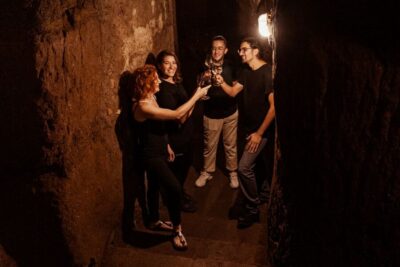
You also sip Italian wine and taste along the way. That part is not just “extras.” It helps you slow down and pay attention to what changes when you adjust dough thickness, filling, and portioning. If you’ve ever wondered why one batch tastes better than another, this pairing approach is a good clue.
One practical tip from the overall experience vibe: if you have restrictions, speak up early. The chefs have shown they can make ingredient adjustments and even prepare a separate sauce in at least one documented allergy situation. You should still ask before you arrive so everyone can plan.
Express Tiramisu, a Dessert That Actually Feels Doable
The dessert portion is one of the smartest design choices. Express tiramisu keeps dessert from becoming an all-night project, but you still get to be hands-on. You prepare the tiramisu with the group and finish it as the class wraps up.
Tiramisu also gives you a satisfying contrast to pasta. Pasta is tactile and savory. Dessert is about layering and timing. It shifts your energy without stretching the schedule.
Because the class is about learning how cooking works, not just eating well, the dessert step matters. You leave with something you can recreate at home without needing a whole equipment overhaul.
Chef Hat, Clean Setup, and a Real Small-Group Atmosphere
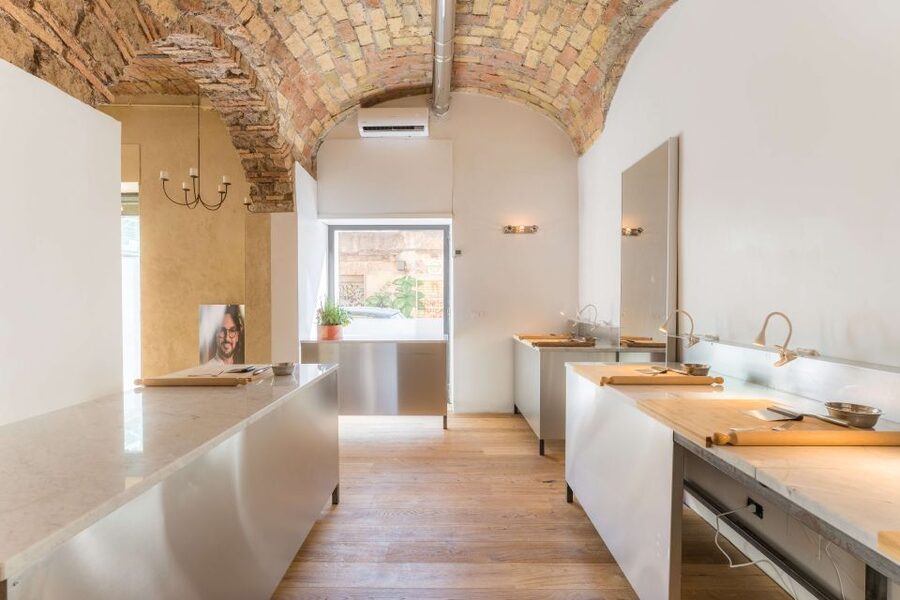
You get a complimentary professional chef hat with the logo of Pastificio Faini. It is a small souvenir, but it also signals something practical. This is meant to feel like you stepped into a real workshop, not a casual demo night.
The class is limited to a small group, which is where the quality shows. When the group is small, chefs can actually monitor what you are doing, not just announce instructions. In the class feedback, people consistently highlight that the chefs hop in to correct technique, help with rolling and shaping, and do it in a way that keeps things light.
You will be taught in English and Italian. That matters because pasta technique is full of physical cues, and having bilingual support helps your body understand what your brain is hearing.
One more note: pets are not allowed. Also, it is not suitable for people with mobility impairments, so plan around that if accessibility is part of your decision.
What You Get for $67.19, and When It’s True Value
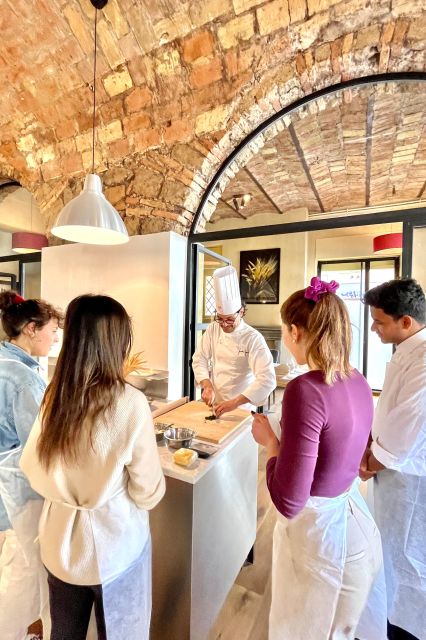
At $67.19 per person, this class is priced for an experience that includes real meals, not just a cooking demo. You get an appetizer with prosecco and cheese, a full meal (lunch or dinner), two plates of handmade pasta, and dessert with express tiramisu. Add in wine during the meal, plus the hands-on class instruction, and you start to see why it can feel like good value for Rome.
Here’s how I think about value for cooking classes: you should leave with both food and a repeatable skill. This one delivers on that because you make multiple pasta shapes and practice rolling thin dough. Many classes teach one format and stop. This one pushes you through a set, so you build confidence fast.
If you’re the type who enjoys food activities and wants to bring something home beyond photos, the price makes sense. If you just want a light snack or a slow tasting tour with no cooking effort, you might feel like you paid for work. This is hands-on by design.
Who This Class Fits Best (and Who Might Prefer Something Else)
This experience fits couples, solo travelers, and small groups who want a hands-on evening that ends with a full sit-down meal. The energy tends to be fun and inclusive, including families where teens and adults cook together comfortably. If you like structured learning with humor, you’ll probably enjoy the pace.
It’s also a great pick for beginners. You start with dough, you get coaching on rolling, and you shape multiple pasta types with help. The class is paced so you can improve as you go, which is exactly what you want in a new skill.
On the other hand, if your trip is packed and you only want a quick activity, this is still a commitment at about 3 hours. It is also not suitable for mobility impairments, and pets are not allowed. If either of those points affects your plans, you may want to choose a different food experience.
Should You Book This Rome Pasta Class?
Book it if you want real technique, not just a meal. I’d choose it when you want a memorable Rome night that mixes cooking, eating, and skill you can repeat at home. The best part is that your work turns into dinner, and you learn five classic pasta shapes in one session.
Skip it if you need maximum sightseeing time, or if you know you cannot comfortably participate in a hands-on, standing-at-a-station type class. Also, if you want only tasting with no shaping or rolling involved, this one may feel too active.
If you book, show up ready to get messy, ask questions early, and listen for the practical cues about rolling thickness and sealing. Do that, and you’ll leave with a full belly and a pasta skill set that makes your next Italian meal feel a lot more intentional.
FAQ
Where does the class meet in Rome?
The start point is an Old Osteria named Cucina. You should look for the original osteria sign in marble on top of the entrance.
How long is the cooking class?
It lasts about 3 hours. Check availability to see specific starting times.
How many people are in the group?
It is a small-group experience limited to 10 participants.
What languages are the instructors?
The class is taught in English and Italian.
What pasta will you make?
You’ll make five pasta types from scratch: ravioli, agnolotti del plin, tortellini, cappelletti, and fettuccine, plus you’ll also work on a thin dough sheet.
What food and drinks are included?
You get an appetizer with prosecco and Italian cheese, a full Italian meal (lunch or dinner), tasting of your different pasta with two sauce types, and dessert with express tiramisu.
Is wine included?
Yes, the experience includes sipping Italian wine during the pasta tasting and meal.
Do you get a chef hat?
Yes. All participants are offered a complimentary professional chef hat with the Pastificio Faini logo.
What is the cancellation policy?
You can cancel up to 24 hours in advance for a full refund.
Is it suitable for mobility impairments, and are pets allowed?
It is not suitable for people with mobility impairments, and pets are not allowed.
More Workshops & Classes in Rome
More Cooking Classes in Rome
More Tour Reviews in Rome



Not for you? Here's more nearby things to do in Rome we have reviewed









Cooking Classes, compared.
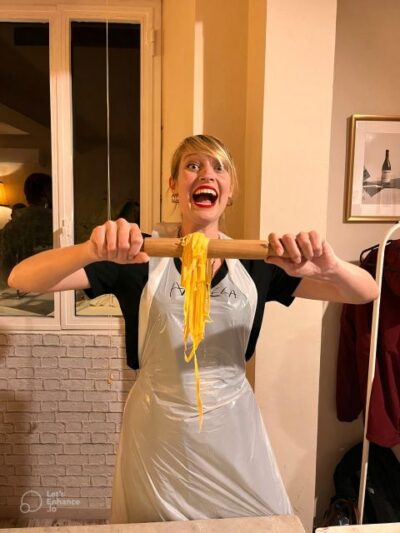 ★ 4.9Pasta Making Class with Wine, Limoncello, and DessertFrom $483,177 reviews
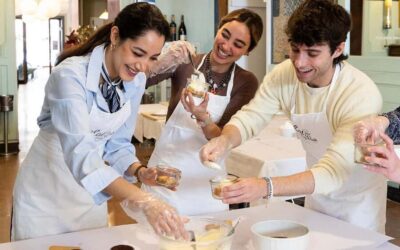 ★ 4.93-in-1 Fettuccine, Ravioli, and Tiramisu Cooking ClassFrom $812,704 reviews
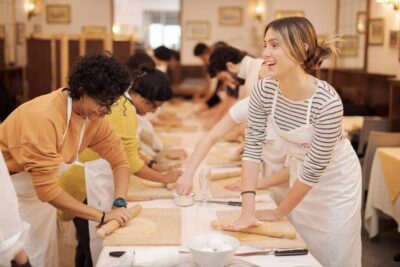 ★ 4.8Fettuccine Pasta Cooking Class in Rome’s City CenterFrom $462,414 reviews
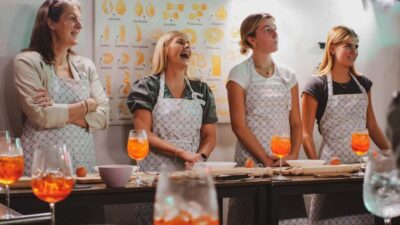 ★ 5.0Traditional Pasta with Cocktails Cooking ClassFrom $1002,374 reviews
 ★ 4.8Fettuccine and Tiramisu Cooking Class with WineFrom $672,013 reviews
 ★ 4.8Pasta & Tiramisu Cooking Class near the Spanish StepsFrom $581,395 reviews
 ★ 4.7Traditional Pizza Cooking Class near Piazza NavonaFrom $461,241 reviews
 ★ 4.9Pasta Making with Wine Tasting and Dinner in FrascatiFrom $35979 reviews
Browse the lists this tour appears in