
Reviewed · WALKING TOURS
Via Crucis Catholic Pilgrim Walking Tour in Rome
A walk like this turns Rome into a prayer map. The Via Crucis Catholic Pilgrim Walking Tour strings together major basilisas and famous Passion relics with explanations that connect Scripture, theology, and Church history. I especially like the way the route is built around Catholic pilgrimage, not just sightseeing.
Two things I love most are the small group size (up to 5) and how the guide guides your attention, with real care and clear stories. Guides such as Tom or Wen have a way of making the meaning land, not just the dates. One possible drawback: it is still a lot of walking, and Rome churches come with dress rules, so you will want to show up prepared.
Key Highlights You’ll Feel During the Walk
- Up to 5 people with the kind of pace where questions do not get brushed aside
- St John Lateran as the Pope’s cathedral, explained as the Mother Church of the world
- Scala Sancta (Holy Stairs) plus a look at the inner chapel area tied to the Holy Stairs tradition
- Santa Prassede for rare relic context and early Christian mosaic art
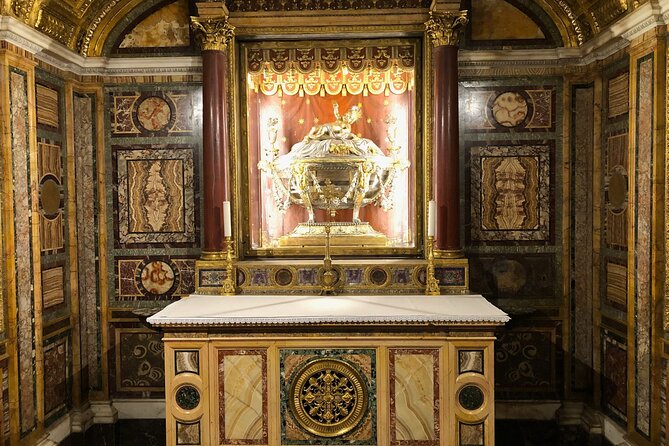
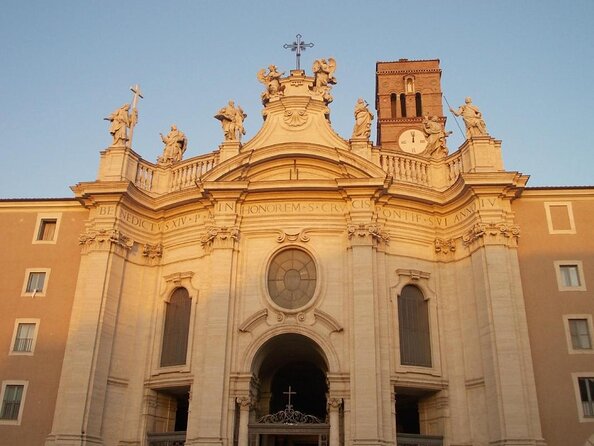
- Passion relics in Santa Croce in Gerusalemme, in a quieter corner of a busy city
A Faith-Focused Route Through Rome’s Holiest Stops
This tour is designed for Catholic pilgrims who want more than a gallery tour of churches. You get a guided walk through some of the most important places in Rome outside the Vatican spotlight, where the Church’s story and the Passion are physically present in the art, relics, and sacred spaces.
What makes this kind of tour work is the order. Instead of random hops, you move along a route that builds meaning step by step. You start with major Church identity, then you shift into lesser-known devotional spaces, and finally you end with relics tied to the crucifixion and the True Cross tradition. If you like connecting the dots between doctrine, Scripture, and lived Catholic practice, you are going to find this satisfying.
The tone is clearly devotional, but the guiding approach also helps you understand why these places matter, even if you are not carrying the same faith background. Many churches in Rome can feel like a blur. Here, the guide gives you a storyline you can actually follow.
You can also read our reviews of more walking tours in Rome

Morning Start, Meeting Point, and Why Timing Matters
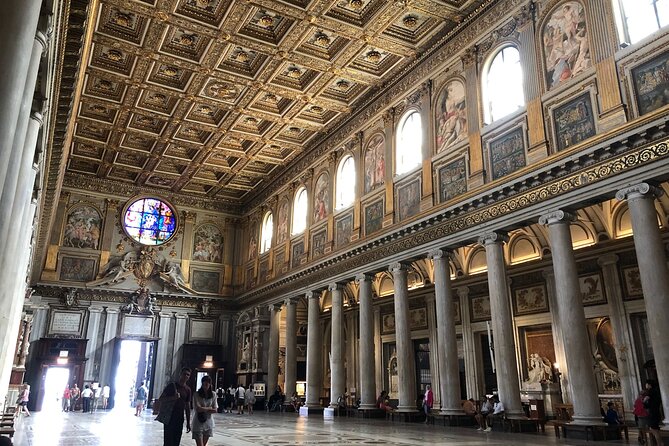
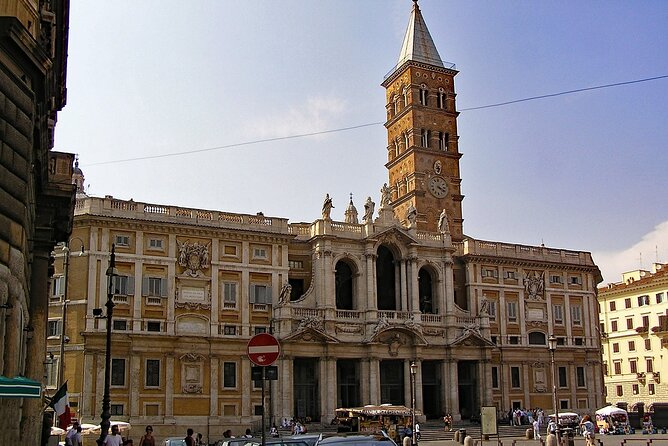
The tour meets at Piazza di Santa Maria Maggiore, 33, with a 8:45 am start. That early departure is practical. Rome is loud and crowded later in the day, and you want your first churches to feel manageable.
Expect 3 to 4 hours total. That range matters because the stops include time for explanations, not just quick entry. The schedule also assumes you will keep moving. You are visiting multiple sacred sites in succession, so your day plan should have some breathing room afterward.
Also note a real-world Rome detail: feast days and events can force the itinerary to shift. This is not unusual in the Eternal City, and it is worth keeping a flexible mindset if something changes by email.
St John Lateran, Holy Door Meaning, and Why This Place Sets the Tone
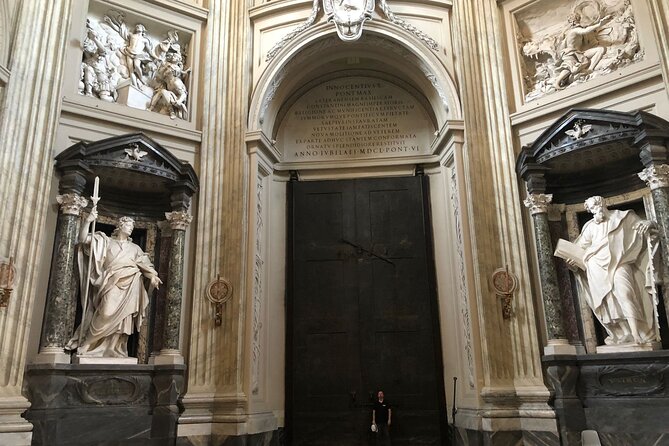
If you are looking for the backbone of Catholic Rome, St John Lateran is where this tour anchors you. The guide frames it as the Mother Church of the world and the seat of the Bishop of Rome, meaning the Pope. You are not just told a title. You are guided to see why the Church treats this place as central.
During your time here, you get several big visual and devotional points:
- The idea of the Holy Door tied to Jubileum year pilgrimage and a Partial Indulgence
- Inside highlights tied to relic and memory, including what the guide presents as part of the Holy Sponge, papal tombs, and the skulls of Saints Peter and Paul
- The statues of the Apostles and other devotional features that make the place feel like a living “who’s who” of the Church
This is also where you learn how major basilicas function within Catholic life. Rome can feel like a museum until someone gives you the key to the building’s purpose. Here, the guide’s Catholic perspective turns architecture and relics into meaning you can repeat later.
One practical note: this is a major church complex. Even when you get a guided pace, it can still be busy. If you are sensitive to crowds, aim for calm attention, and let the guide do the positioning for you.
Santa Prassede: A Quiet Basilica With the Scourging Column
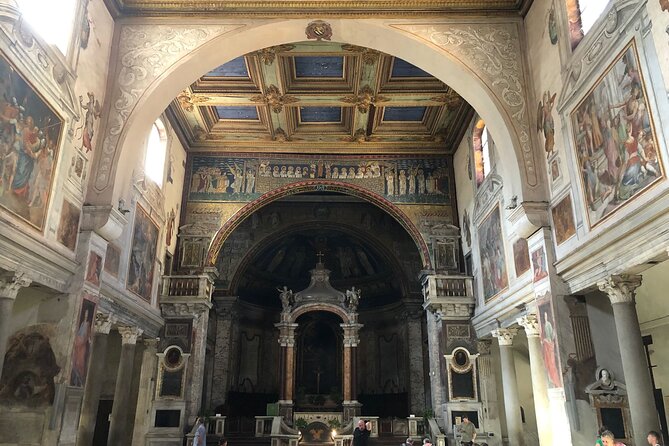
Right across from your next major route, Basilica di Santa Prassede is described and experienced as a calm pause. This is a church that feels tucked away, and you get a moment to slow down.
The most striking detail here is devotional and historical at the same time. The guide points out the pillar against which Christ was scourged before the crucifixion. In this tradition, the column came to Rome from Jerusalem as a 13th century donation in gratitude for the Fourth Crusade. Whether you approach it as faith history or art history, the story gives the object weight.
You also get early Christian context through what is presented as some of the earliest examples of Christian mosaic art. Rome has plenty of beautiful mosaics, but Santa Prassede’s role here is specifically tied to the Church’s story and the devotion of early Christians in Rome.
Expect a shorter stop, around 15 minutes, which means you will not get a full self-guided linger. If you love mosaics and you want extra time for photos and close looking, you might wish you had more minutes. Still, as a pilgrimage-style stop inside a multi-site walk, it lands well.
St Alphonsus Maria de Liguori Church and the Icon of Our Lady of Perpetual Help
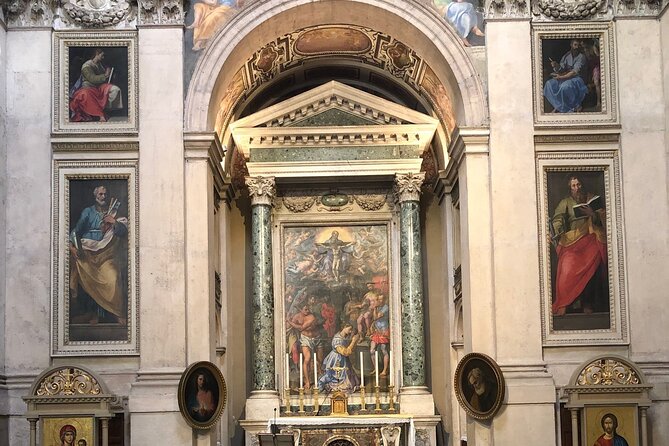
The Church of Saint Alphonsus Maria de Liguori can look modest from the outside, even with its neo-Gothic character. The magic is inside, where traditional devotion becomes visible again.
Your key highlight is the original icon of Our Lady of Perpetual Help (also known as Our Lady of Perpetual Succour, or Our Lady of the Passion). The guide uses this stop to connect devotion to theology and Catholic memory. Instead of treating the icon like a postcard, you are encouraged to see it as part of a lived devotional tradition.
Time here is brief, about 15 minutes, so the value is in the guide’s framing rather than extended wandering. If you enjoy iconography and want to understand what Catholic devotion is doing in an image, you will likely appreciate this stop more than you might expect from the short timing.






Scala Sancta: Holy Stairs, the Inner Chapel, and the One Tradition They Skip
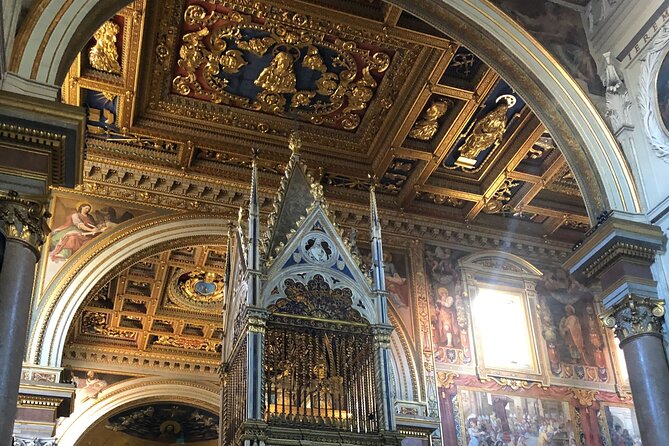
Pontificio Santuario della Scala Santa, the Scala Sancta, is the stop that makes this tour feel like a real pilgrimage. The guide explains these are the steps traditionally linked to Jesus ascending in the praetorium before condemnation, associated with Pontius Pilate.
A key detail you should know before you go: the traditional practice is to climb on your knees as pilgrims follow in Christ’s footsteps. On this tour, you will see the Holy Steps, but you will not have time to partake in that kneeling devotion. Entrance is free and the guide notes that people who want to do the kneeling tradition should organize a separate visit.
Instead, you focus on the sacred space itself. You also get a look at the inner sanctum area connected to the Holy Stairs tradition. The tour includes visiting the “Holy of Holies” at the Church of the Holy Stairs, where the guide describes seeing an icon by tradition begun by St Luke and finished by angels, presented as an acheiropoieta of the Lord Jesus.
This stop is about 30 minutes, and it is one of the best examples of how this tour balances devotion with time limits. If your goal is the kneeling experience exactly as tradition describes it, plan a separate stop. If your goal is to understand what the Scala Sancta represents and see the key devotional elements without rushing your whole trip, this format works.
Practical tip: because you are dealing with sacred spaces and crowds, move with purpose. That way you stay focused on the meaning rather than getting stuck in the flow of people.
Santa Croce in Gerusalemme: True Cross Relics at the End of the Route
The climax is Basilica of Santa Croce in Gerusalemme. This is where the tour goes from story to physical relics in a way you can actually see and venerate.
The guide presents it as home to major relics of the Passion of Christ, with a special highlight set tied to St Helena’s pilgrimage after Christianity was legalized. In this tradition, she brought relics to Rome, including:
- a section of wood from the True Cross
- Holy Nails from the crucifixion
- thorns from the Crown of Thorns
- the board hung above Jesus on the cross, with the inscription referenced by the tour as Jesus the Nazarene, King of the Jews
It is also presented as containing fragments connected to the cave of the Nativity and the Holy Sepulchre, plus what is described here as the finger of St Thomas.
The best part of this stop, from a visitor perspective, is the feeling of contrast. Outside the basilica you are in busy Rome. Inside, the tour notes that crowds are rare. If you want a quieter end to your pilgrimage walk, this is a strong finish.
Time is about 30 minutes, which is enough to take in the big devotional points without turning it into a marathon.
Price and Value: What $114.45 Buys You in Real Life
At $114.45 per person, this is not the cheapest way to do churches in Rome. But it can be good value if your goal is meaning, not just entry to buildings.
Here is what you are paying for, practically:
- A small group experience, capped at 5 travelers, so you get attention
- A guide approach that focuses on theology, scripture, and Church history while you are in the rooms
- Time-saving navigation between sites, with a route that makes sense devotionally
- Entry costs that are largely handled, with free admission at most stops and the Holy Stairs inner area included
If you were to self-tour these sites, you would likely spend extra time researching, and you would miss the connections. Rome rewards reading, but it punishes random wandering when you are trying to grasp the Catholic story behind these objects.
The price also feels more reasonable because you are not paying for private transportation. That choice keeps the experience focused on walking and learning, but it does mean you need to be comfortable with the pace.
What to Wear, How Much You’ll Walk, and How to Make It Pleasant
This tour requires respect in dress and movement. You should plan for shoulders and knees covered. Rome churches are not casual fashion zones on pilgrimage-style routes, and the guide expects you to dress accordingly.
In terms of fitness, this is described as not recommended if you cannot walk more than 2 kilometres. Also, the tour is called particularly difficult in summer. That is a heads-up you should take seriously. Even if you are fine with walking in cool weather, summer heat changes the whole equation.
It is also worth remembering:
- It is near public transportation, but you are still doing the walking
- Service animals are allowed
- You will want water and a little patience for crowds at major sites
If you tend to power through monuments without absorbing much, you might actually find this better than you expect. The guide pace is designed to keep the meaning in front of you.
Who This Tour Is For, and Who Might Prefer Another Rome Plan
This tour is a great match if you are:
- Catholic or Christian and want a devotional walking experience
- Interested in how Catholic tradition connects to specific sacred objects, like the Scala Sancta and Passion relics
- The kind of traveler who enjoys being taught, with scripture and doctrine placed into context while you stand in the room
It is also a good option if you are a family group, based on the kinds of compliments the guides receive for being patient with kids. Still, the walking limitation matters, and the church dress code matters.
If you are not religious and you want only art and architecture with no faith framing, you might find it strongly oriented to Catholic practice. Even then, you would still learn a lot about symbols, relic traditions, and Church history, but your enjoyment will depend on whether you can appreciate that lens.
Should You Book This Via Crucis Catholic Pilgrim Walking Tour?
Book it if you want Rome to feel like more than a checklist. The strongest reason is the combination of sacred sites plus guided Catholic interpretation, with the kind of guide attention that fits a small group.
Skip it or look for another option if you:
- need a low-walking day
- cannot dress with shoulders and knees covered
- travel in peak summer heat and know walking will wear you down quickly
- want the specific kneeling Scala Sancta devotion as part of the timed tour
If you are on the fence, here is the simple test: do you want your visit to these holy places to be explained in a faith framework while you walk between them? If yes, this is the sort of Rome day you will remember for a long time.
FAQ
How long is the Via Crucis Catholic Pilgrim Walking Tour in Rome?
It runs about 3 to 4 hours.
What is the group size?
This experience has a maximum of 5 travelers, so it stays small.
Is the tour in English?
Yes, it is offered in English.
Are there admission fees at the sites?
Admission is free for the listed stops, and the tour includes entry for the Holy of Holies at the Holy Stairs. The rest of the stops are free admission.
Will I have time to climb the Scala Sancta steps on my knees?
The tour allows you to see the Holy Steps, but it does not include time for the kneeling tradition. If you want to do it, you should plan a separate visit.
What should I wear to enter the churches?
You must have shoulders and knees covered, and you should dress respectfully.
More Walking Tours in Rome



More Tours in Rome



More Tour Reviews in Rome
Not for you? Here's more nearby things to do in Rome we have reviewed












Walking Tours, compared.
 ★ 4.9Trastevere & Campo de Fiori Street Food Walking TourFrom $512,768 reviews
 ★ 4.9Paranormal Night Walking Tour & Secret BackstreetsFrom $341,921 reviews
 ★ 4.4Guided City Center Evening Sightseeing Walking TourFrom $46953 reviews
 ★ 4.5Best of Rome Walking Tour including Trevi FountainFrom $4923 reviews
 ★ 4.8Under the Moonlight Evening Walking TourFrom $28852 reviews
 ★ 4.9Forbidden History Walking Tour & Pub Crawl with DrinksFrom $61688 reviews
 ★ 5.0Guided Small Group Walking Tour of City HighlightsFrom $30682 reviews
 ★ 4.5Rome Walking Tour with Piazza Navona, Trevi Fountain and PantheonFrom $35676 reviews
Browse the lists this tour appears in