
Reviewed · VATICAN TOURS
Vatican City: Sistine Chapel, Museums, Basilica Private Tour
Four hours, one world-class art marathon. This private Vatican City tour ties together the Vatican Museums, the Sistine Chapel, and St. Peter’s Basilica with a skip-the-line ticket and a guide to keep the day moving. You’ll see work linked to Michelangelo and Raphael, plus the kind of papal collection that makes you realize scale is its own art form.
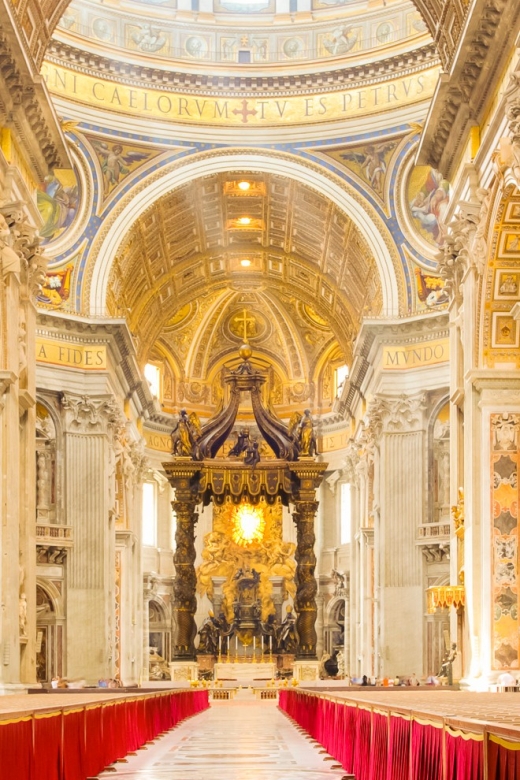
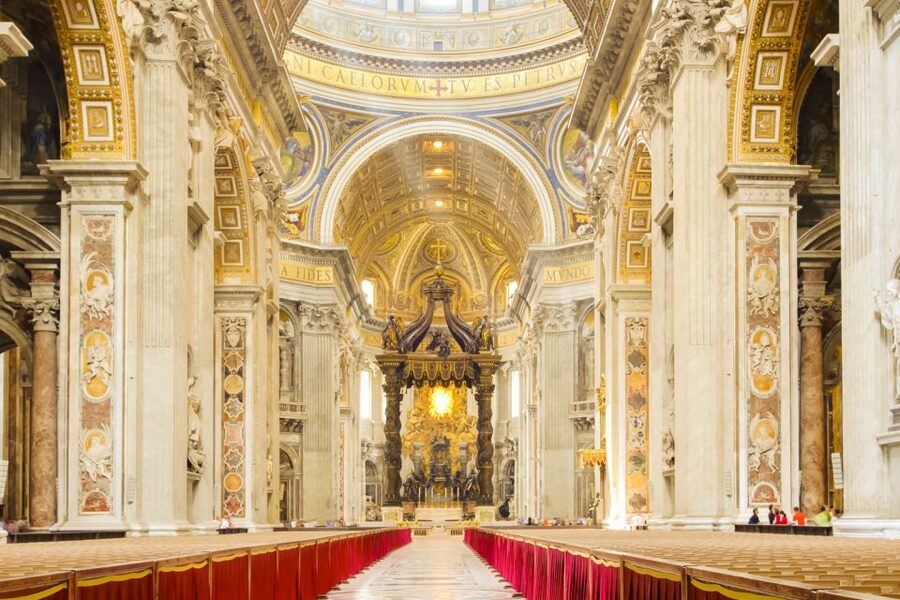
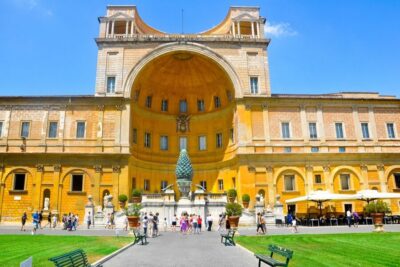
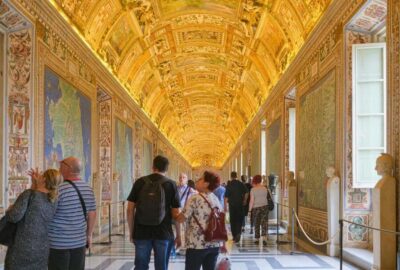
I love that the route is focused, not random. You hit the headline areas, including the Cortile della Pigna and Cortile Ottagono, then galleries like Maps, Candelabra, and Tapestries, before heading to the Sistine Chapel. Another plus is the spirituality stop, St. Peter’s Basilica, where you can slow down for major highlights like Michelangelo’s Pietà and Bernini’s St. Peter’s Baldachin.
One consideration: it’s a packed 4 hours. Expect a lot of standing and walking in crowded spaces, and the dress rules can trip you up if you arrive in the wrong outfit.
Key highlights at a glance
- Skip-the-line entry into the Vatican Museums so you lose less time to the worst bottlenecks
- Cortile della Pigna (the Pine Cone Courtyard) tied to ancient myth and a major fountain
- Gallery of Maps and Renaissance rooms including the apartments Raphael painted for Julius II
- Borgia Pope Alexander VI’s private chambers on the route through the Vatican Collections
- Sistine Chapel time on the clock, with Michelangelo’s ceiling and Last Judgment as the core
Vatican City in 4 hours: what makes this tour feel different
The Vatican can be fun in a chaotic, in-your-face way. But it can also feel like you’re jogging from one crowd to another, hoping you catch the good stuff between selfie lines. This tour tries to solve the problem with a private guide and a tighter route that concentrates on the museum areas most people actually came to see.
The itinerary is built around three big anchors: Vatican Museums, Sistine Chapel, and St. Peter’s Basilica. Between them, you get curated stops like the courtyards and specific galleries, so you’re not just watching crowds drift through rooms. And in a place where the art could swallow the whole day, that focus is a real value.
Price-wise, you are paying for two things. First, the skip-the-line Vatican Museums ticket. Second, a guide who can keep the flow smart and explain what you’re seeing without you having to decode everything on your own.
You can also read our reviews of more city tours in Rome


Where you start at TMark Hotel Vaticano, and how to show up prepared
You meet at TMark Hotel Vaticano, then head to the entrance area where the Vatican Museums ticketing begins. The meeting point is listed as the entrance of the Vatican Museums at Viale Vaticano 99, at the exit of TMark Hotel.
Before you go, do the boring stuff right. Bring your passport or ID card, because you’ll need it for entry. And check your clothes. Shorts, short skirts, and sleeveless shirts are not allowed in the Vatican.
One more practical note: for groups larger than 5, headsets are necessary, available at €3 per person. If you hate loud crowds and constant repeating, headsets are a win.
Vatican Museums first: how the route keeps you from feeling lost
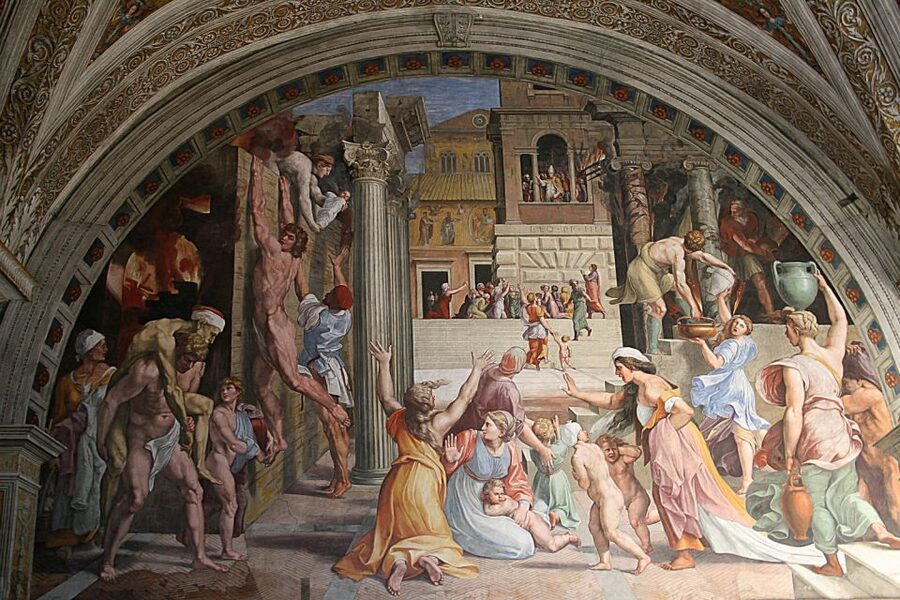
Starting with the Vatican Museums makes sense. Even if you think you know what you want, the Vatican Museum complex is huge, and without guidance it’s easy to waste time wandering. Here, you get a guided museum block of about 2 hours, built to reach major highlights rather than turning your day into a maze.
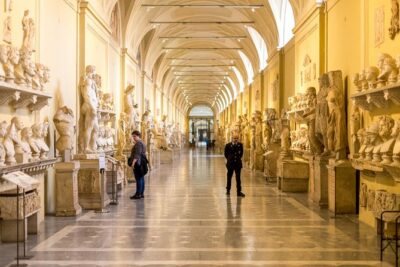
You’ll move through rooms and courtyards that highlight different eras, so the art stops feel connected. You start with classic courtyard views, then shift into galleries that explain how the Vatican became a museum powerhouse, from antiquities to Renaissance painting.
This is also where a private guide makes the biggest difference. With a guide, you’re less likely to miss the specific works or the context that makes the works click. You’re also less likely to get stuck in the wrong corridor at the wrong time.
Cortile della Pigna and Cortile Ottagono: the quick reset you’ll thank yourself for
Two of the most memorable stops are actually courtyards. The tour includes Cortile della Pigna and Cortile Ottagono, and that matters because they break up the long museum slog.
Cortile della Pigna is famous for the fountain featuring a pine cone that once stood near the Temple of Isis. Even if you’re not a mythology person, knowing that the pine cone isn’t random decoration changes how you look at the space. It’s the kind of detail that turns a fast photo stop into something you remember.
Then you move to the octagonal feel of Cortile Ottagono. Courtyards like this give you a chance to catch your breath, reorient, and get a sense of the Vatican’s layers, architecture and symbolism side by side.
Galleries that connect eras: Maps, Candelabra, and Tapestries
After the courtyards, the route shifts into gallery mode. You’ll see the Gallery of Candelabra, including 2nd-century candelabra from Otricoli. The key is that this isn’t just “old objects in a room.” A guide can point out why these antiquities matter to the Vatican collection story.
Next comes Gallery of Tapestries, which includes Flemish tapestries produced by or connected to students of Raphael. This is a smart stop for people who like art, but also for people who want a clearer story about how Renaissance art spread beyond the canvas. You see how techniques and workshops created visuals that could travel, impress, and survive centuries.
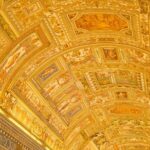
Then there’s the Gallery of Maps, where historic maps of the world set a different tone. It’s a reminder that the Vatican wasn’t only about church art. It also tracked knowledge, power, and the way Europeans understood geography over time.
These gallery stops add up to one big benefit: you leave the museum feeling like you understood what you saw, instead of just collecting room numbers.
You can also read our reviews of more private tours in Rome

Raphael’s apartments and the Borgia chambers: where drama meets art
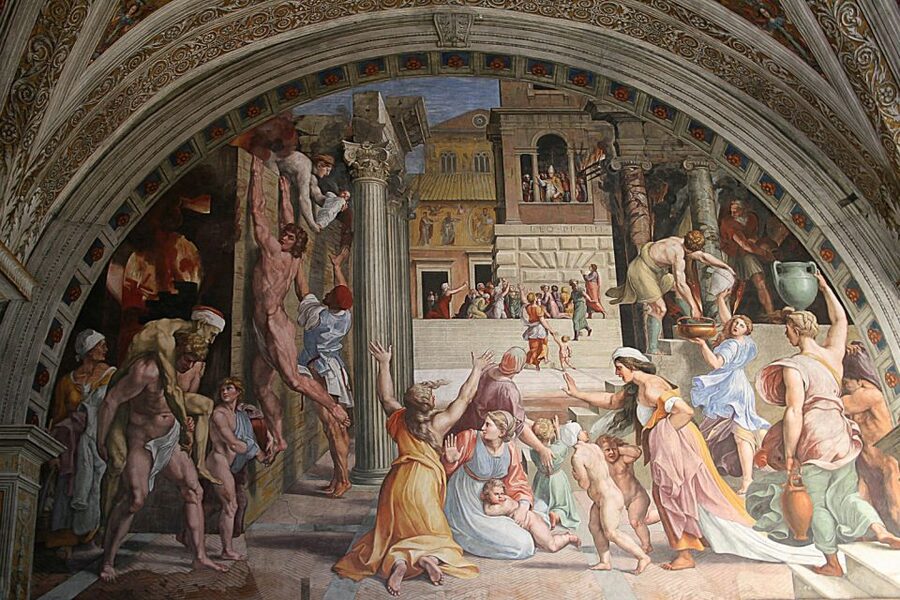
One of the strongest “wait, that’s here?” moments is the inclusion of rooms tied to big-name patrons. The tour includes the apartments that Raphael painted for Julius II. That matters because Raphael isn’t only a reputation. Here you see the working environment that shaped major visual ideas, with a coherent sense of patronage and purpose.
After that, you go to the private chambers of the Borgia Pope Alexander VI. This is where the tour becomes more than museum viewing. You feel the shift from Renaissance clarity to the political and personal drama that shaped church leadership. Even if you’re not obsessed with the Borgias, the setting helps you understand why the Vatican’s art is tied so tightly to power.
This portion is also a good reason to choose a guided route. Without context, you might read these rooms as “pretty” and keep moving. With a guide, you notice patterns, symbolism, and why certain themes show up where they do.
The Egyptian Museum stop you’ll either love or learn from
On the route, you’ll encounter antiquities from Ancient Egypt, highlighted as part of the visit through the museum complex. This is listed as a chance to see antiquities from Ancient Egypt in the Egyptian Museum.
If you love Egypt, you’ll be glad it’s included rather than skipped over in favor of only Christian art. If you’re indifferent, it still works as a palette cleanser. It shows the Vatican collecting instinct, and it gives your brain a break from fresco-heavy Renaissance rooms.
Sistine Chapel: 30 minutes, and how to get the best out of it
The Sistine Chapel stop is guided for about 30 minutes. That time window is short by design. You get enough to see the core masterpiece areas without letting the day drag.
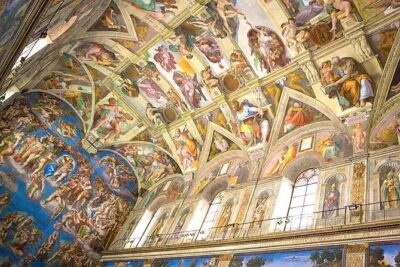
This is where you should have your expectations tuned. You’re not going to “study” every section like you’re on a course. You’re going to see the ceiling frescoes Michelangelo painted, plus the Last Judgment fresco.
Manners matter here. You’ll want to watch your posture and keep movement smooth. The chapel is strict about behavior, and it’s crowded. The best strategy is to stand where you can see, then let a guide point out what to look for first. The ceiling is huge, but once you know what your guide wants you to notice, it becomes easier to track.
If you get motion sickness or fatigue easily, plan for breaks. The rest of your energy will come down in St. Peter’s Basilica.
St. Peter’s Basilica: choosing awe with your feet on the floor
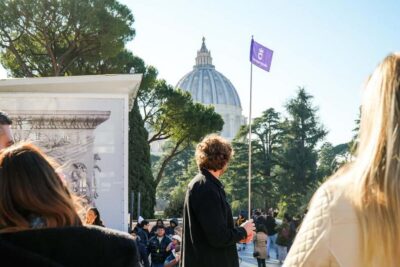
After the Sistine Chapel, you head into St. Peter’s Basilica for about 1 hour of guided time, then end with a 30-minute visit in and around Saint Peter’s Square.
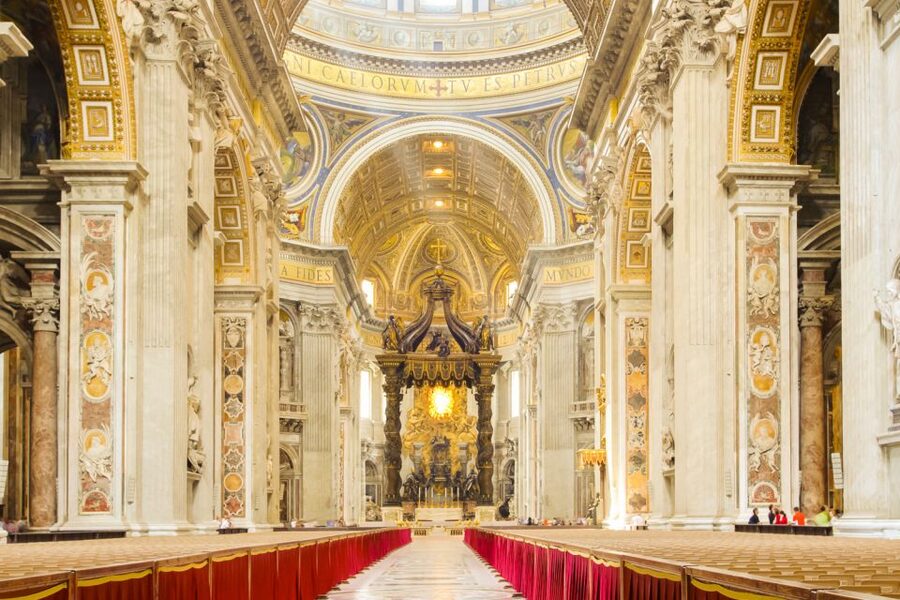
The Basilica is where the Vatican flips from museum mode to spiritual landmark mode. The tour highlights major works you can actually look up close: Michelangelo’s Pietà and Bernini’s St. Peter’s Baldachin.
Even if you’ve seen photos before, standing in the space changes everything. The ceiling height and the scale of decoration make art feel like architecture, and architecture feel like a kind of artwork. It’s not just “a pretty church.” It’s a performance of faith, politics, and craft in stone and bronze.
My practical advice: don’t try to sprint through. In an hour, you’ll do best if you slow down at a few key points your guide prioritizes, then take the rest as walking time.
St. Peter’s Square: a finishing rhythm that feels like Rome
The tour includes Saint Peter’s Square for about 30 minutes. This is a smart add-on because it pulls you out of the indoor intensity and gives you open-air context.
You’re also more likely to catch the photo angles you want once the main crowds have shifted. If you’re sensitive to noise, this is a good moment to reset your senses before you head off on your own.
If you’re trying to continue your day nearby, the location is convenient for walking options around Vatican City. Just be ready for more crowds as the day progresses.
Value and price: why $717 per group can be fair here
The price is listed at $717.06 per group up to 1 for the 4-hour experience. That sounds high until you translate what you’re buying.
You’re paying for:
- A skip-the-line Vatican Museums ticket
- A private guide
- Admission coverage for the Vatican Museums, the Sistine Chapel, and St. Peter’s Basilica visits included as part of the tour
In a place where ticket lines and entry timing can chew up your day, skip-the-line can be worth real money. And a private guide is what turns “I saw it” into “I understood it.”
The main reason this price makes sense is that the tour is structured. It’s not asking you to spend half a day figuring out which rooms to prioritize. In 4 hours, it focuses on the museum highlights and the two biggest religious art anchors.
Who this tour is best for (and who might want a different pace)
This is a great match if you want:
- A tight, high-impact Vatican plan with a private guide
- Specific stops like the Pine Cone courtyard, Raphael rooms, and Sistine Chapel
- Help moving through crowds and choosing what to look at first
It may be less ideal if you:
- Need a very relaxed, slow sightseeing pace (the schedule is full)
- Hate standing for long periods
- Want to spend hours in the museums beyond the top circuit
The tour does state wheelchair accessible. If mobility is an issue, it’s also a smart idea to wear supportive shoes and plan for smooth movement inside.
Book or pass: my decision guide for you
I’d book this tour if you want a high-confidence Vatican day where you get the headline highlights without wasting energy on planning and waiting. The route is built around key courtyards, major galleries, Raphael and Borgia-related rooms, then the Sistine Chapel and Basilica.
I’d pause if you’re the type who wants to wander freely and take your time in side rooms. With only about 2 hours in the museums plus fixed time blocks for the chapel and Basilica, you’ll feel the pace.
If your goal is to see and understand the Vatican’s best known masterpieces in one focused half day, this is the kind of tour that makes the whole trip feel efficient and satisfying.
FAQ
How long is the Vatican City private tour?
The total duration is listed as 4 hours, with starting times that depend on availability.
Where do I meet for the tour?
You meet at the entrance of the Vatican Museums, Viale Vaticano 99, at the exit of the TMark Hotel Vaticano.
What are the tour stops and guided time blocks?
The visit includes:
- Vatican Museums for about 2 hours
- Sistine Chapel for about 30 minutes
- St. Peter’s Basilica for about 1 hour
- Saint Peter’s Square for about 30 minutes
Does this tour include skip-the-line entry?
Yes. It includes Vatican Museums skip-the-line ticket.
What is included in the price?
Included items are the skip-the-line Vatican Museums ticket, admission to the Sistine Chapel, St. Peter’s Basilica visit, and a private guide.
What is not included?
Hotel pickup and drop-off, plus food and drinks are not included.
What language will the guide speak?
The guide is available in Spanish, Dutch, English, French, Portuguese, German, Italian, Russian.
What should I bring for entry?
You should bring your passport or ID card.
Are there dress code restrictions?
Yes. Shorts, short skirts, and sleeveless shirts are not allowed.
Is it wheelchair accessible?
Yes, the tour is listed as wheelchair accessible.
Where does the tour end?
It finishes at Piazza San Pietro, Città del Vaticano, Vatican City. The activity also notes that it ends back at the meeting point.
More City Tours in Rome
More Tours in Rome
More Tour Reviews in Rome
Not for you? Here's more nearby things to do in Rome we have reviewed





Vatican Tours, compared.
 ★ 4.5Vatican: Museums & Sistine Chapel Entrance TicketFrom $38144,003 reviews
 ★ 4.3Vatican Museums & Sistine Chapel Tour with Optional BasilicaFrom $7967,413 reviews
 ★ 4.5Vatican Museums, Sistine Chapel & St Peter’s Basilica Guided TourFrom $2239,149 reviews
 ★ 4.3Vatican Museums, Sistine Chapel & Basilica TourFrom $13013,872 reviews
 ★ 4.4Vatican Museums & Sistine Chapel Skip-the-Line Entry TicketFrom $4313,838 reviews
★ 4.7Vatican Museums, Sistine Chapel & Basilica TourFrom $7213,217 reviews
★ 4.4Vatican Museums & Sistine Chapel Skip-the-Line Entry TicketFrom $4313,838 reviews
★ 4.7Vatican Museums, Sistine Chapel & Basilica TourFrom $7213,217 reviews
 ★ 4.5Skip-the-Line Group Tour of the Vatican, Sistine Chapel & St. Peter’s BasilicaFrom $3012,779 reviews
Vatican Museums & Sistine Chapel Guided TourFrom $11812,117 reviews
★ 4.5Skip-the-Line Group Tour of the Vatican, Sistine Chapel & St. Peter’s BasilicaFrom $3012,779 reviews
Vatican Museums & Sistine Chapel Guided TourFrom $11812,117 reviews
Browse the lists this tour appears in