
Reviewed · CATACOMBS & UNDERGROUND TOURS
Trevi Fountain Underground Aqueduct and Spanish Steps Tour
Rome has layers beneath your feet. This tour connects Spanish Steps, la Barcaccia, and the Trevi Fountain to the water system that fed ancient Rome, with standout time at Vicus Caprarius underground. I love how it turns two of Rome’s most famous photo stops into a story about how modern Rome grew around ancient ruins.
The tradeoff is pacing. It’s not a sprint. You may spend stretches standing while your guide explains the connections, so it helps to enjoy stories as much as scenery.
Key things I’d bet you’ll care about
- Small group size (max 12) keeps the pace relaxed and the explanations easier to follow.
- Underground aqueduct access is the real headline, not just another fountain photo stop.
- English guided tour with mobile tickets makes it simple to show up and move on.
- You see water at every level: from above ground aqueduct sections to a 19BC tank underground.
- Stops stack naturally in about 2 hours, so it fits a tight Rome day without feeling rushed.
Why this Trevi Fountain underground aqueduct tour feels different
Most Rome tours focus on what you see on the street. This one keeps circling back to a question I bet you’ll start asking too: where does the water actually come from?
You’ll spend your time moving between big, recognizable landmarks and the infrastructure behind them. That includes the Spanish Steps area, la Barcaccia fountain, and Trevi Fountain above ground, then a walk into the underground world tied to the aqueduct system. The payoff is that you end up with a clearer mental map of Rome, not just a list of sights.
I also like that it’s built around a small group. With a maximum of 12 people, you get a more conversational feel, and it’s easier to hear the guide in busy public spaces. It’s an approach that works well if your trip has limited time and you want fewer crowds, not more.
One more practical win: this is about 2 hours long. It’s short enough to tuck into a jam-packed itinerary, yet structured enough that you do not feel like you only skimmed the highlights.
You can also read our reviews of more tours and experiences in Rome.



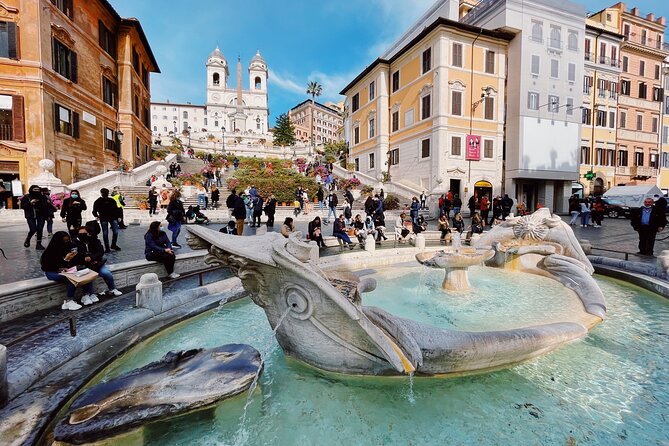
Spanish Steps and la Barcaccia, where the water story starts
Your tour meets at the Spanish Steps area, Piazza di Spagna. This is a smart start because it’s already layered with meaning, from how the square functioned for Romans to how it became the glamorous stage it is today. You’ll hear why the Spanish Steps got their name, which is one of those Rome facts that sounds simple until you learn the backstory.
Then you connect the glamour to the plumbing. The tour takes you to la Barcaccia, the iconic fountain associated with the Spanish Steps. The key point is that it still connects to an ancient Roman aqueduct, one of the big themes of this outing. It’s a fun shift, going from statues and stairs to the idea that a fountain you see today depends on water routes created more than 2,000 years ago.
What I like here is the way the guide frames the area. Instead of treating Piazza di Spagna like a stand-alone postcard, you get a sense of how Rome’s built environment sits on top of older systems. That perspective makes later stops click faster.
The column near Piazza di Spagna, and a reminder about Roman traditions
Right after the Spanish Steps focus, you head to the Colonna dell’Immacolata, tied to local Christmas traditions. This stop is brief, but it adds something useful. It’s a reminder that the city’s sacred and seasonal rhythms layer over older structures.
The practical value is that it helps you read Rome in layers. You learn to notice how modern ceremonies and monuments reuse the city’s long-standing habit of marking important moments in public space. Even if you only catch this for a few minutes, it changes how you look at the next church-front or square.
If you prefer only major-ticket sights, this stop might feel like a short detour. But it also keeps the tour from becoming a single-theme lecture, even while the aqueduct story continues in the background.
Acquedotto Vergine overground sections, plus the mystery-door moment
Next up is Acquedotto Vergine. This is where you start seeing parts of the aqueduct visible above ground. That matters, because it changes the story from abstract facts to physical evidence. You can point at something real and understand how water moved through the city.
Right beside the aqueduct section, the tour mentions a mysterious door. That kind of detail is exactly why this tour works for people who like small surprises. Rome is full of doors that look ordinary until someone gives you the context.
One caution: if you have very little patience for walking at a slow pace, this portion can feel like you’re pausing more than you’d like. The tour is designed to be light on strain, not light on explanation. So if you like to race from photo spot to photo spot, you might need to adjust your expectations.
Rinascente Roma Tritone, a shopping center with ancient aqueduct ruins
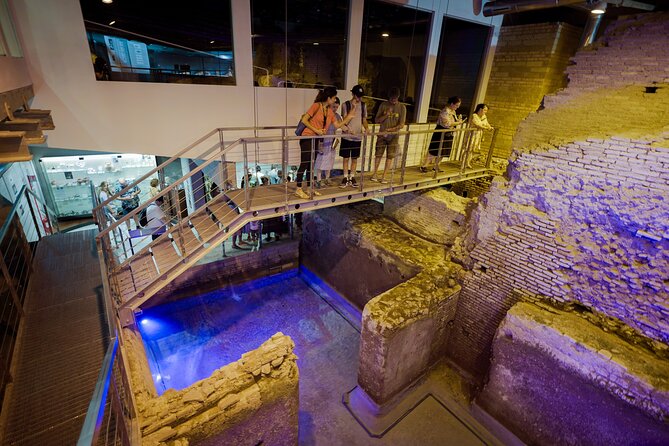
Here’s the twist that makes this tour memorable: you visit Rinascente Roma Tritone and you do not shop. The reason is underground.
The tour points out ruins of the only ancient Roman aqueduct still functioning today. That’s a big claim, and it’s the type of thing you do not usually get in a fountain-only itinerary. You end up realizing that Rome’s modern cityscape is not just sitting near ruins. It’s actually layered over and around living pieces of older infrastructure.
I like this stop because it forces you to reframe the location. A department store is not where most people expect Roman engineering. Yet the city keeps making the unlikely feel normal. If you enjoy moments where Rome surprises you, this is one of them.





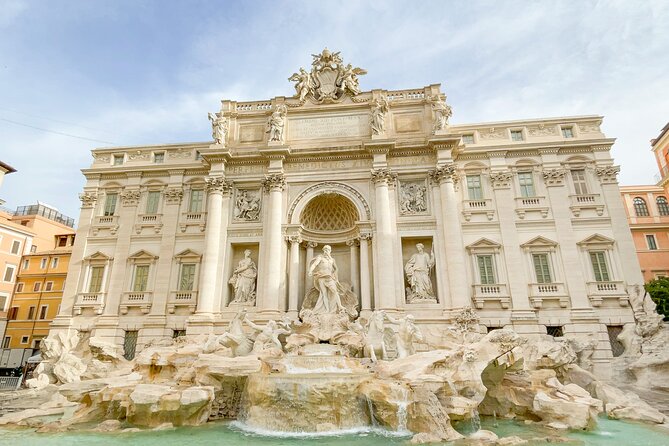
Trevi Fountain, legends above, water logic below
Then you reach Trevi Fountain, the famous one, the one everyone photographs. The tour does not try to compete with the crowd for your attention. Instead, it uses Trevi as a hook for the deeper question: what makes this fountain matter beyond the surface?
You’ll hear legends and stories connected to Trevi from ancient Roman times through today. But the best part is how those stories connect back to water supply and the aqueduct system. In other words, you do not just learn folklore. You learn the underlying reason the fountain exists and how it stays connected to Rome’s older water network.
This stop is also a good checkpoint for your energy. If you want photos, you’ll likely feel you have enough time to capture a few, without turning the whole tour into a photo sprint. If you want to focus on the explanation, the tour structure gives you that too.
Walking underground in Vicus Caprarius, the City of Water
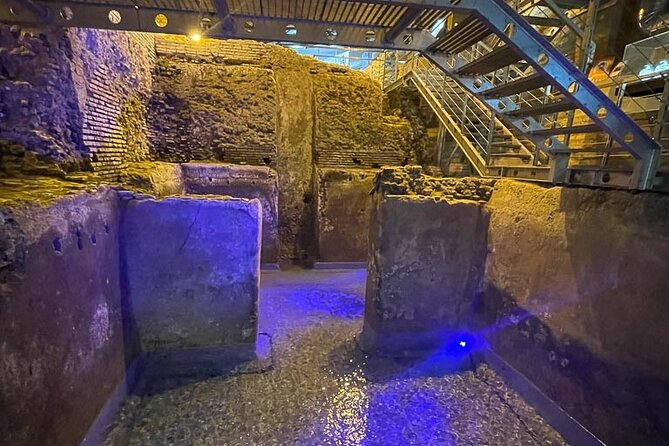
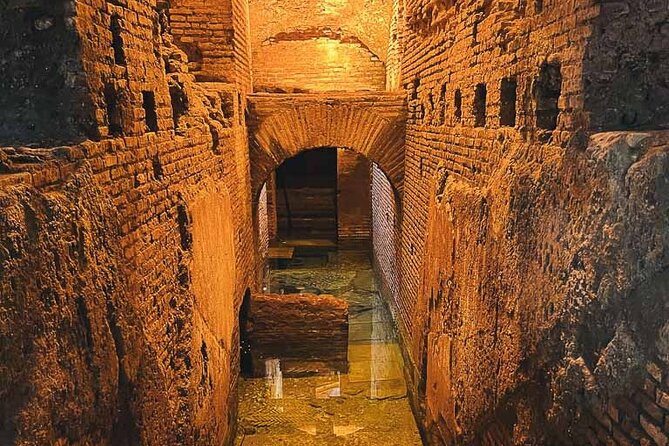
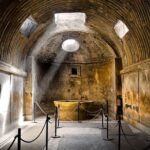
This is the heart of the experience. You go to Vicus Caprarius, often described as the City of Water. The tour explains where the water tied to the Trevi Fountain supply comes from, and then you actually walk underground.
The underground visit focuses on an ancient water tank connected to the aqueduct built in 19BC. Seeing an underground tank changes how you understand Rome’s water story. Above ground, you can admire fountains and aqueduct sections like they are decorations. Underground, it becomes clear they were part of city survival.
The guide also frames the site as layered living space, with different building and home layers that reflect centuries of residents. I like the way this turns the underground space into something human, not just technical. It’s not only architecture. It’s people moving through the same zone, leaving traces over time.
One review-style insight you should take seriously before you book: you should be ready for easy walking and a few steps. It’s not presented as a strenuous hike, but underground spaces do come with uneven footing and stair moments. Comfy shoes matter.
Also, if you’re thinking about weather, this is a good tour for mixed conditions. You alternate between outdoor stops and an underground segment. You won’t spend the whole time exposed to sun or rain.
Price and timing: is $62.75 worth it for 2 hours?
The price is listed at $62.75 per person, for about 2 hours. On paper, that’s not cheap for a “just sights” tour. The value comes from two places.
First, you’re paying for more than standing near famous monuments. You get guided explanations that connect Spanish Steps, la Barcaccia, and Trevi Fountain to Rome’s aqueduct system. That connection is what turns the tour into something you remember.
Second, you’re paying for the underground portion. Access to Vicus Caprarius with the water tank focus is the kind of experience that often gets tacked on in half-hearted ways. Here, it’s a main event, and the tour includes an admission ticket for that underground stop.
If your goal is only to take pictures of Trevi Fountain, you could do that on your own. But if you want to understand the machinery behind Rome’s water features, this price starts to make sense.
Guides and clarity: what you should expect in English
The tour runs in English and uses mobile tickets, so you can plan around it without much hassle. In terms of guide quality, the tour’s reputation is high, with many people praising guides for being engaging and fun while still covering lots of facts.
Names that come up include Sabrina, Federica, Federica, and Riccardo. One key pattern in the positive feedback is that guides stay engaging and keep the tour light, even while covering underground archaeology and aqueduct history. That balance matters in Rome, where it’s easy to turn a short tour into something heavy and slow.
The one caution I’d give you is clarity. English can depend on the specific guide and their speaking style, and you might want to choose this tour confidently if you’re comfortable with different accents. If you know you struggle with that in noisy outdoor areas, it’s worth mentally preparing to ask for repeats if needed.
Who should book this tour, and who might want to skip it
This tour is a strong fit if you like:
- Rome at the infrastructure level, not just the postcard level
- a small group pace that doesn’t feel chaotic
- combining outdoor landmarks with an underground stop
- water-related history, especially aqueducts and how they shaped the city
It’s less ideal if you:
- want a fast, photo-first route with minimal pausing
- dislike listening during sightseeing and prefer self-guided wandering
- have limited comfort with a few steps, since the underground segment includes stair moments
If you’re traveling with family members or mixed ages, this kind of structured pacing can help. You get a guided route and short stops, plus the underground component you cannot easily plan alone without knowing where to go.
Should you book the Trevi Fountain Underground Aqueduct and Spanish Steps Tour?
If you want Trevi Fountain and Spanish Steps, but you also want the “how did this work” answer, I think it’s a smart booking. The tour’s value is in the connections, not just the famous spots.
Book it if you have about half a day to spare and you enjoy learning while you walk. Skip it if your ideal Rome day is purely free-roaming and you’re not interested in aqueduct mechanics or underground water spaces.
FAQ
How long is the Trevi Fountain Underground Aqueduct and Spanish Steps Tour?
It’s approximately 2 hours.
What is the group size for this tour?
The tour has a maximum of 12 travelers.
What language is the tour offered in?
The tour is offered in English.
What are the main stops on the itinerary?
The tour includes the Spanish Steps, Colonna dell’Immacolata, Acquedotto Vergine, Rinascente Roma Tritone, Trevi Fountain, and Vicus Caprarius (the City of Water).
Is admission included for all stops?
Most stops have admission tickets listed as free, and the Vicus Caprarius underground water tank admission is included.
Can I cancel for a full refund?
Yes. You can cancel up to 24 hours in advance for a full refund. If you cancel less than 24 hours before the start time, the amount paid will not be refunded.
More Tours in Rome
More Tour Reviews in Rome
Not for you? Here's more nearby things to do in Rome we have reviewed










Catacombs & Underground Tours, compared.
 ★ 4.7Colosseum: Underground and Ancient Rome TourFrom $16012,691 reviews
 ★ 4.6Crypts and Catacombs Underground Tour with TransfersFrom $745,341 reviews
 ★ 4.7Colosseum Underground Small Group Guided TourFrom $1054,844 reviews
 ★ 4.8St. Peter’s Basilica, Dome Climb, and Underground TourFrom $383,404 reviews
 ★ 4.7Colosseum Underground, Arena & Forum TourFrom $1573,272 reviews
 ★ 4.3Trevi Fountain and Underground Guided TourFrom $411,664 reviews
 ★ 4.6Catacombs and Capuchin Crypt Guided Tour with TransferFrom $411,606 reviews
 ★ 4.7St. Peter’s Basilica Priority Access Tour with Dome & CryptFrom $831,476 reviews
Browse the lists this tour appears in