
Reviewed · TOURS
Tour of Rome Aboard a Vintage Fiat 500
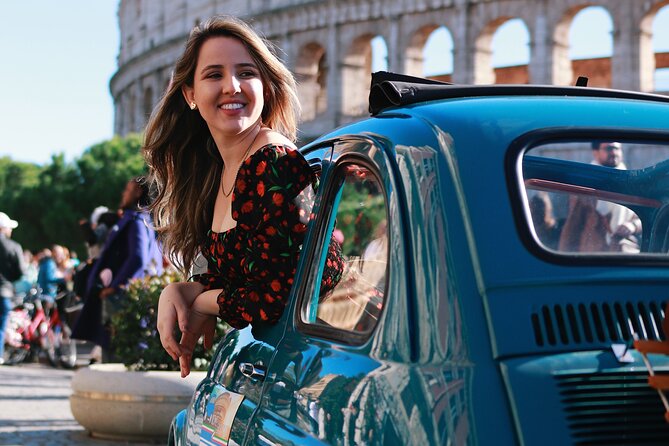
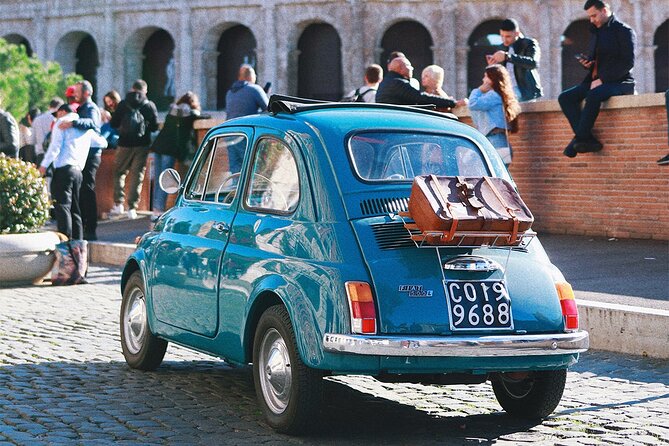
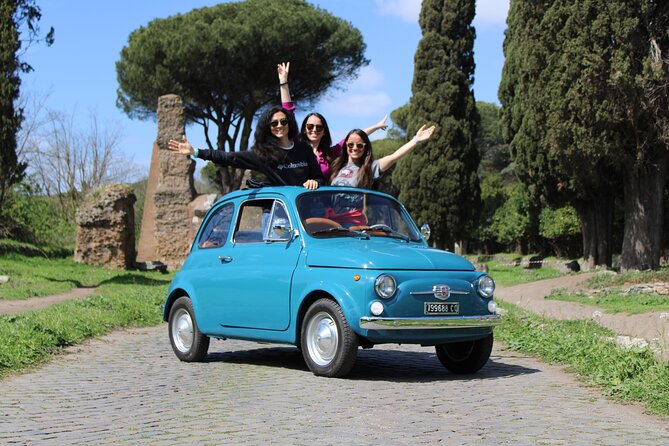
Vintage Fiat 500 makes Rome feel like a movie. I love the Vintage Fiat 500 ride, and I also love how the driver turns short stops into clear history you can actually use later. The included Prosecco or Aperol Spritz and snacks make the pacing feel easy. One caution: the Colosseum is an outside-view only stop, so you will not get an interior visit.
This tour feels practical because it handles the two big headaches for Rome sightseeing: getting you to the sites and keeping you fed along the way. You can start with hotel pickup and use a mobile ticket day-of.
The route is packed with iconic names, from Piazza Venezia and Trajan’s Column to Bocca della Verità and Circus Maximus, then it ends with one last viewpoint at Giardino degli Aranci.
Key Things to Know Before You Go
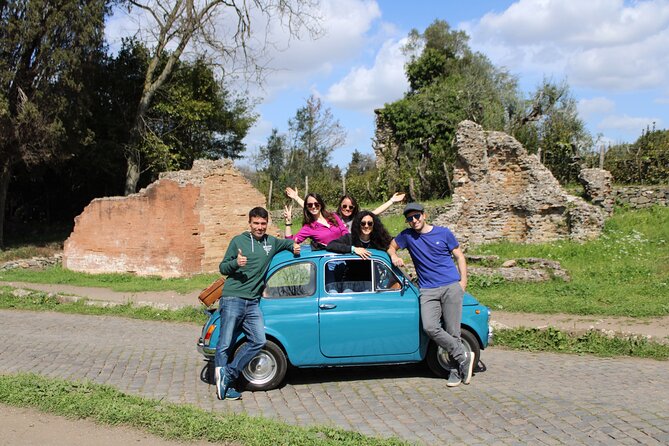
- Vintage Fiat 500 charm: It’s the kind of ride that makes Rome feel storybook fast.
- Aperitif included: Prosecco or Aperol Spritz plus snacks, so the tour never feels like you are just rushing.
- Guiding at every stop: Short photo breaks, but with context so the landmarks stick.
- Outside-only at the Colosseum: Great for views and photos, not for an inside ticket.
- A scenic, low-effort finish: Giardino degli Aranci wraps the day with an easy viewpoint.
- Good weather helps: This one depends on conditions, since much of it is sightseeing and road time.
Why a Vintage Fiat 500 Works So Well for Rome in a Short Time
Rome can feel like three different cities at once, ancient ruins, baroque churches, and modern street life. A vintage Fiat 500 tour is a smart way to stitch those layers together without burning your day in transit.
The driving style also changes how you see Rome. Instead of hiking from one far-apart stop to the next, you get a sequence of scenes. That matters because the landmarks on this route are not random. You start in the civic heart around Piazza Venezia, then you move into the imperial timeline, then you hit legend and crowds, then you finish with big skyline views from the Aventine.
And yes, it helps that the mood is light. The included aperitif means you are not waiting until dinner to feel like the day is going well. A couple of sips and a snack while you look at stone monuments does not sound like a big deal, but it keeps the energy up when the schedule is tight.
You can also read our reviews of more tours and experiences in Rome.



Pickup, Timing, and What 2 to 3 Hours Really Covers
The total time is about 2 to 3 hours. That sounds short, but the structure is built for short attention spans and tight city logistics. You are not trying to do deep museum time here. You are getting a guided circuit of major sights, with photo stops and quick context.
Most stops are either quick viewing or free to access in the way they are used on the tour. Many entries listed are admission ticket free, and the Colosseum is the one clear exception: it is outside only and the admission ticket is not included.
One practical point: there is commuting between attractions and some free time. If you like to stop, look, and absorb without rushing, I suggest keeping your expectations realistic. This is a “see the classics and get your bearings” kind of Rome tour.
Piazza Venezia and the Ancient City Core: Altare della Patria Meets the Forum
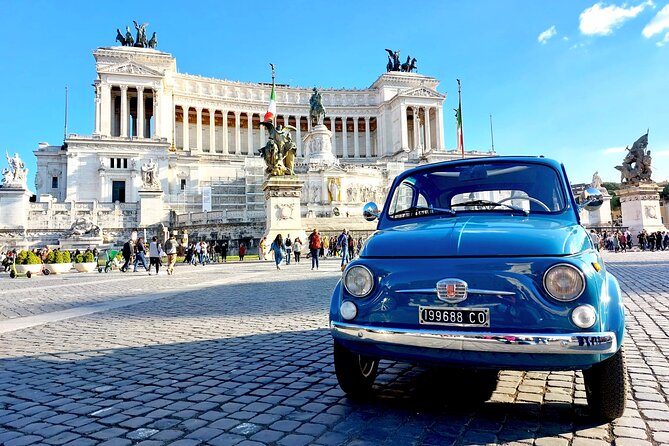
You start at Piazza Venezia, and that’s a strong choice. Piazza Venezia is a natural launch pad because it sits close to some of the most famous “ancient city” imagery.
Here, you admire the Altare della Patria, the tomb of the Unknown Soldier, and you get your first big visual link into the Roman Forum area. Even if you are not going deep into ruins on foot, this opening is useful because it gives you a mental map. Once you see the setting, later landmarks make more sense.
The timing is quick, about 10 minutes. That is deliberate. You get enough time to take photos and understand where you are, then you move on before Rome traffic and crowd patterns force the day to slow down.
Trajan’s Column: How a Victory Monument Becomes a Story on Marble
Next up is Trajan’s Column. This is one of those structures that feels like a straight-on history lesson when you stand nearby.
The column was erected to celebrate Trajan’s conquest of Dacia, now Romania. What I like about stopping here is the concept: the “campaign” is recalled on the marble surface. You are not just looking at a tall object. You are looking at a propaganda-era timeline, built to communicate power and legitimacy.
You typically have around 10 minutes for this stop. In that time, you are not trying to read every detail. The goal is to connect the name to what it represents, so later when you see other Roman imperial monuments, you recognize the pattern.
Teatro di Marcello and the Marble Temples Near Bocca della Verità
The tour includes a pass in front of Teatro di Marcello, a partially preserved ancient theater. It was erected at the behest of Emperor Augustus, in the southern area of Campo Marzio, between the Tiber and the Campidoglio.
Even as a “pass by” moment, this stop can be satisfying. Teatro di Marcello helps you picture how Rome used space. The city was full of performance and public gathering, long before modern theaters existed. It’s also a visual reminder that Augustus-era Rome layered new meaning onto older landscapes.
Then you move toward the area around Bocca della Verità, with a stop near a temple that is often confusingly labeled because of history. You’ll encounter the Temple of Ercole Vincitore, also known as Ercole Invitto or Ercole Oleario. It sits in Piazza della Bocca della Verità, not far from the Temple of Portuno inside the Boarium forum.
Here’s what makes this stop genuinely interesting: due to an erroneous attribution that arose during the Renaissance, it is sometimes popularly referred to as the Temple of Vesta. The circular shape created the confusion because it resembles the real Temple of Vesta in the Roman Forum.
The building dates back to about 120 BC, and it is described as the oldest preserved marble building in Rome, with an even older one noted as lost: the Temple of Jupiter Stator from 146 BC. You do not have to memorize dates, but you should leave with this fact. It adds weight to what you are looking at.






Bocca della Verità: The Mask, the Myths, and How to Enjoy the Stop
Then you hit Bocca della Verità, one of Rome’s most famous “it looks like a mask but it’s not just a mask” landmarks.
This ancient face is carved in pavonazzetto marble and set into the wall of the pronaos of the church of Santa Maria in Cosmedin. Since 1632, it has been walled into place where people can see it up close.
The face shows a bearded male with hollow eyes, nose, and mouth. Over time, people have interpreted it in multiple ways: Jupiter Ammon, the god Ocean, an oracle, or a faun. So when you stand there, remember it’s not only about the famous folklore vibe. It’s also about how Romans and later centuries kept re-reading ancient images.
The stop is about 10 minutes. Use that time well: take a couple photos, then focus on the material and the placement in the church frontage. That’s where the magic becomes real.
Circus Maximus and Palatine Hill: From Legendary Games to Big-View Rome
Circus Maximus is the next major stop, about 10 minutes. It sits in the valley between the Palatine and Aventine hills, and it was used for games since the earliest days of Rome.
You get more than the name here. The story includes the legendary episode of the rape of the Sabine women happening in the valley during games called by Romulus in honor of the god Consus. The tour also notes how the big flat space and proximity to the Tiber landing made it a natural place for market and exchange in early city life.
If you want a quick way to understand Rome’s urban DNA, Circus Maximus is a good one. It was a space for entertainment, trade, and social activity. It wasn’t just spectators watching sports. It was public life in the open.
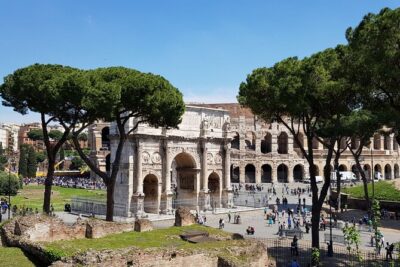
After Circus Maximus, you continue toward Palatine Hill for views. You’ll see the Arch of Constantine, the largest triumphal arch of Ancient Rome, located a short distance from the Colosseum.
The origin story is also worth knowing. The senate dedicated the arch to honor the emperor as the liberator of the city and bringer of peace. The tour context explains that the senate also had political motives, ingratiating themselves with every emperor, while also recognizing Constantine as an effective leader.
This segment works best if you like photos and perspective. You’re capturing scale and placement, and you are getting that “Rome is layered” feeling without needing to hike.
The Colosseum From the Outside, Plus a Bubbly Photo Break
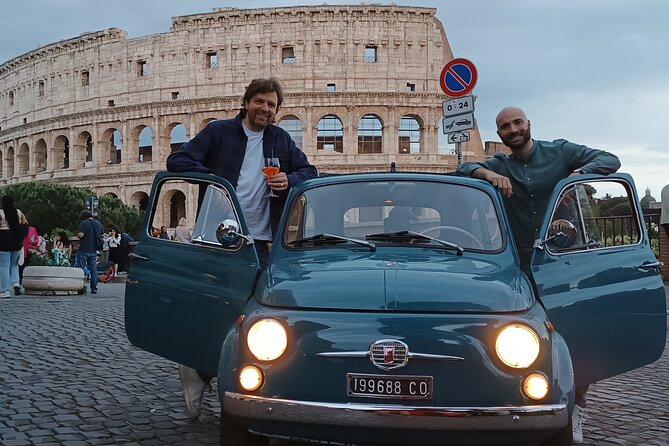
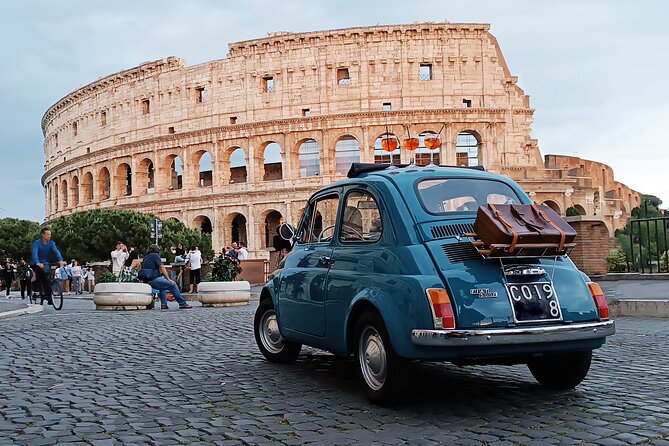
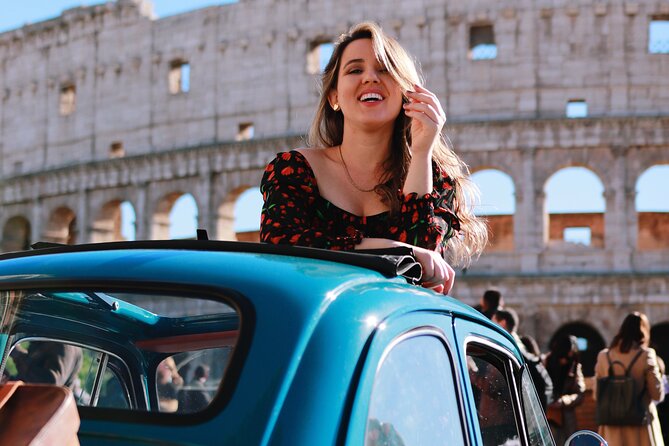
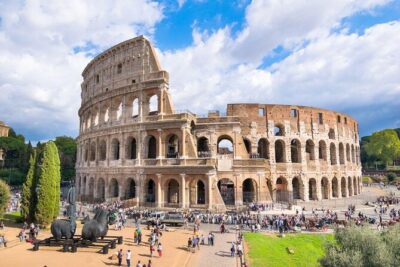
Now for the big one: the Colosseum. The tour includes passing by the Colosseum and then taking a longish panoramic break.
The time here is about 30 minutes, and the visit is outside only. Admission is not included. So this is a photo and viewpoint moment, not a ticketed archaeological visit.
What I like about this setup is that it respects time and keeps the focus on getting you the picture you want without turning the day into a queue-management exercise. The tour includes a break with a panoramic view and the chance to sip an excellent glass of bubbles overlooking the Colosseum.
If you come to Rome wanting the inside ruins experience, you might still want a separate Colosseum ticket tour later. But if you want the Colosseum moment as part of a bigger day, outside-only can be the right call.
After that, you continue to the vault of the Papal Basilica of Santa Maria Maggiore. The point here is that it is one of the four papal basilicas of Rome, and it is the only one that has preserved early Christian structures. Even if you are not going deep into interiors, this stop gives you a bridge from ancient public spectacle into early Christian Rome.
San Giovanni in Laterano: Rome’s Mater et Caput
Next you discover Arcibasilica di San Giovanni in Laterano. You’ll hear it as the “Mater et caput” of all the churches of Rome and the world.
This is a meaningful name to know because it frames the church not only as a beautiful building, but as a symbolic center. The tour describes it as the Archbasilica of the Most Holy Savior and of Saints John the Baptist and Evangelist, commonly known as San Giovanni in Laterano.
Expect about 10 minutes. That might sound short, but the value is in orientation. You come away understanding why this basilica matters, and you get another major Rome landmark without losing the momentum of the tour.
Giardino degli Aranci at the Aventine: The Final View That Makes It Feel Complete
The tour ends at Giardino degli Aranci, which is Parco Savello on the Aventine hill. It’s a park of about 7,800 square meters, and it is known for a great view over the city.
The tour notes about 15 minutes here, and it also says the remaining time is spent commuting and enjoying free time. That makes this ending feel intentional. You get one last scenic payoff after a day packed with monuments and names.
If you are doing Rome for the first time and you want a gentle landing after busy sightseeing, this ending is a smart touch. You can slow down, take in the skyline, and connect what you saw earlier with the way the city looks from a hill.
Price and Value: Is $180.62 Fair for This Vintage Fiat 500 Tour?
At $180.62 per person, you are paying for a few things beyond “a ride with photos.”
First, it includes the aperitif with Prosecco or Aperol Spritz, plus coffee and/or tea and snacks. That’s not trivial in Rome, where you can easily spend a chunk of money just trying to keep energy up between sights.
Second, you get pickup options, either from your hotel or from a convenient pre-arranged location. Rome navigation can be time-consuming. That alone can protect part of your day.
Third, the experience is private, meaning only your group participates. Private tours generally cost more, but they also mean you are not stuck waiting for unrelated people to return from photos, or trying to hear instructions over constant group noise.
Finally, the itinerary is designed for “big names” in limited time: Piazza Venezia, Trajan’s Column, Bocca della Verità, Circus Maximus, the Colosseum exterior viewpoint, and finishes at San Giovanni in Laterano and Giardino degli Aranci.
The one place to watch your expectations is admissions. The Colosseum is outside only and not included, even though you get a panoramic view and the bubbles break. If you want inside access, you should plan a separate ticketed visit.
Who This Tour Fits Best (And Who Might Want Something Different)
This tour is ideal if you:
- Want the classic Rome highlights without spending your day trapped in transit
- Like photo stops but also want a guide to explain what you are seeing
- Appreciate a fun, light mood, with an aperitif and snacks included
- Are short on time but still want a coherent route through ancient and religious Rome
It may be less ideal if you:
- Want a ticketed Colosseum interior visit, since the Colosseum stop is explicitly outside only
- Prefer long stops at a single monument, because the pacing is built for multiple sites
Also, the tour requires good weather. If you are traveling during a rainy stretch, plan flexibility in your schedule.
Should You Book the Vintage Fiat 500 Tour of Rome?
Book it if you want a smooth, memorable circuit of Rome’s headline sights, guided in a way that helps everything connect. The vintage car is not just decoration, it sets the tone and helps you cover ground without feeling like you are sprinting. The included Prosecco or Aperol Spritz plus snacks also makes the whole experience feel like a treat, not a chore.
Skip or pair it with a different plan if your top priority is entering major sites like the Colosseum. This tour is built for views, viewpoints, and orientation. It ends on a strong scenic note at Giardino degli Aranci, which is a great way to finish a tight sightseeing block.
If you like Rome best when it feels personal, fast, and story-driven, this one is a very solid choice.
FAQ
How long is the Rome tour in a vintage Fiat 500?
The tour lasts about 2 to 3 hours.
What is the price per person?
The price is $180.62 per person.
Is pickup offered, and where does it happen?
Yes, pickup is offered. You can be picked up directly at your hotel, or at a pre-arranged location convenient for you.
Is the tour private?
Yes, it is a private tour, so only your group participates.
What is included during the tour?
The tour includes an aperitif with Prosecco or Aperol Spritz, coffee and/or tea, and snacks.
Do I need admission tickets for all stops?
Admission is not included for the Colosseum, and it is outside only. Other listed stops are marked as admission ticket free.
What if the weather is bad or I need to cancel?
The experience requires good weather. If it is canceled due to poor weather, you will be offered a different date or a full refund. You can cancel up to 24 hours in advance for a full refund.
More Tours in Rome
More Tour Reviews in Rome
Not for you? Here's more nearby things to do in Rome we have reviewed












Tours, compared.
 ★ 4.3Vatican Museums & Sistine Chapel Tour with Optional BasilicaFrom $7967,413 reviews
 ★ 4.5Vatican Museums, Sistine Chapel & St Peter’s Basilica Guided TourFrom $2239,149 reviews
 ★ 4.8Colosseum, Palatine Hill and Roman Forum Guided TourFrom $5232,814 reviews
 ★ 4.7Guided Tour of Colosseum, Roman Forum & Palatine HillFrom $5527,897 reviews
 ★ 4.5Colosseum, Roman Forum and Palatine Hill Guided TourFrom $5923,903 reviews
 ★ 4.3Vatican Museums, Sistine Chapel & Basilica TourFrom $13013,872 reviews
 ★ 4.4Colosseum, Forum & Palatine Hill Tour & Optional ArenaFrom $5813,839 reviews
★ 4.7Vatican Museums, Sistine Chapel & Basilica TourFrom $7213,217 reviews