
Reviewed · TOURS
The ORIGINAL Fiat 500 Tour of Rome’s 7 Hidden Gems
Rome changes fast when you leave the main streets.
This vintage Fiat 500 tour takes you through Rome’s tucked-away corners with a morning or afternoon departure, plus a driver who helps you turn quick stops into great photos.
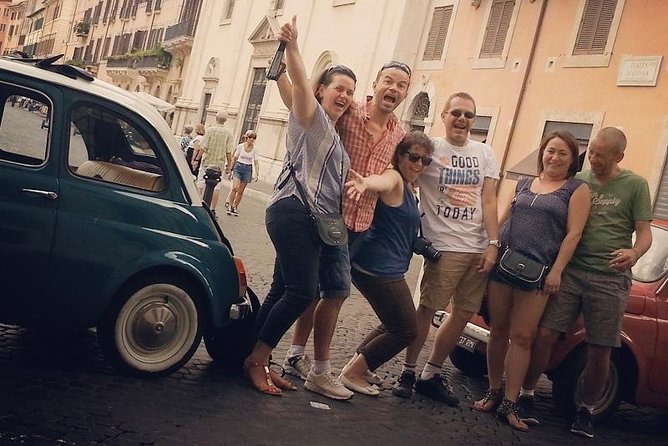
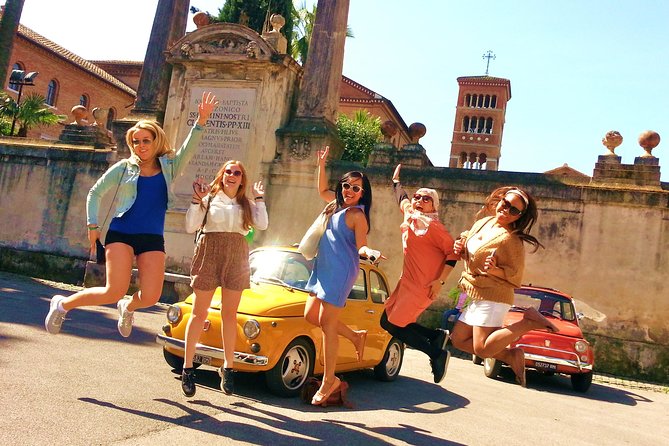
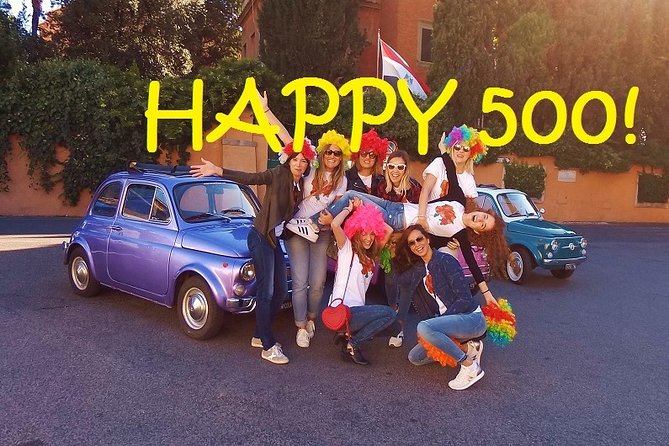
I especially love the free photo shooting with your own phone or camera, and how the driver and guide help you look like you planned it. I also like the small-group feel for a shared tour that can include up to 20 people, so you are not stuck listening from the back of a giant bus.
One consideration: the cars have no safety belts in the back seats and no airbags, plus there is a weight limit of 100 Kg. If you are tall, mobility is a concern, or you prefer bigger cars, this matters.
Key highlights at a glance
- Vintage Fiat 500 convoy: Get Rome views while riding a classic car through streets buses cannot reach easily
- Driver as photographer: You get help staging shots with your own device
- Paced route with short stops: About 20 minutes at each mapped stop, timed for a 3-hour loop
- Multiple panoramic viewpoints: Terraces and viewpoints are part of the plan, not an afterthought
- Caracalla to the Colosseum: Ancient sites appear back-to-back, without a long walk
- Most stops show free admission: The itinerary lists free entry for each stop you visit
Why a Fiat 500 tour feels different than a big bus
Rome can feel like one long queue if you pick the wrong format. This tour swaps the slow, one-size-fits-all rhythm for a chauffeured classic Fiat 500 ride in a convoy. You still see big-name landmarks, but you also get to thread through narrower lanes, where a compact car feels made for Rome.
The setup is also built for your comfort level. The tour is about 3 hours, and the route is broken into quick stops, around 20 minutes each. That means you can sample more neighborhoods without wearing yourself out. It is also offered in English, with the possibility of a multi-lingual guide.
And yes, the photos are a real part of the package. The driver and guide handle the posing and timing, which is what you want when your camera roll is currently just awkward faces at street corners.
You can also read our reviews of more tours and experiences in Rome.

The route in real life: 9 stops, timed for photos and quick context
Despite the tour name, the standard itinerary runs like a tight sampler with nine mapped stops. You will not be parked at one site for a long visit. You should treat it like: arrive, learn a few key points, look around, grab photos, move on.
That pacing is a gift if you are short on time and you want to get your bearings fast. It can be frustrating if you were hoping for a long, slow, in-depth museum-style experience at the Colosseum or Caracalla.
A final planning note: the cars have no air bags, and back seats do not have safety belts. If you are sensitive to that, ask where you will sit when you arrive, and keep your expectations realistic for a classic-car ride.
Caracalla: the giant Roman baths complex you can picture instantly
Stop one takes you to Caracalla, an enormous ancient baths and health center complex. The scale is one of the most useful details I would want you to have in advance. It is described as big as 15 football pitches, which helps you understand why even a short stop can feel dramatic.
Caracalla was not just about bathing. The site also connects baths with a bigger life system: Greek and Roman libraries, gyms, theatre, seminar rooms, gardens, and fountains. Roman emperors really did try to wow people with architecture that served daily life and status at the same time.
What you should expect on this tour: a short window to take in the ruins and connect the dots. It is not presented as a deep dive, so bring your curiosity and be ready to absorb the highlights quickly.
Piazza dei Cavalieri di Malta: the famous keyhole view
Next you will reach Piazza dei Cavalieri di Malta, where the draw is the keyhole viewpoint. The idea is simple, and that is what makes it so fun: when you look through the keyhole, you can line up views across three countries.
This is one of those Rome moments that feels small until you actually do it. The tour frames it as the explanation behind why St. Peter’s Church appears as if it is framed just right. If you care about photos, this stop is basically built for your camera, especially since you will be near your classic car for extra shots.
The tradeoff: with only about 20 minutes, you have to be ready to move efficiently. If there is a line or lots of people aiming their phones, you will want to position yourself early.
Parco Savello: the Garden of the Oranges illusion and a romance factor
The tour’s third mapped stop is Parco Savello, also nicknamed the Garden of the Oranges. The standout detail here is the optical illusion tied to St. Peter’s. You are meant to notice how the viewpoint makes the church appear in a way that feels almost too perfect to be accidental.
This is also described as the Garden of the Lovers, which is not just marketing. Rome viewpoints earn that reputation because they work. A panoramic viewpoint plus a clear sightline gives you that slow, dreamy feeling without needing a full day.
Again, time is short, so come prepared to do two things well: look first, then photograph second. If you rush to photos, you can miss the trick the place is known for.
Trastevere by tiny streets: the thrill of seeing Rome at car speed
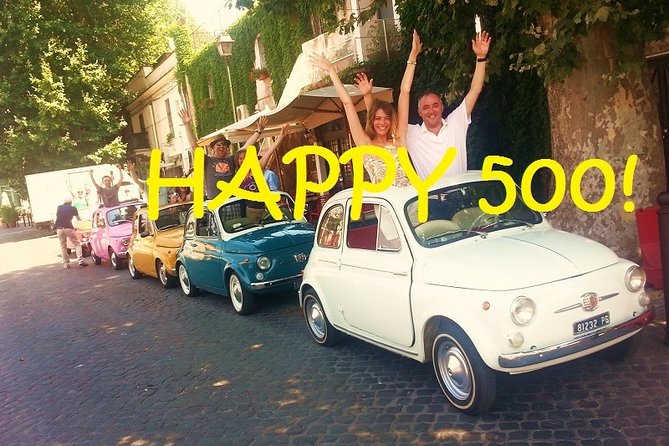
Then you shift into Trastevere, where the streets are tight and the pace changes. This is the stop where the Fiat 500 concept really earns its keep. The tour positions it as a ride experience, not a walking tour, which matters in a neighborhood where the charm comes from the narrow lanes.
You will whiz through small streets aboard the classic car, and you will likely get plenty of onlookers and photo interest as you pass. That does not mean the tour ignores the context. The guide adds history and practical tips as you go, and it helps you connect what you are seeing with what you will notice later if you return on your own.
Downside: Trastevere is not a place you can fully absorb from a moving car. If you want to linger over details like doorways, courtyards, or small churches, you will still need a later self-guided visit. This tour is for snapshots and orientation, not for slow immersion.
Piazzale Giuseppe Garibaldi: the terrace with Colosseum, Pantheon, and more
The next viewpoint stop is Piazzale Giuseppe Garibaldi, described as one of the best panoramic terraces. The tour gives you a helpful mental checklist for what to look for: the Colosseum, the Pantheon, Altare della Patria, and the idea of seeing 100 church domes across the city.
That list is valuable because it turns a vague viewpoint into a map you can actually use. If this is your first day in Rome, you will leave with a stronger sense of where the landmarks sit relative to each other.
The short timing is the main constraint. If the wind or crowding makes you wait for a clear sightline, your time shrinks fast. Keep your phone ready, but also take one good look with your eyes before you start shooting.
Circus Maximus: ancient racing energy without the crowd crush
Your next ancient stop is Circo Massimo, where the tour focuses on the spectacle of Roman chariot races. You get an emotional anchor through numbers: a scale tied to an imagined 250,000 excited crowd, echoing through the space like a scene from Ben-Hur.
The tour also stresses how old this is. It is described as built about 400 years before the Colosseum, and for centuries it held the big fast race energy of the ancient world. Today, the area is also used sometimes for rock concerts, with examples named like The Rolling Stones and other well-known international acts.
What makes this stop worth your time on a car tour is that it gives context. You look at the landscape and understand what it meant, not just that it exists. Since your stop is about 20 minutes, you should focus on understanding the shape of the space and letting the guide’s story do the heavy lifting.
Porta San Paolo: the Egyptian pyramid in Rome
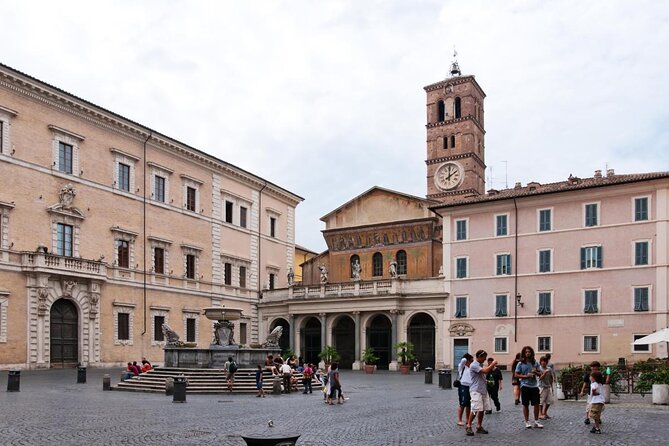
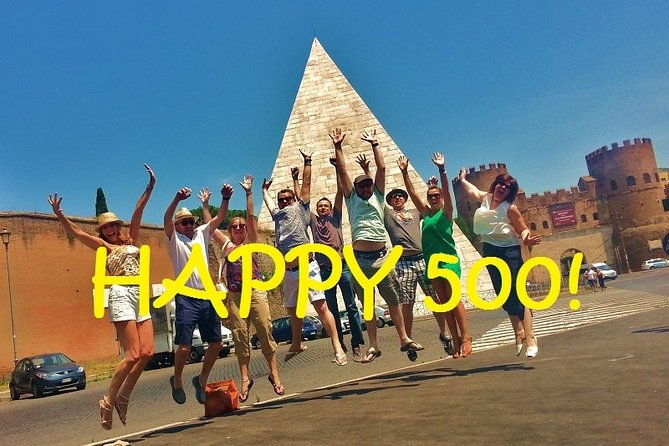
Then you roll to Porta San Paolo, where the highlight is a surprising Egypt connection. The tour claims it contains the 4th biggest ancient Egyptian pyramid in Rome, built around 18 BCE and linked as a tomb for Gaius Cestius.
This is a stop that changes your sense of what Rome includes. If you have only been thinking about classical Roman and Renaissance Rome, this sort of architectural oddity makes the city feel bigger and stranger in the best way.
Time is short, but this is exactly the kind of spot where a short stop still delivers value because the subject is so distinct. You will likely understand why it gets mentioned even after the tour is over.
Via Galvani: the hill made from broken pottery
Next is Via Galvani, a stop that sounds quirky until you learn what it actually represents. The tour describes an artificial hill built from pieces of vessels used to ship things like olive oil, fish sauce, and wine. Over centuries, what started as broken pottery became a raised landscape.
The numbers help here: the hill is described as around 40 meters high and 700 meters around the circumference. It is also estimated to involve terracotta from about 50 million vases.
This is the sort of Roman fact that sticks because it reframes the city. You look at a street or a slope and suddenly you think, someone created this. That is why short stops like this can beat longer bus rides. You leave with stories, not just photos.
Colosseum expectations: yes, you will see it, but plan for brevity
The route wraps with a Colosseum stop. The itinerary positions it as one of the seven wonders of the world, built around 80 CE and used for gladiator fights, executions, and even naval-style combat.
The guide story includes a dark scale: in a 500-year span of activity, the estimate given is around 250,000 people. That is heavy subject matter, and this tour’s pacing means you will not sit there for a long contemplative visit.
So, here is my practical advice. If your dream is a long Colosseum visit with lots of walking and reading, you should plan a separate time for that. If your goal is to make the Colosseum part of a wider orientation loop, this stop works well because you will connect it to other ancient sites you saw earlier.
Also, one caution based on typical tour pacing: the tour is built to cover many stops in about 3 hours. That means any single location visit is short. If you are someone who needs extended time to feel satisfied, you may want to pair this with another booking or a later self-guided revisit.
What’s included, and what to bring so the 3 hours go smoothly
Here is the practical package you can count on. The tour includes the driver/guide, a convoy tour format, and light refreshments. You also get a mobile ticket, and the itinerary lists free admission at the stops it names.
You also get free photo shooting using your own phone or camera. That is not just a nice bonus. It matters because classic cars attract attention, and having someone time the shot saves you from that awkward scramble.
What you should bring is simple: water for the ride, comfortable shoes for any quick stair steps or uneven ground at viewpoints and ruins, and a charged phone or camera. If you use mobility aids, keep the safety information in mind, plus the fact that classic cars are small and entry can take some effort.
Price value at about $205.67 per person
At $205.67 per person for roughly 3 hours, this is not a bargain-basement deal. You pay for three main things: the vintage car format, the guided storytelling, and the photo help.
If you are comparing it to a standard walking tour, the biggest difference is comfort and coverage. You cover more Rome in fewer hours, and you get viewpoints and ancient sites without long transfers. If your group includes teenagers or people who tire easily, the car format can make history feel less like homework.
On the flip side, you need to be comfortable with short time at each stop. This is not the right choice if you want a slow, deep, museum-level experience. You are buying motion plus context, not hours alone in the best parts of each site.
One more value note: with most stops listed as free admission, you are not stacking extra ticket costs on top. That makes the all-in feel better than many tours where the headline price hides paid entries.
Who should book this Fiat 500 loop
This tour fits best if you fall into one of these groups:
- You are seeing Rome for the first time and want a strong orientation fast
- You want photos and a memorable vehicle moment, not just explanations
- You prefer less walking and more guided stops
- Your party includes mixed ages, including teens who need a fun hook for history
It may not fit if:
- You want a long Colosseum visit or long stays at any one site
- You need full accessibility support
- You are sensitive to classic-car safety constraints, with no safety belts in back seats and no airbags
If you’re choosing a guide: names you may run into
English is listed as available. A multi-lingual guide may operate the tour, depending on the day.
From past departures, you may see guides such as Francesco, Alexis, Alexi, Emmanuelle, Giorgio, Max, Marco, Mike, Michael, or Stephanie. That is not a guarantee for your specific date, but it shows the range of personalities that can lead the ride, and the guide role is a big part of why this tour is fun instead of just transportation.
Should you book Rome’s original Fiat 500 tour of tucked-away sights?
I think it is a strong yes if you want Rome to feel playful while still learning the important context. The vintage car element is not a gimmick here. It directly affects where you can go and how you experience neighborhoods like Trastevere.
Book it if you are okay with short stops and you trust the guide to turn quick moments into meaningful ones. You will come away with better bearings, a set of great photos, and several Rome stories you will keep telling later.
Skip it if you need deep time at big ticket sites, or if classic-car safety and entry could be an issue for your group. In that case, you might get more value from a standard walking-and-ticket plan.
If you do book, pick morning or afternoon based on your energy, charge your phone, and treat each stop like a chapter, not a full book. That mindset matches the design of the tour and makes the three hours feel like you did much more than you actually sat through.
FAQ
How long is the Fiat 500 tour?
The tour lasts about 3 hours.
Where does the tour start and end?
It starts at Via Labicana, 125, 00184 Roma RM, Italy, and it ends back at the same meeting point.
What language is the tour offered in?
English is listed as available. The tour may also be operated by a multi-lingual guide.
How many people are on the tour?
The tour can have up to 20 travelers.
Is there a minimum or maximum number of travelers per booking?
A minimum of 2 people is required per booking. The maximum shown per booking is 3 people.
Are admission tickets included for the stops?
The itinerary lists admission ticket Free for the named stops.
Is a mobile ticket provided?
Yes, the tour includes a mobile ticket.
Are there safety restrictions in the car?
No safety belts are installed in the back seats, and there are no air bags in the car. The tour is not suitable for passengers weighing more than 100 Kg.
What is included besides the driver/guide?
You get a convoy tour, light refreshments, and free photo shooting using customers’ cellphones or cameras.
What is the cancellation policy?
You can cancel for a full refund up to 24 hours in advance of the experience start time.
More Tours in Rome

More Tour Reviews in Rome
Not for you? Here's more nearby things to do in Rome we have reviewed








Tours, compared.
 ★ 4.3Vatican Museums & Sistine Chapel Tour with Optional BasilicaFrom $7967,413 reviews
 ★ 4.5Vatican Museums, Sistine Chapel & St Peter’s Basilica Guided TourFrom $2239,149 reviews
 ★ 4.8Colosseum, Palatine Hill and Roman Forum Guided TourFrom $5232,814 reviews
 ★ 4.7Guided Tour of Colosseum, Roman Forum & Palatine HillFrom $5527,897 reviews
 ★ 4.5Colosseum, Roman Forum and Palatine Hill Guided TourFrom $5923,903 reviews
 ★ 4.3Vatican Museums, Sistine Chapel & Basilica TourFrom $13013,872 reviews
 ★ 4.4Colosseum, Forum & Palatine Hill Tour & Optional ArenaFrom $5813,839 reviews
★ 4.7Vatican Museums, Sistine Chapel & Basilica TourFrom $7213,217 reviews
★ 4.4Colosseum, Forum & Palatine Hill Tour & Optional ArenaFrom $5813,839 reviews
★ 4.7Vatican Museums, Sistine Chapel & Basilica TourFrom $7213,217 reviews