
Reviewed · ROMAN FORUM & PALATINE TOURS
Small-Group Tour of Roman Forum & Palatine Hill
Forum ruins. Palatine views. One tight guided walk.
This small-group tour is built to help you check off Roman Forum and Palatine Hill in roughly 90 minutes, while a guide connects arches, temples, and emperor paths into a story you can actually picture.
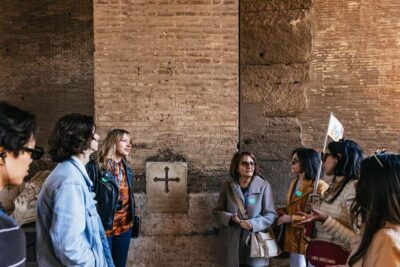
I love that you get live guidance through the key forum power centers, and I love the comfort win of sterilised headsets so the guide stays easy to follow even in crowded stone corridors. You also have enough time to hit the viewpoints without feeling like you’re speed-walking through everything.
The main thing to plan for is mandatory security checks at the Roman Forum entrance, with waits that can run from 5 to 30 minutes depending on the season.
Key reasons this tour works
- Small group cap of 24: more personal attention than big bus-style crowds.
- Headsets included: you hear the guide clearly, even when you’re tucked in tight ruins.
- Big sights, short time: you hit multiple iconic stops without needing a half-day commitment.
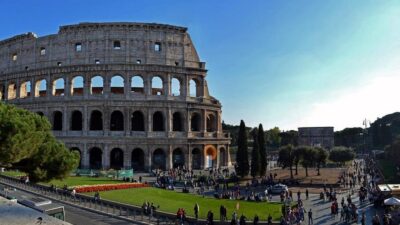
- Colosseum views included as a payoff: you get skyline moments from the Temple of Venus and Roma plus Palatine Hill.
- Security is part of the deal: arrive early so your tour time stays enjoyable, not stressful.
Value for $83.13: what you are actually buying
At $83.13 per person for about 90 minutes, this is priced like a focused guided orientation, not a full day of roaming. The value comes from two things you can’t easily DIY: a guide who ties together what you’re seeing, and included entry to the Roman Forum and Palatine Hill.
You are also getting some practical extras baked in. The tour provides live professional guidance, plus sterilised headsets, which matter a lot in outdoor ruins where it’s easy to lose the thread. The mobile ticket is another real-world convenience for saving time, as long as you show up ready with your documents.
If you are thinking, I can just go on my own, the honest answer is: you can. But the guide adds meaning fast, especially in places like the Senate House area and the emperor-world spaces on Palatine Hill, where it’s easy to see ruins and still miss how the whole place functioned.
You can also read our reviews of more tours and experiences in Rome.



Meeting at Piazza del Colosseo 21 and beating the security line
The tour starts at Piazza del Colosseo, 21 (near the Colosseum area). The meeting point matters because it puts you close to the forum entry flow, but you still have to deal with strict security.
Here’s the part that can make or break your experience: you need to be at the meeting point 10 minutes before start time to sign up and clear the mandatory checks. Expect waits of 5 to 30 minutes to get through security at the Roman Forum, and that range can shift with season.
Plan your day like this:
- Give yourself extra buffer around the scheduled time.
- Wear comfortable shoes, since there’s a moderate amount of walking.
- Keep your bag small, because trolleys and large backpacks are not allowed inside.
Also, keep your paperwork matching exact names. Each traveler must present a valid passport or ID document that matches the name used at booking for successful entry.
Stop 1: Arch of Constantine, a triumphal opener
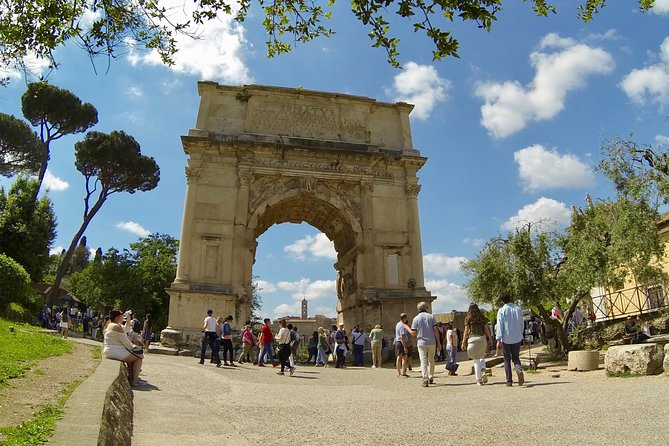
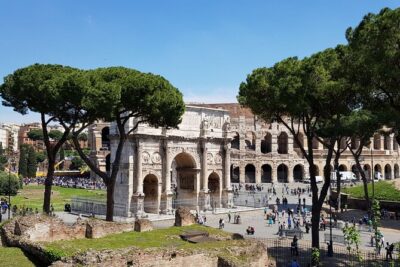
You start with the Arch of Constantine, one of the big triumphal arches from Roman history. Even if you’re not a “stand-and-stare” person, this is a smart first stop because it sets the tone for what you’ll see next: Rome liked to broadcast power in stone.
The stop is short, about 5 minutes, and that’s by design. You’re not meant to spend your day counting decorative details on the arch. Instead, this quick opener gives your guide an entry point to talk about how Romans celebrated wins and shaped public memory with architecture.
Stop 2: Roman Forum, temples, punishments, and the Republic in motion
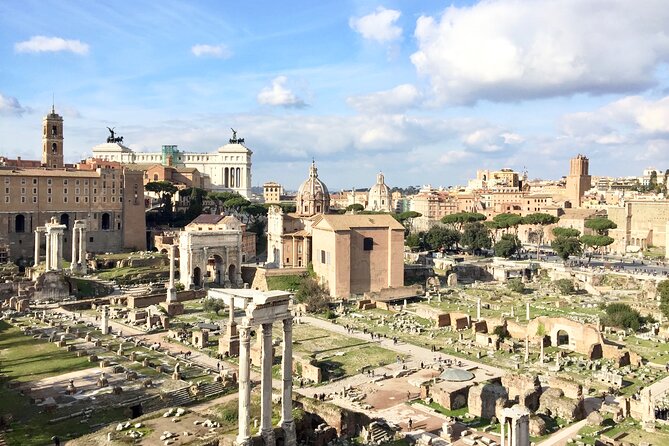
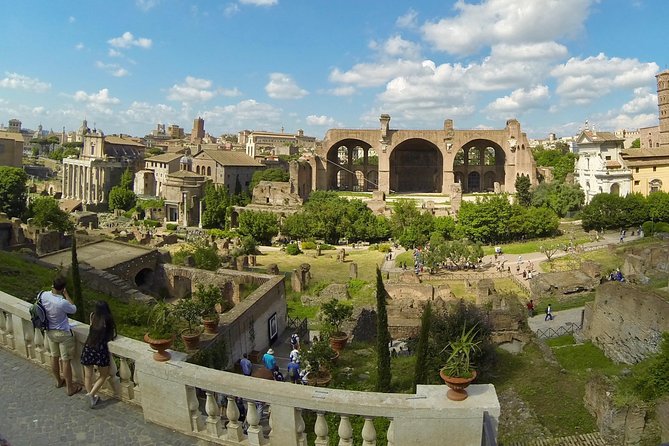
The Roman Forum is the heart of the tour, with about 30 minutes in this main area. This is where the guide’s job really shows.
You’ll hear about the Vestal Virgins, including gardens and the pagan Temple of Vesta, and you’ll also see how religious roles sat close to political power. The tour also touches on penal systems in Ancient Rome and how that connects to Christianity, which can sound like a leap until someone points to the continuity of ideas about authority and punishment.
Then the conversation broadens across famous forum structures:
- Basilica Julia, tied to law and civic life
- The Senate House, where senators decided the Republic’s fate
- The climax point in the story of Julius Caesar, including the murder and cremation
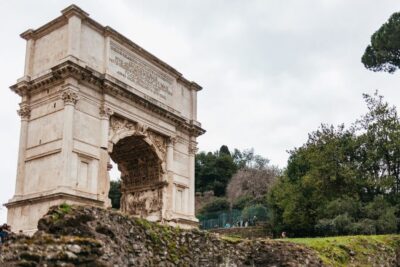
You’ll also encounter the Temple of Castor and Pollux, and the Arch of Titus, which sets you up for the tour’s later look at how later empires borrowed Roman imagery.
A key value here is pacing. In a space like the forum, it’s easy to wander aimlessly. The guide keeps you moving through the logic of the place so you don’t come away with a list of monuments. You come away with an outline of how Rome ran, argued, and punished.
Stop 3: Basilica Julia, where civic business felt real
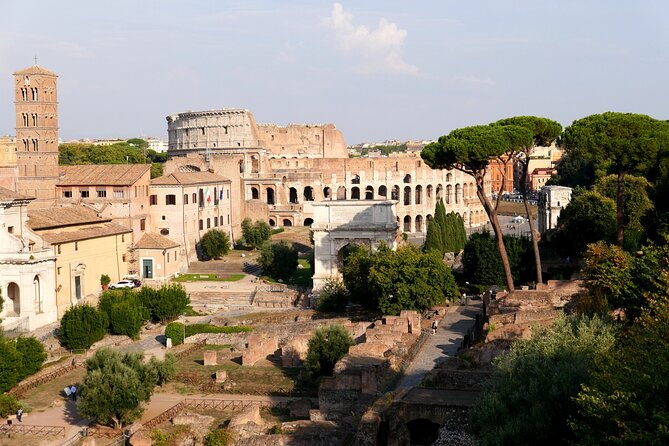
After the main forum section, you hit Basilica Julia for about 5 minutes. This is one of those ruin stops that can look “just another wall” if you’re not given context.
On this tour, the context matters: Basilica Julia connects to the Senate House storyline and to how Roman civic life unfolded in public space. You’ll get a clearer sense of why these buildings were built where they were, and what kind of gatherings they were designed to host.
The time here is short, so treat it like a stop for clarity, not a stop for lingering.






Stop 4: Basilica of Maxentius, the scale you feel in your bones
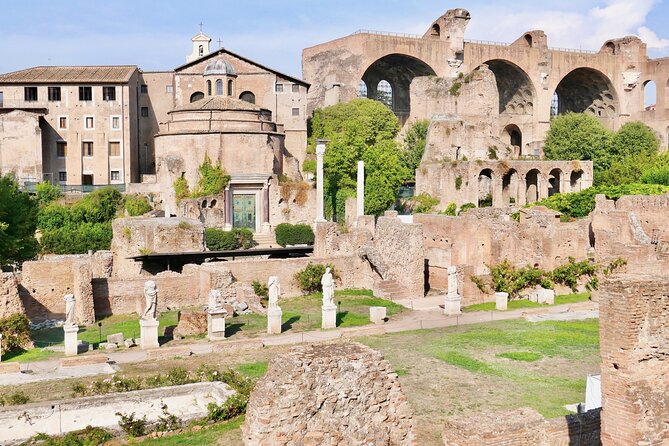
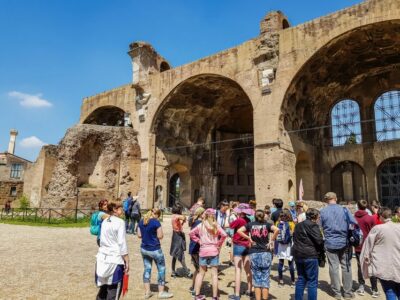
Next is the Basilica of Maxentius, again about 5 minutes. The highlight is the sheer scale. This ruin was once the largest building in the Roman Forum, and that size helps you understand why it mattered.
The tour frames it as an influence on later architecture, including a recognizable modern reference: it inspired designs for buildings like New York City’s former Penn Station. That kind of comparison is useful because it pulls you out of pure ruin appreciation and into “okay, this is why the Romans mattered to later builders.”
In other words, the guide helps you see this not just as ancient debris, but as a design that traveled through time.
Stop 5: Arco di Tito, Roman spectacle that echoes forward
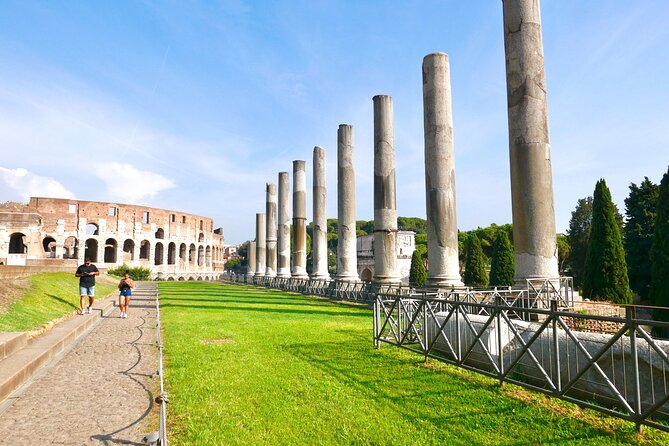
The Arco di Tito stop is quick, about 5 minutes, but it’s packed for anyone interested in how propaganda works.
This arch provides a clear story hook: it influenced later triumphal design, including the Arc de Triomphe in Paris. So you’re seeing more than a Roman artifact. You’re seeing how the idea of celebrating victory got reused again and again.
If you’ve ever wondered why some monuments feel like they’re trying to control the narrative, this is the kind of stop that gives you an answer.
Stop 6: Temple of Venus and Roma, best Colosseum view payoff
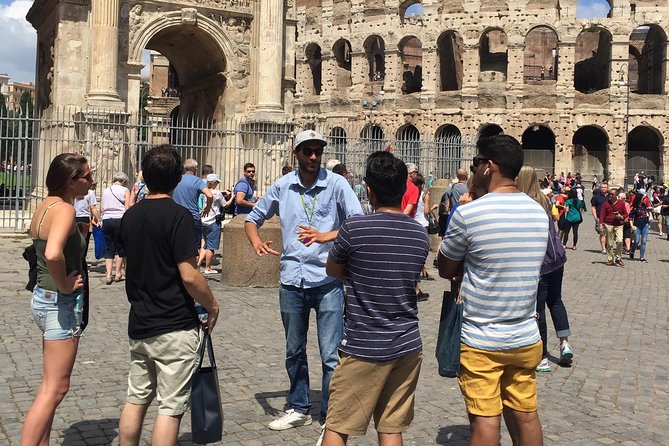
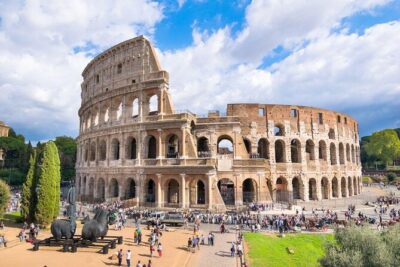
Then comes one of the easiest “yes, this was worth it” moments: the Temple of Venus and Roma. The tour presents it as a place with the best view of the Colosseum.
You also get to connect the dots between religion, public life, and the grand imperial face Rome liked to show. The ruins here are not just scenic. They’re part of the city’s larger visual strategy, where big structures were positioned to be seen, not hidden.
At about 5 minutes, you won’t have time to settle in for a long photo session, but you’ll likely get enough time to enjoy the view and understand why it’s a favorite.
Stop 7: Palatine Hill, emperor paths and Romulus and Remus
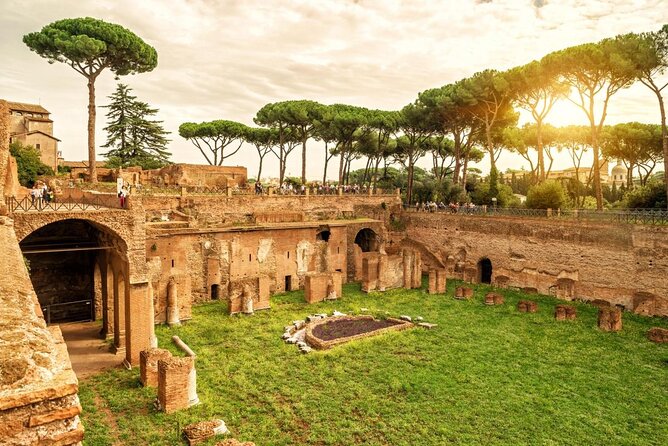
Palatine Hill is the tour’s longer payoff stop, around 35 minutes. This is where the atmosphere shifts from “city center ruins” to “who lived where, and why it mattered.”
You’ll walk paths connected to Roman emperors and the hill’s legendary roots tied to Romulus and Remus, the myth behind Rome’s founding. The guide also explains how Palatine later became one of the most exclusive areas of Ancient Rome, which helps you imagine the difference between ordinary public space and the elite world.
The viewpoint is a major reason this stop works. You’ll get breathtaking views over the Colosseum and Roman Forum, and those angles are exactly what make the rest of the story land. Seeing the terrain from above is one of the few ways to make the forum feel like a real place with real distances and sightlines.
Circus Maximus from the Palatine heights, set expectations
After Palatine Hill, you get a bird’s eye look over Circus Maximus. This part is framed as imagination as much as sightseeing: your guide talks you through Roman Games, chariot races, and gladiator fights, then connects it to early myths and gods tied to the Circus’s foundations.
One important caution: on this tour, Circus Maximus is presented as a viewpoint experience. The entrance fee to the Circus Maximus is not included, so you should not assume you will be walking the Circus grounds as part of this paid package.
If Circus Maximus is your top must-see, treat this as a “see from above and understand the scale” moment, then plan extra time for a separate visit to go deeper.
Staying in the archaeological area after the tour
At the end of the official tour, you finish inside the Roman Forum, and you can stay in the archaeological area as long as you wish. That matters because it gives you control over what you didn’t fully absorb during your guided window.
If you felt rushed at any specific structure, you can return for a slower look once your guide heads out. It also works well if you want to match what you learned to what you notice on your own.
Guides you might encounter, and why it affects the value
This tour’s reviews and feedback point to guides making a big difference. People call out guide styles that are warm, humorous, and able to keep attention even when it’s hot or when entry takes longer than expected.
Two guide names come up: Francesca is described as warm and personable, and Rosy is praised as an excellent guide. You’ll also benefit if your guide adapts to the group. One shared positive note was about a guide taking mobility needs into account and giving direction to help people keep moving comfortably.
That adaptability is hard to measure before you go, but it’s a key reason I think small-group tours can be worth it even when the price is not “cheap.”
Who should book this tour, and who should choose something else
This tour is a great fit if you want:
- A tight, high-impact Roman Forum introduction
- Included entry to Roman Forum and Palatine Hill
- Easy-to-follow explanations with headsets
- Colosseum viewpoints without buying extra tickets for that view
It’s also a smart pick for first-timers, because you’ll get a guided framework for where everything sits and what each major structure was for.
You might want a different plan if:
- You specifically need a long, ground-level exploration of Circus Maximus, since the Circus part here is mainly a view from Palatine Hill and the entrance fee is not included.
- You hate security lines and need a super flexible schedule. The mandatory checks mean you should arrive early and accept that timing can shift.
Should you book the Small-Group Tour of Roman Forum and Palatine Hill?
If you’re the kind of traveler who likes to understand what you’re looking at, this is an easy yes. For about $83.13, you get included entry to the two biggest draw areas, a guided path through the biggest story points, and headsets that keep the experience from turning into guesswork.
Just make one smart adjustment: arrive early enough to handle security without stress, and don’t treat the Circus Maximus element as full admission to the grounds. If you go in with those expectations, you’ll leave with a clear mental map of how Rome worked, from the forum’s public power to Palatine’s emperor world.
FAQ
How long is the Roman Forum and Palatine Hill small-group tour?
It runs about 1 hour 30 minutes.
What is included in the ticket price?
The price includes a live professional guide, sterilised headsets, and entrance fees to the Roman Forum and Palatine Hill.
Is the Colosseum included?
No. Entrance to the Colosseum is not included.
Do I need a passport or ID for entry?
Yes. Each traveler must present a valid passport or ID document that matches the name provided at booking.
How long should I expect to wait at security?
You should expect to wait about 5 to 30 minutes to clear the mandatory security checks, depending on the season.
How big is the group?
The tour has a maximum of 24 travelers.
More Tours in Rome
More Tour Reviews in Rome
Not for you? Here's more nearby things to do in Rome we have reviewed












Roman Forum & Palatine Tours, compared.
 ★ 4.8Colosseum, Palatine Hill and Roman Forum Guided TourFrom $5232,814 reviews
 ★ 4.7Guided Tour of Colosseum, Roman Forum & Palatine HillFrom $5527,897 reviews
 ★ 4.5Colosseum, Roman Forum and Palatine Hill Guided TourFrom $5923,903 reviews
 ★ 4.4Colosseum, Forum & Palatine Hill Tour & Optional ArenaFrom $5813,839 reviews
 ★ 4.6Colosseum, Palatine Hill & Roman Forum Guided TourFrom $5112,703 reviews
 ★ 4.6Colosseum Arena, Palatine Hill & Forum Guided TourFrom $7310,584 reviews
★ 4.4Colosseum, Roman Forum And Palatine Hill Guided TourFrom $428,420 reviews
 ★ 4.3Colosseum, Forum, & Palatine Hill with Audio GuideFrom $444,591 reviews
Browse the lists this tour appears in