
Rome turns spooky after dark. This night-time ghost walk through Lazio hits the city’s darkest corners, starting at Castel Sant’Angelo and working toward places tied to executions and real crimes. I really like how the route mixes big landmarks with darker, less-frequented corners, so you get a Rome feeling that’s all edge and atmosphere. I also like the storytelling tone, because the guide keeps it focused on specific locations instead of wandering off into vague spooky talk.
One thing to consider: it is a 2-hour walk at night with a moderate amount of walking, and it is not recommended if you have heart issues or mobility concerns.
Key moments you should care about
- Castel Sant’Angelo, the opening “tomb-turned-fortress” stop: You start at the ancient site that set the mood fast.
- Ponte Sant’Angelo Bridge area: Expect stories tied to an ancient prison for women and a notorious poisoner.
- Via Giulia and the Brotherhood of Mercy church: This is where the tour points you toward public execution history.
- Campo de’Fiori, a major execution site: A turning point before you move into the more paranormal elements.
- Dowsing rods at the “hot spots”: You do more than listen, you join the superstition side of the evening.
Why Rome’s past feels louder at night
Rome looks dramatic in daylight, but at night it changes its personality. Dark alleys, echoing stone, and street corners with less foot traffic make every story land harder. This is exactly why a paranormal and grim-executions format works so well here.
You’re also paying for a very specific kind of guide-led experience. At $36 for a 2-hour walking tour, you get a professional live guide and a planned route that strings together places you might otherwise skip. If you normally do hop-on, hop-off sightseeing, this is the opposite energy. It is slower, moodier, and more memorable because the locations have names and details attached.
You can also read our reviews of more tours and experiences in Rome.
Where the tour begins: Castel Sant’Angelo (the mood-setter)
Your night starts at Castel Sant’Angelo. The meeting point is at the end of the bridge in front of the fortress, and the guide will be holding a company-branded flag. Getting the first stop right matters, because this fortress-tomb is tied to Rome’s darker associations and sets the pace for everything that follows.
Castel Sant’Angelo is described as an ancient tomb turned Pope’s fortress. That mix of burial associations and power makes it perfect for a tour focused on grim executions and haunted legends. Even before you move, you get the sense that you’re stepping into a city layer that isn’t about shopping streets and photo spots.
Practical note: night walking is where comfortable shoes matter most. You’ll want something that grips, because you’re mostly on city sidewalks and uneven stone near old streets.
Ponte Sant’Angelo: women in prison and stories of poison
After Castel Sant’Angelo, you cross the Ponte Sant’Angelo Bridge area. This bridge is more than a way to get places, it’s part of the story. Here, the tour brings in ties to an ancient prison for women and mentions the home of a notorious poisoner.
I like this section because it connects the “paranormal” theme to real, name-like anchors. When a tour says poisoner, prison, and prison stories sit inside a recognizable place, it gives the evening a grounded feel. You’re not floating in general ghost lore. You’re walking a corridor where darker history is assigned to specific spots.
It’s also a good time to settle into the group rhythm. This is when a good guide can manage pace and keep everyone oriented, especially if your group includes different ages or language preferences.
Via Giulia and the Brotherhood of Mercy: where the public execution story lands
Next you stroll down Giulia Street, moving from bridge-side atmosphere into the core of Rome’s layered city streets. The tour’s highlight here is the Brotherhood of Mercy’s head church. This is presented as a grim execution setting, including the context that public executions were carried out in that area.
This stop can be emotionally heavy if you’re not used to darker topics. But it also makes the tour more than a casual haunted walk. When the story is tied to execution sites, you understand why Rome’s reputation for ghosts exists. It’s not random. It’s built from centuries of punishment, fear, and legend.
If you prefer tours that teach you something real while still staying spooky, this is where you’ll feel it. The route uses a location you can find on maps, but the guide turns it into a narrative you can carry home.
The John Paul Getty III kidnapping spot, a real-world shadow
The tour also points you toward the very spot where John Paul Getty III was kidnapped in the 1970s. This is a big shift, from older execution history to a modern, notorious crime.
That contrast is why this part works. Paranormal tours can sometimes lean too far into fantasy. Adding a real high-profile kidnapping connects the fear theme across time. It reminds you that unsettling stories happen in Rome not only centuries back, but in recent history too.
If you’re the kind of person who likes true-crime vibes mixed with atmosphere, this stop is a highlight. It also gives you something to talk about afterward, because it’s not just vague legend.



Campo de’Fiori: execution history and the route’s turning point
Campo de’Fiori is where the tour leans hardest into execution history. The tour frames it as once the site of thousands of brutal executions. After the bridge and church areas, this square gives the evening a different scale. You move from narrow-feeling streets into a place that reads like a stage for public events.
This stop also works well for photos, but your focus shouldn’t be on camera angles. Instead, I’d treat it like a listening moment. A darker-history walk gets best when you let the story slow you down.
Then comes the paranormal layer. Campo de’Fiori is where the tour shifts from grim past into paranormal “hot spots.”
How the dowsing rods moment changes the experience
The tour includes paranormal hot spots where you explore using dowsing rods. This is one of the few activities you do instead of only hearing about. It turns the tour into a shared game, with the guide setting the rules of the moment.
I like this because it adds participation. You’re not just standing still while someone tells you tales. You’re doing something small, hands-on, and that changes the energy in the group.
That said, keep expectations realistic. The value here is the experience and the mood, not scientific proof. If you want a hard-hitting historical lesson only, this may feel a little playful. If you want a night that blends story and participation, it’s a good match.
The guides: what repeatedly makes this tour work
The biggest strength of this type of tour is the guide. Here, the names that show up in standout feedback include Giuseppe, Fabiana, Josué, Mauricio, and Andrea. Across those descriptions, the common theme is engaging delivery, preparedness, and the ability to keep the group interested.
One small but important detail: a few guides are described as both animated and helpful with attention to individuals. In a walking tour, that matters. If the group is mixed in age or comfort level, you want someone who can pace the story and keep the walk from feeling rushed.
There’s also a review note that the storytelling was appropriate for kids of certain ages. That doesn’t mean every child will enjoy it, but it suggests the guide can tune the tone. If you’re traveling with teenagers or older kids who like spooky stories, this could be a fun night activity.
Languages and how that affects your evening
The tour guide works in Spanish, English, and Italian. Language matters for tours like this because the details are place-specific. You’ll get more out of the evening if your guide can deliver the story in the language you’re most comfortable with.
If you’re bilingual, you can also play a smart game: follow the location names and listen for key phrases tied to places. Even if you miss a line, the site anchors the meaning.
Price and value: $36 for a focused 2-hour route
At $36 per person for a 2-hour guided walk, this sits in the “worth it if you actually want a theme” category. It’s not a budget free-for-all, and it’s not a long sightseeing day either. You’re paying for two things: a planned night route and a professional live guide.
The value improves if you tend to like thematic tours. If you love local stories tied to streets you can stand on, you’ll use the time well. If you only want broad sightseeing without the darker edge, you may feel the price is high for a short evening walk.
Group size also affects how the guide can manage you. One feedback note mentions a small group and good individual attention. If your departure has room to breathe, this tour is easier to enjoy.
Weather, walking pace, and what to wear
This tour runs in all weather conditions. That means you should plan like it could be damp, windy, or cold. Dress appropriately for the season, and don’t assume perfect night weather just because Rome is usually pleasant.
You’ll have a moderate amount of walking, so comfort matters more than fashion. Choose shoes you trust on stone and uneven pavement. If you’re coming from a long day of museum time, this tour can still work, but plan for a slower rhythm.
Who should go, and who should skip it
The tour is not recommended for those with heart conditions or mobility impairments. It also is not suitable for wheelchair users. If you’re dealing with limited stamina or balance, this may be harder than a typical sightseeing stroll.
For the right traveler, this is a strong fit:
- Adults who like paranormal stories grounded in real places
- History-minded travelers who don’t mind darker themes
- People who want a night plan that is active but not exhausting
If you’re sensitive to execution-related stories, consider that before booking. The theme is part of the point, so the evening will follow that direction.
How the route feels as it builds dread and curiosity
The tour design is basically a slow ramp. It starts with a fortress-tomb mood, moves through bridge-side shadow stories, then goes to church and street corners tied to public execution history. After that, it adds a modern crime anchor with the Getty kidnapping spot, then brings you to Campo de’Fiori for a square-scale climax before the paranormal dowsing rod moment.
That build is why the experience can stay with you. You’re not hearing one spooky story. You’re getting a sequence that makes the city feel like a connected web of fear, rumor, and punishment.
Should you book Rome’s Ghostly Tour?
Book it if you want a night walking experience that’s specific, guided, and story-driven. The combination of Castel Sant’Angelo, Ponte Sant’Angelo, Via Giulia, the Brotherhood of Mercy church area, and Campo de’Fiori gives you a route you can’t easily recreate on your own with the same tone.
Skip it or think twice if you can’t handle a moderate night walk, you need wheelchair-friendly access, or execution-related topics are not your thing. Also keep in mind that like any tour, there can be last-minute hiccups. One piece of feedback notes an activity not taking place due to a late suspension, so I’d treat day-of confirmation as smart common sense.
If you’re chasing a Rome evening that feels different from the usual sightseeing shuffle, this one is a solid choice.
FAQ
Where is the meeting point?
The tour meets at the end of the bridge in front of Castel Sant’Angelo. The guide will be holding a company-branded flag.
How long is the tour?
The duration is 2 hours.
What does the tour cost?
The price is $36 per person.
Which languages are the guides available in?
The live guide operates in Spanish, English, and Italian.
How much walking is involved?
There is a moderate amount of walking during the 2-hour route, so comfortable walking shoes help.
Does the tour run in bad weather?
Yes. The tour operates in all weather conditions, so dress appropriately for the night.
Is it wheelchair accessible?
No, it is not suitable for wheelchair users.
Who should avoid this tour?
It is not recommended for people with heart conditions or mobility impairments.
What is included in the price?
You get a guided walking tour and a professional live tour guide. Hotel pickup and drop-off are not included.
More Tours in Rome
More Tour Reviews in Rome
Not for you? Here's more nearby things to do in Rome we have reviewed






Tours, compared.
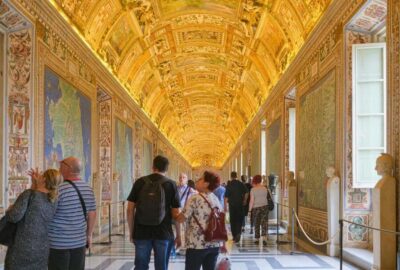 ★ 4.3Vatican Museums & Sistine Chapel Tour with Optional BasilicaFrom $7967,413 reviews
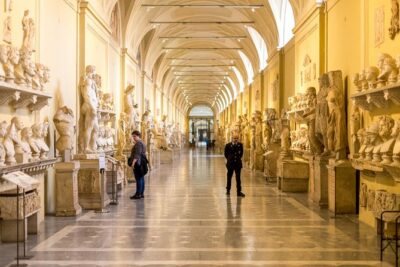 ★ 4.5Vatican Museums, Sistine Chapel & St Peter’s Basilica Guided TourFrom $2239,149 reviews
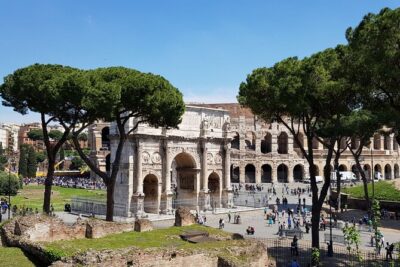 ★ 4.8Colosseum, Palatine Hill and Roman Forum Guided TourFrom $5232,814 reviews
 ★ 4.7Guided Tour of Colosseum, Roman Forum & Palatine HillFrom $5527,897 reviews
 ★ 4.5Colosseum, Roman Forum and Palatine Hill Guided TourFrom $5923,903 reviews
 ★ 4.3Vatican Museums, Sistine Chapel & Basilica TourFrom $13013,872 reviews
 ★ 4.4Colosseum, Forum & Palatine Hill Tour & Optional ArenaFrom $5813,839 reviews
★ 4.7Vatican Museums, Sistine Chapel & Basilica TourFrom $7213,217 reviews
★ 4.4Colosseum, Forum & Palatine Hill Tour & Optional ArenaFrom $5813,839 reviews
★ 4.7Vatican Museums, Sistine Chapel & Basilica TourFrom $7213,217 reviews