
Reviewed · WALKING TOURS
Rome: Walking Tour through the Marvel of the city
Rome’s skyline starts with an angel. I like how this route strings together major sights in one smooth evening plan, and I especially like the Bluetooth headset that keeps your guide crystal clear even when you’re moving. You also get the comfort of a small group (max 15), so questions do not get lost. The one drawback to weigh is the time crunch, each stop is only about 20 minutes, so you will not linger for long photos inside every site.
What makes it feel especially worthwhile is the mix of eras packed into a tight loop. You go from Emperor Hadrian’s world to Piazza Navona’s dramatic Baroque showpiece, then into the politics-and-survival layer of Rome at Largo Argentina and the Ghetto Ebraico. By the time you reach the Capitol hill area, you are looking at a place that has been reinvented again and again.
One practical note: the Pantheon stop is included as a visit, but admission is not included, so plan a little extra budget if you want to go inside. Start on time, bring a current valid passport, and wear shoes you trust for uneven sidewalks.
Key highlights I’d circle before you book
- Angel and emperor in the same stop: Castel Sant’Angelo ties Archangel Michael to Hadrian’s Mausoleum roots.
- Piazza Navona’s Four Rivers fountain: You get oriented to the square’s layout and the church nearby, not just a quick glance.
- A true Caesar stop at Largo Argentina: You’re at the archaeological zone linked to Julius Caesar’s assassination.
- Ghetto Ebraico with living continuity: You see why this Jewish quarter matters, historically and in modern Rome.
- Capitol hill meaning behind the word capital: Piazza del Campidoglio connects ancient Rome, government, and today’s city hall.
- Bluetooth headset included: Easy listening means you can keep walking without missing the story.
A 6:00 pm Rome route that actually fits real life
Rome at night has a different personality. The light softens the buildings, the streets feel less frantic, and you get a guided hit of the center without burning your whole day.
This tour starts at 6:00 pm and runs about 2 hours 30 minutes, with multiple stops that each land around 20 minutes. That pacing works well if you like structure, but you still want to roam a bit on your own after.
You will finish at Piazza Venezia, which is a strong end point for continuing your evening. It is also convenient for heading back toward major transit corridors.
You can also read our reviews of more walking tours in Rome


Meeting at Castel Sant’Angelo: what to expect before you start
You meet at Castel Sant’Angelo, Lungotevere Castello 50, 00193 Roma. Plan to arrive 15 minutes early, so you are not stressed when the group forms.
The route is listed as near public transportation, which matters because Rome logistics can get slippery fast. A small group max of 15 is also a plus. With fewer people, the guide can slow down when you need to catch up.
You will use a mobile ticket, and confirmation comes at booking time. I like mobile tickets in Rome because you are not hunting for paper while you’re already surrounded by postcards, scooters, and confusion.
Stop 1: Castel Sant’Angelo and its angelic name twist
Castel Sant’Angelo is one of those Rome landmarks that people think they know, but the story is more layered than it looks. It is named after Archangel Michael, but it was originally built as Emperor Hadrian’s Mausoleum in 139 AD.
This first stop is also the kind of anchor that makes the rest of the walk click. You start with a major monument tied to power, then you keep moving into politics, faith, and daily life themes.
The tour allots about 20 minutes here, and the stop lists admission ticket free. That means you can expect more than just an exterior photo and a quick explanation.
Stop 2: Piazza Navona and the Fountain of the Four Rivers
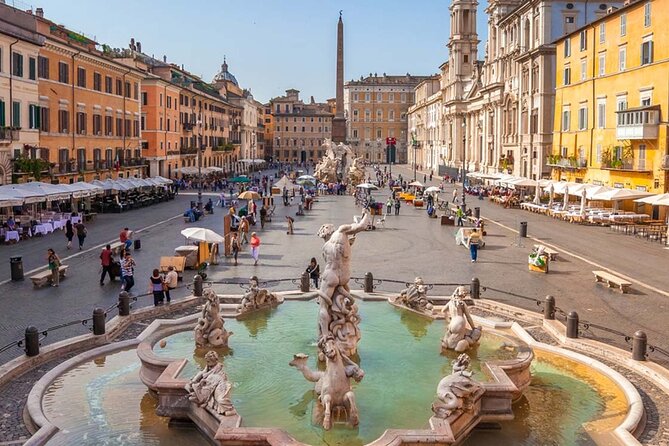
Piazza Navona is Rome’s stage, and the Fountain of the Four Rivers is the star of the show. It is famous for its dramatic composition, but what helps most is understanding how the fountain sits within the square’s overall layout.
The stop also points you to Sant’Agnese in Agone, the church that adds vertical drama to the scene. In a short visit, the guide’s job is to help you read the space instead of just naming things.
You get about 20 minutes at this stop, and admission is free. That is a practical win. You can spend your time focusing on details, street life, and finding good angles without paying more at the door.
Stop 3: The Pantheon stop, and what to budget for
The Pantheon is “Temple of all the gods” in the plainest terms. Even if you have seen pictures, it hits differently in real space, because the geometry and scale do the work for you.
Here is the practical catch: the stop lists admission ticket not included. That means if you want to go inside, you should budget for the entry ticket separately.
Time is tight at about 20 minutes. With that schedule, your best move is to decide quickly if you are doing exterior viewing only or committing to entry. If you’re on a limited Rome timeline, entry can be worth it, but do not let the decision slow down your whole evening.
You can also read our reviews of more city tours in Rome


Stop 4: Largo Argentina, the assassination site in plain sight
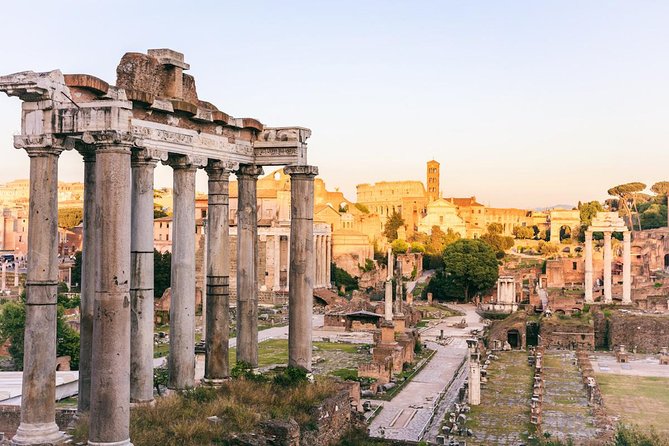
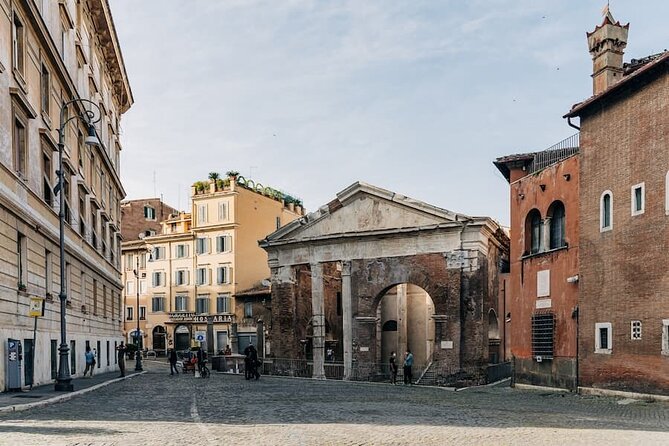
Largo Argentina is the kind of Rome location that makes the stones feel political. The area is tied to Julius Caesar’s assassination, and today it is known as the archaeological zone Largo Argentina.
This stop is listed for about 20 minutes and admission ticket free. That matters because archaeological areas can be expensive if you add multiple paid sites in one day. It is also a reminder that Rome’s past is not locked behind museum glass.
When you stand there with a guide’s framing, you start connecting a bunch of dots. You move from the grandeur of earlier monuments into the reality that power has always come with danger.
Stop 5: Ghetto Ebraico and why continuity matters
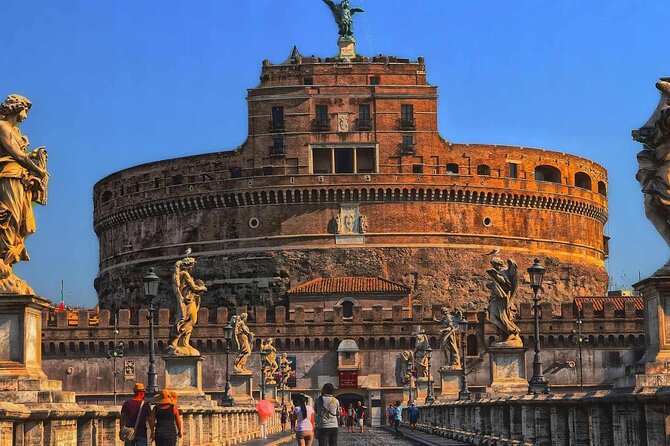
The Ghetto Ebraico is the Jewish district and one of the most meaningful stops on the route. The tour notes it as the oldest Jewish community of the western world, and it also emphasizes that the district is still the core of the Jewish-Roman community.
That is the key takeaway here: you are not only visiting a history lesson, you are walking through a living neighborhood. The streets, the institutions, and the community presence give the stories weight that you can feel.
You get about 20 minutes at this stop, again listed as admission ticket free. That keeps the visit accessible within the tour’s budget and timing.
A small tip: in any neighborhood visit, keep your eyes open for how people actually use the space. The most honest Rome stories often happen between the official landmarks.
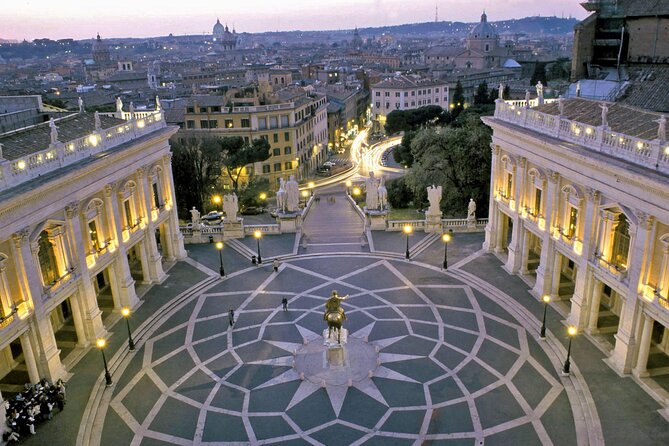
Stop 6: Piazza del Campidoglio and the word capital
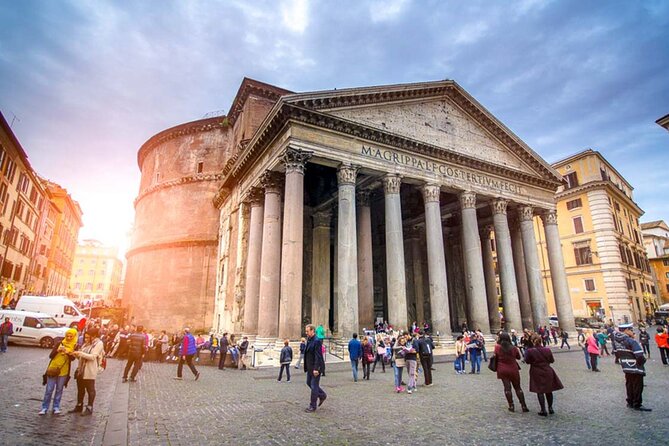
The ending climb is a good payoff. Piazza del Campidoglio sits on the Capitolium Hill, and the tour directly links the place to the word capital.
You also get the ancient anchor: the area is home to the temple of Jupiter in Ancient Rome. Today, it houses the city hall and the Musei Capitolini, which means you are seeing how Rome repurposes its power centers instead of discarding them.
You will likely feel this as more than trivia. It shows you that Rome’s continuity is not just dates on a timeline. It is architecture, government, and identity layered on top of older foundations.
This stop also lists admission ticket free with about 20 minutes allotted. Use that time to orient yourself, then decide what you want to return to after the tour ends.
Bluetooth headset: the small upgrade that changes the whole feel
The Bluetooth headset is included, and it is a big deal for a walk like this. Rome streets are noisy, and without audio help you end up trying to hear while also navigating traffic, gaps in the sidewalk, and constant photo stops.
With the headset, you can focus on the guide’s story instead of guessing. You also retain energy because you are not constantly turning your head and fighting the background.
The tour is set up for listening as you go. That means the guide can keep the narrative moving from monument to monument, and you get a more cohesive evening than a “stand and stare” tour.
Guides who answer questions, and how to get more out of it
The included official guide can make or break an evening route, and the feedback names guides like Lorenzo and Amit for strong explanations and good question handling. That is what you want when you only have a couple hours, you need answers fast and you want them to be accurate.
If you like photos, ask for tips on good angles while you still have time at each stop. You do not need a long pep talk. Just tell the guide what kind of shots you like, wide city views or tighter details, and follow their timing cues.
One more note based on the experience write-ups: there are mentions of guidance for first-timers with Segway confidence in a way that takes only minutes. The tour you book may be described as a walking route, but if your plan includes any add-on movement, trust that the coaching approach is practical and quick to get you comfortable.
Price and value: what $47.06 gets you in real terms
At $47.06 per person, this is priced like a serious value evening tour. The headliner items are the official guide plus the Bluetooth headset and a route that focuses on high-impact sights.
The value gets better because several stops are marked with admission ticket free. Castel Sant’Angelo, Piazza Navona, Largo Argentina, the Ghetto Ebraico, and Piazza del Campidoglio are all presented as ticket-free within the tour structure.
The Pantheon is the clear exception, with admission not included. That is the main extra cost most people will face if they want entry, so keep that in mind when you plan your total Rome budget.
Compared to piecemeal entry fees plus a guide you have to find separately, this kind of bundled route is often the smarter way to spend limited evening time.
Who should book this Rome walking route
You will probably love this tour if you want:
- a curated overview of Rome’s center without juggling tickets for multiple paid stops
- an evening plan that starts at a reasonable time and ends where you can keep going
- a small group with headsets so you can actually hear the story
You might want to skip it or look for a slower option if you prefer long museum-style time. The schedule is built for movement and orientation, not for deep, hour-long wandering in one site.
It also fits well for people who want both ancient and more modern Rome to show up in one loop. You start with a mausoleum, then swing through civic squares, a political assassination site, a living Jewish neighborhood, and the center of government.
Should you book this tour?
I think you should book it if you want an efficient, well-guided evening that connects Rome’s big landmarks into one readable story. The Bluetooth headset and the small group size make the experience feel organized, not rushed. Also, the mix of major sights plus mostly ticket-free stops gives it good value for the time you spend.
Book with a little flexibility in mind. Each stop is brief, so if you want to linger in the Pantheon specifically, plan on spending extra time elsewhere later. And if you have a tight schedule, keep shoes comfortable and be at the meeting point early so the evening stays smooth.
More Walking Tours in Rome



More Tours in Rome


More Tour Reviews in Rome
Not for you? Here's more nearby things to do in Rome we have reviewed







Walking Tours, compared.
 ★ 4.9Trastevere & Campo de Fiori Street Food Walking TourFrom $512,768 reviews
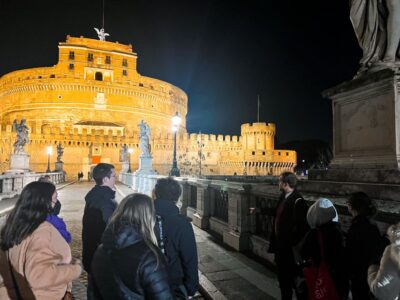 ★ 4.9Paranormal Night Walking Tour & Secret BackstreetsFrom $341,921 reviews
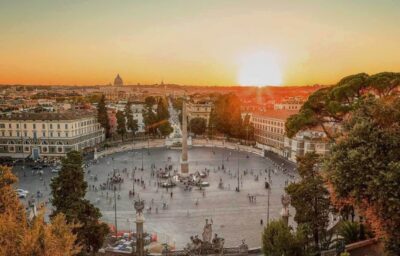 ★ 4.4Guided City Center Evening Sightseeing Walking TourFrom $46953 reviews
 ★ 4.5Best of Rome Walking Tour including Trevi FountainFrom $4923 reviews
 ★ 4.8Under the Moonlight Evening Walking TourFrom $28852 reviews
 ★ 4.9Forbidden History Walking Tour & Pub Crawl with DrinksFrom $61688 reviews
 ★ 5.0Guided Small Group Walking Tour of City HighlightsFrom $30682 reviews
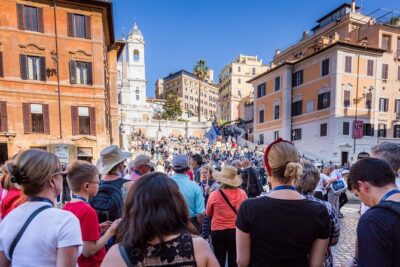 ★ 4.5Rome Walking Tour with Piazza Navona, Trevi Fountain and PantheonFrom $35676 reviews
Browse the lists this tour appears in