
Reviewed · CATACOMBS & UNDERGROUND TOURS
Rome: Underground Temples and Crucifixion Relics Walking Tour
Rome goes vertical, down into faith and rubble. This tour starts at San Clemente, where you’ll see multiple ancient layers of worship, including the best-preserved Temple of Mithras. Then you’ll move to Santa Croce in Gerusalemme, where the church displays relics tied to the Crucifixion story.
I also like the small-group feel, with a maximum of 10 people and live professional guidance with headsets. One real consideration: you spend real time underground and you do a lot of walking, so this is not for anyone with claustrophobia, and comfortable shoes matter.
Key points before you go
- San Clemente’s three-layer site: pagan temple ruins below an active basilica
- Temple of Mithras underground: a standout moment in early Rome
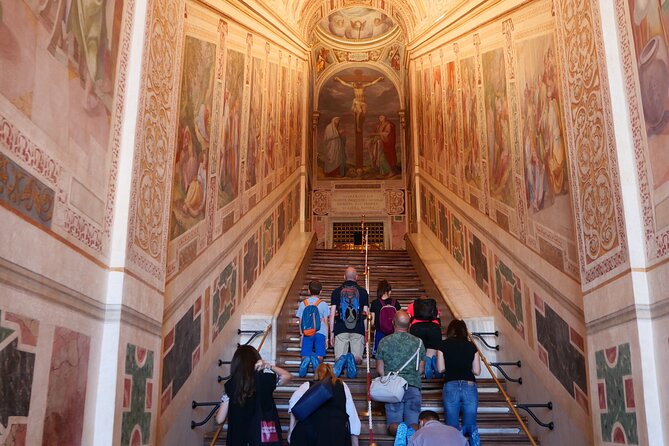
- Holy Stairs stop at the Pontifical Sanctuary: a short visit with heavy emotional weight
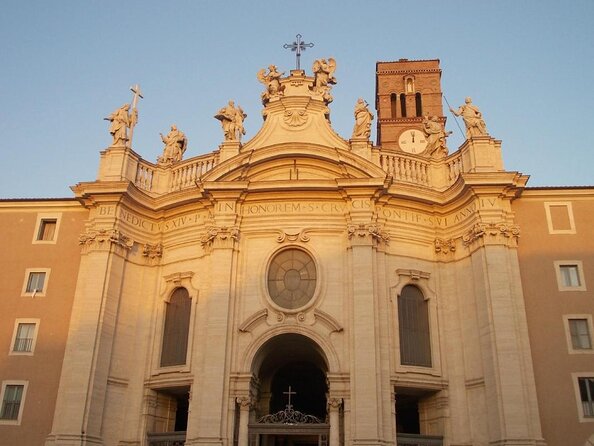
- Santa Croce in Gerusalemme relics: items linked to the Crucifixion and Passion
- Max 10 people plus headsets: easier pacing and clearer explanations
- Dress code for churches: plan for covered shoulders and knees
San Clemente, three layers and the Temple of Mithras
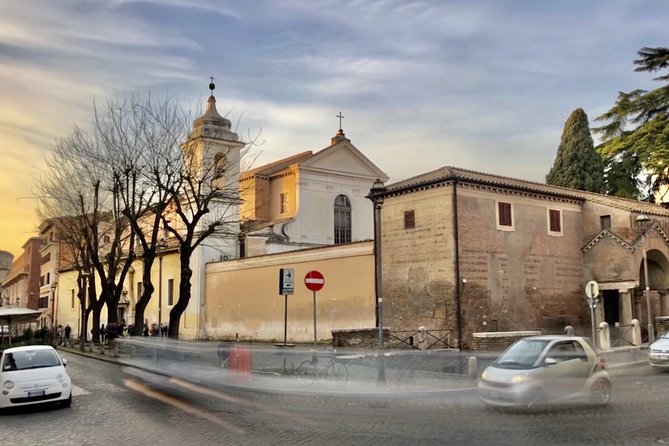
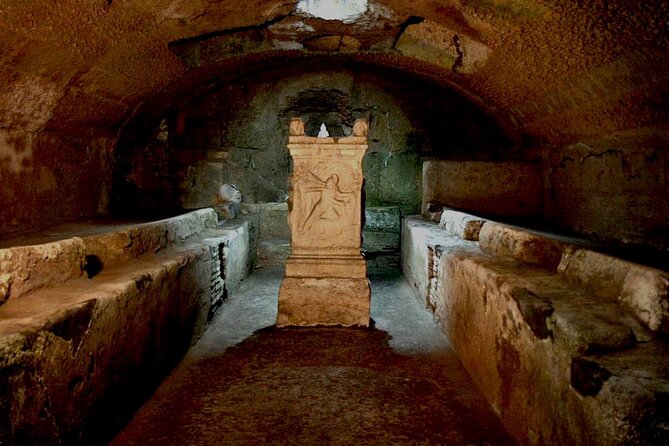
If you want one stop that makes this whole tour click, it’s San Clemente. The experience is built around a simple idea: Rome was never a “one-time” city. Builders reused land, stacked structures, and left older buildings under newer ones. Here, you get to see that layering in person.
You’ll go deep beneath the basilica and experience the site as three chronological layers built on top of each other. The guide frames it as more than a history lesson. You’ll learn how pagan cults, early Christianity, and later symbolism all show up in the same place, just at different levels.
The star is the Temple of Mithras, described as the best preserved here. Mithraism was one of the major religious movements in the Roman world, and seeing part of it below street level gives you a stronger sense of how crowded religious life once was. The tour also includes a moment where you can touch the underground river flowing below the streets of Rome and below the Colosseum area. That kind of physical connection is rare in sightseeing, and it sticks.
San Clemente also comes with mosaics and stories tied to what you’re looking at. This is where having a skilled guide really pays off, because you’re not just staring at stone. You’re learning how the pieces fit together.
Practical note: the underground portions are tight and cool, which is great if you’re trying to escape heat, but it’s still underground space. If you know you struggle in confined areas, skip this tour.
You can also read our reviews of more walking tours in Rome

Walking the Roman church circuit without losing your day
This is a walking tour with several church stops that are a few blocks apart, not a “bus between monuments” day. The good news is the route is short enough that the focus stays on the key sites. The other news is that the walking can feel more intense than the headline duration suggests.
The standard tour runs about 2 hours 30 minutes, paced around these stops:
- San Clemente (about 1 hour 15 minutes)
- Basilica of St. John Lateran (about 30 minutes)
- Holy Stairs (about 15 minutes)
- Santa Croce in Gerusalemme (about 30 minutes)
Then there’s an optional extension:
- Papal Basilica of Saint Mary Major (about 1 hour), which can bring your total to around 3 hours 30 minutes.
In practice, you should plan for roughly 3 to 4 kilometers of walking. You’ll also be standing in churches and moving between them, often with limited time for long breaks. On hot days, bring water and plan your pace accordingly.
The pace can work really well because the group size is capped at 10. Headsets help too. You’re less likely to get lost in the noise of a busy Rome street while trying to follow complex explanations.
Tip: if you’re coming from somewhere far, aim to be at the meeting point early. The tour starts at Piazza di San Clemente, Piazza di S. Clemente, 00184 Roma RM, Italy.
Basilica of St. John Lateran: Rome’s main church and Constantine’s pivot
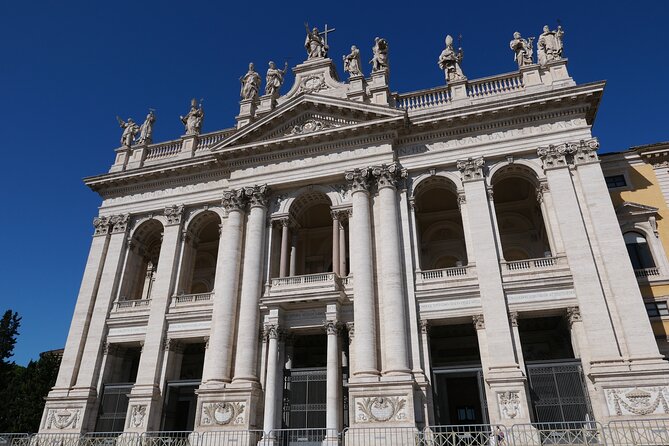
After San Clemente, the tour shifts from underground to one of Rome’s most important church settings: the Cathedral of Rome, the Basilica of St. John Lateran (Arcibasilica di San Giovanni in Laterano).
This stop is a story bridge. You start with earlier paganism and persecutions, then walk into the moment when Christianity becomes legalized and institutionally established in the Roman world. The guide connects the dots to Emperor Constantine, including the fact that he legalized Christianity in 313.
One thing I especially like about this stop is how it changes the emotional tone. You move from archaeology and hidden layers into a public, grand church environment. You’ll get a look at the golden interior and hear about the ancient frescoes.
And yes, the basilica is known as the Mother and head of all churches on Earth. Even if you’ve heard that phrasing before, it makes more sense once you’ve just learned how early Christianity fought for space and survival.
Drawback to consider: this portion is shorter than San Clemente. If you fall in love with one church, you might want more time here. The tour design keeps you moving toward the relic stops.
The Holy Stairs at the Pontifical Sanctuary of the Holy Stairs
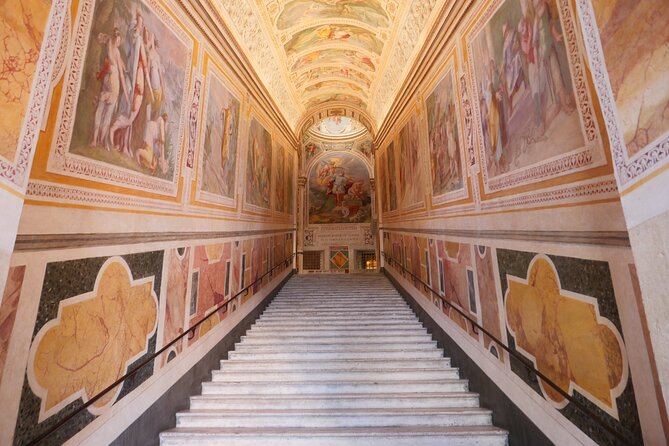
Then you’ll reach the Pontifical Sanctuary of the Holy Stairs. This stop is only about 15 minutes, which sounds quick until you realize what makes it powerful: you’re not visiting a museum object. You’re encountering a tradition linked to the trial of Jesus.
The guide explains the backstory of St. Helena, Emperor Constantine’s mother, and her pilgrimage to Jerusalem to recover sacred artifacts. You’ll hear how those artifacts were protected by the early underground church in the Holy Land.
Inside, you’ll see the Holy Stairs, described as the original stairs of the praetorium where Jesus is said to have climbed at his judgment. Even if you don’t take religious tradition literally, the devotion you’ll see around you is part of the experience.
This is also a good reminder of what kind of tour this is. It isn’t only about architecture. It’s a religious history and relic-focused route.
Practical note: the time here is short by design. If you want to spend extra moments in silence, you’ll need to manage your expectations and timing, because the schedule is tight.
Santa Croce in Gerusalemme: Jerusalem relics in Rome
Santa Croce in Gerusalemme is where the tour turns from history to objects you can point at. The church is said to have been built with earth brought from the Holy Land, and that origin story adds atmosphere before you even get to the relics.
You’ll see relics secured by Helena, including:
- a nail from the Crucifixion
- the walnut board Pontius Pilate placed above the cross
- wood of the Cross Jesus was crucified on
- fragments of the wall from the cave of the nativity in Bethlehem
- two thorns from the crown of the Passion of Christ
Whether you feel religious awe, historical curiosity, or a mix of both, it’s hard to stay casual around items presented with this kind of meaning. The guided context matters because without it, relic displays can feel like a blur of small items. With the guide, you understand what each object represents in the larger story the church tells.
Possible drawback: the stop is about 30 minutes, so it’s enough time to see what’s presented and hear key context, but it may not be enough if you want a long personal moment with each relic. If you tend to linger, mentally plan for a fast but meaningful run through the highlights.

Saint Mary Major add-on for extra mosaics and relic context
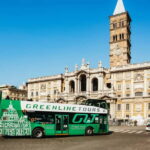
If you opt to extend the day, the final stop is the Papal Basilica of Saint Mary Major. This is about one additional hour.
This stop is a good choice if you want an artistic finish. The basilica is especially known for stunning mosaics and sacred relics that add more context to Christian history.
If you’re deciding whether to add it, think about your travel style. If you want a concentrated, four-church experience, keep it to the main route. If you want more church art and more time with a guided narrative, add Saint Mary Major and let your day end in a more relaxed, reflective way.
What $90.51 buys you (and how to make it feel like a win)
At about $90.51 per person, this is not the cheapest thing you can book in Rome. But when you look at what’s included, the value starts to make sense.
Your ticket includes:
- a live professional guide
- headsets so you can hear clearly
- entrance fees and all fees and taxes
That means you’re paying for expertise plus access plus communication. In a route this focused on layered sites and relic explanations, a good guide isn’t optional. It’s the product.
Small-group size also matters. With a maximum of 10 travelers, it’s easier to keep the pace manageable and for the guide to answer questions. You’ll also spend less time stuck behind gaps in the group.
How to get the most out of it:
- Wear the right church outfit (covered knees and shoulders).
- Use the headsets fully. Don’t leave them in your pocket.
- Bring water, especially in summer. Multiple churches plus walking adds up fast.
- Keep expectations realistic about timing. The tour is designed to fit multiple major sites, not to linger for hours in one.
Also, the guides for this route are often praised for making complex topics understandable without turning it into a lecture. Names you might hear include Mario, Francesca, Daniel, Paul, Tom, and Chiara. The common thread is clear explanations and respectful pacing through the sacred sites.
Dress code and practical gear you should not skip
Church rules in Rome can be firm. For this tour, you need an appropriate dress code to enter churches: knees and shoulders should be covered. That typically means no bare shoulders and no short shorts.
If you show up underdressed, you might end up waiting outside or scrambling to find a solution. Don’t give yourself that stress. Plan outfits with coverage in mind.
For gear, stick to comfortable walking shoes. A moderate level of walking is involved, and you’ll likely walk around 3 to 4 kilometers depending on your group pace. On top of that, you’ll stand and move between indoor sites.
Quick heat strategy: even if the underground spaces feel cooler, the streets won’t. Take sunscreen and a water bottle seriously.
Should you book this Underground Temples and Crucifixion Relics tour?
If you want Rome with a spiritual and historical spine, I think this tour is a strong book. It’s especially worth it if you like the idea of seeing early Christianity not just as ideas, but as real places and real objects, from San Clemente’s underground world to the relics at Santa Croce in Gerusalemme.
Book it if:
- you want four (or five) major churches tied together by story
- you enjoy archaeology plus religious history in one route
- you like small groups and clear explanations, aided by headsets
- you’re comfortable walking and standing for a few hours
Skip or rethink it if:
- underground spaces make you anxious (claustrophobia is a clear no)
- you want a low-walking, slow-paced day with lots of breaks
- you prefer only the big postcard sights, because this tour focuses on early Christian layers and relics, not only the headline ruins
If you fall into the first group, this is the kind of Rome day that turns into a memory for the right reasons, the kind where stone, story, and devotion all overlap.
FAQ
How long is the Rome Underground Temples and Crucifixion Relics walking tour?
The tour lasts about 2 hours 30 minutes to 3 hours 30 minutes, depending on whether you add the Saint Mary Major stop.
Where does the tour start and end?
It starts at Piazza di San Clemente (Piazza di S. Clemente, 00184 Roma RM, Italy) and ends at Basilica di Santa Croce in Gerusalemme (Piazza di S. Croce in Gerusalemme, 10, 00185 Roma RM, Italy).
What are the main stops on the tour?
You’ll visit San Clemente, Arcibasilica di San Giovanni in Laterano, the Pontifical Sanctuary of the Holy Stairs, and Basilica di Santa Croce in Gerusalemme. There is also an optional extension to Papal Basilica of Saint Mary Major.
Is the Saint Mary Major visit included?
It’s an optional extension. The base tour includes the first four stops.
How much does the tour cost, and what’s included in the price?
The price is $90.51 per person. The tour includes a live professional guide, headsets, entrance fees, and all fees and taxes.
Do I need to pay for church tickets separately?
No. Entrance fees are included.
What dress code is required to enter the churches?
You need knees and shoulders covered.
Do I need comfortable shoes?
Yes. You should wear comfortable walking shoes, since there is a moderate amount of walking.
Is the tour recommended for people with claustrophobia?
No. It is not recommended for people with claustrophobia due to underground portions.
What if a church area is closed or there is a service?
If certain areas of one of the churches are closed, your guide will adapt the itinerary by highlighting alternative sites, and the overall duration will remain unchanged.
More Walking Tours in Rome



More Tours in Rome
More Tour Reviews in Rome
Not for you? Here's more nearby things to do in Rome we have reviewed




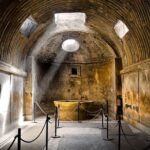
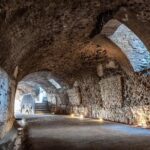
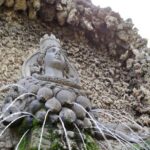

Catacombs & Underground Tours, compared.
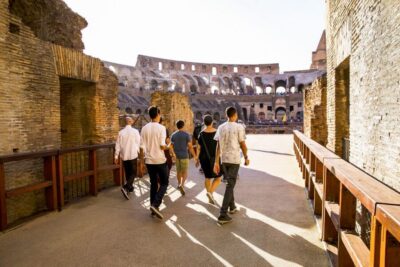 ★ 4.7Colosseum: Underground and Ancient Rome TourFrom $16012,691 reviews
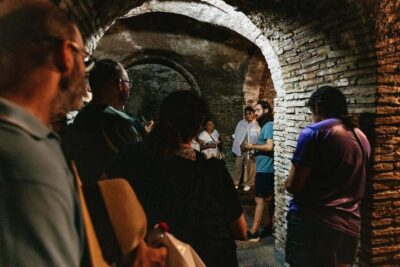 ★ 4.6Crypts and Catacombs Underground Tour with TransfersFrom $745,341 reviews
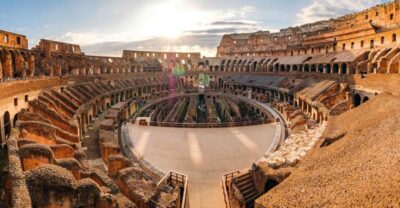 ★ 4.7Colosseum Underground Small Group Guided TourFrom $1054,844 reviews
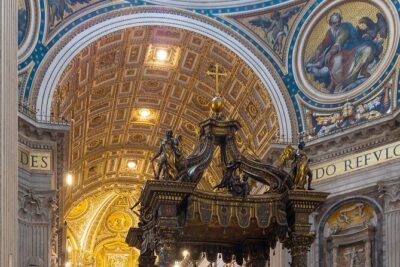 ★ 4.8St. Peter’s Basilica, Dome Climb, and Underground TourFrom $383,404 reviews
 ★ 4.7Colosseum Underground, Arena & Forum TourFrom $1573,272 reviews
 ★ 4.3Trevi Fountain and Underground Guided TourFrom $411,664 reviews
 ★ 4.6Catacombs and Capuchin Crypt Guided Tour with TransferFrom $411,606 reviews
 ★ 4.7St. Peter’s Basilica Priority Access Tour with Dome & CryptFrom $831,476 reviews
Browse the lists this tour appears in