Reviewed · ROME
Rome: Trajan Markets Experience with Multimedia Video
Roman commerce, now in your headphones. This one-day visit pairs a 25-minute Ancient Rome video with a smartphone audio guide, so you get context before you walk through the Trajan Markets complex.
I like the semi-circle architecture of the Trajan Markets ruins, because it instantly helps you picture how this place worked as a commercial hub. I also like the stop at the Fori Imperiali Museum, where you see artifacts that go beyond big-name monuments, including amphorae and objects linked to ancient everyday life.
One thing to watch: the experience is not a full guided tour, so you will rely on the video and the app for explanations. If you are expecting a live guide and lots of interactive storytelling, you may feel you only see part of what you hoped for.
Key things to know before you go
- Video first, then walk: you start with a 25-minute multimedia presentation to set the stage.
- Smartphone app with 170 points: the download is meant to guide you through the city with audio.
- Trajan Markets as an imperial shopping center: you are stepping into the commercial heart of the Roman Imperial Age.
- Forums named for you: you get to focus on Caesar’s Forum, Augustus’ Forum, Nerva’s Forum, and the Templum Pacis.
- Museum artifacts, including amphorae: the Fori Imperiali Museum adds depth beyond what you can see outdoors.
- Plan for ticket handoff time: if you are exchanging a voucher, allow extra minutes at check-in.
Starting with the 25-minute Ancient Rome video and app audio
The visit begins with a 25-minute multimedia video on Ancient Rome. It is designed to help you build a mental map quickly, including reconstructions of the city’s most important monuments. This matters in Rome, because the ruins can feel like a puzzle unless you know what you are looking for.
Then you are asked to use a downloadable city app audioguide on your phone, with more than 170 points of interest. The goal is simple: you can listen as you explore and connect what you see on the ground with what it meant in the past. Bring headphones and make sure your phone is charged, because you do not want to start the experience and suddenly lose audio halfway through.
If you have never used an audioguide app in Rome, you will likely find it helpful. You get to control your pace, pause when you want, and replay when something clicks. The trade-off is that you are not getting a live guide’s real-time answers to your questions.
You can also read our reviews of more tours and experiences in Rome.



Trajan Markets: your Roman-era shopping mall in ruins
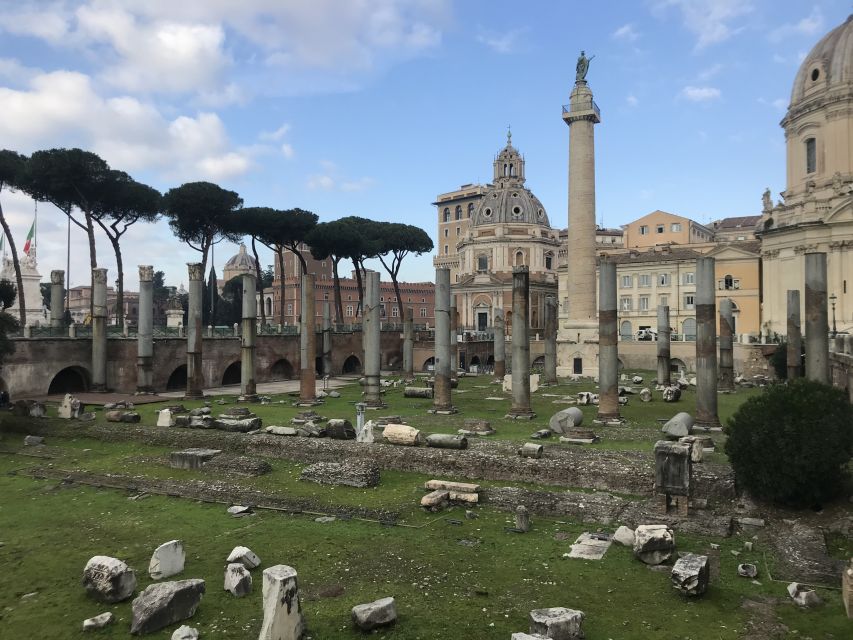
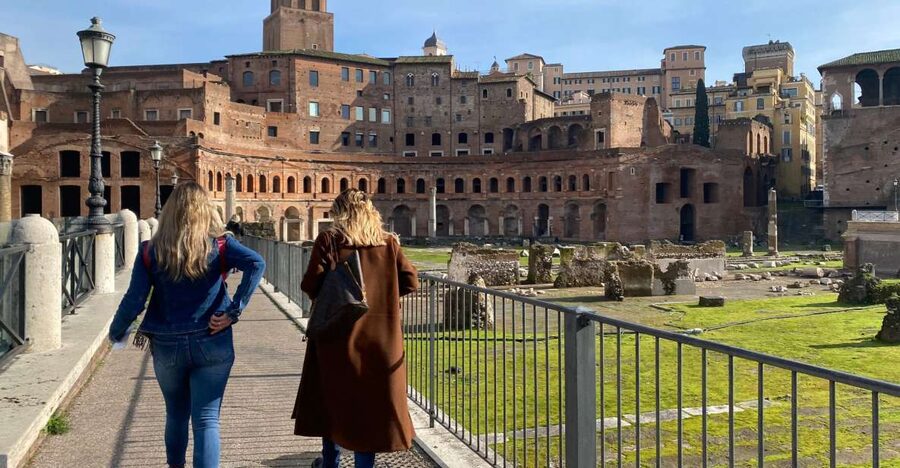
Trajan Markets is the star, and it is not hard to understand why. This archaeological complex was the commercial center of the city during the Roman Imperial Age, which means it was built for movement, shopping, and business. Standing near the remains, you can feel how the space was meant to function, not just look impressive.
One detail I especially like is the semi-circle shape noted in the architecture. Even if you are seeing only parts of the structure, the curve gives you a strong clue about how the area was laid out and how people would have navigated it. Think of it as a built environment where commerce was part of the city’s daily rhythm.
Another plus is the variety of functions you can pick up just by paying attention to layers of use. You will see the ruins of a 17th-century cistern, which is a powerful reminder that this area did not freeze in Roman time. It kept getting repurposed across centuries, and that makes your visit feel more grounded and real.
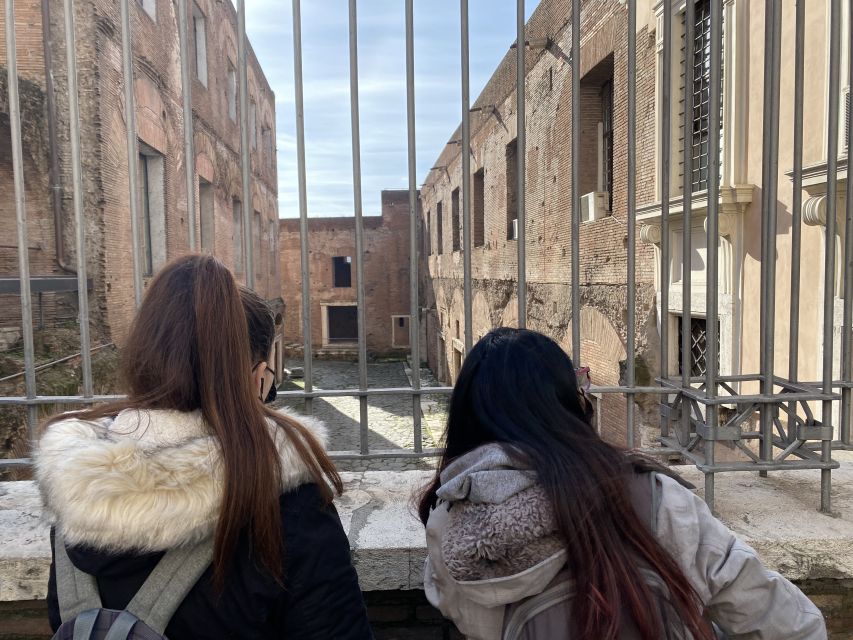
What you should bring into your expectations is this: outdoor archaeology can limit what you can physically inspect up close. In some spots, much of the site may be easier to understand from your position near the streets or viewing areas. If you arrive expecting to walk through every room of an intact building, the ruins may feel more open and interpretive than that.
The imperial forums you connect to trade and meetings
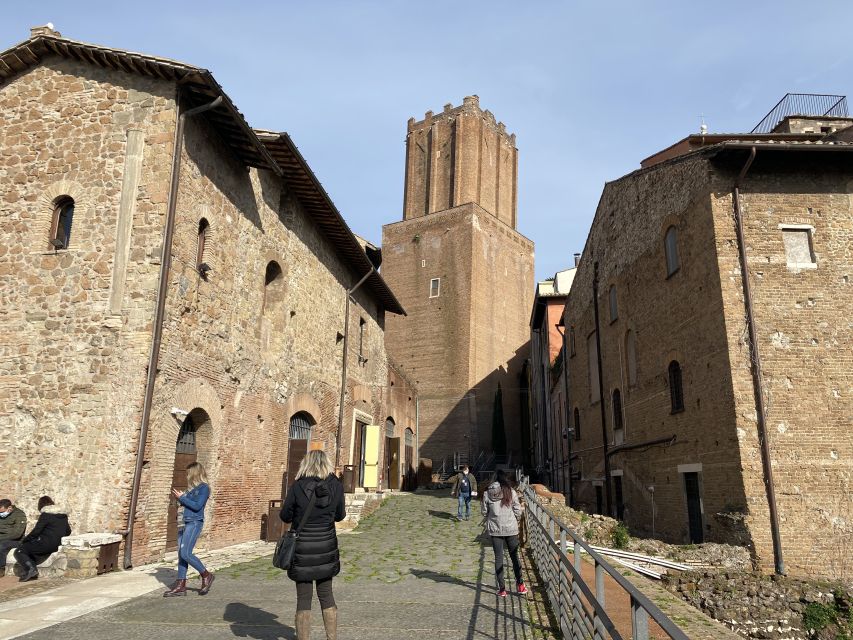
After you get your bearings with the markets, the experience ties the shopping world to the wider political and civic space of Rome. You explore the different forums that served as trading and meeting points, including Caesar’s Forum, Augustus’ Forum, Nerva’s Forum, and the Templum Pacis.
This is a valuable angle because it reframes what forums were. These were not just parade grounds for power. They were places where business, conversation, and public life overlapped. Once you connect markets to forums, you stop treating Roman streets as separate attractions and start seeing them as a functioning system.
You do not need to be a Roman architecture expert to follow the story. The app points and the video setup are there to guide you through that interpretation. If you use the audio at each step, you will likely get more from the forums than if you just wander and take photos.
One practical consideration: because this is tied to multiple named areas, time management helps. If you rush through, the forums can blend together. If you slow down and listen where the app prompts you, you will get a cleaner sense of how each part related to commerce and movement.
Fori Imperiali Museum: amphorae and artifacts that fill in the everyday story
The Fori Imperiali Museum is where the visit gains texture. Outdoors you get the big geometry of ancient space. Indoors you get the material culture that explains what went in and out of places like the Trajan Markets.
You see a collection of artifacts from ancient civilizations, including amphorae. Amphorae are one of those objects that are small but meaningful, because they connect directly to trade. When you can actually see containers used to transport goods, Roman commerce stops being abstract.
A review point I found particularly encouraging is the mention of artificers in the museum section. That kind of detail matters, because it shifts your attention from emperors and temples to the people who made things and kept the city supplied. Even when you are not reading every label, you can still sense that the museum is trying to humanize daily life.
This museum stop is also a smart pacing tool. If the outdoor ruins make you feel like you are walking through stone and shade, the museum provides a calmer space to absorb details and reset your brain before moving on.
How the self-guided format really works in practice
This experience includes the essentials, but it is still a self-guided style visit. You get entrance tickets, the Ancient Rome video presentation, and the downloadable city app audioguide. What you do not get is a guided tour led by a person, and that is a key distinction when deciding if it fits your travel style.
Here is how to make it work smoothly:
- Arrive with headphones ready and your phone battery above half.
- Plan to use the app at each stop so the audio ties directly to what you are seeing.
- If you are exchanging a voucher, give yourself extra time at the start. One negative experience highlighted ticket printing taking around 15 minutes and staff seeming unsure about the process. That is not your fault, but it can affect your schedule.
The check-in location is also specific. You report at the Touristation Aracoeli Office at Piazza d’Aracoeli 16, near Piazza Venezia. Look for the orange Touristation flags, and there is a fountain in front of the office entrance. Getting this right avoids a stressful start, especially if you are already tired from Rome walking.
Group timing is another factor to keep in mind. This activity is valid for 1 day, with starting times depending on availability. If you are trying to fit it into a busy itinerary, confirm your time slot before you commit.





Practical details that keep your day smooth
Comfort matters because you are doing outdoor archaeology plus indoor museum time. Wear comfortable shoes, and keep your bag situation simple. The experience does not allow luggage or large bags, and it does not allow pets, weapons or sharp objects, drones, or glass objects.
Also, skip anything you might assume is fine. No alcohol and drugs, and no sprays or aerosols. It is one of those rules sets that sounds strict, but it is common for sites with controlled spaces and artifact collections.
Bring:
- Passport or ID card
- Comfortable shoes
- Headphones
- Charged smartphone
One more practical note: it is not suitable for wheelchair users, so plan accordingly if mobility is an issue.
Finally, think about food. Food and drinks are not included. You will likely want to schedule a meal around the visit so you do not end up searching for something quickly after.
Price and value for $37 in Rome
At $37 per person for a 1-day experience, the value depends on how you like to travel. You are paying for access to Trajan Markets and the Fori Imperiali Museum, plus a 25-minute multimedia video and the smartphone audio guide.
If you like structured context (video first), then flexible pacing (app after), this pricing feels reasonable. You get more than an entrance ticket because the audio and video aim to teach you how to read the site.
If you want a person guiding the story in real time, you might feel the cost is less justified, since a guided tour is not included. In that case, you would need to complement it with another guided option in your day.
If check-in logistics annoy you, treat that as a value consideration too. There is at least one reported experience where ticket printing felt inefficient. That does not mean it will happen every time, but it is smart to show up calmly so the day stays on track.
Who should book this Trajan Markets + museum visit
This is a great fit for people who:
- enjoy audio-guided experiences and want to set their own pace
- like connecting monuments to how people lived and traded
- want both outdoor ruins and an indoor museum stop
- prefer a structured start with a multimedia intro
It may be less ideal if you need full accessibility accommodations, or if you strongly prefer a live guide for explanations and questions. Also, if you have a very short attention span for self-guided interpretation, you may end up wanting more human guidance.
Should you book it?
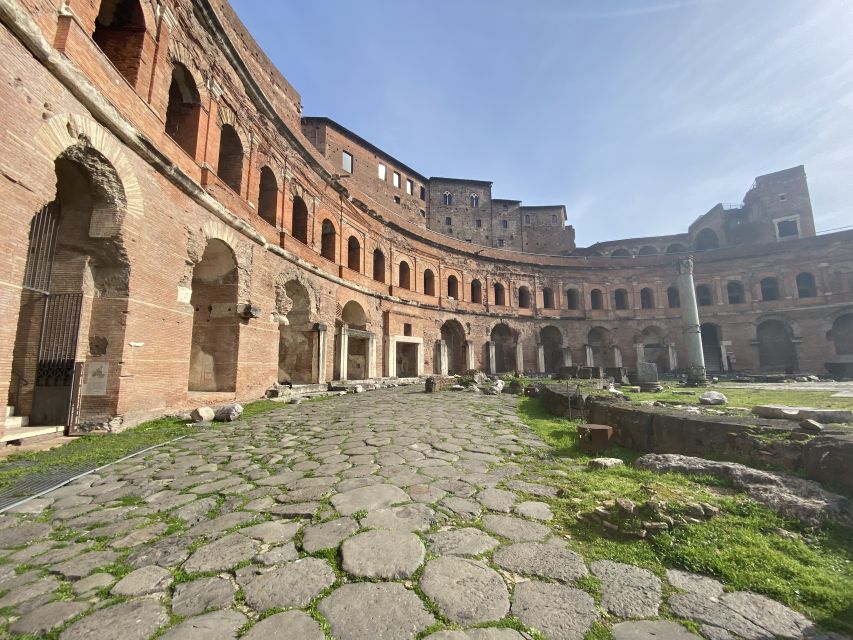
I would book this if you want a solid Rome day that connects Roman commerce to the places where people met, shopped, and moved through the city. The video plus app format is built for understanding, and the museum adds tangible objects like amphorae so it is not just outlines of buildings.
I would skip or pair it differently if you are expecting a fully guided experience with lots of back-and-forth. Also, go in with realistic expectations about visibility of outdoor ruins, and plan extra time for ticket handoff if you are exchanging a voucher.
If you like learning by walking, listening, and looking closely, this one is worth your hour-by-hour schedule.