
Reviewed · CATACOMBS & UNDERGROUND TOURS
Rome: Tour of St. Clement’s Basilica Underground Temples
Rome hides churches under churches. At St. Clement’s Basilica, I love the golden mosaic in the apse and the way the tour reveals the preserved Mithraic temple underground. One thing to consider is that you’re going 14 meters down into tight spaces, so it’s not for wheelchair users and it may be tough if you dislike claustrophobic areas.
If you extend your visit, Santo Stefano Rotondo adds a second dose of martyrdom art, this time in a circular setting that feels intentionally unsettling. Guides such as Francesca and Lorenzo get high marks for clear, energetic storytelling, plus they make the symbolism feel practical instead of “just spooky.”
This is a great choice if you want one of Rome’s most layered sites in a short window, 1 to 2 hours, with headsets so you actually catch every detail while you’re standing in the middle of history.
Key highlights to look for
- 14 meters down, inside Rome’s stacked religious layers, from medieval spaces to ancient rooms
- A golden mosaic with hidden symbolism, explained in a way that clicks fast
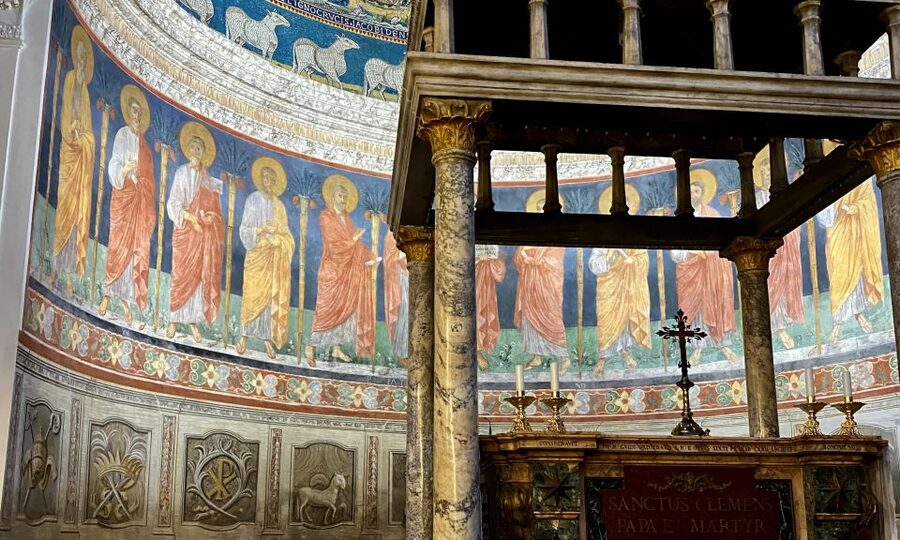
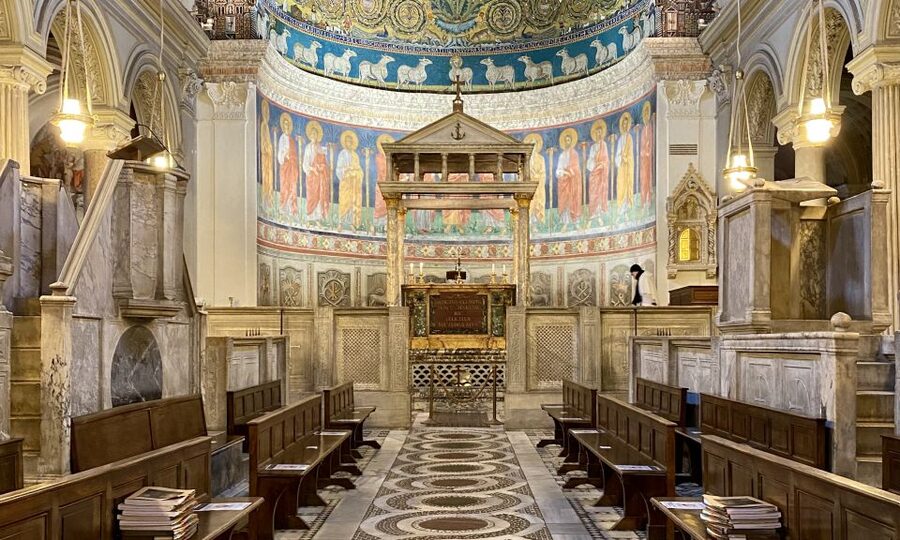
- 4th-century frescoes of martyrs, in the underground church built over earlier Christian ground
- One of Rome’s best-preserved Mithraic temples, plus an underground river atmosphere
- Optional Santo Stefano Rotondo, with graphic martyrdom frescoes in a circular church
- Expert live guidance with headsets, so you can focus on what matters, not straining to hear
St. Clement’s Basilica takes you 14 meters underground fast
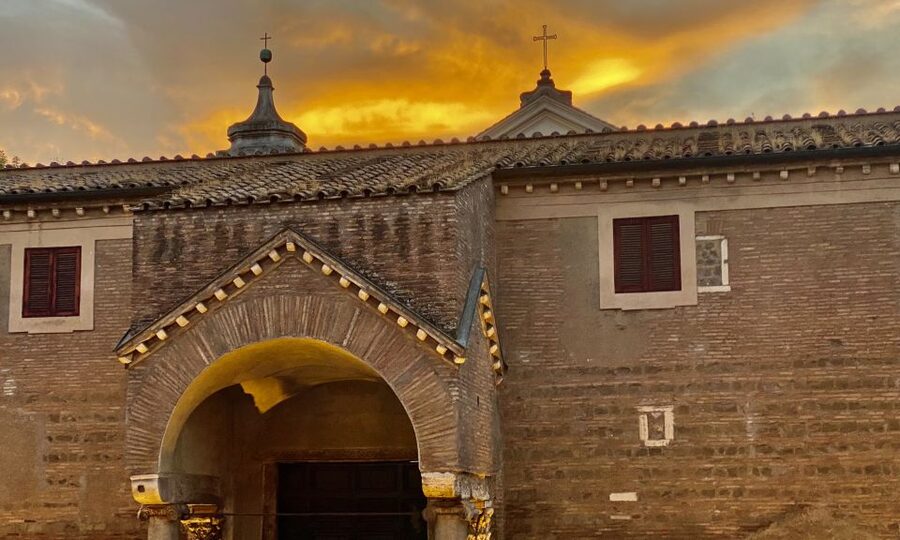
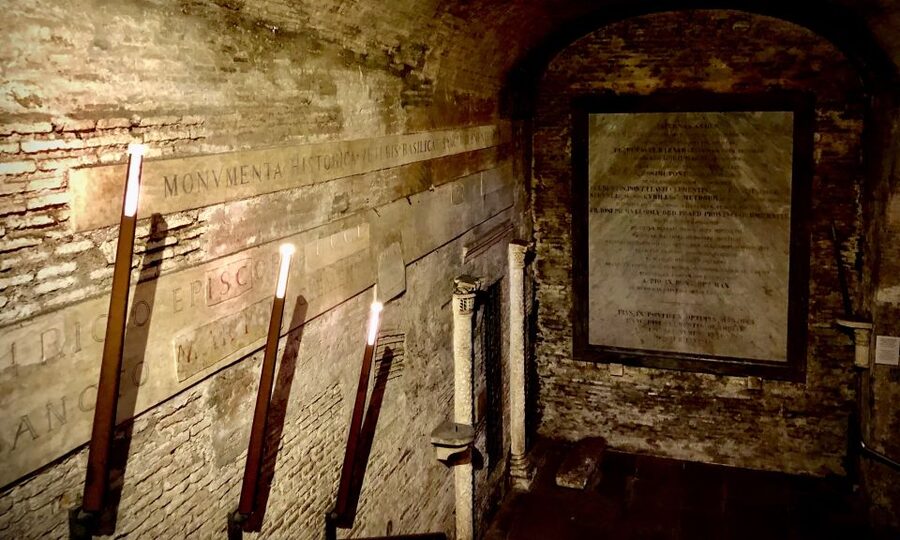
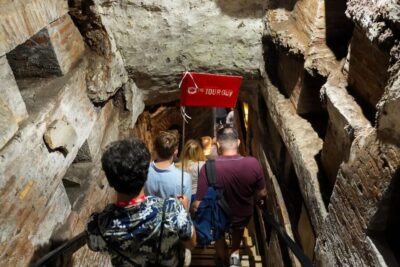
This tour’s appeal is simple: you get real depth, both literally and historically. The experience starts at the visible, 12th-century Basilica of San Clemente, then you descend 14 meters beneath it. That drop matters, because St. Clement’s is famous for having multiple building phases stacked on top of each other, like Rome kept upgrading the same plot of land.
Think of it less as a “catacomb walk” and more as a vertical time machine. You move from a church people see every day, down into earlier Christian space, and further into the older religious world that existed before Christianity became the dominant force.
What I like for you here is the structure. Your guide doesn’t just point at walls. They explain what you’re looking at and why it changed over time, from pagan ritual spaces to early Christian worship, and then to medieval art and theology.
And yes, the underground atmosphere has that eerie, damp quiet that makes every step feel important. You’ll also hear plenty because the tour includes headsets, which is a big deal in enclosed spaces.
You can also read our reviews of more tours and experiences in Rome.
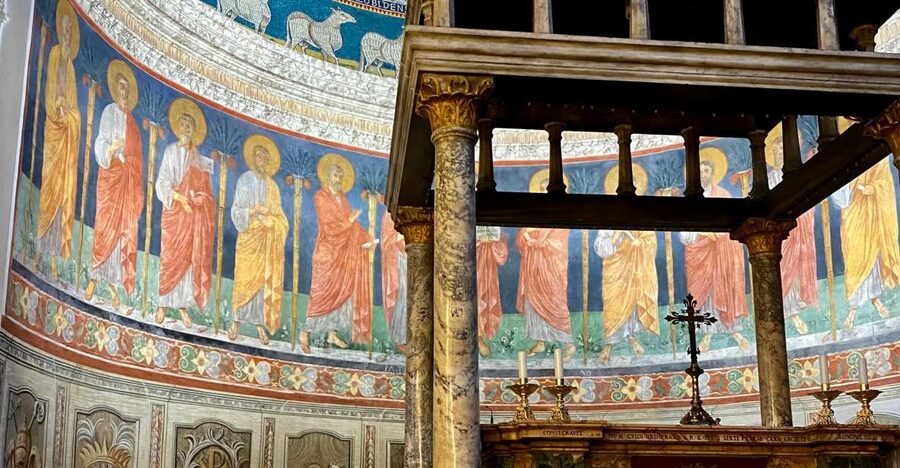
The 12th-century apse mosaic: gold, symbolism, and why it was built there
Before the stairs and the underground rooms, you get oriented at the surface level. The tour begins by focusing on the golden mosaic in the apse. It’s not just decorative gold. Your guide walks you through the symbolism and the spiritual meaning the mosaic was meant to communicate.
This is a smart start because it gives your brain a framework. Once you’ve seen how the medieval church wanted to express faith through imagery, the later layers make more sense. The mosaic becomes a clue for how art served religion, and how later communities reused and reinterpreted sacred space.
One of the best things about guides like Francesca or Tom, based on what I’ve been given here, is that they make the imagery readable. They don’t treat it like trivia. They connect details to bigger ideas, like how religious messages were designed to be understood by ordinary people, not just experts.
The 4th-century underground church and the martyrs on the walls
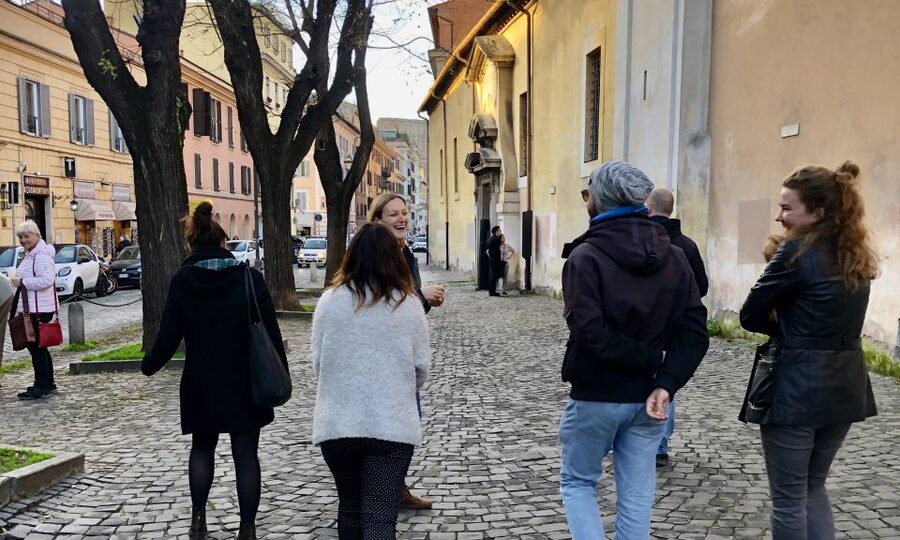
Next comes the real “under Rome” part: the underground church built directly atop earlier ground connected to St. Clement, the third pope of Rome. In the 4th century, this space held early Christian worship and art. You’ll see some of the earliest Christian frescoes on site, including scenes depicting martyrs and what persecution looked like for Christians at the time.
This section hits best when you treat it like a story rather than a museum stop. Your guide points out the key fresco scenes and helps you understand what they’re communicating. You’re not just watching figures in paint. You’re seeing how a community told itself, and the public, who it was and what it believed.
A practical note for you: underground rooms can have uneven footing and you will be on your feet. Comfortable shoes are not optional. Also, the pace is guided. That matters because there’s a lot to see, and it would be easy to miss the meaning if you were trying to read everything yourself.
Mithraic mysteries below the basilica, plus that underground river effect
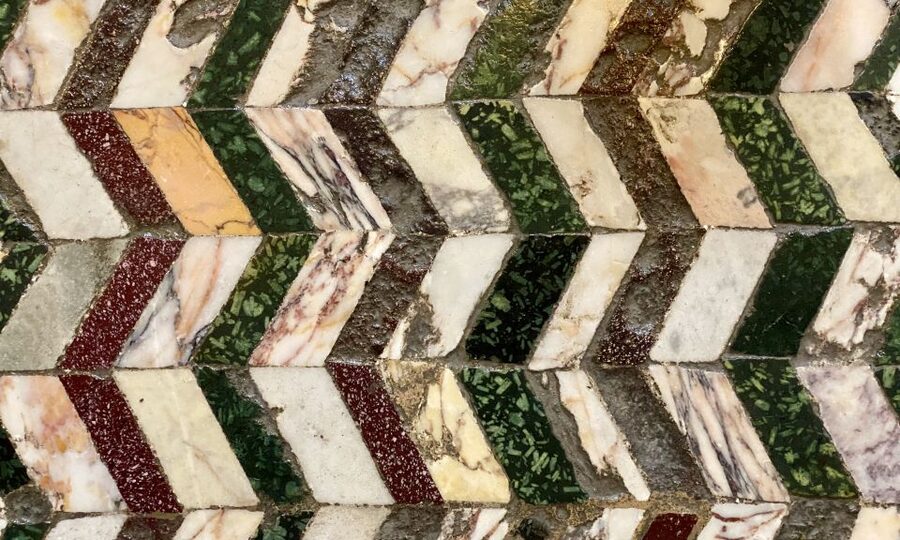
Then the tour shifts in a way that surprises many people. You descend further to one of Rome’s best-preserved Mithraic temples. Mithraism was a pagan cult that flourished before Christianity became dominant, and St. Clement’s preserves physical evidence of that earlier religious world.
What makes this part special is the contrast. You move from Christian frescoes to a pagan ritual setting, and your guide explains the beliefs and the hidden rituals connected to the cult. It’s also where the underground environment adds another layer: you’ll be able to notice waters of an underground river, which gives the space a real feeling of atmosphere, not just archaeology.
I like that your guide handles the “what is this?” questions directly. Mithraic symbols and ritual spaces can feel confusing if you only have a plaque to go on. Here, you get context, so the temple stops reading like a jumble of stone and starts functioning as a place people once believed in.
If you’re the type who loves turning up your mental flashlight, this is a strong match. Guides such as Paul are especially praised for explaining details in a way that sticks, which helps when you’re trying to keep multiple belief systems straight in your head.
Golden mosaic above, old pagan spaces below, and the meaning of all the layers
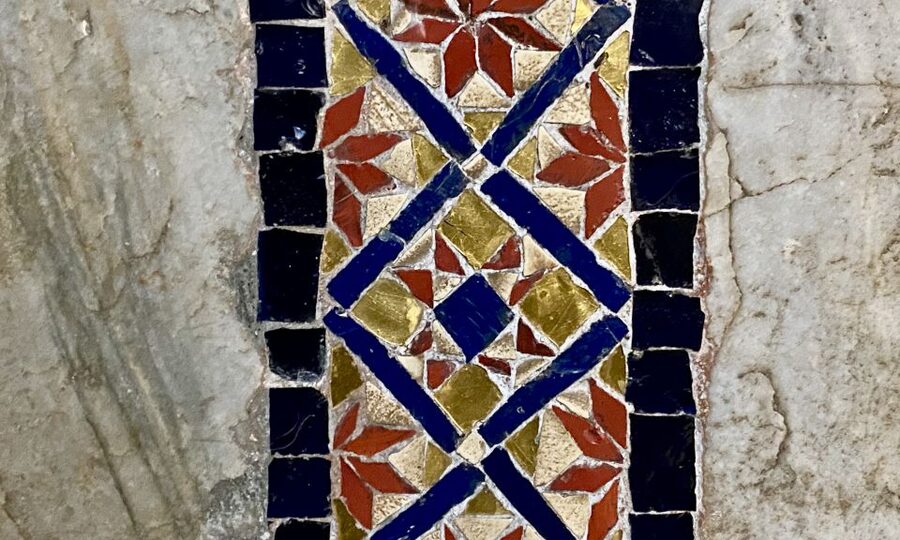
The biggest takeaway of St. Clement’s is how Rome reused sacred space. The site is often described as layered, and that’s the right word. You’re walking through a history of renovations and reinterpretations, where later communities built on top of what came before.
So even though you’re “just visiting one location,” you’re actually watching a change in worldview happen in stages:
- A medieval church created visible religious messaging through art.
- Early Christians used underground space for worship and for telling stories of persecution and martyrdom through frescoes.
- Pagan cult worship, including Mithraic ritual life, existed beneath later structures.
That’s why I recommend this tour to people who feel bored by standard ruins that don’t explain what life was like. This is more personal. It connects architecture to belief, and belief to how people remembered their past and organized their present.

Santo Stefano Rotondo extension: the haunting martyrdom frescoes in a circular church
If you choose the extension, you’ll add a guided 45-minute visit to Santo Stefano Rotondo. This church has a distinct circular architecture, and it’s known for frescoes depicting martyrdom scenes. The art is described as graphically portraying martyrdom, so it may not be appropriate for children.
For you, this stop works best if you want the martyr theme to continue after the earlier Christian frescoes you saw at St. Clement’s. The extension doesn’t repeat the story word-for-word, but it does reinforce the emotional and symbolic function of those images. It’s the same era of spiritual urgency, shown through different space and different artistic choices.
One thing to understand upfront: the order can vary. Depending on timing and schedule, you may start at St. Clement’s and go to Santo Stefano Rotondo, or flip it. That doesn’t usually hurt your experience, but it does mean you should keep your expectations flexible.
Also, the extension may be unavailable on certain days due to special events or liturgical celebrations. If that happens, the itinerary can change while keeping the overall duration the same.
Duration, pacing, and what the 1 to 2 hours feels like
On paper, the tour is listed as 1 hour for St. Clement’s alone, and 1 to 2 hours when you add Santo Stefano Rotondo. In real life, the time feels about right because the tour is built around a sequence of short, meaningful segments. You don’t wander aimlessly. You’re guided from one interpretive “layer” to the next.
You’ll spend time:
- listening at the surface level to set context and focus on the golden mosaic,
- descending to the underground church and frescoes,
- visiting the Mithraic temple and noticing the river atmosphere,
- then optionally moving on to Santo Stefano Rotondo for the martyrdom frescoes.
Because headsets are included, your pacing stays smoother. You won’t be constantly turning your head to hear the guide over stone echoes and crowded corners.
In some cases, the group can be very small. I’ve been told there are times where it feels close to private, which is great if you like asking questions and getting direct answers. Still, the tour is designed to work in standard group format too, with the guide keeping the narrative clear.
Where you meet, where you finish, and how to plan your afternoon
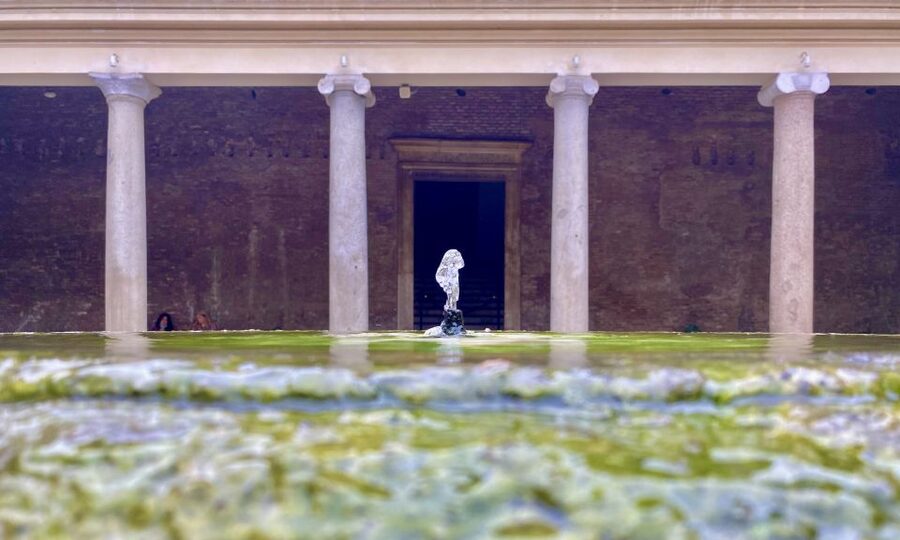
Your meeting point can vary depending on the option you booked. Common starting points include Piazza di San Clemente and Basilica di San Clemente al Laterano. If you extend to Santo Stefano Rotondo, your drop-off locations can include Piazza di San Clemente again or Basilica di Santo Stefano Rotondo al Celio.
That means you should plan your next stop with a bit of flexibility. In practical terms, I treat this as a main historical anchor for one part of your day, not something you tack on at the end when you need to rush to another far-off neighborhood.
Also, the tour is subject to weather and liturgical-calendar events. If something changes, the guide adapts. That’s helpful, but it’s still smart to keep other tight commitments light the day you book.
Price value: why this $70 ticket can be worth it
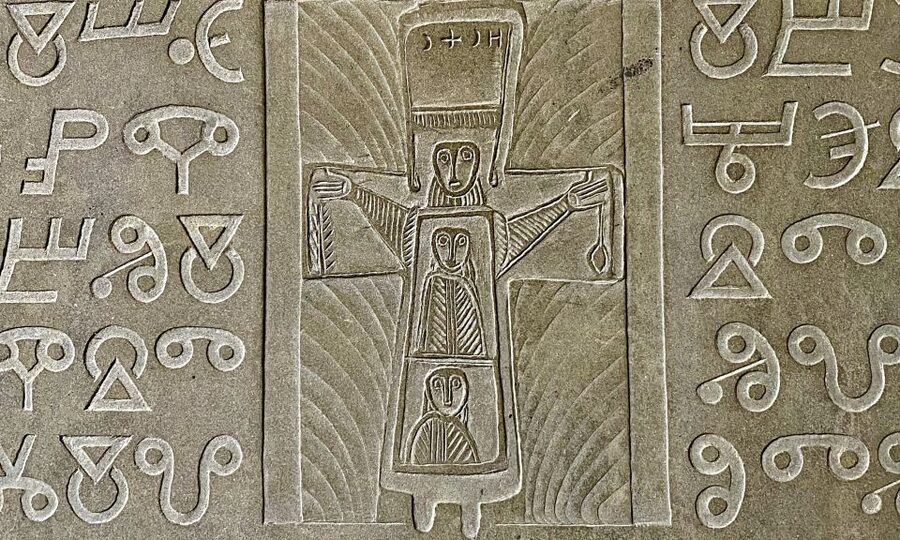
The price is about $70 per person, and that number matters less than what’s included.
You’re paying for:
- an expert live guide,
- entrance fees to the Basilica di San Clemente,
- headsets to hear clearly,
- and, if you select the extension, the guided visit to Santo Stefano Rotondo.
Compared with piecing together multiple tickets and trying to interpret underground art and symbolism on your own, this is good value. St. Clement’s is not an “easy self-guided” site. The meaning is layered, and your guide turns confusing features into a coherent story.
This is one of those tours where a good guide affects the whole trip. The highest praise here focuses on clarity and engagement, with named guides such as Lorenzo, Francesca, Paul, Anestis, and Mario standing out for strong communication and the ability to answer questions without making you feel rushed.
If you’re trying to keep your Rome day focused and still feel like you understand what you’re seeing, $70 starts to feel like a reasonable trade.
Before you go: dress code, photos, and what to bring
Bring comfortable shoes. The route includes steps and underground areas. Also, dress sensibly. Shorts, short skirts, and sleeveless shirts are not allowed inside. You’re also not allowed to bring food and drinks.
Photography is restricted. Video recording is not allowed, and photography inside is not allowed either. If you love documenting everything, this is the rare tour where you’ll need to rely on memory and notes instead of phone pictures.
Other rules include no pets, and no weapons or sharp objects. It sounds obvious, but it’s worth checking if you’re traveling with anything bulky.
Who should book, and who should skip this one
This tour is a strong fit if you:
- love ancient religion and how beliefs left physical traces,
- want early Christian art without the usual crowds,
- enjoy guided interpretation, especially for symbols and fresco scenes,
- and like short, efficient tours that still feel substantial.
It’s not a fit if you:
- use a wheelchair, since it unfortunately is not accessible due to the structures inside and under the basilica,
- have claustrophobia, since the underground spaces may be hard to handle,
- are bringing kids who might be sensitive to graphic martyrdom frescoes (especially if you choose Santo Stefano Rotondo).
If you fall into the “sensitive to tight spaces” group, consider booking only the St. Clement’s portion and skipping the extension, or choose a different Rome stop altogether.
Quick verdict: should you book the St. Clement’s underground temples?
If you want one of Rome’s most unusual cultural experiences, this is an easy yes. You get multiple time periods in a small space, with clear guidance and headsets, plus the standout mix of golden medieval mosaic, 4th-century martyr frescoes, and a Mithraic temple underground.
Book it if you’re comfortable with stairs and confined spaces, and if you like your history explained in plain language. Skip or reconsider if you have claustrophobia, need wheelchair access, or if the graphic martyrdom art at Santo Stefano Rotondo would be hard for your group.
If you’re ready to see Rome as a stacked story instead of a pile of sights, this tour is a solid choice.
FAQ
How long is the St. Clement’s Basilica Underground Temples tour?
The guided tour of St. Clement’s Basilica is about 1 hour. If you choose the optional extension to Santo Stefano Rotondo, the total experience can be 1 to 2 hours.
Does the tour include Santo Stefano Rotondo?
Santo Stefano Rotondo is included only if you specifically select the extension option during purchase.
How deep do you go underground at St. Clement’s?
You descend about 14 meters beneath the Basilica of San Clemente.
What languages are the live guides available in?
The live guide is available in Spanish, French, German, English, Italian, and Portuguese.
Are photos or video allowed inside the churches?
No. Video recording is not allowed, and photography inside is not allowed.
Is this tour wheelchair accessible?
No. The tour is unfortunately not accessible to wheelchair users due to the architectural structures inside and under the Basilica of San Clemente.
Is it suitable for claustrophobia?
It may not be suitable. The tour includes underground spaces within the Basilica of San Clemente.
Can I cancel for a refund?
Yes. You can cancel up to 24 hours in advance for a full refund.
What should I wear and bring?
Wear comfortable shoes. Also avoid shorts, short skirts, and sleeveless shirts, since those are not allowed.
More Tours in Rome
More Tour Reviews in Rome
Not for you? Here's more nearby things to do in Rome we have reviewed



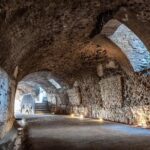

Catacombs & Underground Tours, compared.
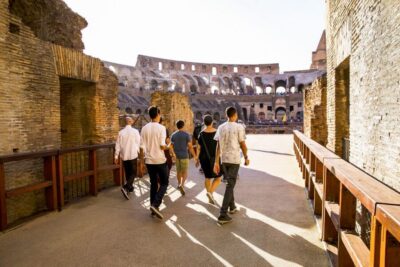 ★ 4.7Colosseum: Underground and Ancient Rome TourFrom $16012,691 reviews
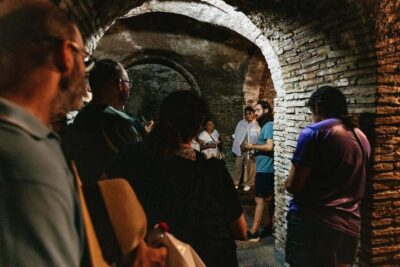 ★ 4.6Crypts and Catacombs Underground Tour with TransfersFrom $745,341 reviews
 ★ 4.7Colosseum Underground Small Group Guided TourFrom $1054,844 reviews
 ★ 4.8St. Peter’s Basilica, Dome Climb, and Underground TourFrom $383,404 reviews
 ★ 4.7Colosseum Underground, Arena & Forum TourFrom $1573,272 reviews
 ★ 4.3Trevi Fountain and Underground Guided TourFrom $411,664 reviews
 ★ 4.6Catacombs and Capuchin Crypt Guided Tour with TransferFrom $411,606 reviews
 ★ 4.7St. Peter’s Basilica Priority Access Tour with Dome & CryptFrom $831,476 reviews
Browse the lists this tour appears in