
Reviewed · MUSEUMS
Rome: Leonardo da Vinci Exhibition Entrance Ticket
Leonardo turns into working machines in Rome.
In this multimedia exhibit at Palazzo della Cancelleria, you walk through Leonardo’s engineering thinking, not just his paintings, with full-size builds, interactive stops, and dramatic tech like 3D holograms.
My two favorite parts: the chance to see (and often touch) full-scale machines made from his designs, and the way the exhibit uses 9 holograms to bring his ideas into motion in a way static images never can.
One thing to consider: it is not a huge museum, and parts of the floor can be a little tricky to navigate, so keep a close eye on little kids and watch your step.
Key highlights worth your time
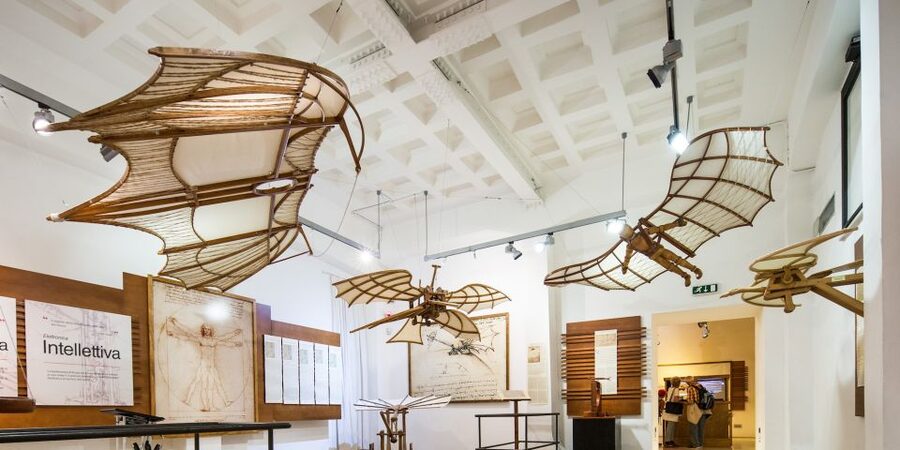
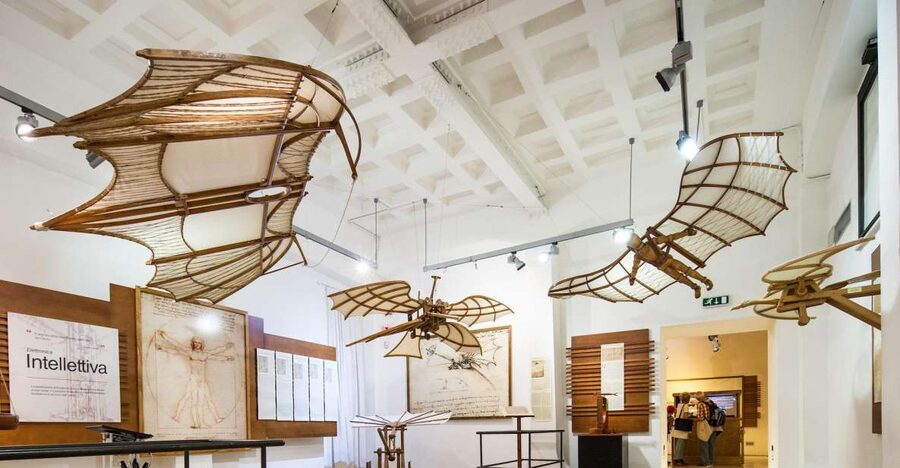
65+ full-scale machines built from Leonardo’s designs, many of them made to be tried, not just stared at
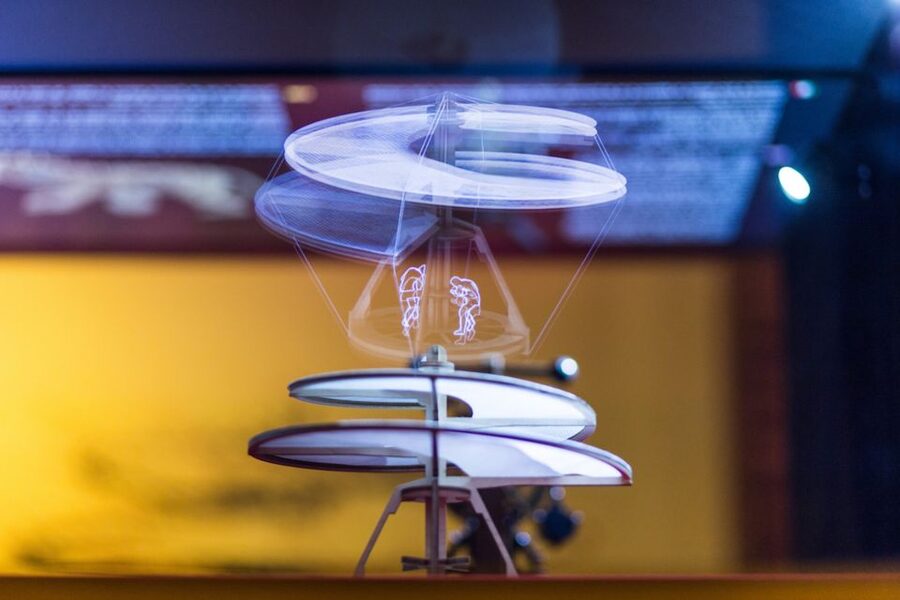
9 holograms in 3D, showing Leonardo paintings and inventions in a more lifelike way
Four themed sections built around Water, Air, Fire, and Earth studies
7 interactive installations based on Leonardo’s drawings, where you can push, test, and play
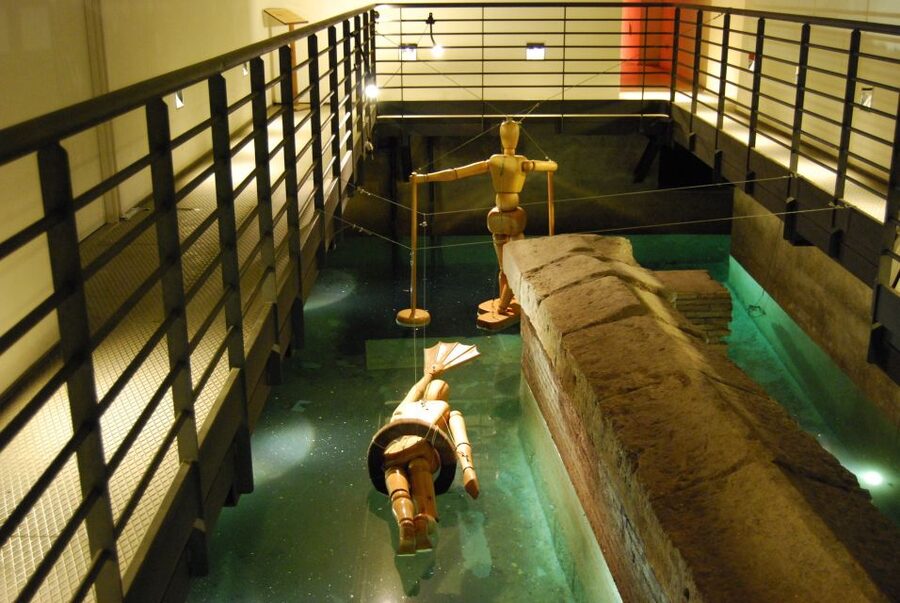
An underground stop with a tomb from 43 BC set beside an immersed pond
A self-guided flow with a gadget for the experience, plus an audio option that many people find worth it
Palazzo della Cancelleria: the cool, historic setting
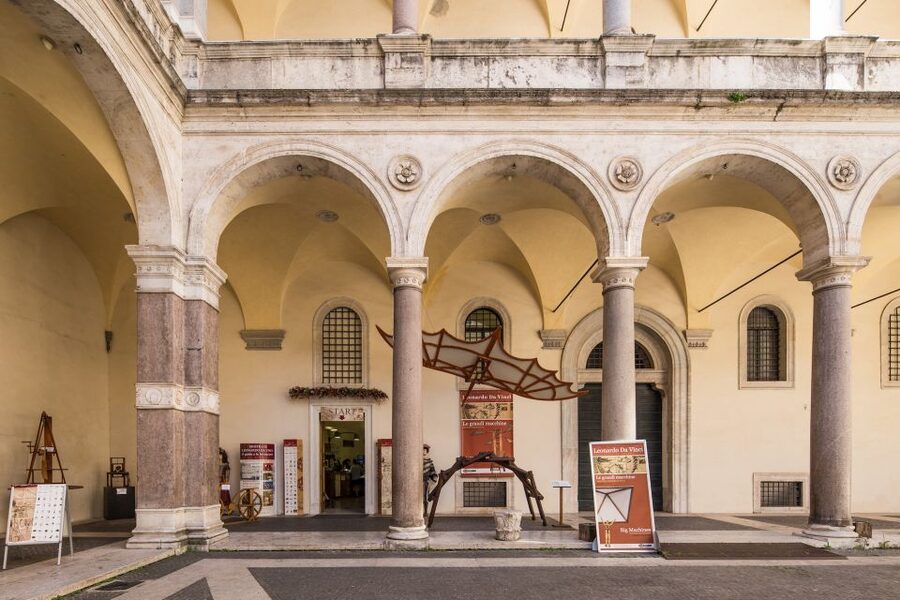
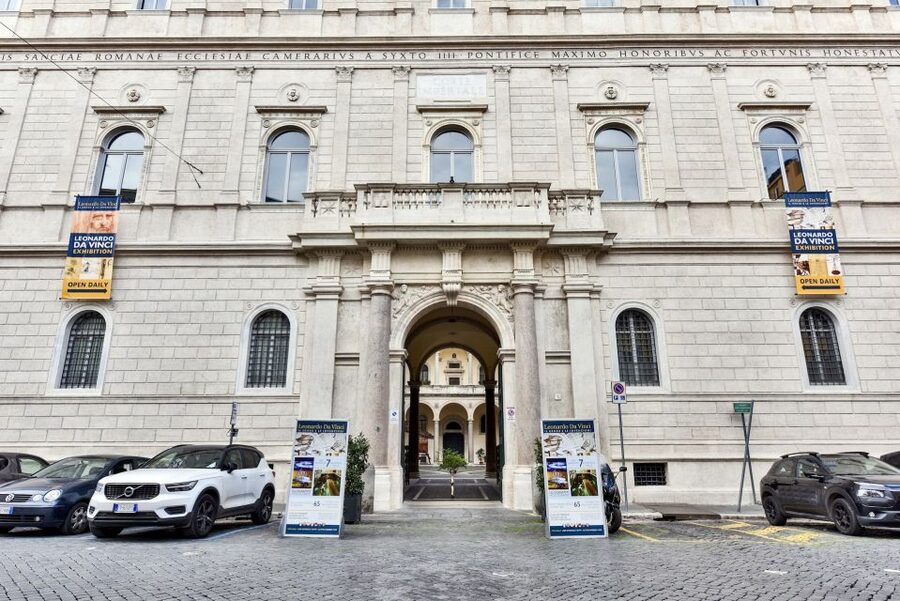
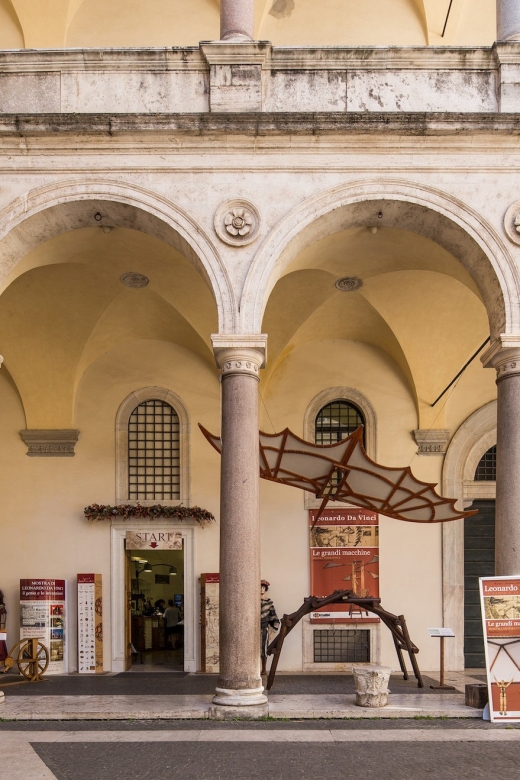
This exhibition sits inside Palazzo della Cancelleria, a fascinating building with Vatican ownership and strong architectural pull. You are in a place where Rome’s religious and civic history overlap, which gives the exhibit a different feeling than the usual museum box.
What I like about the location is that it does not feel like an isolated attraction. The upper floor connects you to a real landmark, including the Sacra Rota, tied to church processes around marriage dissolution. And in the same complex, you have the added jolt of seeing the tomb of the architect Auro Irzio from 43 BC, placed in a dramatic underground pond setting.
Also, this is an underground and semi-underground experience. On a hot Roman day, that matters more than you might expect. Even without being “a big long break,” the cooler interior helps you keep your energy for the rest of your sightseeing.
A few more Rome tours and experiences worth a look



Ticket value and what you actually get for $10
At $10 per person, this is the rare Rome add-on that feels like good value even if you have only a short window. You are paying for an entrance ticket plus a gadget that supports how you move through and interact with the displays.
You are also getting more than “information panels.” The exhibit is built around reproductions and practical engagement: full-scale builds, hands-on elements, holograms, and interactive stations tied to Leonardo’s drawings. That combo is why it tends to feel worth it, even if you are not a hardcore art-history person.
One small planning note: your ticket is valid for 1 day, but you should check starting times and reserve a slot. Entrance is available until 1 hour before closing, so do not wait until the last minute.
Your 1-day plan: four Leonardo themes and a clear flow
Think of the exhibit as a guided walk through Leonardo’s mind, with four thematic legs: Water, Air, Fire, and Earth. The layout is designed to take you section by section, and each area connects his sketches to working ideas. Even if you do not know much about Renaissance engineering, the exhibit does a decent job of making the logic feel approachable.
Here is how the experience generally unfolds once you enter:
Section: Leonardo’s engineering thinking in real models
You start by setting your expectations. This place leans hard into the maker approach, where you see mechanical reasoning made visible. You will spot multiple categories of inventions, including models linked to science and engineering. The format is very “see it, then understand it,” and it moves at a museum pace that works for both adults and kids old enough to follow instructions.
Section: Water studies
Water is where you start to notice Leonardo’s obsession with practical problems: how forces move, how structures hold, and how flow behaves. The exhibit highlights his water studies as a key part of his thinking, and you can expect models tied to those concepts. It is one of the sections that makes you realize he was not only dreaming about flight or art.
You can also read our reviews of more museum experiences in Rome



Section: Air and aviation ideas
In the Air-focused area, Leonardo’s curiosity turns upward. You will see models connected to flight ideas and related engineering thinking. This is often the moment where the exhibit reminds you he was a true “Renaissance man,” not just a painter with notebooks.
Section: Fire and machine logic
Fire-themed displays bring in the energy and danger side of invention. This is also where the museum connects his studies to broader applied concepts, including aspects tied to military-related ideas. If you like mechanics and systems, this is one of the more satisfying sections because you can watch the logic behind the design.
Section: Earth and the building mindset
Earth rounds out the story with a focus that feels grounded. It ties back to structure, materials, and practical construction thinking. If you enjoyed the previous sections, this is where you may start connecting the dots between Leonardo’s drawings and how engineering becomes architecture and tools.
Full-scale machines you can touch, plus the build-your-bridge moment
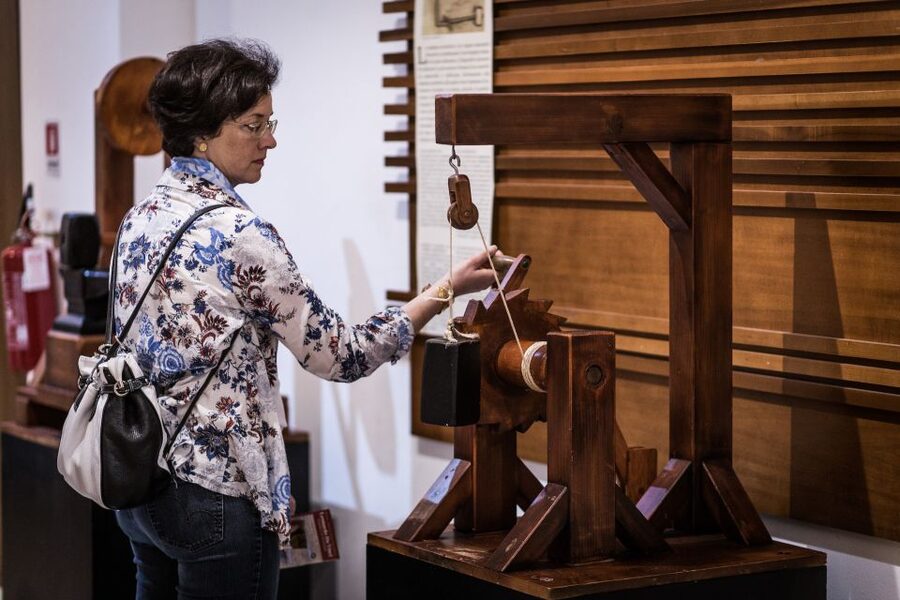
The biggest reason this exhibit earns its strong reputation is its hands-on design. You are not only looking at reproductions. Many machines are built to be activated or tested, which helps you understand what Leonardo’s sketches were trying to solve.
You will encounter almost all the machines on display in a way that feels interactive, and there are multiple chances to play with mechanisms rather than just read explanations. One of the best activities here is the chance to build your own version of a bridge that Leonardo invented. Even if your bridge is not winning any engineering awards, the point is the cause-and-effect learning.
A practical tip: the interactive zones often come with touch rules and small safety boundaries. Look for signage and take a second before you press buttons or move parts. This keeps you from doing the annoying thing of stopping halfway through your own fun because a section is meant to be handled a specific way.
Holograms and the “making art move” effect
Leonardo is famous for art, so the holograms are a big deal. The exhibit includes 9 holograms that show his paintings and inventions in 3D. It is also described as the only holograms of the artist in the world, which tells you this is meant to be a signature tech feature, not a random add-on.
What works about this kind of presentation is timing. You see a sketch or concept, then you get a visual upgrade that helps your brain picture how it could function in 3D space. It bridges the gap between “I see the drawing” and “I understand the idea.”
If you like art, do not skip the art-linked moments. They are not just decoration, they are part of how the exhibit connects creativity with invention.
The 43 BC tomb in an underground pond: the scene-stealer
One of the most unusual things on the route is the tomb dating to 43 BC, immersed in an underground pond. This is not your typical museum backstory. It is a striking atmosphere stop, and it changes the emotional tempo of the visit.
Even if you care more about the inventions than the archaeology, that underground setting makes the whole day feel different. It gives you a sense of “Rome layering over time,” right inside the same building.
This is also a good pause. If you have been moving fast, the pond tomb area is where you can slow down, look up from the machines for a minute, and then get back to the engineering story.
Audio option, gadget pickup, and how to get your money’s worth
Your ticket includes a gadget, and the exhibit also offers an audio option. Many visitors highlight how strong the audio is, so if you want the why behind the how, headphones can pay off fast.
Here is how I suggest you use it without overthinking:
- Start the audio early so you stay oriented with the exhibits
- If the room flow feels slightly non-linear, let the audio guide your spot in the story
- Use the audio to connect specific models to Leonardo’s themes like Water, Air, Fire, and Earth
Also, the exhibit uses a calming music background. That matters because a lot of interactive places go loud and chaotic. Here, the vibe is more focused, which makes it easier to take in the details even if you are not a technical person.
Best time to go, and how long to plan
This is a short to medium visit. While it depends on how much you stop and test, a lot of people land around 45 to 60 minutes, with others lingering closer to about two hours.
I like planning it as a flexible slot in your day. It fits well if you want something educational but not exhausting, especially when the sun is doing its usual Roman thing.
If you get the timing right, it also helps you avoid the “run through everything because you are late” trap. Slow down at the interactive stations and the hologram moments. Those are the places where your attention gets rewarded.
Who this Leonardo exhibit suits best
This is a great match if you love tinkering, visual learning, engineering, or hands-on museums. The variety helps, too, because you get a blend of machines and creative ideas, including items like instruments and even a tank model highlighted in the exhibit.
It is also fun for families, especially kids who enjoy pushing buttons and trying physical models. A lot of the interactivity is built around making ideas feel real.
Possible mismatch: if you have very small kids, plan extra caution. Some areas can involve trip hazards or “touch here, not there” zones, so supervision matters.
Final verdict: should you book the Leonardo da Vinci ticket?
Book it if you want an easy, affordable Rome stop that feels genuinely different from the usual photo-and-pose itinerary. At $10, the combination of 65+ full-scale machines, holograms, and interactive stations gives you a lot of learning per minute.
Skip it (or at least rethink your priorities) if you only want big-name masterpieces and prefer quiet, traditional galleries. This exhibit is more maker lab than cathedral-museum, and the payoff comes from touching, testing, and watching how ideas work.
If you are on the fence, I’d decide like this: if Leonardo’s drawings and inventions appeal to you, this is a smart use of time in Rome. If you are more into architecture and classics, pair it with those plans, and treat this as your hands-on palate cleanser.
FAQ
Where is the Leonardo da Vinci exhibition in Rome?
It is at Piazza della Cancelleria 1, near Campo dei Fiori and Piazza Navona.
How much does the entrance ticket cost?
The price is $10 per person.
How long is the visit?
The activity is listed as 1 day, and many visitors spend about 45 to 60 minutes, with some staying closer to around 2 hours.
What is included with the ticket?
Entrance fees are included, and you also receive a gadget.
Is there a guide included?
No, a guide is not included. You can request a guide for an additional cost.
What can I see in the exhibition?
You can see over 65 full-scale machines based on Leonardo’s designs, 9 holograms in 3D, and interactive installations based on his drawings. The exhibit also includes a tomb from 43 BC set in an underground pond.
Are there interactive elements?
Yes. There are 7 interactive installations, and you can touch and play with many of the machines on display, including an activity where you build your own version of a bridge Leonardo invented.
Is the audio guide worth it?
The audio guide is optional, and the audio experience is specifically called out as excellent in the provided feedback.
Can I enter late in the day?
Entrance is available until 1 hour before closing time.
Is the exhibition wheelchair accessible?
Yes, it is wheelchair accessible.
More Museum Experiences in Rome
More Tickets in Rome



More Tour Reviews in Rome


Not for you? Here's more nearby things to do in Rome we have reviewed











Museums, compared.
 ★ 4.5Vatican: Museums & Sistine Chapel Entrance TicketFrom $38144,003 reviews
 ★ 4.3Vatican Museums & Sistine Chapel Tour with Optional BasilicaFrom $7967,413 reviews
 ★ 4.5Vatican Museums, Sistine Chapel & St Peter’s Basilica Guided TourFrom $2239,149 reviews
 ★ 4.3Vatican Museums, Sistine Chapel & Basilica TourFrom $13013,872 reviews
 ★ 4.4Vatican Museums & Sistine Chapel Skip-the-Line Entry TicketFrom $4313,838 reviews
★ 4.7Vatican Museums, Sistine Chapel & Basilica TourFrom $7213,217 reviews
Vatican Museums & Sistine Chapel Guided TourFrom $11812,117 reviews
★ 4.4Vatican Museums & Sistine Chapel Skip-the-Line Entry TicketFrom $4313,838 reviews
★ 4.7Vatican Museums, Sistine Chapel & Basilica TourFrom $7213,217 reviews
Vatican Museums & Sistine Chapel Guided TourFrom $11812,117 reviews
 ★ 4.2Vatican Museums & Sistine Chapel Skip-The-Line TicketFrom $4111,708 reviews