

Reviewed · WALKING TOURS
Rome: Jewish Ghetto Walking Tour
Rome’s Jewish quarter tells stories in every corner. This 2.5-hour walking tour strings together Trajan’s Column and Tiber Island, with stops like the Theater of Marcellus and the Turtle Fountain. I love how the guide connects 2,000 years of change and continuity, and I love the included kosher gelato pause. The main thing to plan for is simple, real walking time, plus you cannot expect the schedule to wait for late arrivals.
I also like the human touch. The tour is led in English by friendly, professional guides, and names you may hear in past groups include James, Angela, Gabi, Elena, Tom, and Maria, who often turn history into something you can follow, even with teens along.
One more practical note: you’ll pass important religious sites like the Great Synagogue of Rome, and if your route includes church interiors, you’ll want a cover for bare shoulders. And if you’re thinking about a Friday afternoon slot, I’d plan carefully around the start of Shabbat, since that can affect the vibe and flow in the area.
Key highlights to look forward to
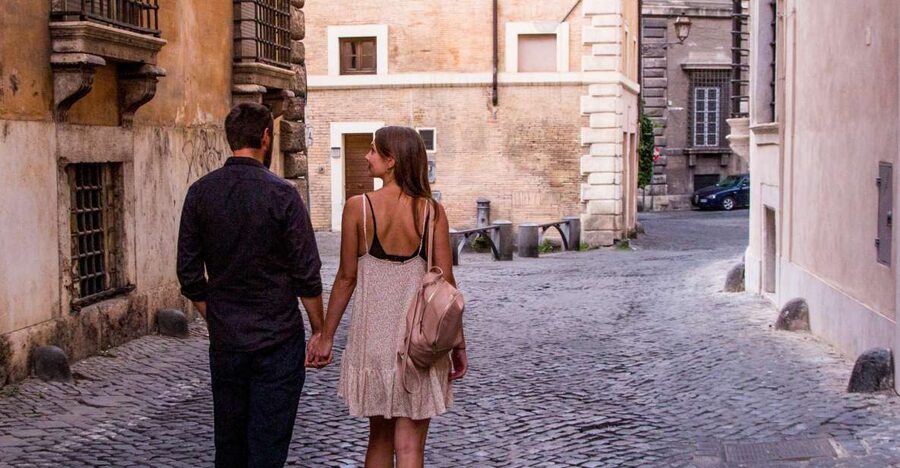
- Trajan’s Column meeting point at Foro Traiano, 84, makes it easy to orient fast.
- Theater of Marcellus gets treated as an ancient anchor point, even older than the Colosseum.
- Fontana delle Tartarughe at Piazza Mattei brings the Turtle Fountain story into focus.
- Portico d’Ottavia and surrounding remains show how Roman architecture kept getting reused.
- Tiber Island crossing includes WWII rescue stories and the Asclepius tradition linked to a church today.
- Kosher gelato or coffee is built into the tour, so you’re not hunting for a snack mid-walk.
First stops near Trajan’s Column, Foro Traiano
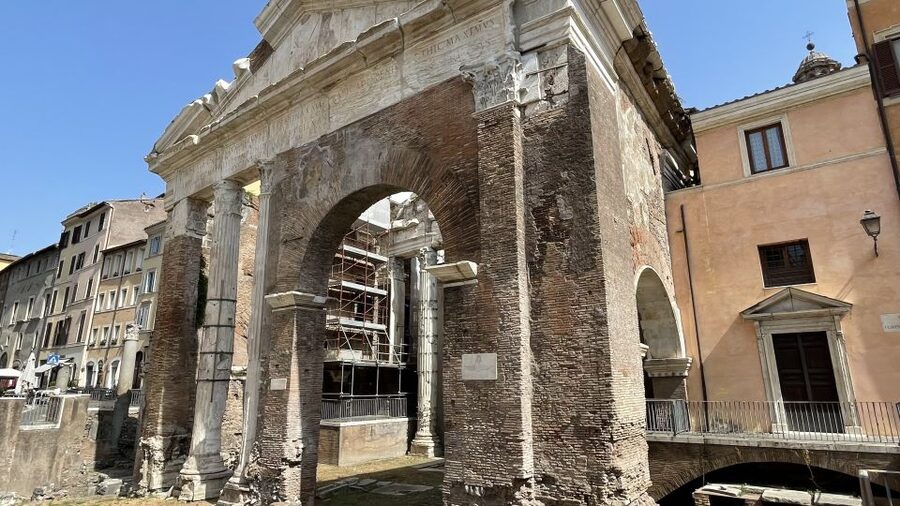
The tour begins at Foro Traiano, 84, and you’ll want to find the orange Roman Vacations sign at the meeting point. If you like getting oriented on day one, this is a smart start, since you’re already in the historic center before you head into the Jewish Ghetto area.
From there, you move through Rome like you’re flipping back and forth between eras. The guide sets the context early, so the neighborhood doesn’t feel like a museum exhibit, it feels like a living layer cake built over centuries.
If you’re thinking of bringing kids or teens, this kind of format works well. Several guides have a story-forward style, and that makes the facts easier to hold onto when you’re walking.
You can also read our reviews of more walking tours in Rome


Theater of Marcellus: ancient scale before the Colosseum
One of the first real wow moments is the Theater of Marcellus. What makes it special here is the framing: it’s older than the Colosseum, so it gives you a different angle on Roman entertainment and engineering.
You’ll spend a focused stretch looking at what still reads as theater architecture, then your guide connects it to the broader city story. Even if you’ve seen the Colosseum before, this stop helps you understand Rome didn’t invent spectacle overnight.
A consideration: this is outdoors and in open sightlines. If the day is hot, wear sunscreen and plan for shaded breaks, because the tour’s power comes from walking between landmarks.
Fontana delle Tartarughe and Piazza Mattei
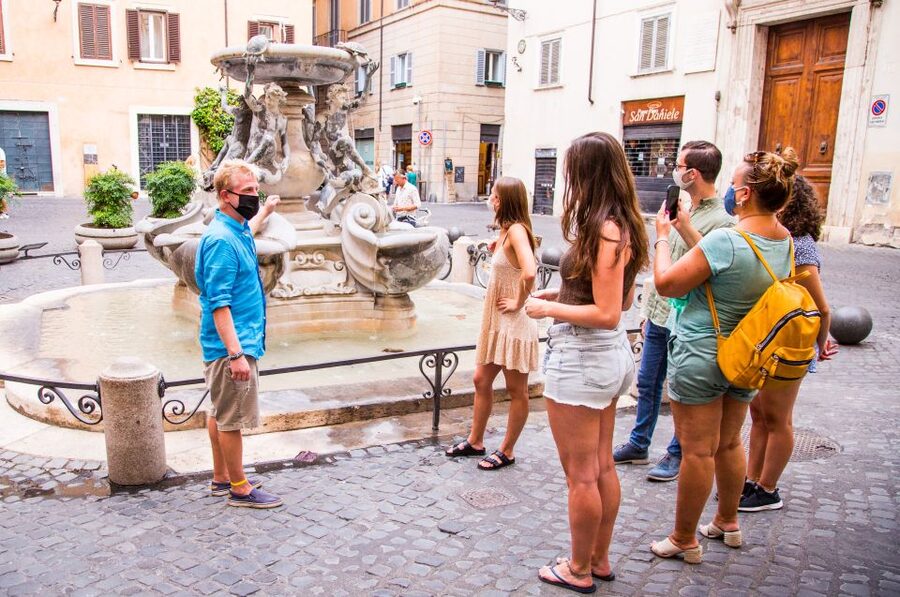
Next up is the Turtle Fountain, Fontana delle Tartarughe, in Piazza Mattei. This stop matters because it’s not just a photo moment, it’s a lesson in how Rome stores folklore in plain sight.
Your guide shares the story behind the famous fountain, including the famous theme of unrequited love. That kind of human detail is exactly what helps the rest of the tour land, since you’re about to hear heavier history next.
Take your time here. The plaza is compact, so it’s a good place to reset your legs and listen carefully, rather than rushing straight to the next street.
Entering the Jewish Ghetto streets and the Great Synagogue
Now the tour’s tone shifts from Roman grandeur to community life under pressure. You’ll walk through the Jewish Ghetto area and hear how the neighborhood changed across centuries, not just what happened in one tragic chapter.
You’ll see and learn about the last remaining piece of the wall that helped keep the Jewish community in this area for centuries. That physical reminder makes the stories feel more grounded, because you can see how rules and borders took shape in stone and street plans.
You’ll also pass the Great Synagogue of Rome while the guide explains key parts of the community’s past and resilience. The approach is respectful and contextual, and it helps you understand why modern Rome has to be read with multiple timelines at once.
If you’re visiting from outside Italy, I’d treat this stop as your “interpretation layer.” The Jewish Ghetto is famous, but without a guide’s connections, it can feel like scattered highlights rather than one long story arc.
Portico d’Ottavia: reused Roman space and visible continuity
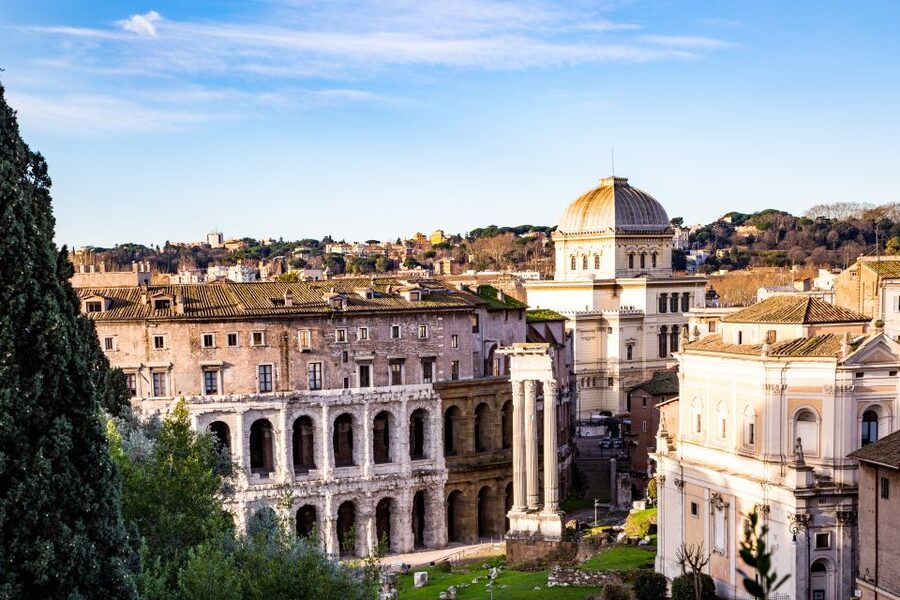
The tour then moves to Portico d’Ottavia, where ancient structure meets everyday city usage. The practical reason this stop is worth your attention is simple: Rome’s “old” buildings often still function, and you get that sense here.
You’ll get a guided look at the portico and how it fits into the surrounding urban rhythm. That matters because it shows how the city’s older bones remained relevant as communities changed over time.
This is also a good section for questions. Guides tend to use this stretch to explain how Rome’s geography influenced settlement patterns, and it’s easier to ask in the middle of a guided pause than at the next fast-moving corner.



Cross to Tiber Island: WWII rescue and Asclepius made church
One of the most memorable parts is crossing to Tiber Island. Your guide points out that you’re using the oldest functioning bridge in Rome, which is a neat reminder that infrastructure can outlast empires.
On Tiber Island, the stories go beyond the ancient past. You’ll hear about a hospital connected to saving people during World War II, and you’ll also hear the ancient Asclepius tradition tied to a temple that is now a church.
This is history with two timelines running side by side. You’re not just learning what happened long ago, you’re also seeing how later events layered meaning onto the same physical space.
What to watch for: church interiors can require clothing that covers shoulders. If you’re wearing a tank top or strappy top, bring a light layer so you’re not scrambling at the door.
Kosher gelato or coffee, a smart mid-tour reset
The included break is one of the easiest ways to judge value. You’ll head to a gelateria for homemade kosher gelato, and if you prefer, it can be kosher gelato or coffee depending on what’s offered that day.
I like built-in food stops on walking tours, because they keep the energy up without you paying extra just to stay comfortable. It’s also a cultural moment, not only a sugar moment, since the flavor and setting tie into the tour’s theme.
If you’re sensitive to lactose or have dietary restrictions, check what’s available when you arrive. The tour data confirms kosher options, but it doesn’t spell out vegan or allergy specifics.
Price and value for a 2.5-hour Rome walking tour
At $65 per person for about 2.5 hours, you’re paying for three things: an English-speaking guide, a route that covers multiple major landmarks, and the included kosher gelato or coffee.
Is it worth it? For Rome, it usually comes down to whether you want context while walking. This route hits sites you could technically find on your own, but the tour’s real value is how the guide connects architecture, neighborhood boundaries, and cultural change over centuries.
A small practical point: because it’s a walking tour, you’ll get more out of it if you show up ready to move at a steady pace. If you like slow museum-style visits, you might find this format slightly intense, but the payoff is the flow between viewpoints.
Timing, weather, and what to bring so the day feels easy
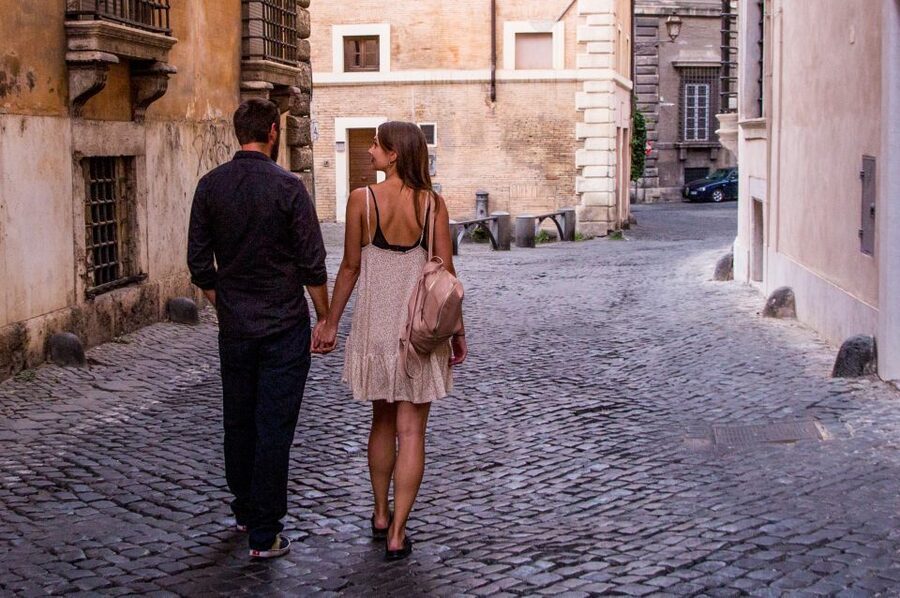
The tour runs in all weather conditions, so plan like you’re in Rome, not on a postcard. Bring an umbrella if rain is likely, and wear weather-appropriate clothing since you’ll be outdoors between stops.
The basics that make this tour comfortable are in your control:
- Comfortable shoes
- Sun hat, sunscreen
- Umbrella (if rain is possible)
- A reusable water bottle
For timing, I’d also keep Friday in mind. One of the guide notes from past guests suggests you might want to avoid late Friday afternoon right before Shabbat starts, since local rhythms can shift and affect the experience.
If you want a smooth day, go earlier rather than later when you can.
Who this tour suits best
This is ideal if you want a neighborhood-focused walk that still includes major Roman landmarks. You’ll get Theater of Marcellus scale, Turtle Fountain storytelling, and then the Jewish Ghetto context, without turning it into a dry lecture.
It’s also a good choice if you enjoy asking questions. Many guides on this route are described as answering thoughtfully and keeping groups engaged, including families and people who are new to this area.
If you have mobility concerns, I’d plan to communicate your walking pace needs before you start. There is evidence from past experiences that guides can adjust pace for slower walkers, but this still remains an outdoor walking tour, so manage expectations accordingly.
Should you book the Rome Jewish Ghetto walking tour?
Yes, if you want your Rome to feel personal and readable. The price includes an experienced English guide and a real cultural break, and the route ties together ancient Rome, community life, and later events like WWII without losing focus.
I would think twice only if you hate walking, you can’t manage sun or rain, or you know you’ll arrive late and might miss parts of the route. Otherwise, this is one of the more meaningful ways to experience the city’s layers in a short time.
FAQ
Where is the meeting point for the Rome Jewish Ghetto walking tour?
Meet at Foro Traiano, 84. Look for an orange Roman Vacations sign at the meeting point.
How long is the tour?
The tour lasts 2.5 hours.
What’s included in the price?
The tour includes a tour guide and kosher gelato or coffee.
Is the tour offered in English?
Yes. The tour is offered with a live guide in English.
Does the tour run in bad weather?
Yes. The tour proceeds in all weather conditions.
What should I bring and wear?
Bring comfortable shoes, a sun hat, umbrella, sunscreen, weather-appropriate clothing, and a reusable water bottle.
Are there any dress rules for churches?
Yes. Bring a cover for bare shoulders if you enter churches.
Can I cancel, and what happens if I arrive late?
You can cancel up to 24 hours in advance for a full refund. The tour will not be delayed for late arrivals, and no refunds are given for missed tours due to late arrival.
More Walking Tours in Rome



More Tours in Rome

More Tour Reviews in Rome
Not for you? Here's more nearby things to do in Rome we have reviewed







Walking Tours, compared.
 ★ 4.9Trastevere & Campo de Fiori Street Food Walking TourFrom $512,768 reviews
 ★ 4.9Paranormal Night Walking Tour & Secret BackstreetsFrom $341,921 reviews
 ★ 4.4Guided City Center Evening Sightseeing Walking TourFrom $46953 reviews
 ★ 4.5Best of Rome Walking Tour including Trevi FountainFrom $4923 reviews
 ★ 4.8Under the Moonlight Evening Walking TourFrom $28852 reviews
 ★ 4.9Forbidden History Walking Tour & Pub Crawl with DrinksFrom $61688 reviews
 ★ 5.0Guided Small Group Walking Tour of City HighlightsFrom $30682 reviews
 ★ 4.5Rome Walking Tour with Piazza Navona, Trevi Fountain and PantheonFrom $35676 reviews
Browse the lists this tour appears in