
Reviewed · CYCLING TOURS
Rome: Highlights Bike Tour
Rome moves fast when you ride it. This 3-hour bike loop strings together Rome’s top sights in a way that feels practical, not rushed. I particularly like the headset audio, which makes the guide’s stories clear while you’re actually seeing the city move around you. The main thing to consider is the cobblestones and busy streets, so this is not the best pick if you’re pregnant, or if you’re not comfortable riding in traffic.
What makes this tour stand out is how the local guide manages the group. Names like Mattia, Marco, Sergio, and Daniele come up again and again for keeping everyone safe while the pace stays fun. You also get a solid mix of postcard classics (Pantheon, Trevi, Colosseum) plus the in-between streets where Rome feels lived-in.
Best of all, it’s an efficient way to cover a lot of ground without doing the same stop-and-start routine on foot. You’ll ride from ancient Rome landmarks toward views associated with Vatican City, but the focus stays outside the big-ticket interiors, not museum lines.
Key highlights you will feel right away
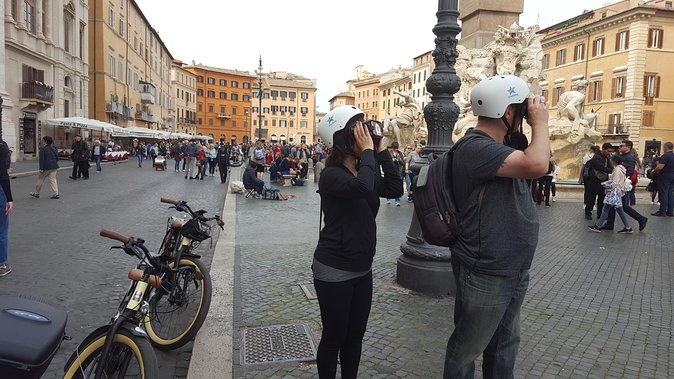
- Clear audio headset that helps you follow the stories while riding
- Cruiser bikes that keep the ride manageable for most adults
- Top landmarks in one route including the Pantheon, Trevi Fountain, and Colosseum
- Real street context as you cycle past squares and monuments, not just through them
- Busy-road safety focus guided by experienced leaders (Mattia, Marco, Sergio, Daniele, and more)
- Rain or shine touring, with ponchos provided if weather turns
A 3-hour circuit that turns Rome into something you can use
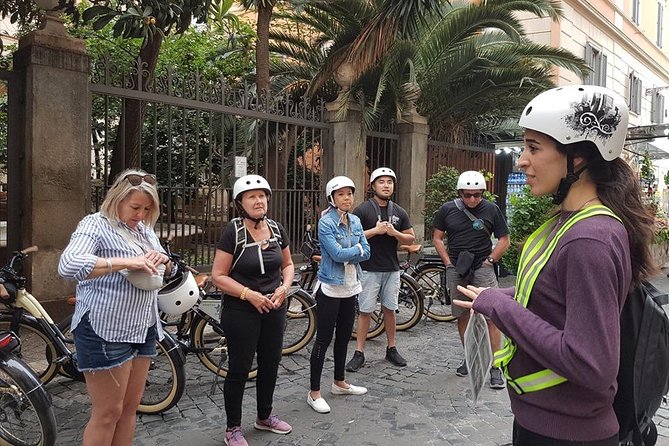
If you want Rome to feel big but still doable, this tour nails the timing. Three hours is long enough to see multiple major landmarks, and short enough that you’re not exhausted before you get to dinner. The format is active, but not intense: you’re on a cruiser bike with time to pause at key stops and take photos without sprinting across town.
I like that it’s not just a list of monuments. The route flows through different eras and neighborhoods, so the city starts to make sense as one place, not a pile of disconnected stops. And because the guide uses an audio system, you can keep your attention on the road when you need to, then tune in when you’re waiting at a landmark.
You should know the practical reality too: this is not a “museum day.” You’re seeing famous exteriors and city landmarks from the bike and at the stops, not going inside monuments and museums.
You can also read our reviews of more cycling tours in Rome

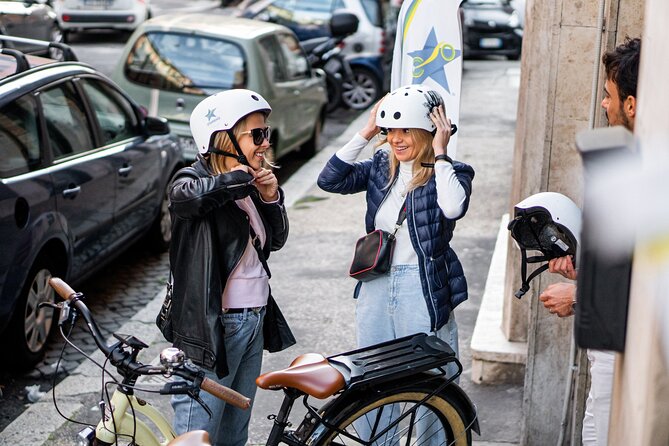
Meeting at Via dei Delfini and setting yourself up for an easy ride
The meeting point is Fat Tire Tours Rome at Via dei Delfini 35/36, about 150 meters from Piazza Venezia (roughly a five-minute walk). It’s also around 1.5 km from the Colosseum (about a 15-minute walk). Plan to arrive 15 minutes early, because you’ll need time for bike setup and a quick safety rundown.
A few small rules matter here in Rome, where sidewalks and roads can be chaotic:
- Closed-toe shoes are encouraged, and open-toed shoes are not allowed.
- Helmets are optional, but you can choose to wear one.
- The tour runs rain or shine, and rain ponchos are provided, with reimbursement if you do not use them.
The big “do this right” tip: wear shoes you can confidently handle on uneven ground. If you’ve ever slipped on a curb in Rome, you already know why.
Jewish Ghetto and Campo de’ Fiori: starting with neighborhoods, not just monuments
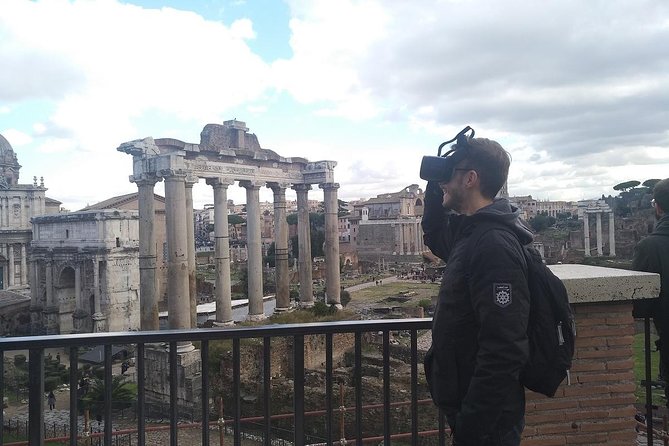
The tour begins with quick rides through central Rome, starting at the Fat Tire Tours office. From there, the first notable stop is the Jewish Ghetto area, followed by Campo de’ Fiori.
These segments are short, which is perfect for a first feel of the route. You get the sense of street life and the way Rome’s historic neighborhoods sit right next to major sightseeing corridors. Even if you do not stop long at each place, it helps you orient yourself for the rest of the afternoon.
If you’re the type who likes to understand where you are, this early part is valuable. It puts you in the city’s everyday setting before you hit the iconic architecture stops.
Pantheon: seeing why it copied Rome for centuries
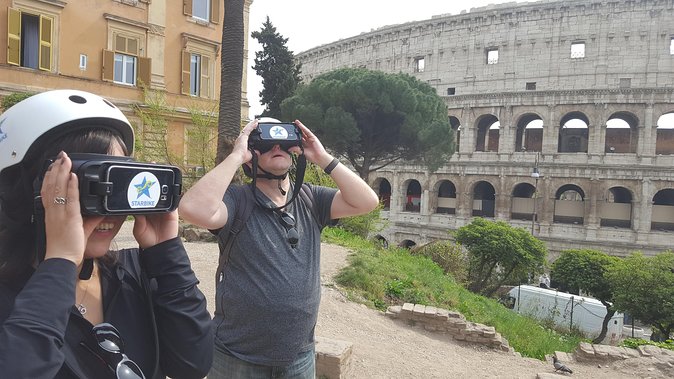
The Pantheon stop is one of the tour’s anchors. You’ll spend time there, enough to get photos and absorb what makes the building famous. The guide frames it as a former temple honoring the gods of Ancient Rome, and it’s easy to see why this structure became a model for architecture.
A couple of details that help you notice more when you’re standing there:
- The Corinthian columns give it a refined, formal look.
- The massive concrete dome is the standout engineering feature, and it helped inspire buildings far beyond Italy, including the Pantheon in Paris.
You’re not going inside on this tour, so your payoff comes from what you can observe from outside and at street level. Still, this is the stop where the “wow” factor usually lands for first-time Rome visitors.
Piazza Navona and Sant’Ignazio di Loyola: watching the city’s postcard sides
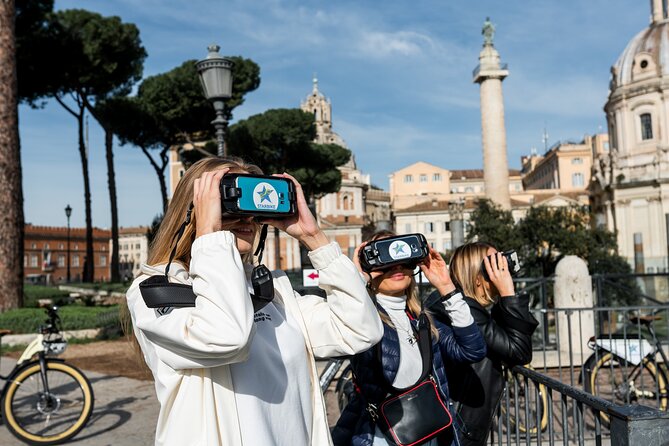
Next up is Piazza Navona, with a short bike pause that’s long enough to take in the square’s layout and the way buildings frame open space. From there, you’ll ride to the Church of Sant’Ignazio di Loyola.
Because you’re moving through the area rather than waiting in line, you get a smoother rhythm. You’re not stuck in one location, and that matters in Rome where time evaporates quickly.
Here’s how to make the stop count: use the short time to photograph the views you’ll recognize later when you compare your pics to travel photos online. The tour gives you a fast way to connect the names to the real shapes and angles of the streets.

Temple of Hadrian to Trevi Fountain: power, then artistry
The Temple of Hadrian gets a quick ride-by stop, and then the tour saves its biggest mood shift for Trevi Fountain.
At Trevi, you’ll have a longer break, around 20 minutes, which is exactly what you need for a good photo strategy in a famously crowded place. The guide explains it as Rome’s largest Baroque fountain, and the emphasis is on craftsmanship and elegant design. Even if you’ve seen Trevi in photos for years, it can still feel different in person because the scale is hard to guess at.
For practical photos: aim for a few wide shots first, then focus on the details after. If you try to do it the other way around, crowds can force you to choose between the perfect close-up and the full fountain shot.
Trajan’s Column and Piazza Venezia: the street-route version of museum context
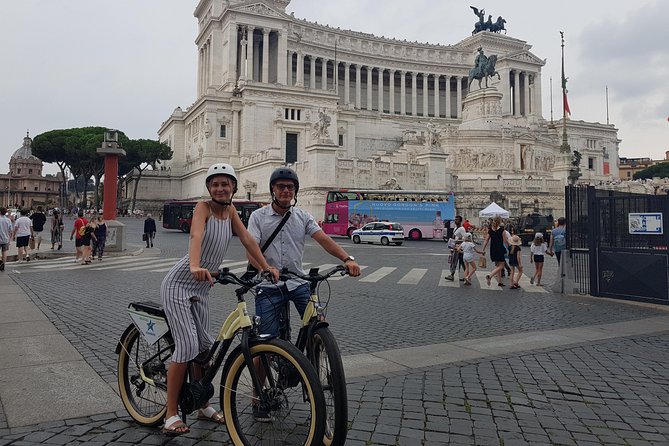
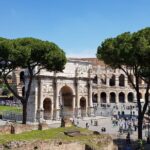
You’ll pass Trajan’s Column, with a planned stop that gives you time to look closely at the monument. You’ll also ride by Piazza Venezia, then continue through the area toward the Arch of Constantine.
Even without going inside anything, this portion helps connect Roman rule to visible stone. These are monuments designed to communicate with the public, so standing there for a short moment gives you more than a quick glance.
If you like history but hate lectures, this is a good balance. You get key facts in a way that matches the scale of what you’re seeing.
Colosseum roll-by: the big one, with the right expectations
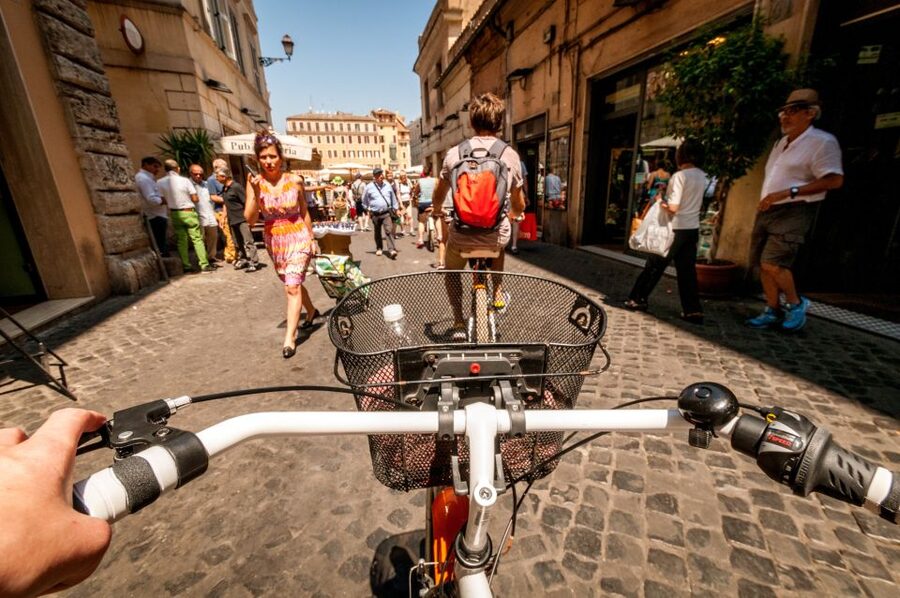
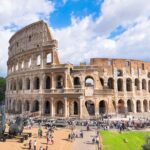
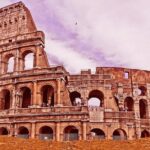
The Colosseum is a major highlight, with a longer stop time, about 25 minutes. It’s one of those places where you stop not because you’re done, but because you finally can.
The guide frames it as built in 72 AD during Emperor Vespasian’s reign, and the point is how it still dominates the skyline. You are not entering the Colosseum interiors on this tour, so your experience is about exterior scale, the surrounding street geometry, and that immediate sense of place.
If you’re tempted to think, I should have booked a ticket inside instead, consider what the bike format gives you. You gain time to see other major sights in the same afternoon. If you only have a short stay, this kind of overview can be a smart first move, and then you can decide later what deserves your money for an interior visit.
Circus Maximus: where chariot spectacle used to own the space
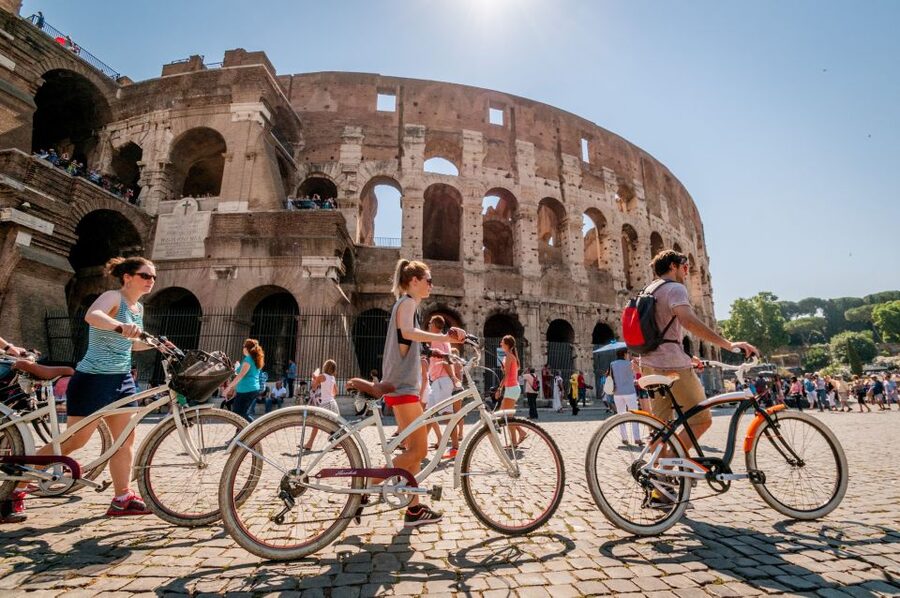
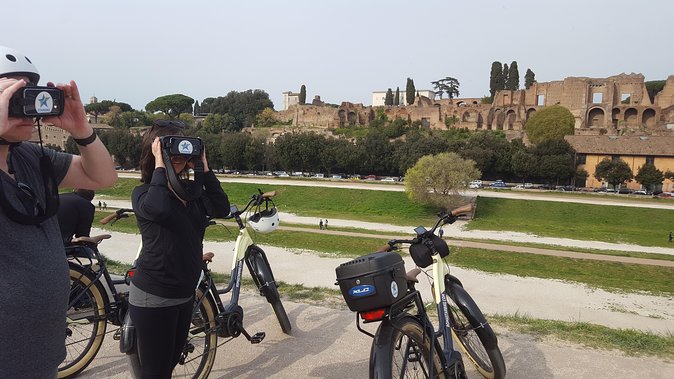
After the Colosseum, you’ll head toward Circus Maximus. The stop time here is around 20 minutes, and the guide connects it to the era of chariot races.
This is a great moment to shift your mental model of Rome. Instead of thinking only about temples and emperors, you get a sense of entertainment and public spectacle. You can also use this stop to breathe a little after the intensity of the Colosseum area.
Where Vatican City fits in (and what to expect for interiors)
The tour description aims beyond central Rome and includes Vatican City highlights, including views tied to St. Peter’s Basilica. Just keep your expectations aligned: the tour does not visit inside monuments and museums.
So think of this as a “get the angles, understand the geography” part of your day. You’ll see enough to place the Vatican on your Rome map, and that helps if you later want a separate Vatican museum or basilica timed entry.
The guide and safety factor, why names like Sergio and Mattia keep winning
Rome traffic is no joke. That’s why this tour is so often praised for group control and clear instructions.
In the feedback, guides like Mattia are singled out for keeping the group safe in busy streets while still making the ride feel smooth. Marco is praised for friendliness and for riding routes that include manageable riding, while Sergio stands out for calm handling when the weather turned, including advice on rain ponchos and shelter when roads became slippery.
I also like that the headset system means you do not have to guess what the guide is saying. You can stay in the moment, listen to the history and context, and then regroup at the next stop without losing the thread.
If you’re prone to feeling nervous in crowds, this is a strong comfort feature. The bike setup plus the leader’s pacing is what makes the city feel navigable instead of intimidating.
How the route plan helps you see Rome without museum fatigue
Here is the value of this tour in plain terms: it compresses a lot of sightseeing into one afternoon where your feet would otherwise be stuck on long walks and transit lines.
You see:
- Pantheon as a prime example of classic Roman architecture
- Trevi Fountain for Baroque artistry and photo-ready time
- Circus Maximus for the story of public spectacle
- Roman Forum and ancient Rome context through the cycling route and commentary
- Colosseum for scale and that immediate sense of Roman power
And because the tour stays outside interiors, it works well if you already have tickets for specific museums later, or if you just want a fast orientation day. It’s basically a city overview on wheels, with guided context at every major stop.
Price and value, what you’re paying for at $51.24
At $51.24 per person for a 3-hour guided ride, you’re paying for three things at once:
- A cruiser bike for the time you’re out
- A local guide who explains what you’re looking at
- Headset audio that keeps the experience smooth even when streets are noisy
That combo is what makes the tour feel like good value. You’re not paying to sit on a bus and stare out a window. You’re paying to move through the city, learn as you go, and cover far more ground than you could comfortably do on foot in the same window.
If you’re watching your travel budget, this is one of the better “time-for-sightseeing” options, especially for first-time Rome visitors who want a smart overview before committing to interior visits.
Who should book this bike tour, and who should consider a different plan
This tour is a good fit if you:
- Are comfortable riding a bike and want a fun, active way to see Rome
- Want a fast overview of major landmarks like Pantheon, Trevi, and Colosseum
- Appreciate guided context and clear audio while you’re on the move
It’s not a great fit if:
- You’re pregnant, because Rome’s cobblestones and road conditions make it not recommended
- Your child is uncomfortable riding or not ready for cobblestones and street conditions
- You need a tour that includes inside monuments and museums, because this one focuses on exterior viewing and stops
Kids rules matter too. Unaccompanied minors are not allowed. Children under 10 must have an excellent level of biking and be able to ride on their own bike. Children under 18 must be accompanied by an adult 18+. The operator can decline a child’s participation without obligation to refund if they do not meet biking requirements.
Should you book Rome Highlights Bike Tour with Fat Tire Tours?
I’d book this if you want a high-value Rome afternoon that mixes big landmarks with street-level context, and you’re comfortable riding a bike in real city conditions. The strongest reason to go is the combination of headset clarity, guided pacing, and a route that hits the Pantheon, Trevi, Colosseum, and Circus Maximus in one smooth session.
Skip it if cobblestones make you nervous, if you’re pregnant, or if you know you won’t enjoy riding in traffic, even with an experienced guide. In Rome, comfort is not optional.
If your goal is to get your bearings fast, see the essentials, and still feel like you experienced real Rome instead of just collecting photos, this tour is a very solid choice.
More Cycling Tours in Rome
More Tours in Rome
More Tour Reviews in Rome
Not for you? Here's more nearby things to do in Rome we have reviewed





Cycling Tours, compared.
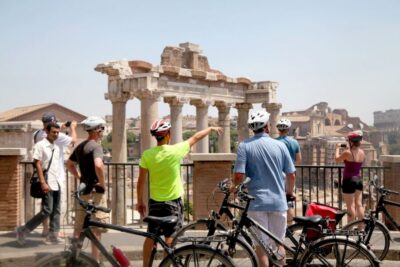 ★ 4.9Top Highlights & Hidden Gems Tour by Cannondale E-BikeFrom $851,760 reviews
 ★ 4.9Appian Way, Catacombs, & Roman Aqueducts E-bike TourFrom $851,421 reviews
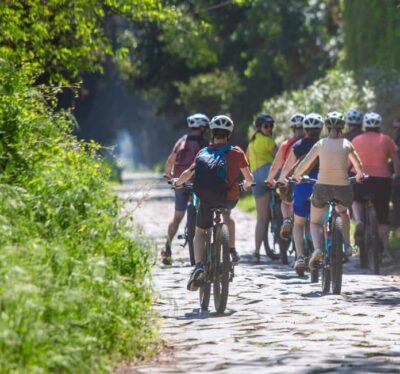 ★ 4.9Appian Way E-bike Tour with Catacombs, Aqueducts & FoodFrom $961,210 reviews
 ★ 4.9E-Bike Night Tour with Food and Wine TastingFrom $891,131 reviews
 ★ 5.0Appian Way Aqueducts Bike Tour (Catacombs & Lunch Option)From $78975 reviews
 ★ 5.0Appian Way, Catacombs and Aqueducts Park Tour with Top E-BikeFrom $102735 reviews
 ★ 4.6Appian Way E-Bike Tour Catacombs, Aqueducts & PicnicFrom $89727 reviews
 ★ 4.9Appian Way Aqueducts Bike Tour (UPG Catacombs & Lunch)From $81692 reviews
Browse the lists this tour appears in