
Reviewed · BORGHESE GALLERY TOURS
Rome Golf Cart Tour from Villa Borghese Gardens
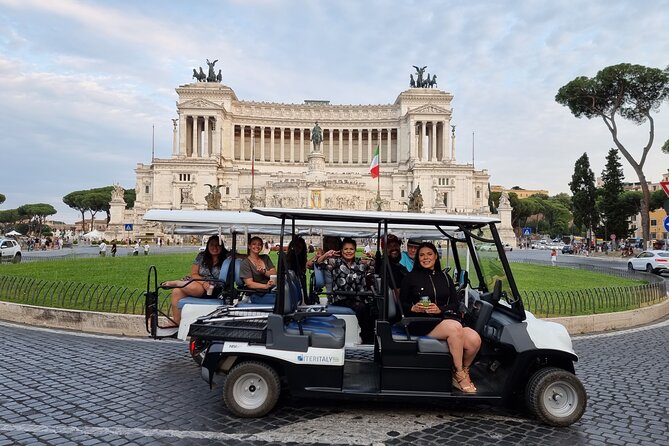
Rome moves fast, and this tour keeps up. In just about 3 hours, you ride between classic landmarks with on-board English commentary and smart photo stops. It is a practical way to get your bearings when your feet are tired, the streets are busy, and the heat starts winning.
I really like the pacing. You do not just drive by sights, you get short moments to look, snap photos, and hear what you are seeing. I also like the size of the group, max 7 travelers, which makes it feel relaxed instead of cattle-car sightseeing. One thing to consider: you are still in the center of Rome, so you will spend some time outside the cart and walking a bit between viewpoints and monuments.
Key Points Before You Go
- Small-group size (max 7) keeps the ride personal, with time for questions.
- English commentary on board helps you understand what you are looking at, fast.
- A tight 3-hour loop covering major landmarks without turning the day into a marathon.
- Frequent photo stops mean you can actually frame the views, not just rush past them.
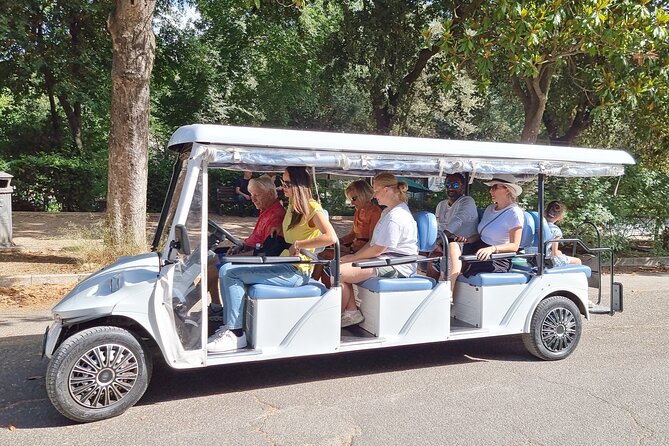
- Golf cart comfort for hot days is a big part of why this tour gets praised.
Why This 3-Hour Golf Cart Loop Works in Rome
Rome is one of those cities where good planning beats good intentions. If your days are short, or you simply do not want to clock miles of walking in the sun, a golf cart tour gives you momentum. You cover a lot of ground while your guide talks history and context as you travel.
This tour is built for short attention spans in the best way. You get a sequence of stops that hits big-picture Rome: parks and viewpoints, main squares, major ancient monuments, and the poster sites like the Pantheon and Trevi Fountain. The “few hours” format also makes it easier to fit into a first day or a limited schedule.
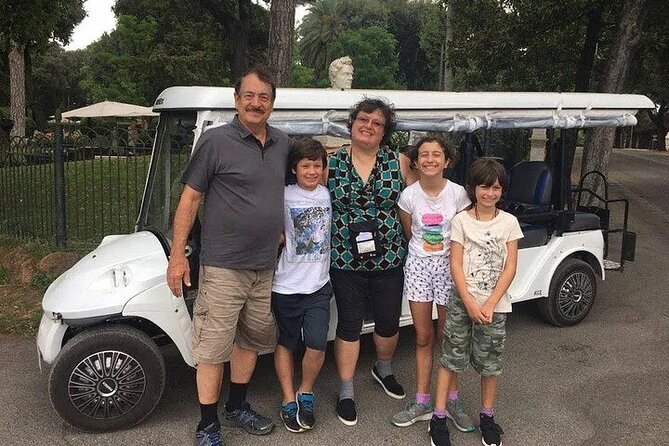
The other advantage is the feel. A max of 7 travelers often means you get a more flexible vibe. You can move at a pace that works for your group, and your guide can answer the little questions that come up when you see something in person.
You can also read our reviews of more tours and experiences in Rome.



Meeting Point and How to Plan Your Timing
You start at Pic Nic – Just Amir srl, Piazzale delle Canestre, SNC, 00197 Roma RM, Italy. The tour ends back at the meeting point. It also says the location is near public transportation, which matters because getting to and from central Rome can be its own small adventure.
Bring a little patience for street navigation. Rome streets can be narrow and busy, and your cart ride will be a mix of open views and slower scenic segments. If you are going in peak season, I would treat this as a must-book activity early. On average, it is booked 43 days in advance, which is a good sign for a popular short tour.
Villa Borghese: The Park Break and the Overlook Moments
The first stop is Villa Borghese, a huge urban park and one of Europe’s largest green spaces inside a city. The park was reshaped in the 19th century into an English-style landscape, with ponds and fountains that create calmer pockets even when you are in Rome.
You are scheduled for about 15 minutes here. That might sound short, but it is the right length for a “reset.” Think of it like a breath before the stone-and-statue sprint through central Rome. If you like skyline views, this is also one of the better places to get a sense of how Rome spreads out.
A golf cart helps here because you can see the park’s scale and viewpoints without turning the visit into a hike. In hot weather, this first stop often feels like a relief.
Piazza del Popolo and the Gate-Spotting Feel
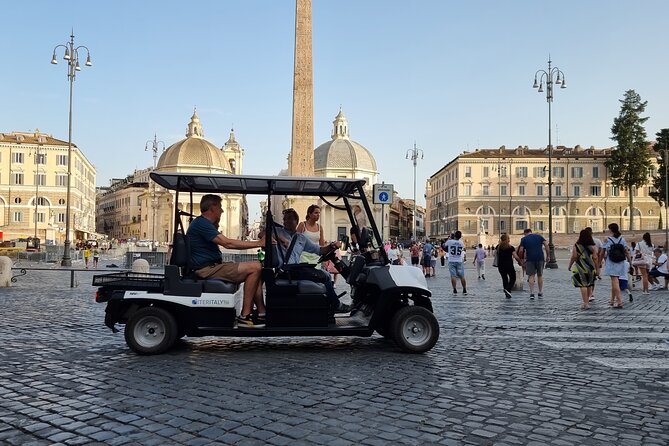
Next up is Piazza del Popolo, a famous square with the Porta Flaminia as a key reference point in the area. This is the kind of Roman “anchor” location where you can orient yourself. You get one of those “I’ve seen this before” moments, then your guide connects the geometry of the place to how Rome has changed over time.
You have about 10 minutes. This is not a long museum visit, it is a look-and-learn stop. The payoff is that when you roll out to the next sites, your mental map feels clearer.
The Mausoleum of Augustus: The Monument That Keeps Showing Up
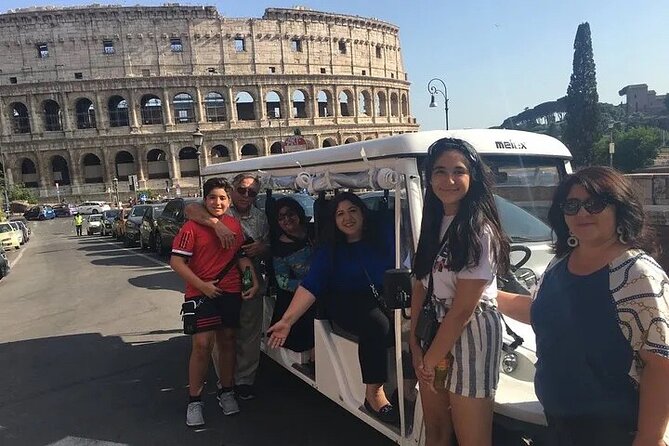
You also stop for the Mausoleum of Augustus, a large circular tomb that is important if you care about how Roman artifacts and monuments were reused and reinterpreted over centuries. Even if you do not remember every detail from a textbook, this stop helps you understand why this area is so layered.
There is no listed time on this stop, but the way the tour runs suggests it is a short, focused viewing stop. The value here is the guide’s framing, because you are seeing a monument that has been part of Rome’s story for a very long time.






Column of Marcus Aurelius: A Quick Hit of Political Propaganda

The Column of Marcus Aurelius and Faustina is in Piazza Colonna. It is generally dated to around the time of Commodus and commemorates campaigns against the Quadi across the Danube around the mid-170s CE.
You get about 10 minutes. This is exactly the right length for a stop like this because columns can turn into slow reading sessions if you let them. With a guide, you can learn what to look for without getting stuck tracing every carved detail.
Piazza Venezia and the Ancient-City Angle
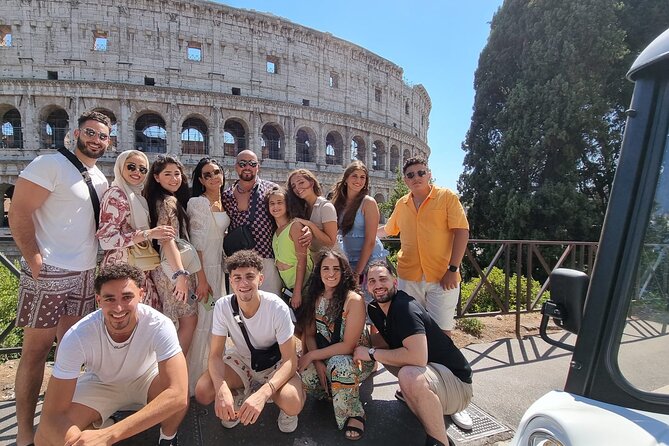
Your next 10-minute stop is around Piazza Venezia / Ancient City, a square shaped by later remaking of the area, especially around construction of the Monumento a Vittorio Emanuele II. It is a strong “street-level Rome” moment because you can sense how modern Rome sits on top of older Rome.
From here, the tour also points you toward the ancient layers. You stop for the kind of material that turns “I saw a forum” into “I understand how the imperial city worked.” In this part of the route, you are introduced to the Imperial Forums through multimedia displays, explanatory panels, and a selection of archaeological artifacts, along with Trajan’s Markets (Mercati di Traiano), a towering 2nd-century complex.
The takeaway is not just that the site is impressive. It is that Rome’s power and its daily economy were built in the same neighborhoods. If you want a history fix without committing a full day to museums, this stop is a smart compromise.
Circo Massimo: The Scale Shock
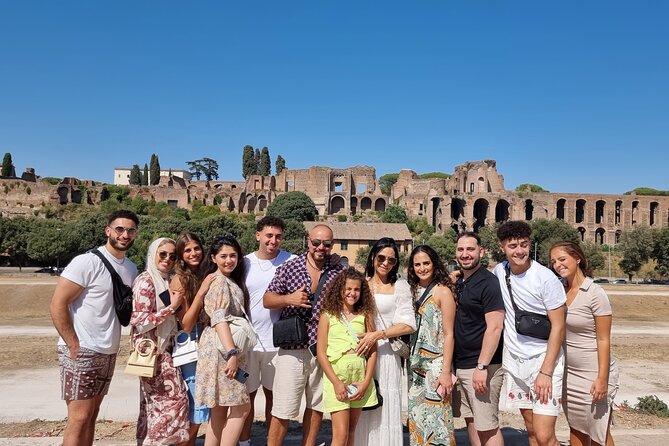
Then it is Circo Massimo, the Circus Maximus area between the Aventine and Palatine Hills. The tour framing makes the scale the point, because this was an enormous extended precinct that once held around 300,000 spectators.
You only get about 5 minutes, so treat it as a quick scale check. When you stand in a place like this, it helps you grasp why Roman architecture often feels grand even when you see only fragments today. The cart route also means you can keep moving toward the next viewpoint quickly, rather than losing the momentum that makes a short tour work.
Giardino degli Aranci: Orange Garden Views and a Possible Keyhole Stop
One of the most loved moments on this route is Giardino degli Aranci on the Aventine Hill. It is a beloved green spot and it covers almost 8,000 square meters, with a panorama over Rome.
You have about 15 minutes. This stop is the perfect middle-of-the-tour break because it gives you open air and a different kind of Rome photo. Your guide may also add the Keyhole of Rome if there is time, which is the kind of quick, playful sight that feels fun without eating your schedule.
A golf cart makes this easy because you can arrive close to the good viewing areas and then spend your time actually looking out over the city.
Bocca della Verità: Mouth of Truth and the Goofy Side of Rome
Next is Bocca della Verità. The story is part of the fun: it is an ancient carving called the Mouth of Truth, and the legend says it bites the hands off liars. Long before modern lie-detector gadgets, this was Rome’s theatrical version.
You have about 5 minutes. This is not a deep archaeological stop. It is a short, memorable cultural moment that adds humor to the route. And it is the kind of stop that works well for families or anyone who wants a break from pure stone-and-sculpture.
Forum Boarium Temples: Two Small Stops That Tell Big Stories
After Bocca della Verità, you have a run of smaller ancient structure stops near the Forum Boarium by the Tiber.
- Temple of Hercules is described as the only surviving sacred structure in ancient Rome made of Greek marble. It is thought to be linked to Greek architect Hermodoros of Salamina.
- Temple of Portunus is another well-preserved Roman temple, overlooking the fluvial port of Rome, watching over goods entering the city.
These stops do not list set minutes, but the tour structure suggests quick, guided viewing. The reason I think these are worth it is simple: they show Rome as an active, working city. You are not just looking at monuments for the sake of monuments, you are seeing places connected to trade, worship, and daily life.
If you get tired, this is where the cart helps again. You can keep your energy for the actual viewing moments rather than doing everything on foot.
Theatre of Marcellus and the Big Influence
You also stop at the Theatre of Marcellus, described as the largest and most important theatre in Rome, completed in the late 1st century BCE during Augustus’s reign. The architecture of theatres influenced façades across the empire, including iconic buildings like the Colosseum.
Again, you likely get a short viewing window. But this stop is a great example of how a guide can turn “I saw a theatre” into “I see the design legacy.” You start noticing Roman design patterns instead of treating each site like a standalone postcard.
Navona, Pantheon, and Campo de’ Fiori: Rome’s Center in One Sweep
Near the end, you land in the area around Piazza Navona, the Pantheon, and Campo de’ Fiori. This is classic central Rome: lively streets, iconic squares, and architecture you instantly recognize even if you cannot place every date.
Piazza Navona is described as commissioned by Domitian in 86 CE and it originally functioned as an athletics stadium, the Circus Agonalis. The elongated shape is part of why the place feels unique.
Then comes the main event: the Pantheon. You get about 15 minutes here, and this is one of the most spectacular stops on the whole tour. It dates to the early 2nd century AD, is among the best-preserved historic buildings in Rome, and features the famous dome with its central opening, the oculus.
What makes this work on a golf cart tour is that you are not spending half your day just getting there. You arrive fresh, you learn what matters about the building, and you still have time to keep moving after.
Campo de’ Fiori is mentioned in the stop area. Even if your “time on the square” is shorter than you want, it gives you a sense of Rome beyond the museum-heavy corners.
Trevi Fountain: The Photo Stop You Actually Get Time For
Then you roll to Fontana di Trevi, the late Baroque masterpiece designed by Nicola Salvi and completed by Giuseppe Pannini in 1762. It is one of the most famous fountains in Rome, and the legend says if you toss coins in, you will return.
You have about 10 minutes. This is enough time to take photos from a couple of angles and enjoy the scene without feeling like you are racing the crowd. If you are trying to do Rome on a tight schedule, Trevi is often the spot people think they will skip. This tour makes it easier to include without draining your day.
Piazza di Spagna and the Spanish Steps Hangout
Your final major stop is Piazza di Spagna, with the Spanish Steps nearby. The square takes its name from the Spanish Embassy, which sat there with ties to the Vatican dating back to the seventeenth century.
You have about 5 minutes here. That is brief, but it is the right kind of “arrival moment.” You can take a quick look, capture a last photo, and enjoy the vibe of a place built for people-watching.
What I Think This Tour Is Best For (And When It Is Not)
This is best for you if:
- You want a first-day Rome intro without committing to a full walking itinerary.
- You have limited time, like a weekend, a few cruise days, or a tight schedule between other plans.
- You want history explained while you move, not history explained only after you arrive somewhere.
- You prefer a small group with an informal pace and photo stops.
It might not be ideal if you love long, slow museum time. This route is about seeing and understanding quickly. Also, because it is a sightseeing route with multiple stops, you will be outside for stretches, so plan for weather.
A note from the vibe in the tour feedback: the guides are often praised for being patient and upbeat, and a few named guides show up in the stories, including Jean Luca, Gian-Luca, Marco, Sabrina, Paul, Pietro, and Nikolai. That matters because it signals you are likely to get more than rote reciting.
Value Check: Is $171.68 a Fair Deal?
The price is listed at $171.68 per person for about 3 hours, and it includes an English-speaking driver guide. Most of the listed stops show admission ticket free, which helps you avoid surprise add-ons tied to entry fees.
Here is how I think about value for a Rome tour like this:
- You are paying for transportation that reduces walking and helps you move between far-apart sights efficiently.
- You are paying for guided context while you are traveling, which can be harder to replicate if you go solo.
- You are paying for a small-group setting (max 7), which tends to improve the experience.
If you would otherwise spend money on taxis or spend hours shuffling between neighborhoods, this often feels like a good consolidation of time and effort. If you are the type who already has every site planned and loves to linger, you may feel it is more “efficient sightseeing” than “deep study.” For most people, though, it is a smart way to get a lot of Rome done in a limited window.
Should You Book This Rome Golf Cart Tour?
If you want an easy first taste of Rome that covers major sites in a short span, this is a strong choice. The combination of on-board English commentary, small group size, and practical comfort (especially for hot days) makes it feel built for real travelers, not just people who like to power-walk.
I would book it if:
- You are short on time and want a focused route.
- You want the Pantheon and Trevi without turning your day into a footrace.
- You want to learn what you are looking at while someone else handles the driving.
I would think twice if you are hoping for a long, slow, museum-grade experience with lots of time inside buildings. In that case, you would likely be happier mixing self-guided exploring with one or two longer guided stops.
FAQ
How long is the Rome Golf Cart Tour from Villa Borghese Gardens?
It lasts about 3 hours.
What languages is the tour offered in?
The tour is offered in English.
How many people are in the group?
The tour has a maximum of 7 travelers.
Where does the tour start and end?
It starts at Pic Nic – Just Amir srl, Piazzale delle Canestre, SNC, 00197 Roma RM, Italy, and it ends back at the same meeting point.
Do I need admission tickets for the stops?
The itinerary lists admission ticket free for the listed stops.
Is a mobile ticket included?
Yes, it includes a mobile ticket.
More Tours in Rome
More Tour Reviews in Rome
Not for you? Here's more nearby things to do in Rome we have reviewed












Borghese Gallery Tours, compared.
 ★ 4.8Borghese Gallery Guided Tour with Skip-the-Line EntryFrom $842,649 reviews
 ★ 4.6Borghese Gallery Skip-the-Line Tickets with AudioguideFrom $532,562 reviews
 ★ 4.5Borghese Gallery Entry Ticket & Optional Guided TourFrom $512,237 reviews
 ★ 4.9Borghese Gallery Guided Tour with TicketsFrom $571,880 reviews
 ★ 4.7Skip-the-Line Borghese Gallery Guided TourFrom $100933 reviews
★ 4.9Borghese Gallery Guided Tour with Skip-the-Line EntryFrom $83891 reviews
 ★ 4.1Borghese Gallery Entry TicketFrom $31780 reviews
 ★ 4.8Borghese Gallery Guided Tour with priority entranceFrom $73546 reviews
Browse the lists this tour appears in