
Reviewed · ANCIENT ROME TOURS
Rome: Domus Aurea Tour with Virtual Reality Experience
Nero’s palace returns in 3D. This Domus Aurea experience pairs a guided walk through East areas and the newly reopened West Wing, then tops it off with a 3D virtual reality reconstruction that helps the frescoes and vaults click into place fast. You’ll also get the story of Nero, the fire of 64 AD, and what changed in Rome after the disaster, all wrapped into a smooth 2-hour visit.
I really like two things here. First, the VR moment is the star, showing a 3D reconstruction of Nero’s Golden Palace at its peak, plus an outside lavish portico concept. Second, I like that you actually move through the site’s real spaces, including those newly reopened areas, so the tour feels practical, not just screen-based.
One possible drawback: the meeting and entry flow can feel a little confusing, so you will want a time buffer and to watch for the Open Mind Tours sign outside the Domus entrance area.
Key things to know before you go
- Two-wing access: the route covers the East areas and the newly reopened West Wing
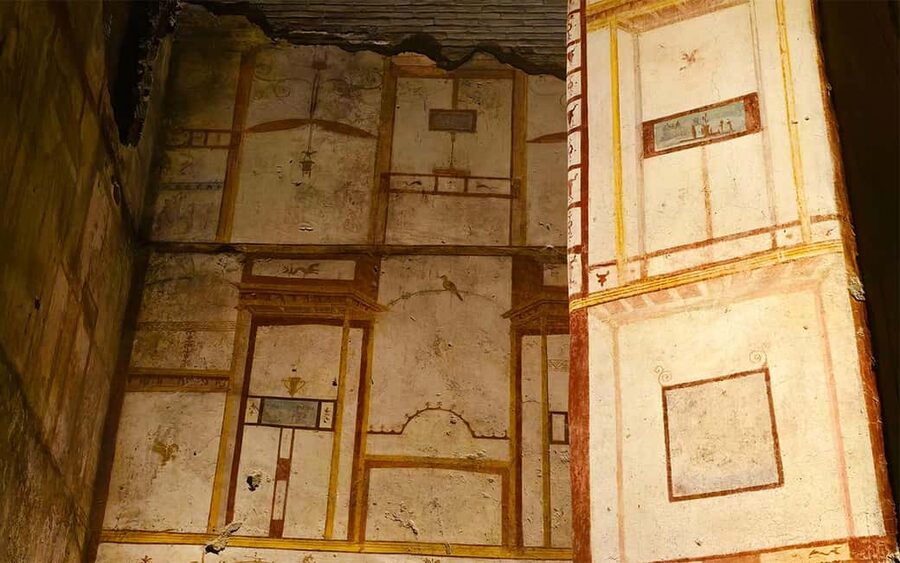
- About 30 frescoed halls: you see a large chunk of the site’s vaulted rooms and painted spaces
- Myth-busting Nero talk: the guide explains why Nero was not the person behind the fire of July 64 AD
- Nero’s Golden Palace in 3D: the peak reconstruction includes hall views and a portico concept
- Seated VR segment: you sit during the VR portion, so it helps to look around when prompted
Why Nero’s Domus Aurea is such a great target in Rome
The Domus Aurea is Rome at its most surprising. On the surface you think, this is an emperor’s palace. But once you’re inside, you realize it’s also an archaeological “time capsule” of Roman taste, engineering, and propaganda.
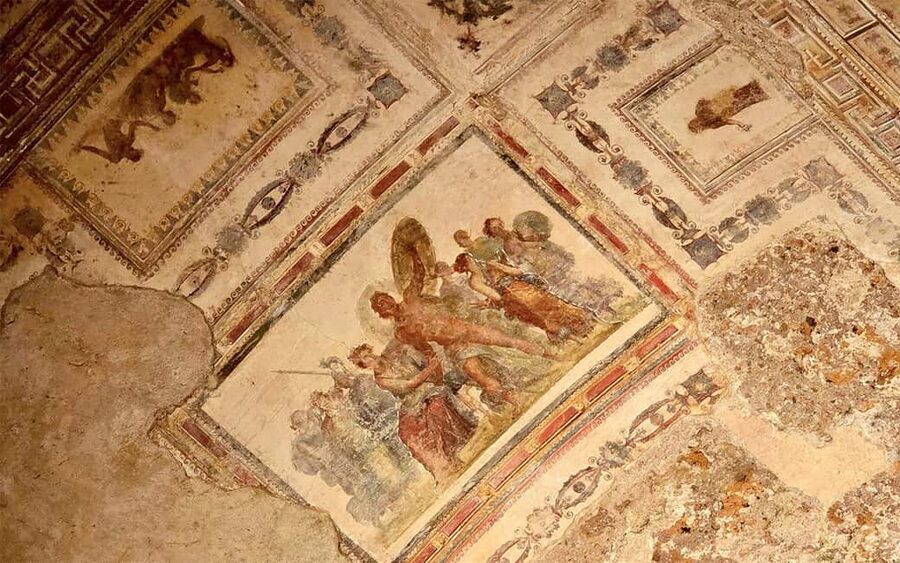
This tour gives you a clear narrative arc for all that. You start with Nero’s personality, tastes, and sharp intellect, then the guide connects the strange figures in the frescoes to Nero’s eccentric style and artistic sensitivity. Then comes the myth you probably heard before, the one about the fire of 64 AD, and the guide corrects it with context.
Even the setting matters. This is Rome’s largest active archaeological site, and it can feel calmer than the big, crowded icons. That matters because you need your brain to slow down enough to notice painting styles, vault geometry, and how the rooms connect.
You can also read our reviews of more tours and experiences in Rome.
Starting at Domus Aurea: getting your bearings fast
You meet outside the Domus Aurea area with an Open Mind Tours sign. Your voucher is not the entry ticket, your guide handles that. One practical point from how the visit runs: the Domus entrance is typically at least 20 minutes after the scheduled guide presentation, so don’t treat the first talk time as the exact door time.
You’ll want comfortable shoes. The route includes halls and passageways where you’ll keep changing your angle, and you don’t want sore feet cutting into your focus. Bring a jacket too. Even in warm months, parts of the site can feel cool and shaded.
If you’re coming in with the mindset of just grabbing photos, you might miss what makes this tour valuable. The real win is that the guide helps you see patterns, like where the restored frescoes sit, how vaulted ceilings shape light, and why some rooms feel more “intimate” than you’d expect for an imperial complex.
The East Wing walk: vaulted halls, restored frescoes, and “light” thinking
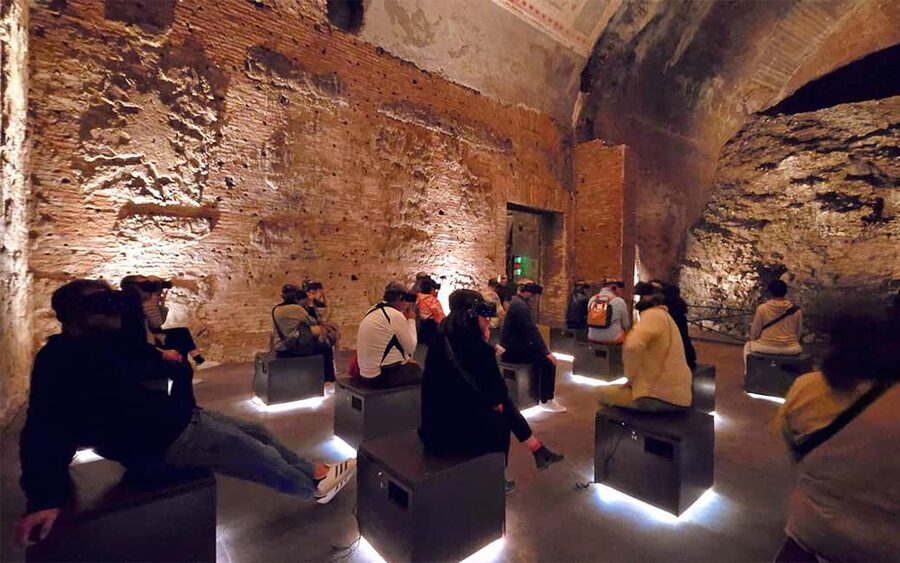
The heart of the guided portion is the walk through the East Wing areas. As you move, you learn to read the space like a designer. That sounds fancy, but it’s simple: Roman spaces like these were built to steer attention, to frame view corridors, and to make the painted scenes feel connected to architecture.
The guide highlights the vaulted halls and hallways, including how frescoes were originally bathed in delicate beams of light. You might hear the tour connect that light to the combination of porticoes, fountains, and gardens that supported the palace experience.
This is also where you start learning the “why” behind Nero’s choices. One thing I like about the tour approach is that it doesn’t treat everything as random decoration. The bizarre figures in frescoes are explained as a window into Nero’s eccentric taste, rather than as mere weird Roman art.
The newly reopened West Wing: why that recent access changes the visit
The newly reopened West Wing is a big part of why this experience is worth booking, not just browsing. The site’s reopening means you get an expanded route, and that changes how the palace story feels. With more access, the palace stops feeling like isolated rooms and starts feeling like a larger design.
The guide focuses on the newly accessible areas as part of the same bigger narrative. You’re still hearing the Nero story, still learning about construction and layout, and still connecting fresco themes to personality and imperial image-making. But the West Wing adds fresh viewpoints, more corridors, and more “oh wow” moments as you compare spaces.
From a comfort angle, it can also make the pacing feel better. Instead of circling the same types of rooms, you get a sense of progression through distinct parts of the palace complex.
About 30 frescoed halls: what to actually notice as you walk
This is not a quick highlight reel. The tour is built around the idea of seeing a lot of space, about 30 frescoed halls, along with high alleys and wonderful frescoes.
Here’s what you should pay attention to, so you get more out of it than the average pass-through:
- Fresco subjects and how they relate to the surrounding architecture, not just wall decoration
- Vault and ceiling geometry, because the ceiling lines are part of the “feel” of the room
- Restored fresco condition, which helps you understand what the palette and figure styles originally looked like
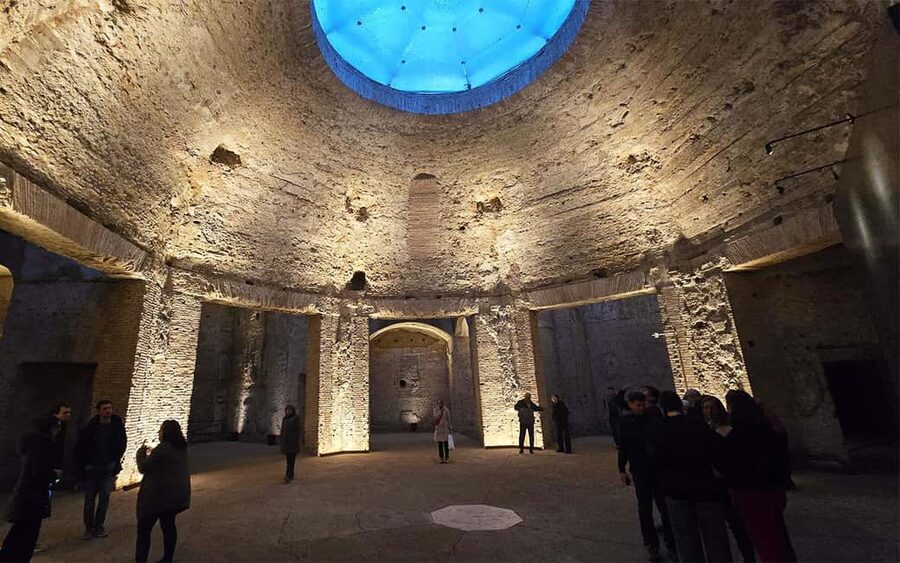
You’ll likely reach up toward the Octagonal Room, described as a major moment in the visit. The details you’re given can include the idea of a rotating ceiling concept, and even if the exact mechanism wasn’t what your brain expects, the point is clear: this palace was designed for spectacle.
Also keep in mind this is an active archaeological environment. That means you move through it with rules, and you shouldn’t expect to do what you would in a museum showroom. The payoff is that you see the site as a living restoration project, not just as static relics.



VR Golden Palace at peak: what the seated 3D experience adds
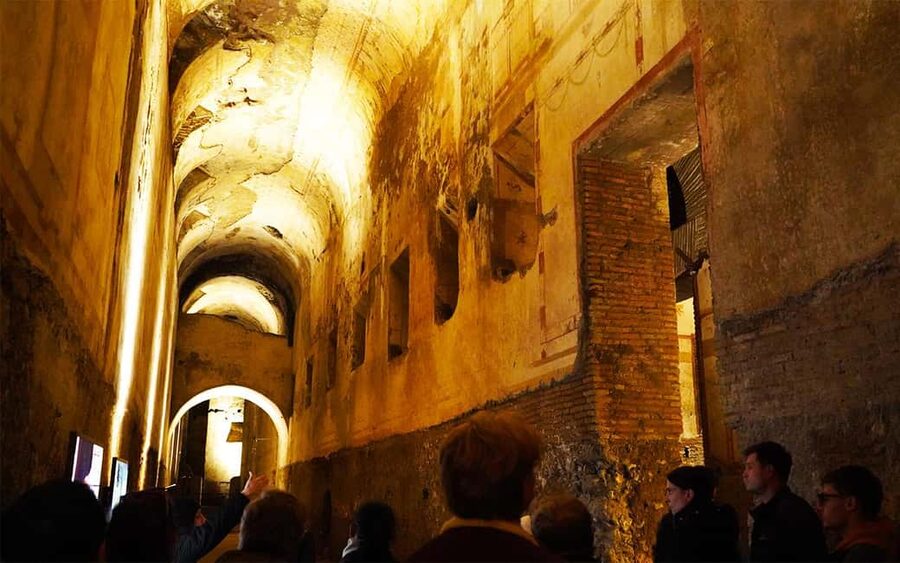
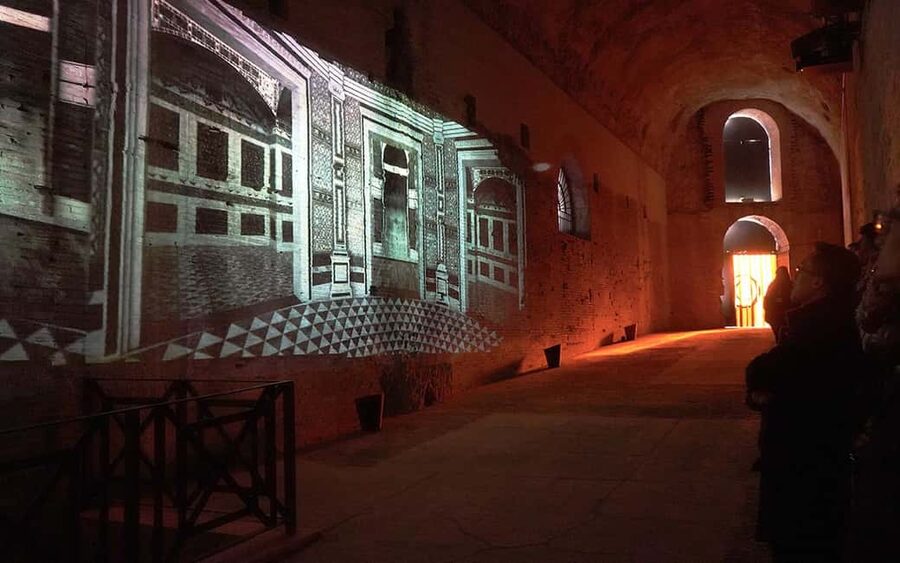
The peak moment is the 3D virtual reality reconstruction. It’s shown in a seated segment, which is helpful because it makes the VR portion easier to focus on without constantly shifting your position in a tight space.
When the VR starts, your task is simple: look around in every direction while you’re seated. The value here is that it helps you understand how the halls connected and how the outside setting might have felt. If you only stare forward, you’ll miss some of the spatial cues the VR is trying to teach.
The VR concept is also specific. It reconstructs the halls and includes an outside lavish portico concept of the palace, described as not yet completed when Nero committed suicide. That unfinished detail matters, because it adds a historical “snap” to the experience. You see what the ambition looked like, and then you’re reminded of the political break that ended it.
Technically, the tour aims for the sweet spot between spectacle and understanding. The goal isn’t just wow. It’s to give your brain a working mental model so that when you think back on the frescoes and vaulted spaces, you can picture how the palace might have operated as a coherent whole.
Nero’s fire of 64 AD, the garden response, and the political turnaround
The guide busts the famous story that Nero caused the July 64 AD fire. You get a different framing: Nero was away at a seaside villa outside Rome, and the tour connects myths to how power narratives were shaped after catastrophe.
From there, you learn what Nero did after the disaster, at least as presented in the tour story. He opens his gardens to shelter people left homeless. He distributes essential goods, lowers the price of grain, and introduces urban planning regulations meant to prevent similar disasters, including minimum distances between buildings and the shift to stone and bricks rather than wood.
And then you also hear the criticism that accompanied those actions. Nero’s delays in rescue efforts and what the tour describes as insufficient funding for reconstruction are part of the emperor’s public fall.
Finally, the tour covers the long arc of what came next:
- Nero’s palace complex expands even after the fire, including the Domus Aurea on the Palatine Hill and a luxurious internal lake
- Vespasian builds the Colosseum in place of Nero’s lake, turning the disaster aftermath into a public-facing political signal
- Trajan later buries Nero’s Golden House under an immense bath complex
- The Domus fades from common knowledge for about 1,500 years
- Renaissance artists rediscover it in the 1500s, sparking a major European rediscovery of ancient heritage
That sequence is one of the reasons this tour feels bigger than a single archaeological visit. You end up understanding Domus Aurea not just as a palace, but as a turning point in Rome’s story about tragedy, propaganda, and rebuilding.
Guides matter here: the difference between a good and great visit
The tour depends heavily on the guide, because you’re learning a complex site. The good news is that guides in this experience are often praised for making the place understandable, and for explaining how to read what you see.
Names that show up in feedback include Rosario, Linda, Yev, and Alexei, and there’s also mention of an excellent inside guide with a very clear English delivery. One visitor praised a guide for taking a complex exploration and making it easy to follow, which is exactly what you want when you’re dealing with fresco programs, architecture, and restoration context at the same time.
If your group includes different English comfort levels, that can affect what you hear in the tighter spaces. One caution I take from those experiences: if you struggle with audio, the VR segment can act as a reset, because it gives you visual context even when spoken details are harder to catch.
Logistics that can make or break your experience
This tour is designed to be efficient for a site that’s not like the big open squares. Still, a few practical notes will help:
- Meeting point: you’ll wait outside for your guide with an Open Mind Tours sign
- Entry timing: plan around the entrance being at least 20 minutes after the scheduled presentation
- Bag and camera rules: leave luggage and large bags behind, and skip selfie sticks
- Camera gear: professional cameras, tripods, and similar equipment are not allowed
- Drones are not allowed
- Keep your hands free: no weapons or sharp objects
These restrictions are normal for archaeological sites, but they can surprise people who pack like they’re going to the Vatican. If you arrive with a lot of gear, you’ll feel rushed.
Also note who this is not for. The tour is not suitable for people with mobility impairments or wheelchair users, so check your needs before you book.
Who should book this Domus Aurea VR tour
You’ll probably love this if:
- You want high context in a short window, not a quick walk
- You enjoy seeing how archaeology and restoration storytelling connect
- You like Nero as a character, including the contrast between myth and the tour’s narrative
- You value the newly reopened West Wing in a practical, guided route
You might reconsider if:
- You want a totally self-paced visit with lots of quiet time to wander without explanation
- You dislike seated VR formats, or you know you’ll struggle to hear in a group setting
- Your mobility needs mean you’ll have difficulty on-site
This also makes sense as a “balance day” in Rome. If you already hit Colosseum and Roman Forum, this is the change of mood you want. If you started with churches and monuments, this is the major switch into a different side of the Roman story.
Should you book it?
Yes, I’d book this if your goal is to understand Domus Aurea in a way that sticks. The combination of a real guided walk through East and the newly reopened West Wing, plus the 3D VR reconstruction of the Golden Palace, is a smart pairing. It saves you from guessing what you’re looking at when you’re standing in a site that was once far grander than it is today.
I’d hold off only if your priority is total self-guided freedom, or if mobility constraints are a concern. Otherwise, give yourself a little extra time for the meeting and entry flow, bring the right shoes and a jacket, and go in ready to look around during the VR segment. That’s where the palace clicks into focus.
FAQ
How long is the Domus Aurea tour with VR experience?
The experience lasts about 2 hours, with a guided tour portion of 105 minutes.
Does this tour include virtual reality?
Yes. The visit includes a 3D virtual reality reconstruction of Nero’s Golden Palace.
Is this a skip-the-line tour?
It includes skip-the-line entry through a separate entrance.
What language is the live guide in?
The live tour guide is available in English.
Where do I meet the guide?
Meet outside the Domus Aurea area with an Open Mind Tours sign. Your voucher is not the entry ticket, the guide has it.
Is the experience suitable for wheelchair users or mobility impairments?
No. It is not suitable for people with mobility impairments or for wheelchair users.
What should I bring and wear?
Wear comfortable shoes and bring a jacket.
Are there any restrictions on what I can bring?
You cannot bring weapons or sharp objects, luggage or large bags, drones, pets (assistance dogs are allowed), selfie sticks, professional cameras, tripods, or sprays or aerosols.
More Tours in Rome
More Tour Reviews in Rome
Not for you? Here's more nearby things to do in Rome we have reviewed








Ancient Rome Tours, compared.
 ★ 4.7Colosseum: Underground and Ancient Rome TourFrom $16012,691 reviews
 ★ 4.4Colosseum, Ancient Rome Tour or Self AudioGuided TourFrom $392,866 reviews
 ★ 4.9Appian Way, Catacombs, & Roman Aqueducts E-bike TourFrom $851,421 reviews
 ★ 4.9Appian Way E-bike Tour with Catacombs, Aqueducts & FoodFrom $961,210 reviews
 ★ 5.0Appian Way Aqueducts Bike Tour (Catacombs & Lunch Option)From $78975 reviews
 ★ 4.7Appian Way, Aqueducts, and Catacombs TourFrom $64942 reviews
 ★ 4.7Caracalla Baths & Circus Maximus — Private or SharedFrom $77835 reviews
 ★ 4.7Colosseum Arena Access and Ancient Rome Guided TourFrom $94774 reviews
Browse the lists this tour appears in