
Reviewed · COLOSSEUM TOURS
Rome: Colosseum, Palatine Hill and Roman Forum Guider Tour
Gladiators meet modern crowds at the Colosseum. I love the guided storytelling inside the arena and I love getting up to Palatine Hill, where Rome’s elite and emperors shaped daily life and power. The main downside is simple: this outing is not set up for people with mobility impairments, and you should expect a lot of standing and walking.
Plan to show up sharp at the metro Colosseo meeting point, where your guide holds a yellow umbrella. You also get headsets for groups larger than five, and the tour runs in Russian, English, or Italian, so you can follow along even if the group gets chatty.
Key highlights you will care about
- Skip the ticket line so you spend time on monuments, not queues.
- Colosseum-focused guided time, including the arena and where spectators sat.
- Roman Forum and Palatine Hill access, so you see Rome as a political machine and an imperial neighborhood.
- Meet at the right Colosseo entrance, yellow umbrella in hand to keep you from wandering in circles.
- Headsets for bigger groups so you can actually hear your guide.
- Bring an ID and leave large bags behind, because access requires you to carry documents.
Price and value, what your $96.29 actually buys
At $96.29 per person, you are paying for three big things: an expert guide, skip-the-line entry support, and a timed route across the Colosseum area. If you try to do this solo, you can save money, but you will lose a lot of the “what am I looking at” clarity, especially when ruins get confusing fast.
The included perks are real: you get a certified tour guide with a university degree in history and/or art, plus headsets for groups larger than five. In practice, that headset detail matters in Rome, because crowds and distance can make even good explanations hard to catch.
One more value point: you are not just being taken to viewpoints. The tour is built around the Colosseum as a lived experience, then transitions to the Forum and Palatine Hill as the places where Rome ran its world.
You can also read our reviews of more tours and experiences in Rome.

Meeting point at Metro Colosseo, yellow umbrella, no wandering
Your meeting point is straightforward but easy to mess up: arrive 15 minutes early at the front of the metro station Colosseo. Your guide will be holding a yellow umbrella.
A practical tip that can save you time: there can be an upper-level and a ground-level entrance/exit at Colosseo, so don’t wait in the wrong place. If you get there early, you can confirm the exact spot, relax, and stay on schedule.
Also plan for no hotel pickup or drop-off. You will start and end back at the meeting point, so figure out how you will get there before you book.
Entering the Colosseum arena, and understanding what you see
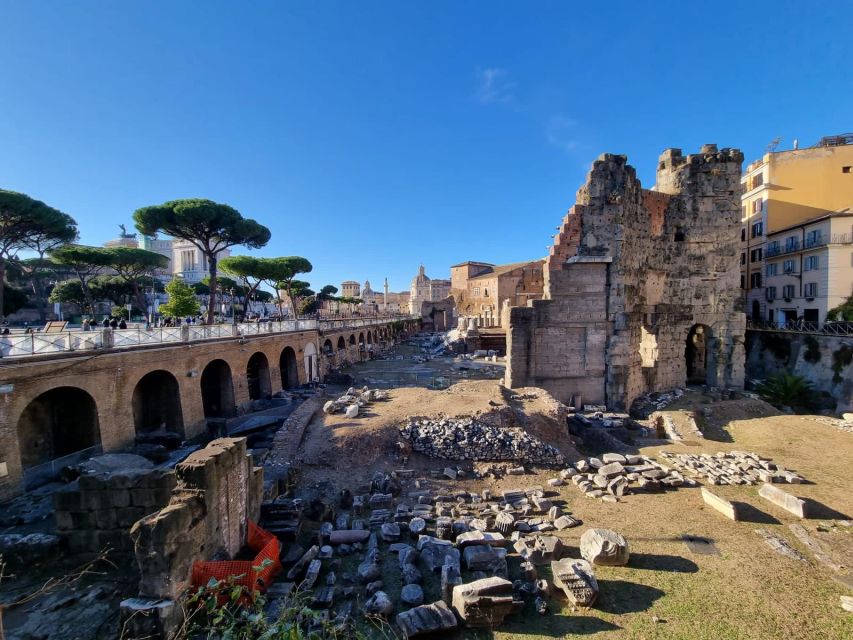
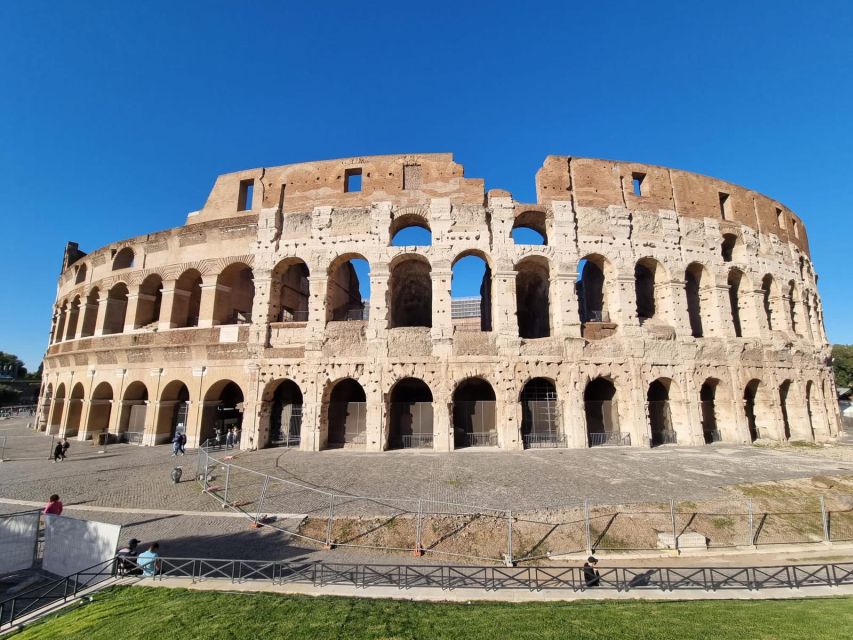
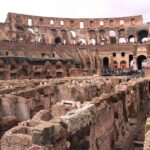
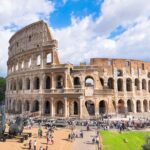
The Colosseum stop is the star of the show, with a guided tour and photo time. The experience is built around physical locations, not just dates: you will walk on the floors where spectators used to sit and stand close enough to the arena to understand the scale of what took place there.
The tour description also leans into what made the Colosseum a massive stage. You’ll hear about gladiatorial shows and re-enactments, along with animal fights, Greek tragedies, and theatrical light performances. Even if you already know the basics, you’ll usually enjoy hearing how the show format connected to Roman life and public entertainment.
It’s also helpful that the tour includes skip-the-ticket-line support. The Colosseum area can be time-consuming, and losing time to paperwork or ticketing is the easiest way to make a good day feel rushed.
Roman Forum, the empire’s commercial, religious, and political center
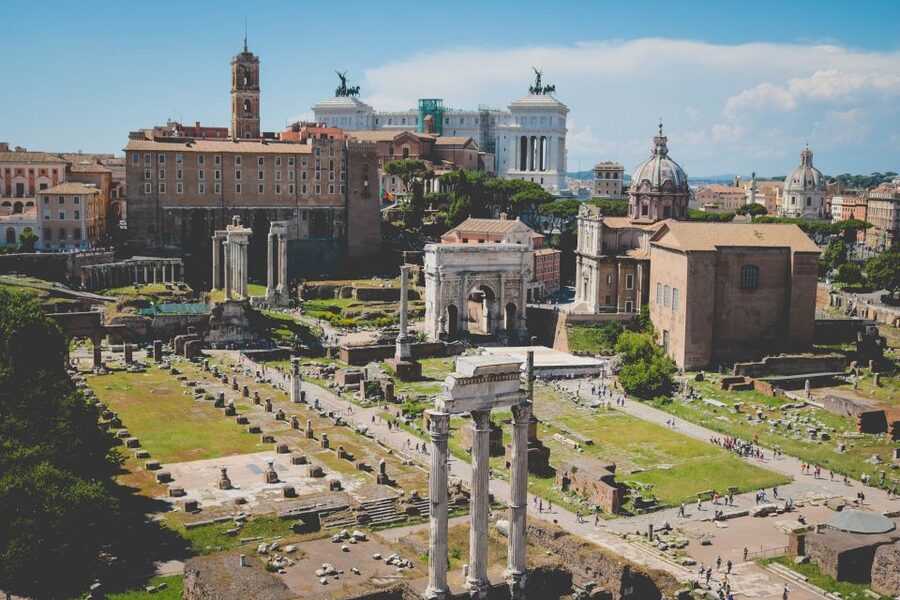
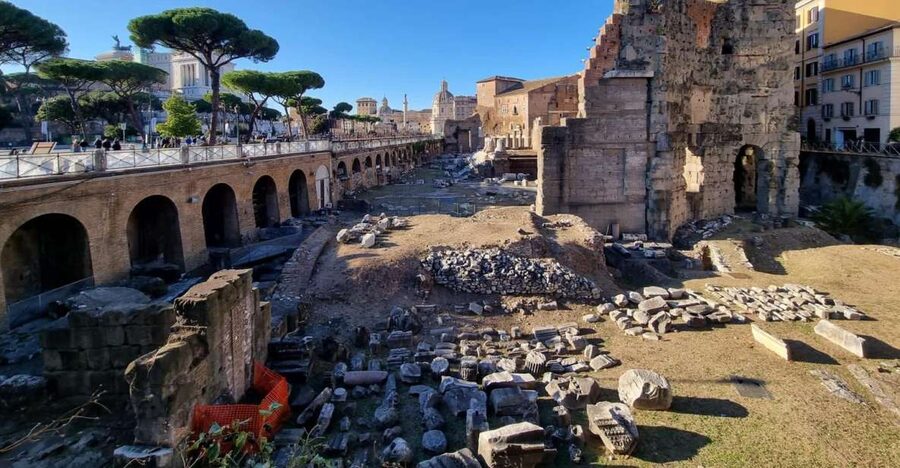
After the Colosseum, you head to the Roman Forum, the place that used to act as Rome’s power hub. This is not one temple or one monument, it’s a whole working district that served as commercial, religious, and political center for Rome and the wider empire.
You will get guided context here, plus a break and photo stop. That mix is useful, because the Forum can feel like a maze unless someone points out what matters. A good guide helps you connect the ruins to the roles they played, rather than letting you wander through stone and columns with no anchor.
One practical way to use this stop: keep your camera ready, but also pay attention to any stops your guide emphasizes. The Forum gets best when you can label what you’re seeing, even if only in broad strokes.
Palatine Hill, emperors lived here, and Augustus picked the seat
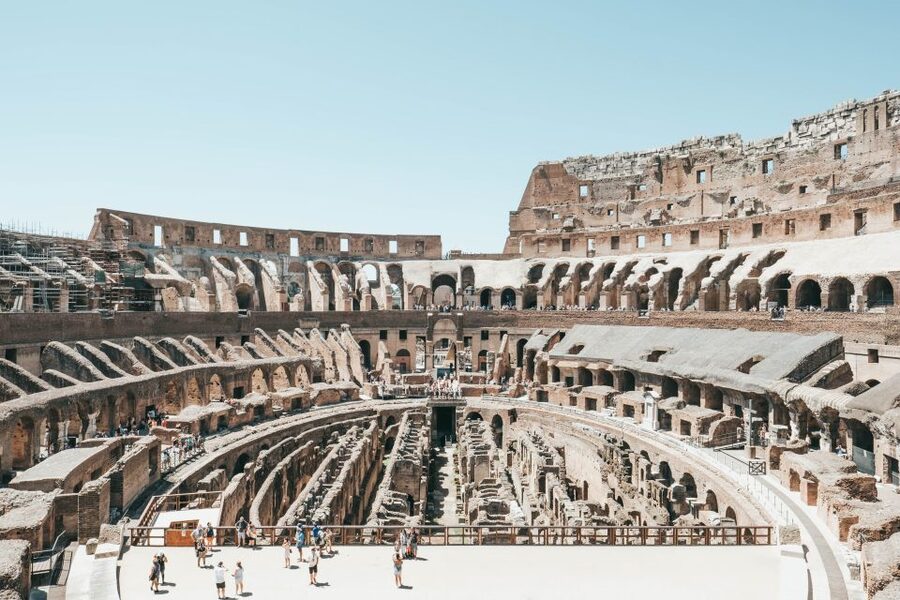
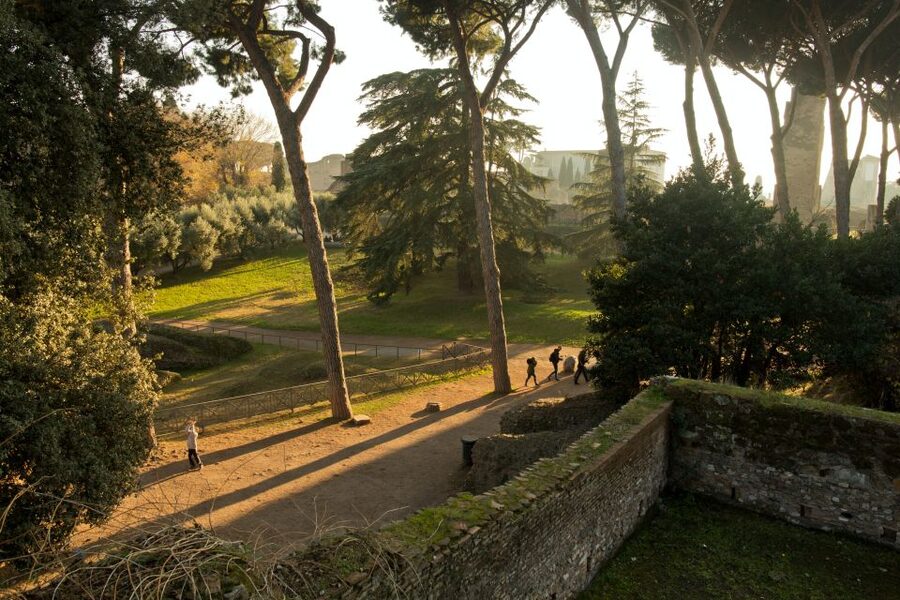
Palatine Hill is where the tour shifts from public spectacle to imperial neighborhood. You get guided time here, and you’ll learn how Palatine was home to wealthy patricians who built sumptuous homes on the hill.
Then the tour connects that lifestyle to power. You’ll walk on the hill where Octavian Augustus decided the seat of the Imperial Palace should be placed. That detail matters because it turns Palatine from “pretty views and ruins” into a story about why rulers wanted to live above the city, close to control.
If you like your sightseeing with context, Palatine Hill is the perfect middle stop. The hill does not just show you remains, it helps you picture how status, living spaces, and politics could overlap in one landscape.



Guided time versus self-exploration, how to pace your day
There’s one important detail to keep in mind: the Colosseum is clearly the focus of the guided portion, while you also gain access to explore Palatine Hill and the Roman Forum. That means you should treat the hills and Forum time as your chance to move at your pace, linger on what catches your eye, and come back to any labeled spots you want to study.
To make this work smoothly, I suggest you do two things. First, listen closely during the Colosseum portion so you build a mental framework. Second, at Palatine Hill and the Forum, slow down and look for the points that your guide highlighted, because that’s what will turn scattered ruins into a coherent scene.
Also note the tour includes photo stops. That is not just for selfies. It’s your moment to reset your direction, take bearings, and make sure you know which direction you are heading next.
What to bring, and what will get you turned away
This is one of those tours where small prep pays off. Bring your passport or ID card, because all visitors must carry IDs. If you forget, you can create a headache right when you’re trying to enter.
Don’t bring luggage or large bags. The tour does not list hotel storage, and access restrictions are common in historic sites around the Colosseum. If you are traveling with a backpack, keep it small enough that you’re not stuck negotiating entry rules.
Finally, opening hours can change. So if you are planning other timed tickets nearby, build in buffer time around this area. Roman sites are schedule-sensitive, and your best move is to keep the rest of your day flexible.
Who this tour is best for (and who should skip it)
This tour is a great fit if you want a structured route and you care about understanding what you are looking at. If you have ever felt like you’re standing in front of ruins with no “why,” the Colosseum plus Forum plus Palatine combo is a smart way to get answers quickly.
It also works well for couples and small families who can follow a guide and keep a steady pace. The headsets for groups larger than five are a plus if your group gets noisy, and the tour languages include Russian, English, and Italian.
But skip it if you have mobility limitations. The tour is explicitly not suitable for people with mobility impairments, and the Colosseum area plus hills involve uneven ground and lots of walking.
Should you book the Colosseum, Roman Forum, and Palatine Hill guided tour?
Yes, I think you should book if you want to turn a crowded monument visit into an organized, understandable experience. The skip-the-line support, the university-trained guide, and the way the tour connects the Colosseum to the Forum and then up to Palatine Hill create real value for the money.
If you hate crowds, or you want total freedom with zero structure, you might prefer a DIY plan. But for most people, this is the “right first pass” through the ancient core of Rome, with enough guidance to help you enjoy it instead of just surviving it.
FAQ
What time do I need to arrive, and where do I meet?
Arrive 15 minutes before the tour starts at the front of the metro station Colosseo. Your guide will be holding a yellow umbrella.
Is ticket line skipping included?
Yes, skip the ticket line is included as part of this experience.
What languages are offered during the tour?
The live tour guide speaks Russian, English, and Italian.
Is the tour suitable for people with mobility impairments?
No, it is not suitable for people with mobility impairments.
What do I need to bring?
Bring a passport or ID card. All visitors must carry IDs.
Are headsets provided?
Yes, headsets for groups larger than five are included.
More Tours in Rome
More Tour Reviews in Rome
Not for you? Here's more nearby things to do in Rome we have reviewed








Colosseum Tours, compared.
 ★ 4.8Colosseum, Palatine Hill and Roman Forum Guided TourFrom $5232,814 reviews
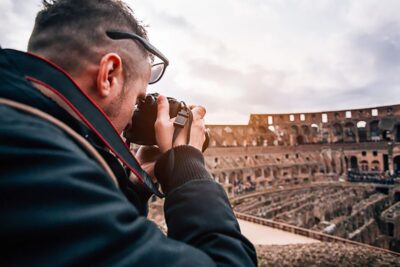 ★ 4.7Guided Tour of Colosseum, Roman Forum & Palatine HillFrom $5527,897 reviews
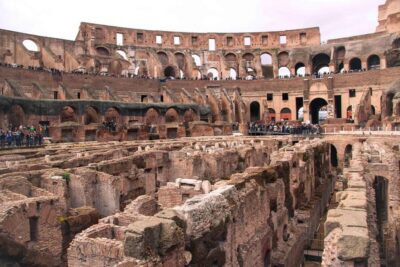 ★ 4.2Colosseum & Forum with Audio Guide App -Optional ArenaFrom $4124,770 reviews
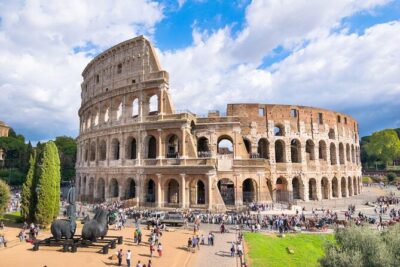 ★ 4.5Colosseum, Roman Forum and Palatine Hill Guided TourFrom $5923,903 reviews
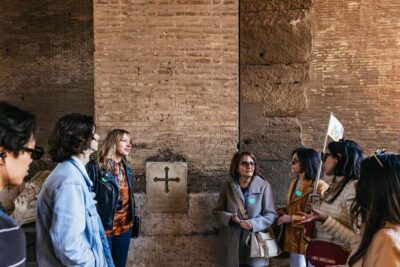 ★ 4.4Colosseum, Forum & Palatine Hill Tour & Optional ArenaFrom $5813,839 reviews
 ★ 4.6Colosseum, Palatine Hill & Roman Forum Guided TourFrom $5112,703 reviews
 ★ 4.7Colosseum: Underground and Ancient Rome TourFrom $16012,691 reviews
 ★ 4.6Colosseum Arena, Palatine Hill & Forum Guided TourFrom $7310,584 reviews
Browse the lists this tour appears in