
Reviewed · COLOSSEUM TOURS
Rome: Colosseum Forums, Pantheon and City Highlights Private Tour
One route hits Rome’s biggest icons. I love how it bundles Colosseum entry and the Pantheon into a tight half day, with an art-history guide pointing out what you are actually looking at. The trade-off is solid walking with moderate fitness needed, and there is no hotel pickup.
Guides like Paola and Claudia keep the pacing smooth, and their focus on architecture and the city’s story makes the ruins feel less random. You cover ancient power, Renaissance design, and classic photo stops without the usual scramble.
This is a private tour, and you get a mobile ticket plus a clear start at Piazza del Colosseo. Double-check that every traveler’s full name matches the ID or passport you provide at booking for Colosseum and Roman Forum entry.
Key things I’d zero in on
- Admission fees included where it matters most, including Colosseum entry and reservation
- Private guide, your pace so questions and stops do not feel rushed
- A smart mix of eras, from Roman arena engineering to Pantheon geometry
- Prime landmarks in one route, Trevi, Pantheon, Piazza Navona, plus the Forum area
- A guided walk through the “in-between” Rome, including Piazza Venezia and the Quirinal area
Why this half-day Colosseum to Pantheon route works so well
Rome is big, and the highlights can feel like random checkboxes if you show up without a plan. This tour is designed to stitch together the main “you can only understand this once” sights into one continuous flow. You go from spectacle to politics, then to legend and classic design, and you do it without hours of transit hopping.
I also like that the tour keeps your eyes on interpretation, not just walls and arches. A good guide turns the Colosseum and Forum into a story with characters, rules, and purpose. That is how a half day stays memorable instead of tiring and blurry.
One practical note for expectations: you are not just standing at monuments. You will walk between them, and you should be ready for uneven stone and frequent stops for explanations.
You can also read our reviews of more city tours in Rome


Entering The Colosseum: more than rows of seats
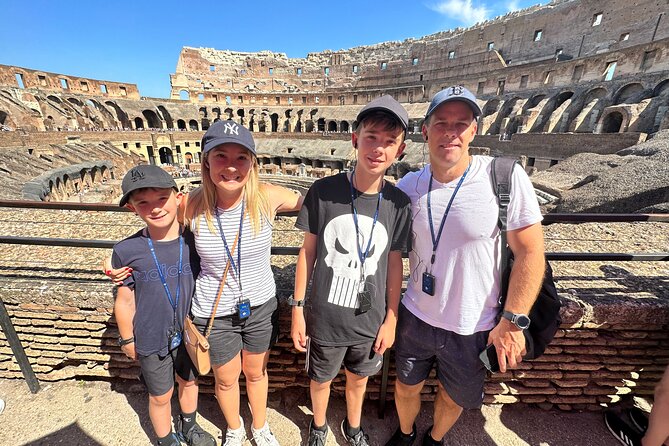
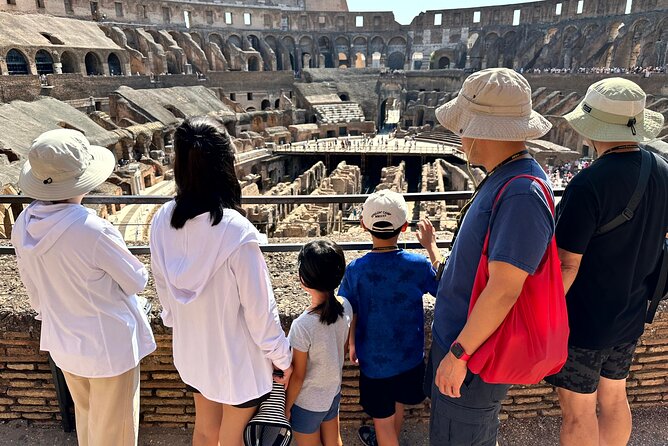
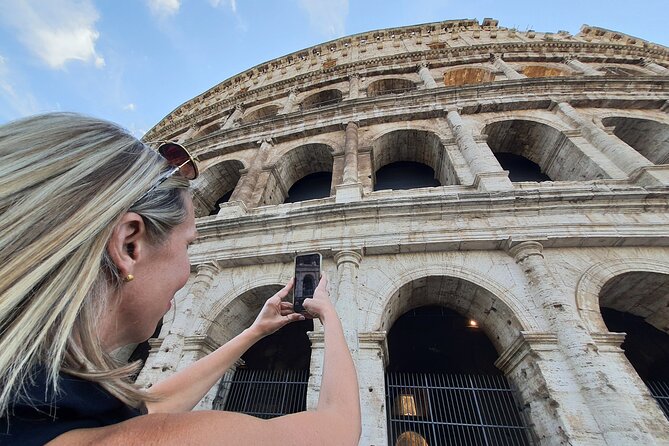
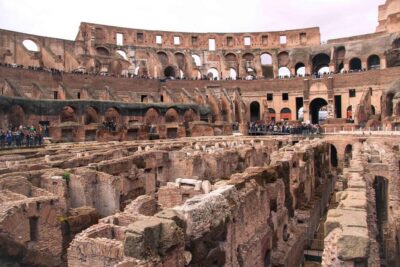
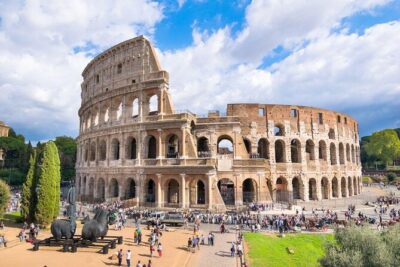
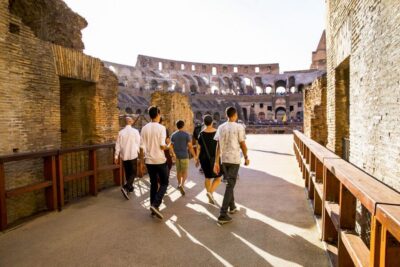
The Colosseum stop is your anchor, with about an hour inside. You start with the setting: Roman engineering and the way the arena worked for crowds and combatants. The focus is not just what it looks like now, but what it was built to do.
A guide will point out the arena logic that makes the place click, such as how the design supports viewing lines and large-scale events. You also get context around the combatants and the wild spectacle that made this site famous. If you have ever wondered why the Romans built such a massive stage, this is where the answer starts.
The big value here is that admission is handled for you, including the Colosseum ticket and reservation fee. That matters because timed entry is the sort of detail that can derail a day if you are improvising.
What to watch for while you are there
You will get the most from it if you listen for cues tied to the areas you walk past. Ask your guide to explain what you are seeing in plain terms, especially where the structure hints at how events moved. If your group prefers photos first, you can still do it, just coordinate with your guide so you do not lose the best explanation spots.
Roman Forum and the Arch of Constantine: the city’s power hub
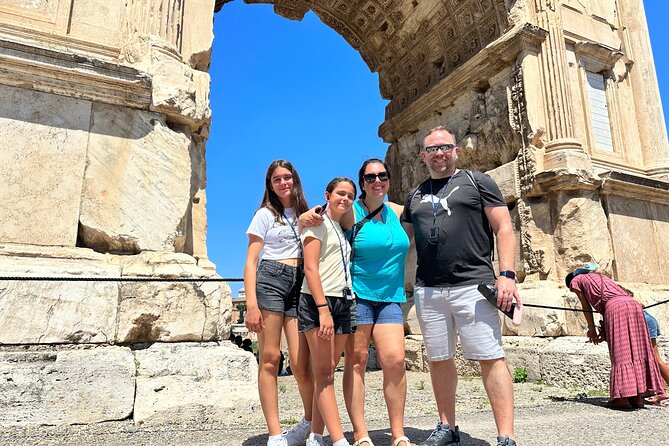
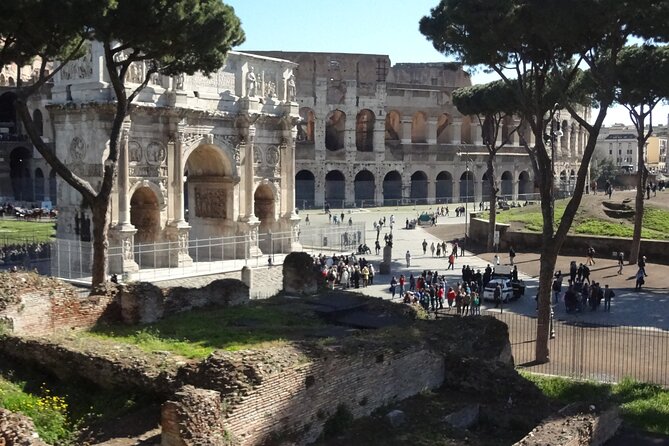
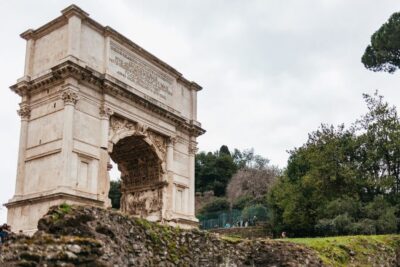
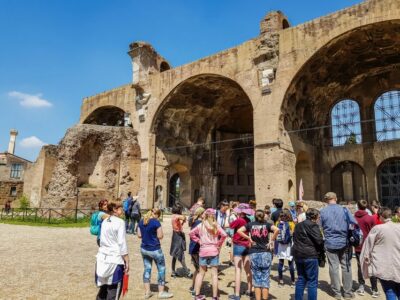
After the arena, the tour shifts to the Forum area, again for about an hour. This is where Rome stops being a theme park and becomes a working system. You see the Arch of Constantine from outside, and you step into the landscape of Rome’s main square, where political, religious, and social life collided.
The Forum is hard to understand if you only look at ruins. Your guide helps you read the space like a city map: who would be where, what kinds of gatherings happened, and why monuments were placed where they were. This is a big reason people love the Forum when they have a guide with a clear narrative.
A realistic consideration: the Forum can feel like walking through history class. If you are the type who wants the visuals first and the explanations second, ask for a slightly lighter pace. The private format helps here.
Trevi Fountain: the legend moment, with time to actually enjoy it
Trevi Fountain is short on time here, about 30 minutes, and that is a good thing. You toss in the coin, make your wish, and then you still have enough energy to keep going instead of getting stuck in an all-day photo sprint.
This stop is also a reminder of something practical about Rome: iconic places attract crowds, and you do not control that. With a private guide and a set plan, you at least avoid turning Trevi into a chaotic wandering exercise.
Since you are already in ancient rhythm, your guide’s context makes Trevi more than a movie backdrop. You get the story behind it, so the fountain becomes connected to the city rather than standing alone.
Tip: if you want a great photo, time your moments with your guide’s suggested vantage points. Even a few steps can change how crowded a frame looks.
Piazza Venezia and the Quirinal Palace views: the city’s newer power
Between the Roman core and the Pantheon, you walk through the area toward Piazza Venezia and beyond. You will reach Piazza Venezia, home to the so-called wedding cake marble landmark built in 1885 to honor King Victor Emmanuel II. From there, you head in the direction of the Quirinal Palace, the official residence of Italy’s president.
This part of the route is easy to overlook if you only care about ancient ruins. But it adds something useful: it shows you how Rome keeps remaking itself, stacking eras in layers you can still feel in the streets. You go from emperors and institutions to a modern national symbol, and it helps you understand why Rome never really stops rewriting its image.
If your legs are getting tired, this is also where a private guide can help you pace the walk. You can take a breather while still staying engaged.
You can also read our reviews of more private tours in Rome


Pantheon time: geometry, sculpture, and Raphael’s resting place
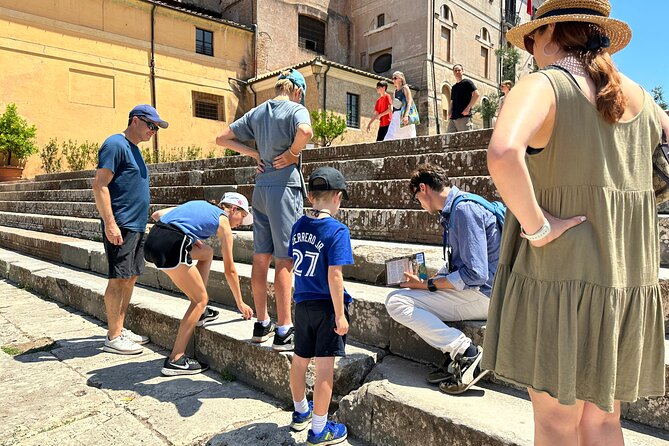
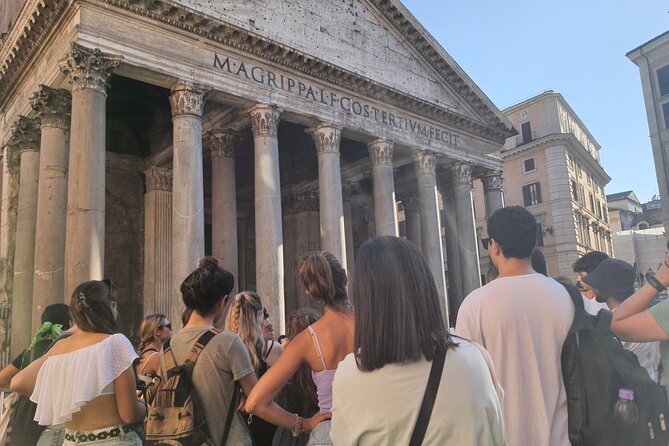
The Pantheon stop runs about an hour, and it is one of those sights that rewards attention. You step inside and see why Renaissance artists and builders kept studying this building centuries after it was first created.
Raphael is buried here, and that detail often changes the experience from seeing a famous interior to understanding why artists cared. Your guide ties the structure to its influence, and that context is what makes the Pantheon click beyond the wow factor.
Practical reality: the Pantheon is indoors, but it is still a popular stop. The private guide helps you focus on what matters most visually and conceptually while you are there.
A simple strategy: treat the Pantheon like a guided walkthrough of how space is shaped. If you ask questions, you will usually get explanations that connect design choices to practical results, like how light and scale work together.
Piazza Navona and Bernini’s Fountain after the Baths of Nero
You end up at Piazza Navona, about an hour here. This area sits on top of layers, including the Ancient Baths of Nero, and your guide helps you understand why the place took the shape it has. That context matters because Piazza Navona is not just a square, it is a historical palimpsest.
The star attraction is the Fountain of the Four Rivers by Bernini. If you like Renaissance art that feels theatrical, this is the moment. The guide’s explanation gives you a way to look that is more than, That’s pretty. You start noticing the symbols and the way the fountain is designed to read like a story.
If you still want a final souvenir moment, this is a good place to do it. It is lively enough to feel like Rome, but structured enough that you are not lost trying to find your way at the end.
Value and price: what you are paying for at $426.54 per person
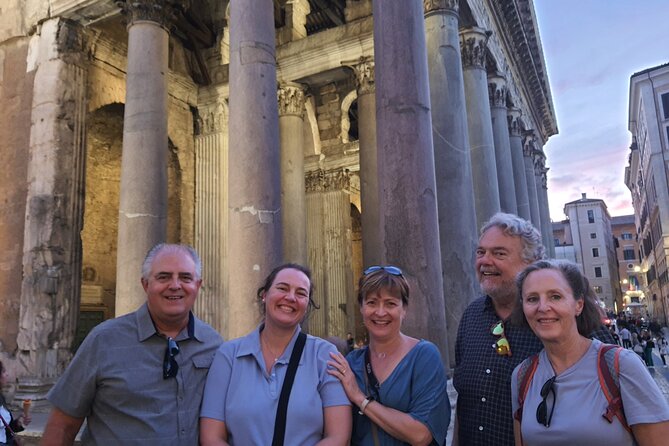
At $426.54 per person for about 4 hours 30 minutes, this is not a budget tour. The value is in the bundle, not in one single monument.
Here is the clearest way to think about the price based on what is included:
- Private guide and private time for your group
- Admission included for the big-ticket sites, including Colosseum entry and the Colosseum reservation fee
- Professional art historian guide plus local guiding, which is the part that usually turns monuments into meaning
- Multiple entry points handled as part of one plan, so you do not have to coordinate separate purchases for the core sites
The other big value is how the route is paced. You are not just cramming in five stops, you are connecting them into a single story, ancient spectacle to civic life to major architectural legacy. For first-time visitors, that kind of structure can be worth more than squeezing in an extra site that you barely understand.
Also, plan ahead. This experience is often booked around 52 days in advance on average, which tells you the schedule gets taken. If you are traveling during a busy season, earlier booking is smart.
One fair caution from real-world experience: a few people feel the price can be steep for a private format. That is especially true if you are sensitive to paying for guide time. If you want maximum value, make sure you are the kind of group that will ask questions and actually use the guide.
Practical tips: tickets, meeting points, and how to avoid entry headaches
This is a private tour, meaning only your group participates. You start at Piazza del Colosseo, 23, 00184 Roma RM, Italy, and you finish in Piazza Navona, 00186 Roma RM, Italy. That end point is useful because Piazza Navona is a convenient hub for your next meal or walk.
There is no hotel pickup. You will want to arrive at the meeting point under your own steam, using public transportation since the start is near it.
Bring the documents carefully. For Colosseum and Roman Forum entry, you must have valid passport or ID that matches the full names provided at booking. The tour uses a mobile ticket, which is convenient, but the name match requirement is a serious one. If you are the organizer, double-check spelling.
Physical effort: the tour asks for moderate fitness. You do not need to be an athlete, but you should be ready for steady walking and standing while your guide talks.
In hot weather, you will also benefit if you bring water and plan for shade breaks. Some guides on this route have adapted pacing to help families and older visitors, including checking in often and finding rest spots when needed.
Who should book this private highlights tour
This tour is ideal when:
- You want a first-timer route that covers the biggest icons without guesswork
- You like explanations that connect architecture to how people lived and built
- Your group values a private pace, especially if you need more time at certain stops
- You want admissions bundled, including Colosseum entry and reservation handling
It is also a good choice for couples and small groups who want to avoid the stress of coordinating tickets on multiple platforms. The private format can reduce friction, because you are not stuck in a large crowd rhythm.
If your group is the type that hates guided narration and would rather freestyle, you might feel the cost more than the value. In that case, you could do a self-guided plan. But if you want the meaning behind the stones, a guide-led loop like this pays off.
Should you book it?
I think you should book this tour if you want Rome’s top landmarks in one smooth arc, with admission included and a guide who can turn monuments into a clear story. For first-time visitors, the value is not just convenience, it is understanding, especially at the Colosseum, Forum, and Pantheon.
Skip it, or at least reassess, if your group has very limited walking tolerance, hates guided time, or is working with a tight budget where private guide pricing feels hard to justify.
FAQ
How long is the tour?
The tour is listed at approximately 4 hours 30 minutes.
Is this tour private?
Yes. It is a private tour/activity, and only your group participates.
Where do you meet and where does it end?
You start at Piazza del Colosseo, 23, 00184 Roma RM, Italy and end at Piazza Navona, 00186 Roma RM, Italy.
Are admission tickets included?
Admission fees are included for convenience, including the Colosseum entrance ticket and the Colosseum reservation fee.
Does the tour include tickets for the Pantheon and other stops?
The tour includes activities at the major stops listed, and admission is included for the Pantheon and the Colosseum-related sites.
Is hotel pickup included?
No. Hotel pickup is not included.
What ticket format is used?
The tour uses a mobile ticket.
What documents do I need for Colosseum and Roman Forum entry?
Each traveler must present a valid passport or ID document that matches the name provided at booking for successful entry.
What happens if the names on the voucher do not match the IDs?
Failure to present a voucher with all travelers’ full names at the ticket office prior to entry may result in denied entry to the Colosseum and Roman Forum.
What is the activity level like?
Travelers should have a moderate physical fitness level.
Can I change or get a refund if my plans change?
This experience is non-refundable and cannot be changed for any reason.
More City Tours in Rome


More Tours in Rome






More Tour Reviews in Rome

Not for you? Here's more nearby things to do in Rome we have reviewed












Colosseum Tours, compared.
 ★ 4.8Colosseum, Palatine Hill and Roman Forum Guided TourFrom $5232,814 reviews
 ★ 4.7Guided Tour of Colosseum, Roman Forum & Palatine HillFrom $5527,897 reviews
 ★ 4.2Colosseum & Forum with Audio Guide App -Optional ArenaFrom $4124,770 reviews
 ★ 4.5Colosseum, Roman Forum and Palatine Hill Guided TourFrom $5923,903 reviews
 ★ 4.4Colosseum, Forum & Palatine Hill Tour & Optional ArenaFrom $5813,839 reviews
 ★ 4.6Colosseum, Palatine Hill & Roman Forum Guided TourFrom $5112,703 reviews
 ★ 4.7Colosseum: Underground and Ancient Rome TourFrom $16012,691 reviews
 ★ 4.6Colosseum Arena, Palatine Hill & Forum Guided TourFrom $7310,584 reviews
Browse the lists this tour appears in