
Reviewed · COLOSSEUM TOURS
Rome: Colosseum, Circus Maximus, Forum & Ancient Rome Tour
Ancient Rome feels close on this 2-hour walk. You get a smart, street-level way to see major monuments without getting stuck in ticket lines, and the guide-led storytelling helps it all click fast. I particularly like how this tour works as a focused orientation to the city center.
I also like that the route mixes the famous with the slightly overlooked, starting around Piazza Cinque Scole and pushing on to places like the Theatre of Marcellus and the Portico d’Ottavia. One possible drawback: this is an outdoor route and it does not include an inside visit to the Colosseum, so you will need a separate plan if that is your goal.
Key things to look for on this Rome tour
- Colosseum exterior only, but you still get the big-picture context
- Capitoline Hill and Michelangelo’s square for standout skyline views
- Piazza Cinque Scole and the Jewish Ghetto area as an early, meaningful stop
- Ponte Fabricius and Tiber Island views on an easy-to-follow route
- Roman Forums from Via dei Fori Imperiali with named stops like Augustus, Caesar, and Nerva
- Strong guide energy, with guides like Bruno, Gabriel, Francesco, and Sam highlighted for clarity and humor
A 2-hour Rome loop that makes the ancient city make sense
Rome can be overwhelming. This tour is built to cut through that feeling. In just two hours, you walk a route that connects the Jewish Ghetto area, the Forum zone, and major public sites, so you understand what you are looking at rather than just collecting photos.
What I like most is the “why it mattered” approach. Even when you are only seeing buildings from the outside, the guide helps you place them in time and in Roman life. That means when you later return for more exploring, the city feels less random.
You can also read our reviews of more tours and experiences in Rome.



Meeting at Sant’Anastasia al Palatino, then getting your bearings fast
You meet your guide in front of the Basilica of Sant’Anastasia al Palatino. It is a good spot to start because it places you in the historic center area where the ancient streets start to feel real, not abstract.
One practical detail matters: arrive about 15 minutes early. The tour is not designed for late entry, and guides wait only about 10 minutes after the start time. If you are even slightly unsure of where to stand, show up early and get your bearings.
The tour is also rain or shine. This matters because it is an outdoor walk built around sightseeing from sidewalks and viewpoints. Plan for weather, and keep your shoes comfortable, not cute.
Piazza Cinque Scole and the Jewish Ghetto atmosphere
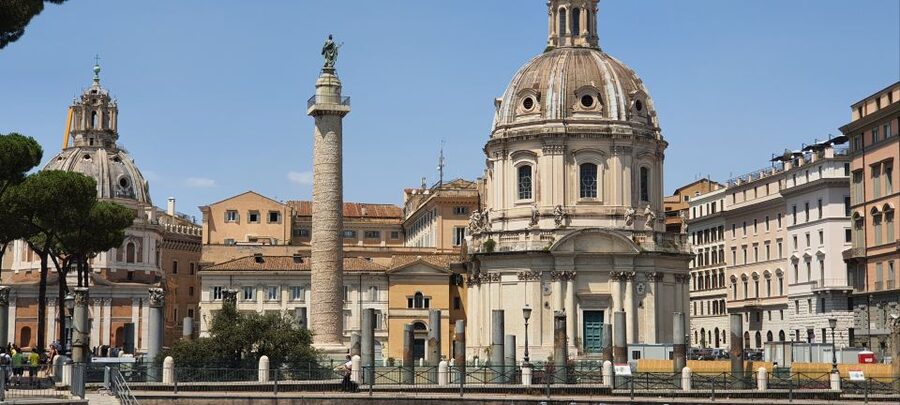
The tour begins by setting you up in the area around Piazza Cinque Scole, where you can absorb the atmosphere of the Jewish Ghetto. This is a smart start if you want more than Roman emperors and arenas. It reminds you Rome has layers, and ancient Rome is part of a much bigger story.
I like this opening because it softens the jump into the Forum zone. You are not sprinting straight toward the most famous ruins, you are easing into the city center with a human, neighborhood feeling first. That makes the walk feel less like a checklist.
Portico d’Ottavia: where the city’s daily life shows through
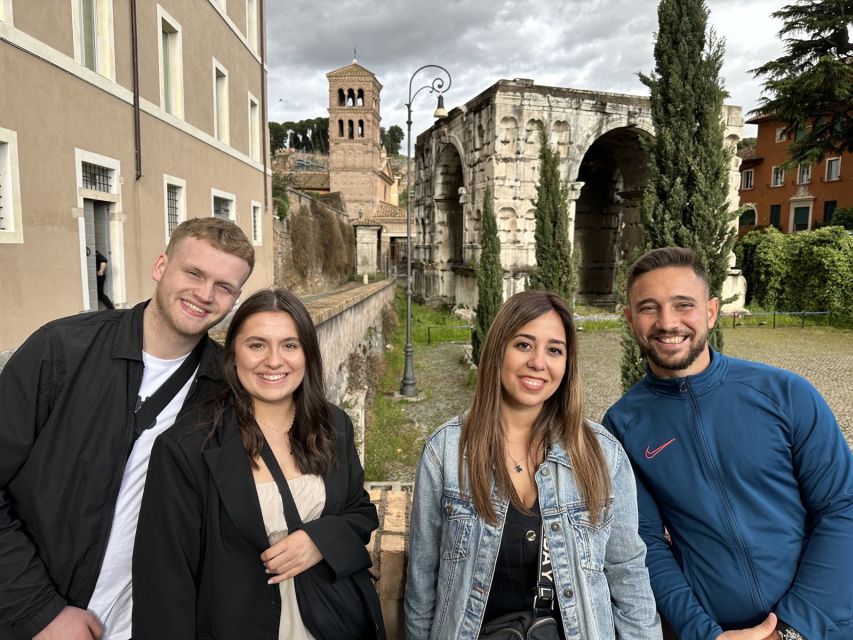
From there you head toward the Portico d’Ottavia (often linked with the Portico of Octavia). The guide points out how it once marked an entrance to a bustling market. That phrase is key. In Rome, “public space” was not only for speeches and ceremonies, it was also where commerce happened and people rubbed shoulders.
This stop is valuable because it trains your eye. Instead of looking at ruins like isolated objects, you start seeing them as parts of movement and routine. And once you see that pattern, the rest of the walk clicks more quickly.
Ponte Fabricius and the Tiber Island connection
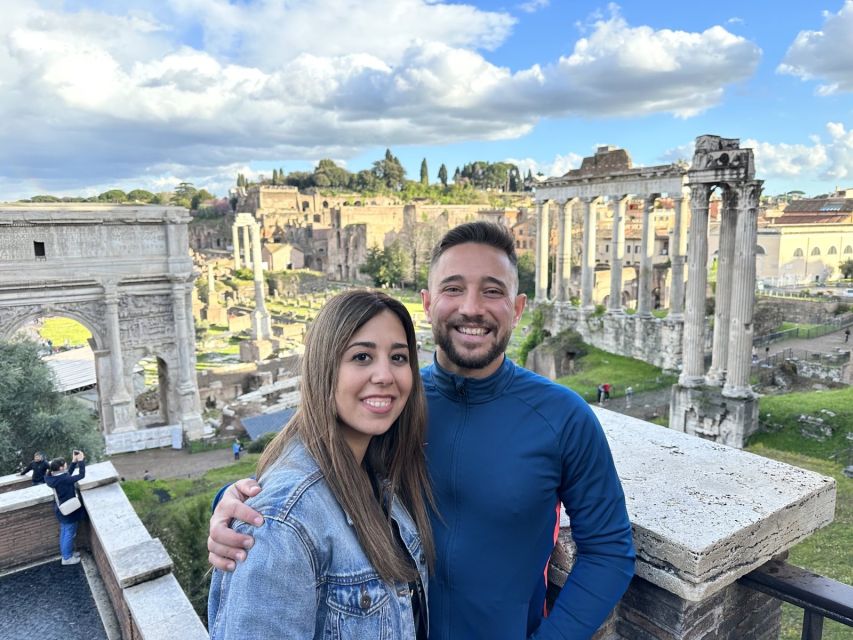
Next comes Ponte Fabricius, described on this tour as the oldest bridge in Rome. Crossing it gives you a natural “pause” moment. You get the simple satisfaction of seeing how the river shaped the city and how people kept moving across it.
The bridge also connects you visually to Tiber Island. Even if you do not spend tons of time here, the viewpoint helps you understand why the river mattered for travel, trade, and power. Rome’s monuments are often impressive, but Rome’s location is just as important.






Theatre of Marcellus: the outside stop that surprises people
Then you reach the Theatre of Marcellus, an ancient theater that is often mistaken for the Colosseum. That is a fun warning from your guide because it pushes you to look closely and notice what is different, not just what is famous.
This is one of my favorite stops for a simple reason: it feels like you are seeing Rome beyond the most obvious landmark. The Colosseum gets all the attention, but the Theatre of Marcellus is the kind of place that helps you understand how entertainment and crowd life worked in earlier and parallel ways.
If you like guided comparisons, this stop is especially satisfying. You learn how two structures can occupy similar cultural space while still being different in purpose and era.
Temple of Apollo ruins and the Capitoline Hill climb
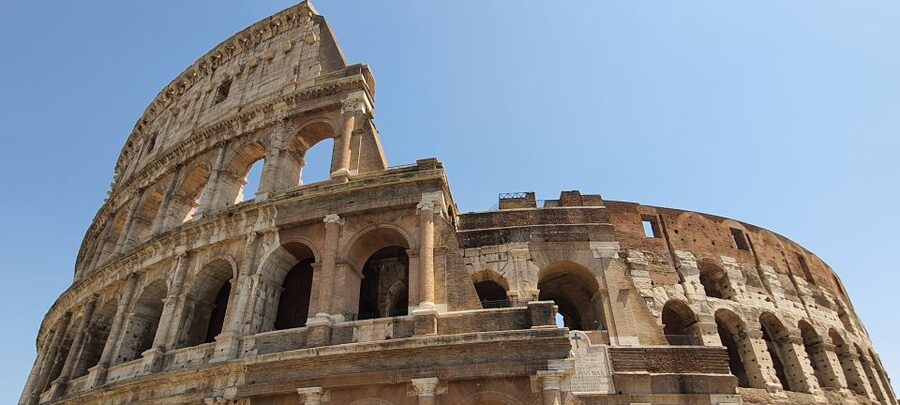
After the Theatre of Marcellus, you move toward the Temple of Apollo, with ruins that echo Rome’s past. Even without entering anything, it is a powerful reminder that temples were not only religious spaces. They also acted as symbols of authority and cultural identity.
Then the pace turns upward with a climb to Capitoline Hill. This is where the tour gives you a payoff viewpoint, and it is not just “stand here and look.” You see the square designed by Michelangelo, and the guide ties it back to the idea that Rome has repeatedly re-shaped its own power centers.
You also start seeing how the Forums fit into the wider city plan. The hill position helps your brain connect elevated perspectives to the ground-level political world you will face soon.
Via dei Fori Imperiali: the Forum view with named stops
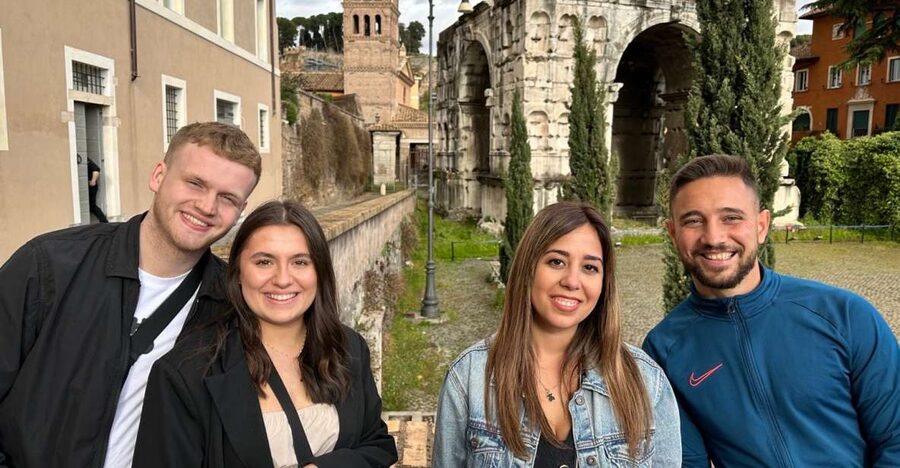
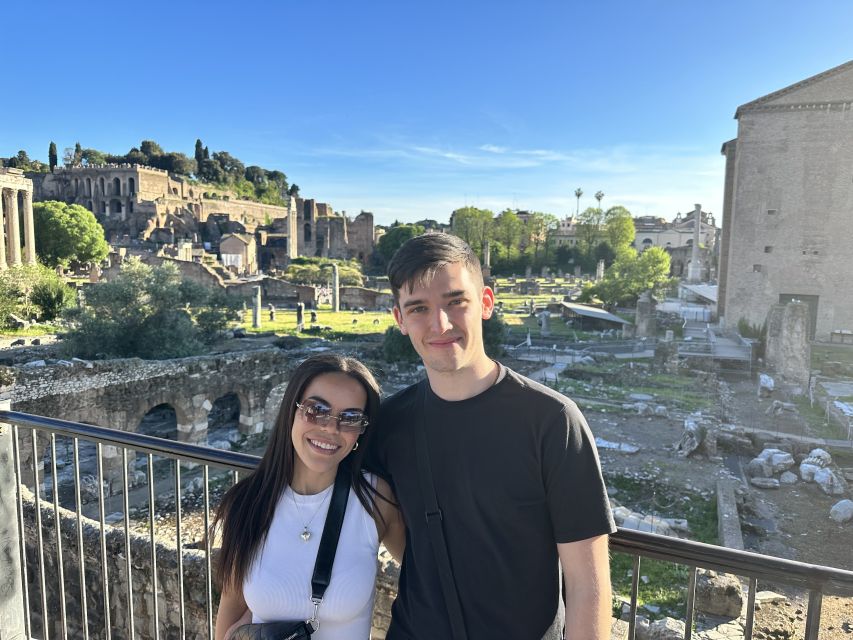
One of the best parts of the walk is reaching Via dei Fori Imperiali. This is where you look out toward the Roman Forum area, with the guide helping you track Roman social and political life through the major forum spaces.
You get the chance to see and orient yourself with named locations like:
- the Roman Forum
- the Forum of Augustus
- the Forum of Caesar
- the Forum of Nerva
This is valuable because it is easy to stand near ruins and feel like you are guessing. With a guide, you can understand why these were built and what each forum represents. It is not just seeing stone fragments, it is seeing a storyline of leadership, propaganda, and public life.
Also, from a traveler standpoint, this stop sets you up for smart self-guided wandering later. Once you know the names and the general layout, you can return on your own and spend time where your interests pull you.
Circus Maximus: chariot-racing history, seen from the outside
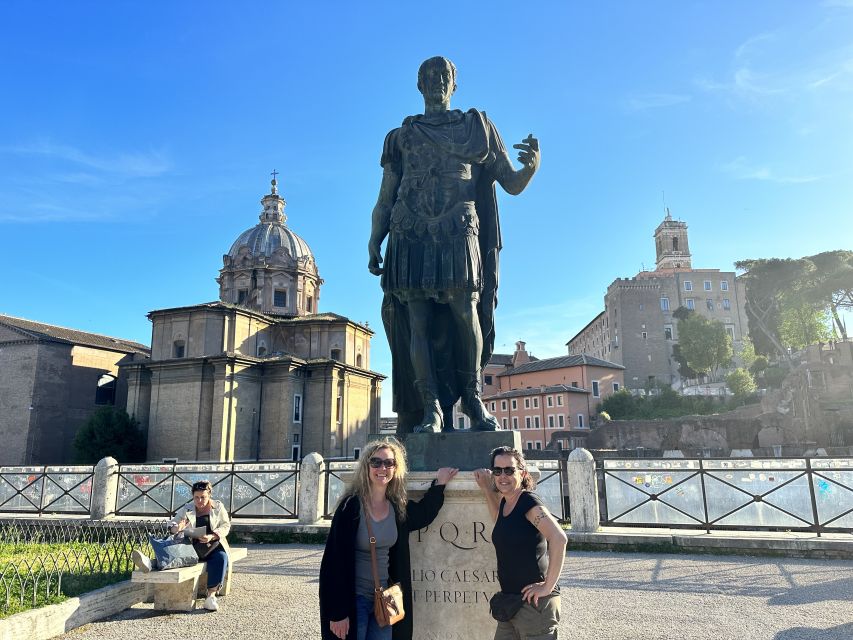
No Rome walk through ancient public life feels complete without Circus Maximus, the famous chariot-racing stadium. Here, you are not going inside, but you still get a sense of scale and purpose.
I like that the tour uses Circus Maximus to widen your idea of Roman entertainment. It is not only about arenas and stadium walls. It is also about speed, spectacle, and the kind of mass event that could unite a city under shared attention.
This stop also helps you connect the dots with what came before and what comes after, because you see Rome as a system of spaces built for specific crowds and specific moments.
Colosseum from the outside: what you still gain
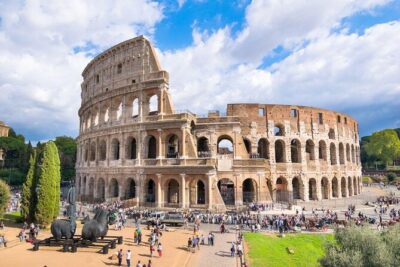
The tour ends with the Colosseum from the outside. Since there is no inside visit, the big question is whether it feels satisfying.
In practice, it works well if you want context more than tickets-for-everything. The guide’s job here is to help you understand what the Colosseum represents compared to the theatre culture you saw earlier and the massive public life you watched unfold through the Forum and Circus areas. That makes the Colosseum less of a photo stop and more of a reference point.
If you specifically want to walk through the Colosseum corridors, sit in the seats, and see the internal exhibits, you will need to pair this with a separate Colosseum ticket strategy. Think of this tour as your “prep walk,” not your final inside visit.
The guide is the real differentiator
This tour leans hard on guide quality, and the reviews back that up with real names. People highlight guides like Bruno for warm, humorous, easy-to-follow teaching that made the walk feel like a highlight. Others mention Gabriel for clear, informative explanations, and Francesco for handling questions smoothly while keeping the mood friendly. Sam is described as personable and solidly informed, which matters because it shapes how comfortable you feel asking questions.
So here is the practical takeaway for you: if you enjoy learning while you walk, this tour style fits. The route is efficient, but it is the guide who turns stones and streets into a story you can actually remember.
You can also use that mindset when you pick your moment to ask questions. A two-hour window goes fast. Ask at the places you care about most, like the Forum viewpoints, the Capitoline Hill area, or the Theatre of Marcellus comparison.
Price and value: $243.56 per person for two hours
At $243.56 per person for about 2 hours, this is not a budget stroll. So you want to check what is actually included.
What you get is a live English guide and the walking tour route. What you do not get is entrance tickets and fees, and you are not visiting the Colosseum inside. That changes the math.
For value, I think of it like this: if you already plan other paid entries, this tour can still be a smart purchase because it gives you context that makes those entries more meaningful. If you only want the Colosseum interior, then the pricing may feel steep because this tour does not deliver that ticket experience.
For many first-timers, the value comes from orientation. You walk away with a mental map of key ancient areas, plus the confidence to explore more on your own afterward.
What it feels like to walk this route
This is an outdoor city-center walk with steps and some uphill parts, especially once you start climbing Capitoline Hill. It is marked as not suitable for people with mobility impairments and not suitable for wheelchair users.
Even if you are fine walking, you should treat this as a real walking tour, not a casual sit-and-stroll. Wear comfortable shoes, and keep your water plan simple. Rome sidewalks can be uneven, and your time on the ground matters.
On timing, you should also expect a steady rhythm. The tour starts at your meeting point, then the guide moves you through several major zones, mixing big names with quieter stops like Piazza Cinque Scole and the Theatre of Marcellus.
Who should book this tour
You will probably love this tour if:
- you want a guided way to see Ancient Rome landmarks without spending the entire day
- you like learning the meaning behind monuments, not only taking photos
- you are okay with Colosseum exterior views instead of an inside ticket
- you want to mix the Forum zone with lesser-visited stops like the Theatre of Marcellus
You might skip or adjust your plan if:
- you are only interested in inside access and want to tour the Colosseum itself on the spot
- you need wheelchair-friendly access or have mobility limitations that make walking and climbing difficult
Should you book this Rome: Colosseum, Circus Maximus, Forum & Ancient Rome Tour?
Yes, I would book it if you want a fast, guided introduction that helps you understand what you are seeing. This tour works especially well for first-time visitors who want the big hits like the Colosseum, Forum viewpoints, and Circus Maximus, but also want meaningful side stops like Piazza Cinque Scole and the Theatre of Marcellus.
If your top priority is inside Colosseum access, plan that separately and use this walk as your pre-game. Either way, make sure you show up on time, wear good shoes, and pick your questions. With guides like Bruno, Gabriel, Francesco, and Sam, the quality of the explanations is the main reason the tour feels worth it.
FAQ
How long is the Rome: Colosseum, Circus Maximus, Forum & Ancient Rome Tour?
The tour lasts about 2 hours. You can check available starting times when you reserve.
Where do I meet the guide, and where does the tour end?
Meet your guide in front of the Basilica of Sant’Anastasia al Palatino. The tour ends back at the same meeting point.
Is the Colosseum included inside on this tour?
No. The tour is outdoor, and visiting inside the Colosseum is not included.
What is included in the price?
The included items are the guide and the walking tour. Entrance tickets and fees are not included.
What language is the live tour guide?
The tour is offered with a live guide in English.
Does the tour run rain or shine?
Yes, the tour takes place rain or shine.
Is this tour suitable for wheelchair users or people with mobility impairments?
No. The tour is not suitable for people with mobility impairments and it is not suitable for wheelchair users.
More Tours in Rome
More Tour Reviews in Rome
Not for you? Here's more nearby things to do in Rome we have reviewed












Colosseum Tours, compared.
 ★ 4.8Colosseum, Palatine Hill and Roman Forum Guided TourFrom $5232,814 reviews
 ★ 4.7Guided Tour of Colosseum, Roman Forum & Palatine HillFrom $5527,897 reviews
 ★ 4.2Colosseum & Forum with Audio Guide App -Optional ArenaFrom $4124,770 reviews
 ★ 4.5Colosseum, Roman Forum and Palatine Hill Guided TourFrom $5923,903 reviews
 ★ 4.4Colosseum, Forum & Palatine Hill Tour & Optional ArenaFrom $5813,839 reviews
 ★ 4.6Colosseum, Palatine Hill & Roman Forum Guided TourFrom $5112,703 reviews
 ★ 4.7Colosseum: Underground and Ancient Rome TourFrom $16012,691 reviews
 ★ 4.6Colosseum Arena, Palatine Hill & Forum Guided TourFrom $7310,584 reviews
Browse the lists this tour appears in