
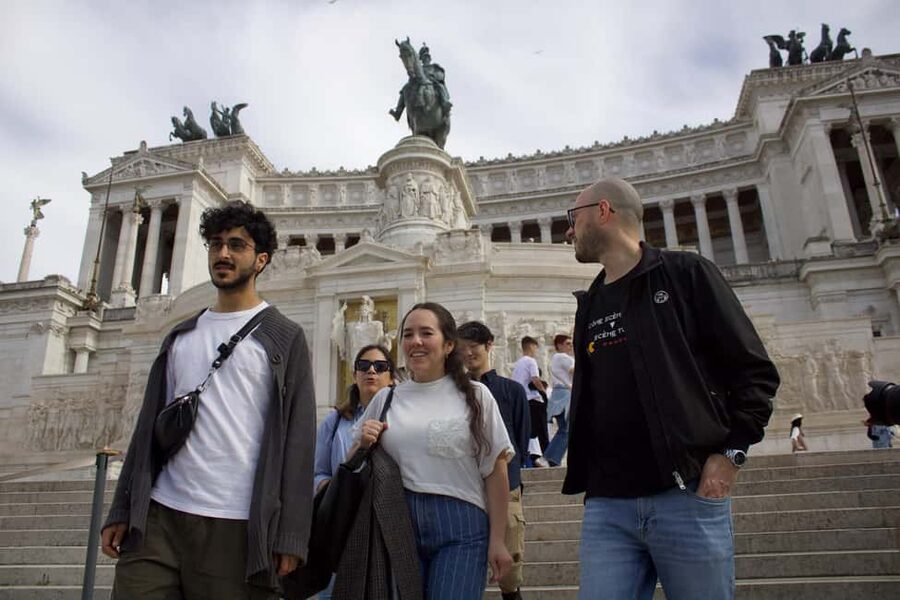
Reviewed · WALKING TOURS
Rome: City Walking Tour in English or Spanish
Rome runs best when someone else points. This guided Rome city walking tour strings together major monuments, lively piazzas, and story-driven history so the Eternal City feels less random. I especially like the mix of famous landmarks and smaller “look over here” stops, and I love that the guide ends with practical Rome advice at Piazza Navona. One thing to consider, though, is that you cover a lot in a short window, so you are not settling in for long inside visits at every stop.
You can book in English or Spanish, and the tour is only about 2 to 2.5 hours. When the guide is a standout, like Domenica or Dan, the walk moves quickly, questions stay welcome, and the stories make the stones feel alive. The main drawback is that the route can start in one of two piazzas (Piazza d’Aracoeli or Piazza di Pasquino), and the finish can land in different places depending on the option.
Key things to know before you go
- Two starting options: Piazza d’Aracoeli or Piazza di Pasquino, so check which one you book.
- A tight best-of route: Piazza Venezia, Trajan’s Column, Trevi Fountain, and a pass by the Pantheon.
- Short guided stops, not long museum time: you get context fast at each major point.
- Hidden gems along the way: including Galleria Sciarra and Church of Sant’Ignazio di Loyola.
- End near food and viewpoints: Piazza Navona is the common finish point, with rooftop terrace energy.
Why this 2 to 2.5 hour Rome walk is such a smart first move
Rome can be loud, crowded, and visually overwhelming. This tour is designed to cut through that chaos with a guided path that hits the monuments you will likely plan around anyway. In about 2 to 2.5 hours, you get a storyline: Roman power to everyday street-level Rome today.
I like that it does not only do the big names. You also get built-in moments where the guide points out smaller, off-main details that help you start recognizing patterns in the city, like how piazzas shape movement and how churches and grand facades sit inside everyday life. It is a great way to get your bearings fast.
The pace is ideal for a first day, but it is still a walking tour. If you want slow strolling with lots of free time to linger, plan to pair this with a later, more flexible walk in the areas you liked most.
You can also read our reviews of more walking tours in Rome


Choosing your start: Piazza d’Aracoeli or Piazza di Pasquino
Your tour starts at one of two meeting points, depending on the option you book: Piazza d’Aracoeli or Piazza di Pasquino. This matters because both locations set you up for a slightly different feel right from the first minutes.
If you start at Piazza d’Aracoeli, you are stepping into a spot that naturally leads you toward major sights in the historic core. If you start at Piazza di Pasquino, you get a more “street-corner Rome” entry point, which can be fun if you like small-scale views while you warm up your Roman walking legs.
Either way, come ready for city conditions. Wear comfortable shoes and plan for uneven sidewalks and lots of turning your head upward. A few minutes at the start help you settle into the route so you are not constantly re-orienting later.
Piazza Venezia: the big-picture setup for Roman power
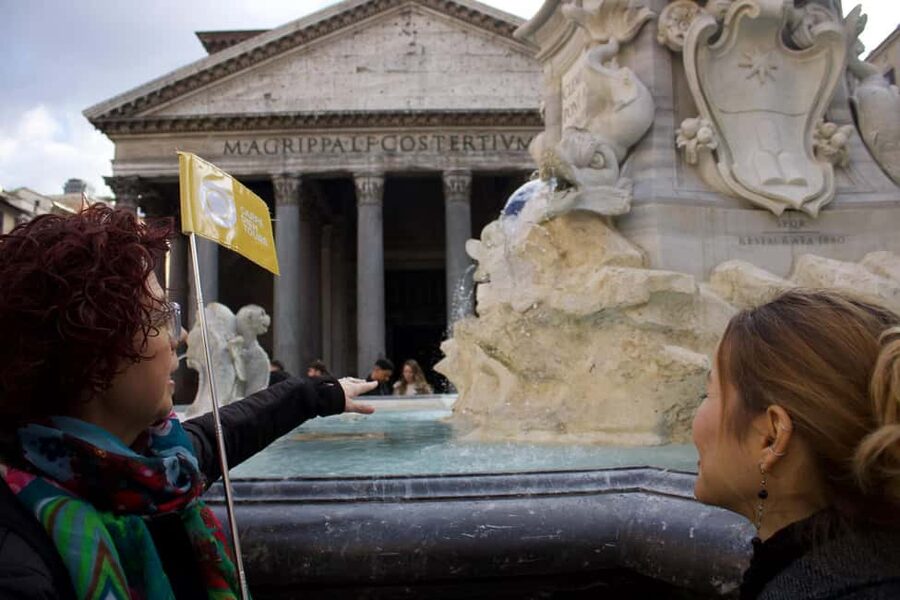
One of the first major stops is Piazza Venezia. This is where you get the kind of context that makes the rest of the walk easier to follow. The guide gives a guided segment here, around 20 minutes, which is enough time to connect what you are seeing to what Rome was trying to project.
Why this stop works: piazzas are not just pretty squares. They are stage sets. When you understand how they function, you start noticing that the city is arranged for movement, ceremonies, and visibility. This is especially helpful when the walk jumps later into empire-era monuments.
Practical tip: while you are listening, keep an eye on the building lines and open sightlines around the square. Those visual cues help you map what you will see next, including Trajan’s Column and the route toward Trevi.
Trajan’s Column: history you can actually picture
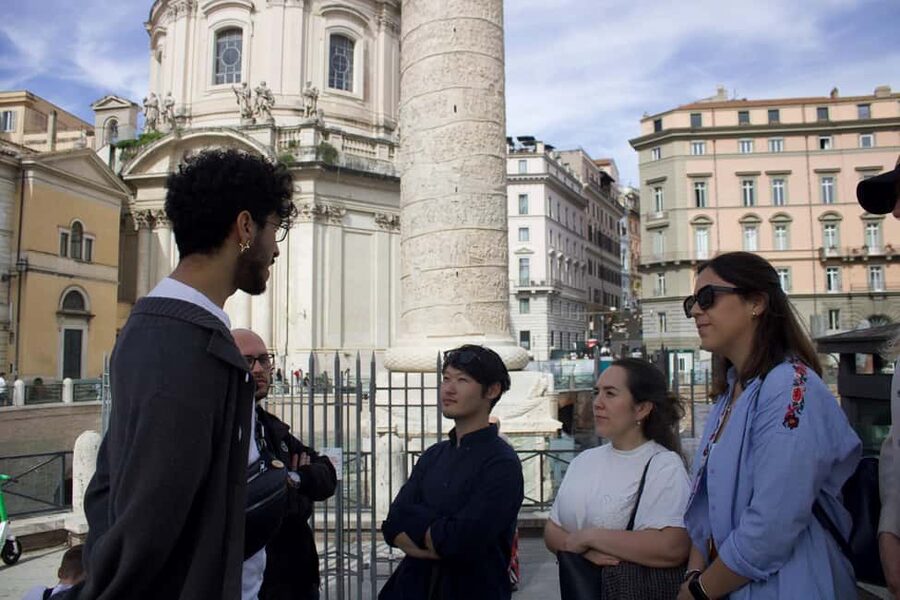
Next up is Trajan’s Column, with another guided segment (about 20 minutes). This stop is a favorite style of Roman sightseeing because it turns history into something you can visually track.
The guide’s job here is crucial. Roman history can sound like dates on a page, but at Trajan’s Column you can connect the story to real imagery and location. You also get a chance to ask questions as you stand there, which is where good guides really separate themselves.
A possible drawback: the column is fascinating, but it is still a quick stop. If you want to study it in depth, use the tour as your first pass and then plan a longer follow-up on a separate day. Think of this as learning the headline version so later details feel easier to absorb.
Trevi Fountain: the “everybody knows it” stop, handled at a human pace
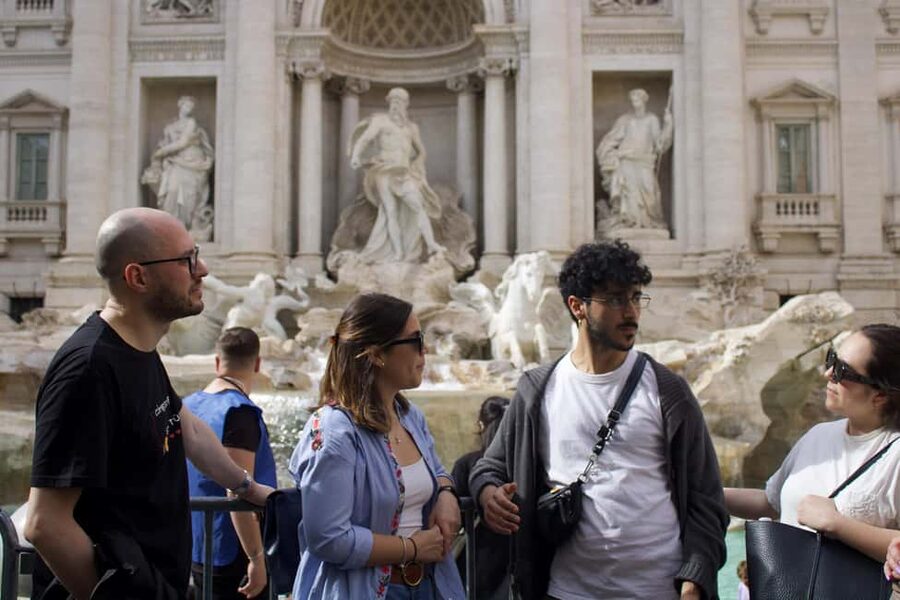
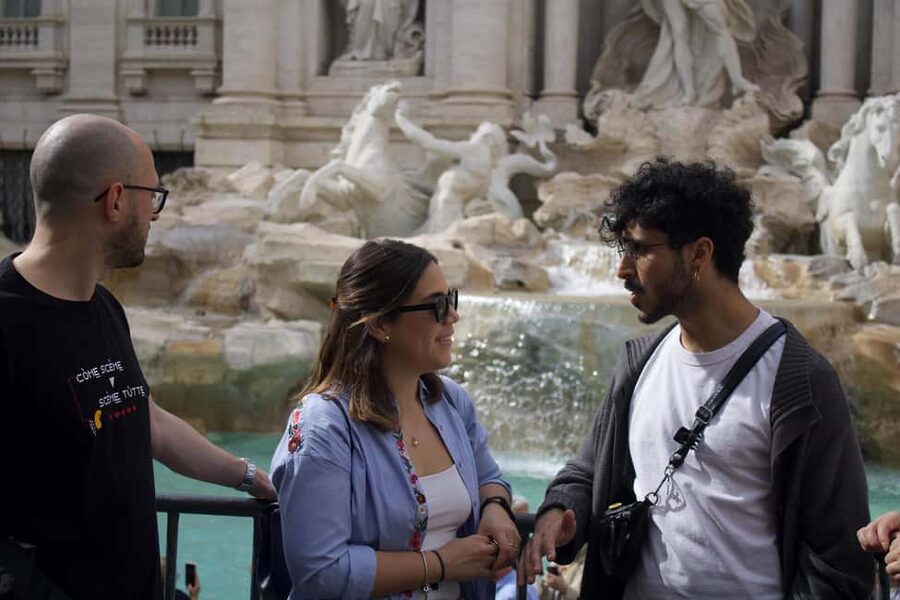
Then comes Trevi Fountain, with about 30 minutes on site. This is the part of Rome most people already have on their list, and it can also be the most chaotic. The upside of having a guide is that you are not just guessing where to stand or when to look up.
You do get a guided moment here, but you also get room to experience the space. Trevi is not only a photo. It is a whole scene where architecture, crowds, and city myths collide. When the guide frames the fountain in its larger Roman story, it stops feeling like a generic tourist stop and starts feeling like part of Rome’s ongoing self-image.
One consideration: Trevi is extremely popular. Even with a guided flow, expect crowds. The practical win is that you will leave with a better sense of where to go next, and that matters more than squeezing every perfect shot.
You can also read our reviews of more city tours in Rome


Galleria Sciarra: the quieter palate cleanser between the landmarks
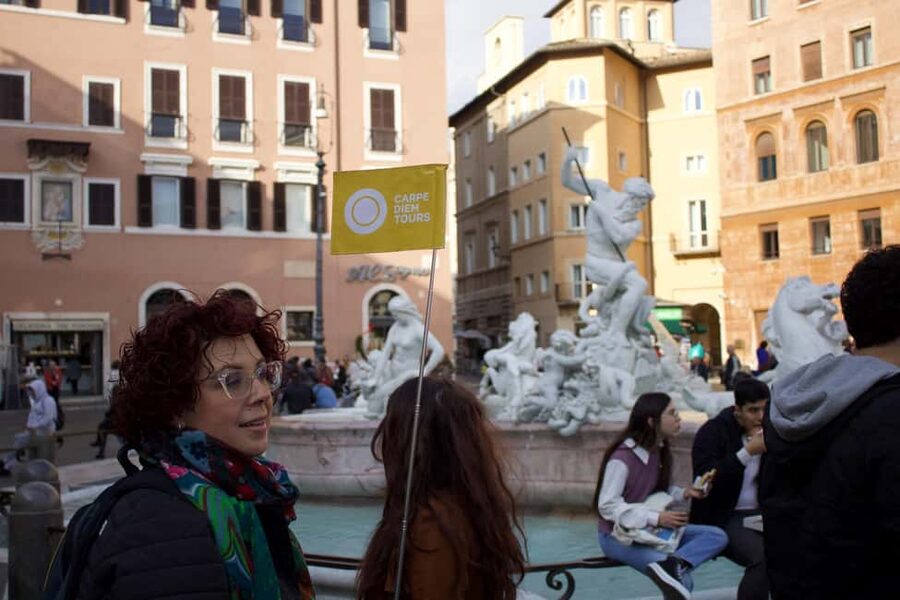
After Trevi, the route moves to Galleria Sciarra, with about 20 minutes guided. This is the kind of stop that changes how you remember the day. A covered passage like this feels different from the open piazzas and monumental outdoor facades.
Why it is worth your attention: it gives your eyes a break and gives you a new angle on Rome. Instead of only looking outward at empire-era statements, you notice everyday design details and the city’s habit of stitching different spaces together. This is where the tour’s promise of hidden gems becomes real.
If you like architecture in motion, watch how people move through the passage and how daylight works along the corridors. Even in a short time, you will pick up enough to spot similar spaces later on your own.
Church of Sant’Ignazio di Loyola: baroque drama, explained simply
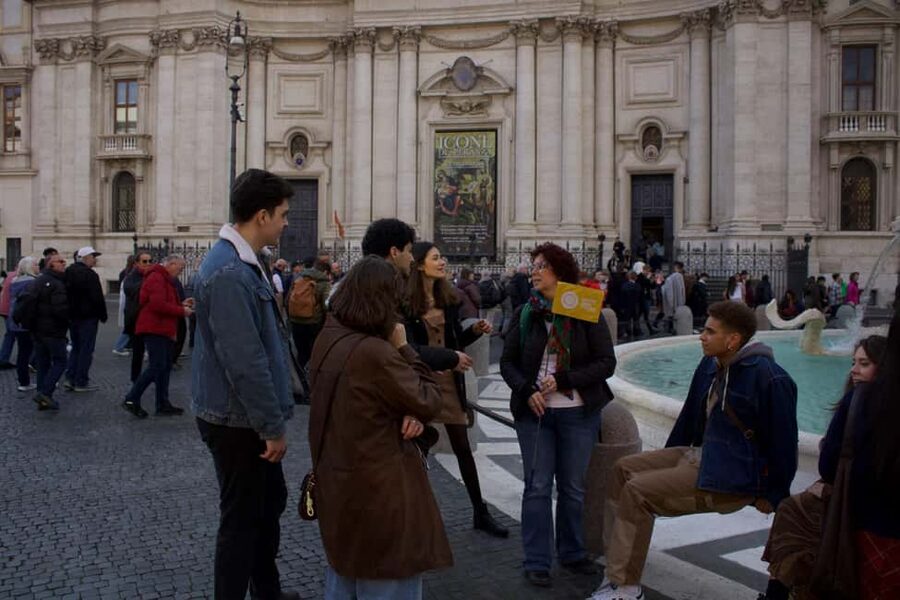
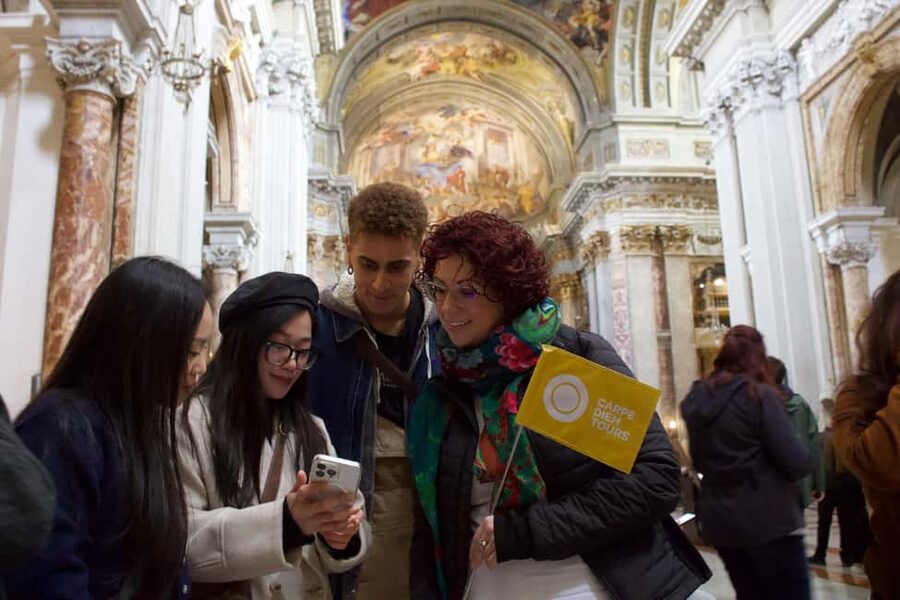
Next is the Church of Sant’Ignazio di Loyola, with about 20 minutes guided. This stop is a strong example of how Rome can be both spectacular and practical. Churches in Rome often overwhelm people because they are so full of details.
A good guide helps you avoid the common problem of standing there, staring, and learning nothing. With a focused talk, you get enough background to understand what you are looking for, and you can choose what to pay attention to instead of trying to absorb everything at once.
Practical tip for this stop: slow down your pace just a bit. You will get more out of it if you take even one moment to look at specific elements the guide points out, then circle your attention back to the overall space.
Pantheon: a pass by, but still worth planning your own return
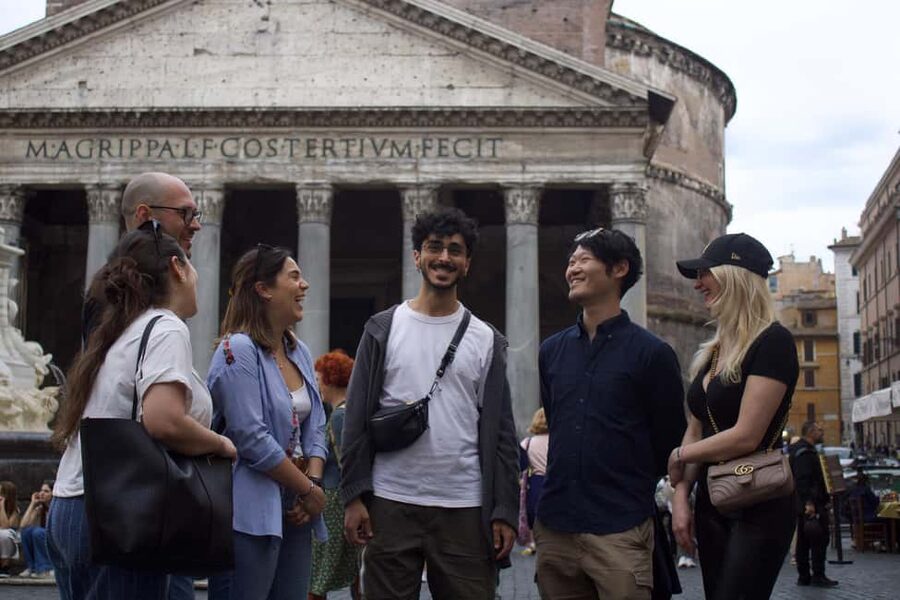
The tour includes a pass by the Pantheon, around 20 minutes total for this segment. This is one of those Rome moves that is both efficient and a little tricky: you are not doing a full guided deep visit, but you are still getting a meaningful touchpoint.
Why it works anyway: the Pantheon is one of the best reference points in the city. Seeing it during your guided route helps you connect other monuments to a broader timeline of Roman influence and later styles. Even as a pass-by, it can help your mental map click.
If you want the Pantheon as a full experience, you will probably want to schedule a separate visit later when you can linger longer. Use this tour as the primer, then come back with your new context.
Ending near Piazza Navona (and sometimes closer to the Colosseum)
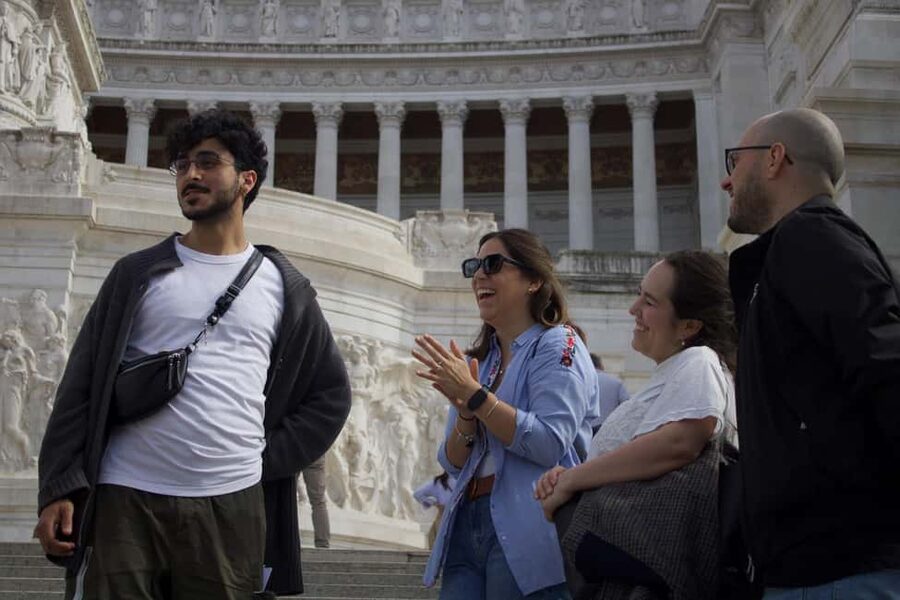
The tour ends at a set of drop-off locations, commonly Piazza Navona, with an option that ends near Piazza Navona again, and another option ending near the Colosseum. You can think of this as the tour choosing your next step for you: food, walking paths, and classic sightseeing are all nearby.
Piazza Navona is a smart finish point because it is one of the best places in central Rome to continue the day on your own. You also get the guide’s recommendations right as you wrap up, which is handy if you want to avoid hunting for a decent meal after a long walk.
Here is the practical advantage: by the time you reach your finish, you are not just tired, you are oriented. That makes it easier to pick a direction for the rest of your trip, whether that means a relaxed sit-down meal near the square or heading toward bigger icons like the Colosseum.
What you get from the guide, beyond the stops
This experience includes a local guide, hidden gems, Roman history, scenic spots, and recommendations. That is a lot, but the real value is how the guide connects the dots between places.
In the best versions of this tour, the guide’s storytelling turns the walk into an easy sequence you can remember. Names that stand out in the past include Domenica, Dan, Alina, Romani, Dinara, and Vlad, and a common thread is clear communication plus friendly ways to handle questions. If you care about history but do not want a lecture, this approach works well.
Also pay attention to the small “how to see Rome” advice. One of the tour’s recurring strengths is directing you to popular areas from smarter angles, so you can enjoy the view without always being shoulder-to-shoulder.
One detail that can improve the experience: some groups may use small audio headsets so you can hear the guide clearly while walking. If that is offered in your session, it is a big quality-of-life upgrade.
Is the price worth it for a Rome walking tour?
At $28 per person for a 2 to 2.5 hour guided walk, this is priced for real value. The key is what you get for the money: a guide, multiple major sights, and the kind of historical context that helps you get more from each place after the tour.
Compare it to paying for a half-day of aimless wandering. You can absolutely do that in Rome, but you will likely spend your time figuring out what matters and where to go next. This tour already solves that problem, and it does it with enough variety that you come away with a shortlist of what to revisit later.
For best value, book it early in your trip. Then you can use the tour’s recommendations to plan better. If you only do it on your last day, you will still learn a lot, but you lose some of the planning advantage.
Who this tour suits best, and who should pick something else
This tour is ideal if you want an organized, first-timer-friendly route through central Rome that still leaves room to notice smaller places. If you like monuments but also enjoy street-level surprises, you will probably feel like the time flew by.
You might choose a different option if you want long indoor museum time, guided entry tickets, or slow pacing with lots of free time between stops. This walk is built for motion and context, not for lingering inside every site for extended periods.
Families often do well with this kind of structured walking tour, as long as everyone can handle 2 to 2.5 hours on foot. If you have mobility constraints, check the day’s pace and ask about what is possible during your session.
Final call: should you book this Rome City Walking Tour?
Book it if you want a smart intro to central Rome with real context at the big sights and a few places you might otherwise miss. The payoff is not only seeing Trevi Fountain and getting near the Pantheon, it is learning how the city “reads” as you walk from piazza to monument to church.
Skip it or swap it for another format if you need a fully relaxed day, or if you hate crowds around top attractions like Trevi. If your goal is the best first route and practical Rome tips at the end, this one earns its place.
FAQ
What is the duration of the Rome city walking tour?
The tour runs for about 2 to 2.5 hours. Starting times can vary, so check availability for the exact slot you want.
How much does the tour cost?
The price is $28 per person.
What languages are available for the guide?
The live tour guide is available in English and Spanish.
Where does the tour start?
The meeting point can vary based on the option you book. It’s either Piazza d’Aracoeli or Piazza di Pasquino.
Where does the tour end?
The activity ends at the selected drop-off location, with options that include Piazza Navona (with two similar Piazza Navona drop-off options) and Colosseum.
Is food included in the tour price?
No. The tour does not include food or drinks, though the guide will share recommendations.
Do I need to bring anything?
Wear comfortable shoes and comfortable clothes, since it is a walking tour.
More Walking Tours in Rome



More Tours in Rome


More Tour Reviews in Rome
Not for you? Here's more nearby things to do in Rome we have reviewed







Walking Tours, compared.
 ★ 4.9Trastevere & Campo de Fiori Street Food Walking TourFrom $512,768 reviews
 ★ 4.9Paranormal Night Walking Tour & Secret BackstreetsFrom $341,921 reviews
 ★ 4.4Guided City Center Evening Sightseeing Walking TourFrom $46953 reviews
 ★ 4.5Best of Rome Walking Tour including Trevi FountainFrom $4923 reviews
 ★ 4.8Under the Moonlight Evening Walking TourFrom $28852 reviews
 ★ 4.9Forbidden History Walking Tour & Pub Crawl with DrinksFrom $61688 reviews
 ★ 5.0Guided Small Group Walking Tour of City HighlightsFrom $30682 reviews
 ★ 4.5Rome Walking Tour with Piazza Navona, Trevi Fountain and PantheonFrom $35676 reviews
Browse the lists this tour appears in