
Reviewed · WALKING TOURS
Rome: City Highlights Walking Tour
Short walk, big Rome pay-off. This Rome highlights walking tour strings together the classics and a few meaningful side streets, so you get context while you move. I especially like the way you hit both the Pantheon and the Trevi Fountain without wasting time hunting around. I also like the added stop at the Jewish Ghetto, which gives you a different angle on the city, not just postcards. One consideration: it is a lot of walking, and the tour stays outside, so you are not going in for interior visits.
Meet-up is simple, and the flow is efficient. You start at Trajan’s Market, then work through major squares and monuments, finishing where you want to end, at Trevi. Still, if you want to enter the big sights, you will need to plan other tickets on your own, because this tour keeps things on the street.
Key points before you go
- Outside-only highlights: you see the monuments up close without entering buildings
- Efficient route in 2.5 hours: a tight set of major stops, plus one lesser-known area
- Headphones included if needed: helps a lot in busy squares
- Trajan’s Market opener: you start with real Roman muscle and engineering
- Jewish Ghetto context: a quieter, heavier stop that matters
- English live guide: you can ask questions and get story behind each turn
Why this Rome city highlights walk is worth your time
Rome has a way of making first-time visitors do the same loop, photo then shuffle then repeat. This tour keeps you out of that loop by doing two smart things. First, it starts with Trajan’s Market, which anchors you in how Rome worked when it was a working capital, not just a museum. Second, it ends at Trevi Fountain, so your final stop matches the classic dream image, then you can keep exploring on your own if you still have energy.
The biggest win is storytelling on the move. A good guide turns stone and statues into “oh, that’s why it’s here.” That matters most at places where you might otherwise just look up, snap a picture, and move on.
You can also read our reviews of more walking tours in Rome



Where you meet and how the tour route keeps you moving
You meet at Colonna Traiana n 84. The guide holds a sign or flag with the City Walkers logo, so you are not playing guessing games for long. There is no hotel pickup or drop-off, which is fine if you are comfortable making your own way to central Rome.
From the start, the route is designed for walking between landmarks you actually want to see. Trajan’s Market to Piazza Venezia is a strong opening, because it puts you in ancient Rome quickly, then transitions you into one of the city’s most famous modern showpieces. After that, you cut through Rome’s lived-in core, including the Jewish Ghetto and Campo de Fiori, before you hit Piazza Navona, the Pantheon zone, and finally Trevi.
Trajan’s Market: the strong opening act you will remember
The tour begins at Trajan’s Market, an ancient Roman market built in the 2nd century AD. Starting here is not a random warm-up. It sets the tone: Roman Rome was built with systems, not just monuments.
What I like about this opening is that it gives you a baseline for later stops. When you see Roman architecture later on, you start noticing the practical choices: how space was used, how structures were designed to last, and how Rome could be both public and functional.
Tip for your senses: take a moment to look around before you start rushing ahead. The market area makes you slow down in a good way, then the pace picks up as you move toward squares.
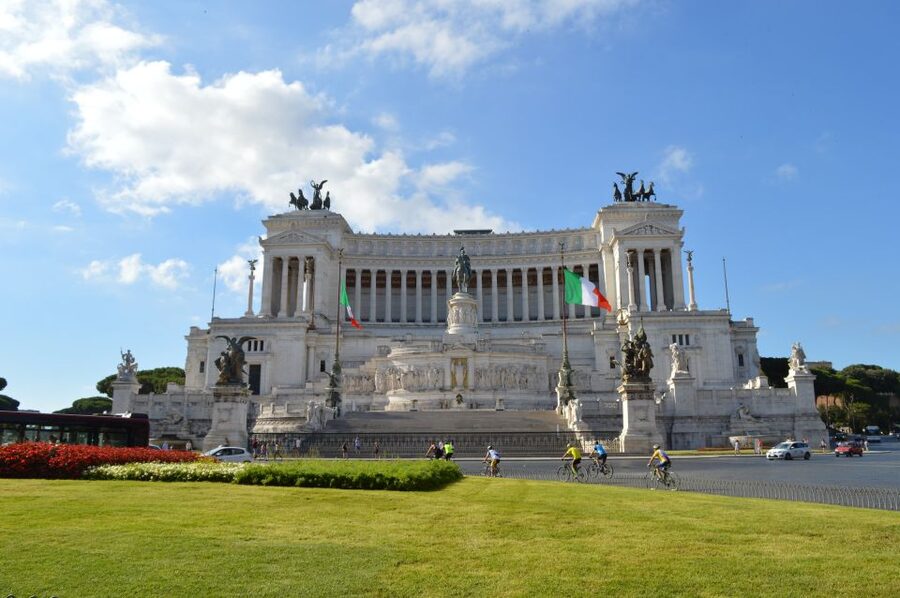
Piazza Venezia and the Monument to Victor Emmanuel II: Rome’s layered skyline
Next comes Piazza Venezia, one of Rome’s most famous squares, and home to the Vittorio Emanuele monument (the Monument to Victor Emmanuel II). This is where Rome stops being just ancient and starts showing you the later political and cultural layers.
A good moment here is learning to read the contrast. You get a powerful sense that Rome is not stuck in one era. Even when you are standing in front of an imposing monument, the city around it is still shaped by older patterns.
One practical note: this square can get crowded. Use your headphones if you have them available, and keep an eye on your guide so you do not drift while people surge past.
The Jewish Ghetto and why this stop is more than a photo stop
Then you head to the Jewish Ghetto, a small area dating back to the 16th century. This is the tour stop that adds depth. It is not just another neighborhood. It is a reminder that Rome’s story includes community life, restrictions, resilience, and cultural change over centuries.
What makes this stop valuable is how it changes your mental pace. After the bigger sightseeing energy of Piazza Venezia, the ghetto area tends to feel more like you are walking through real urban history, not just viewing it.
Also, a small caution: if you prefer strictly light and funny sightseeing, this segment may feel heavier than the rest. I think it is worth it, but your mood matters.
You can also read our reviews of more city tours in Rome




Campo de Fiori: market life in the heart of the city
From there you walk to Campo de Fiori, a square in central Rome known for its street market. Even if you are not there specifically for shopping, it is a lively place to watch how locals move through the day.
This stop works well inside a highlights tour because it breaks the “monument only” pattern. You get a sense of Rome as a living city, not a curated route.
Just keep your expectations practical. You will not have time to browse every stall like you would on a dedicated market outing. Think of it as a short reset, a taste of daily Rome.
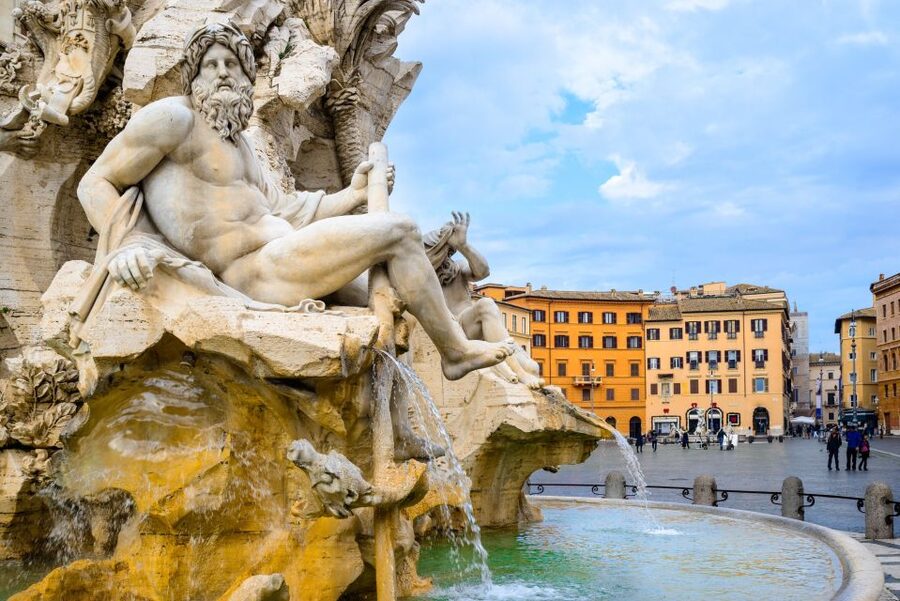
Piazza Navona: Baroque fountains and sculpture in a street-level setting
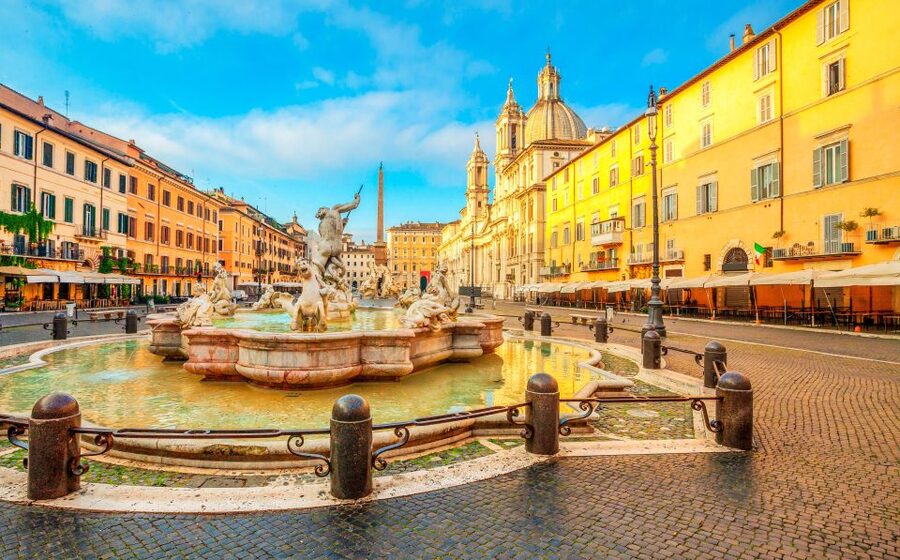
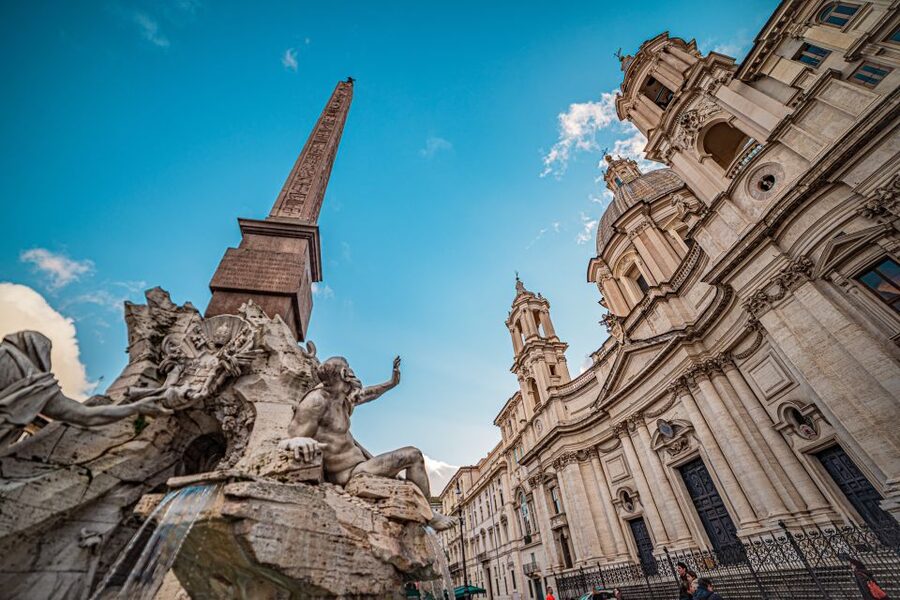
Next up is Piazza Navona, known for Baroque-style fountains and sculptures. This square is a classic for a reason. Even from the outside, you feel how designed the space is, like the whole square is one big stage.
I like that this stop gives you an easy visual win before the tour moves into the Roman giants. After Navona, the vibe shifts from Baroque drama to Roman construction, and your brain is ready for it.
If you are trying to time photos, you will likely want to stand back for a minute and watch how people flow. The fountain views can look messy if you rush in and try to shoot immediately.
The Pantheon and Hadrian’s Temple: Roman design that still works
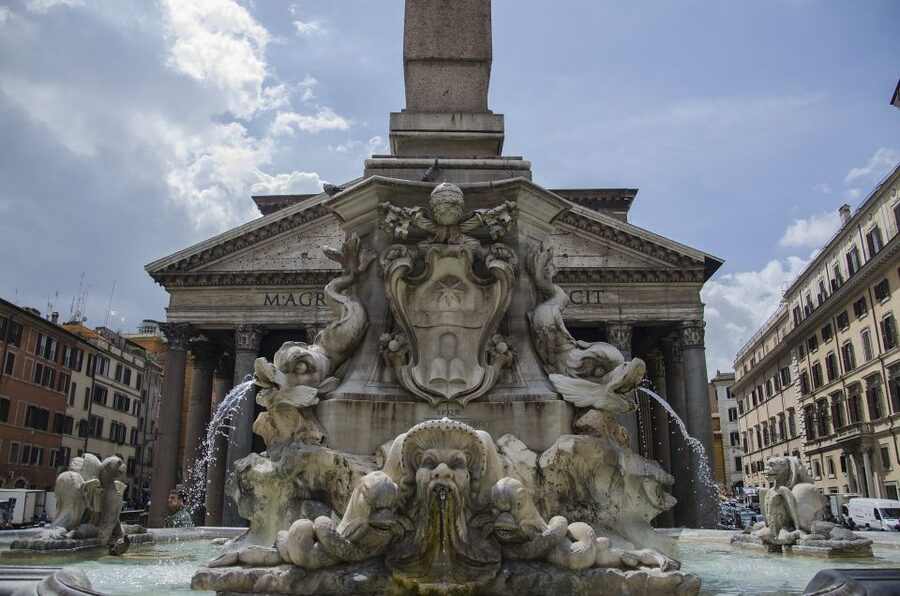
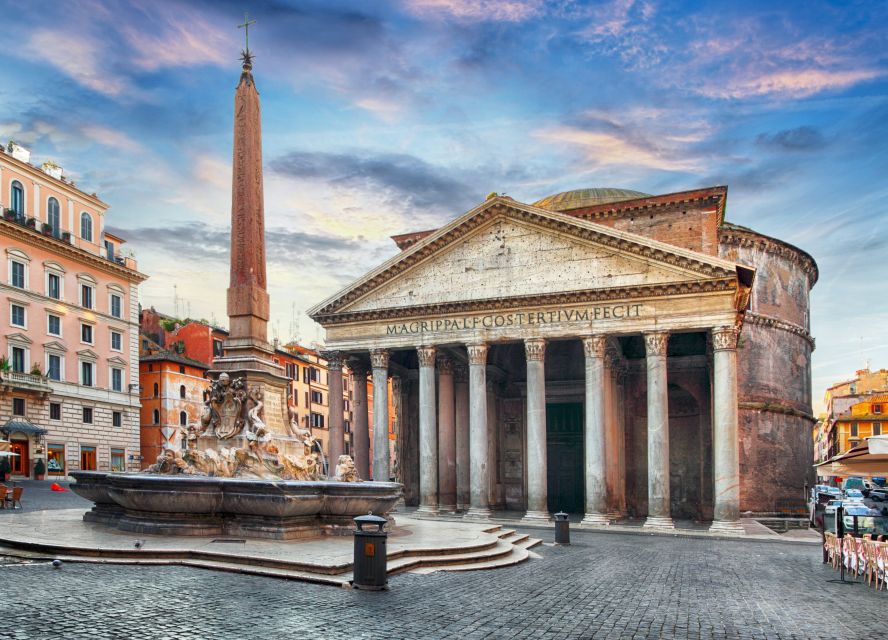
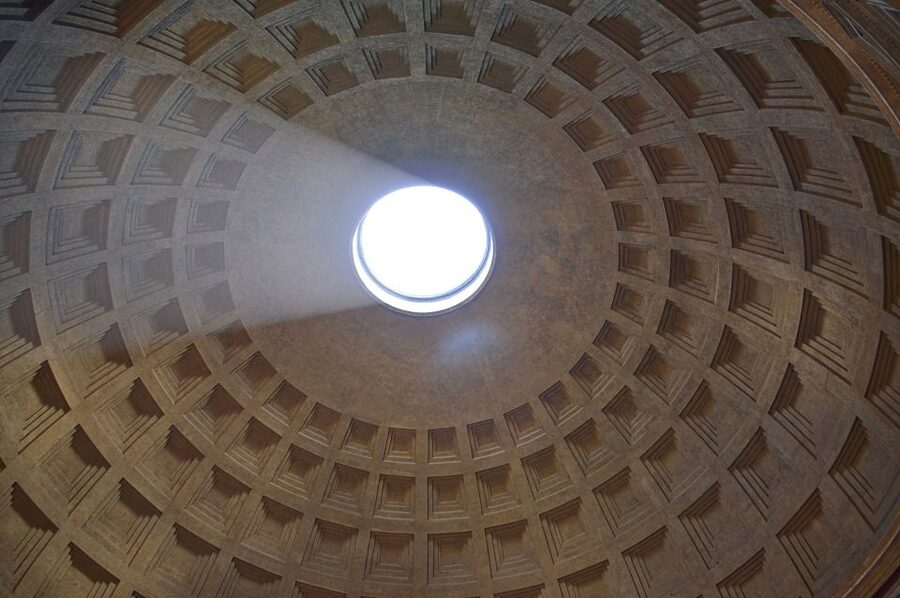
The itinerary then moves to the Pantheon, which is described as one of the best preserved ancient Roman monuments. This is the kind of place where even an outside-only view gives you a strong impression, because the building is still doing what it did centuries ago, making a statement through proportions and structure.
After the Pantheon, you visit Hadrian’s Temple. Again, the key is how the tour keeps you outside. You are not spending your time in ticket lines or waiting for group entry windows. Instead, you learn what you are looking at while staying in motion.
The practical advantage here is pacing. A 2.5-hour tour cannot be an all-day museum plan. This one gives you the essentials without the friction. If you later want interior access at the Pantheon or other nearby sites, you will have a better sense of what matters once you see the buildings from the street.
Trevi Fountain finale: end with the big “I got it” moment
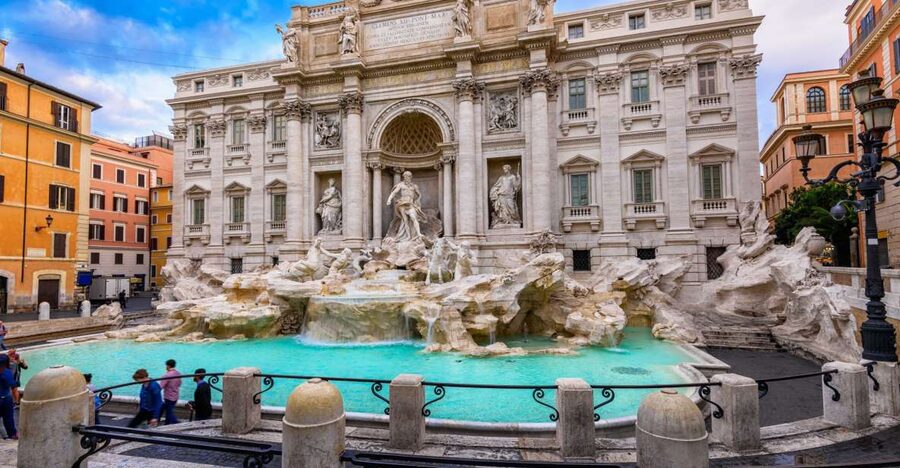
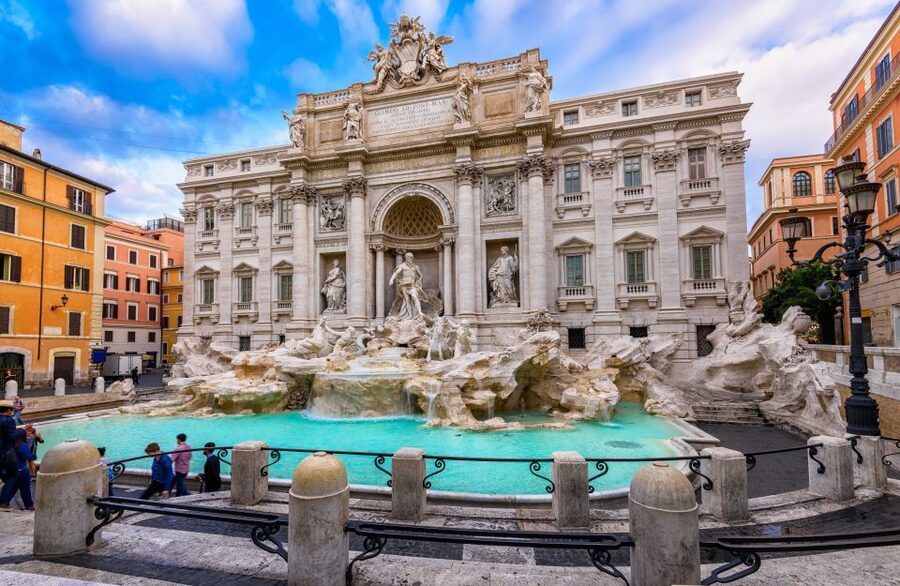
The tour finishes at the Trevi Fountain, described as an iconic Baroque masterpiece and one of the most famous fountains in the world. Ending here is smart because it lets you end on maximum recognizability. After the walk, you are right where you might want to linger longer, grab a gelato, or keep exploring nearby streets.
Even if you have seen Trevi in photos a hundred times, it hits differently in person. The moment is real, the scale is bigger than your phone screen suggests, and the Baroque energy feels loud even when you are just standing there.
My advice: plan for a few minutes of just standing and looking. If you treat it only as a checklist stop, you might miss what makes it memorable.
What the guide does with the 2.5 hours
This tour rises or falls on the guide, and the good news is you are in the hands of an English live guide. From names like Fabio, Brian, and Monica, you can see a pattern: the guides are friendly, answer questions, and use humor to keep the walk from turning into a lecture.
One thing I really value is how the guide can connect the dots. You hear the history behind each monument as you walk, so you build a mental map. That is why you start at Trajan’s Market and not at Trevi, and why the Jewish Ghetto stop lands instead of feeling pasted on.
You are also not stuck staring at your guide the whole time. The headphones help if you need them, and the route gives you brief moments to reset and look around between explanations.
Pace, comfort, and what to bring for this kind of walk
This is a 2.5-hour walking tour, and it takes place rain or shine. That means your comfort setup matters.
Bring water and sunscreen, and wear comfortable clothes that match the weather. The tour also notes that it includes monuments explained from the outside, with no entry into any buildings. So you should expect outdoor walking, outdoor viewing, and a steady but manageable pace.
One more practical consideration: it is not suitable for people with mobility impairments. If that applies to you, you will want a different format, maybe a driving route with stops, or a tour that includes step-free access.
Price and value: why $41 makes sense for a highlights plan
At $41 per person for about 2.5 hours, the value comes from three practical parts.
First, you get a guide, not just an audio route. Second, you get the route planned so you see multiple big-name sites in one outing, including a major Roman monument and the Jewish Ghetto segment. Third, you get headphones if needed, which is a small detail but often the difference between hearing the guide clearly or not.
Is this a deal if you already know Rome well? Maybe not. But for most first-time visitors, it is a smart way to get oriented fast, then use the rest of your time for tickets, meals, and deeper exploration.
Who this tour is best for
This works especially well if you:
- Want an efficient way to hit major sights like the Pantheon and Trevi without planning a full day
- Prefer learning while walking, rather than reading a guidebook all afternoon
- Appreciate a route that includes both Roman monuments and the Jewish Ghetto
It may not be the best fit if you:
- Want interior access to monuments during this outing
- Need step-free mobility support
- Plan to spend long periods inside museums or churches on the tour day
Should you book this Rome City Highlights Walking Tour?
If you want a fast, story-rich overview of central Rome, this is a strong choice. I like that it mixes the big names with at least one meaningful neighborhood stop, and I like the practical outside-only structure that keeps the schedule moving.
Book it if you are okay with walking and you want context more than interior tickets. Skip it, or pair it carefully, if your main goal is museum-grade access or if you need mobility options not included in this format.
If you do book, I suggest you keep your post-tour plans flexible. Ending at Trevi is convenient, but the real win is what you learned on the way, so you can walk back into the city with sharper eyes.
FAQ
How long is the Rome City Highlights Walking Tour?
The tour lasts about 2.5 hours.
Where do I meet the guide?
Meet at Colonna Traiana n 84. The guide will be holding a sign or flag with the City Walkers logo.
What’s included in the price?
The tour includes a guide and headphones if needed.
Do we enter the monuments during the tour?
No. The tour explains monuments from the outside, and there is no entry into any of the buildings.
Does the tour run in bad weather?
Yes, it takes place rain or shine.
Is this tour suitable for people with mobility impairments?
No, it is not suitable for people with mobility impairments.
More Walking Tours in Rome



More Tours in Rome




More Tour Reviews in Rome
Not for you? Here's more nearby things to do in Rome we have reviewed









Walking Tours, compared.
 ★ 4.9Trastevere & Campo de Fiori Street Food Walking TourFrom $512,768 reviews
 ★ 4.9Paranormal Night Walking Tour & Secret BackstreetsFrom $341,921 reviews
 ★ 4.4Guided City Center Evening Sightseeing Walking TourFrom $46953 reviews
 ★ 4.5Best of Rome Walking Tour including Trevi FountainFrom $4923 reviews
 ★ 4.8Under the Moonlight Evening Walking TourFrom $28852 reviews
 ★ 4.9Forbidden History Walking Tour & Pub Crawl with DrinksFrom $61688 reviews
 ★ 5.0Guided Small Group Walking Tour of City HighlightsFrom $30682 reviews
 ★ 4.5Rome Walking Tour with Piazza Navona, Trevi Fountain and PantheonFrom $35676 reviews
Browse the lists this tour appears in