
Roman chariot racing starts in your hands. This Circus Maximus VR experience turns the birthplace of Roman spectacle into an interactive game, with a guided VR walk through reconstructions of nearby monuments. I especially liked how the VR chariot races give you real control and momentum, and how the 3D re-creations make the setting feel specific, not generic.
One heads-up: the price does not include entry to the Circus Maximus Archaeological Site, so you are doing a VR-led history experience rather than a full archaeological visit.
You’ll meet staff at the intersection of via San Gregorio and via dei Cerchi, where you’ll spot a small black flag that reads Ancient and Recent. From there, you follow the story like a protagonist moving through Rome’s transformations, with an English and Italian VR assistant and audio guide included.
Quick hits: what you get at Circus Maximus VR
- Interactive VR quadriga race with you as the star, competing for the Emperor’s favor
- Reconstructed 3D Rome visuals including key landmarks like the Arch of Titus, the multi-story monumental fountain, and the Settizodio
- Two-part VR format: first a VR walk, then a VR look inside the Circus Maximus arena
- Choose a faction and race alongside other participants in a structured competition
- Small-group feel with a suitability cap of up to 25 participants
- Language support with VR assistant and integrated audio guide in English and Italian
Getting there: the via San Gregorio and via dei Cerchi start
The experience begins right where most people can actually get to it with minimal fuss, at the intersection of via San Gregorio and via dei Cerchi. When you arrive, staff welcome you with a small black flag that says Ancient and Recent, which makes it easy to find the right group without wandering.
I like that the activity also ends back at the same meeting point. That simple loop matters in Rome, where you can lose time fast if an experience drops you somewhere you still have to figure out.
You will want comfortable shoes. Even though the headline is VR, you are still walking as the story leads you through the spaces tied to the Circus Maximus.
You can also read our reviews of more tours and experiences in Rome.



The VR walk through ancient Rome’s big-name landmarks
The first phase is the “story walk,” where you follow the history of the Circus Maximus as the main protagonist. You walk live through the area while the VR adds Roman scenes around you, with soldiers and ancient Romans appearing as part of the reconstructed world.
What makes this section work is the way it connects the Circus Maximus to what you can name. You are not just seeing random ruins. The VR visuals focus on landmarks such as the Arch of Titus, a majestic multi-story monumental fountain, and the Settizodio as you move through the narrative.
You also get a faithful sense of how the area changed over time. The VR is described as a reconstructed 3D animation of Roman buildings and monuments, and that detail matters because you are seeing transformations, not a single frozen moment.
A practical note: because you are wearing a VR headset, you’re trading some real-sight flexibility for “on purpose” visuals. If you prefer to stop, look up, and wander at your own pace, you might feel a little constrained. But if you like following a guided story, it’s a strong fit.
The short break and why it helps
After the VR walk phase, you get a short break. Then staff escort you to the starting point for the chariot race.
That break is not just pacing, it’s also sanity. VR can be tiring, especially if you are wearing a headset and moving your body while tracking a storyline. A reset like this keeps the energy up for the second phase, when you need focus for racing.
It also helps with group management. With a size that can go up to 25 participants, you want time to get everyone in sync before the competition part starts.
Inside the Circus Maximus, built for scale
Now comes the part that really makes the Circus Maximus feel enormous. You put on the VR headset again, this time to see the internal structure of the arena.
You will be shown the Circus Maximus as a space designed for massive crowds, with an accommodation figure of up to 385,000 spectators. Even if you’ve heard numbers about Roman stadiums before, it lands differently when you are looking at the shape of the interior and understanding the scale in an interactive way.
This is where the experience stops feeling like a standard “history video” and starts feeling like a guided walkthrough. You are not just being told it was huge. You get to look at what huge means inside the space.
One thing to keep in mind: this VR view gives you internal structure, but it is still VR. This is not the same as visiting the Circus Maximus Archaeological Site itself, which is why the admission is not included.
The chariot race setup: choose your faction
At the race starting point, staff guide you through the next step, and then you compete. The game has you choose your favorite faction, and the goal is to earn the Emperor’s favor.
That faction choice matters because it gives the game a light “belonging” layer. You’re not only racing against a screen. You’re joining a side within the story, which is part of why the competition feels more structured and less random.
This is also where the experience becomes social in a good way. You are racing as part of the group, so the energy rises. In the reviews, the assistant Manuela is singled out for keeping participants entertained during the chariot race, which tells me the staff role here is active, not hands-off.






Racing the quadrigas: what makes it fun
The core highlight is the interactive VR chariot race at Circus Maximus. In plain terms, you get the feeling of being in the driver’s seat, joining the other participants in the competition.
If you like games that mix movement and timing, this is the easiest part to recommend. You are not passively watching history. You are engaging with it through action.
And because this is set at the Circus Maximus, the visuals and story theme stay consistent. The VR isn’t generic “Roman ruins.” It’s built around the idea of chariot spectacle in a very specific place tied to Rome’s origin and expansion.
There’s also a nice learning payoff. One review described it as helping them learn about the birth of the city and how important the Circus Maximus was. You don’t get a lecture, but the narrative framing plus the named landmarks makes the information stick.
Possible drawback: VR racing can feel intense if you are sensitive to motion or you don’t like wearing headsets. The experience is only 1.5 hours, but it still packs two VR phases into that window. If you know VR motion triggers discomfort for you, consider that before booking.
Price and value: $34 for 1.5 hours of guided VR
At $34 per person for about 1.5 hours, the value depends on what you want from Rome.
If your priority is high-mileage walking between classic sights, this might feel pricey for the time. But if you want something different from the usual museum routine, it makes sense. You are getting:
- A guided VR experience with an English or Italian VR assistant
- An integrated audio guide in Italian and English
- Two VR phases, including the internal view of the Circus Maximus and the chariot race competition
- Insurance coverage noted as RC insurance
Also, the experience has a 4.6 rating across 21 reviews, which usually means people are not just “vibing” with a game, they are appreciating the way the story and staff support connect.
In short, you’re paying for a controlled, structured experience that mixes fun with place-based history. It’s best viewed as a VR add-on that expands your understanding of the Circus Maximus area, not as a replacement for an archaeological visit.
What to bring, what to skip, and the practical rules
Plan like this is a VR attraction with a history theme, not a casual stroll.
Bring:
- Passport or ID card (required)
- Comfortable shoes (strongly recommended)
Not allowed:
- Pets
- Luggage or large bags
- Unaccompanied minors
Children:
- Children under 18 must be accompanied by an adult and carry a valid ID document.
This matters because it affects your packing choices. If you’re traveling light, it’s easy. If you have big bags from shopping or day tours, you’ll want another plan before you arrive.
Group size:
- The activity is suitable for up to 25 participants. That cap helps keep the experience organized, especially when you are switching between phases and putting on VR headsets.
Accessibility:
- The experience is marked as wheelchair accessible. If you use a wheelchair, you’ll still want comfortable logistics, but the provider states it can be done accessibly.
Languages, staff support, and the human touch
The experience includes a VR assistant in English and Italian, plus an integrated audio guide in Italian and English. There is also a live tour guide listed in English and Italian.
The staff role shows up in the reviews. One review praises Sara for being super friendly and informed. Another highlights Manuela’s ability to keep participants entertained during the chariot race. That combination tells me you’ll get more than just headset instructions. You’ll get real support and encouragement, which is especially important in a competitive VR game where timing and clarity make a difference.
If you don’t speak Italian, you’re not stuck. The content and support are available in English. If you speak both, you can follow along with audio guidance while listening to the assistant.
Should you book Circus Maximus Virtual Reality?
Book it if:
- You want a break from the usual “stand and read” Rome experience
- You like interactive games, especially competitive ones
- You want place-based history tied to recognizable landmarks like the Arch of Titus, the Settizodio, and that multi-story monumental fountain
- You’d enjoy a guided experience that fits into a manageable 1.5-hour window
Skip or think twice if:
- You specifically want access to the Circus Maximus Archaeological Site, because the VR experience does not include that entrance
- You are sensitive to VR headsets or motion and you prefer a fully free-form walking tour instead
- You are traveling with luggage or anything you might struggle to store, since large bags and luggage are not allowed
If you’re the type of person who likes Rome stories that move, this is a fun, organized way to bring the Circus Maximus era to life, one chariot race at a time.
FAQ
How long is the Rome Circus Maximus VR game?
It lasts about 1.5 hours. You’ll need to check availability to see starting times.
Where do I meet for the experience?
Meet at the intersection of via San Gregorio and via dei Cerchi. Staff will welcome you with a small black flag saying Ancient and Recent.
Where does the experience end?
It ends back at the same meeting point.
What is included in the price?
The experience includes a VR assistant in English and Italian, a VR headset, an integrated audio guide (Italian and English), and RC insurance.
Is entrance to the Circus Maximus Archaeological Site included?
No. Entrance to the Circus Maximus Archaeological Site is not included.
What languages are available?
You can get support in English and Italian, including the live assistant and the integrated audio guide.
Is it suitable for wheelchair users?
Yes, it is listed as wheelchair accessible.
What should I bring with me?
Bring your passport or ID card and wear comfortable shoes.
Are there any restrictions on bags or pets?
Pets are not allowed, and luggage or large bags are not allowed inside the attractions.
Is there a cancellation option?
Yes, free cancellation is offered up to 24 hours in advance for a full refund.
More Tour Reviews in Rome
Not for you? Here's more nearby things to do in Rome we have reviewed












Ancient Rome Tours, compared.
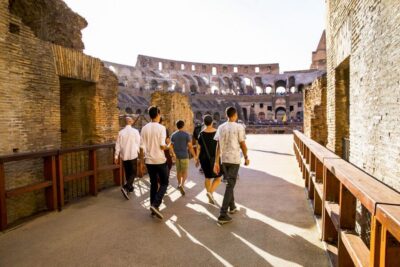 ★ 4.7Colosseum: Underground and Ancient Rome TourFrom $16012,691 reviews
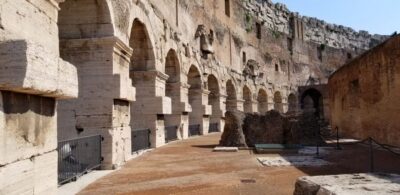 ★ 4.4Colosseum, Ancient Rome Tour or Self AudioGuided TourFrom $392,866 reviews
 ★ 4.9Appian Way, Catacombs, & Roman Aqueducts E-bike TourFrom $851,421 reviews
 ★ 4.9Appian Way E-bike Tour with Catacombs, Aqueducts & FoodFrom $961,210 reviews
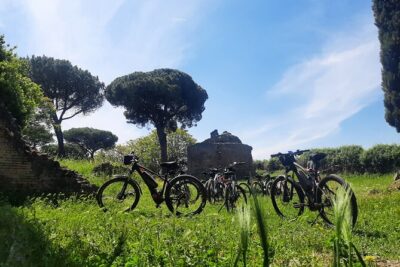 ★ 5.0Appian Way Aqueducts Bike Tour (Catacombs & Lunch Option)From $78975 reviews
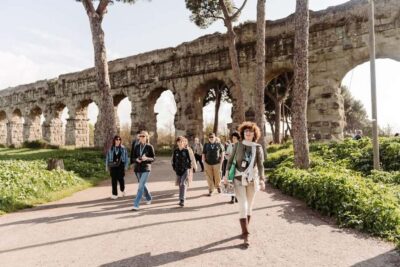 ★ 4.7Appian Way, Aqueducts, and Catacombs TourFrom $64942 reviews
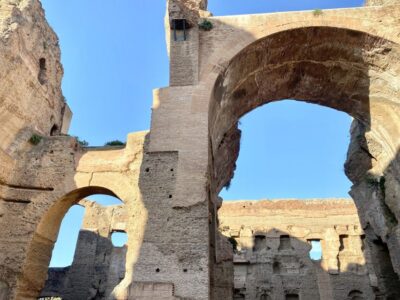 ★ 4.7Caracalla Baths & Circus Maximus — Private or SharedFrom $77835 reviews
 ★ 4.7Colosseum Arena Access and Ancient Rome Guided TourFrom $94774 reviews
Browse the lists this tour appears in