
Reviewed · WALKING TOURS
Rome: Caravaggio Guided Walking Tour
Caravaggio is waiting in Rome’s churches. What makes this tour work is the combo of your guide’s art know-how and the way you move through the exact neighborhoods Caravaggio worked in. I really liked Patricia for her passionate, story-driven explanations, and I loved seeing the paintings where they live, especially at Santa Maria del Popolo. One thing to plan for: there’s moderate walking and a dress code for churches, so skip shorts and sleeveless tops.
You start at Piazza del Popolo and cover three major worship stops, with headsets included so you can actually hear the commentary while you’re in the dark corners of side chapels. The tour runs about 2.5 hours, guided in English or Italian, and you also get audio guidance on top, which helps if you want to linger after key moments.
Key Things to Know Before You Go
- Three Caravaggio works in three churches in a tight route, so you do not feel like you are “chasing art” across the city.
- Piazza del Popolo to the Contarelli Chapel forms a clear arc, from start-point landmarks to the chapel that closes the story.
- Headsets are included, a small detail that makes the difference on a walking tour with lots of turning and echoing interiors.
- Your guide connects technique to daily life, including how Caravaggio worked and what you can notice in the paintings.
- Expect alleys and side streets, not just main avenues, with frequent chances to re-orient your bearings.
- Church rules matter, especially shoulders and knees covered, plus no short skirts or sleeveless tops.
Rome’s Caravaggio Tour, Where the Paintings Actually Belong
This is the kind of tour that works best when you want both art and atmosphere, without turning your day into museum sprinting. The route is built around where Caravaggio lived and worked, then pays off in the churches that display some of his most famous work. In practice, that means you are not just reading about paintings in a vacuum. You are looking at them with the surrounding context in mind, while your guide ties together what you see, how it was made, and what life looked like in that part of Rome.
The walking pace is described as moderate, but the group does move steadily between stops. You’ll want comfortable shoes because church interiors and narrow streets can make each “short transfer” feel longer than it sounds. If you are the type who likes to stop for photos, just do it quickly, then rejoin the group. Your headsets help, but they do not stop the tour from continuing.
You can also read our reviews of more walking tours in Rome
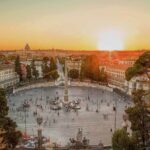
Starting at Piazza del Popolo: Getting Your Bearings Fast
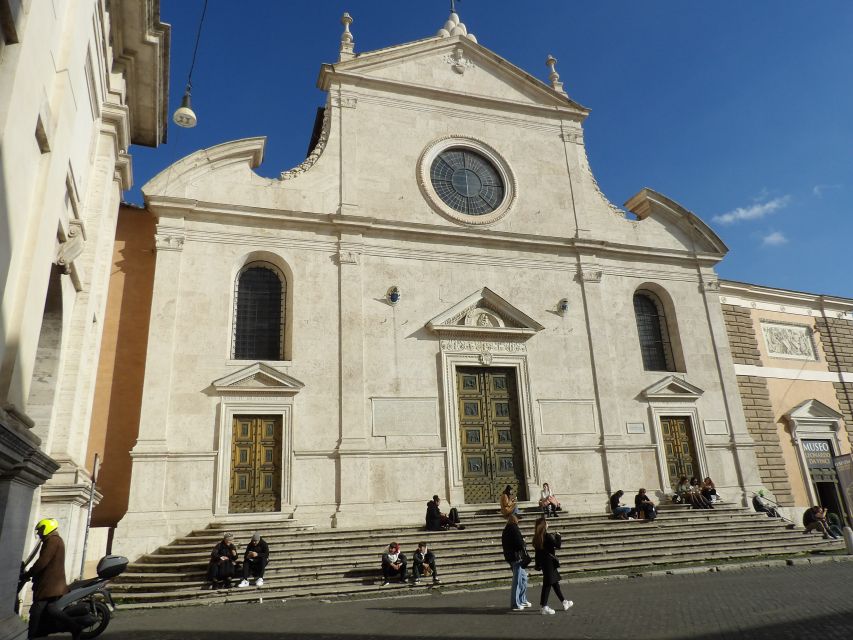
The tour begins at Piazza del Popolo, a smart choice because it helps you orient right away in the historic center. From there, you head toward Basilica Santa Maria del Popolo, with a guide who sets the tone early. You are essentially told what to look for, so when you step inside a chapel, you are not just staring at a big painting hoping it makes sense.
If you want a simple strategy, listen first, then look. Your guide’s comments are often about the way Caravaggio constructed the scene and how the details push the emotional effect. Even if you only catch part of the explanation in the first church, you’ll notice the pattern by the second stop.
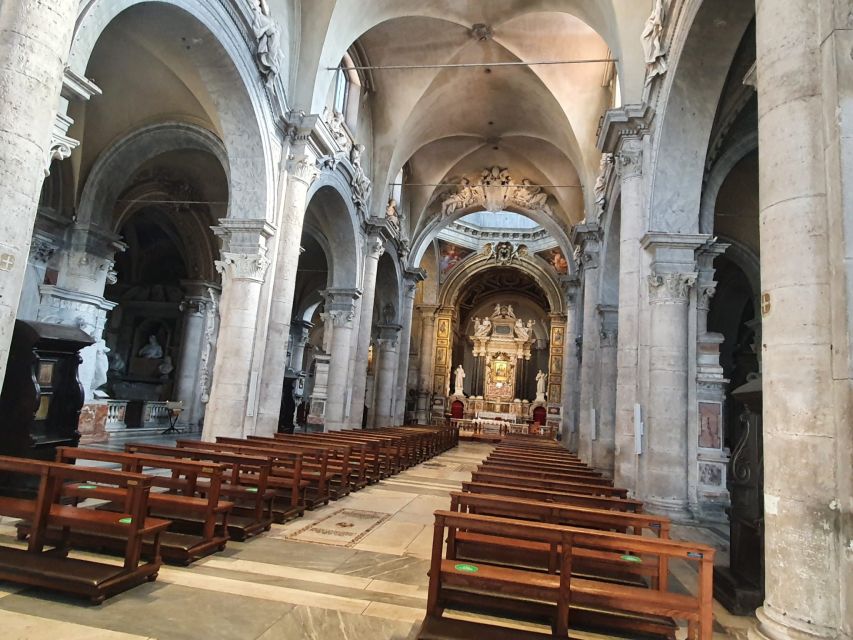
Basilica of Santa Maria del Popolo: Two Paintings, One Big Payoff
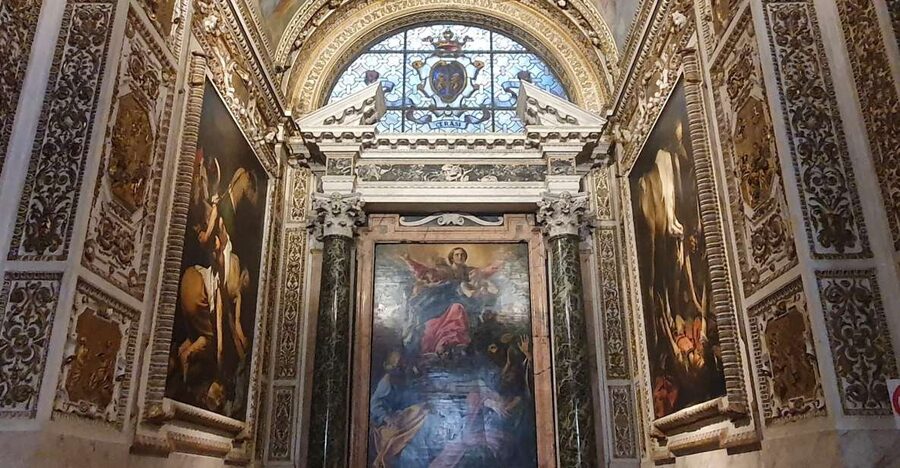
At Basilica of Santa Maria del Popolo, you see two of Caravaggio’s major works: The Crucifixion of St. Peter and The Conversion of St. Paul. This is a key moment in the tour because it gives you variety in subject and mood while still staying anchored to one location.
Why this stop is especially valuable is the pairing. The guide can compare how Caravaggio handles dramatic religious narratives and what stands out in the figures, setting, and overall impact. You get time to shift from one painting to the next, so you can start recognizing recurring traits in his approach rather than treating each artwork like a one-off.
Practical tip: church light can be dim, so give your eyes a minute to adjust. And if you are taking photos, do not block anyone. You will enjoy the art more if you keep your space minimal and focus on the details your guide highlights.
Passing Palazzo Madama and Giustiniani Palace: Caravaggio in the Real Street Scene
After the first basilica, the route includes passing Palazzo Madama and Giustiniani Palace, described as Caravaggio’s residences. This is where the tour shifts gears from “art gallery mode” to “Rome street mode.”
Even without a long, stop-and-stare segment, this part matters because you start to connect the paintings to the person who lived in these surroundings. The guide’s explanations can help you understand what it might have meant to work as an artist in that neighborhood, not just as a name in an art book. You are moving through the city as it still feels, with the buildings acting like signposts in a bigger story.
If you like walking tours that include personality, this is one of the sections that delivers. You are not stuck listening the whole time. You are seeing the kind of urban texture that makes the art feel less abstract.
Church St. Augustine: Madonna of the Pilgrims and a Different Tone
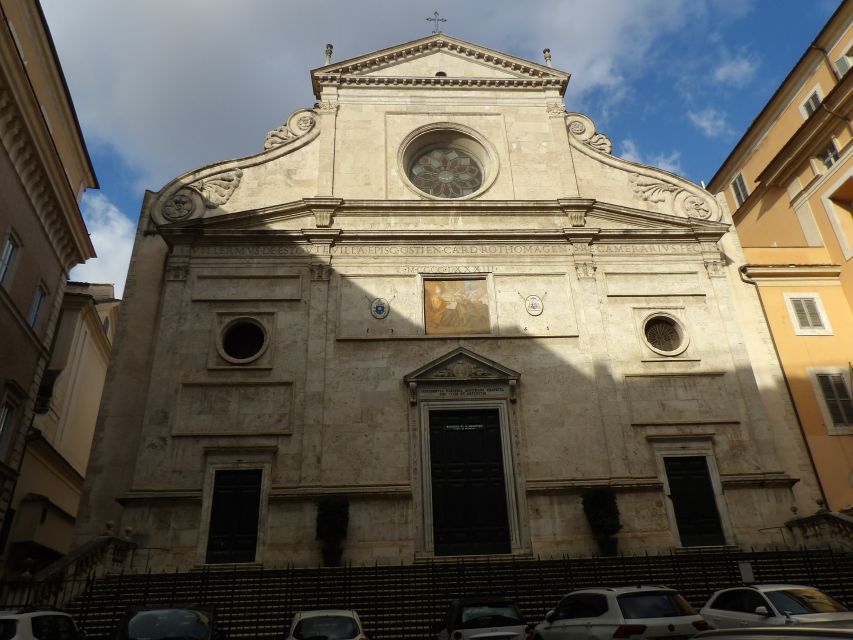
Next up is Church St. Augustine, where you see The Madonna of the Pilgrims. Compared with the earlier, more overtly narrative scenes, this painting can feel quieter, and that matters for pacing. Your guide can point out how Caravaggio’s technical skills support the emotional tone of the scene, even when the composition is more focused and intimate.
This stop is also useful because it teaches you how to look in a church setting. You are not just scanning for the biggest artwork. You are learning to notice framing, placement, and how the chapel space affects your view. By the time you leave, you’ll likely find yourself thinking about why an image sits where it sits, and how that shapes your reading of the work.
Dress-code reality check: this is a worship site. You’ll want your shoulders and knees covered. If you planned with this in mind, you avoid the awkward scramble right before entering.
You can also read our reviews of more guided tours in Rome





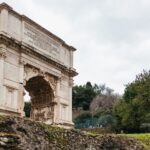
Contarelli Chapel in St. Louis of France: The Ending Work That Makes It Click
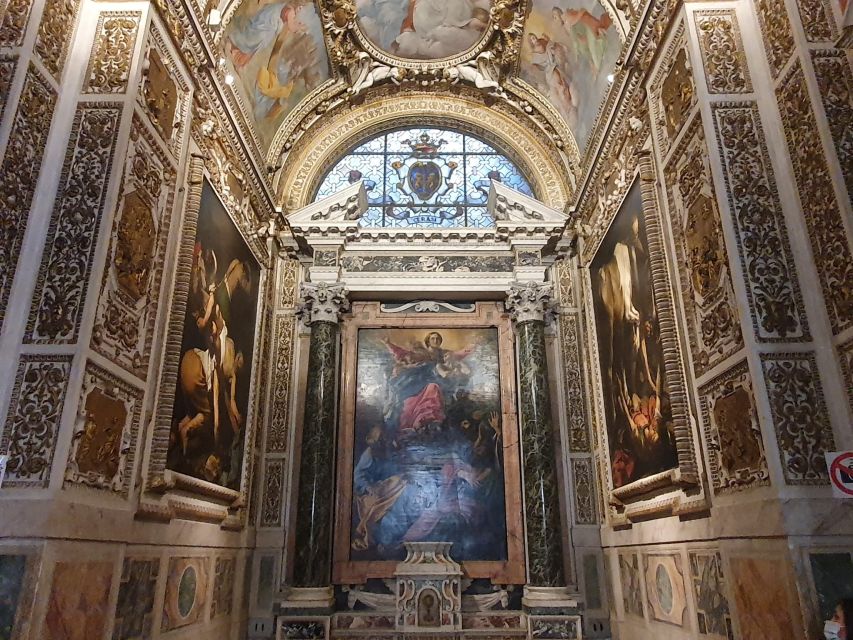
The final masterpiece is The Life of St. Matthew in the Contarelli Chapel at St. Louis of France. This is the tour’s dramatic close, because it puts a major narrative work right at the end, when your brain is warmed up and your eye is trained.
This ending also works because you have built momentum. You start with two paintings in one basilica, you link Caravaggio to real residences as you walk, and then you reach a church stop that shifts the tone. By the time you arrive at the Contarelli Chapel, you are ready to see how the guide’s earlier comments connect to the last work.
If you only take one takeaway from this part of the day, make it this: the tour is designed so you notice technique through comparison. You should leave with a clearer sense of what Caravaggio is doing, not just what he is painting.
The Guide Factor: Patricia’s Storytelling Style
The most consistent praise centers on the guide experience, and a specific name pops up: Patricia. People highlight that she is passionate about Caravaggio and knows a lot about both the art and the life behind it. They also describe the tour as less academic and more like walking with someone who actually loves the subject and can explain it in human terms.
That style shows up in the flow. Instead of treating each painting like a lecture slide, the guide helps you connect the story, the setting, and the visual choices. And because you have headsets, you can keep your attention on the speaker while you shift your gaze between artworks.
One more practical note: meeting points on walking tours can be chaotic, and this one uses a clear identifier. Your guide will have a flag with the The Voyager logo. I’d treat that as non-optional. Arrive a few minutes early, scan the group, and check the flag immediately. If you miss it, you can lose time fast, especially when you are trying to enter churches on a schedule.
Price and Value: Does $71 Buy Enough?
At $71 per person for about 2.5 hours, this tour is priced like a focused guided experience rather than a “big bus tour” add-on. The value comes from what you actually get: a live guide plus headsets, and access to multiple major Caravaggio works in a compact route.
What you are paying for is not just the paintings. It’s the ability to understand them in context, plus the logistics of getting you from stop to stop without you needing to plan the order yourself. If you tried to do this solo, you could visit the churches, but you’d likely spend more time figuring out what matters most in each space.
If art is your priority and you want a route with built-in interpretation, $71 can feel fair. If you are mostly interested in quick “see the famous things” photos and you do not want guided commentary, it might feel like you are paying for storytelling you will barely use.
What to Expect Day-Of, in Real Terms
Here’s how the day tends to feel: start outside at Piazza del Popolo, move into churches where sound changes, then walk through Rome’s alleyways and side streets between stops. Your guide handles the pace, but you should still expect frequent entering and exiting, short pauses, and time spent looking at multiple works.
Included items that help: live guide and headsets. Not included items: food and drinks, and there is no hotel pickup or drop-off. That means you’ll want to plan a snack before or after, and get to the meeting point under your own steam.
Also, keep an eye on what is allowed to wear and bring. You should bring a passport or ID card and plan for comfortable shoes and comfortable clothes that still meet the church dress code. Not allowed includes shorts, short skirts, sleeveless shirts, plus luggage or large bags. If you travel with a bulky bag, you’ll probably want a lighter plan for this day.
Who This Tour Suits Best (And Who Should Skip It)
This tour is a strong fit if you love art but also like learning the “why” behind it, not just the “what.” It’s also good if you want a walking route that takes you through the historic center with stops that feel connected, instead of a checklist where you see a famous painting and immediately forget it.
It’s likely less ideal if you need mobility support, because it is not suitable for people with mobility impairments. If that applies to you, it may still be possible to enjoy Rome’s Caravaggio sites on your own, but this specific format would be a struggle.
Final Decision: Should You Book This Caravaggio Walking Tour?
If you want a guided day that connects Caravaggio’s paintings to the streets and churches where they are tied to his life and work, this is a smart booking. The standout reason is the guide experience, with Patricia singled out for her passion and expertise, plus the practical benefit of headsets on a walking route.
I’d book if:
- You want to see major Caravaggio works in Santa Maria del Popolo, St. Augustine, and the Contarelli Chapel
- You like learning through a real route, not just standing in one room
- You can handle moderate walking and you’re ready for church dress rules
I’d think twice if:
- You dislike walking between multiple church interiors
- You cannot follow the church clothing requirements
- You need an itinerary that is easier for mobility concerns
FAQ
How long is the Rome Caravaggio guided walking tour?
The tour lasts 2.5 hours.
Where does the tour start?
The meeting point is Piazza del Popolo.
How do I recognize the guide?
The guide will have a flag with the The Voyager logo.
What languages are the guides and audio available in?
The tour is offered in English and Italian, and audio guidance is also available in English and Italian.
What is included in the price?
A live tour guide and headsets are included.
Are hotel pickup and drop-off included?
No, hotel pickup and drop-off are not included.
Is food or drinks included?
No, food and drinks are not included.
What should I wear or bring for church entrances?
Bring comfortable shoes and comfortable clothes, and cover your shoulders and knees. Shorts, sleeveless shirts, short skirts, and similar items are not allowed. A passport or ID card is also required.
Is the tour suitable for people with mobility impairments?
No, it is not suitable for people with mobility impairments.
What happens if a church or site closes during the tour?
If closures are communicated in time and alternatives are possible, the operator will provide alternatives. If closures happen suddenly and alternatives are not possible, no refund is possible.
More Walking Tours in Rome

More Tours in Rome


More Tour Reviews in Rome
Not for you? Here's more nearby things to do in Rome we have reviewed












Walking Tours, compared.
 ★ 4.9Trastevere & Campo de Fiori Street Food Walking TourFrom $512,768 reviews
 ★ 4.9Paranormal Night Walking Tour & Secret BackstreetsFrom $341,921 reviews
 ★ 4.4Guided City Center Evening Sightseeing Walking TourFrom $46953 reviews
 ★ 4.5Best of Rome Walking Tour including Trevi FountainFrom $4923 reviews
 ★ 4.8Under the Moonlight Evening Walking TourFrom $28852 reviews
 ★ 4.9Forbidden History Walking Tour & Pub Crawl with DrinksFrom $61688 reviews
 ★ 5.0Guided Small Group Walking Tour of City HighlightsFrom $30682 reviews
 ★ 4.5Rome Walking Tour with Piazza Navona, Trevi Fountain and PantheonFrom $35676 reviews
Browse the lists this tour appears in