
Reviewed · WALKING TOURS
Rome: Between Holy Doors Small Group Walking Tour
Holy Doors pull you into a different Rome. This 3 to 4 hour small-group walking tour strings together up to seven major basilicas, chapels, and relic sites, with a guide who explains what you are really looking at. You also get the chance to connect the story of Catholic Rome to the art you see on the walls and altars.
I love the tight focus here. Instead of bouncing around the same “big sights,” you get inside churches like Basilica di Santa Prassede and San Pietro in Vincoli, where the famous details are not obvious unless someone points them out.
One thing to consider: it is not a sit-and-sip outing. Expect a solid walk with stairs and uneven cobblestones, plus a dress code, so come ready to move and cover up.
Key things to know before you go
- Up to seven churches and basilicas in just a few hours, so you get real religious art concentration
- Small group size (max 5), which makes questions practical inside busy sanctuaries
- Free-site admission focus for the listed stops, so you are paying mostly for interpretation and timing
- Holy Doors may vary during Jubilee periods, and passage cannot be guaranteed
- Concentrated walking (about 2 to 3 miles) with inclines and stairs, so comfy shoes matter
Why Holy Doors are a big deal in Rome
Holy Doors are not just a gimmick or a photo moment. In Catholic tradition, they connect a place to a specific era of prayer and pilgrimage, and Rome turns the volume up when Jubilee years roll around. That is why this type of tour feels different from a standard church-hopping day.
What I like is that the route is built around meaning, not just architecture. You start with major Marian devotion, then move through relics tied to the Passion, apostolic memory, and the saints, ending with the Scala Sancta. As you go, the “why” starts to make sense, and the symbols start to land.
You can also read our reviews of more walking tours in Rome

Meeting spot and how the walk really feels
The tour begins at the Statua di San Giovanni Paolo IIEsquilino area (near metro Line A) and ends at Basilica di San Giovanni in Laterano, close to Piazza San Giovanni in Laterano. A mobile ticket is used, and the tour is offered in English.
Expect a walking tour, with short stretches between churches, but still enough movement to add up. Reviews also point to cobblestones, a bit of incline, and lots of steps in and around the churches. If you are the type who hates “stair fatigue,” plan this for a day when you are not already drained.
Also, most of the time you are standing. There is restroom access at the beginning and again around the halfway point, and if you truly need a break, the guide can pause at a nearby bar. The best strategy is to handle any bathroom needs early, then focus.
Santa Maria Maggiore: the big Marian base and a Holy Door stop
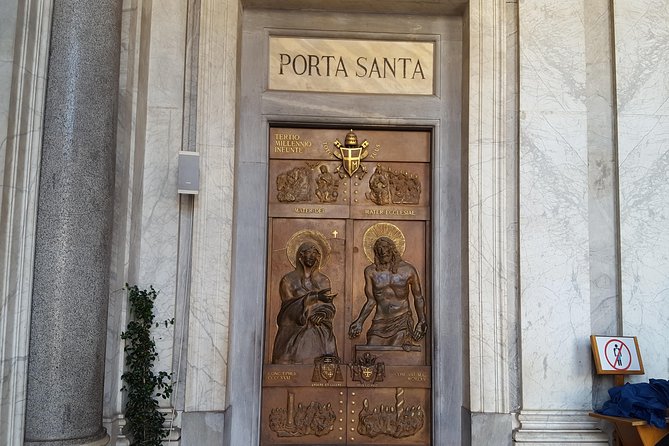
You start at Basilica di Santa Maria Maggiore, the largest church in Rome dedicated to Saint Mary in this itinerary. It is also known for having the city’s highest bell tower, and importantly for this tour, it includes a Holy Door stop.
Why it works as the opener: you get a “big room” first. Santa Maria Maggiore sets a scale and tone that makes the smaller churches later feel like intentional chapters, not detours. The main sights here are the church’s major significance, its chapels, and the special door tied to the devotional rhythm of Rome.
Time on site is about 40 minutes, with free admission. A practical move: when you first walk in, pause for a moment before following the crowd. If your guide is Roberto, this is usually where his explanations turn into a useful mental map for the rest of the day.
Santa Prassede: apse mosaics and a relic tied to the Passion
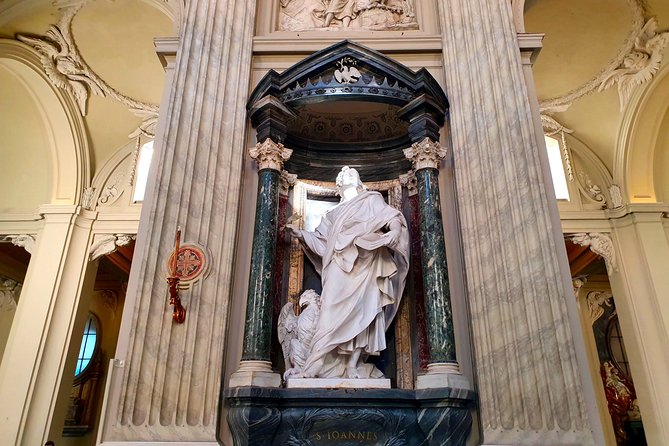
Next up is Basilica di Santa Prassede, with about 20 minutes here. The headline detail is the church holding one of the oldest apse mosaics in the world. This is one of those places where you can stand there and think, I’m seeing something ancient, but not fully grasp what makes it special until someone frames it.
This church is also known for a relic connected to the Passion of Christ. That pairing matters: you are not just admiring art, you are seeing a church that preserves devotion through objects and imagery.
A heads up: churches like this can feel busy, and some visits feel like quiet competition for the best viewing angle. In a small group, you generally have an easier time keeping your spot while still moving on schedule.
San Pietro in Vincoli: Michelangelo’s Moses and the chains of Peter
San Pietro in Vincoli is one of the most memorable stops in the whole loop, and you only get about 20 minutes. The reason it stays in people’s minds is the Michelangelo sculpture of Moses and the wonder-working chains of Saint Peter.
This is where “church history” becomes personal. Michelangelo’s Moses is not just a sculpture you pass by. It carries a dramatic sense of presence, and it has become part of how many people experience biblical storytelling through Renaissance art. The chains add a different layer, tying the building to apostolic tradition in a more physical way.
If you like details, watch for the guide’s pacing here. Reviews often call out how Roberto explains symbols, statues, and the meaning behind what you might otherwise miss in a quick look.


San Clemente: why one apse can feel like multiple Romes
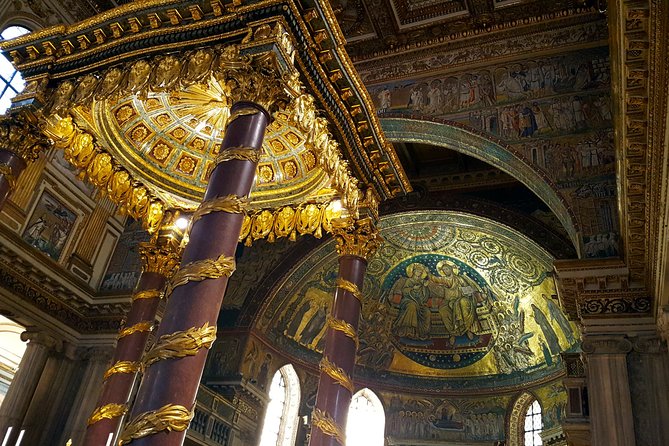
San Clemente is another stop of about 20 minutes, listed as one of the oldest churches in the city with an impressive apse. This is a good example of how Rome can feel layered in plain sight.
You do not need a museum ticket to experience the idea of time stacking up. A church like San Clemente gives you that sense that you are inside a location that has been important through many chapters, even if today’s visit is only a short window.
The practical tradeoff: with only 20 minutes, you get a guided highlight, not a long linger. If you are the type who likes slow travel, still treat this stop like a “told-you-where-to-look” moment. You can always return later if you want deeper time.
Ss. Quattro Coronati: legends painted where you might not expect them
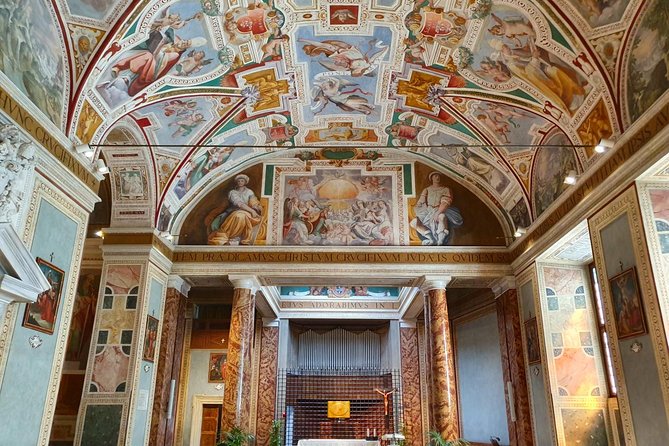
Ss. Quattro Coronati takes about 20 minutes and focuses on a fresco depicting the legends of Saint Silvester. This is a perfect “you did not know this existed” stop.
In many big Rome itineraries, you hear the same names and hit the same routes. This church breaks that pattern. The value is not only the fresco, it is the way a guide connects it to the saint’s wider place in Rome’s religious imagination.
If you come here after several heavier churches, the fresco can feel like a breather because it offers a clear visual story to track. Just remember to look up and let the image guide you, instead of reading only labels.
Arcibasilica di San Giovanni in Laterano: the Catholic heavyweight
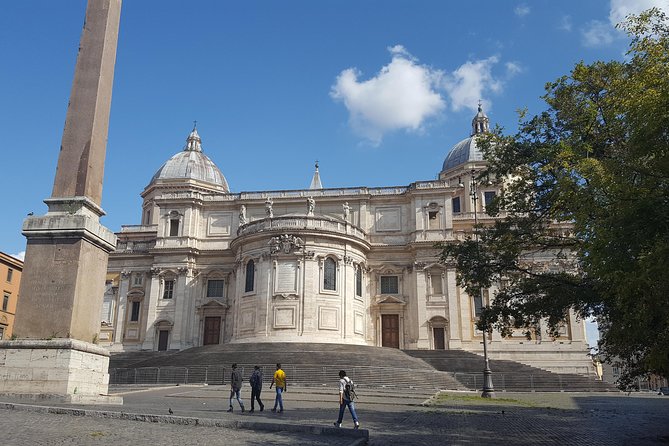
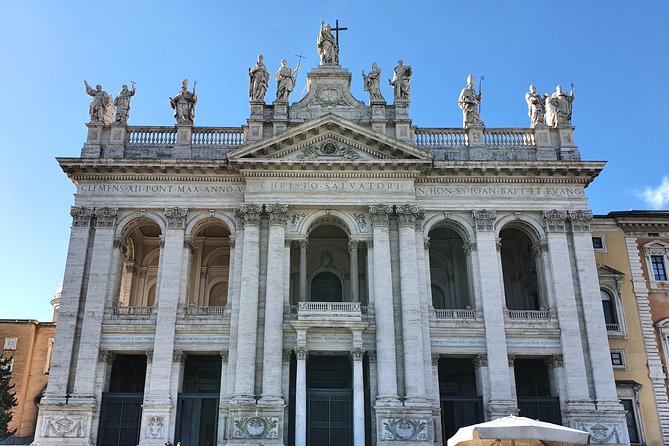
The Arcibasilica di San Giovanni in Laterano is the most important church for Catholics in this itinerary. You also get about 40 minutes, making it one of the longest stops after Santa Maria Maggiore.
This is where the tour becomes more explicitly about relic tradition. The church is described as containing relics associated with Saint Peter and Saint Paulus. For many people, this stop is the emotional center of the day, because it is not only art and architecture. It is also about how Rome’s Catholic identity is anchored to physical places.
Given it is a major pilgrimage site, plan to move with the flow. In a small group, you are still more nimble than you would be in a big bus tour, and questions remain possible without turning the visit into a queue.
Pontifical Sanctuary of the Holy Stairs (Scala Sancta): what to expect
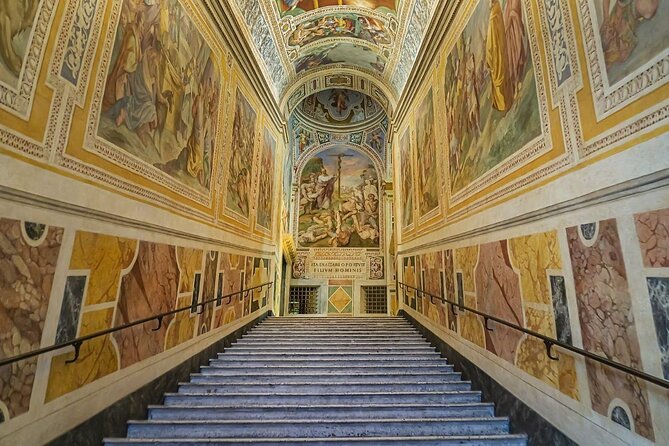
The final stop is the Pontifical Sanctuary of the Holy Stairs, at about 20 minutes. You will see impressive frescoes and the stairs believed to come from the palace of Pontius Pilatus.
This is where expectations need one reality check. Even when the itinerary includes the Holy Stairs, timing can vary based on how long waiting lines are, and not everyone physically climbs the stairs. The approach can also vary by devotion and visitor ability.
The best way to handle this stop is to treat it as two parts:
1) a guided explanation so you understand what you are seeing and why it matters
2) then a choice about how to proceed at your own pace once you are in the area
If Jubilee crowds are in play, line time can also affect how much you actually do inside any church area. The good news is that your guide will generally set expectations so you are not left guessing.
What makes this tour different: the guide’s church-by-church storytelling
This experience is built around interpretation. The churches are impressive on their own, but the real value is how the guide connects symbols, saints, and art to the life of the city.
Reviews repeatedly mention Roberto for a few standout traits: he explains with depth, stays patient, and answers questions on the spot. That matters because Rome’s churches are full of details you might never notice without a prompt. A good guide also keeps the tone respectful, which feels important in sacred spaces.
The other advantage of small group size is practical. In a group of up to five, you can ask something that pops into your head while you are looking at a specific mosaic, statue, or chapel feature. Instead of saving questions for the end, you can get the answer while it is still relevant.
And because the tour is only 3 to 4 hours, you get a strong “meaningful highlights” day without the fatigue that can come from trying to cover too many sites on your own.
Price and value: why $83.48 can make sense
At $83.48 per person for a 3 to 4 hour walking tour that visits up to seven stops, the cost can feel high if you think you are paying for entry tickets. But the sites listed are presented as free admission for this experience, so you are paying mostly for guidance, timing, and getting you into the right interpretive headspace.
So the question is: what is your time worth? If you would otherwise spend half a day researching which church holds which relic or which artwork connects to which saint, a good guide is a shortcut. And if you enjoy the religious art side of Rome, you are getting a lot of context per hour.
Is it for everyone? Not necessarily. If your ideal Rome day is street food and wandering, you might not get your money’s worth. But if you want a structured, meaningful church circuit with expert narration, this price can be fair.
Dress code and timing tips that prevent stress
Most churches in Italy follow a simple rule: cover shoulders, back, and knees. Bring something light that you can throw on quickly if you need to. Plan your outfit for comfort too, because you will be standing and walking for hours.
Timing matters. The start is 9:00 am. That early slot can help you get in before peak crush at major sites. Still, Jubilee periods can bring longer waiting times and itinerary adjustments, and passage through Holy Doors cannot be guaranteed during those special events.
Comfort tips that actually help:
- wear shoes with grip for cobblestones
- expect stairs at multiple churches
- drink water beforehand, then focus on the indoor visits
You will feel it when you end, but it should feel like a successful morning-to-lunch route, not a punishment walk.
Who this Holy Doors tour is best for
This tour fits you if you want:
- Catholic history and symbolism explained in plain language
- a focused set of churches you might skip if you only chased the biggest names
- a small group day where you can ask questions and not feel rushed
It is also a good option for a “rest day” if you want movement without committing to climbing mountains or doing nonstop outdoor sightseeing. Most stops are in churches, so your day still has shelter.
You might skip it if:
- you are not comfortable with walking 2 to 3 miles plus stairs
- you dislike structured itineraries
- you only want the top two or three most famous sights and nothing else
Should you book this Rome Holy Doors tour?
Book it if you want a church-focused Rome day that feels intentional. The route hits major Marian devotion, apostolic relic tradition, and the Scala Sancta, with explanations that turn art and symbols into something you can actually understand while you are standing there.
Skip it if your main goal is casual wandering, or if you need a low-walking day. This is movement with meaning, not a slow stroll.
If you do book, go in with two mindsets: wear your walking shoes, and let the guide do the heavy lifting on what you are seeing. That is where the value shows up fast.
FAQ
How long is the Rome Between Holy Doors small group walking tour?
It runs about 3 to 4 hours.
How many sites does the tour visit?
The tour visits up to seven basilicas, churches, and chapels in the few hours of the itinerary.
Where does the tour start and end?
It starts at Statua di San Giovanni Paolo II in the Esquilino area and ends at Basilica di San Giovanni in Laterano near Piazza San Giovanni in Laterano.
What is the dress code for entering the churches?
Shoulders, back, and knees must be covered to enter the churches.
Is passing through the Holy Doors guaranteed?
No. During Jubilee events, the itinerary might be adapted due to special events and longer waiting times, and passage through the Holy Doors cannot be guaranteed.
Is the tour suitable for mobility needs?
The tour involves a lot of walking and stairs and is not specifically adapted for mobility challenges. For wheelchair access, it can be arranged as a private tour so timing and access can be adjusted.
More Walking Tours in Rome

More Tours in Rome
More Tour Reviews in Rome
Not for you? Here's more nearby things to do in Rome we have reviewed






Walking Tours, compared.
 ★ 4.9Trastevere & Campo de Fiori Street Food Walking TourFrom $512,768 reviews
 ★ 4.9Paranormal Night Walking Tour & Secret BackstreetsFrom $341,921 reviews
 ★ 4.4Guided City Center Evening Sightseeing Walking TourFrom $46953 reviews
 ★ 4.5Best of Rome Walking Tour including Trevi FountainFrom $4923 reviews
 ★ 4.8Under the Moonlight Evening Walking TourFrom $28852 reviews
 ★ 4.9Forbidden History Walking Tour & Pub Crawl with DrinksFrom $61688 reviews
 ★ 5.0Guided Small Group Walking Tour of City HighlightsFrom $30682 reviews
 ★ 4.5Rome Walking Tour with Piazza Navona, Trevi Fountain and PantheonFrom $35676 reviews
Browse the lists this tour appears in