
Reviewed · WALKING TOURS
Rome Art Walking Tour Who Killed Caravaggio
Caravaggio leaves more than paint. This 2-hour Rome walking tour strings together real locations and art clues to explain how the Caravaggio story took its dark turn. You’ll move through the Baroque world of churches and palaces while trying to solve a centuries-old mystery tied to Caravaggio.
I especially love the tour’s storytelling-first approach. You are not just looking at famous works, you are getting the dramatic backstory as you pass each one. The other big win is the mix of stops, including churches where his originals still hang today.
One thing to consider is the walking component, plus the way questions can happen while you’re moving between stops. If you want every detail, you’ll do best staying close when the group is in motion.
Key Points You’ll Care About
- Licensed local guides bring the Caravaggio story to life, with past guides including Simone, Ivan, and Jacopo
- Original art inside active churches, including the Contarelli Chapel at San Luigi dei Francesi
- Story locations in the streets, like the Via di Pallacorda murder scene and the Vicolo del Divino Amore addresses
- All-in feel for entry fees, since the listed stops are admission ticket free
- Small group size with a max of 25 travelers, making it easier to interact
- Tip-based format, so the real cost depends on how you tip
Why This Caravaggio Mystery Works in Rome
Rome is built for this kind of experience. You do not have to imagine the world of Caravaggio, you walk through it. The tour uses Baroque art like a trail map, then adds the human drama that shaped how artists, patrons, and street-level rumors tangled together.
What makes it click is the pacing. You’re not stuck in one museum room. Instead, you bounce between compact squares, grand church interiors, and narrow lanes tied to people in Caravaggio’s orbit. By the time you reach the final stop near the Spanish Steps, the story feels like it has moved from paint to street to power.
Also, this is a low-friction way to get a focused introduction to Roman Baroque thinking. You’ll learn how artists used light, emotion, and staged realism to make religious scenes hit you in the chest.
You can also read our reviews of more walking tours in Rome
Starting at Piazza della Minerva, Where the Baroque Story Begins
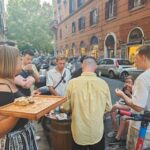
The tour starts at Piazza della Minerva near the Pantheon. This area is a smart opener because it blends layers of Rome at walking distance from each other. In a small space, you can see how old Roman space gets reused and reshaped again and again.
At Piazza della Minerva, you’ll run into Bernini’s Elephant and Obelisk, plus the Gothic church of Santa Maria sopra Minerva. That mix matters. It sets a tone for the rest of the walk: Rome’s art world did not replace the past, it kept building over it.
The tour timing here is short, about 15 minutes. That’s good. It gets you into the flow without wasting time on a warm-up that feels like a detour.
Practical tip: if you’re arriving early, take 2 minutes to orient yourself around the Pantheon area. Once the guide starts connecting art and locations, you’ll want to follow fast.
The Pantheon and Palazzo Madama: Big Names, Big Power
After the Minerva square, the next stop is the Pantheon, built around 126 AD. Even if you’ve seen photos, the domed roof and the central oculus still land. This is one of those buildings that makes you realize why artists could dream so big in a city that built miracles out of stone.
You’ll also hear how the Pantheon is a resting place for Raphael. That detail helps you understand why Rome attracted artists and why it still does. Rome’s art story is also a power story, and this building sits at the intersection of both.
Then you move to Palazzo Madama, a historic Baroque palace originally built in the 16th century and now home to the Italian Senate. The point of this stop is not politics for politics’ sake. It’s a reminder that in Rome, art and influence are always sitting at the same table.
Here’s what I like about this segment: it stops the Caravaggio story from feeling like isolated street gossip. Instead, you see a larger system around artists, patrons, and institutions.
San Luigi dei Francesi: Where Caravaggio’s St. Matthew Becomes a Drama
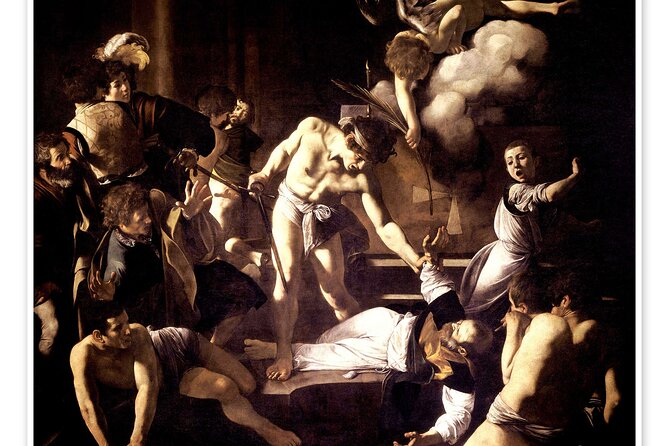
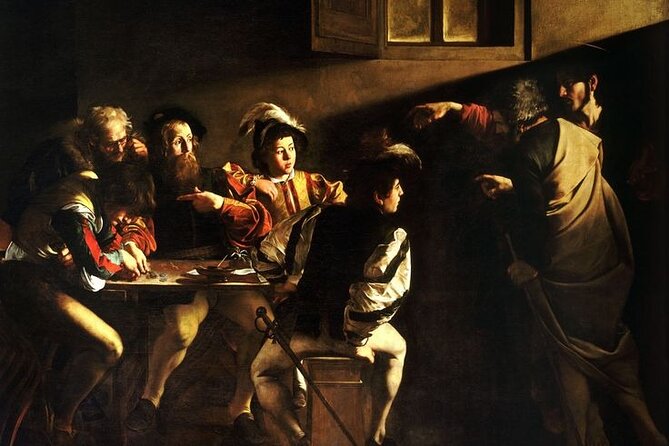
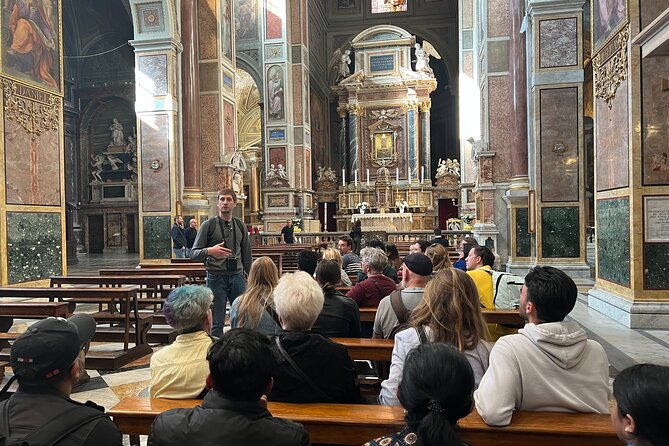
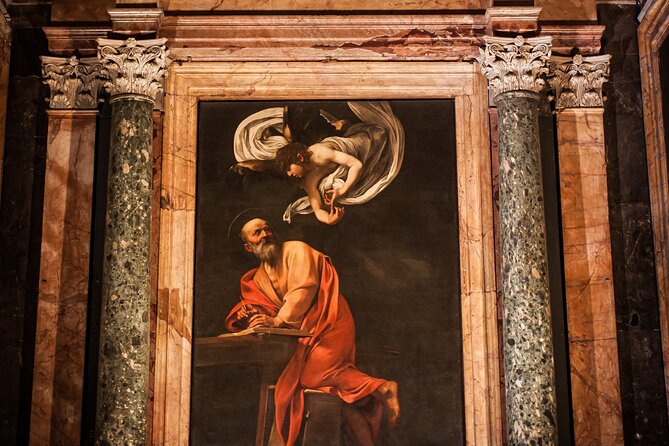
The tour’s art highlights really sharpen at San Luigi dei Francesi, near Piazza Navona. This is the church stop you’ll remember if you care about Baroque art. The reason is simple: the Contarelli Chapel holds three Caravaggio masterpieces showing scenes from the life of St. Matthew.
You’ll get the story context as you look at the paintings, which changes the way you see them. Caravaggio’s figures feel like they’re caught in a moment, not arranged for decoration. And when you understand what was being portrayed, the lighting and emotion feel less like technique and more like storytelling.
This stop is listed for about 15 minutes, and that’s about right. Caravaggio’s scenes can grab you hard, so a timed visit helps you keep moving without losing the thread of the overall mystery.
Good to know: since this is a church visit, you may want to keep your voice low and dress respectfully, the same way you would in any active religious space.
Sant’Agostino: The Caravaggio Side, Plus Raphael’s Shadow
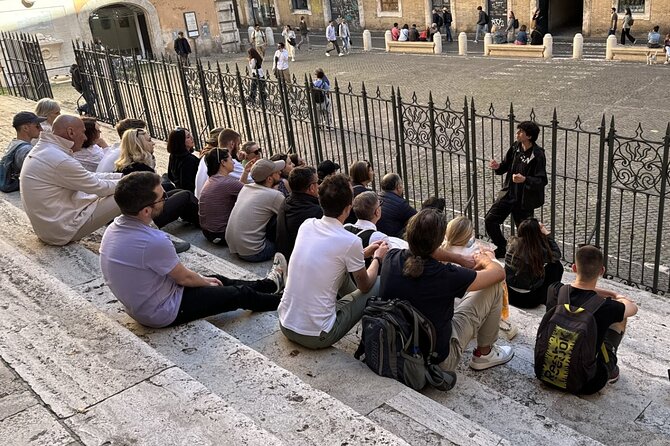
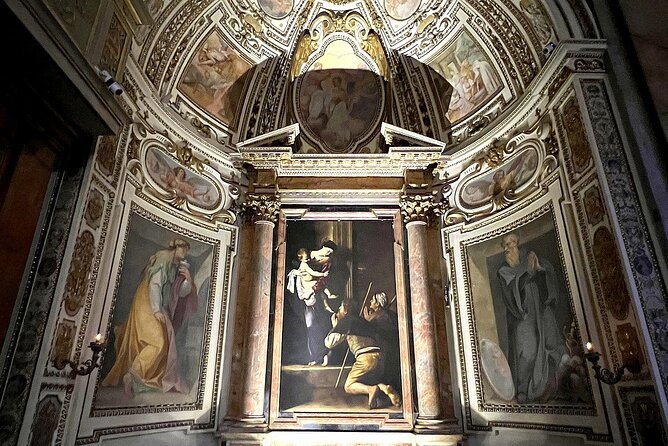
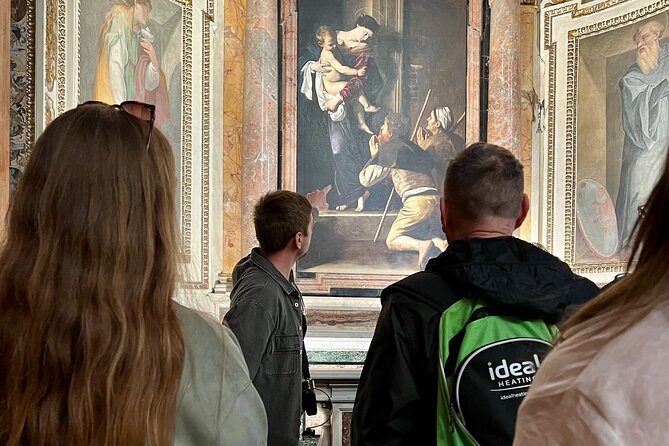
Next comes Sant’Agostino, also near Piazza Navona. Here you’ll find Caravaggio’s Madonna di Loreto along with a fresco of Isaiah by Raphael. That pairing is clever for two reasons.
First, it gives you a quick comparison point between two of Rome’s art giants. Second, it keeps your attention anchored in the church setting instead of treating Caravaggio like a single-artist fascination. Rome likes cross-currents, and this stop lets you feel that.
Again, you’re in for about 15 minutes. The chapel and wall spaces are easier to take in when you have a guide telling you where to look and what the story is doing.

Via di Pallacorda: The Murder Scene Beat
Now the tour starts feeling like a detective story in the real world. At Via di Pallacorda, you’ll hear about the murder scene of Tomassoni, Caravaggio’s victim.
This is one of those moments where the guide is basically giving you a timeline with footsteps. You’re standing in a location that becomes more than scenery because the story connects it to the personal costs of the artist’s life.
This stop is short, around 10 minutes, which is perfect. You do not need long lectures here. You just need the meaning, the connection, and the reason it matters to the art you saw a few minutes earlier.
Vicolo del Divino Amore: Lena, Then Caravaggio’s Own House
Then you reach Vicolo del Divino Amore, and the tour gets personal fast.
At one point on the lane, the guide points out the house of Caravaggio’s most scandalous model, Lena. A few steps later, the tour treats the same lane like a stage, with another stop focused on Caravaggio’s own house.
These two short stops, about 5 minutes each, are more impactful than their timing suggests. They remind you that the art was not made in a vacuum. Models, reputations, and private lives fed public work and public conflict.
Tip for enjoying this segment: if you want the strongest “who, where, why” connection, listen closely during the lane transitions. This is where it is easiest to miss a detail if you fall behind the group or drift too far from the guide.
Palazzo Borghese: Power, Patronage, and the Circolo della Caccia
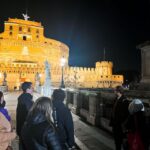
The tour ends at Palazzo Borghese near the Spanish Steps area. The Borghese family is one of the key names you want in your Rome notebook when you talk about Baroque art.
You’ll hear about a secretive elite club called Il Circolo della Caccia, established in the 17th century by the Borghese family. The club met in connection with Palazzo Borghese and was known for exclusivity, discussions, art exhibitions, and private hunting activities. It’s often linked with the family’s connection to the cultural and political elite.
This final stop matters because it explains a big theme of the whole tour: Caravaggio’s story moved through networks. Those networks included patrons and social circles powerful enough to shape reputations, careers, and survival.
The time here is about 15 minutes, and it gives you a satisfying end point. By now, you’ve seen the art, the places, and the human tension. The ending ties it together into a world where art is both spiritual and social power.
Price, Duration, and the Tip-Based Reality
At $4.83 per person for roughly 2 hours, the headline price is hard to ignore. The catch is that it’s a tip-based tour, and the guide works for your tips alone. So the real value equation is: you pay a low base fare, then you support the guide directly based on what you think you got.
In a walking tour, a low price usually means one of two things: either the format is limited, or the guide time is meant to be compensated by tips. Here, you’re getting a licensed local guide, an English tour, and a set route that covers multiple key art locations across Baroque Rome.
Group size also matters. With a max of 25 travelers, you’re not stuck in a massive herd. Smaller groups tend to make the storytelling more responsive, especially in churches and tight lanes where space is limited.
The tour starts at 5:00 pm. That’s a practical advantage if you want to do it after daytime sightseeing, and it also helps you avoid the brightest midday crowds. You should still expect walking and church pauses.
Who This Tour Is Best For
This is a great choice if you want:
- A story-led way to see Rome’s Baroque art without getting lost in dates
- Caravaggio content that ties art to locations instead of only talking about paintings
- A guide-led experience where you can ask questions and get answers in plain language
It also works well if you like a mystery tone. The tour does not turn Caravaggio into a cartoon villain. It keeps the drama human: conflicting relationships, public stakes, and the way reputation can become plot.
If you hate walking or you want a museum-only experience, this might feel like too much movement. But if you’re happy outside with a short church-and-street rhythm, it’s a strong fit.
Should You Book the Who Killed Caravaggio Walk?
Yes, if your goal is an art tour that actually feels like a story. The value is excellent for the time, and the stop selection hits both sides of the Caravaggio equation: art you can still see and places that shaped the legend.
I would book it especially if you:
- Like your art history with people and motives attached
- Want a guide who can connect visual details to the narrative
- Appreciate small-group walking tours with a lively, responsive guide
If you dislike guided storytelling, or you only want major monuments, you might want a different format. But for anyone curious about Caravaggio’s world in Rome, this one is worth your evening.
FAQ
How long is the Who Killed Caravaggio walking tour?
The tour lasts about 2 hours.
What are the start and end points?
It starts at Piazza della Minerva, 00186 Roma RM, Italy and ends at Palazzo Borghese, Piazza Borghese, 00186 Roma RM, Italy.
What time does the tour begin?
The start time is 5:00 pm.
Is the tour offered in English?
Yes, it is offered in English.
What is included in the price?
It includes a licensed local guide, a walking tour, rare paintings, and engaging storytelling. You’ll also get a mobile ticket.
What is not included?
Tips are not included. The tour is tip-based, and guides work for your tips alone.
Are the stop locations admission ticket free?
The itinerary lists admission ticket free time at each stop.
What is the group size limit?
The tour has a maximum of 25 travelers.
Is the tour accessible and are service animals allowed?
Service animals are allowed, and most travelers can participate.
Is free cancellation available?
Yes, you can cancel for a full refund up to 24 hours in advance of the experience start time.
More Walking Tours in Rome

More Tours in Rome
More Tour Reviews in Rome
Not for you? Here's more nearby things to do in Rome we have reviewed



Walking Tours, compared.
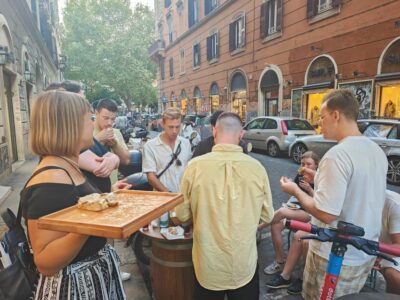 ★ 4.9Trastevere & Campo de Fiori Street Food Walking TourFrom $512,768 reviews
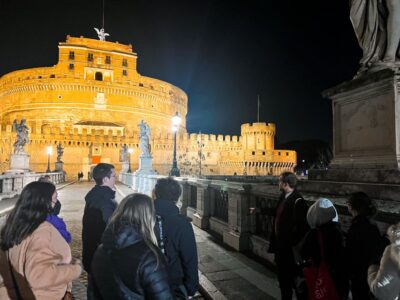 ★ 4.9Paranormal Night Walking Tour & Secret BackstreetsFrom $341,921 reviews
 ★ 4.4Guided City Center Evening Sightseeing Walking TourFrom $46953 reviews
 ★ 4.5Best of Rome Walking Tour including Trevi FountainFrom $4923 reviews
 ★ 4.8Under the Moonlight Evening Walking TourFrom $28852 reviews
 ★ 4.9Forbidden History Walking Tour & Pub Crawl with DrinksFrom $61688 reviews
 ★ 5.0Guided Small Group Walking Tour of City HighlightsFrom $30682 reviews
 ★ 4.5Rome Walking Tour with Piazza Navona, Trevi Fountain and PantheonFrom $35676 reviews
Browse the lists this tour appears in