
Reviewed · ROMAN FORUM & PALATINE TOURS
Roman Forum and Palatine Hill Experience
Two of Rome’s biggest wow zones in one tidy outing. You get skip-the-line SUPER tickets plus an audio-guide setup that lets you keep your own pace while still hitting the big sights. I like that this route is short enough to stay enjoyable, yet structured enough to cover both the Forum’s political core and Palatine’s imperial home turf, including the Domus Tiberiana, reopened to visitors in 2023. The main consideration: it is primarily audio-guided, so you need a workable phone connection for the WhatsApp instructions and you should bring your own headset, or the experience can feel like more work than it should be.
This is also a smart choice for planning your day. Your group is capped at 25 people, and you start at Piazza del Colosseo and finish on Palatine Hill. Arrive about 15 minutes early with a valid ID, and keep bags small so you do not get slowed down at security.
Key points worth knowing before you go
- SUPER tickets for the Roman Forum and Palatine Hill help you avoid the long main lines.
- Audio guide plus your own headset keeps the pace flexible, even when crowds are thick.
- Domus Tiberiana is a standout stop, reopened to visitors in 2023.
- You cover iconic areas like Curia Iulia and Santa Maria Antiqua along the way.
- The visit is built for speed and clarity, with about 45 minutes per main site.
- Max group size is 25, which usually means you are not stuck in a huge herd.
Roman Forum and Palatine Hill in 2 hours, minus the main-line stress
The Roman Forum and Palatine Hill are the kind of places that can swallow a whole day. This experience is built as a focused sprint, about 2 hours total, so you get the headline sights without turning your legs into pasta.
The value here is not just convenience. With pre-booked SUPER tickets, you are more likely to walk into the sites with far less waiting. That matters because both areas can get crowded fast, and you do not want your vacation time spent staring at ticket ropes.
I also like the mix of big-name landmarks and the smaller, high-impact stop. The Domus Tiberiana is not always on every quick route, and it is specifically called out here as being reopened to visitors in 2023. If you enjoy seeing Rome not just from ground level but from inside the emperor’s world, that one stop can make the whole outing feel special.
You can also read our reviews of more tours and experiences in Rome.

Where you start: Piazza del Colosseo meeting point, and why it helps
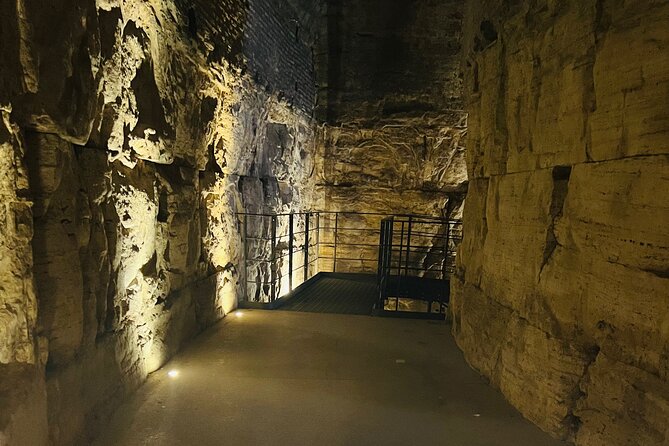
Your tour begins at Piazza del Colosseo 23. That is a practical location because it puts you right in the Colosseum area, where public transport and taxis are simple.
Your final point is Palatine Hill, at the Parco archeologico del Colosseo area on Via di S. Gregorio 30. The practical benefit is that you are not retracing your steps all the way back. Once you finish, you are already positioned to keep exploring the Palatine area or to work your way toward the rest of the historic center.
Before you go, do two very boring things that prevent stressful moments: arrive 15 minutes early and bring a valid ID. This tour also asks you to avoid large purses, bags, or backpacks, which is Rome’s way of telling you security lines can get ugly if you show up overloaded.
Stop 1 on the route: Foro Romano, the Senate, temples, and everyday power
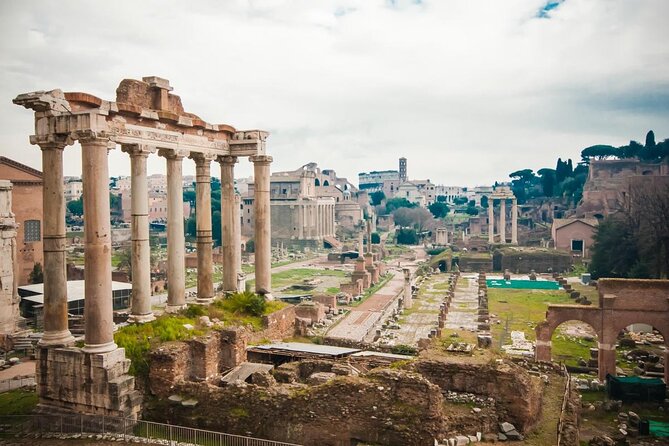
You start in the Foro Romano, the Roman Forum, and you have about 45 minutes there. This is the place where Rome’s big ideas were performed in public: religion, politics, business, and pageantry all sharing the same stone blocks.
What makes this stop click in a short visit is the way the Forum works as a map of power. Even when you are looking at ruins, you can still follow the logic of the space. You will see remnants of temples and civic buildings, and the route is designed so you can connect what you are seeing with what the Romans were doing there.
A key advantage of this format is that you do not have to keep up with a fast-moving live group for every sentence. The experience is audio-guided, so you can pause when something catches your eye, step aside for photos, or speed up when you feel like you are getting the gist.
The drawback of a shorter Forum visit is obvious: you will not have time to linger in every corner. If you are the type who wants to read every plaque and take your time comparing columns, plan to do extra exploring after the tour ends or on a separate visit day.
Stop 2: Palatine Hill viewpoints and the emperor neighborhood feel
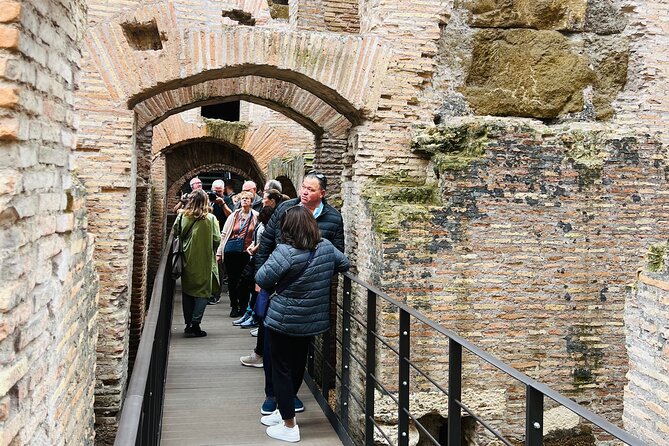
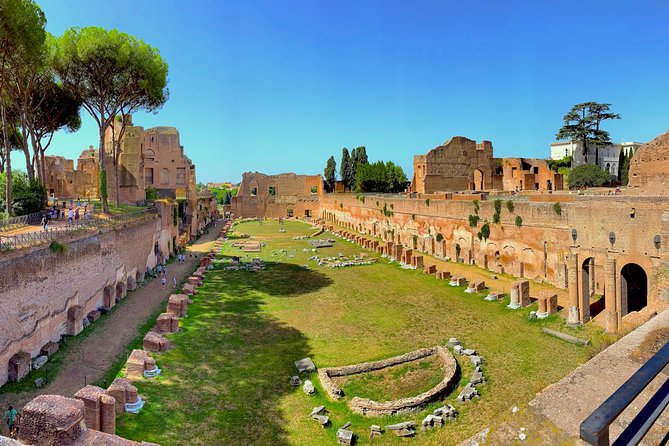
After the Forum, you climb to Palatine Hill for another 45 minutes. This is the “where the rulers lived” side of the story, and it has a very different atmosphere from the Forum’s civic center.
Palatine sits above much of Rome, which means you get those classic panoramic angles. That view is not just for pictures. It helps you understand why the elite wanted to be here. Being higher up gave them a commanding perspective over the city.
This stop is also focused on the imperial palaces and how the living spaces were organized. You are set up to explore the grounds of the emperor-focused areas, with attention on opulent architecture and decorative elements like frescoes. In a short visit, you are not trying to master every palace room. Instead, you are getting the big picture of how power displayed itself through space and design.
One practical reality: Palatine is a walk-heavy place, and Rome in summer can be intense. Bring water, wear shoes with decent grip, and expect some stairs and uneven surfaces. If you hate heat or you move slowly, this is still doable, but you will want to go at a steady pace and take breaks.
Stop 3: Domus Tiberiana, the 2023-reopened palace rooms
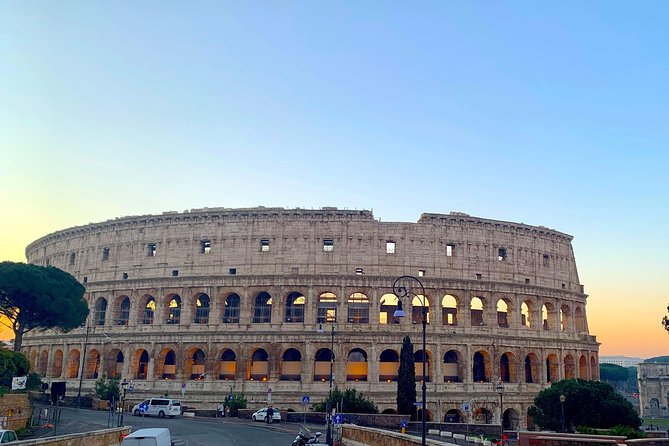
This is where the tour earns its keep. The Domus Tiberiana is listed as part of the experience, and it is specifically described as being reopened to visitors in 2023.
What you should expect is a more “inside the emperor’s world” feeling than the outdoor ruins. The Domus Tiberiana is an imperial residence on Palatine, and the emphasis here is on well-preserved spaces, architectural details, and decorative frescoes. Even if your brain is tired from walking, frescoes and room layouts can be easier to absorb than sprawling ruins from the outside.
The time here is short, about 15 minutes. That is good news if you are doing this as part of a bigger day. You get the highlight without losing half your afternoon, and you can still enjoy the views afterward.
The main thing to know is that room access can depend on what is open that day. Like many major sites, Rome can shift access due to operations and security. So treat this as a chance to see something special, not as a guaranteed long visit to every single corner.



Audio guide setup: flexible pacing, but you need your tech to cooperate
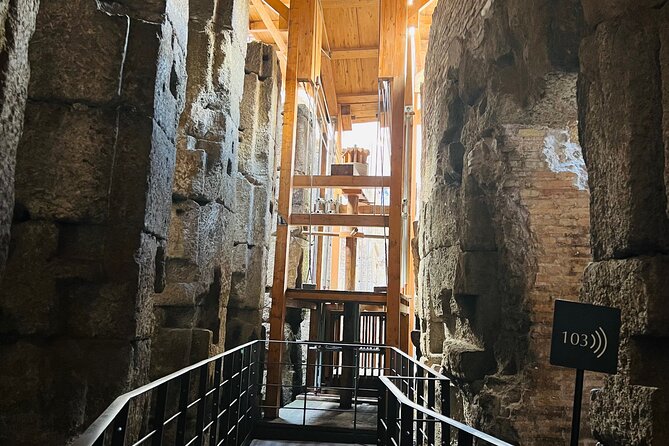
This experience leans into audio guidance, and your materials are set up for that. You get an audio guide and you are told to bring your own headset.
The important practical detail is access. Some guests reported that they needed WhatsApp on their phones to receive instructions and start the audio. Others also mentioned phone connectivity issues, including not having enough data to access the guide. That is why I recommend you treat this tour like a tech-dependent plan, not just a casual stroll.
Here is how to set yourself up for success:
- Bring a charged phone and enough data or an easy way to connect before the tour starts.
- Confirm you have WhatsApp installed and working.
- Bring a wired or Bluetooth headset you know works.
- If you rely on weak cell service, download or prepare anything you can before you arrive.
What you gain with audio is control. You can move at your speed, pause for a look, and avoid the stress of keeping up with a large group.
What you lose is human follow-up. If you want a live guide who can answer your questions on the spot and explain the details in a conversational way, audio-only may feel thin. Some people also described the audio as limited in depth, which is a reminder that audio tours can be best for broad storytelling, while live guides excel at Q and A.
If you do get a human coordinator during the walk, that can help with flow. One thing I took from guide feedback is that certain guides, like Sarah (including a group that specifically praised Sarah Gildea) and Tanya, can make the day feel more lively through storytelling and pacing. But the core narration is still audio, so plan accordingly.
Included sights you will actually notice: Curia Iulia and Santa Maria Antiqua
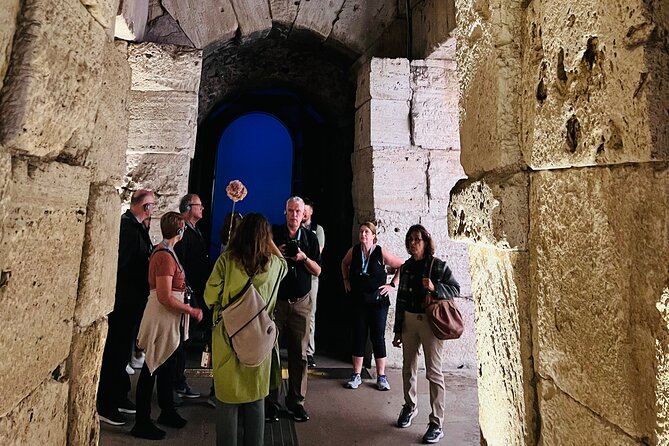
Along the route, the experience includes several named stops and components, not just “general Forum and Palatine.” You are set to see things tied to the political identity of ancient Rome, and that includes Curia Iulia and Santa Maria Antiqua.
Curia Iulia matters because it is associated with the Roman Senate’s meeting place. When you see it in context, it helps you understand why the Forum was not just ceremonial. It was government made physical.
Santa Maria Antiqua is a church connected to Palatine Hill’s long layered past. In Rome, that kind of stop can be a useful reminder that the area kept evolving after the Roman Empire, rather than going silent.
Because your total time is tight, the route is probably designed to let you hit a set list of high-value points. That is a good approach if you want your trip to feel efficient, and if you also plan to return someday for deeper exploration.
Price and value: what $49.20 gets you in real-world terms
At $49.20 per person, you are paying for two things: access planning and time efficiency.
In Rome, the painful part is not only the ticket price. It is the time you lose waiting in line and the stress of figuring out entry when crowds are at peak levels. This experience’s pitch is built around pre-booked SUPER tickets for the Forum and Palatine Hill. That is a meaningful value point if you dislike uncertainty and you are trying to protect your schedule.
You also get the audio system, with the extra requirement to bring your own headset. That keeps the “what do I do next” friction lower, as long as your phone cooperates with WhatsApp instructions.
Is it the cheapest way to see the sites? No. But for many people, $49.20 can be worth it if it buys you less waiting and a clearer route through the top stops.
If you are traveling with someone who gets overwhelmed by crowds, this kind of structured timing and small group size can be a comfort. If you are comfortable navigating on your own, you might compare options. Still, the Domus Tiberiana inclusion and the focus on these three stops make it feel like more than a simple overview walk.
Who should book this tour, and who should not
This is a good fit if you:
- Want Forum plus Palatine without spending half a day in transit or lines.
- Like self-paced exploration but still want an organized route and audio storytelling.
- Care about seeing the Domus Tiberiana, especially given its 2023 reopening.
- Prefer a smaller group experience, since the cap is 25 travelers.
It is less ideal if you:
- Need a fully live, interactive guide for every stop. The experience is primarily audio-guided.
- Do not want to rely on WhatsApp instructions or fear phone connectivity problems.
- Are easily frustrated by operational changes that can happen when major events or security closures affect access in Rome.
Should you book this Roman Forum and Palatine Hill tour?
Book it if you want a tight, efficient visit with skip-the-line SUPER tickets and you are excited to include Domus Tiberiana in a short outing. The audio guide setup can be a real win for pacing, as long as you show up prepared with a headset and working phone access.
Skip it or reconsider if you are paying for the experience expecting constant live guiding and deep back-and-forth explanations. Also think twice if you know your phone will have trouble with WhatsApp instructions or data. In those cases, the tour can turn from flexible audio into unnecessary hassle.
If you are planning smart, you can treat this as your anchor visit to the Forum and Palatine highlights, then build the rest of your Rome day around slower wandering and extra photo stops.
FAQ
How long is the Roman Forum and Palatine Hill experience?
It runs for about 2 hours total, with around 45 minutes at the Roman Forum and about 45 minutes at Palatine Hill, plus roughly 15 minutes for Domus Tiberiana.
What is included in the ticket price?
The experience includes Roman Forum and Palatine Hill SUPER tickets, Domus Tiberiana, imperial palaces, Santa Maria Antiqua, and Curia Iulia, plus an audio guide (bring your own headset).
Is there a live tour guide during the visit?
The experience is described as audio guided, and the audio guide is a key part of the format. You should plan around the audio experience rather than expecting a full live guide for the entire tour.
Do I need my own headset?
Yes. The tour includes an audio guide, and you are asked to bring your own headset to use it.
Where do I meet, and where does it end?
Meet at Piazza del Colosseo 23, 00184 Rome. The tour ends on Palatine Hill at Parco archeologico del Colosseo, Via di S. Gregorio 30, 00186 Rome.
Is the Colosseum included?
No. The Colosseum entrance is not included in this experience.
More Tour Reviews in Rome
Not for you? Here's more nearby things to do in Rome we have reviewed







Roman Forum & Palatine Tours, compared.
 ★ 4.8Colosseum, Palatine Hill and Roman Forum Guided TourFrom $5232,814 reviews
 ★ 4.7Guided Tour of Colosseum, Roman Forum & Palatine HillFrom $5527,897 reviews
 ★ 4.5Colosseum, Roman Forum and Palatine Hill Guided TourFrom $5923,903 reviews
 ★ 4.4Colosseum, Forum & Palatine Hill Tour & Optional ArenaFrom $5813,839 reviews
 ★ 4.6Colosseum, Palatine Hill & Roman Forum Guided TourFrom $5112,703 reviews
 ★ 4.6Colosseum Arena, Palatine Hill & Forum Guided TourFrom $7310,584 reviews
★ 4.4Colosseum, Roman Forum And Palatine Hill Guided TourFrom $428,420 reviews
★ 4.6Colosseum Arena, Palatine Hill & Forum Guided TourFrom $7310,584 reviews
★ 4.4Colosseum, Roman Forum And Palatine Hill Guided TourFrom $428,420 reviews
 ★ 4.3Colosseum, Forum, & Palatine Hill with Audio GuideFrom $444,591 reviews
Browse the lists this tour appears in