
Reviewed · VATICAN TOURS
Private Jubilee Tour: 3 Papal Basilicas with Santa Maria Maggiore
Three Holy Doors in one calm route. This private Jubilee tour connects you with three papal basilicas and the chance to see Holy Doors open during Rome Jubilee 2025. I like the way the plan is built for a real devotional pace, with prebooked entry that keeps you from losing time at entrances, and with guides like Barbara, Chiara, Massimo, Giulia, and Ribal earning shout-outs for clear explanations and an unhurried flow. One thing to consider, St Peter’s Basilica is not included.
You’ll move through the heart of Rome by private transport, meet your guide in Piazza San Giovanni in Laterano, and wrap near Piazza Venezia, with the drive back to the city center. It is offered in English, lasts about three hours, and uses a mobile ticket, which makes day-of logistics simpler. If your priority is spiritual focus plus iconic church art you can actually understand, this is a strong match.
Key Things You Get From This Jubilee Tour
- Three papal basilicas, one guided route, with special attention to what makes each site distinct
- Holy Door access for Rome Jubilee 2025, including the moments when the doors are open
- Prebooked tickets for basilica entrance in advance, so you spend less time waiting
- St Mary Major special access to the Papal Loggia, a quieter vantage many visitors never get
- A guided pace that avoids rushing, which matters when churches have changing access rules
- Guides with standout communication, including Barbara and Chiara, praised for making the material feel personal
Jubilee 2025 Holy Doors: What This Route Actually Delivers
Jubilee time in Rome is not just about crowds and photos. It is about a specific rhythm of worship, and this tour is designed around that. You are visiting three major basilicas tied closely to the Catholic tradition, and the big draw is seeing three of the Holy Doors open during Rome Jubilee 2025.
The practical win is that you are not doing this as a DIY scavenger hunt. A guide helps you interpret what you are seeing, from door symbolism to how the churches tell the story of faith through art and architecture. You also avoid the most common frustration of Jubilee season, trying to line up timed access on your own while the city runs on sacred schedules.
You can also read our reviews of more private tours in Rome

St John in Lateran: Holy Staircase, Borromini, and the Cathedral of Rome
Your first stop is Arcibasilica di San Giovanni in Laterano, the Basilica of St John. This place is often called the Head and Mother of all Churches, and for good reason. It is the most important cathedral in Rome, tied to the early legal Christian church and also to the Pope’s seat as Bishop of Rome.
What I like about this stop is how the guide can connect the big ideas to very concrete details you can look at. You’ll walk in to a vast, peaceful interior, with statues of the apostles lining the nave and golden mosaics in the apse. The building has layers, including work designed by the 17th-century architect Borromini, so you are not just seeing one era.
You’ll also get the kind of outside details that make a church feel like part of the city, not an isolated museum. The giant bronze doors were originally the doors of the Roman Senate, and outside the basilica you will see the world’s largest, oldest Egyptian obelisk. Right across is the Holy Staircase, brought from the Holy Land by Saint Helena.
The Holy Staircase: When Faith Meets Practical Rules
The Holy Staircase is one of those moments that changes how you experience the building around it. It is protected by wood today, and pilgrims can climb it only on their knees. That means you should be ready for a slower, more devotional pace than you might expect.
This is also why a guided visit helps. A private guide can help you understand what you are looking at and what the rules tend to be when people are praying. Access can be limited in the case of religious ceremonies, so you are relying on local flow rather than a strict itinerary that ignores real life.
This stop is about 45 minutes, which is just long enough to see the main features and still keep your energy. Dress warmly if you are sensitive to cool stone floors, because you will spend time standing and looking up.
St Paul Outside the Walls: A Fire, a Rebuild, and a Cloister That Feels Like Silence
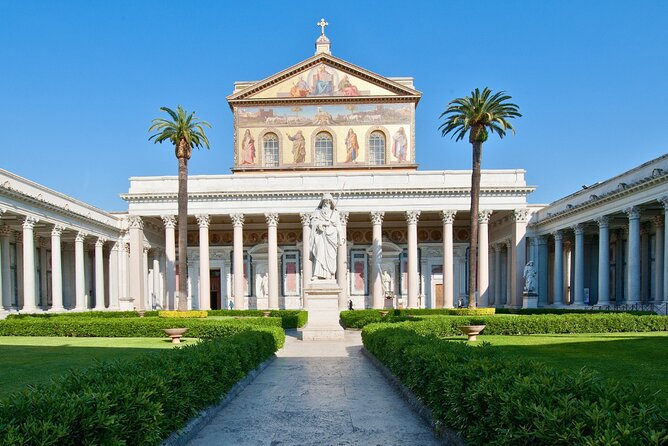
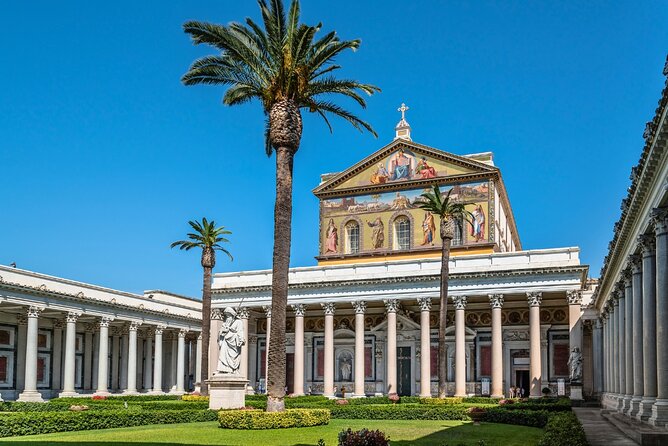
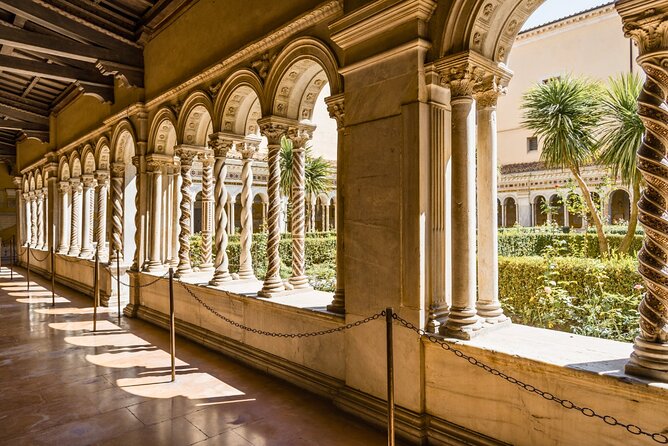
Stop two is Basilica Papale San Paolo Fuori le Mura, Saint Paul’s Outside the Walls. This basilica is built over the tomb of Saint Paul of Tarsus, martyred in that area. You are not far from the idea that faith here is tied to history you can stand on.
One story you will hear is how a massive fire destroyed about 90 percent of the original marble basilica in the 1800s. The good news is that the rebuild kept the same overall dimensions, using donations of marble and money from Egypt, Russia, and Greece. That gives you a clear reason why the church feels both grand and oddly familiar, like the spirit of the original design survived.
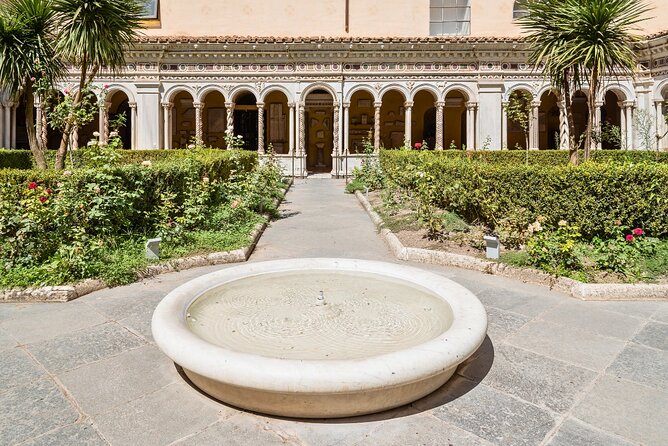
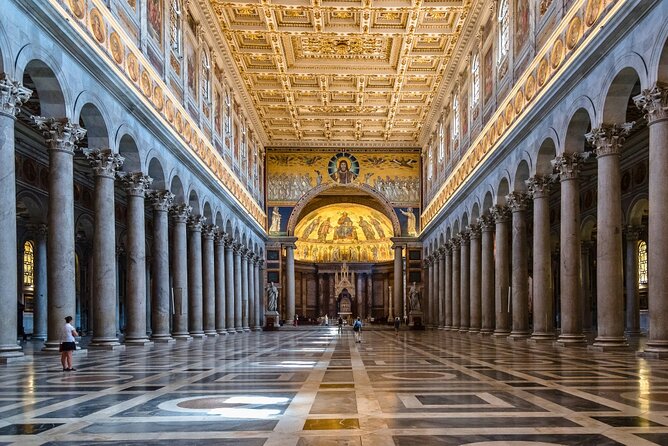
Inside, you can ease your way from explanation to reflection. Before you go into the main nave, there’s a peaceful cloister for quiet contemplation. It is lined with 80 columns, and you will also see portraits of every pope since St Peter. It is the kind of place where you can slow down, even if the rest of the day is moving at a steady pace.
The Porphyry Altar, Gold Mosaic, and a Surviving 13th-century Detail
In the nave, you’ll see the Baldachin of porphyry stone covering the altar and the grave of Saint Paul below. The list of visual wow moments is long, but a few stand out because they carry meaning. There is a giant marble Easter candle from the 13th century that survived the fire, and that survival feels symbolic in its own right.
At the center top, there is a massive, solid gold mosaic of Christ crowning the basilica. If you like art that looks like devotion, this is a strong stop because the design leads your eyes upward and inward.
Outside, you will have practical options while you wait for the next step, including a Vatican post office, a souvenir shop, and a café. That matters because a three-hour tour moves quickly enough that you’ll want one chance for a breather and a small refresh.

Santa Maria Maggiore: Golden Mosaics, Inca Gold Legend, and Papal Loggia Access
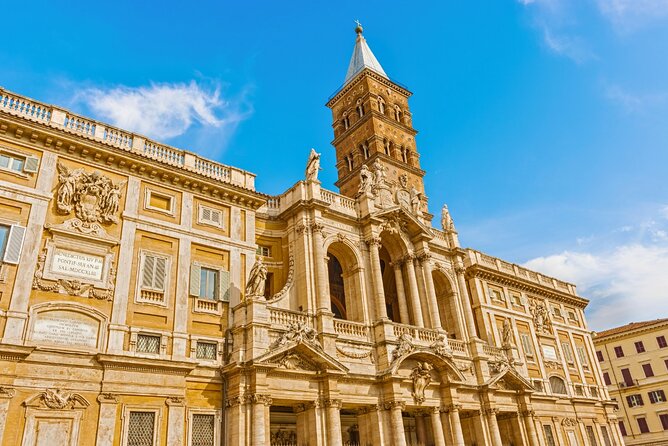
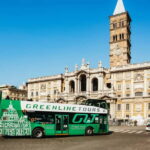
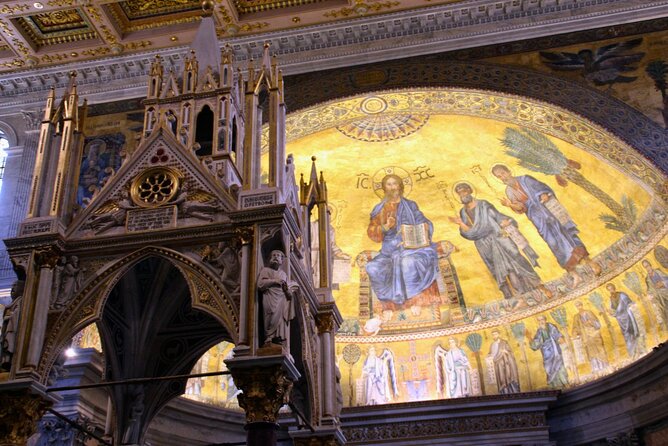
Your final stop is Santa Maria Maggiore, built in the 5th century. This basilica is famous for its 13th-century golden Byzantine mosaics. The style is distinctive, more glittering and intricate than the plain stone you might see elsewhere in Rome.
A detail I especially like here is that the basilica is not only about the centuries-old altar and mosaics. It also has a personal, human thread. You can see the tombs of Paulina Borghese, sister of Napoleon, and the Baroque genius Bernini.
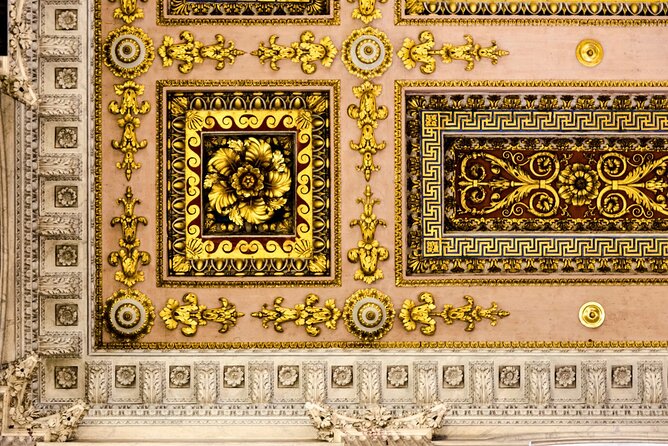
There’s also a relic of the Holy Manger held in a porphyry casket beneath the altar. And then there is the ceiling, reputed to be Inca gold donated by Spanish monarchs Ferdinand and Isabella. That claim gives the basilica an extra layer of legend, and your guide can help you understand how stories like that travel through time.
Papal Loggia: The Access That Changes Your View
One of the biggest reasons this tour is worth your attention is the exclusive ticketed access to the Papal Loggia. Most visitors can only see so much from the general areas. Here, you get a special vantage, which turns the final stop from a quick glance into a more complete experience.
This stop is also about 45 minutes, so it fits neatly at the end of the day. You’ll be walking out toward the Piazza Venezia area, where the energy of the center of Rome picks back up.
How the Private Format Keeps You from Feeling Rushed
A private tour in Rome is not automatically better, but it can be, and this one leans that way. You get private transportation and an expert private guide, and only your group participates. That matters in churches where access can change at any moment due to religious ceremonies.
The best part is the pacing. In this kind of route, if you get hurried, you miss the meaning. When your guide can slow down at the right moments, you actually absorb what you see, like the apostle statues in St John in Lateran or the surviving medieval candle in St Paul. Guides like Barbara and Chiara are praised for explaining details clearly and adapting to the audience, which is exactly what you want when you do not all care about the same things equally.
Another small practical plus is the mobile ticket. You are not juggling paper confirmations, and it can speed up day-of check-in where allowed.
Price and Value: Is $392.22 Worth It?
At $392.22 per person for a three-hour private tour, you should think in value, not just cost. This price covers a private guide, private transportation, and entry to St John in Lateran and St Paul Outside the Walls, plus the special access at St Mary Major. You are paying for time saved, smoother entry, and a guide who can connect symbolism, architecture, and worship practices into something coherent.
Private tours can feel steep if you are traveling solo. If you are a couple, a small family, or a group of friends who want this route at the right speed, the value usually improves because the fixed costs spread out while you keep the benefits of private attention.
Also consider what is not included. St Peter’s Basilica is not part of this tour. If your main goal is Vatican masterpieces in one sitting, you will need a separate plan. If your main goal is three papal basilicas and the Jubilee Holy Doors, this tour is very focused, and that focus is part of the value.
Dress Code, Church Etiquette, and What to Pack for Holy Door Visits
Churches in Rome are strict, and you should plan for that. For entry, you need shoulders and knees covered. That means no tank tops and no short dresses. If you are bringing light summer layers, consider a scarf or thin shawl so you can adjust quickly.
Also remember that access can be limited during religious ceremonies. This is not a flaw, it is the nature of visiting active places of worship. A guide helps you manage expectations in real time, so you do not burn your mood on rules you could have anticipated.
For comfort, wear shoes that work on stone. You will be standing, looking up, and moving between stops in a way that adds up fast. If you are sensitive, also bring water, because the three-hour visit can feel longer when you stop to pray or just take in mosaics and ceilings.
Who This Tour Suits Best
This tour fits best if you want a Jubilee-focused itinerary without juggling tickets and timing. It is ideal for pilgrims and for anyone who likes faith explained through art and architecture, not just a list of facts.
You will also enjoy it if you prefer smaller, calmer group dynamics. The private format helps keep the route from turning into a sprint. And if you care about the Holy Door symbolism, the route is built to deliver it across three different basilicas, not just one.
Should You Book This Jubilee Tour of Three Basilicas?
Book it if three papal basilicas plus Jubilee Holy Door moments are exactly what you want. The standout strengths here are Holy Door access during Rome Jubilee 2025, the special Papal Loggia ticketed access at Santa Maria Maggiore, and the guided pacing that keeps the experience spiritual instead of frantic.
Pass or pair it with something else if St Peter’s Basilica is your top priority. This tour is not designed to cover the Vatican, so you will need an additional plan for that.
If you want a clean, meaningful route that respects how churches actually work, this private three-hour format is a very solid choice.
FAQ
Which basilicas are included, and is St Peter’s Basilica part of the tour?
You visit Arcibasilica di San Giovanni in Laterano (St John in Lateran), Basilica Papale San Paolo Fuori le Mura (St Paul Outside the Walls), and Santa Maria Maggiore. St Peter’s Basilica is not included.
Do I get to see the Holy Doors during Rome Jubilee 2025?
Yes. The tour includes the chance to see three of the Holy Doors open during Rome Jubilee 2025.
How long does the tour take?
The duration is about 3 hours.
What should I wear to enter the churches?
Places of worship have strict dress code rules. You need shoulders and knees covered, with no tank tops or short dresses.
What ticket access is included for the basilicas?
Admission tickets are included for St John in Lateran and St Paul Outside the Walls. St Mary Major also includes special ticketed access to the Papal Loggia.
Where do we meet, and where does the tour end?
You start at Piazza San Giovanni in Laterano, and the tour ends at Piazza Venezia. The operator also drives you back toward the city center.
Is this a private tour?
Yes. It is a private tour, so only your group participates.
What is the cancellation policy?
Free cancellation is available up to 24 hours in advance for a full refund. If you cancel less than 24 hours before the start time, the amount paid is not refunded.
More Private Tours in Rome
More Tours in Rome
More Tour Reviews in Rome
Not for you? Here's more nearby things to do in Rome we have reviewed





Vatican Tours, compared.
 ★ 4.5Vatican: Museums & Sistine Chapel Entrance TicketFrom $38144,003 reviews
 ★ 4.3Vatican Museums & Sistine Chapel Tour with Optional BasilicaFrom $7967,413 reviews
 ★ 4.5Vatican Museums, Sistine Chapel & St Peter’s Basilica Guided TourFrom $2239,149 reviews
 ★ 4.3Vatican Museums, Sistine Chapel & Basilica TourFrom $13013,872 reviews
 ★ 4.4Vatican Museums & Sistine Chapel Skip-the-Line Entry TicketFrom $4313,838 reviews
★ 4.7Vatican Museums, Sistine Chapel & Basilica TourFrom $7213,217 reviews
★ 4.4Vatican Museums & Sistine Chapel Skip-the-Line Entry TicketFrom $4313,838 reviews
★ 4.7Vatican Museums, Sistine Chapel & Basilica TourFrom $7213,217 reviews
 ★ 4.5Skip-the-Line Group Tour of the Vatican, Sistine Chapel & St. Peter’s BasilicaFrom $3012,779 reviews
Vatican Museums & Sistine Chapel Guided TourFrom $11812,117 reviews
★ 4.5Skip-the-Line Group Tour of the Vatican, Sistine Chapel & St. Peter’s BasilicaFrom $3012,779 reviews
Vatican Museums & Sistine Chapel Guided TourFrom $11812,117 reviews