
Reviewed · MUSEUMS
National Museum of Palazzo Venezia in Rome
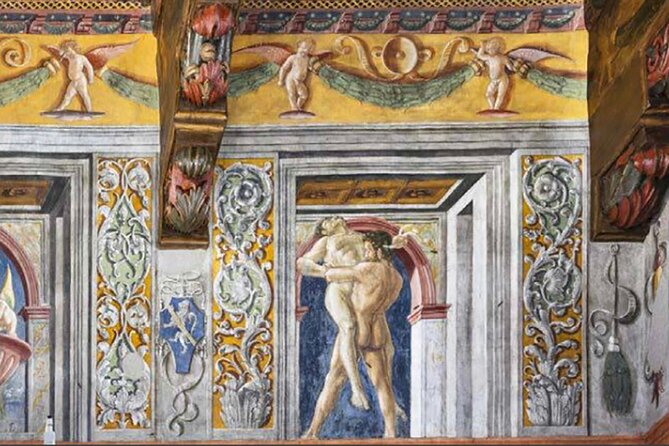
A quiet palace, then art lessons in real scale. The National Museum of Palazzo Venezia lets you walk through a former home tied to Venetian Pope Paul II Barbo, while the collection focuses on applied arts from the 15th to 18th centuries.
What I like most is how the place itself does half the work for you, with grand rooms and decorative details you can actually see up close. I also love that the museum mixes Italian and German art traditions, so it feels like a real crossroads rather than one narrow style.
One possible drawback: the experience is basically an independent visit via an admission ticket, not a classic guided tour. If you are expecting a guide to lead every moment, you might feel a bit shortchanged.
Key things to know before you go
- A palace with a built-in backstory: Palazzo Venezia was the residence of Venetian Pope Paul II Barbo before it became a museum.
- Applied arts focus: You get design, decoration, and craftsmanship, not just paintings on white walls.
- Many materials, many centuries: Sculptures, bronzes, porcelain, and historic arms span several eras.
- Italian and German connections: The collection highlights both traditions, which is a refreshing change from Italy-only stops.
- Great for pacing yourself: With a 1 to 3 hour window, you can go slow and still stay on schedule.
- Check expectations about guidance: Tickets in this category are typically self-directed, and confusion shows up in reviews.
Palazzo Venezia: a Venetian Pope’s palace turned museum
Palazzo Venezia sits in Rome like the kind of building that must have secrets, even if you only notice them after you’ve climbed the steps. This museum occupies what used to be the grand residence of Venetian Pope Paul II Barbo, tied to the building’s artistic ambitions in the late 1400s. The museum opened in 1921, and since then it has leaned into a specific kind of appreciation: decorative arts and craftsmanship, often called applied arts.
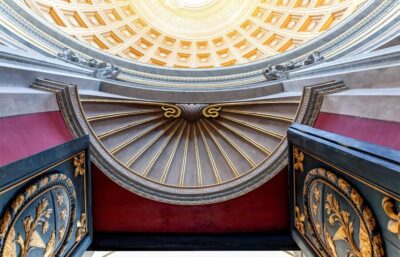
This is not one of those museums where you rush from “big thing” to “big thing.” Instead, you move through rooms where floors, ceilings, furniture, and display objects all contribute to the feel of the place. One review summed it up as stunning interiors with impressive mosaic work, which matches what you’ll experience when the rooms are intact and you can read the details without craning your neck.
You can also read our reviews of more museum experiences in Rome



What you’ll see inside: applied arts that actually teach you how art worked
Applied arts can sound like museum-speak until you see it in action. Here, you are looking at objects made to be used, displayed, worn, held, or handled, often by people with money and taste. That means the museum’s focus is craftsmanship: metalwork, ceramic finesse, sculptural form, and design choices meant for real spaces.
In practical terms, expect the collection to show up as a series of “look closer” moments. You might notice how decorative elements echo across different materials. Or you might spot that certain themes and styles show up in sculpture, then repeat in bronzes or furniture details. Even if you are not a specialist, this approach gives you a clearer sense of how art circulated through households and courts.
The museum’s timeframe, 15th to 18th centuries, is a good fit for a short visit because you can compare how taste changes without needing a full day. If you like the idea of standing in one building and seeing multiple artistic languages talk to each other, this stop delivers.
Italian and German sculptures, Renaissance bronzes, porcelain, and arms
The most reliable way to enjoy this museum is to pick your “favorites,” then let the rest support them. The collection includes Italian and German sculptures, Renaissance bronzes, delicate porcelain, and historic arms. That mix is unusual in a single museum, and it matters, because it changes how you read each room.
Sculptures and bronzes: form and finish
Sculptures tend to reward slow looking. You’ll often see the work of proportion and surface treatment. Renaissance bronzes, when displayed well, show you how casting and design went together. Even if you do not know the artists, you can still appreciate the labor, and that makes the museum feel more human.
Porcelain: light, pattern, and restraint
Porcelain is a great counterpoint if you are getting museum-tired. It often feels more delicate than the metal and stone work around it, and it can help you reset your attention. One of the themes that comes through in reviews is how the museum treats these objects as part of the room, not just isolated artifacts.





Historic arms: the “power and practicality” angle
Historic arms can be a sensitive subject, but in a museum context it helps explain how craftsmanship served military and status roles. If you like history that’s also design-focused, you’ll probably enjoy these displays as objects of skill, not just weapons.
The big advantage here is choice. You can spend extra time on the materials you care about most, and still leave with a coherent sense of what “applied arts” means.
Palazzo rooms, original details, and what the building adds to the art
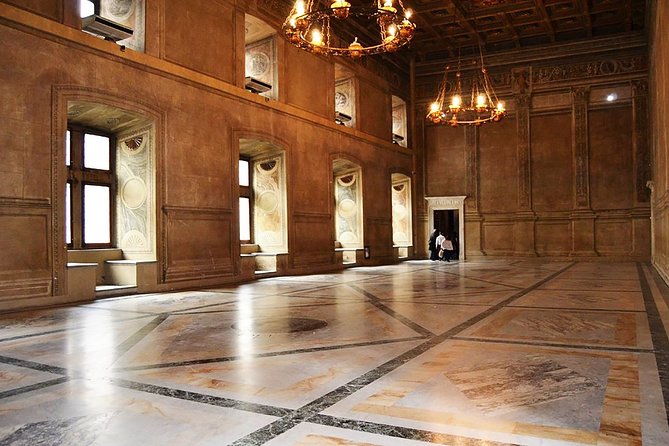
One of the most praised parts of Palazzo Venezia is the palace itself: decorated and frescoed rooms, plus original construction details that survive. Reviews mention original floors and ceilings dating to the 1500s, which is the kind of thing that makes a short visit feel bigger than it should.
A museum like this works best when you allow yourself to look up. Floors, mosaics, ceilings, and decorative transitions tell you how the space was meant to function. If you only focus on the objects, you miss the point of the “applied” part of applied arts.
Also, accessibility is worth noting. At least one review specifically mentions the palace being accessible thanks to an elevator and ramps. That’s helpful if you want to avoid building anxiety and just plan to move comfortably at your own pace.
The garden pause: calm breaks in the middle of Rome
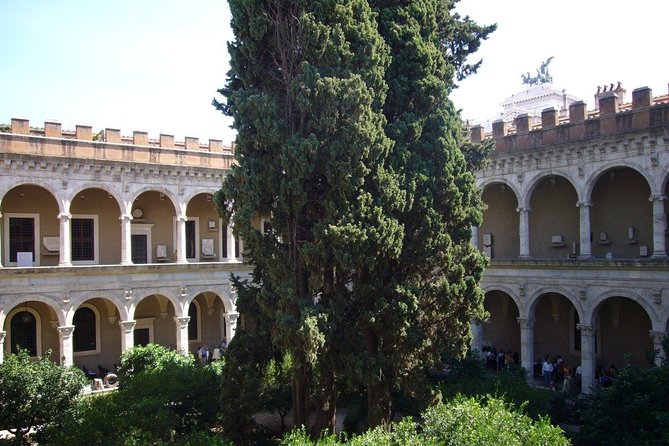
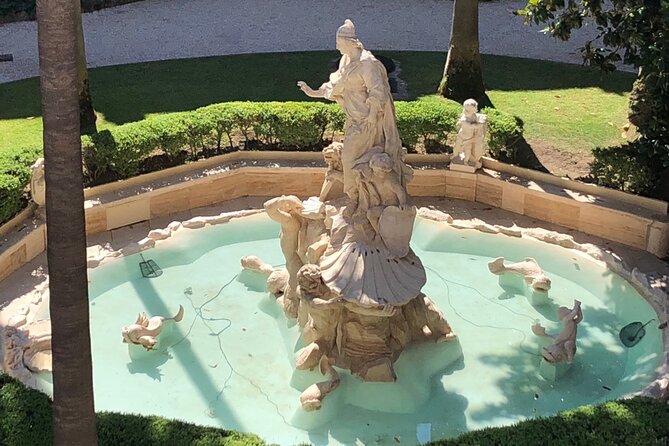
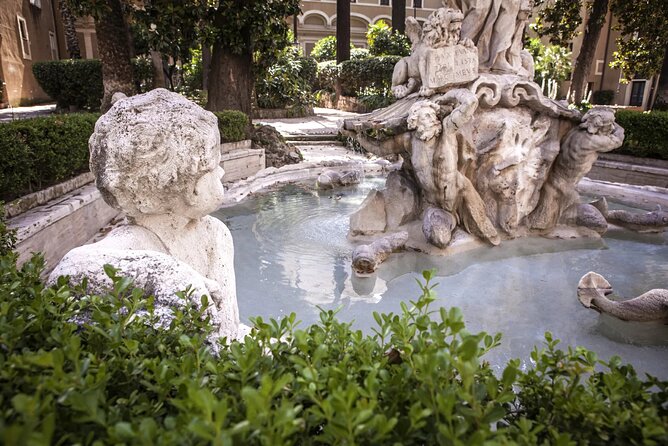
Even with a museum ticket, you should treat your visit like a rhythm: art, room-by-room, then a mental breather. The courtyard garden is one of the reasons this stop gets positive mentions.
One review described the garden as tranquil and used by locals to sit in shade. Another pointed out that the garden experience was tied to a specific ticket bundle and could be free depending on what you purchased. Since your booking here is an entrance ticket to the museum, you’ll want to confirm on-site what parts of the grounds your ticket covers.
Still, plan for at least a short rest if the garden access is available to you. Rome can feel loud and nonstop. A calm outdoor pocket inside a historic complex is the kind of payoff that makes the whole day easier.
Duration and pacing: how to get your money’s worth in 1 to 3 hours
The stated duration is about 1 to 3 hours. That range is actually generous, because the museum’s value is in your attention span. If you have one hour, you can do a focused run: pick a route, see the main highlights, and spend extra time only in the rooms that match your interests (sculpture, bronzes, porcelain, or arms).
If you have three hours, you can slow down and enjoy the building details. This is the sweet spot for people who like to take photos, read labels, and look at craftsmanship without racing.
A practical tip: don’t try to see every object like you’re doing an assignment. Instead, find one or two themes and follow them through the rooms. Applied arts become much more meaningful when you connect patterns across objects.
Price of $27.87: is Palazzo Venezia a good value?
At $27.87 per person, this ticket lands in a reasonable Rome category for a museum housed in a major historic palace. The key value question is not the number alone. It’s what’s included and what kind of experience you want.
Your ticket includes the entrance. That’s a good match if you are comfortable doing self-directed museum time. It is also a good match if you like decorative arts, because the collection is not dependent on a guided script to be enjoyable. You can still get a lot from the objects and rooms on your own.
If you were hoping for an instructor to explain the collection like a classroom lecture, this is where value may feel weaker. Reviews include complaints tied to a mismatch between expecting a guided visit and receiving an independent one. So be honest about your preferred style: do you enjoy wandering with a map and labels, or do you need a guide to unlock context?
Also compare bundles carefully. Some people mention combos that paired Palazzo Venezia with the Altar of the Fatherland elevator and other parts of that complex, and those bundles appear to change what’s included and what costs extra. If you are considering multiple attractions, read what each ticket covers so you do not pay for overlap.
Mixed reviews: what to watch out for before you blame the building
This museum has a fairly modest average rating, which means your experience can depend on expectations and day-to-day service. The praise in the feedback clusters around two big wins: stunning palace interiors and the garden atmosphere. If you go for those strengths and plan for self-guided time, you’re setting yourself up well.
The negative notes focus on two issues:
- Service complaints, including claims of rudeness. That’s always frustrating, and it can color your whole visit.
- Confusion about guidance. Multiple comments suggest people expected a guided tour, then encountered an independent entry model. In one response, the provider clarified that the ticket supports an entrance for an independent visit.
So here’s the best prevention plan: treat the purchase as an admission ticket, then decide whether you want to add a guide elsewhere for the historical context. You can even do this emotionally: see the museum as a craft-and-rooms stop, not a walking lecture.
If you run into staff problems, be clear and calm. Ask what the ticket includes and where the museum route starts. In a museum environment, that simple step often saves time and frustration.
Who this fits best, and who should skip it
This is a strong fit for you if:
- You like museums where craftsmanship matters, especially applied arts like bronzes, porcelain, and decorative displays.
- You want a palace visit that is visually rewarding even if you are not a specialist in the subject.
- You enjoy short, flexible itineraries, since 1 to 3 hours is workable in almost any Rome plan.
You might not love it if:
- You need a guide to give structure and explanations, and you assumed that guidance would be included.
- You prefer high-impact, single-icon masterpieces over a collection of decorative works across rooms.
If you’re doing a Rome day packed with major sites, I’d place Palazzo Venezia in the “breather” category. It’s interesting, it’s contained, and it has that chance to sit quietly in the garden if the grounds are accessible with your ticket.
Should you book the National Museum of Palazzo Venezia?
Yes, I’d book it if you’re aiming for an authentic-feeling Rome museum stop that mixes palace atmosphere with craftsmanship. The biggest selling points are the historic interiors and the museum’s applied arts approach that connects 15th to 18th century objects across Italian and German lines. At this price, you’re paying for a memorable setting plus a collection that’s easy to enjoy in a self-directed way.
Book with the right expectations, though. If your ideal visit includes a guided lecture, confirm what is actually included before you purchase. And if garden access matters to you, verify whether your specific ticket covers it.
If you want a calm palace detour that feels different from the usual Rome crowd magnets, Palazzo Venezia is a solid choice.
FAQ
How long does the National Museum of Palazzo Venezia visit take?
It runs for about 1 to 3 hours.
What is included with the ticket?
The experience includes the entrance ticket.
Is private transportation included?
No, private transportation is not included.
Where is this experience located?
It is in Rome, Italy.
When will I receive confirmation after booking?
Confirmation is received within 48 hours of booking, subject to availability.
Is it near public transportation?
Yes, it is near public transportation.
Is this experience suitable for most people?
Most travelers can participate.
How much does it cost?
The price is $27.87 per person.
What if I cancel or change my booking?
It is non-refundable and cannot be changed for any reason.
More Museum Experiences in Rome

More Tour Reviews in Rome

Not for you? Here's more nearby things to do in Rome we have reviewed












Museums, compared.
 ★ 4.5Vatican: Museums & Sistine Chapel Entrance TicketFrom $38144,003 reviews
 ★ 4.3Vatican Museums & Sistine Chapel Tour with Optional BasilicaFrom $7967,413 reviews
 ★ 4.5Vatican Museums, Sistine Chapel & St Peter’s Basilica Guided TourFrom $2239,149 reviews
 ★ 4.3Vatican Museums, Sistine Chapel & Basilica TourFrom $13013,872 reviews
 ★ 4.4Vatican Museums & Sistine Chapel Skip-the-Line Entry TicketFrom $4313,838 reviews
★ 4.7Vatican Museums, Sistine Chapel & Basilica TourFrom $7213,217 reviews
Vatican Museums & Sistine Chapel Guided TourFrom $11812,117 reviews
 ★ 4.2Vatican Museums & Sistine Chapel Skip-The-Line TicketFrom $4111,708 reviews