
Reviewed · MUSEUMS
Leonardo da Vinci Museum: the Universal Genius and His Works
This is one smart museum you can play in. I like the hands-on, full-scale replicas of Leonardo’s designs, plus the multimedia shows that make the inventions feel current, not dusty. One drawback to plan for: audio guidance costs extra, and without it you may zip through faster than you’d like.
At Museo/Mostra Leonardo da Vinci, you spend about 45 minutes to 1 hour, and it is built for a wide range of ages. I also love the surprise ending with an underground pond and the tomb of Aulo Irzio, dating to 43 BC. Just keep in mind that a few hands-on stations can be hit-or-miss depending on what is operating that day.
Leonardo in one hour, interactive style
- 65+ full-scale reproductions of machine drawings you can touch and try
- 3D holograms and videomapping that explain how the ideas work
- Underground pond and Aulo Irzio tomb (43 BC) at the end of the visit
- Mobile ticket admission so you can spend less time sorting things out
- Audio guides cost extra but add structure and depth
Leonardo da Vinci Museum: A Play-First Show in Rome That Fits Your Day
If your Rome day is already packed, this kind of museum can save you. The visit window is roughly 45 minutes to 1 hour, with a note that you should plan for at least 40 minutes to do it justice. That timing matters, because it keeps the experience from feeling like a slow slog after you have already walked half the city.
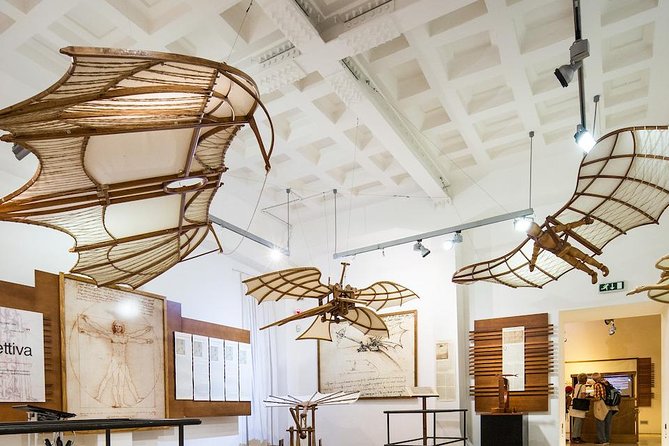
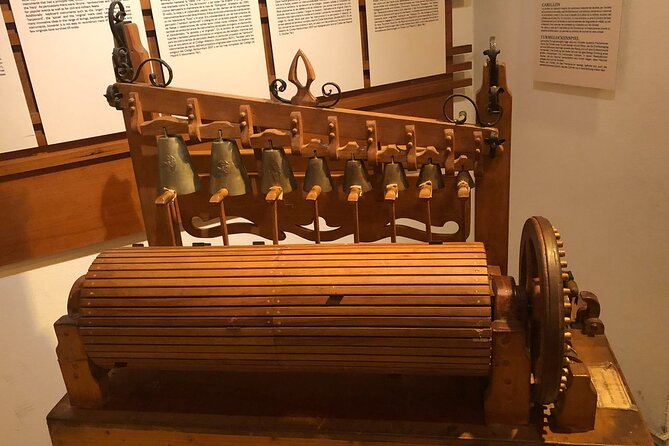
What makes this one work is the mix of old-school design and modern presentation. You are not just reading about machines, you are encouraged to interact with them, including many full-size reproductions of Leonardo’s inventions. Pair that with the multimedia elements, and the whole place feels designed to help your brain picture how the mechanisms move.
Value-wise, the ticket price is modest, so you can afford to add the audio guide if you want more context. Also, since the museum is located in central Rome, it can plug into a normal sightseeing route without forcing a long detour.
Piazza della Cancelleria 1: Finding It, Booking It, and Timing It Right
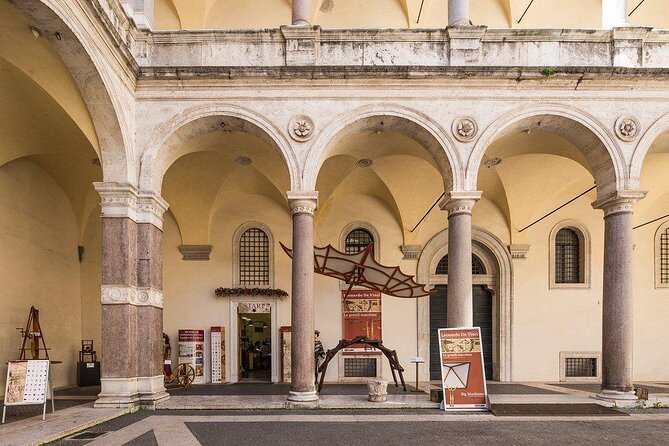
This is in the heart of Rome, at Piazza della Cancelleria 1, near public transportation. The listing runs Monday through Friday, from 9:30 AM to 7:00 PM, and it is closed on December 25th. If you are visiting on a weekend, you will need another plan, because the provided hours only cover Mon-Fri.
You get a mobile ticket, and confirmation is received at booking time. That is useful in Rome, where lines and last-minute confusion can steal time from your real priorities. The experience provider does not mention a complicated meeting routine here, but one review did flag that unclear instructions between nearby places can cause stress, so I’d treat the address like a non-negotiable detail and arrive with it copied on your phone.
Two quick “don’t mix it up” notes from what people struggled with elsewhere in Rome: there are multiple Leonardo-related museums, and confusing the addresses costs time. Make sure you are headed to Piazza della Cancelleria 1, not another da Vinci site with a similar vibe.
You can also read our reviews of more museum experiences in Rome



Inside Museo/Mostra Leonardo da Vinci: Il Genio le Invenzioni (Stop 1)
The whole experience is essentially one focused stop, and it is centered on Leonardo da Vinci: Il Genio le Invenzioni. You walk through an exhibition that pairs Leonardo’s thinking with replicas built on a real-life scale. The big promise here is clear: you will see machines, learn what they were for, and get chances to touch and test some of the models.
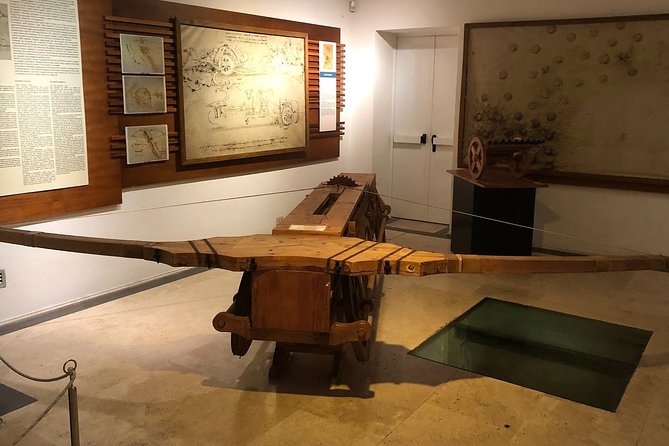
Full-scale machine replicas you can touch and try
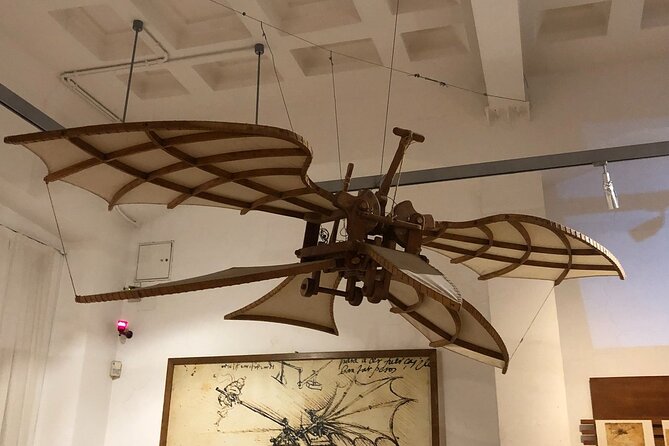
A standout feature is the collection of more than 65 reproductions of Leonardo’s machines, described as real-life scale versions of his drawings. This is where the museum earns its ticket. Leonardo’s sketches can look abstract until you see how the pieces relate in 3D and at working size.
Also, the exhibition is not just about one theme. You are exposed to Leonardo as artist, engineer, and craftsman through how the machines are presented. Even if you come in with a general interest in da Vinci, the format helps you connect the dots between the art and the engineering logic.
3D holograms and videomapping for the “how it works” part
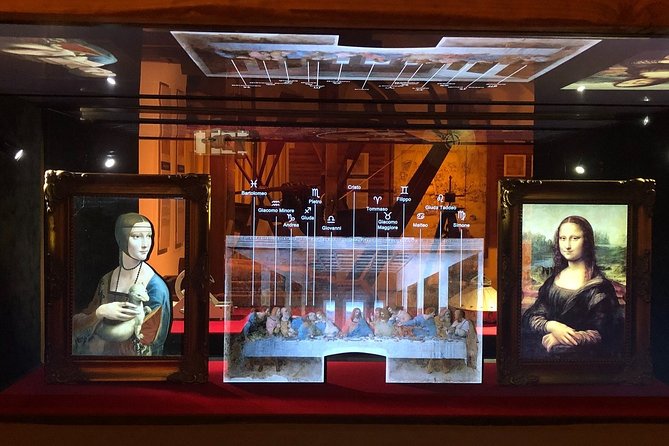
To keep you from getting lost in the idea maze, the museum uses 3D holograms and videomapping. These tools are especially helpful when you want to visualize motion, mechanical sequencing, or perspective. If you learn best by seeing how something changes, this part is worth slowing down for.
You also get a contemporary feeling next to the older setting. That contrast is not random, it is the point: Leonardo’s ideas were futuristic in his day, and they still look like they should belong in a maker studio.
The final surprise: underground pond and a Roman tomb
The last section includes an unusual twist that many science-and-art visitors love. At the end of the exhibition, you can see an underground pond containing the tomb of Aulo Irzio, dating to 43 BC. The museum experience becomes more than a science exhibit, because you end by connecting Leonardo’s world of invention to the layered history of Rome itself.
This is also a good “mental bookend.” After you have been thinking about mechanisms and designs, the underground setting gives your attention a different kind of depth.




A note on size and hands-on availability
This is often described as a small museum, and some people felt it was possible to see a lot quickly. That can be a good thing if you are short on time, but it can also mean you should plan to take your time, especially if you care about understanding the machines rather than just scanning them.
One more real-world consideration: some hands-on exhibits may be under construction or not available to physically try on certain days. If touching everything is your top priority, go in expecting a few stations might not be operating smoothly.
Audio Guides: The €3 Option That Can Change Your Visit
Audio guides are not included with admission, but you can rent them on arrival at the entrance for €3.00 per person. If you skip audio entirely, you can still enjoy the interactive displays, but you may move through rooms faster and miss the thinking behind what you are seeing.
There is also a practical, language-based reason to consider the audio guide. The available audio languages include Italian, Spanish, English, French, German, Portoghese, Russian, Dutch, Romanian, Polish, and Hebrew. So even if your Italian is rusty, you can still follow along.
One caution from a visitor experience: audio guidance can feel confusing if you are not sure which device track matches which stop, and some people suggested the exhibit signs could be clearer. My advice is simple: when you start a room, orient yourself first, then start the next audio segment once you see what it is referencing. It keeps you from feeling like you are in a scavenger hunt with no map.
How Long Should You Plan, and What Order Makes Sense?
Most people should be fine with 50 to 60 minutes if you take breaks, read labels, and try the models you find most interesting. The museum notes minimum 40 minutes for the visit, so if you only have 30 minutes between buses and a museum-hopping plan, you might feel rushed.
A smart approach is to spend extra time at the interactive and multimedia moments, then let the underground finale be the finish line. If you go too fast early, you may end up treating the tomb and pond area like a quick photo stop, and that is the moment that tends to feel most unusual.
Also, because the museum is described as quieter than many bigger attractions, it is a nice choice when you want to look closely without constant crowds. If you prefer calm over chaos, this is one of those museum options that makes it easier to really focus.
Air-Conditioning, Facilities, and Comfort Tips for Rome Heat
Rome in summer can turn short museum visits into sweaty marathons, so it helps that one review specifically noted A/C. If you are visiting during the hotter months, this comfort detail can be the difference between enjoying the inventions and just wanting to escape to the next church.
Restroom reports were mixed. One person mentioned that there were several bathrooms, while another complained about a lack of a visitor bathroom. Since the reality can change by floor access and building setup, I’d play it safe and use facilities before you commit deep into the exhibit route.
Who Should Book This Leonardo da Vinci Museum, and Who Might Skip It?
This is a strong choice if you like science, design, and hands-on learning. It is also family-friendly in concept, since it is described as working for visitors of all ages, with the rule that children must be accompanied by an adult. If you are traveling with kids, the chance to touch and try replicas tends to be the reason they remember the visit later.
It is also a good match if you want something different from Rome’s usual monuments. You still get to do sightseeing nearby, but you get a different mental workout: mechanical thinking, problem-solving, and the artist-engineer connection.
Skip it or rethink if you are specifically chasing original Leonardo manuscripts or artifacts. This exhibition is built around reproductions and models, so it will not satisfy a collector’s itch for rare originals. Also, if you want a long guided walkthrough and deep historical lecture time, the shorter format might feel too compact.
Finally, if you are price-sensitive, consider that the audio guide is optional but often helpful. Some people felt the visit was quick for the price, but adding audio can turn it from a fast look into a more complete experience.
Should You Book the Leonardo da Vinci Museum in Rome?
I think you should book if you want a smart, family-friendly, centrally located museum that you can actually finish within an hour. The interactive model experience, plus the multimedia storytelling, is the winning combo, and the ending with the Aulo Irzio tomb and underground pond makes it memorable in a way most machine exhibitions do not.
Book it with your expectations calibrated. This is an interactive exhibition built on replicas, not a vault of Leonardo originals. If you arrive ready to try the models, watch the holograms, and take time with the final underground moment, it is likely to feel like a great value.
My practical recommendation: secure your entry in advance, plan for 40 to 60 minutes, and budget a little extra for the €3 audio guide if you want more meaning behind the mechanics. It is the easiest way to get more out of the time you spend.
FAQ
How long does the Leonardo da Vinci Museum visit take?
Plan on about 45 minutes to 1 hour. The museum also notes that you should allow a minimum of 40 minutes to visit properly.
Where is the museum located?
The address is Piazza della Cancelleria 1, Rome, Italy.
Is admission included in the price?
Yes. Admission to the Leonardo da Vinci Exhibition is included.
Are audio guides included?
No. Audioguides are not included, but you can rent them at the entrance for €3.00 per person.
What languages are available for the audio guide?
Audio guides are available in Italian, Spanish, English, French, German, Portoghese, Russian, Dutch, Romanian, Polish, and Hebrew.
What are the opening hours?
The provided hours are Monday through Friday, 9:30 AM to 7:00 PM.
Is the exhibition suitable for children?
Children must be accompanied by an adult. The exhibition is designed to appeal to visitors of all ages.
Is the museum wheelchair or mobility friendly?
The information only says that most travelers can participate. It does not provide specific accessibility details.
Can I cancel for free?
Yes. Free cancellation is available, and you can cancel up to 24 hours in advance for a full refund.
More Museum Experiences in Rome

More Tour Reviews in Rome
Not for you? Here's more nearby things to do in Rome we have reviewed









Museums, compared.
 ★ 4.5Vatican: Museums & Sistine Chapel Entrance TicketFrom $38144,003 reviews
 ★ 4.3Vatican Museums & Sistine Chapel Tour with Optional BasilicaFrom $7967,413 reviews
 ★ 4.5Vatican Museums, Sistine Chapel & St Peter’s Basilica Guided TourFrom $2239,149 reviews
 ★ 4.3Vatican Museums, Sistine Chapel & Basilica TourFrom $13013,872 reviews
 ★ 4.4Vatican Museums & Sistine Chapel Skip-the-Line Entry TicketFrom $4313,838 reviews
★ 4.7Vatican Museums, Sistine Chapel & Basilica TourFrom $7213,217 reviews
Vatican Museums & Sistine Chapel Guided TourFrom $11812,117 reviews
★ 4.4Vatican Museums & Sistine Chapel Skip-the-Line Entry TicketFrom $4313,838 reviews
★ 4.7Vatican Museums, Sistine Chapel & Basilica TourFrom $7213,217 reviews
Vatican Museums & Sistine Chapel Guided TourFrom $11812,117 reviews
 ★ 4.2Vatican Museums & Sistine Chapel Skip-The-Line TicketFrom $4111,708 reviews