Reviewed · ROME
Julius Caesar and the Emperors’ Nighttime Stories
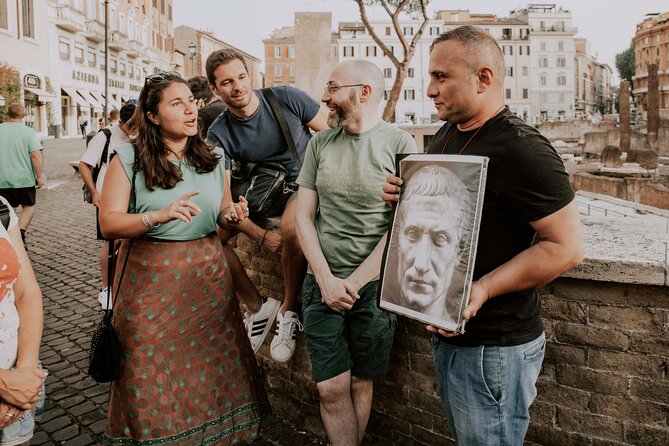
Empires feel human after dark. This late-afternoon to evening storytelling walk links Caesar’s assassination spot with Augustus’ mausoleum and Nero’s world, all through the lives of real people, not just names. You get dramatic emperor stories while strolling between major landmarks, keeping the focus on why these events mattered.
I especially like the small group feel (max 20) and the pacing that keeps the walk fun instead of lecture-like. I also like that the tour is built around places with free admission at each stop, so your money goes mostly to the guide and the story craft.
One heads-up: it’s still a walking tour, so you’ll want comfortable shoes and a warm layer for night air. Also, the experience runs only in good weather, since it relies on an outdoor stroll.
Key highlights worth showing up for
- Evening departure to beat the daytime sun and crowds
- Human storytelling about emperors, betrayals, and forbidden love
- Stops tied to major Roman figures, from Caesar to Nero
- A manageable route across central Rome, ending in Piazza del Popolo
- Free admission at the listed sites, so you do not pay extra at each stop
- A guide known for energy and humor, with pacing that stays easy to follow
Why this Caesar to Nero walk clicks at night
Rome is at its most watchable after the heat drops. This tour leans into that, running in the late afternoon or evening so you can enjoy the city without that daytime burn. You also get a different mood at night, and it helps the stories land better.
The best part is the emotional angle. Instead of treating Roman rulers like distant statues, the guide frames them as people with motives, families, secrets, and mistakes. The tour highlights include dramatic tales of emperors, betrayal, and forbidden love, and that theme stays consistent as you move from one square to the next.
Another smart choice is the structure. You do not spend the whole time inside one museum. You walk between linked historical sites, and each stop adds a new character or twist. That makes it easier to keep your mental map straight, especially if you are juggling other sights in Rome.
You can also read our reviews of more tours and experiences in Rome.
Price and value for 2 to 3 hours of Roman drama
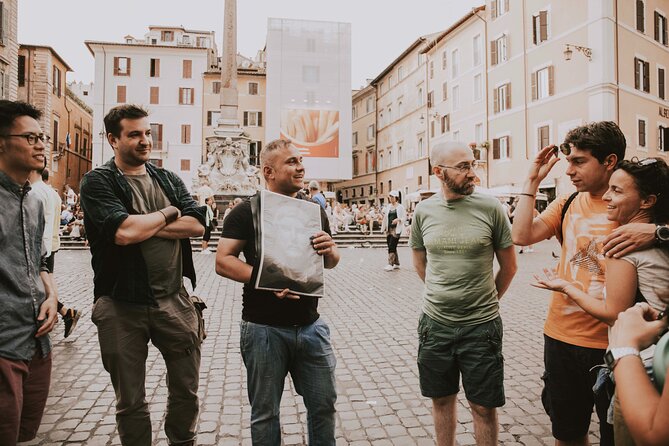
The price is $47.06 per person for about 2 to 3 hours. That can sound steep if you think it is just paying for a walk, but the value is in what you get while walking.
You are paying for:
- A story-focused guide that connects multiple emperor eras into one night narrative
- A route through major Roman landmarks across central Rome
- A format that uses the places themselves as story prompts, instead of repeating dates
And you also get a practical bonus: the listed stops show admission ticket free for the sites you visit. So you are not layering extra entry fees on top of the tour price. You still pay for the guided experience, but you avoid the common problem where “free tour” plans quietly turn into paid museum stops.
How long, how small, and how you actually join the group
The tour lasts about 2 to 3 hours, and it keeps group size under control, with a maximum of 20 people. That matters more than it sounds. With a smaller group, the guide can keep the pacing tight and the story flow stays intact.
You also get a mobile ticket, so you do not have to worry about printing. You receive confirmation at booking, which helps you get ready without extra back and forth.
Language is English, so you should plan to listen closely for names and relationships, especially in the parts about family ties. The storytelling approach depends on that flow, and the payoff is when you hear the details connected across the route.
Getting oriented: start at Via Florida, end at Piazza del Popolo
The start point is Via Florida, 14, 00186 Roma RM, Italy. The walk finishes at Basilica Parrocchiale di Santa Maria del Popolo, Piazza del Popolo, 12, 00187 Roma RM, Italy.
Why this matters for your trip planning: Piazza del Popolo is a central stopping point with lots of food options nearby. It also connects well if you want to continue on to another part of town after the tour.
For transit, you have the Flaminio metro station on the red line A. You also have taxi access right in the area, which makes it easier to avoid a long wait late at night.
Stop 1: Largo Argentina and the shock of Caesar’s assassination
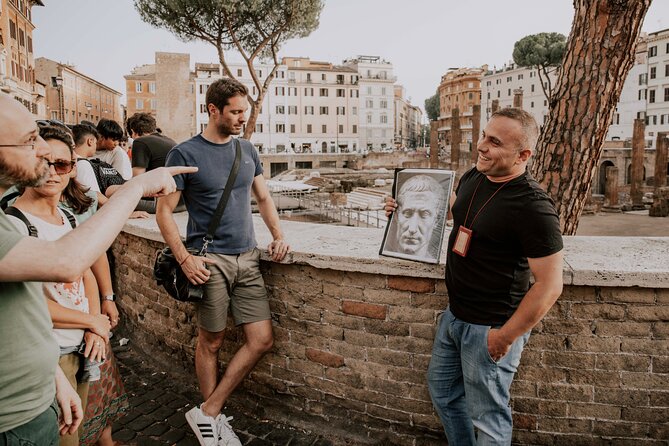
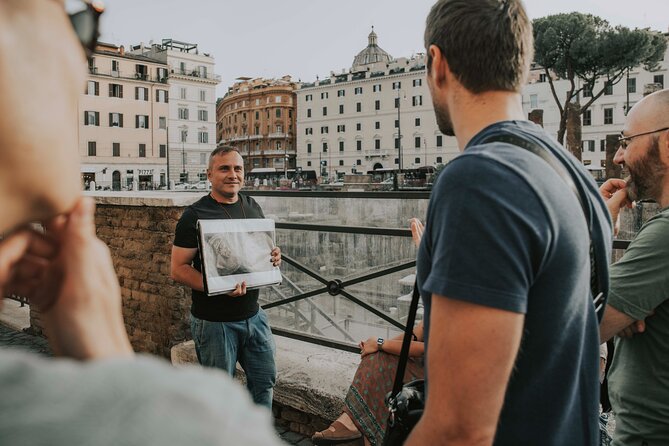
The night begins at Area Sacra di Largo Argentina, where you see the Largo Argentina square, the site connected to the Assassination of Julius Caesar. This is a strong opening because it sets a tone: Roman history is not tidy. It is political, dangerous, and full of consequences.
This stop runs about 30 minutes, which gives the guide room to set up the story threads. From there, you keep moving on foot, with the route designed to keep you looking outward at the city while the guide brings each historical figure into focus.
A practical note: Largo Argentina is an outdoor square scene. You are mostly standing and walking, so your job is simple, watch the guide and keep your footing. If you come with the right expectation, you will enjoy the way the story jumps from public power to private fear.



Stop 2: The Pantheon at night and Marcus Agrippa’s rise
After Largo Argentina, you head toward the Pantheon, and the guide keeps the momentum. At this stop, the focus is on Marcus Agrippa, a man in the 1st century BC who becomes the second most powerful man in the world.
This part runs about 20 minutes. That time window works well for nighttime storytelling because it stays focused. You are not stuck listening through an entire lecture, and you still get enough detail to feel the arc of someone moving from support roles into real influence.
At night, the atmosphere helps. You are seeing a major landmark in a quieter setting, and the story about Agrippa’s power adds an interesting “climbing the ladder” angle before the tour shifts back into emperors and family stakes.
Stop 3: Piazza di Pietra ruins and Hadrian’s story
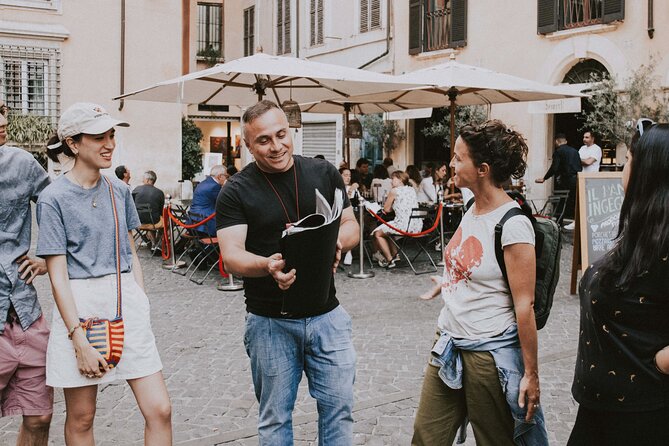
Next you reach Piazza Di Pietra, where you get a look at 2nd century AD ruins while learning about Emperor Hadrian. This stop is also around 20 minutes.
What makes this enjoyable is the contrast. The Caesar assassination start is dramatic and immediate. Then you pivot to a later emperor, with ruins as the visual anchor. You can feel the difference between “a single event that changes everything” and “an emperor’s era shaping the long arc.”
If you like history that connects place to person, this is a good stop. If you want facts only, the ruins may feel like scenery. But if you enjoy narrative history, you should get a lot out of this section.
Stop 4: Piazza Colonna and the spiral column of Marcus Aurelius
In Piazza Colonna, you see a monumental 2nd century AD spiral column dedicated to Emperor Marcus Aurelius. The guide points out the hand-carved spiral relief, which shows significant moments of his life from bottom to top.
This stop lasts about 20 minutes, and it is one of the best examples of how the tour uses the city as a storytelling device. The column is already a visual record, but the guide helps you interpret it as a life story, not just a sculpted object you pass by.
For your viewing, the key is attention. When the guide explains what the relief represents, you will get more out of glancing carefully instead of rushing your photos.
Stop 5: Augustus’ mausoleum and the heartbreak of Julia
Then comes what the tour treats as a climax: Piazza Augusto Imperatore, where you admire the 1st century AD burial site of Emperor Augustus, his mausoleum. This stop runs around 25 minutes, and it concentrates on Augustus’ family, especially the life of his only child, Julia.
Julia’s story is described as a powerful moment, centered on her strong personality and independence for that era, and it is framed as unique and heart-breaking. That matters because it shifts the story away from pure politics and into personal cost.
This is also where the emotional tone of the tour is at its strongest. If you enjoy Roman history mainly for the human drama, this is the stop that should keep you thinking about the tour long after you reach the final square.
Practical tip: since this part is longer than some stops, plan for a bit of standing time. If you get cold easily at night, you will thank yourself for bringing layers.
Stop 6: Piazza del Popolo and Nero’s artist obsession
The tour ends in Piazza del Popolo, where the guide closes with the story of Emperor Nero. This part takes about 20 minutes, and it digs into Nero’s psychological profile, his relationship with his mother Agrippina, and how Nero wanted to become an artist. The tour frames how that desire pulled him into intense attention.
Ending here makes sense. Piazza del Popolo feels like a finish line, and it is a convenient place to grab dinner afterward. You are in a central area with transport options and lots of nearby restaurants.
As a final impression, the Nero section ties together the themes you heard earlier. Power and family pressure show up again, but with a more personal twist: ambition, identity, and the price of being seen.
The guide style: humor, pacing, and stories you can follow
A major reason this tour gets strong ratings is the guide approach. People highlight guides like Massimo, who is described as funny and engaging with just the right pacing. The common thread is energy without rushing you, plus a storytelling method that keeps you listening even when you already know a few Roman names.
One detail I think is especially useful for your own planning: keep warm. In the run-up to the tour, guides may suggest dressing for the cold night air. That’s not just comfort. It helps you stay focused and enjoy the later part of the story, when you are still standing in public squares.
What to wear and bring for a comfortable evening walk
This is a night stroll through multiple squares, so treat it like an outdoor walking plan.
Bring:
- Comfortable walking shoes
- A warm layer for night air
- Your phone for the mobile ticket
Consider:
- An optional break is available on tour, but the main format is continuous strolling. If you need frequent stops, plan your expectations in advance.
Since it runs about 2 to 3 hours, you can also time a light snack beforehand. That keeps your energy up while the guide holds your attention through several major figures.
Who should book this tour, and who might skip it
This tour is a great fit if you like Roman history but want it told through people and relationships, not just a list of emperors. It works especially well if you are tired of daytime crowds and want a more relaxed way to cover several big-name sites in one evening.
It can also be a strong family option. One reason it earns praise is that kids and adults often enjoy the story structure, especially the dramatic, emotional beats.
You might choose another style of tour if you prefer strict chronological timelines and museum-style interpretation. This one is built around narrative highlights, betrayal, and family drama, and the pacing is meant to be entertaining.
Should you book this Julius Caesar and the Emperors nighttime stories tour?
If you want Roman history with emotion, this is an easy yes. The tour hits major figures, keeps the story arc moving, and uses a nighttime walk to make the experience easier on your body and your attention span. For the price, you also get strong practical value because the listed sites are marked admission free, so you are paying mainly for the guide’s storytelling.
My main reason to hesitate is the obvious one: it is a walking tour at night. If your mobility is limited, or you hate standing in squares for long stretches, you may find it less comfortable than a more seated option.
But if you are game for a small-group night walk with a guide who can hold the room, this is one of the more fun ways to understand the first wave of emperors and the human drama around them.
FAQ
How long is the nighttime walking tour?
The tour lasts about 2 to 3 hours.
Is the tour offered in English?
Yes, the tour is offered in English.
Do I need to bring a printed ticket?
No. You get a mobile ticket.
How large is the group?
The tour has a maximum of 20 travelers.
Is there admission cost at the stops?
The listed stops are marked as admission ticket free.
Where does the tour start and end?
It starts at Via Florida, 14, 00186 Roma RM, Italy. It ends at Basilica Parrocchiale di Santa Maria del Popolo, Piazza del Popolo, 12, 00187 Roma RM, Italy.
Is the tour close to public transportation?
Yes, it is near public transportation. The tour ends near the Flaminio metro station on the red line A.
Is service animals allowed?
Yes, service animals are allowed.
What happens if the weather is bad?
This experience requires good weather. If it is canceled due to poor weather, you will be offered a different date or a full refund.
Is there free cancellation?
Yes. You can cancel for free up to 24 hours in advance for a full refund.