
Reviewed · ANCIENT ROME TOURS
Hills of Ancient Rome Segway Tour
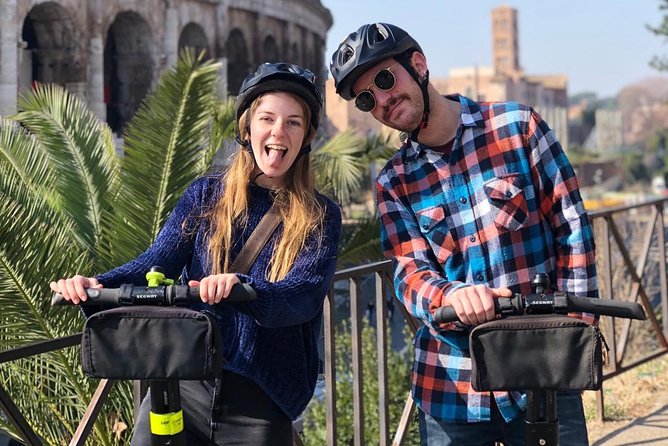
Glide up Rome’s Seven Hills in 3.5 hours. This Hills of Ancient Rome Segway Tour is a smart way to cover serious ground without turning your legs into pasta. I love the Segway coaching that happens right before you roll, and I love the tight group size of up to 10, which keeps the ride calm and the guide’s attention focused. One consideration: you’ll spend most of the tour on your feet plus balancing on the Segway, so basic comfort with mobility matters.
You’ll get helmets, ponchos if it’s wet, and a guide who helps you translate what you see into something you can picture. Expect views tied to the Colosseum area, the Roman Forum, Palatine Hill, and the famous in-between stops like Trajan’s Column and the Keyhole. Also, the start point has practical perks, like wifi, a toilet, and luggage space, so you’re not stressed before you begin.
Quick hits before you book
- Segway lessons included, plus on-site safety and how-to riding time
- Small group feel, capped at 10 riders (and semi-private with up to 8)
- Seven Hills viewpoints, including Aventine Hill, Capitoline Hill, and Palatine Hill
- Iconic photo stops without a frantic pace, timed in short chunks
- Fun Rome oddities like Bocca della Verita and the Knights of Malta Keyhole
- Rain-ready setup, with helmets plus ponchos provided
Start at Piazza del Gesù, roll from a shop with real conveniences
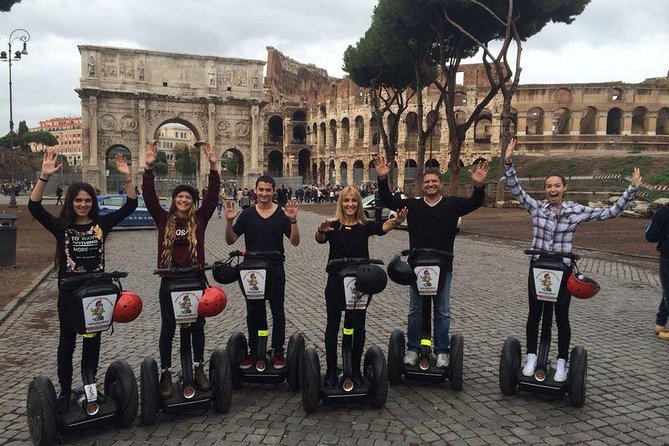
Your tour starts and ends at the Rolling Rome shop area, with the meeting point listed at Piazza del Gesù, 47 (00186 Roma). That matters because you don’t need a complicated travel plan to meet up, and you can treat this like the anchor of your morning or afternoon.
Before anyone rides, you get the basics on the spot: how the Segway works and the safety rhythm you’ll follow during the tour. The shop itself has helpful extras such as wifi, a toilet, and luggage space, so if you’re carrying a bag, you’re not stuck hunting for facilities while everyone else gets ready.
This is also a good setup for beginners. You’re not expected to already know how to ride. Instead, you learn the motions first, then you earn the views once you’re in control.
You can also read our reviews of more tours and experiences in Rome.



How the pre-ride Segway coaching actually helps on Rome’s hills
Even if you’ve never touched a Segway before, the tour is designed for first-timers. You get training right before departure, and that’s where a lot of the value is hiding. When you understand how to start, stop, and steer confidently, the rest of the tour feels smoother and less tiring.
The tour includes helmets and the guide provides instructions on how to ride + safety. That sounds standard, but in a city like Rome, it changes the whole experience from stressful to enjoyable. You’ll be moving through real streets and uneven spaces, and the coaching helps you stay relaxed rather than gripping the handlebars like your life depends on it.
One extra tip: wear comfortable shoes and be ready to stand and balance. The tour is short stops, but you still ride through the day, and the “easy” part is relative to your comfort level, not to the geography.
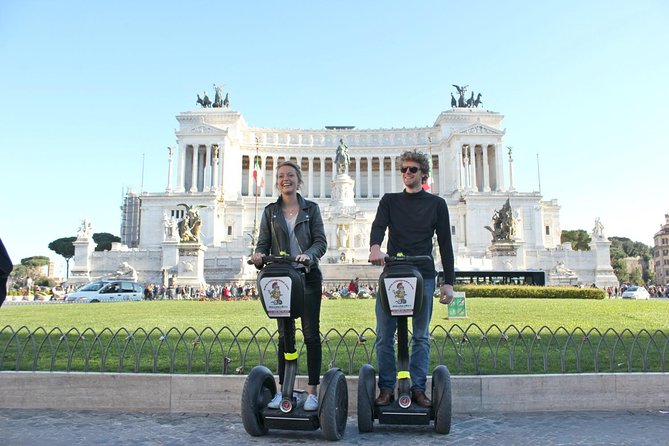
Piazza Venezia: a chaotic square that’s perfect for getting oriented
You’ll begin your sightseeing phase with a stop at Piazza Venezia, a busy square where it’s easy to get overwhelmed by what’s right in front of you. That’s exactly why it works early in the route. You start building a mental map, then the guide connects what you see to what you’re about to climb and view.
This stop is brief, but it sets the tone. Rome doesn’t give you one neat storyline. Instead, you get layers piled on layers, from monument to everyday street life. If you like travel where your eyes keep finding new details, Piazza Venezia is a good opener.
The only drawback is the same one you’d have on your own there: it’s active and you’ll want to pay attention rather than letting the crowd decide where your gaze goes.
Trajan’s Column: read Rome in stone reliefs
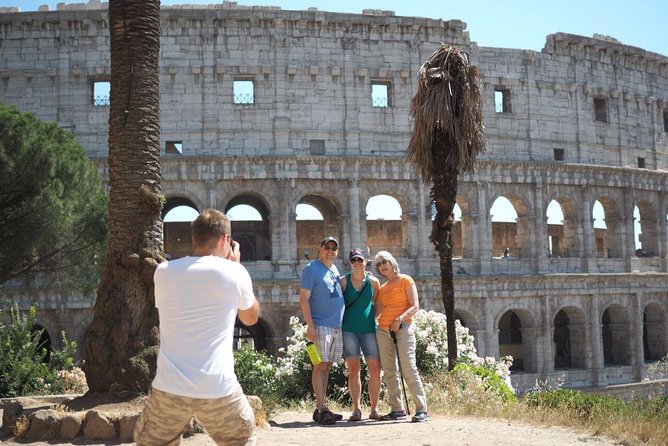
Next up is Trajan’s Column, described as an extraordinary marble column that has stood in place for about 2000 years. The real hook here is that it tells the story of the Dacian War and the glory of Emperor Trajan through carved scenes.
If you’ve ever looked at ancient monuments and thought, Ok, but where do I start, this stop helps. A column like this is not just a background object. It’s a narrative you can follow visually, and your guide’s explanations turn the carvings into something you can picture without needing a book in your hand.
The visit time is short, so don’t plan on studying every panel like a museum. Instead, aim to get the big storyline and then enjoy how long it has been there.
Foro Romano: picture markets, politics, money, and laws
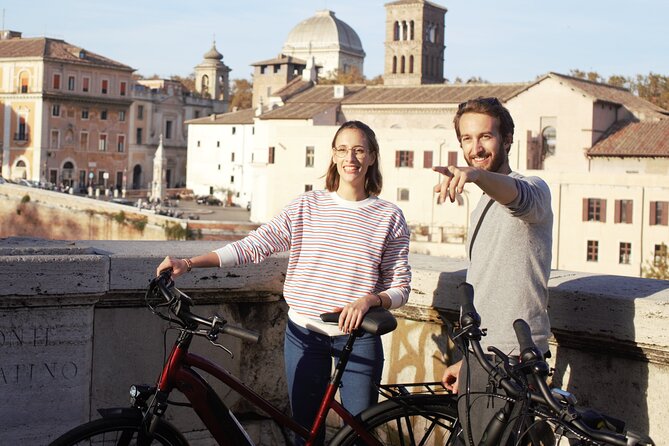
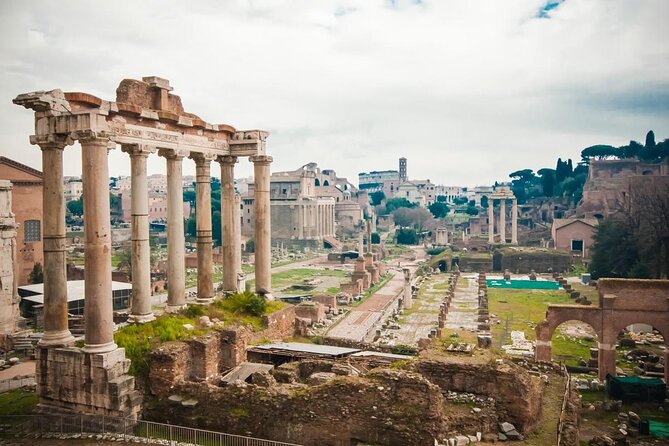
The Roman Forum stop is where the tour becomes more than a scenic ride. The Forum is framed as the place where Romans walked through markets, shopped in what’s described as the oldest shopping mall, handled politics and public relations, and dealt with money and laws that still shape everyday life.
That’s a powerful way to see it because it pushes you past postcard Rome. You’re not just looking at ruins. You’re imagining the daily rhythm of government and commerce happening in the same space, with crowds moving between decisions, deals, and announcements.
A practical note: because the Forum area is spread out, your viewpoint will matter. Take a minute to find the perspective your guide points out, then use that anchor to make the scene feel coherent.






Circo Massimo: the scale of Roman spectacle in a few minutes
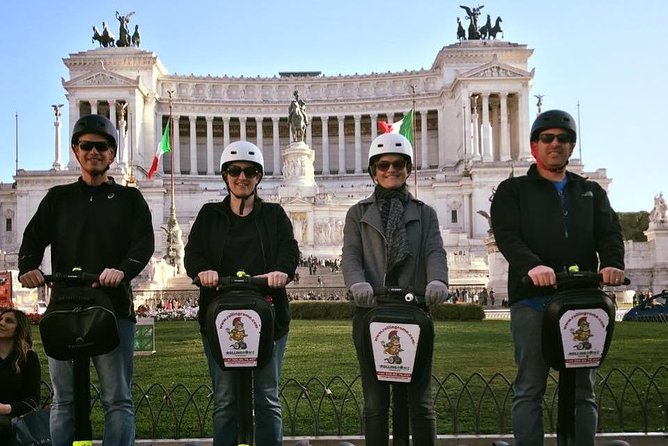
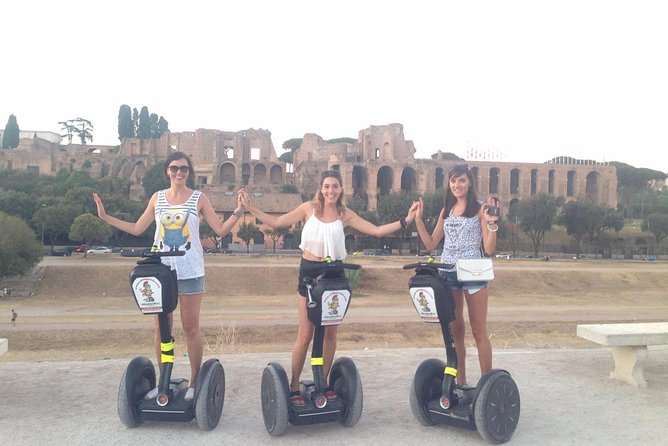
At Circo Massimo, you get the feeling for how big Roman entertainment once was. The site is tied to famous chariot races and is described as the largest stadium ever built, used for thousands of years.
This is a quick stop, but it’s an efficient one. It helps you connect the dots between ancient Rome and the scale of crowds and spectacle that the city could produce. If you’re a person who likes to understand infrastructure, this one gives you a sense of how Romans built for spectacle, not just ceremony.
The only caution is simple: since you’re stopping briefly, you won’t have long to walk and explore. You’re there for context and vantage, not for deep roaming.
Aventine Hill viewpoint, the Keyhole, and the mini-country moment
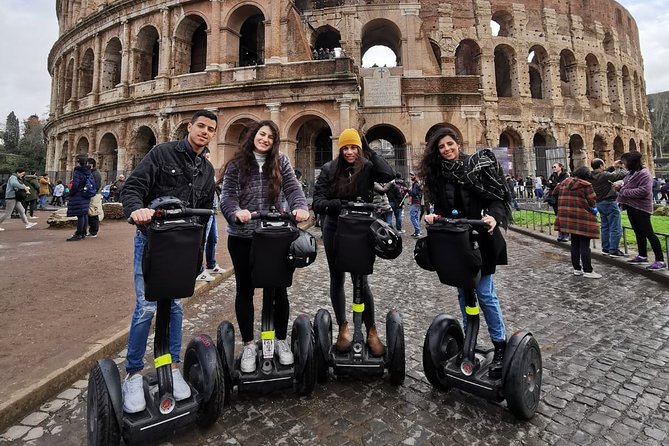
Then you shift toward one of the best parts of the Seven Hills idea: the viewpoints. On Aventine Hill, you get a fantastic view over Rome roof tops, and that helps your brain switch gears from “ancient ruins” to “the city as a whole.”
Right after that, you’ll stop at the Knights of Malta Keyhole. You peer through Rome’s famous keyhole for a surprise view, and you also learn about another tiny country inside Rome. It’s playful, and it gives you a break from the heavy monuments.
What I like about this stretch is how it balances awe with humor. You’re going from Trajan’s Column storytelling to a literal keyhole photo moment. That mix keeps the tour from becoming one long history lecture.
Bocca della Verità: the lie-detector myth you can try safely
Bocca della Verità is famous for the idea that it was used as a lie detector through the middle ages, and the physical gimmick is simple: you put your hand inside the ancient marble mouth and take the moment seriously for the story’s sake.
This is one of those stops that turns the tour from “seeing” into “doing.” Even if you don’t buy into the legend fully, the act of placing your hand there makes the whole thing memorable. It’s also a nice reset after the serious scale of columns and forums.
Quick consideration: you’ll want to watch for comfort and timing during the stop. The tour keeps moving, so treat it as a brief, fun photo and story stop, not as a long lingering moment.
Colle Capitolino and Palatine Hill: your Seven Hills payoff
Colle Capitolino is described as the heart of Rome and the most famous and important of the seven hills of Ancient Rome. You’re there for a view point that overlooks the entire Roman forum, and that overview is what makes the Forum stop click. Without that broader view, ruins can feel like scattered rocks. From a viewpoint, they start to look like a system.
Then you head to Palatine Hill, described as discovering the view on the old ruins. Palatine is where the tour reinforces the main theme: these hills are not random. They are where Rome concentrated power, residence, and myth.
If you’re the kind of traveler who loves connecting landscapes to stories, this is a great payoff section. You’re building a mental model of where everything sits, then you get the visuals to match it.
One drawback to keep in mind: because these are viewpoints and hill areas, you’ll notice the terrain more than at flat monuments. If you’re easily tired by slopes, plan to pace your own energy and focus on posture and control on the Segway.
Teatro di Marcello: an older sibling to the Colosseum vibe
The tour finishes its sightseeing loop with Teatro di Marcello. It’s described as the little brother of the Colosseum and also as older than its bigger cousin. The payoff here is architectural storytelling, with the idea that the structure tells multiple stories through how it was built and how it still reads as ancient space.
Even with limited time, this stop gives you a different angle on Roman architecture. It’s not just about one famous building. It’s about how Roman design patterns show up again and again, and how older structures influenced what came later.
If you loved the Colosseum area but wanted something with a less overwhelming crowd vibe, this stop is a good balance. You get the Roman theatre concept without feeling like you’re trapped in a single landmark.
Small group pacing: why up to 10 riders is a big deal
The tour caps at a maximum of 10 travelers, and it’s described as semi-private with up to 8 participants. In a city where “group tour” can mean a stampede, that small size is one of the best parts of the experience.
It shows up in the pace. Stops are short, so you need time to get moving, listen, and take your photos without waiting forever. A group of 10 moves differently than a group of 30. Your guide can also adjust to the needs of first-time riders, especially when someone needs a slower handhold on a maneuver.
The reviews you can learn from also highlight a patient, helpful guide experience. Guides like Nico (also heard as Nikko) are described as very personable, with lots of knowledge and patience for first-time riders. If you end up with a similar guide, that can be the difference between feeling rushed and feeling confident.
Comfort, safety, and what to bring for a smooth ride
This tour is a “most travelers can participate” type of experience, with a minimum age of 15. Children must be accompanied by an adult, and the tour is offered in English.
What you should bring is mostly common sense, but it matters for comfort. You’ll be riding for roughly 3 hours 30 minutes, with short walks and photo moments. Wear shoes that grip, bring layers for the breeze, and expect you’ll be out enough that weather matters.
Ponchos are included in case of rain, so you’re not paying for waterproof gear on the fly. Still, a light jacket helps even on breezy days.
If you’re thinking about agility, treat it like this: the Segway does the heavy lifting, but you’re still participating. If balancing and standing for long stretches is an issue, you may find the experience tiring.
Value check: what $102.12 covers, and why it can be worth it
At $102.12 per person for about 3.5 hours, this is not a budget activity. But it also includes several things that usually cost extra on your own: the Segway, helmets, and the pre-ride instruction plus safety coaching.
The tour also throws in ponchos, and it guides you to a concentrated loop of major sites and famous viewpoints without the coordination headache of multiple tickets, transport, and finding the right meeting point for each stop. That “packaging” is where the value lives.
Is it worth it for everyone? If you enjoy the sites but hate long walks between them, yes. If you prefer to wander slowly with no structure, you might feel limited by the short stop times. But if you want a high-efficiency way to hit Rome’s icons and Seven Hills perspectives in one go, this price is easier to justify.
Who should book this Segway tour, and who should choose another style
This is a strong match for:
- First-time Segway riders who want instruction before departure
- Travelers who want big-name Rome views without turning the day into a leg workout
- People who like a mix of serious monuments plus playful photo stops
- Small groups or couples who want a more intimate feel than large bus tours
You might reconsider if:
- You need a fully sit-down tour, because you’ll be actively riding and doing short stop moments
- Hills and standing still feel like a problem for you
- You want a long, slow museum-style experience at each place
One small planning note: hotel pickup and drop-off is not included. That means you should be comfortable getting yourself to the meeting point area at Piazza del Gesù.
Should you book the Hills of Ancient Rome Segway Tour?
If your goal is to see Rome’s Seven Hills highlights, major Ancient Rome landmarks, and viewpoint moments in one organized, efficient stretch, I think you’ll like this tour. The best part is the combination of beginner-ready Segway coaching plus a small group cap, which keeps the experience from feeling chaotic.
Book it if you want a structured route with breaks for photos and explanations, and if you’re comfortable balancing on the Segway for much of the 3.5 hours. Skip it if you’re looking for a long, in-depth museum day, or if mobility and balance are a daily struggle.
FAQ
FAQ
How long is the Hills of Ancient Rome Segway Tour?
The tour lasts about 3 hours 30 minutes.
Where does the tour start and end?
It starts at Piazza del Gesù, 47, 00186 Roma RM, Italy, and it ends back at the same meeting point.
Do I need Segway experience before going?
No. Beginners are welcome. Training on how to ride and safety is included before you depart.
What’s included with the Segway tour?
The tour includes a local guide, Segway, helmets, ponchos in case of rain, and the Segway how-to lesson. It also includes a semi-private format with a small group size.
What group size should I expect?
The tour is capped at a maximum of 10 travelers, and it is described as semi private with up to 8 participants.
Is hotel pickup included?
No, hotel pickup and drop-off are not included.
What age is the minimum for this tour?
The minimum age is 15 years, and children must be accompanied by an adult.
Is the tour offered in English?
Yes. English is listed as the offered language.
Can I cancel for a full refund?
Yes. Free cancellation is available, and you can cancel up to 24 hours in advance for a full refund.
More Tours in Rome
More Tour Reviews in Rome
Not for you? Here's more nearby things to do in Rome we have reviewed












Ancient Rome Tours, compared.
 ★ 4.7Colosseum: Underground and Ancient Rome TourFrom $16012,691 reviews
 ★ 4.4Colosseum, Ancient Rome Tour or Self AudioGuided TourFrom $392,866 reviews
 ★ 4.9Appian Way, Catacombs, & Roman Aqueducts E-bike TourFrom $851,421 reviews
 ★ 4.9Appian Way E-bike Tour with Catacombs, Aqueducts & FoodFrom $961,210 reviews
 ★ 5.0Appian Way Aqueducts Bike Tour (Catacombs & Lunch Option)From $78975 reviews
 ★ 4.7Appian Way, Aqueducts, and Catacombs TourFrom $64942 reviews
 ★ 4.7Caracalla Baths & Circus Maximus — Private or SharedFrom $77835 reviews
 ★ 4.7Colosseum Arena Access and Ancient Rome Guided TourFrom $94774 reviews
Browse the lists this tour appears in