
Reviewed · ROME
German Vom Kapitol bis zum Campo de’ Fiori – Walkingtour
A few Roman streets feel like a movie set. This German walking tour strings together big landmarks and small stories, from the Capitoline view to Campo de’ Fiori. You get playful facts about daily life, architecture, and power, with a guide who uses humor to keep the pace lively.
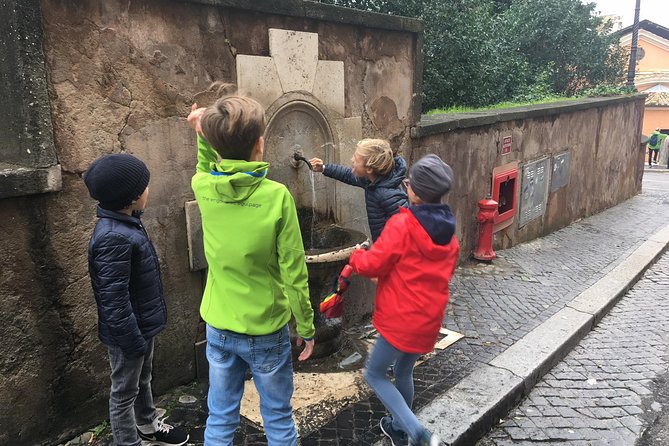
I especially like the way the route mixes hero sites with quieter corners. You start on the Marc Aurel statue area and get a real photo moment over the Forum Romanum toward the Colosseum, then you work your way through places with names that still echo older Rome. I also appreciate the human touch in the guide style, like how Mira handled rain creatively, or how Giancarlo tailored explanations for kids.
One thing to consider: it’s a 3-hour walk, so you’ll want comfortable shoes and a plan for warm weather. Also, it’s in German, so if you are more comfortable in English, you might want to look for another language option.
Key highlights
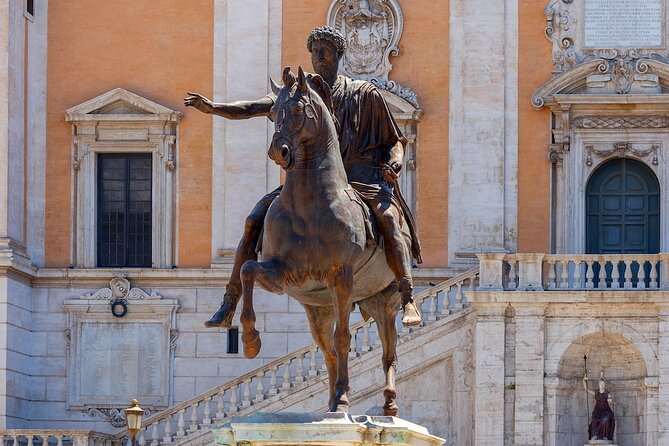
- Capitoline Hill meetup at the Marc Aurel statue, plus a fast orientation to Rome’s founding ideas
- Forum Romanum to Colosseum viewpoint, built for photos and understanding where things sit
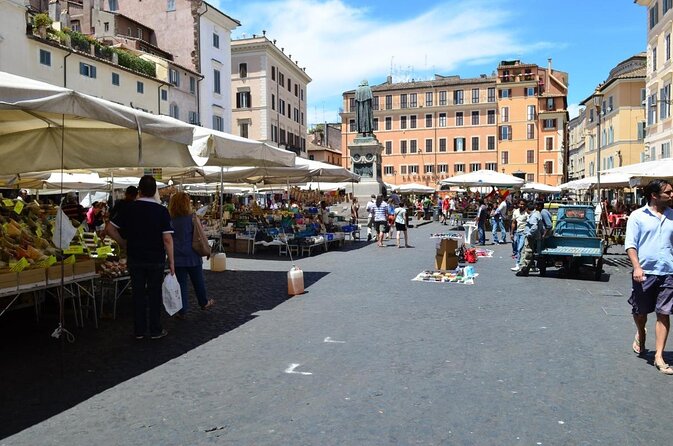
- Forum Boarium (old cattle market) and a heads-up on the best weekend farmers market
- Jewish Quarter stroll, including the romantic Schildkrötenbrunnen Turtle Fountain area
- Largo Argentina, tied to where Julius Caesar was murdered
- Small group size (max 18), which helps the guide keep the pace and energy
Starting on the Capitoline Hill, where Rome makes sense fast
This tour is built around a simple idea: Rome feels confusing until you learn how to look at it. You begin at Piazza del Campidoglio, meeting your guide at the Marc Aurel statue. That spot matters. It’s on the Capitoline Hill, one of the classic “control points” of Rome, where you can quickly grasp how the city’s power shifted over time.
From there, you’re not just walking from one postcard to the next. You get context right away: the foundation of Rome, plus the fun concept of the speaking statues. You also hear about monuments shown on Italian money coins, which is a clever way to connect modern everyday life with ancient symbols. It’s the kind of detail that makes later sights easier to remember.
You’ll also get a smooth start. The first stop is short (about 35 minutes) and focused, so you’re not exhausted before the real walking begins.
You can also read our reviews of more tours and experiences in Rome.



Getting the viewpoint: Forum Romanum to the Colosseum photo moment
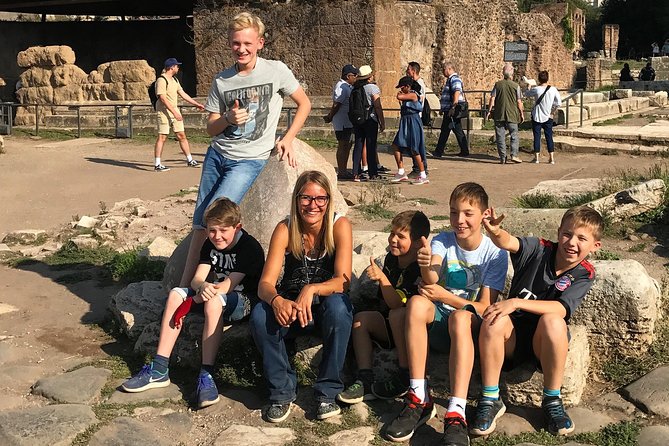
One of the best parts of this route is the built-in “look” moment. After you’re oriented on the Capitoline area, you experience the view over the Forum Romanum, with the Colosseum visible in the same sightline.
This is more valuable than it sounds. The Forum and the Colosseum can look like random ruins and big stone drama from street level. From the right height, they start to feel like a plan, not a pile. You get a chance to place your landmarks in your head. That makes the rest of your walking route click.
It’s also timed in a way that helps photos. You’re not trying to take pictures while sprinting between crowds. You’re getting a real pause with a purpose: look, understand, then keep moving.
Walking the panorama path toward the Forum Boarium
After the viewpoint, you follow a pleasant route along a panorama path. The goal here is variety. Rome is full of big-name sights, but the magic often happens in the middle, on the way between them.
Your next major stop is the Forum Boarium, described as the former antient cattle market of Rome. Today it doesn’t look like a livestock yard, but the name carries the old function. And the guide uses that history as a springboard into modern rhythm, too.
Here’s a practical detail that I love for planning your time in Rome: you’ll be shown where there is a best farmers market every weekend. Even if you don’t go the same day, it helps you spot where the city still trades in fresh food and local goods.
This is also a good segment for families and mixed groups. The route keeps moving, but it’s not just one long straight line. It feels like a guided “walk and learn” with breaks built into the flow.
Marcellus Theater to the Jewish Quarter, plus the Turtle Fountain
From Forum Boarium, the route passes by the Marcellus-Theater area before heading into the Jewish Quarter. This shift is important. You go from a market-history zone to a neighborhood with a different vibe, where you start noticing small streets and calmer pockets of architecture.
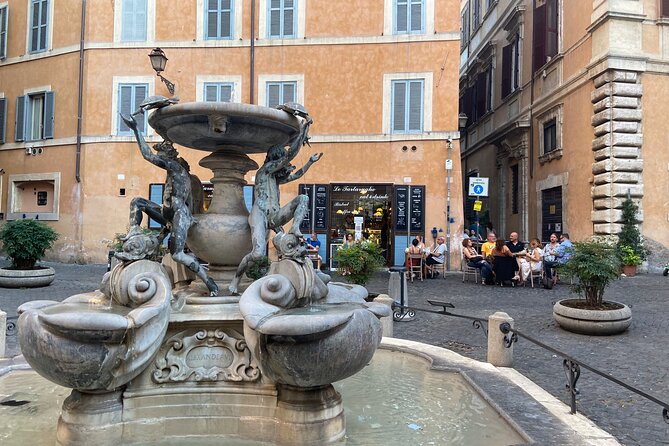
In the Jewish Quarter, the guide points out small, meaningful corners, including the Schildkrötenbrunnen, the Turtle Fountain. It’s the kind of stop that changes the tone of the tour. Big ruins can feel overwhelming. Small details like this give you something to hold onto, and they make the walk feel more like exploring with a storyteller than marching with a checklist.
This is also where the guide’s personality shows. In the reviews tied to this company’s tours, guides like Donato are praised for mixing humor with lots of practical detail, and guides like Niels for showing Rome in a way that feels away from tourist crush. You’re still hitting major names, but you’re doing it through real neighborhood texture.
Largo Argentina and the Julius Caesar murder site
Next comes Largo Argentina, known for ancient temple areas on the site tied to the murder of Julius Caesar. This is a heavy topic, but the tour keeps it understandable.
The value here is not just knowing the headline. It’s seeing where the event connects to the city’s physical layout. When you learn the story in front of the relevant setting, your memory sticks. And you’re not rushing through. You’ve built up context earlier in the tour, so by now the city feels like a sequence, not disconnected stops.
If you like Roman politics, this is your moment. If you’re more casual, it’s still a standout because it’s a named place with a clear association to one of Rome’s most famous power struggles.





Ending at Campo de’ Fiori, and what to do next
The tour finishes at Campo de’ Fiori. This is a smart ending because it gives you options immediately. You can grab a drink, eat something local, or simply wander in the open area after your tour is done.
Campo de’ Fiori also works well as a staging point. If you’re continuing your day, you’ll likely find it easier to move from here than from somewhere deep in quieter streets. And because the tour ends in a lively area, you’re not left needing a long walk to reach dinner plans.
My practical advice: plan your next steps before you arrive at the end. Have a direction in mind, even if you keep it flexible. The area is popular, and that’s good, but it can make you lose time if you wait until the tour is over to decide.
Price and value for $93.68 per person
At $93.68 per person for a roughly 3-hour walk in German, you’re paying for more than entry-free sightseeing. You’re paying for interpretation, pacing, and the ability to connect places that otherwise blur together.
What you get for the money:
- A guided route with multiple major sights plus smaller neighborhood stops
- A small group cap of 18 travelers, which helps the experience feel more human
- A mobile ticket, which makes it easier to check in without extra hassle
- German-language storytelling that is designed to keep attention, including kid-friendly approaches mentioned in reviews for guides like Susi and Susanne
What you don’t get:
- Transportation to and from attractions
- Tips
- Snacks
So think of this as a mid-price “guide time” purchase. If you enjoy cities best when someone explains what you’re looking at, it makes sense. If you prefer to go completely self-paced with no guidance, you’ll likely feel like you overpaid for the walking alone.
Who this tour suits best (and who should skip it)
This tour is a great match for:
- Families who want Rome in a story format. The praise for guides such as Giancarlo and Susi points to tailoring explanations for kids while still engaging adults.
- People who want fewer hours than a full-day tour, but still want more than just the top three highlights.
- Anyone comfortable walking through central Rome for a few hours and enjoying neighborhood flavor.
It may not be ideal if:
- You don’t speak German. Since it’s German language only, you might struggle to follow the key facts and jokes that drive the experience.
- You dislike walking between sites. This is a true walking tour, not a ride-along.
Practical tips for a smoother 3-hour walk
A few details can make the difference between a good tour and a great one.
Wear comfortable shoes. The route crosses varied streets and levels typical of central Rome, and you’ll be on your feet most of the time.
Bring water, especially in warm weather. One review noted heat, and that’s usually the time when pauses matter most.
Be flexible with weather. Mira’s experience described rain handled creatively, which is a sign the guide team adapts rather than cancels instantly.
Also, because tips and snacks are not included, it’s smart to budget a small amount for gelato or a quick bite near the end. In reviews tied to this kind of pacing, a short gelato stop has shown up, but don’t count on it as guaranteed. Still, having a plan for a treat keeps energy up for the final stretch to Campo de’ Fiori.
Finally, take the group size seriously. With up to 18 people, the guide can keep things moving, but you’ll still want to arrive on time. Rome check-in points can be easy to miss if you’re late.
Should you book this German walking tour from Capitoline to Campo de’ Fiori?
I think you should book it if you want a German guide to connect Rome’s biggest moments with the small streets in between. The route is strong because it does three useful things: gives a commanding viewpoint early, uses market-history context at Forum Boarium, and lands on a dramatic political setting at Largo Argentina before ending at Campo de’ Fiori with easy next-step options.
You might skip it if language is a barrier or if you’d rather spend your time doing Rome without guidance. In that case, you could still visit the same places, but you’ll lose the “why this here, what it meant, and how to look at it” layer that makes this style of tour worth the money.
FAQ
How long is the German Vom Kapitol bis zum Campo de’ Fiori walk?
It’s about 3 hours.
Where do I meet the guide?
You meet at Piazza del Campidoglio, at the Marc Aurel statue.
What is the tour end point?
The tour ends at Campo de’ Fiori.
Is transportation included?
No. Transportation to and from the attractions is not included.
What language is the tour?
The tour is in German.
What does the ticket mean for check-in?
You use a mobile ticket.
Is there a limit on group size?
Yes, the tour has a maximum of 18 travelers.
Are service animals allowed and is it generally suitable for most people?
Service animals are allowed, and most travelers can participate.
Is free cancellation available?
Yes, you can cancel up to 24 hours in advance for a full refund.











