Reviewed · ROME
German Verstecktes Rom im Zentrum
Rome goes underground, and it feels real. This German tour strings together headline sights with lesser-known layers, with Piazza Navona’s Stadion Domitian and the Vicus Caprarius water city as the big wow moments. One practical consideration, it moves briskly through central Rome, so plan for a good walk.
I like the way the guide turns landmarks into answers for real questions. You’ll hear why Roman sport could mean nudity, how water reaches the Trevi Fountain, and why Rome is still called the Eternal City after more than 3,000 years.
The group stays small, up to 16 people, and you’ll use headsets if it’s larger than four. It also runs in rain, and you go in with a mobile ticket.
Key highlights you should care about
- Stadion Domitian under Piazza Navona: you see how the square sits over an old stadium.
- Pantheon as church today: you get the contrast between temple and current worship space.
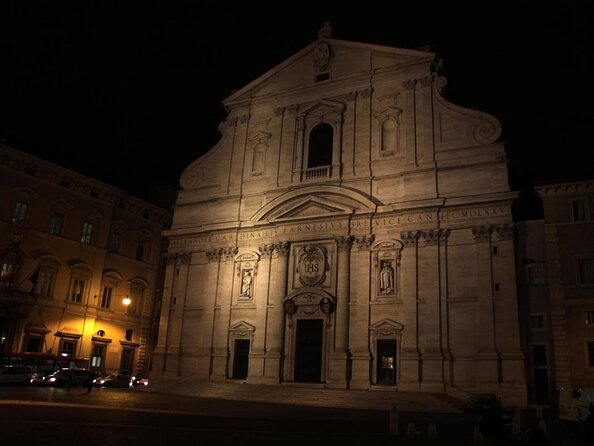
- Sant’Ignazio 3D ceiling: baroque illusion tricks explained as you stand under it.
- Vicus Caprarius, the City of Water: follow the Trevi Fountain story underground.
- Rinascente Roma Tritone basement stop: a short modern detour with history-flavored context.
- Small-group feel in a busy center: headsets and a pace that lets you hear the guide.
Hidden Rome works because you see it in layers
Rome can feel like a photo album if you only look up. This tour changes the rhythm. You start on famous squares and churches, then the story drops down into tunnels, underground remains, and the systems that made city life possible.
The best part is the mix of “iconic” and “how did that happen?” Piazza Navona looks like a perfect postcard. Then you drop beneath it and the same place becomes a window into how Romans organized entertainment and crowds. Later, you follow water to the Trevi Fountain instead of treating the fountain like a magic bucket.
I also like the human side of the guiding. You get facts, yes, but you also get explanations that make Roman life feel less distant. Why were some sporting events linked with nudity? How did daily city needs, like water, get engineered and managed? These questions help the city make sense, even if you think you already know the big sights.
One more strength: the tour keeps you moving through the center without making you feel rushed. It’s about 3 hours, enough time to connect several layers, not so long that you melt into the pavement.
You can also read our reviews of more tours and experiences in Rome.


Piazza Navona to Stadion Domitian, the underground stadium lesson
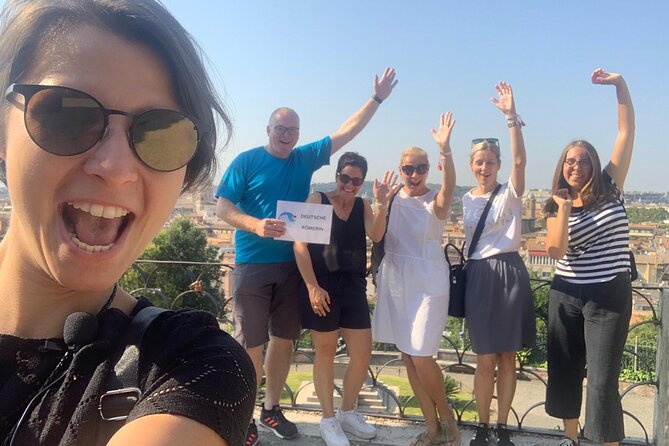
Piazza Navona sets the tone fast. You meet at the Fontana dei Quattro Fiumi, right in the Piazza Navona area, and the guide frames what you’re looking at before you even start moving. That matters here because you’ll spend real time with the idea of layers, not just buildings.
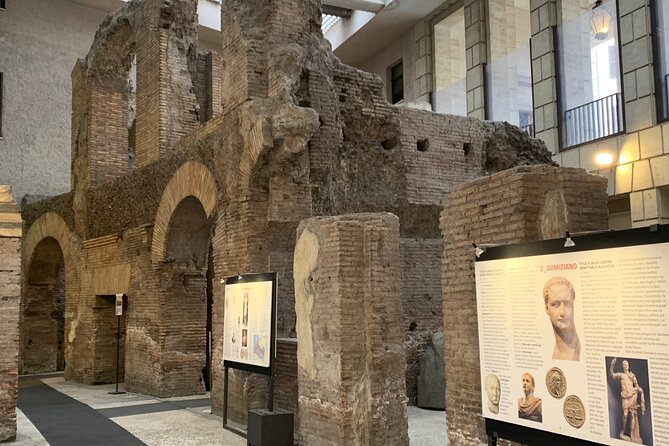
From there, the tour’s first major wow is the underground visit connected to the Piazza Navona square, the Stadion Domitian. Standing on the surface is one experience. Going underneath gives you a completely different map of the area. You stop seeing the square as an endpoint and start seeing it as something built over earlier urban life.
Why this part is so valuable is simple. Rome’s center isn’t just full of monuments. It’s full of reused space. The guide connects the modern plaza feeling to older structures beneath it, so your brain finally clicks: yes, that familiar place has a second city under it.
A practical tip, stay mentally flexible. You’ll shift from “watch the square” to “understand the underground” quickly. If you enjoy contrasts, like old versus new and surface versus system, this is the portion that will stick in your memory.
If you don’t love confined spaces, this stop may take a little getting used to, since the point is getting below ground. The trade-off is worth it if you want Rome to feel more real than just scenic.
Pantheon and Sant’Ignazio, when architecture becomes a story you can see
After Piazza Navona, the tour works its way toward the Pantheon area. Along the way, you pass key civic landmarks, including the Senate building area, so your walk feels like a guided timeline rather than a random stroll.
At the Pantheon, you get a clear moment of orientation. The stop focuses on the building itself and on stories behind the way it functions today. The big idea you’ll take away is that the Pantheon is no longer just ancient temple architecture in a museum sense. It’s a church, and the guide explains the curious bridge between those eras.
This stop usually feels short on paper, but it’s packed. You get time to look up at the space and time to understand why people keep talking about it. The dome and the light do the show, but the guide gives you the why behind what you’re seeing.
Then you move to Chiesa di Sant’Ignazio di Loyola, where the star is the 3D ceiling painting. This is one of those places where you can either glance and move on, or pause and let the illusion work. The guide’s explanations make it easier to see what your eyes might otherwise miss.
I like this pairing because it balances mood. The Pantheon teaches scale and form. Sant’Ignazio teaches how art and perspective can manipulate what you feel you’re seeing. Together, they help you read Rome’s layers with both history and imagination.
Trevi Fountain coin time, then the Vicus Caprarius water lesson underground
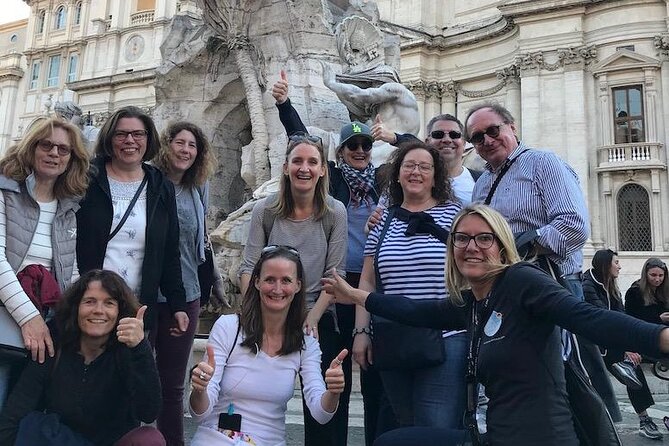
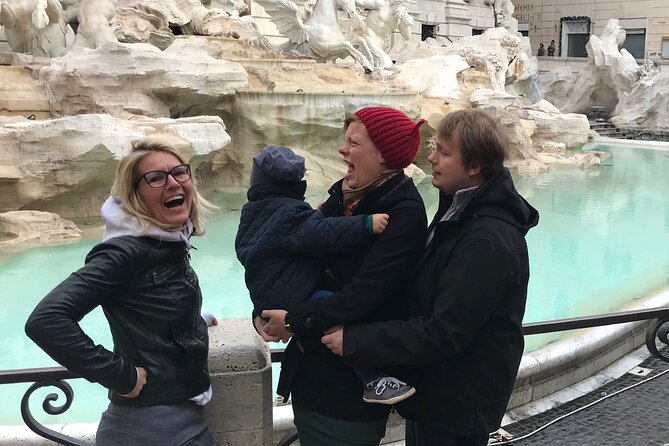
Everyone knows the Trevi Fountain from photos. This tour makes you look beyond the surface and into the city mechanics behind it. You throw a coin at the famous fountain as part of the experience, then you get the explanation you usually never hear.
The key stop here is Vicus Caprarius, described as the City of Water. The focus is underground access near the Trevi area, where you learn how water reached the fountain. This is where the tour earns its name as a hidden Rome experience, because it shifts your attention from wishing to understanding.
Here’s the mental switch that makes this portion rewarding. The Trevi Fountain stops being a standalone attraction and becomes the visible tip of a city-wide water system. Once you hear the water story, you’ll notice how often Rome’s grandeur ties back to logistics, pipes, channels, and engineering.
It also connects well to the Eternal City theme. Rome lasted for thousands of years partly because it managed the basics of living well enough to keep building. Water was not optional. It was the foundation.
Practical note: you’ll spend time looking down and around in underground spaces. If you’re the type who enjoys tracing cause and effect, this will feel satisfying, not just entertaining.
Rinascente Roma Tritone, a modern stop with a different kind of value
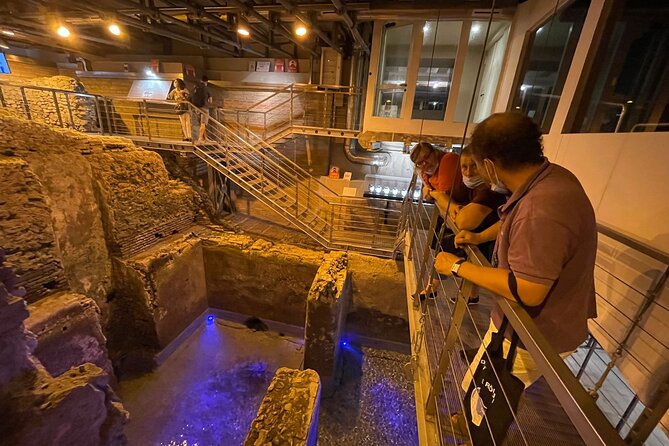
The tour doesn’t end at a monument. It ends at Rinascente Rome, Via del Tritone, near the Spanish Steps area. This is the part some people initially question, like why trade ancient streets for a department store.
But the reason it works is that Rinascente is a concentrated modern moment in the same historic center. You’re getting a break from constant outdoor looking, and you’re also getting context for how Rome layers old and new everyday life. The stop focuses on what’s in the store, specifically in the basement level.
Think of it as a palate cleanser that still feels connected to the tour’s overall theme. After underground ruins and church ceilings, it’s refreshing to stand in a different kind of space and see the city keep evolving.
Time-wise, it’s a manageable stop, around 30 minutes, and included in the experience with admission for that part.
If shopping is not your thing, treat this as a short reset. You’re not stuck there. You’ll have the chance to enjoy one final look at central Rome’s rhythm before you’re done.
Price and what you actually get for $115.12
At $115.12 per person for about 3 hours, this isn’t the cheapest way to see central Rome. The value comes from how the time is used.
You’re paying for more than walking between famous spots. You’re paying for:
- access to underground historic areas like the Stadion Domitian area and the Vicus Caprarius water story
- a German-speaking guide who explains what you’re seeing, including the “why” behind details
- headsets when the group grows beyond four, which keeps the sound clear in crowded central streets
- entry tickets included in the tour price, so you’re not constantly stopping to handle separate admissions
The small-group cap, maximum 16, matters too. Big city center attractions can turn into loud lines. Here, you’re set up to hear explanations without straining.
One more value point: this tour is built to work even in rain. That reduces the risk of wasting a half-day when plans feel fragile. You still get the underground and indoor ceiling moments, so the experience holds together.
Your costs outside the tour are basically personal expenses like food and drinks. That’s normal for Rome, so it’s easy to budget if you plan ahead.
How the guides keep it lively, even when the subject is technical
One reason people rate this style of tour so highly is the guide approach. In the broader Deutsche Römerin tours, guides like Mira and Giancarlo show up repeatedly in strong feedback for energy, friendly explanations, and the ability to handle complex context without losing people.
You’ll feel that kind of guiding here too, especially in the underground portions. Underground visits can turn into a series of signs and silence. Instead, the guide ties it back to what it meant for Romans, then connects it to other stops so the day doesn’t feel like separate sightseeing chunks.
Another praised trait is the guide’s willingness to answer questions. That’s a big deal in Rome, because you’ll always notice something odd, like a detail on a façade, a historical contrast, or a weird place name. A good guide helps you turn those moments into understanding.
You also get this family-friendly kind of pacing in spirit. Some guides are praised for including both adults and kids, which usually means clearer explanations and more interactive moments. Even if you’re traveling as a couple, that clarity helps.
Bottom line, you’re not just collecting sights. You’re learning how Rome worked.
Who should book this Hidden Rome tour in the center
This tour is ideal if you want more than the classic checklist. It’s for you if:
- you love Roman stories with mechanics, like how water actually reached the Trevi Fountain
- you enjoy seeing famous squares alongside what lies beneath them
- you want a German-speaking guide who can explain architecture, churches, and illusions
- you prefer a small-group setup that stays audible with headsets
It may be less ideal if you dislike underground spaces or prefer long, slow museum-style pacing. This experience is structured around multiple stops in a compact time window.
It’s also a good fit for first-timers who already recognize the Pantheon and Trevi, but haven’t connected them to the city systems underneath. If you’ve been to Rome before, it can still feel fresh, because the underground and water-city focus gives you a different angle on familiar places.
Should you book Deutsche Römerin’s Hidden Rome in the Center tour?
I’d book it if your goal is to leave Rome with a mental map that actually makes sense. You get famous highlights, yes, but the tour’s real power is the layering: surface to underground, legend to infrastructure, temple past to church present, illusion art to explanation.
The tour also scores well on comfort for planning, since it runs in rain and uses headsets to keep communication clear. For the price, you’re buying access and guided time, not just strolling.
If you only want to tick off sights fast, you can do that cheaper on your own. But if you want the city to feel less like a set of backdrops and more like a lived machine, this one fits.
FAQ
Where does the tour start?
The tour starts at Fontana dei Quattro Fiumi in Piazza Navona, address Piazza Navona 90, 00186 Roma RM, Italy.
Where does the tour end?
The tour ends at RINASCENTE Rome, Via del Tritone 61, 00187 Roma RM, Italy, near the Spanish Steps area.
How long is the tour?
It lasts about 3 hours.
What language is the tour in?
It is a deutschsprachige (German-language) tour.
Does the tour run in rainy weather?
Yes, the tour takes place even when it rains.
How big is the group?
The group size is limited to a maximum of 16 travelers.
Are headsets provided?
Headsets are needed if there are more than 4 participants.
Are entrance tickets included in the price?
Yes, admission tickets are included in the tour price. Personal expenses like food and drinks are not included.
What is your cancellation policy?
Free cancellation is available. You can cancel up to 24 hours in advance for a full refund.
How and when will I get confirmation?
Confirmation is received at the time of booking, unless you book within 12 hours of travel, in which case confirmation is sent as soon as possible subject to availability.