
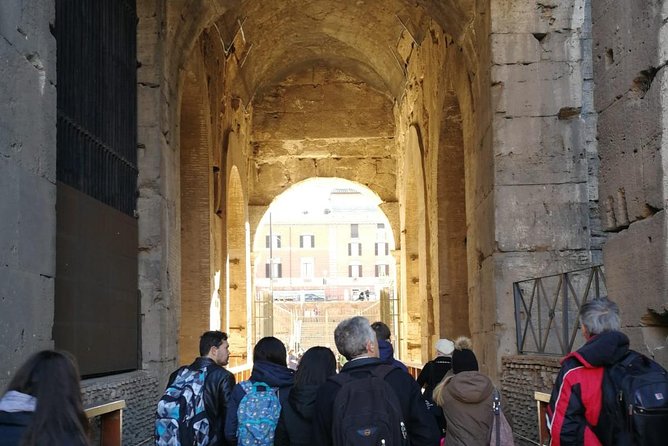
Reviewed · COLOSSEUM TOURS
Colosseum with Gladiator Arena, Forum and Palatine in Spanish
Walking into the Colosseum arena changes your sense of scale. This Spanish tour takes you through the gladiator gate and then continues to the Palatine Hill and the Roman Forum, with a tight 3-hour plan designed to keep things moving. You get a mobile ticket and very small groups, so it feels more like a guided visit with access than a rushed photo stop.
What I really like is the direct time in the Colosseum interior and Arena, not just staring up from the outside. I also love how the day builds context, starting from the arena experience and then moving to the Roman birth story from the Palatine and the political center of the Forum with key sites along the Via Sacra.
One thing to watch: entry depends on your details. You must provide the full names of everyone booking and show a valid passport or ID that matches those names, or you can be denied entry at the Colosseum and Roman Forum.
Key things that make this tour work
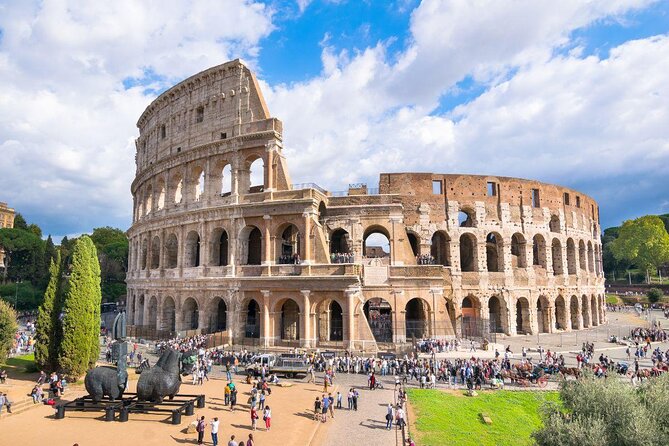
- Gladiator gate access for a true interior Colosseum moment
- Very small group size (max 20) helps you move and hear the guide
- Three linked sights: Arena, Palatine Hill, then the Roman Forum
- Focus on specific landmarks like Temple of Antoninus, the Curia, and the Arch(s)
- Tickets included in the price, so you pay once and go
Spanish-guided Colosseum flow that actually feels efficient
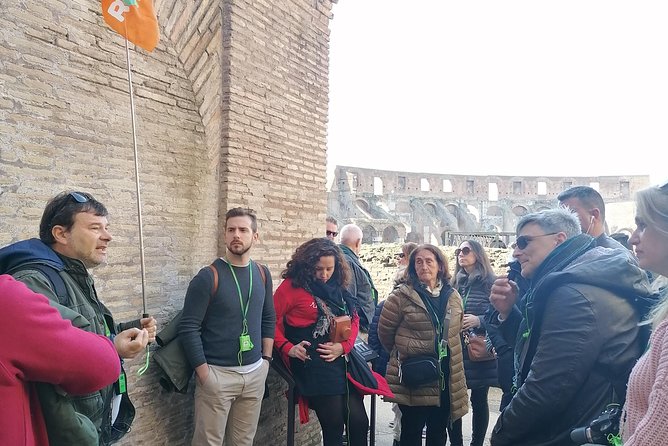
This is one of those Rome tours where the biggest value is how the time is handled. You’re not bouncing around with a big crowd and waiting your turn to enter. Instead, you get a guided, Spanish-language experience that keeps the day tight and organized, with the key benefit that the Colosseum experience is centered on being inside the Arena area.
A very practical point: the tour uses a mobile ticket. That’s handy in Rome, where you’re constantly pulling up maps, schedules, and entry details on your phone. Just make sure your battery is happy and you can show the ticket at the start.
I also like that this isn’t only about the Colosseum. The Palatine Hill stop gives you the “where Rome began” frame, and the Roman Forum stop connects the dots between imperial power and everyday politics. If you’ve ever visited Rome and left feeling like you saw three separate museums, this structure helps your brain link the story together.
Spanish matters too. If you’re comfortable in Spanish, you’ll probably enjoy the explanation more than you would with an audio-only plan. And if you’re learning Spanish, you get a real-world setting where you’ll hear place names and concepts you can remember later.
You can also read our reviews of more tours and experiences in Rome.



Entering the Colosseum Arena through the gladiator gate
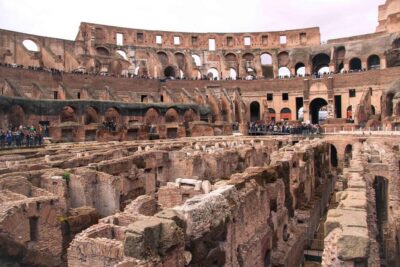
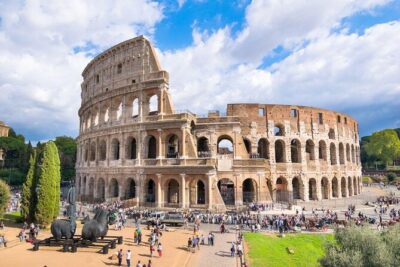
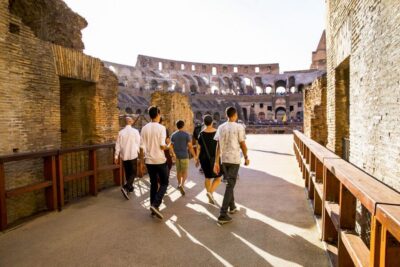
The headline moment is your time inside the Colosseum with direct access into the Arena area, entering through the gladiator gate. That single detail changes the feeling of the place. From the stands, the Colosseum is impressive. From the Arena, it’s human-sized, and you start to understand how tight and intense those events must have been.
Expect a full hour to take it in at the Colosseum stop. The idea isn’t just to “stand where people stand.” Your guide’s job is to help you look at what you’re seeing, so the Arena and surrounding interior feel like a designed stage, not just old stone.
One smart advantage is that this tour is set up as a small-group visit. In a big group, you often get pulled along while you’re still trying to orient yourself. Here, the rhythm tends to be smoother, which matters because the Colosseum is so visually busy. You want time to slow down, look up, and then look around without feeling like you’re always behind.
You may also see how different parts of the Colosseum connect to the events people associate with it. Since you’re entering through the gladiator gate, your mental map gets built in the right order: from the moment the action would have started to the spaces around it.
A quick, real-world tip: go in with the mindset that you’re going to be looking upward and around a lot. That’s great for photos, but it can feel tiring if you’re not ready for it. If it’s hot out, this is exactly where you’ll want water access, and note that bottled water is not included.
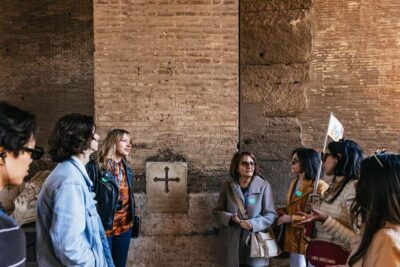
And on the guide side, one highlight shows up in past experiences: a guide named Tomás was described as very engaging and humorous, which is a good sign if you like information that doesn’t sound like a script. Of course, guides can vary, but it’s encouraging to see that the tour is capable of delivering a lively, professional approach.
Palatine Hill from the Farnese Terrace and the Flavia palace spaces
After the Colosseum, you move to Palatine Hill. This stop is framed from the top of the Palatine, specifically from the Farnese Terrace. That location is useful because it gives you a “big picture” view. From here, you can start to sense why this hill mattered so much, both for storytelling and for power.
You’ll spend about an hour on Palatine Hill, and the focus is not generic. The explanation is aimed at contemplating where Rome was born, then walking through spaces associated with the Flavia dynasty palace. The point is to understand the site as more than a viewpoint. It’s part of how Rome signaled authority through architecture, and it helped turn power into something visible and permanent.
If you’re the type who likes a short route with a clear narrative, Palatine is a strong second stop. It acts like a bridge. The Colosseum gives you spectacle. The Palatine gives you the setting behind the spectacle, where emperors and elites built their environments and shaped the image of Rome’s dominance.
Potential drawback: Palatine Hill can feel uneven underfoot, and you’ll likely do some walking on historic surfaces. The tour says most travelers can participate, but it’s still wise to wear shoes you can trust. If you’re expecting an easy, flat stroll, you might want to temper expectations.
This stop is also a good moment to take in the temperature and the crowd level. If the Colosseum felt intense and crowded by reputation, Palatine can feel like a calmer phase of your day, even though it’s still a major sight.
The Roman Forum and Via Sacra landmarks that tie the story together
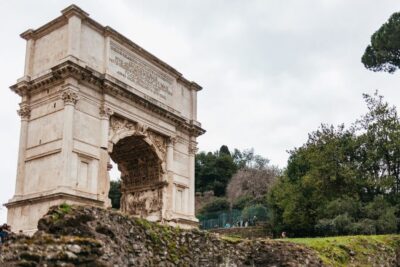
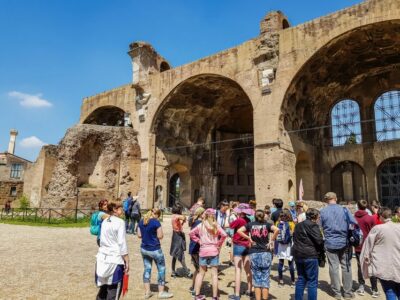
The final stop is the Roman Forum, and it’s structured around the key dramatic spaces. You’re looking at a sequence of famous buildings and political monuments, including the Temple of Antoninus, the Curia, and the triumphal arches of Titus and Septimius Severus.
One reason this stop works so well after the Colosseum and Palatine is that the Forum is where you get the “who had power and how” layer. The Colosseum is performance. The Forum is governance, messaging, and public life. Once you’ve seen both, Rome feels less like a list of sites and more like a system.
You’ll tour the Via Sacra, which is essentially the Forum’s main processional route, and the visit includes the basilicas and the memory of the place where Rome gave its last greeting to Julius Caesar. That last detail matters because it’s the difference between “old buildings” and “big moments where real people lived and died in the public eye.”
As you look around, you’ll likely notice how the monuments shape movement. The Forum is made for walking and pausing in specific spots. A guided visit helps you choose the right pauses, instead of wandering until you find something interesting.
A practical note: in a 3-hour overall tour, the Forum portion is still only about an hour. You’ll get a guided sweep of the highlights rather than a slow museum-style experience. If you want to linger for 20 minutes on one arch, you might feel a little rushed. The tradeoff is that you get a coherent overview of the Forum’s biggest names without losing the plot.
Price and value: what $90.57 really buys you
The price is $90.57 per person, and this tour is often booked about 43 days in advance. That tells you two things: it’s popular enough to plan ahead, and it’s likely best to reserve early so your schedule matches the departure times that work.
Here’s how to judge value. Admission ticket costs are included, and you’re visiting three major sites. That means your money is mostly paying for the guide, the organized flow, and the added access emphasis at the Colosseum Arena.
You’re also getting a mobile ticket and a plan designed to avoid lines. While you’ll still be at major monuments where some waiting can happen, the tour approach is built around minimizing the time you spend stuck at entry points with no context.
Is it “worth it” for everyone? If you love Roman ruins but you prefer to explore on your own, this might feel like too much structure. If you want an organized story with specific landmarks and time inside the Arena area, this is a strong value option because it bundles the big stops into one half-day window.
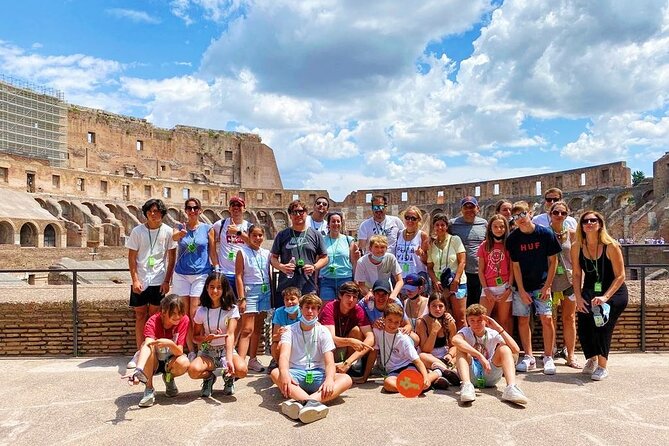
One more value signal: maximum group size is 20. That’s not private in the sense of only your family or two people, but it is small enough that the guide can keep control of the pacing and deliver explanations without sounding like a megaphone.






Meeting point, mobile ticket, and day-of tips that prevent headaches
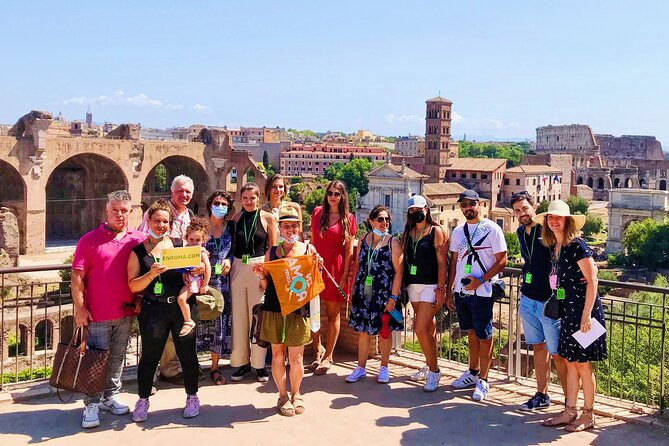
The tour starts at Largo Corrado Ricci, Roma RM, Italy. It ends at the Colosseum area, specifically Colosseum Piazza del Colosseo, 1, 00184 Roma RM, Italy, and you can stay near the Colosseum after the tour if you want.
That ending detail is useful. You get back to the Colosseum area, so it’s easy to keep exploring on your own without hopping across town.
Day-of, keep these points in mind, because they’re not “nice to have,” they’re entry-critical:
- Bring a valid passport or ID that matches the full names you provided when booking.
- Make sure every traveler’s full name is correct before entry. If it’s wrong, entry can be denied.
- Keep your mobile ticket ready on your phone and plan for low battery risk.
Also, bottled water is not included. If your visit is during a hot stretch of the year, you’ll thank yourself for carrying water before you start. One account of a very hot day came up in past experiences, and it’s exactly what you should expect in Rome summers.
If you’re the type who needs things to go smoothly, be early to the meeting point. The meeting location is near public transportation, which helps. But it’s still on you to arrive with enough buffer time to check in calmly.
One red flag did appear in a past experience summary: a no-show situation where the guide reportedly did not arrive and the operator reportedly said the tour was not available for the reservation. I cannot predict whether that will happen again, but I can say this: confirm your start time and meeting details the day before, and keep your booking confirmation handy so you can fix issues fast if anything feels off.
Who this tour suits best
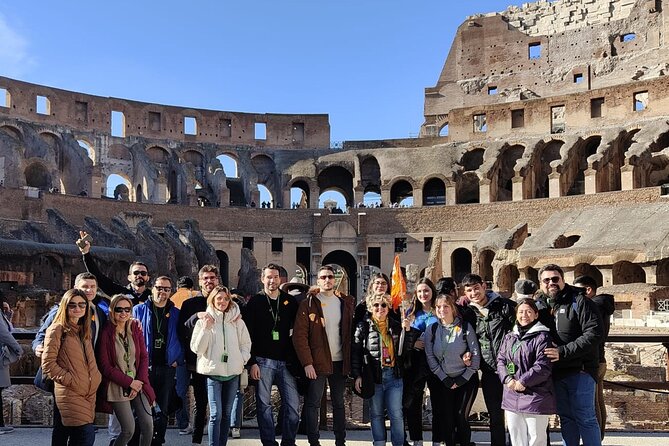
This is a great fit if you want:
- a Spanish-language guide
- small-group pacing (maximum 20)
- Colosseum time that includes the Arena area, not just viewpoints
- a connected story that moves from imperial power context (Palatine) into public life and politics (Forum)
It’s also a good option if you have limited time in Rome and you’re trying to pack the biggest “must-see” sites into one smooth 3-hour block. You’ll see enough to feel oriented, and you’ll leave knowing what you’re looking at instead of just what you’ve photographed.
If you strongly prefer wandering without a schedule, you might find the fixed stop times too structured. And if you need lots of quiet time at one single site, an hour can feel short.
FAQ
Is the tour in Spanish?
Yes, this is an exclusive visit in Spanish.
How long is the tour?
The duration is about 3 hours.
What ticket format do I get?
You receive a mobile ticket.
What is included in the price?
All fees and taxes are included, and admission tickets for the Colosseum, Palatine Hill, and the Roman Forum are included as part of the stops.
What is not included?
Lunch and bottled water are not included.
Where do we meet, and where does the tour end?
You start at Largo Corrado Ricci, Roma RM, Italy, and the tour ends at Colosseum Piazza del Colosseo, 1, 00184 Roma RM, Italy.
How many people are in the group?
The tour has a maximum of 20 travelers.
What ID do I need for entry?
Each traveler must present a valid passport or ID document that matches the name provided at booking.
Can I cancel and get a full refund?
Yes. You can cancel up to 7 days in advance for a full refund. Cut-off times are based on local experience start time.
Should you book this Colosseum, Palatine, and Forum tour?
If you want a guided, Spanish-language visit that actually gets you into the Colosseum Arena area, this is a strong yes. The combination of gladiator gate access plus Palatine Hill and the Roman Forum is efficient, and it helps you understand Rome as one linked story rather than three separate stops.
Book it especially if you’ll appreciate structure: you want the guide to point out the key Forum buildings and help you make sense of what you’re seeing. Also, plan ahead, because it tends to sell faster than many tours, with bookings averaging around 43 days out.
I’d reconsider if you hate group pacing or if you’re not sure your booking names and IDs are perfectly matched. For entry-dependent experiences like this, careful details matter. If you’re good with that, you’ll likely feel like you got your money’s worth.
More Tour Reviews in Rome
Not for you? Here's more nearby things to do in Rome we have reviewed












Colosseum Tours, compared.
 ★ 4.8Colosseum, Palatine Hill and Roman Forum Guided TourFrom $5232,814 reviews
 ★ 4.7Guided Tour of Colosseum, Roman Forum & Palatine HillFrom $5527,897 reviews
 ★ 4.2Colosseum & Forum with Audio Guide App -Optional ArenaFrom $4124,770 reviews
 ★ 4.5Colosseum, Roman Forum and Palatine Hill Guided TourFrom $5923,903 reviews
 ★ 4.4Colosseum, Forum & Palatine Hill Tour & Optional ArenaFrom $5813,839 reviews
 ★ 4.6Colosseum, Palatine Hill & Roman Forum Guided TourFrom $5112,703 reviews
 ★ 4.7Colosseum: Underground and Ancient Rome TourFrom $16012,691 reviews
 ★ 4.6Colosseum Arena, Palatine Hill & Forum Guided TourFrom $7310,584 reviews
Browse the lists this tour appears in