
Reviewed · COLOSSEUM TOURS
Colosseum Underground, Roman Forum & Cesar Palace Special Access
Rome’s best seats are underground. And this tour strings together the Colosseum, the Roman Forum, and Caesar’s Palace on Palatine Hill in one smooth 3-hour circuit, with rare access through the Gladiator’s Gate. I like that you’re not just looking at ruins from a distance, you’re stepping onto the arena path and down into the spaces that powered the spectacle.
My favorite parts are the backstage walkthrough at the Colosseum and the way the Roman Forum pieces get explained in real-world location order. I also like that you get an expert guide and a manageable group size, so the pace stays focused and questions feel doable. One heads-up: this is a lot of walking on uneven ground and stairs, and it runs rain or shine, so you’ll want moderate fitness and good weather gear.
Key Highlights Worth Booking For
- Gladiator’s Gate entry that replaces the usual crush at the front doors
- Arena floor access plus photos from the level most visitors never reach
- Underground spaces and dungeons where gladiators and wild animals were kept
- Roman Forum route that hits major anchors like Vestal Virgins and Julius Caesar’s tomb
- Palatine Hill focus on Caesar’s world, from ancient foundations to later rebuilds
- Small group size (max 24) that helps keep the tour moving smoothly
Entering the Colosseum Like a Gladiator, Through Gladiator’s Gate
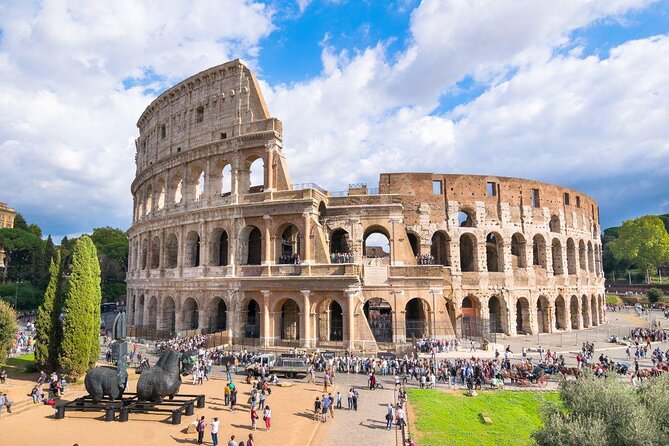
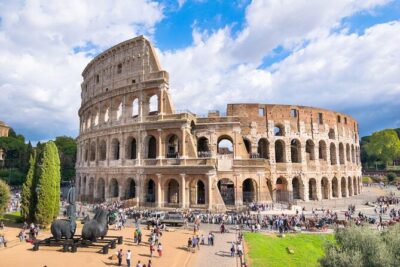
The Colosseum can feel like a photo stop unless you connect the dots. This tour tries to fix that by getting you inside through a privileged route, Gladiator’s Gate, so you start your visit with momentum instead of waiting in the general entry line. Once you’re in, the guide sets up a clear mental map of the stadium, how crowds behaved, and why the layout made the violence feel controlled.
After that, you walk onto the arena floor area for exploration and photos. This matters because you’re seeing the scale from a perspective closer to the original action, not from the top galleries. You’ll also get a guided transition into the underground levels, where the Colosseum’s story turns from architecture to logistics.
If you want to hear history explained with energy, the guides on this tour have earned praise for strong storytelling and even humor, including names like David, Andre, and Polina. That can make a long, intense site feel less like a lecture and more like a guided walk with context.
You can also read our reviews of more tours and experiences in Rome.

What you’ll actually notice at ground level
The Colosseum is not just stone. You’ll understand how people built it so it could hold thousands and move large groups efficiently. The guide also helps you connect structure to purpose, which is the real trick for not losing interest when you’re standing in the same big oval shape everyone sees.
And because you go underground, the experience becomes more than “standing in a famous place.” You’ll see the supporting spaces behind the public show, the places that were meant to be hidden from the audience.
Colosseum Underground: Arena Path, Then the Backstage World
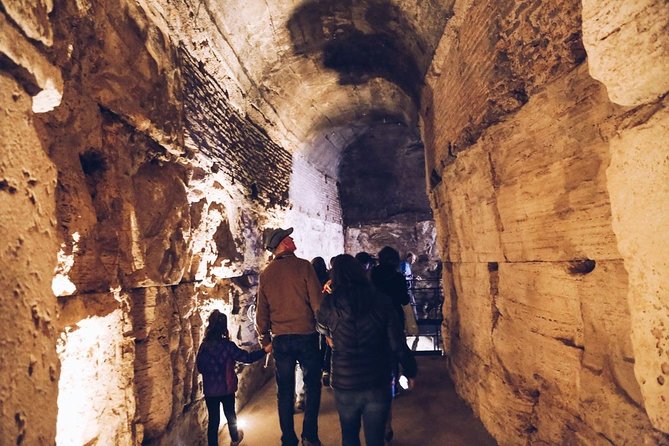
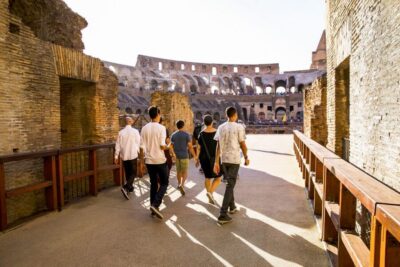
The Colosseum Underground portion is the main event here. You start with privileged entry, then you explore the arena level, before heading into the underground areas often described as backstage for gladiators and wild beast handling. The tour is built so you learn what you’re looking at as you go, not after you leave.
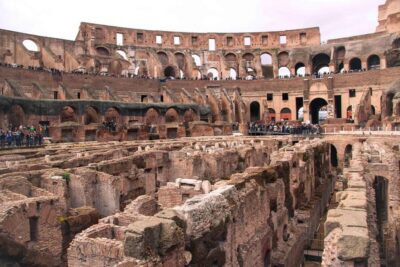
In the underground spaces, you’re looking at the Colosseum’s operational side: where people were staged, where animals were held, and where the fights were prepared. The tone shifts from awe at scale to a more grounded feel for how the venue ran day to day and fight to fight.
You’ll spend about an hour on the Colosseum stop, but it doesn’t feel like a quick walk-by. This is partly because the physical movement is meaningful, and partly because the guide talks through the logic of the site. Some guides on this tour have professional archaeology backgrounds, which shows in how they explain layers, materials, and how excavations changed what we know.
Photos and pacing, the practical reality
You’ll want to bring your phone for photos, but also remember that underground areas can feel darker and more enclosed than you expect. If you’re sensitive to tight spaces, plan to move slowly and take breaks if you need them. This isn’t a long crawl tour, but it’s still a “real site” visit with stairs and level changes.
Expect more crowds than you’d see on a private tour, even with skip-the-line access. The difference is that your time is structured. Instead of getting lost at the entrances and juggling ticket queues, you’re following a path built for the same special access route.
A small but real comfort tip
Bring water and plan for heat. Even on cool days, Rome can warm up fast, and you spend time outside before you reach shaded underground areas. Reviews also point out sunscreen and hats for summer. That advice is practical, not fussy.



Roman Forum: Temples, the Senate House, and Caesar’s Tomb
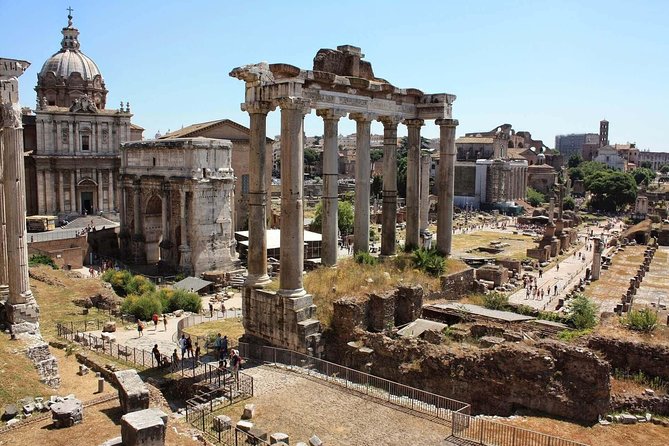
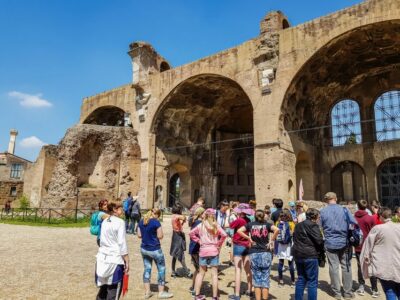
After the Colosseum, the tour shifts from arena drama to civic and religious power. The Roman Forum is where you see how Rome organized authority, faith, and memory in one compact zone. The guide takes you to key ruins and explains how each one fits into the daily life of ancient Rome.
You’ll cover places like pagan temples and tombs, the house of the Vestal Virgins, the Senate house, and Julius Cesare’s tomb. That’s a strong set of “anchor points.” It’s also a good mix because it covers both the public face of power and the religious side that made political life feel legitimate.
Why this stop feels different from a generic Forum walk
A typical Forum visit can turn into “I’m standing in piles of stone.” Here, the format keeps the story moving. You’re not just seeing famous fragments, you’re getting explanations tied to the locations themselves. That helps you understand why people built, used, and revised these spaces.
The Vestal Virgins stop is especially useful because it gives you a human angle on how Rome treated religion like infrastructure. The Senate and tomb areas then connect the spiritual and political threads, so the Forum reads like a functioning system rather than separate landmarks.
You’ll spend about an hour here, so the goal is direction, not exhaustive archaeology. If you’re the type who enjoys learning enough to navigate the site confidently later, this timing is a sweet spot.
Palatine Hill, Caesar’s Palace, and the Layers of Rome
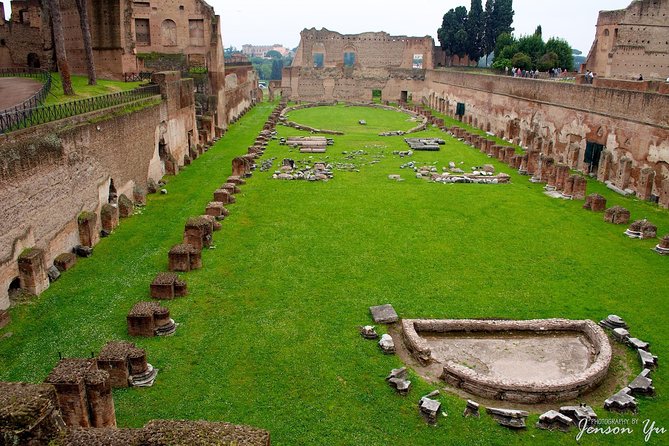
Next comes Palatine Hill, often described as Caesar’s Palace, though the guide will explain it as Palatine Hill in the broader sense. This is where you get the feeling that Rome’s ruling class didn’t just govern, they lived inside power.
Palatine Hill is also tied to the founding story of Rome, nearly 3,000 years ago, and the site holds structures spanning from far earlier periods through later eras, including Renaissance-era changes and buildings associated with Benito Mussolini. That “time layered” detail matters, because it explains why Palatine Hill can feel both ancient and oddly modern in its edges.
What you’ll learn here that changes how you see Rome
At Palatine Hill, you’re walking through space that rulers claimed as their own. The guide’s job is to show you how that changed over centuries. You’ll be hearing about emperors, and the tour description mentions “Rome’s most brilliant and also psychotic Emperors,” which signals the vibe you can expect, dramatic, pointed, and story-driven.
Even if you don’t memorize dates, the effect is the same. You’ll start seeing Palatine Hill as Rome’s power center, not just another hill with ruins.
This stop is about an hour as well. It keeps the tour moving and helps you finish with a sense of flow, Colosseum to Forum to the ruling residence.
Timing, Transportation, and What 3 Hours Feels Like
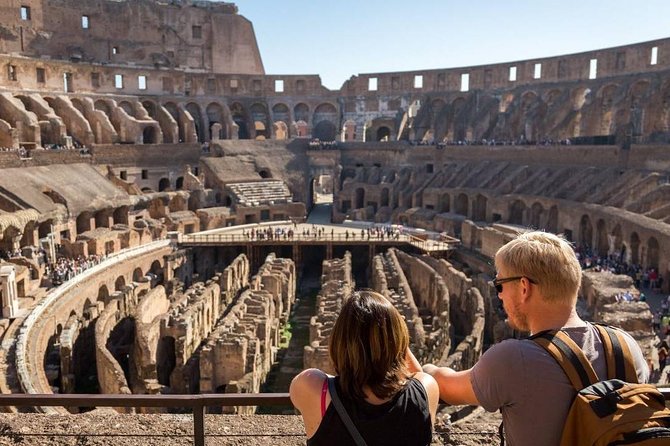
This is an approximately 3-hour tour, offered in English, and it runs with multiple start times. It’s also capped at a maximum of 24 people, which is big enough to feel lively but small enough that you’re not stuck behind a wall of strangers the whole time.
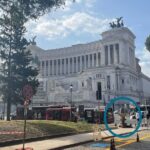
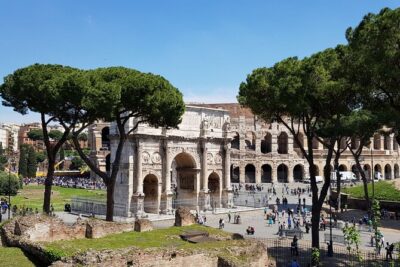
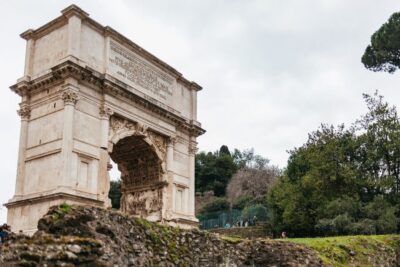
The meeting point is at the Arch of Constantine, Piazza del Colosseo, 00184 Rome. You’ll end in the center of the Ancient City at the Roman Forum. That end location is handy because it keeps you close to public transportation, shopping, restaurants, and other major sights you’ll likely want to continue to on your own.
Fitness reality check
The tour calls for moderate physical fitness. That lines up with what you should expect: uneven surfaces, stairs, and multiple transitions between outdoor and underground areas. If you’re traveling with knee issues or you tire quickly, go slower and tell the guide early. Some guides on this tour have been praised for being patient when someone needed more frequent stops, which is exactly what you want to hear if you’re concerned.
Rain or shine
The tour is not weather-optional. Reviews mention rain or shine, including heavy rain, so plan accordingly. That means a light rain jacket, shoes with grip, and a small plan for keeping your phone protected in the underground areas.
Mobile Tickets, Your Name on the Pass, and Smooth Entry
You get a mobile ticket. That’s modern and convenient, but it comes with a key rule: each traveler must present a valid passport or ID document that matches the name provided at booking. If your travel documents and booking name don’t match exactly, entry can be a problem.
You also need full names when booking. It’s not a “later fix” kind of situation at entry points, so double-check the spelling.
A practical way to protect your day: keep your confirmation information handy on your phone and be ready to show it at check-in. One recurring theme in feedback for similar special-access tours is that last-minute changes can stress people out, so if your pickup or start time shifts, respond quickly and verify your ticket details the same day.
Price and Value: Is $144.82 Worth It?
At $144.82 per person, this is not a cheap “see the Colosseum” add-on. But the value comes from the access level and how the time is packaged.
Here’s why the price can make sense for many people:
- You get special access entry through Gladiator’s Gate rather than the standard route.
- You get arena floor time plus Colosseum Underground areas that most visitors never see.
- You also bundle the Roman Forum and Palatine Hill stops into the same guided flow, so you’re not spending your day hopping between tickets and separate guides.
If you plan to visit only the Colosseum, you might feel like you overpaid. But if your goal is to understand how the Colosseum worked and then connect that to Rome’s civic and ruling power centers, this tour is built for that big-picture day.
In other words, the cost isn’t just for convenience. It’s paying for access, structure, and interpretation in the same block of time.
Who This Tour Suits Best, and Who Might Skip It
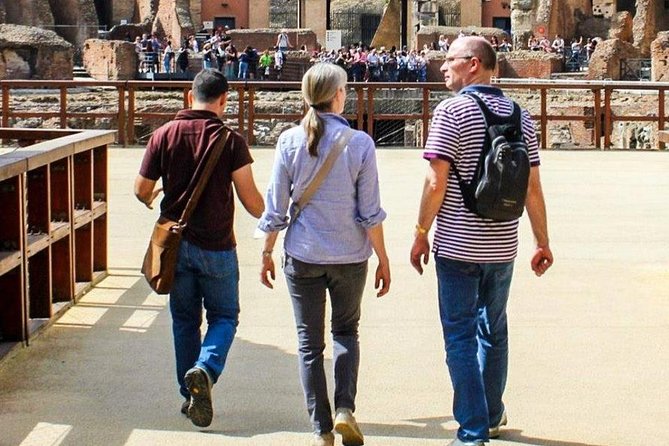
This tour is best for you if:
- You want the Colosseum underground experience and not just a surface-level look
- You prefer guided explanations tied to exact locations
- You like an efficient plan that covers Colosseum plus Forum plus Palatine Hill in one go
- You’re traveling with limited time in Rome and want the highlights done well
You might think twice if:
- You’re very sensitive to stairs, uneven ground, and crowds, even with a guided route
- You hate structured tours and would rather wander freely without checkpoints
- Your schedule doesn’t allow for about 3 hours of concentrated site time
The strongest fit is history-minded travelers who still want a story and photos, not just facts. It’s also great for couples and small families who can handle walking and want one ticket that links the big three ancient sites.
Should You Book Colosseum Underground, Roman Forum, and Caesar’s Palace Access?
I’d book it if you want the Colosseum to feel like a living machine, not just an impressive ruin. The Gladiator’s Gate access plus the underground backstage areas give you a view you’ll struggle to replicate on your own, and the Forum and Palatine Hill adds context that makes the day feel bigger than one attraction.
Still, don’t ignore the tradeoffs. This is a physically active tour, and it runs in real Roman conditions. Wear comfortable shoes, bring water, and protect yourself from sun or rain, because the experience will be better if you can keep moving comfortably.
If your priority is “see everything with the least effort,” you may prefer a less walking-heavy option. If your priority is “see the places that most people miss,” this one is doing exactly that.
FAQ
How long is the Colosseum Underground, Roman Forum & Caesar Palace special access tour?
It is approximately 3 hours total, with each major stop taking about an hour.
What language is the tour offered in?
The tour is offered in English.
What’s included in the tour tickets?
Admission tickets are included for the Colosseum, the Roman Forum, and Palatine Hill as part of the experience.
Where do I meet the guide, and where does the tour end?
You start at the Arch of Constantine, Piazza del Colosseo (00184 Rome). You end in the center of the Ancient City at the Roman Forum area.
Do I need a passport or ID for entry?
Yes. Each traveler must present a valid passport or ID document that matches the name provided at booking for entry to the Colosseum and Roman Forum.
Can I change or cancel if my plans shift?
This experience is non-refundable and cannot be changed for any reason.
More Tour Reviews in Rome
Not for you? Here's more nearby things to do in Rome we have reviewed






Colosseum Tours, compared.
 ★ 4.8Colosseum, Palatine Hill and Roman Forum Guided TourFrom $5232,814 reviews
 ★ 4.7Guided Tour of Colosseum, Roman Forum & Palatine HillFrom $5527,897 reviews
 ★ 4.2Colosseum & Forum with Audio Guide App -Optional ArenaFrom $4124,770 reviews
 ★ 4.5Colosseum, Roman Forum and Palatine Hill Guided TourFrom $5923,903 reviews
 ★ 4.4Colosseum, Forum & Palatine Hill Tour & Optional ArenaFrom $5813,839 reviews
 ★ 4.6Colosseum, Palatine Hill & Roman Forum Guided TourFrom $5112,703 reviews
 ★ 4.7Colosseum: Underground and Ancient Rome TourFrom $16012,691 reviews
 ★ 4.6Colosseum Arena, Palatine Hill & Forum Guided TourFrom $7310,584 reviews
Browse the lists this tour appears in