
Reviewed · COLOSSEUM TOURS
Colosseum & Ancient Rome Guided Walking Tour
Rome’s ancient core hits fast. In a single guided loop, you move through the Colosseum, Palatine Hill, and the Roman Forum with an expert telling you what you are actually seeing. What I love most is the reserved ticket setup included in the price, and the way the guide keeps the pacing manageable in one of the busiest zones in Rome. One drawback to plan for: there is plenty of walking, plus cobblestones, steps, and inclines, so comfy shoes and water matter.
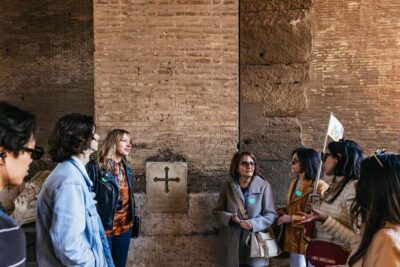
This tour works well if you want big-picture context without getting lost, and you still get hands-on, in-the-walls details at each stop. I also really like the use of headsets, because you can hear the story even when the crowd noise spikes. If you are very sensitive to accents, do note that a small number of guide styles can be harder to follow, so pick this when you are ready to listen closely.
Key Highlights You Will Care About
- Reserved admission and entry fees are included, so you are not scrambling for tickets while the crowds surge.
- Headsets keep the narration clear, which is a big deal at the Colosseum.
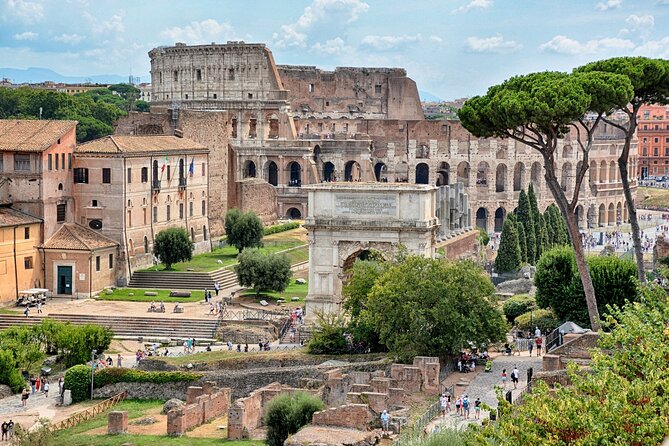
- Three iconic sites in one loop (Colosseum, Palatine Hill, Roman Forum) means you see more without wasting transit time.
- Small-group size (max 25) helps the guide manage the group and answer questions.
- Guides lean into storytelling and humor. I have seen history told vividly by guides like David Bataglino, Radu, Giuseppe, and Lumi.
- Photo and rest moments show up in many guides’ styles, which helps when the pace gets hot and the crowding ramps up.
Why This Colosseum-Palatine-Roman Forum Loop Makes Sense
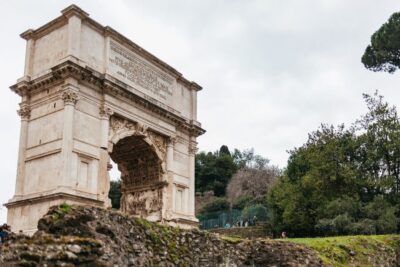
Rome is great, but it can also be a lot. This tour stitches together the three sites that explain how Rome went from a legend about kings to an empire built on power, spectacle, and politics.
You are looking at roughly 2 hours 45 minutes total, split into focused time at each location. That format is ideal for first-timers, or anyone who wants to see the headline monuments while still understanding the big story: who built what, why it mattered, and what daily life looked like from the outside in.
The price is listed at $65.33 per person, and the key value is not just that it includes a guide. It also includes the site tickets and fees, including a Colosseum reservation component. For a place like the Colosseum, that bundled approach can take stress off your day.
You can also read our reviews of more walking tours in Rome


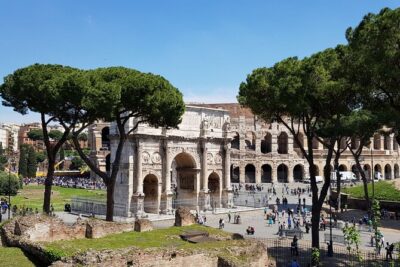
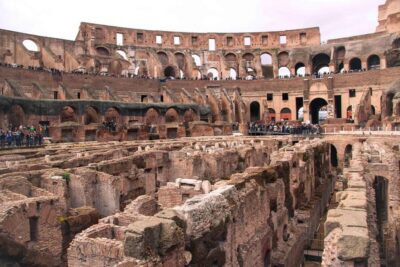
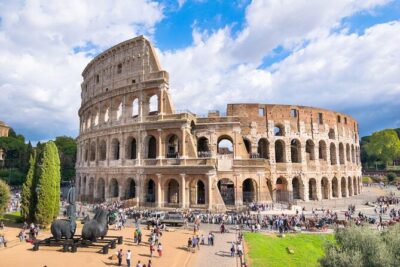
Entering the Colosseum: Flavian Amphitheatre Facts You Can Picture
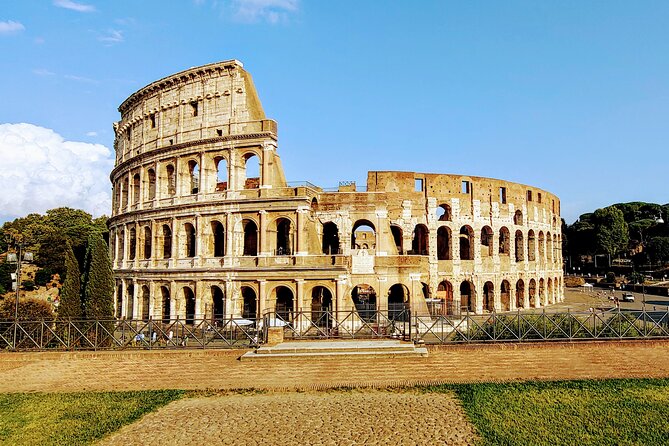
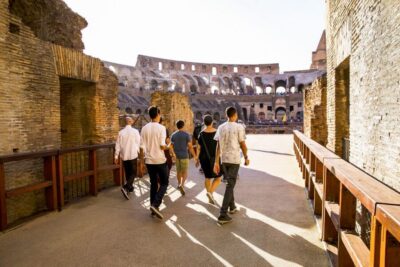
The Colosseum is one of those landmarks you think you understand, until a guide puts you in the right mental frame. This is the Flavian Amphitheatre, built on the order of Emperor Vespasian between 72 and 80 AD. Once you hear that, the building stops being a photo backdrop and starts being a machine built for public emotion.
Here are the kinds of details you will likely hear as you stand in the right spots with the group:
- The scale is mind-bending: it was constructed using more than 1 million tons of materials, including travertine, marble, and cement.
- Roman entertainment was not a one-off. There were roughly 200 similar entertainment venues across the empire.
- The games were free for the public, funded by the emperor to project the empire’s greatness.
- Over nearly five centuries, the arena hosted gladiators, animals, and convicts.
- The inauguration games took place under Titus in 80 AD, and they lasted 100 days.
That last point is especially helpful because it reframes the spectacle. You stop thinking in terms of one big event and start seeing a recurring institution.
What to expect on the ground
You will move through the Colosseum area with reserved entry and stay with your guide as the group navigates crowd flow. Expect a lot of people, and expect the guide to keep you moving so you do not lose time to slow lines.
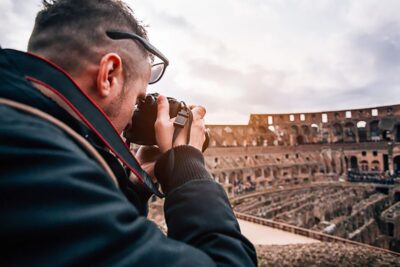
Many guides also build in practical beats that make the history easier to absorb. In my experience with this kind of Colosseum tour style, that often means short photo opportunities and quick stops for explanation, which helps you actually remember what you heard instead of just surviving the crowd.
A realistic drawback
Colosseum time is usually the hardest part of any short tour because the site is massive and crowded. Even with reserved entry, your guided time can feel brief if you want to linger. If you crave long, slow exploration, consider spending extra hours before or after the tour on your own.
Palatine Hill: The Seven Hills Story Begins Here
If the Colosseum is Rome’s loudest chapter, Palatine Hill is Rome’s origin story. This hill is tied to the legend of the first king, Romulus, with Rome traditionally founded in 753 BC. The guide framing matters here because the Palatine is not just scenery. It is the place where the powerhouses of early and imperial Rome grew up.
You will also hear why the hill is strategically important. Early civilizations often chose high ground near rivers for defense and protection, especially because flooding was an ongoing risk. Palatine Hill became the “best of the seven hills” in part because of its central position.
You can also read our reviews of more guided tours in Rome

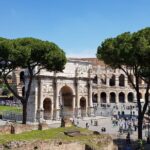
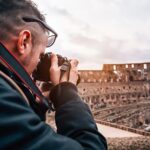
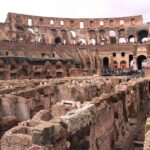
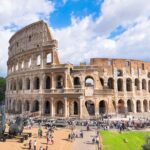
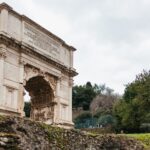
What you are seeing
Palatine Hill is where archaeologists found signs of settlements going back to the Bronze Age, which supports the traditional foundation date. As you look around, you are really looking at layered Rome:
- early settlement traces
- then later, the imperial palaces and the residences tied to kings and notable people
The takeaway I like is simple: Palatine is where Rome’s political myth turns into physical space you can walk around.
The human-sized pacing win
Compared to the Colosseum’s intensity, Palatine tends to feel more “explainable” in a short time. You usually get enough moments to understand why the hill mattered and where the big residences were, without feeling like you are being rushed through every corner.
The Roman Forum: Where Politics, Business, and Justice Played Out
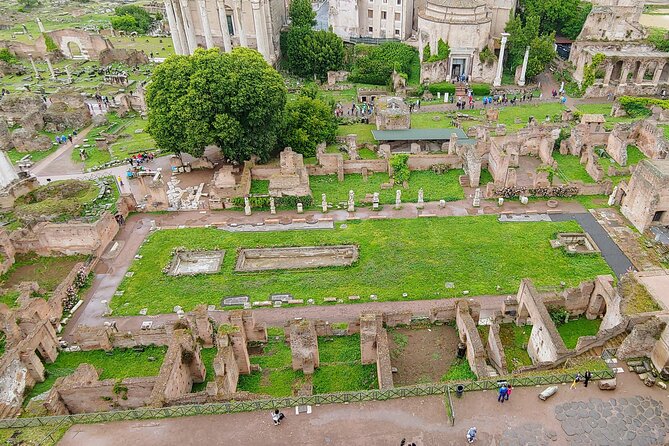
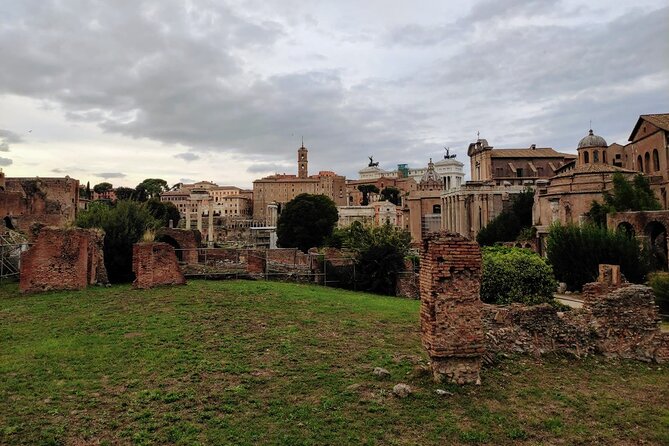
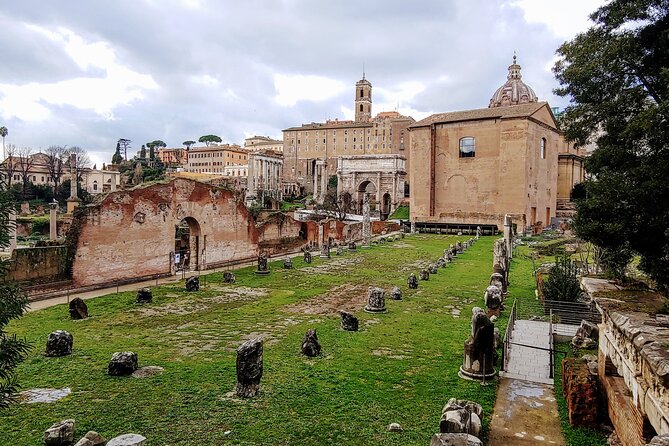
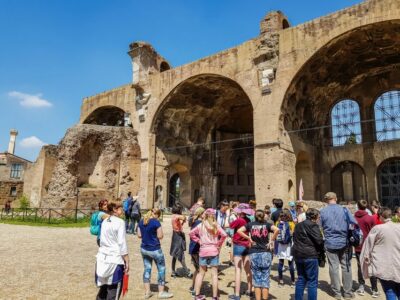
Next comes the Roman Forum, the outdoor plaza that sat at the center of Roman public life. This is where Rome’s power was processed daily, in the open air, by regular people and officials.
In this part, the guide usually helps you read the space like a map of power. The Forum was not one building, but a zone with temples, basilicas, and power structures. It is where politics was shaped, business happened, and justice was administered.
The kinds of places you will focus on
You may point out landmarks tied to Roman governance and public institutions, such as:
- the Senate-related area
- temples and basilicas
Even when so much is now ruins, the structure of the space is still recognizable. That is the value of having a guide here. Ruins alone can feel like “cool old rocks.” With interpretation, you start connecting what you see to how Romans organized society.
One practical consideration
The Forum can feel crowded too, but the visit often feels more conversational because the guide can guide you through the roles different buildings played. Still, your time is time-boxed. If you want to read everything slowly, plan to add self-guided wandering after the tour ends.
Guide Style That Makes or Breaks the Day
This is the part people underestimate. A good Colosseum guide does two things at once: explains history and keeps the group together in chaos.
The tour includes live narration plus headsets, which is a huge help in a place where you cannot always hear over crowd noise. In many of the guide styles associated with this route, you will also find a strong storytelling approach, sometimes with humor and clear visual aids.
I have seen examples of what works particularly well:
- Guides like Lumi using picture-based explanations to make the layout easier to understand.
- Humor-forward storytelling from guides such as Radu, which helps younger travelers stay engaged.
- Guides like Giuseppe connecting the Colosseum to Rome’s broader story so you can “see” what the experience meant.
- Energetic, patient guiding from David Bataglino, including clever ways to time photo moments near the rails while keeping everyone together.
The one thing to watch
A small share of experiences can be less enjoyable if the guide is hard to understand due to accent. If that is a concern for you, you might prefer a departure time when you know you will have energy to focus and you will sit close enough to hear clearly.
Price and Value: Why $65.33 Feels Fair Here
At $65.33 per person, this is not a budget stroll. But it is also not just you paying for a lecture at three famous ruins.
Here is why the price makes sense based on what is included:
- Admission tickets and fees are included for all three stops.
- The Colosseum portion includes a ticket valued at €18 plus a reservation fee valued at €2.
- The remaining cost covers the guide, live services, and the logistics that help you get through timed entry and crowd flow.
In other words, you are paying for the convenience and interpretation together, not just the right to stand in front of monuments.
If you try to do this on your own, you will typically spend time on tickets, planning, and figuring out what matters at each stop. If you want Rome to feel understandable instead of overwhelming, the guide value is real.
The tour also carries good odds of being worth your money because it is a small group, max 25. That size supports a calmer pace and better management at the busiest locations.
Comfort Tips: Walking Pace, Steps, and Hot Weather Reality
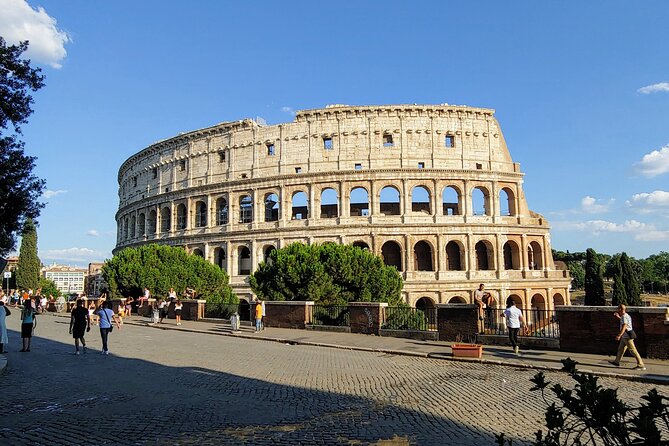
This tour is not a sit-down museum visit. It is a walking day through uneven surfaces.
From the practical feedback I have seen with this route, you should plan for:
- cobbled pavements
- stairs and inclines
- enough walking that water is smart
- summer heat that may require shade breaks
One guide style advantage that comes up often is that some guides actively manage comfort, finding shade and building in short rests. That matters because the heat and the walking can distract you from the history if you are uncomfortable.
So my advice is straightforward:
- wear comfortable shoes you trust on stone
- bring water
- if you get tired easily, pace yourself early and do not wait until you feel overheated
Who This Tour Is Best For
This is ideal if you want:
- a high-impact overview of ancient Rome without mapping every ruin yourself
- a guide-led explanation that turns big monuments into understandable history
- a pace that tries to balance crowd movement with storytelling
It also works well for mixed-age groups because many guides keep the tone engaging and answer questions while moving. If you have a very mobility-limited traveler in your group, note that steps and inclines show up, and the day involves a good amount of walking.
If you already know a lot and crave deep academic detail, you might find the short time at each site limiting. But for most first-time visitors, this combo is exactly the right length.
Should You Book This Colosseum & Ancient Rome Guided Walking Tour?
I would book it if your priority is to see the core ancient sites in one efficient day while learning what you are looking at. The combination of reserved tickets included, headsets, and a guide who can explain the Colosseum, Palatine Hill, and Roman Forum in a human way is the sweet spot.
I would skip or adjust expectations if you:
- want long, slow solo time inside each monument
- struggle with walking on cobblestones, stairs, and inclines
- need a very clear accent match to follow spoken explanation
If that sounds like you, consider doing the sites separately with extra time. But if you want Rome to make sense quickly, this tour is a strong choice.
FAQ
How long is the Colosseum, Palatine Hill, and Roman Forum guided walking tour?
It runs for approximately 2 hours 45 minutes, with about 1 hour at the Colosseum and about 45 minutes each at Palatine Hill and the Roman Forum.
What is included in the tour price?
The price includes Colosseum, Palatine Hill, and Roman Forum tickets and fees, a live tour guide, and headsets. It also includes the Colosseum entrance ticket and a Colosseum reservation fee.
What is the tour price per person?
The listed price is $65.33 per person.
Where do I meet the tour, and where does it end?
The start point is L.go Gaetana Agnesi, 5, 00184 Roma RM, Italy. The tour ends at the Roman Forum area, 00186 Rome, Metropolitan City of Rome Capital, Italy.
What language is the tour offered in?
The tour is offered in English.
Do I need to bring identification?
Yes. Each traveler must present a valid passport or ID document that matches the name provided at booking. You also need to provide full names for all travelers, or entry to the Colosseum and Roman Forum may be denied.
Is food and drink included?
No. Food and drinks are not included.
Is this tour physically demanding?
Most travelers can participate, but it includes a fair amount of walking. Expect cobbled pavements, stairs, and inclines, so comfortable shoes and water are a smart idea.
What is the cancellation policy?
You can cancel up to 7 days in advance for a full refund. If you cancel less than 7 full days before the start time, the amount you paid will not be refunded.
More Walking Tours in Rome


More Tours in Rome

More Tour Reviews in Rome
Not for you? Here's more nearby things to do in Rome we have reviewed




Colosseum Tours, compared.
 ★ 4.8Colosseum, Palatine Hill and Roman Forum Guided TourFrom $5232,814 reviews
 ★ 4.7Guided Tour of Colosseum, Roman Forum & Palatine HillFrom $5527,897 reviews
 ★ 4.2Colosseum & Forum with Audio Guide App -Optional ArenaFrom $4124,770 reviews
 ★ 4.5Colosseum, Roman Forum and Palatine Hill Guided TourFrom $5923,903 reviews
 ★ 4.4Colosseum, Forum & Palatine Hill Tour & Optional ArenaFrom $5813,839 reviews
 ★ 4.6Colosseum, Palatine Hill & Roman Forum Guided TourFrom $5112,703 reviews
 ★ 4.7Colosseum: Underground and Ancient Rome TourFrom $16012,691 reviews
 ★ 4.6Colosseum Arena, Palatine Hill & Forum Guided TourFrom $7310,584 reviews
Browse the lists this tour appears in