
Reviewed · WALKING TOURS
City Walk with Architect: Private walking tour of Rome
Rome’s buildings are the map. This private walking tour turns famous sights into architecture lessons, with a guide who can point out what to look for, not just where to stand. You’ll move past major landmarks and also get time on quieter architectural moments, with a route that can flex based on your interests.
I especially like the professional guide time built into every step. With Bado leading the walk, you get a real Q and A rhythm, and he’s known for tailoring the flow to what you care about, plus practical Rome tips and photo help.
One consideration: this is still a city-walk format. It’s about 2 hours 30 minutes of walking, with small breaks, so plan for a steady pace if you can comfortably walk at least an hour.
Key things that make this Rome walk worth it
- A private, question-friendly format, so you can ask as you go instead of saving questions for the end
- Bado’s architecture and history focus, with helpful photo tips and follow-up recommendations
- Flexibility in the route, so you are not stuck on a rigid checklist
- A best-of Rome mix, from Trevi and the Spanish Steps to the Pantheon and Vittoriano terrace
- Prime starting point at Piazza della Minerva, with an easy walk into the classic Rome core
A private architect guide in Rome, built for questions
If you like Rome, but you get frustrated by tours that feel like a stamp-collecting exercise, this format makes sense. You’re not herded along a fixed script. Instead, you get a professional lens on the buildings you see, and time to ask why something was built the way it was.
The guide is English-speaking, and the “private for your group” setup matters more than you might think. When you walk through crowds around places like Trevi Fountain and the Pantheon, the real value is in interpretation. You’ll want the story behind the lines, the materials, and the way architects shaped public space. That’s what this tour is built to deliver, with lots of chances to keep the conversation going as you move.
And yes, the guide name comes up a lot here: Bado. People highlight his patience, his knack for handling late arrivals, and his willingness to help with photos. That’s not fluff. In Rome, where timing and crowd flow can be chaotic, a calm, flexible guide makes the whole experience feel easier.
You can also read our reviews of more walking tours in Rome


How the walk stays flexible, and why that matters
Rome rewards curiosity, but most walking tours lock you into a route that ignores your questions. This one leans the other way. The plan is built around a classic sequence of landmarks, but you’re not trapped by a predetermined path. That flexibility can help you get more out of what you personally find interesting.
Here’s what that means in practice:
- If you want to linger on architectural details, you can.
- If something grabs your attention faster than expected, you can re-center the conversation.
- If you’d rather pace for photos or viewpoints, the guide can adjust the rhythm.
The tour also uses a mobile ticket, which helps on the logistics side when you’re juggling crowds, schedules, and where to meet. And because you’re ending at Piazza Venezia, it’s easy to build the rest of your day around another transit option, another walk, or a museum stop nearby.
The walking time is listed at about 2 hours 30 minutes. That’s long enough to feel like a real “Rome loop,” but short enough that it doesn’t swallow your entire afternoon.
Piazza della Minerva to Trevi Fountain: reading marble like a blueprint
You start at Piazza della Minerva, which is a smart launch point. From there, the walk quickly guides you into the center of the tourist map, but the tour angle is the important part. You’re not just seeing famous views. You’re learning how different eras shaped Rome’s streetscape and public squares.
At Piazza della Minerva, you get a quick start with no pressure to rush. It’s a good moment to reset your eyes, because it sets up how the guide will talk about form, function, and style later.
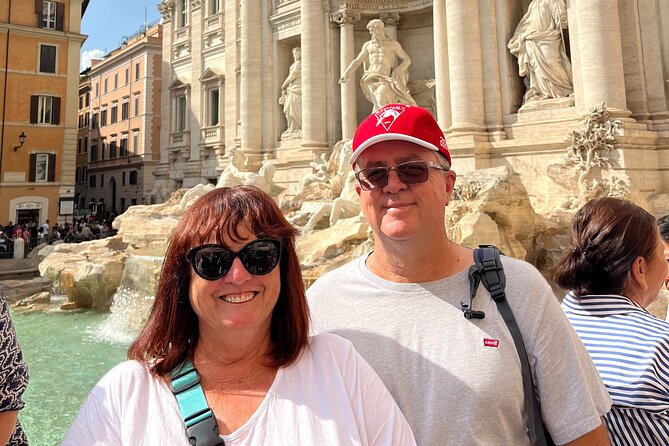
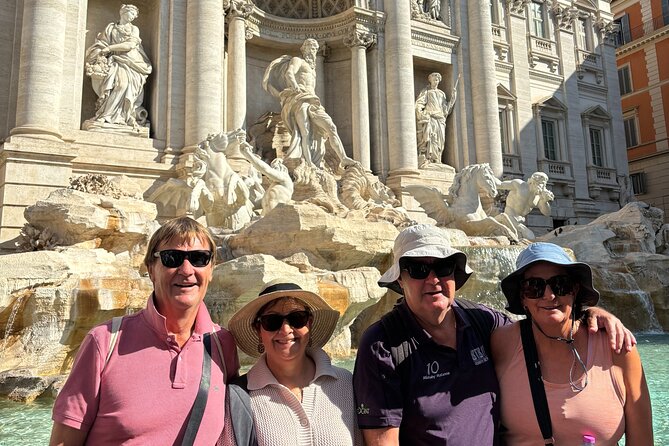
Then comes Fontana di Trevi. Plan for crowds, plan for people blocking angles, and plan to be patient. Your advantage here is that you’re not stuck photographing from one position. A good architecture guide will help you notice how the fountain’s design pulls your attention, how the sculptural program creates a sense of movement, and why the façade reads the way it does as you move around it.
A small drawback worth expecting at this stop: you may spend a lot of time just finding your footing and your best view. That’s not a problem with the tour, it’s the reality of Trevi. The good news is that the guide can steer you toward what to look for while you wait for a better angle.
Trevi Fountain to Colonna Immacolata Concezione: faith and form in one column
After Trevi, you’ll shift from an instantly famous scene to a more specific architectural focus: Colonna Immacolata Concezione. This kind of stop is where an architecture-first tour earns its keep. You’re learning how monuments communicate identity, beliefs, and power through shape and placement, not just through famous names.
What I like about this middle-of-the-walk inclusion is that it breaks the rhythm. Trevi is a huge magnet. The Spanish Steps are next. If the tour only hit headline landmarks, you’d start blending everything together. A column stop gives your brain a chance to reset, and it gives you a new way to look at Rome’s built environment.
Time at this stop is listed at about 15 minutes, so treat it as a focused mini-lesson. Ask your guide what details matter most, and where your eye should go first. Columns can look simple until you understand what they’re doing visually, how they guide sightlines, and how they connect to the broader architectural language around them.
This is also one of those spots where you can ask better questions later. If you pay attention here, the next plazas and monuments start to feel less random and more connected.
Spanish Steps and Piazza del Popolo: stairways, symmetry, and real viewpoints
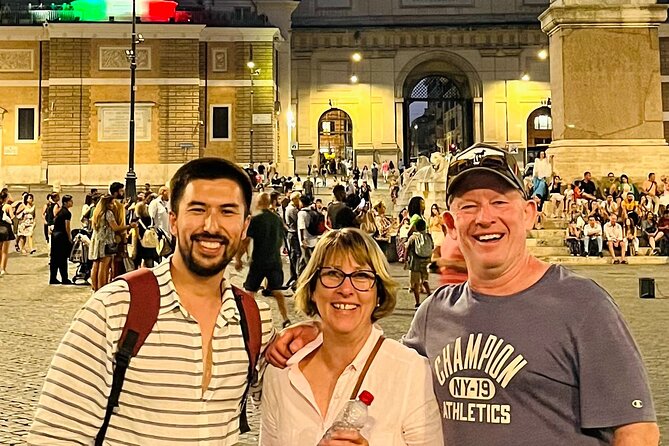
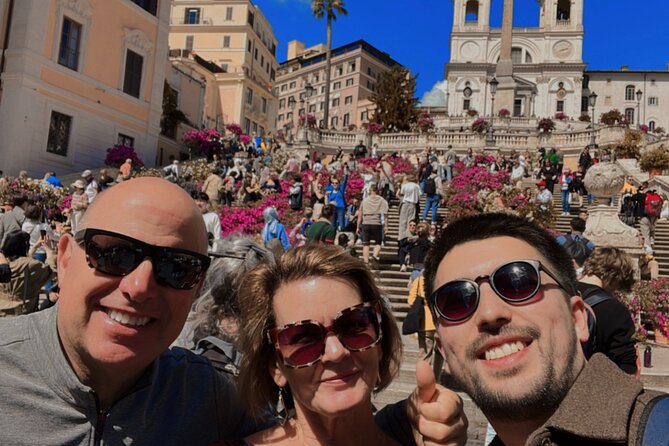
Next up is Spanish Steps, and this is where the tour’s flexibility can pay off. The Spanish Steps are famous, but what you get from a guide is the skill of reading the scene. You’ll learn to look at the stair as architecture, not just as a photo backdrop.
After that, you head to Piazza del Popolo. This plaza is a great “breather” stop, but it’s also an architectural stage. Plazas like this are designed to open space and frame movement through the city. If you’ve ever felt like Rome’s squares are chaotic, a guide helps you see the underlying structure.
You’ll spend around 15 minutes at each of these stops. That’s plenty of time to:
- get one or two strong viewpoint angles
- hear the main architectural points
- ask follow-up questions without feeling rushed
Possible drawback here: if you travel during peak hours, the Spanish Steps and nearby streets can get very crowded. Your best bet is to stay open to viewpoint changes. The guide’s job is to help you shift positions without losing the lesson.
You can also read our reviews of more city tours in Rome



Piazza Colonna and the Column of Marcus Aurelius, then Tempio di Adriano
You then move to Piazza Colonna, where the landmark is the Column of Marcus Aurelius. This stop is a big deal for architecture lovers because it shows how public monuments can act like visual storytelling. A column is not just a vertical element. It becomes a framework for interpretation, a way to compress history into a readable format while still dominating the square.
Time here is listed at about 15 minutes. Use that time to ask what to notice first. If you know what the guide is pointing out, the column stops being abstract and starts feeling intentional.
From there, you head to Tempio di Adriano (Temple of Hadrian). The Temple of Hadrian is one of those structures that can feel quieter than the major poster sites. That makes it a good pairing with the more narrative stop at Piazza Colonna. You’ll likely find that after listening to how the column functions as a message, the temple’s restrained design reads differently.
This cluster works well because it contrasts types of architecture: narrative monument versus temple framework. If you enjoy that kind of comparison, you’ll get extra satisfaction from the walk.
Piazza Navona and the Pantheon: two icons, two different design moods
Now you shift into two of Rome’s most “look-at-me” destinations: Piazza Navona and the Pantheon.
At Piazza Navona, the key is to view it as more than a square. You’ll spend about 15 minutes, which is just long enough to notice the way the space holds activity and how architecture helps shape where people gather. Piazza Navona is a classic example of a public space that still feels alive, even when you step back from the street level chaos.
Then comes the Pantheon. This stop is listed at about 15 minutes too, which means you’ll want to use your time efficiently. I recommend you ask your guide for one or two focal points before you go looking on your own. The Pantheon can overwhelm you if you try to take in everything at once.
A common wish on similar walks is to get inside more sights. With this tour, you will certainly get a focused view and guidance that helps you see what makes the Pantheon important. If you do not get interior access on the day, you can still leave knowing what to look for outside, and what questions to carry into your own follow-up visit.
Either way, the architecture lesson pays off because it teaches you how to “read” a building by structure, scale, and design choices, not just by reputation.
Ending at Piazza Venezia with the Vittoriano terrace view
The final stretch ends at Piazza Venezia, with a visit to the Vittoriano building and access to the terrace. This is a strong ending, because terraces give you the one thing you cannot get from photos alone: context.
From the terrace, you get a broader sense of where the city’s major landmarks sit in relation to each other. After all the walking and looking, that big-picture reset is satisfying. It also helps you understand the city’s geometry, even if you never use a map again.
Time here is listed at about 25 minutes, longer than most stops. That extra time is likely there for two reasons: you need time to enjoy the terrace and you need time to transition from landmark sightseeing into whatever comes next in your day.
If you like walking tours that end with a view and not just another street corner, this ending works.
Price, pace, and what value you really get
Let’s talk money. The tour price is listed at $118.82 per person for an about 2.5 hour private experience. That is not cheap, but it’s also not priced like a full-day private driver package. You’re paying for time with an English-speaking guide, the architecture-focused interpretation, and the flexibility to ask questions as you walk.
So where is the value?
- You’re buying expertise per minute. In Rome, the best returns often come from understanding what you’re seeing while you’re still there.
- You get a private setup for your group, which means your questions do not compete with strangers’ questions.
- You hit many major landmarks in one loop while still keeping an architecture theme, including the more specific Monument and Temple-style stops.
Pace matters, too. The tour is not described as a relaxed stroller walk. It’s a walking experience with small breaks. If you can walk for at least an hour comfortably, you should be fine. If you struggle with extended walking, consider planning extra rest stops on your own day.
Finally, keep an eye on timing. This experience is typically booked about 39 days in advance on average. If your dates are tight, booking earlier helps you lock in the guide and start time that fits your schedule.
Should you book City Walk with Architect in Rome?
Book it if you care about architecture and you want your Rome time to feel intentional. This tour is ideal for people who like learning while they walk, who enjoy comparing styles across eras, and who want a guide who can handle questions without turning the experience into a lecture.
Skip it if you’re looking for a low-effort sightseeing shuffle, or if you need long stops to rest often. It’s also less ideal if you mainly want stand-alone photo time, because the tour focus is interpretation, not endless wandering.
If you do book, show up ready to ask good questions. Ask what detail to look for first at each stop. Ask how the buildings connect to the city’s broader plan. With Bado running the show, you’ll likely get a calm, patient guide who can tailor the route to what you want to understand.
FAQ
How long is the City Walk with Architect in Rome?
The tour is approximately 2 hours 30 minutes.
Where does the tour start and end?
It starts at Piazza della Minerva, 00186 Roma RM, Italy, and ends at Piazza Venezia, Roma RM, Italy.
Is this a private tour?
Yes. It is a private tour/activity, and only your group participates.
What language is the guide?
The guide speaks English.
Does the tour use a mobile ticket?
Yes, the tour includes a mobile ticket.
Are admissions included for the stops?
Admission is listed as free for the stops on the itinerary.
Is private transportation included?
No. Private transportation is not included.
Are service animals allowed?
Yes, service animals are allowed.
When can I cancel for a full refund?
You can cancel up to 24 hours in advance for a full refund.
More Walking Tours in Rome



More Tours in Rome






More Tour Reviews in Rome

Not for you? Here's more nearby things to do in Rome we have reviewed












Walking Tours, compared.
 ★ 4.9Trastevere & Campo de Fiori Street Food Walking TourFrom $512,768 reviews
 ★ 4.9Paranormal Night Walking Tour & Secret BackstreetsFrom $341,921 reviews
 ★ 4.4Guided City Center Evening Sightseeing Walking TourFrom $46953 reviews
 ★ 4.5Best of Rome Walking Tour including Trevi FountainFrom $4923 reviews
 ★ 4.8Under the Moonlight Evening Walking TourFrom $28852 reviews
 ★ 4.9Forbidden History Walking Tour & Pub Crawl with DrinksFrom $61688 reviews
 ★ 5.0Guided Small Group Walking Tour of City HighlightsFrom $30682 reviews
 ★ 4.5Rome Walking Tour with Piazza Navona, Trevi Fountain and PantheonFrom $35676 reviews
Browse the lists this tour appears in