
Reviewed · CATACOMBS & UNDERGROUND TOURS
Capuchins Crypt Tour and Concert in Rome
Bones, choir, and Roman sacred art in one evening. I like how the visit to Santa Maria Immacolata mixes major artworks with the Capuchin Crypt’s famous bone decor, and I also really enjoy the live sound of the Schola Romana Ensemble. One thing to plan for is timing, because the entry window closes and you will not be accepted after 4:45 p.m.
If you are short on time in Rome, this is a smart two-in-one plan. You start at Via Vittorio Veneto 21, you get English interpretation, and the whole experience runs about 1 hour 30 minutes for a maximum group size of 30.
Key highlights
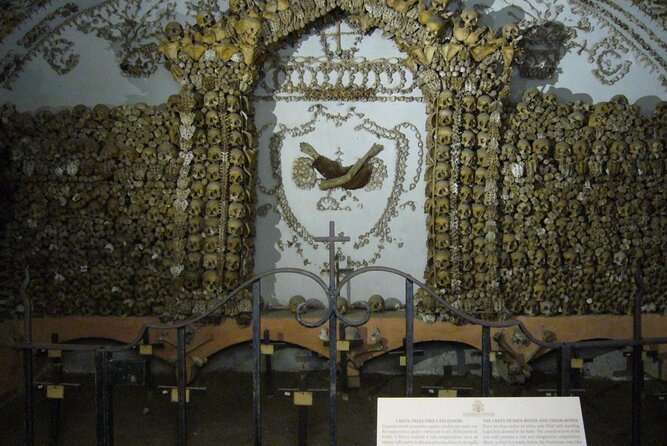
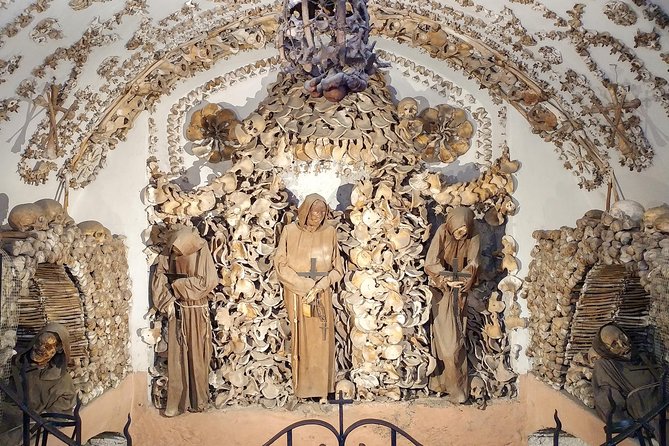
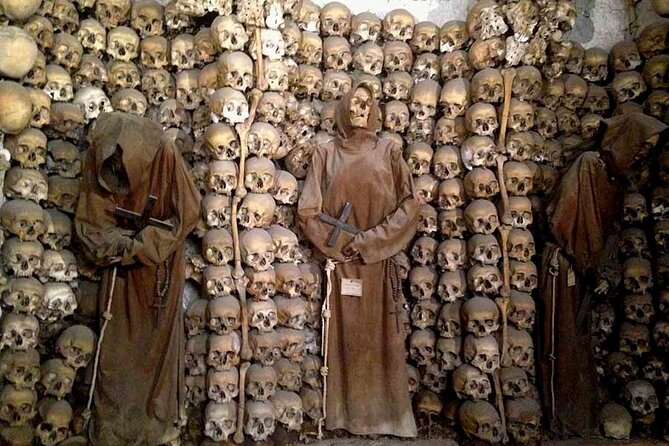
- Capuchin Crypt with 4,000 bones for a truly unusual stop in central Rome
- Masterworks inside Santa Maria Immacolata, including Caravaggio
- Live sacred concert in a reserved hall, with Gregorian chants performed on site
- English presentation with an art historian and guided context, not just a soundtrack
- Small-group feel with a max of 30 people, plus photos allowed during the concert (no flash)
Capuchin crypts plus live sacred music, timed for a Rome evening
This outing works because it treats your evening like two different experiences that still fit together. First you focus on art and story inside the church and museum, then you switch gears to music performed live in the Capuchins convent hall. The pacing is tight enough that you will feel you got a complete evening, not a long slog.
I especially like that the concert is not tacked on as filler. It is part of the experience design, with a program built around composers associated with sacred music, plus Gregorian chants. The result is that your brain does not bounce between unrelated things. It stays in the same emotional lane: solemn, reflective, and very Roman.
There is also a practical upside. You do not need to stitch together separate tickets and separate schedules across the city. You show up near Via Veneto, do the guided crypt portion, and then stay for the concert.
A few more Rome tours and experiences worth a look
Santa Maria Immacolata and Via Veneto: art in a surprising setting
Your first big moment happens at Santa Maria Immacolata, the Capuchins church near Piazza Barberini on Via Veneto. This matters because Via Veneto is one of those Rome streets that many visitors only pass through, and this gives you a reason to linger in a part of the city most people rush past.
Inside the church, you can see works by painters such as Guido Reni, Domenichino, Pietro da Cortona, Gherardo delle Notti, Antonio Sacchi, and others. For art lovers, it is a useful reminder that this is not just a novelty stop. The church side has serious names on the walls.
And yes, Caravaggio is part of the story here. The tour specifically mentions a Caravaggio masterpiece: La meditazione di S. Francesco. That single detail is worth planning around. If you care about seeing famous artists in context, this kind of pairing, church first then crypt, helps the whole place make more sense.
The Capuchin Crypt museum: 4,000 bones with structure, not chaos
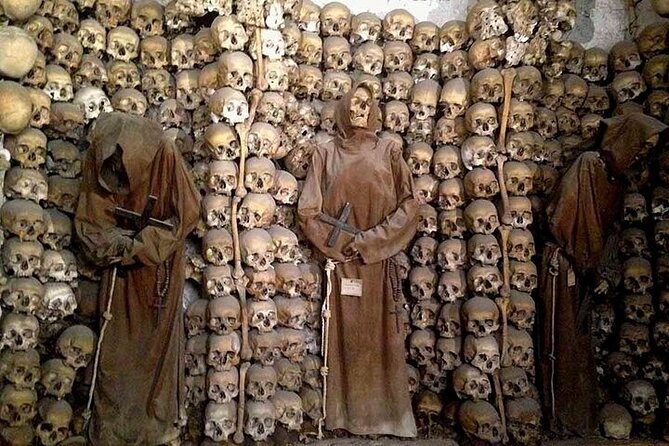
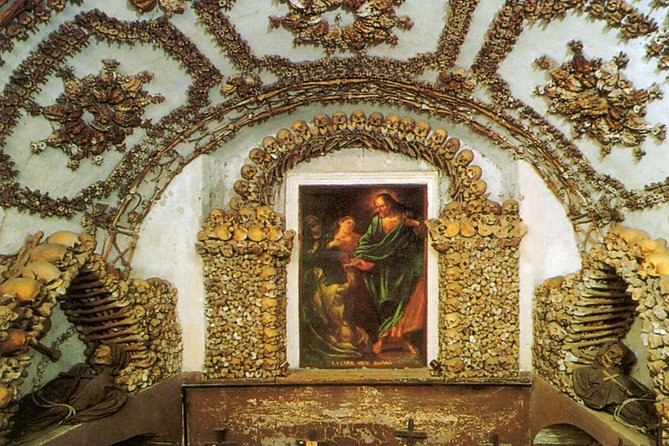
Now for the reason people start talking about this place before they even book. The crypt-museum is decorated with about 4,000 bones of friars. That is the headline, but the real value is how the visit is guided. You are not just handed a shock-and-awe route.
You also have two layers of interpretation at work. There is an audioguide option with 13 languages, and the experience includes a guided tour with an English presentation and art-historian style explanation. In other words, you can follow along without feeling lost, even if you do not read much Italian.
One practical note: the vibe can be intense. A review-style tip I would take seriously is that the experience can feel more like a work of art than a horror set. The rooms are described as having different meanings and stories, and the guide explanation goes room by room. If you come in expecting only skulls lined up in aisles, you will probably miss what makes the visit so memorable.
If you are sensitive to the subject matter, decide in advance. There is no sugarcoating the theme. At the same time, the tone you are given can keep it from feeling like pure morbid spectacle.
A Caravaggio moment, then the crypt: how the order helps
I like the order of the evening. Starting in the church gives you a way to anchor what you are seeing. You begin with paintings and church art, then you move into the crypt space where the setting changes from conventional religious artwork to the bone-decorated environment.
That shift can be jarring in a good way. It forces you to pay attention to symbolism and setting rather than treating the crypt as a stand-alone curiosity. When Caravaggio is already on your mind, you are more likely to view the rest of the environment as part of a broader artistic language.
The tour also mentions that the church is built by Pope Urbano VIII Barberini in the 17th century, which helps you place it in Rome’s timeline. And it is set near Via Veneto, a street that has been a film location, including La Dolce Vita by Federico Fellini. That detail might seem like trivia, but it does something useful. It reminds you that Rome’s layers are not sealed off. They overlap.
Schola Romana Ensemble concert: Sistine Chapel music in the right mood
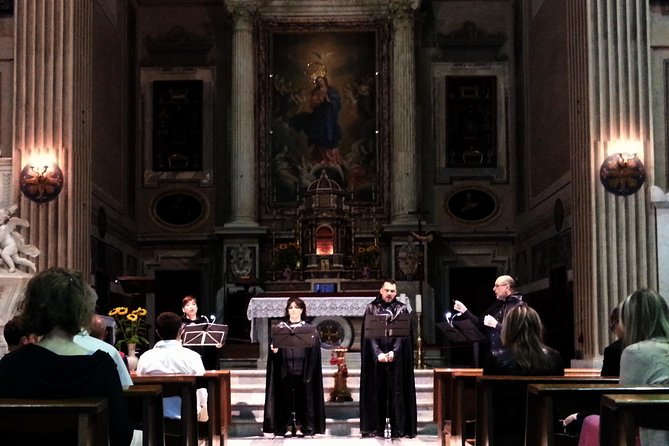
After the guided portion, you transition into the sacred music concert. This is performed live by Schola Romana Ensemble, described as a resident historically informed music group. The lineup is built like a classic sacred-music blend: soprano, alto, tenor, bass, plus a conductor.
The program is named and specific. It includes Music of the Sistine Chapel selections by Palestrina, Arcadelt, Morales, Victoria, Pitoni, Agazzari, and Gregorian chants. That mix matters because it keeps the sound in the same spiritual universe. You are not bouncing from style to style, which is often what makes concerts feel like background noise.
This is also an all-acappella setup. A cappella singing changes the listening experience. You hear individual lines with more clarity, and it feels more connected to the space you are in. Several reviews highlight how calming and moving this can be, even for people who usually skip audio tours or do not expect much from short concerts.
Practical watch-outs for the concert:
- Photos are allowed during the concert without flash.
- Video is not allowed during the concert.
- If someone uses flash anyway, it can disrupt the atmosphere, so stick to the no-flash rule and follow staff instructions.


Meeting point timing: Via Veneto entrance you must find
This tour has a strict timing window, and it is worth treating it like theater. You meet at Via Vittorio Veneto 21, 00187 Roma RM. The start time is 4:45 p.m., and the admission time is from 4:15 p.m. until 4:40 p.m. You will not be accepted after 4:45 p.m.
The staff will wait for you at the entrance of the Capuchins Convent with the entrance from Casa per Ferie I Cappuccini, Via Veneto 21, directly on the street in front of the bus stop. This is a different entrance than the Capuchin Museum. That detail sounds small until you are standing at the wrong door.
If you want fewer stress points, arrive early. The guidance recommends arriving half an hour before the concert starts, which is exactly what I would do in Rome when signage can be confusing.
How the two-in-one plan saves you Rome time
At about 1 hour 30 minutes, this experience is designed to fit an evening slot without stealing your whole day. You are not managing a second ticket purchase across town, and you are not trying to time a concert after dark with unpredictable transit.
It is also efficient because the guided crypt portion gives you context before you listen to music in the same institution. When you know the setting, you hear more in the performance. The concert does not feel like a separate event dropped into the schedule. It feels like a closing chapter.
Even if you are not a hardcore classical fan, the music choice helps. You get known sacred composers plus Gregorian chants, so there is a decent chance at least a few pieces will click. The short program also keeps things from dragging.
Dinner upgrade and what is included with it
There is an upgrade option to add a traditional Roman dinner after the concert. If you choose that dinner option, the price includes alcoholic beverages, water, and wine, with one bottle every two people.
Transportation to the restaurant is not included. After the concert, the suggestion is to walk to Piazza Barberini and then take a taxi or bus. The data even lists bus lines 83/63/80/160/492 to Piazza del Plebiscito, then a 700 m walk.
This is useful if you are planning your last night. You can keep dinner close, rather than adding a far-off commute.
Price and value: what you are really paying for
The price shown here is $106.42 per person for about 1 hour 30 minutes. That can sound steep until you break down what is actually included.
In the operator’s own breakdown, the core ticket includes:
- Entrance fees to the Museum and Crypt
- A guided tour in English of the Capuchins museum, crypt, and church by a professional guide
- Exclusive entrance in the Concert Hall of the Capuchins Convent reserved only for your group
- The a cappella sacred music concert
- An introduction in English to the musical program
On top of that, the experience includes an audioguide with 13 languages.
For Rome, where many paid attractions cover only one thing, I think this is where the value lives: you are buying access to a guided art and crypt visit plus a reserved concert slot in the same location. If you are the kind of traveler who likes experiences with structure, it likely feels fair.
If you are price sensitive and only want one of the two parts, this setup might feel less efficient. The better deal is when you genuinely want both the crypt context and the live music.
Who should book this Capuchin Crypt Tour and who should skip it
This is a strong fit if you like:
- Church art and major artists in a real setting, not just photo stops
- Unusual Rome experiences that are guided and explained
- Sacred music, or at least the idea of hearing familiar names plus Gregorian chants in a live performance
- A small-group format, with a maximum group size of 30
It is less ideal if:
- You hate the idea of bone-decorated spaces. Even with good guidance, the theme is still the theme.
- You show up late or hate strict timing. The admission window ends at 4:40 p.m., and entry is not accepted after 4:45 p.m.
One more note. The concert is an intimate, no-video situation. If you need to record everything, you will have to adjust expectations.
Should you book? My practical recommendation
Yes, you should book if you want a meaningful, well-organized evening that combines art, guided context, and live sacred music in one compact time window. The two-in-one format is the key advantage, and the concert seems to be the emotional payoff, based on how often people describe it as moving and beautiful.
I would book sooner rather than later, since the experience is commonly reserved about 68 days in advance on average. And I would plan your arrival like you are catching a show, because that entrance window is not flexible.
If you are on the fence, your decision is simple:
- Choose it if you are curious about the Capuchins and you also want the live concert component.
- Skip it if you only want a quick look at the crypt, or if you are strongly put off by the subject matter.
FAQ
How long is the Capuchins Crypt Tour and concert?
It runs about 1 hour 30 minutes.
What time does the tour start?
The start time is 4:45 p.m.
Where is the meeting point?
The meeting point is Via Vittorio Veneto 21, 00187 Roma RM, Italy.
What entrance do I use for the Capuchins convent?
The staff meet you at the entrance from Casa per Ferie I Cappuccini, Via Veneto 21, directly on the street in front of the bus stop. This entrance is different from the Capuchin Museum.
What time do I need to arrive?
Admission time is from 4:15 p.m. until 4:40 p.m., and you will not be accepted after 4:45 p.m. The recommendation is to arrive about half an hour before the concert starts.
Is the tour in English?
Yes, it is offered in English, including an English presentation of the musical program.
What is included in the price?
The price includes the sacred music concert, the English presentation of the musical program, and a Capuchin Museum and Crypt tour with the aid of an audioguide (13 languages available). If you select the dinner option, water and wine are included as stated.
Are drinks included?
Water and wine are included if you select the dinner option, with one bottle every two people.
Can I take photos during the concert?
Yes, photos are allowed during the concert without flash. Video is not allowed.
How many people are in each group?
The maximum group size is 30 travelers.
Is transportation to the restaurant included if I add dinner?
No. After the concert, the suggestion is to walk to Piazza Barberini and then take a taxi or bus (lines 83/63/80/160/492 to P.zza del Plebiscito), followed by a 700 m walk.
More Concerts & Music in Rome

More Tours in Rome
More Tour Reviews in Rome
Not for you? Here's more nearby things to do in Rome we have reviewed



Catacombs & Underground Tours, compared.
 ★ 4.7Colosseum: Underground and Ancient Rome TourFrom $16012,691 reviews
 ★ 4.6Crypts and Catacombs Underground Tour with TransfersFrom $745,341 reviews
 ★ 4.7Colosseum Underground Small Group Guided TourFrom $1054,844 reviews
 ★ 4.8St. Peter’s Basilica, Dome Climb, and Underground TourFrom $383,404 reviews
 ★ 4.7Colosseum Underground, Arena & Forum TourFrom $1573,272 reviews
 ★ 4.3Trevi Fountain and Underground Guided TourFrom $411,664 reviews
 ★ 4.6Catacombs and Capuchin Crypt Guided Tour with TransferFrom $411,606 reviews
 ★ 4.7St. Peter’s Basilica Priority Access Tour with Dome & CryptFrom $831,476 reviews
Browse the lists this tour appears in