
Reviewed · TOURS
Buzz Buggy Tour – you drive we’ll lead!
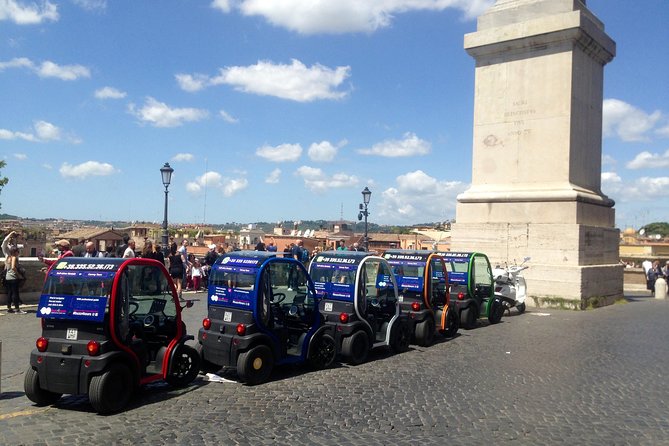
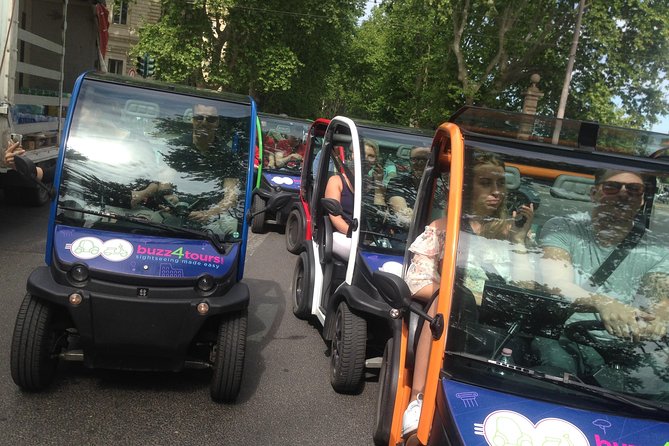
Rome feels different in a buggy. You get to drive an electric two-seater while your guide pilots the route past classics like Castel Sant’Angelo and the Pantheon. I love the self-drive freedom and the way each stop has a story that makes Rome click. The main consideration is that you need a valid driving licence, and sharing the road in Rome can feel nerve-wracking if you prefer a low-stress ride.
This is a tight 3 hours 30 minutes built for orientation and for seeing a lot without feeling like you’re stuck watching from a bus window. You’ll cover major sights plus atmospheric areas, with frequent photo and viewpoint breaks along the way. The group stays small, with a maximum of 18 people, and the tour is offered in English.
Guides here seem to lean into personality and practical guidance. Names that come up again and again include Dino, Massimo, Gas, Gastone, Guido, and Pietro, and the common thread is clear: they talk through what you’re seeing, then make sure you’re comfortable navigating the city rhythm.
Buzz Buggy Tour in a Nutshell: what stands out
- You drive a two-seat electric buggy, with your guide leading the way so you can focus on the route ahead
- A strong mix of landmarks and neighborhoods, from Trastevere to Piazza Navona, not just postcard stops
- The Magic Keyhole moment near Aventine area is a fun break from the usual Rome checklist
- Plenty of photo time and short walks, so you can get out, look around, and not feel rushed constantly
- Rome traffic is real, but the buggies are easy to handle at low speed and people report it as manageable
- Your itinerary can flex if congestion or conditions force a change, since the guide has final discretion
Why driving an electric buggy beats a bus day
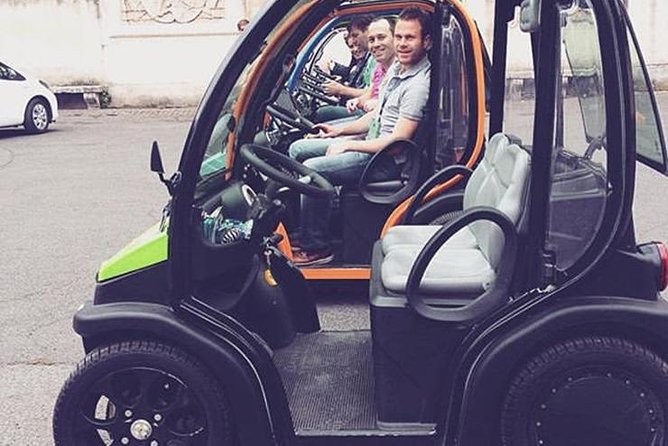
The big appeal here is simple: you are not just sightseeing, you are actively moving through Rome. A two-seater electric buggy feels small, nimble, and old-Rome friendly, so you can get close to key areas where a bigger vehicle would struggle.
Practically, it works like this. You’ll rent the electric buggy for the tour, and you’ll need a valid driving licence. That changes the whole vibe. Instead of holding a strap and hoping the driver finds the perfect angle, you take the wheel and you feel the city flow. One rider typically drives while the other snaps photos and enjoys the ride, then you both get to soak in the views during stops.
Now the honest part. Rome driving can feel intense, even when you’re going slowly. Some people find it thrilling, others find it stressful. If you’re anxious about traffic, go in knowing you’ll be sharing the streets with cars, scooters, and pedestrians. The good news is that multiple guide updates and experiences emphasize that the buggy itself is easy to drive, and cars tend to be respectful enough for the process to feel controlled.
Also, this tour is electric, so the ride feels smoother than you might expect from a “toy car” impression. It’s the kind of mode that lets you concentrate on landmarks and city details without the constant engine noise and fumes you get elsewhere.
Finally, remember that the schedule is not a museum audit. If roads are crowded or sites are congested, the guide can change or reduce stops. That’s not a dealbreaker, it’s Rome reality, and it helps the tour keep its rhythm.
You can also read our reviews of more tours and experiences in Rome.

Getting rolling at Vicolo d’Orfeo and learning the route fast
The tour starts at 10:00 am at Vicolo d’Orfeo, 8, 00193 Roma RM. It ends back at the same meeting point, which makes the whole half-day plan feel tidy.
I like using something like this early in a trip because it gives you mental geography quickly. You see how neighborhoods connect, where the big sights sit relative to each other, and how long crossings really take. If your next day includes solo wandering, this kind of orientation can save you time and stress.
Timing matters on a buggy day. You’re not meant to spend 2 hours inside a single major attraction. Instead, you get a sequence of short, purposeful stops: look, listen, take photos, then roll to the next place. The tour is about momentum and context, not deep museum time.
The tour is capped at 18 people, so you’re not swallowed by a huge herd. That makes the driving part calmer too, because there’s less chaos at each stop. It also helps the guide manage the pace, and several guides are known for giving clear advice for how to handle the rest of your days in Rome.
If you want to maximize the value, show up ready. Comfortable shoes help for the short walk moments. Bring whatever you need for photos, and keep your expectations realistic: this is a whirlwind loop, not a slow art-history stroll.
Castel Sant’Angelo: Hadrian’s Mausoleum, Borgia Tower vibes
Your first stop is Castel Sant’Angelo, scheduled for about 10 minutes. The name you’ll hear is tied to Emperor Hadrian’s Mausoleum, plus references to the Borgia Tower. Even if you don’t go deep inside, this is a strong “Rome at scale” opener. You see how the city’s power centered around monumental structures long before today’s streets existed.
What makes this stop work on a buggy tour is the quick set-up. Your guide points out what you’re looking at and frames it so the next sights feel connected, not random. It’s also a good warm-up for driving, since you start seeing how the streets and viewpoints line up.
The tour lists free admission ticket for this stop, so you can focus on the experience rather than doing extra ticket math. Still, be ready for what Rome always brings: lines, security, and the normal flow of visitors at major sights.
If you’re trying to decide whether this tour is worth your time, the way it starts here is a clue. You’re not waiting for the “real highlights” later. You get momentum from minute one, then you build from there.
Trastevere’s Santa Maria: mosaics and old foundations
Next up is Basilica di Santa Maria in Trastevere, about 20 minutes. Trastevere is one of those Rome areas that feels like a place you can linger, and this stop gives you a reason to care beyond just the streets.
You’ll hear that the foundations date back to the 3rd century, then you’ll be able to admire the late 13th-century mosaics inside. That’s a compelling combo: very old roots, then later artistic beauty.
Why it’s a great buggy-tour stop: it’s not a museum marathon, but it’s substantial enough to reset your brain between driving segments. You get a quiet break, some sacred architecture, and then you roll back out into the city air.
This stop is also listed with free admission, which is a nice bonus for value. If you’ve been spending your Rome budget on tickets all week, it’s refreshing to have at least a few stops where you can simply walk in and focus on what you see.
One practical tip for this part: if you care about photos, do them quickly before the crowd thickens. Church interiors tend to fill in fast, and your tour time is short by design.
Tiber Village stories and the Magic Keyhole moment
After Trastevere, you get a fun shift with Tiber Village, about 15 minutes, where you’ll hear talk about the oldest bridges in Rome and a story about four heads that had to role. It’s the kind of detail that makes Rome feel like a lived-in narrative instead of a list of dates.
Then comes a highlight that many people remember clearly: Piazza dei Cavalieri di Malta with the Magic Keyhole. The tour positions it as a quick peek linked to the Aventine area, around 15 minutes. This is one of those Rome “only in Rome” things. You’re not just looking at a monument, you’re trying to see a view through a small opening that tourists often miss on standard walks.
I like that this moment is built into the route because it turns the tour into more than just big-name stops. It gives you a playful break that feels specific to the city, not generic.
As for timing, both of these stops are short on purpose. You’re meant to take them in, grin at the Keyhole oddness, snap what you can, then move on while the light and energy still feel good.




Circo Massimo and Foro Romano: big views, quick context
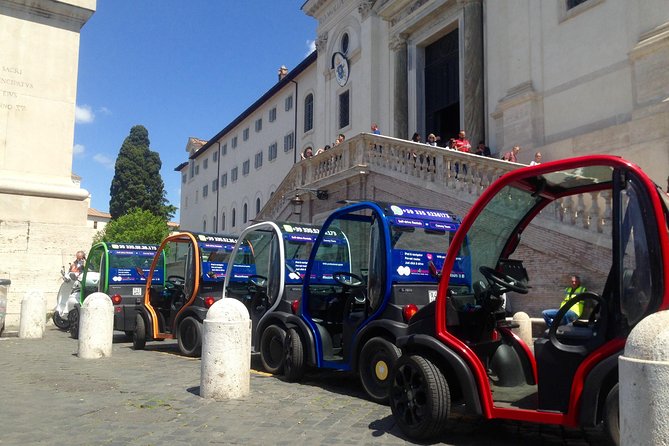
Now you hit the wide-open legend zone.
First is Circo Massimo, around 15 minutes. You’ll hear how Indianapolis got the idea from here. Even if you’re not a motorsports person, this is useful because it explains how old Rome shaped later thinking about mass crowds, spectacle, and design.
Then the tour heads to Foro Romano, about 20 minutes. This stop is set up for views, including a great look over the Forum and a short walk toward Michelangelo’s square on Capitoline Hill. That pairing is smart. You get the iconic Roman setting and then you get a viewpoint that helps you imagine what you’re seeing in three dimensions.
The “why” behind doing this on a buggy tour: you get both context and orientation in a compressed time window. On your own, you might walk into the Forum, look around, then leave without fully understanding what matters where. Here, the guide gives you a framework so the ruins feel like a system rather than scattered stones.
This part is also listed with free admission ticket, which can help you plan. Still, don’t ignore the fact that the Forum area can get crowded. Rome congestion can slow movement, and the guide may adjust the route to keep you on pace.
Trevi Fountain to Trinità dei Monti: classic photos, controlled time
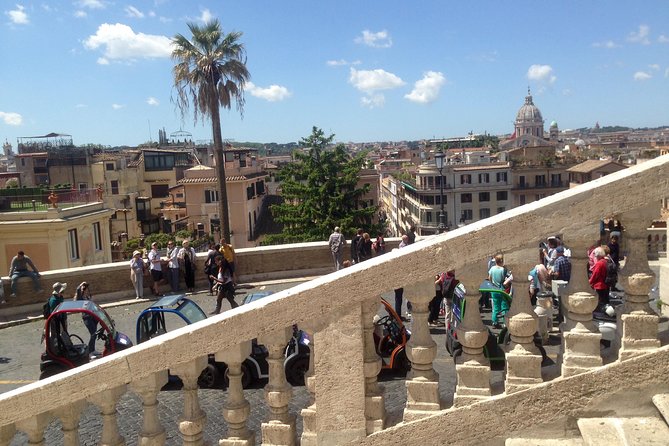
After the Forum viewpoint, you roll to Trevi Fountain, about 15 minutes. If Rome has a single “everyone knows it” landmark, it’s this one, and your guide’s approach will keep it lively. You might even find yourself singing along with the idea of three coins in the fountain.
This is where the tour’s timing matters most. Trevi is packed. Trying to spend 45 minutes there by yourself would be a frustration. On the buggy route, you get a focused look and enough time for photos, then you move on. That’s the trade-off you’re making to see so much in 3.5 hours.
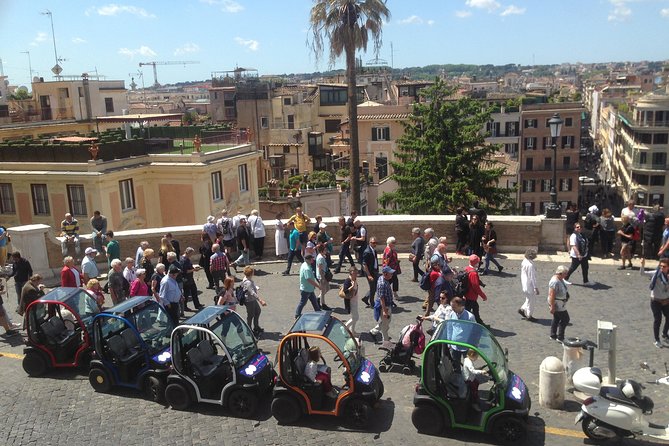
Next is Trinità dei Monti, around 15 minutes, including the famous steps and a viewpoint over the rooftops. Again, this stop is short but meaningful because it gives you elevation. You see Rome not as a flat street map, but as a layered city of domes, rooftops, and hills.
For both Trevi and the steps, keep your expectations honest. You’re not going to linger like a local here. You’re going to experience, photograph, and then roll.
Pantheon scale check and Piazza Navona charm
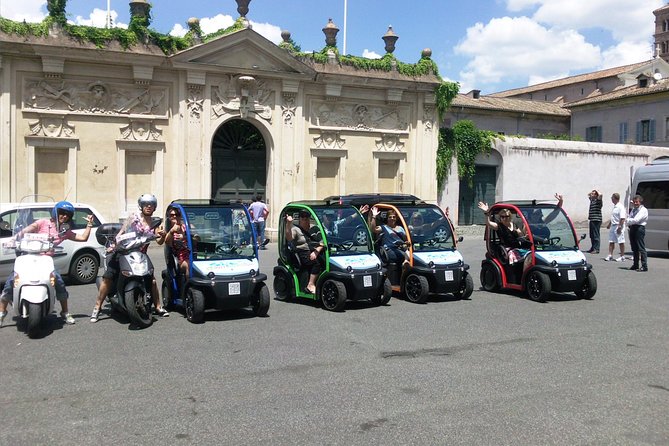
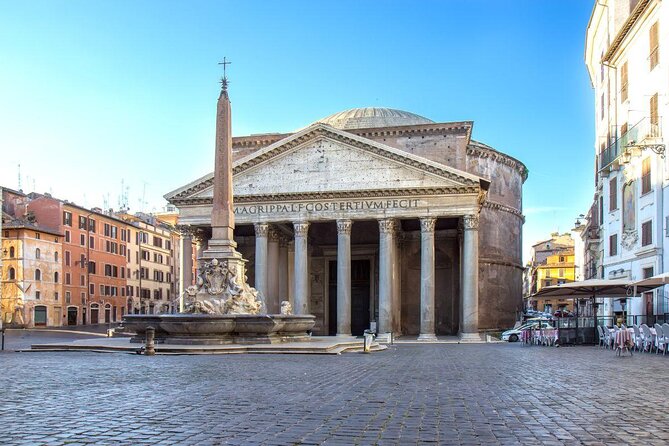
Then comes a stop that often shocks people for its size: the Pantheon, about 20 minutes. You’ll be amazed at the sheer scale, and you’ll notice the hole in the roof, the defining feature that makes it feel different from typical churches.
This is a strong mid-tour anchor. By now you’ve been driving, you’ve heard a lot, and your brain needs one “stop everything” moment. The Pantheon does that quickly.
The Pantheon stop is listed with free admission ticket, which supports value for a major site. Don’t waste this time waiting for the perfect photo. The inside of the Pantheon is more about the experience than the snapshot.
After that, you head to Piazza Navona, around 15 minutes. The tour frames it as one of Europe’s most beautiful piazzas, and I agree with the logic of that. It’s a place where Rome feels social and cinematic, with a layout you can quickly understand even in a short visit.
If you like a mix of architecture and street-life energy, Navona is the right kind of finale before you step into the biggest religious monument of the day.
St. Peter’s Basilica: the final big scale stop
Your last listed stop is St. Peter’s Basilica, about 20 minutes. The tour describes it as the hub of Catholicism that embraces all mankind. Even if you don’t share the same faith, it’s still a powerful, human-made statement of art, scale, and devotion.
This is a good closing stop because it’s the opposite of tiny back streets. After driving through smaller corners, you get to finish with a monument that forces you to look up and take in everything at once.
The stop is listed with free admission ticket, so it’s another value win. Still, expect the usual: crowds and lines can eat into your time. This is where the guide’s judgement matters most, since they may need to adjust the pace to keep the day flowing smoothly.
Once you’re done, you head back to the meeting point. That loop makes the experience feel complete, like a finished circuit rather than a one-way scramble across Rome.
Price and value: does $143.61 make sense?
At $143.61 per person for roughly 3 hours 30 minutes, the price isn’t “cheap,” but it is also not just paying for sightseeing. You’re paying for a driver-style experience plus the guide leadership, in a vehicle that turns a normal Rome walk into something active.
Here’s what makes the value hold up:
- You cover a lot of headline sights in one run, so you don’t spend your best half-day piecing together multiple tour tickets
- The buggy rental is included, and you get the electric driving experience that you cannot replicate with a standard walking tour
- The route includes both famous monuments and specific local moments like the Magic Keyhole, which makes the day feel more Rome-specific than generic
- English is included, and the tour caps at 18 people, which helps keep the experience manageable
The biggest value risk is also the biggest “fit” issue. If you don’t want to drive, or if traffic stress would ruin the day, then no price is worth it. But if you’re okay with the Rome road reality and you want a fun, efficient way to learn the city quickly, this can feel like a smart investment.
Also check your own itinerary. If you’ve got a lot of walking planned afterward, this tour can set up your bearings so you walk with confidence instead of guessing.
Who should book this Rome buggy tour
This tour fits best if you want an active Rome experience and you’re comfortable with a driving licence requirement.
You’ll probably love it if:
- You’re in Rome for a short time and want the highlights plus a few quirky local moments
- You like the idea of driving through the city, not just riding along
- You want orientation early in your trip, then use that mental map for the rest of your days
- You enjoy guides who add stories and practical advice so the monuments feel connected
You might want to skip or think twice if:
- You strongly prefer a no-pressure experience where you do not share roads with traffic
- You get stressed by crowded viewpoints and short stop times
- You’re hoping for long indoor museum sessions
If you’re traveling with a partner, this also tends to work well because there’s usually a simple rhythm, one person driving while the other rides and takes photos, then you both enjoy stops together.
Should you book Buzz Buggy with Buzz4tours?
If you want Rome in motion, this is an easy yes. The combination of self-drive freedom, a route that blends major monuments with neighborhood flavor, and the chance to hit fun specifics like the Magic Keyhole makes it a memorable half-day plan.
Book it if you meet the core requirements, a valid driving licence and enough comfort with driving in busy streets. If that sounds fun, the value at $143.61 per person is easier to justify, because you’re not only touring, you’re learning the city’s shape while you ride through it.
Skip it if traffic anxiety would take the joy out of the experience. In that case, consider a slower walking-based option where you control pace without driving stress.
FAQ
Do I need a driving licence to do the Buzz Buggy Tour?
Yes. The tour includes rental of a two-seat electric buggy, and you will need a valid driving licence to drive.
How long is the Rome Buzz Buggy Tour?
It lasts about 3 hours 30 minutes.
What sights are included on the route?
The tour includes stops at Castel Sant’Angelo, Basilica di Santa Maria in Trastevere, Tiber Village, Piazza dei Cavalieri di Malta, Circo Massimo, Foro Romano, Trevi Fountain, Trinità dei Monti, Pantheon, Piazza Navona, and St. Peter’s Basilica.
Is the tour offered in English?
Yes. The tour is offered in English.
Where does the tour start and end?
It starts at Vicolo d’Orfeo, 8, 00193 Roma RM, Italy, and it ends back at the same meeting point.
How big is the group?
The maximum group size is 18 travelers.
Are there paid entry tickets included?
Many listed stops are marked as Admission Ticket Free. The tour is described as including admission ticket being free for those stops.
What if there is traffic or sites are congested?
The guide has full discretion to change or reduce the itinerary if traffic or site congestion prevents keeping the schedule.
What is the cancellation policy?
You can cancel for free up to 24 hours in advance for a full refund. If you cancel less than 24 hours before the start time, the amount paid is not refunded.
When will I receive confirmation after booking?
You receive confirmation at the time of booking, unless you book within 3 days of travel. In that case, confirmation is received within 48 hours, subject to availability.
More Tours in Rome
More Tour Reviews in Rome
Not for you? Here's more nearby things to do in Rome we have reviewed








Tours, compared.
 ★ 4.3Vatican Museums & Sistine Chapel Tour with Optional BasilicaFrom $7967,413 reviews
 ★ 4.5Vatican Museums, Sistine Chapel & St Peter’s Basilica Guided TourFrom $2239,149 reviews
 ★ 4.8Colosseum, Palatine Hill and Roman Forum Guided TourFrom $5232,814 reviews
 ★ 4.7Guided Tour of Colosseum, Roman Forum & Palatine HillFrom $5527,897 reviews
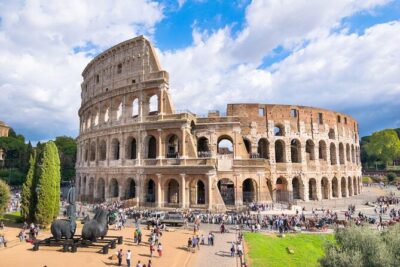 ★ 4.5Colosseum, Roman Forum and Palatine Hill Guided TourFrom $5923,903 reviews
 ★ 4.3Vatican Museums, Sistine Chapel & Basilica TourFrom $13013,872 reviews
 ★ 4.4Colosseum, Forum & Palatine Hill Tour & Optional ArenaFrom $5813,839 reviews
★ 4.7Vatican Museums, Sistine Chapel & Basilica TourFrom $7213,217 reviews
★ 4.4Colosseum, Forum & Palatine Hill Tour & Optional ArenaFrom $5813,839 reviews
★ 4.7Vatican Museums, Sistine Chapel & Basilica TourFrom $7213,217 reviews