
Reviewed · BORGHESE GALLERY TOURS
Borghese Gallery Skip the Line Guided Tour
Bernini and Caravaggio make more sense fast. I love the skip-the-line entry and the headset so you can actually hear the guide. The only downside is it is a highlights pace, so if you want to linger in front of every sculpture, you may feel rushed.
This is a small-group tour with up to 15 people, so you get real chances to ask questions. You also get the big context of how the collection was built by Scipione Borghese, the nephew of Pope Paul V, which turns the gallery from pretty rooms into a story you can follow.
Key things I’d plan around
- Headsets included: No straining your ears in busy galleries.
- Max 15 people: More time for questions, less crowd chaos.
- Skip-the-line entrance: You gain time for the art, not the line.
- Tour built around major artists: Bernini, Canova, Raffaello, Caravaggio.
- Paolina Room is a must: Expect a focused moment with Paolina Borghese as Venus.
Skip-the-Line Entry, Headsets, and Why It Changes the Whole Experience
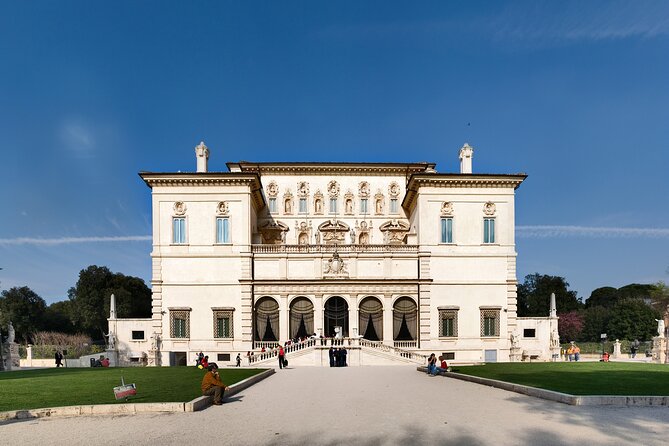
The Borghese Gallery is one of those places in Rome where time is precious. Tickets are timed, and the museum can feel tight once you are inside. That is why I really like this tour’s skip-the-line setup. You are not standing around trying to figure out where the official group begins. You walk in with a plan, and you start looking instead of waiting.
Even better is the headset. In marble rooms with lots of voices, it is easy for a guide to get lost in the noise. With the headset, you hear your guide clearly without craning your neck or giving up halfway through a great explanation. It is a small thing that makes a big difference, especially if you are traveling with friends who do not read art labels quickly.
One practical note: the tour is about 2 hours. That is enough to see the museum’s key pieces, but it is not meant to be slow and contemplative. If you love museum wandering and you want long, silent time with one sculpture, you may want to pair this with a longer self-guided visit later. (The schedule on a fixed 2-hour tour will not let you do that inside the group.)
Where You Start: Piazzale del Museo Borghese and Getting Oriented
The meeting point is Piazzale del Museo Borghese, 00197 Roma RM, Italy. The tour ends back at the meeting point, so you are not dealing with a half-day “drop-off somewhere else” feeling.
This location also matters because Borghese is not in the most central pocket of downtown Rome. You will likely need some transit time to get there, and you do not want to arrive rushed. I recommend giving yourself extra buffer, especially in late afternoon when you may be juggling daylight, photos, and the museum’s entry window.
Another small detail that helps: you will have a mobile ticket. That makes last-minute logistics easier, because you do not need to hunt for printed paperwork once you are already in the area.
You can also read our reviews of more guided tours in Rome



Small Group Size, English Guidance, and What You Gain by Keeping It Human-Scale
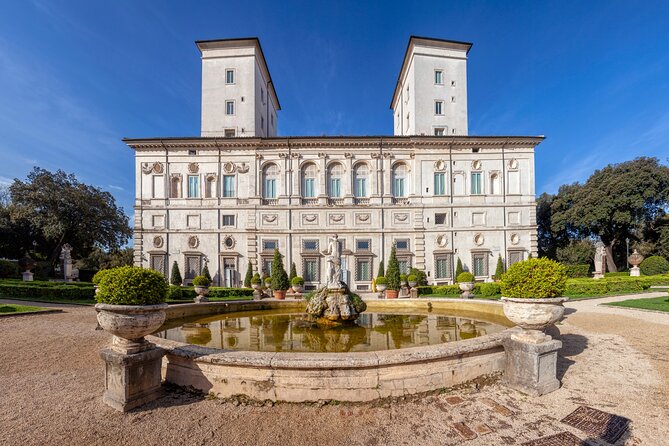
With a maximum of 15 participants, you get a group size that actually feels workable. In larger tours, questions get lost in the shuffle. Here, you are more likely to ask something and get a real answer instead of a quick nod.
The guide is English speaking, which is a big deal in this type of museum. The Borghese Gallery is not just about spotting famous names. It is about understanding why these pieces were collected, what styles were competing at the time, and what symbolism the artists were using.
In the reviews, guides named Dimitri, Virginia, Smaragda, Valentina, and Gabriel appear as standouts. One guide was highlighted for advanced academic credentials, including a PhD in archaeology and art history. Even if you do not get that exact person, it is a strong sign that the guides tend to bring serious preparation. When you hear the story behind a sculpture, you start noticing details you would otherwise miss, like posture choices, facial expressions, and the way the artist uses light and texture.
Scipione Borghese and Pope Paul V: The Collection’s Big Origin Story
Before you go room to room, you get the key foundation: the collection was built by Scipione Borghese, the nephew of Pope Paul V, in the early 17th century. That might sound like background filler, but it changes how you view the gallery.
When you understand who was paying for and shaping this collection, you stop thinking of the Borghese Gallery as a random art showcase. It becomes a designed statement. The rooms, the selection of artists, and the display style all point to power, taste, and careful control.
This context also helps with the “why” of what you see. For example, you are not just viewing famous names like Bernini. You are learning how the gallery’s core sculptures sit inside a wider plan, with artists working in the same cultural ecosystem, responding to patrons and to the tastes of the day.
Bernini’s World: The Sculptures That Make the Gallery Feel Like a Stage
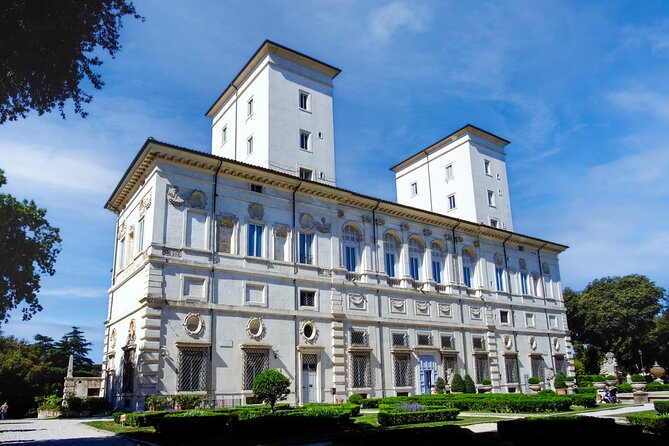
The Borghese Gallery is strongly associated with sculpture, especially the work of Gianlorenzo Bernini. A guided tour here is especially worthwhile because Bernini is not always easy to read at first glance. His works are meant to be read from multiple angles, and they often carry emotion in ways that are subtle until someone points out what to look for.
As you move through the collection, you can expect major Bernini highlights such as The Truth, as well as Scipione Borghese’s Bust and multiple Bernini self-portraits. The tour gives you a framework for seeing these as more than “pretty stone.” You learn how Bernini conveys expression and how the gallery’s atmosphere supports that drama.
This is also where a small-group setup helps. If you want to know why a particular figure looks the way it does, or how the artist achieved a certain effect, you have time to ask. With a headset and a group that is not too large, those questions do not get shut down.
Paolina Borghese in the Paolina Room, Plus How to Look at Venus in Real Life
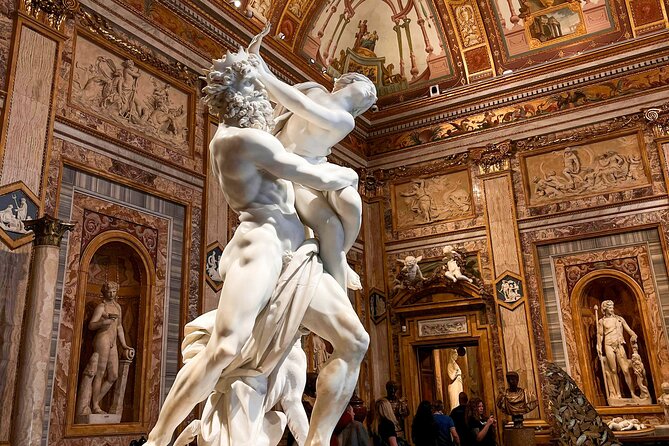
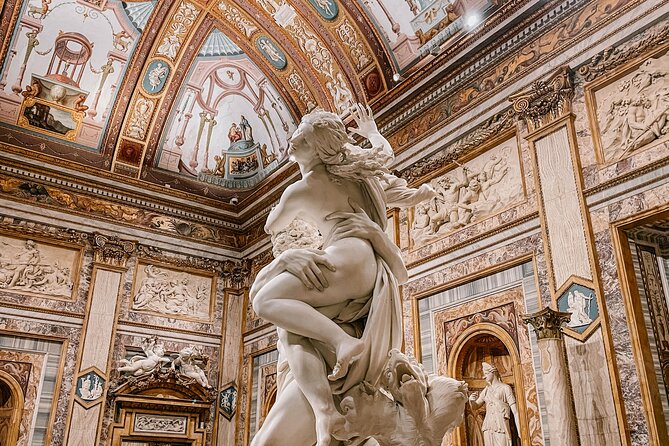
One of the most talked-about moments is the Paolina Room, where you pause to contemplate the statue of Paolina Borghese, Camillo Borghese’s wife, shown in the guise of Venus.
What I like about this stop is that it turns you from viewer into interpreter. You start asking practical questions: Why Venus? What does the pose communicate? Why present a real person through myth?
When the guide explains the symbolism tied to how Paolina is portrayed, it makes the artwork feel less like a formal museum object and more like a statement about identity and status. You also get the chance to look carefully at the details that are hard to catch when you are rushing through rooms.
If you care about sculpture, this is a room you should mentally slow down for, even if the overall tour is timed. Give your eyes one full pass, then listen for one or two specific points your guide emphasizes. That mix of looking and listening is what makes the tour payoff feel real.
You can also read our reviews of more museum experiences in Rome



Old Masters You Will Actually Recognize: Raffaello and Caravaggio Highlights
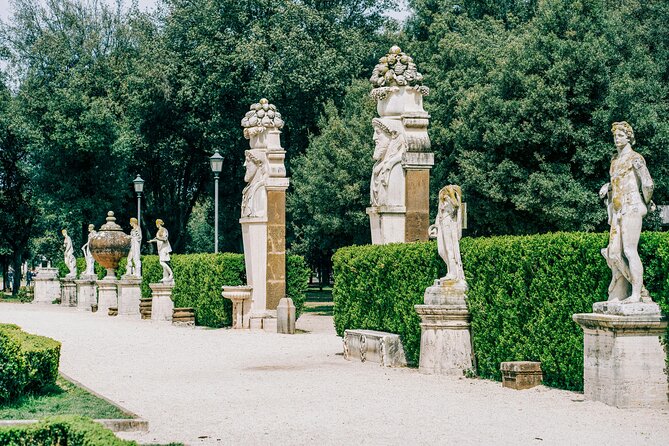
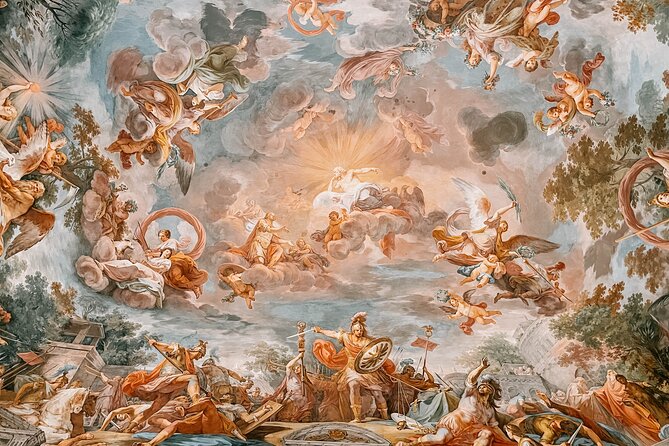
The Borghese Gallery is not just Bernini and sculpture. You will also see paintings and works tied to famous names, and the tour helps you connect the dots instead of staring at artworks with no anchor.
Expect stops featuring works by Raffaello, including Lady with Unicorn and a Portrait of Pope Julius II. Those pieces are famous for a reason, but the guide’s framing helps you notice composition choices and symbolism without needing to read a wall of text yourself.
Then there is Caravaggio, with works including David with the Head of Goliath, Boy with a Basket of Fruit, St Jerome, and Self-Portrait as Bacchus. Caravaggio can be intense. A guided explanation keeps the experience from becoming only a “wow, dark and dramatic” reaction. You get help understanding what is happening, why it matters, and how the emotional energy of the figures connects to the artist’s style.
Even if you are not an art expert, this structure works. You get enough context to see what is important, and you do not get buried in art-school terminology.
Canova Comes Into Focus: The Neoclassical Contrast
The tour also includes one of Antonio Canova’s most famous works, giving you a useful stylistic contrast. Canova is tied to neoclassical sculpture, so seeing that after Bernini helps you feel how different artistic priorities can be.
This is where the guided format shines again. If you are simply moving through rooms, the styles can blend into “old art.” With a guide, you start noticing shifts in mood, surfaces, and how bodies are idealized or dramatized.
Think of it like listening to different music from the same era. The notes might all be “classical,” but the feeling changes fast once you know what to listen for.
How the 2-Hour Timing Works (and How to Make It Work for You)
A 2-hour tour means you will see a lot, but you will not see everything. That is not a flaw. It is a feature of this format.
In practice, your best strategy is mental. Decide what you want most before you go in. If you are a sculpture fan, focus your attention on Bernini stops and the Paolina Room. If you prefer painting, keep an eye out for the Raffaello and Caravaggio moments. Either way, the guide helps you prioritize so you are not just collecting random photos.
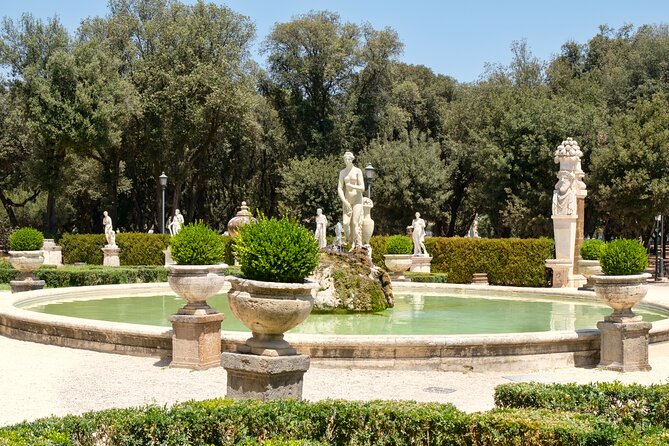
One more timing tip: the Borghese estate area includes gardens. In at least some cases, you may get a bit of time to enjoy the surroundings before entering the collection. Even if it is brief, that extra outdoor space can be a morale boost on a day packed with Roman sights. It also helps break up your brain from city noise before you step into the gallery rooms.
Booking Ahead: When You Should Reserve and Why It’s Not a Casual Plan
This tour is commonly booked about 46 days in advance on average. That tells me demand is high enough that you should plan early.
If you are traveling in peak season or you have a tight itinerary, treat this as something to reserve sooner rather than later. A skip-the-line tour is most valuable when you can actually lock in your preferred time window.
Price and Value: What You Are Paying For at $90.36
At $90.36 per person for about 2 hours, you are not paying only for entry. You are paying for:
- Skip-the-line entrance
- An English speaking guide
- A headset
- A guaranteed small group up to 15
- Admission included
That is a lot of “handled for you,” and in a museum like this, that matters. If you show up on your own, you still need time to manage timing, figure out where the tour group lines up, and interpret what you are looking at. Here, you trade money for clearer direction and better use of your limited time.
If you are a very confident self-guided museum visitor who already knows Bernini and Caravaggio well, you might be able to do it without a guide. But if you want the museum to make sense quickly, especially with the headset and focused route, this format often feels like good value.
Who This Tour Fits Best, and Who Might Want a Different Plan
This tour is ideal if you:
- Want the Borghese Gallery experience without wasting time in lines
- Like asking questions and getting answers in real time
- Appreciate art context, especially for sculpture like Bernini
- Prefer an English guide and a headset so you can hear clearly
It may not be ideal if you:
- Want a slow, unstructured, go at your own pace museum visit
- Are hoping for long stretches in only one room
- Prefer to read every label on your own
A simple way to think about it: this is a smart way to get the museum’s greatest hits with help. It is not the replacement for a later, longer self-guided session if you want to study deeply.
Should You Book the Borghese Gallery Skip-the-Line Guided Tour?
Yes, I’d book it if Borghese is a priority on your Rome trip and you want maximum payoff in limited time. The mix of skip-the-line access, headsets, and a small-group cap of 15 solves the two biggest museum frustrations: wasted time and missed explanations.
Also, the guides highlighted by name, including Dimitri, Virginia, Smaragda, Valentina, and Gabriel, suggest consistent quality. The best version of this tour is when you arrive with a bit of curiosity, then let your guide point your eyes to the details that make Bernini and Caravaggio click.
If you tell me what you most want to see in Borghese, I can help you pick the best time of day for your schedule and suggest what to focus on during those 2 hours.
FAQ
How long is the Borghese Gallery skip-the-line guided tour?
It runs for about 2 hours.
Does the tour include admission tickets?
Yes. Admission to the Borghese Gallery is included.
Are headsets provided so I can hear the guide?
Yes. Headsets are included.
What is the group size limit?
The tour has a maximum of 15 travelers.
Where do I meet the guide?
You meet at Piazzale del Museo Borghese, 00197 Roma RM, Italy. The tour ends back at the same meeting point.
Is the tour offered in English?
Yes, the guide speaks English.
Is free cancellation available?
Yes. You can cancel for a full refund up to 24 hours in advance of the experience start time.
More Guided Tours in Rome


More Tours in Rome
More Tour Reviews in Rome
Not for you? Here's more nearby things to do in Rome we have reviewed












Borghese Gallery Tours, compared.
 ★ 4.8Borghese Gallery Guided Tour with Skip-the-Line EntryFrom $842,649 reviews
 ★ 4.6Borghese Gallery Skip-the-Line Tickets with AudioguideFrom $532,562 reviews
 ★ 4.5Borghese Gallery Entry Ticket & Optional Guided TourFrom $512,237 reviews
 ★ 4.9Borghese Gallery Guided Tour with TicketsFrom $571,880 reviews
 ★ 4.7Skip-the-Line Borghese Gallery Guided TourFrom $100933 reviews
★ 4.9Borghese Gallery Guided Tour with Skip-the-Line EntryFrom $83891 reviews
 ★ 4.1Borghese Gallery Entry TicketFrom $31780 reviews
 ★ 4.8Borghese Gallery Guided Tour with priority entranceFrom $73546 reviews
Browse the lists this tour appears in