
Reviewed · ANCIENT ROME TOURS
Archeological Area of Ostia Antica Entry Ticket
One ticket, and the quiet ancient streets start making sense. This Ostia Antica entry lets you wander one of Ancient Rome’s best-preserved cities at your own speed, with options that can add audio, a golf cart ride, and even an aperitivo break.
I like two things right away: the skip-the-line entry that gets you into the site with less waiting, and the flexible timing of 2.5 to 5 hours so you can move at a pace that fits your energy. The optional smartphone audio guide also helps you make sense of what you are seeing as you go, rather than just taking photos.
One consideration: the audio support is an app, not a live expert. If you are the type who wants heavy context on every corner, you may find some explanations on the brief side.
Key highlights at Ostia Antica entry
- Express security and fast-track entry to start exploring sooner
- Optional Rome City audio guide app with over 170 points of interest
- Self-paced ruins built for wandering, with a visit window of 2.5 to 5 hours
- Golf cart ride option for an easier overview across a sprawling archaeological area
- Baths of Neptune and Decumanus Maximus as strong, high-impact priorities
- Mosaic houses that reward slow looking, not just quick stops
Why Ostia Antica feels different from Rome city
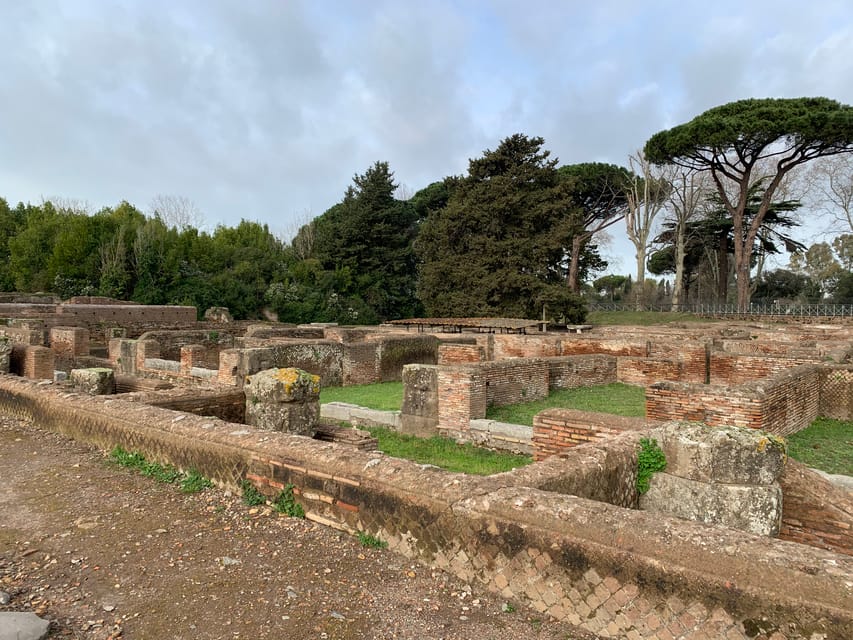
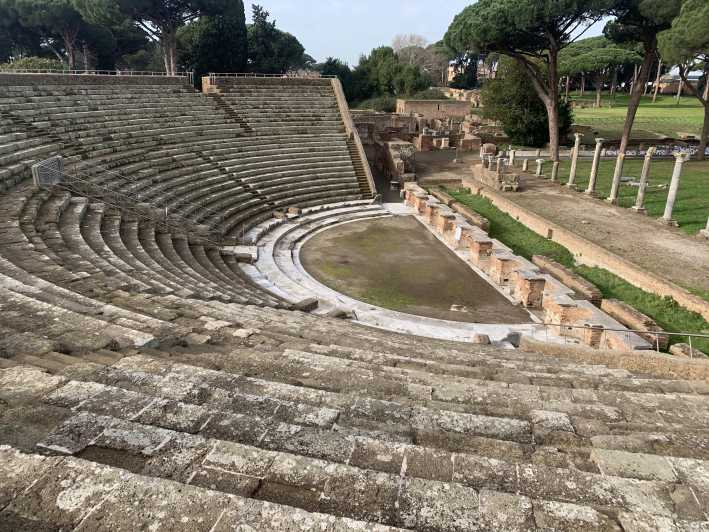
Rome is loud, crowded, and layered, but Ostia Antica plays a different game. Instead of rushing from one landmark to another, you walk through a real ancient town layout, with streets, building footprints, and neighborhoods that still read like a lived-in place.
Ostia was a port city for Ancient Rome, which changes the mood of what you see. Even without a guide whispering in your ear, you can sense commerce, daily routines, and the way people organized their homes and workplaces. That is the kind of archaeological site that gets better the longer you stay, because details start snapping into place.
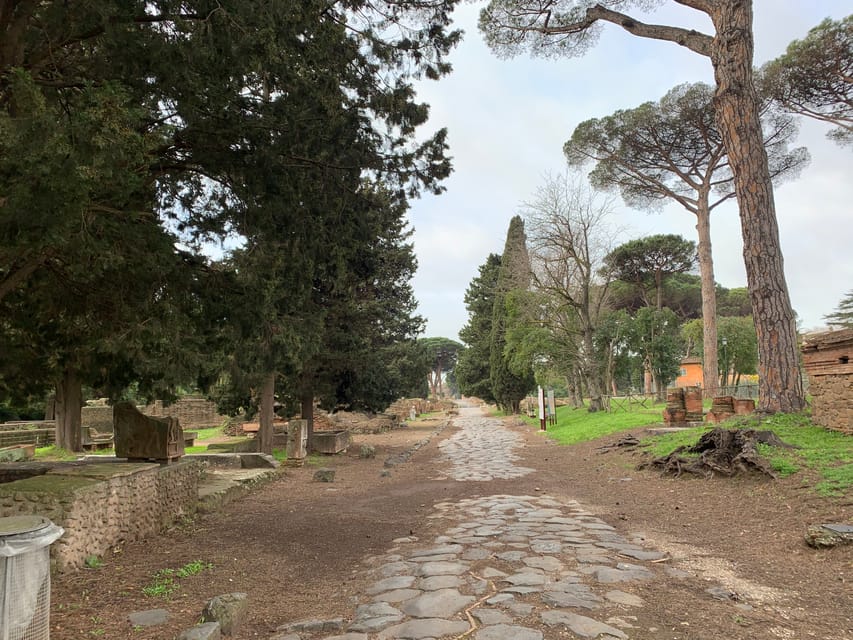
If you like cities where ruins have a pattern you can follow, this works well. You are not just looking at scattered columns, you are navigating an ancient street system and public spaces that make sense as you walk them.
You can also read our reviews of more tours and experiences in Ostia Antica.
Getting in fast: express security and skip-the-line entry
The main practical win here is the skip-the-line benefit. You still have to pass security, but this option is built to speed up entry through an express security check. In a place like Ostia Antica, that matters. Once you lose time before you even start walking, it compresses your whole visit.
Plan around the fact that your voucher is not your ticket. You receive a voucher first, and then an operator contacts you with the instructions you need to coordinate entry. I’d treat that as a reminder to keep an eye on your messages before your visit day.
Also note the reality of how you will experience the site. This is self-paced. There is no live guide included in the base experience. So your best advantage of the fast entry is that you can spend that extra time actually inside the archaeological area, moving between highlights while your attention is fresh.
Choosing the right ticket, from standard entry to golf cart and aperitivo
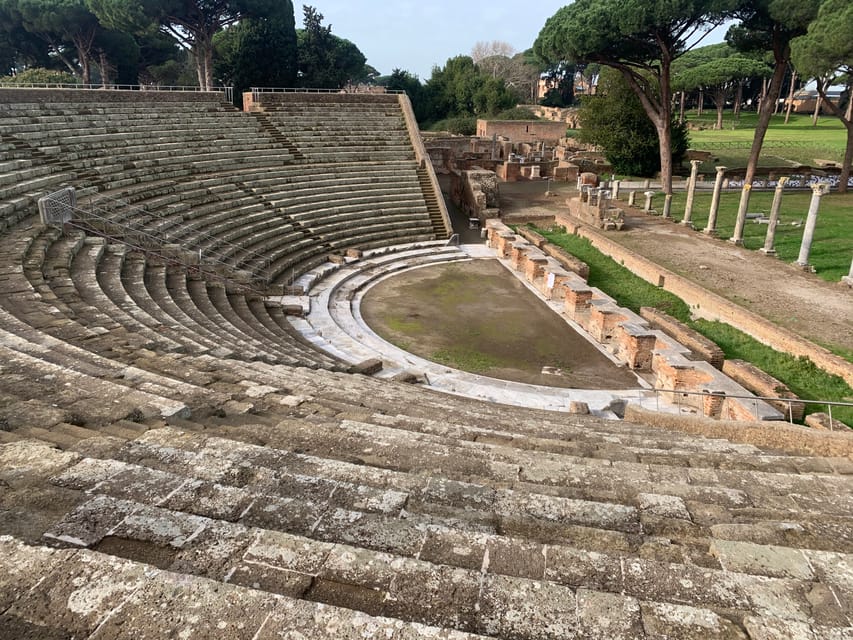
There are multiple ways to buy into this experience, and the value depends on how you like to travel.
Basic admission: best for walkers and independent planners
If you pick the admission ticket for independent exploration, you are basically paying for skip-the-line entry. That can be a good deal if you are comfortable reading a map, using a phone for general context, and doing your own pacing.
It is also the simplest choice. No extra time constraints from a ride or a scheduled add-on, just you and the ruins.
Admission with audio guide: best for structure without a live guide
Add the option with an audio guide, and you get an audio experience while you walk. The audio is offered through a downloadable smartphone app and includes more than 170 points of interest.
This is the sweet spot for people who want context but do not want the pressure of a group schedule. You can pause when something catches your eye, then resume when you feel like it.
One small warning based on how the app experience can feel: if you are expecting deep, narrative-level explanations about specific areas such as the port context, the audio may not always satisfy. For some visitors, the explanations can feel brief. If that is your style, plan to supplement with your own background reading or a general guidebook on the day.
Admission with golf cart ride: best for covering more ground
If Ostia Antica is calling but you worry about distance or fatigue, the golf cart ride option can be worth it. The cart is described as a leisurely ride through the sprawling ruins, letting you take in sights and sounds without burning energy on every stretch.
This works especially well if you want a strong overview early, then return on foot to the areas that pull you in. It also helps if you prefer to spend your walking time where the details matter most, like mosaic floors and building interiors.
Golf cart ride plus aperitivo: best for a break in the middle
The most relaxed option combines the golf cart ride with an Italian aperitivo. This turns part of the visit into a slower reset. After time in the sun and on uneven ground, a planned break can make the overall experience feel smoother and more enjoyable.
If you like your history visits to have a little food and atmosphere attached, this option is the most fun. Just be sure you understand what is included in the specific package you select.
How the price feels in value terms
The headline price is listed at $40 per person, but the breakdown matters. The total includes €18.00 adult admission to the archaeological area, and the rest of the price difference is tied to the services in the offer (like skip-the-line entry, audio, and optional cart and aperitivo).
So, the best value is the package that matches what you actually plan to use:
- If you will mostly walk and use your own research, basic admission can be enough.
- If you want guided structure without a person, the audio add-on gives you the most support per hour.
- If walking distance will limit you, the golf cart options protect your time and enjoyment.
This product is rated 4 out of 5, with 69 reviews in the overall summary, which suggests generally solid satisfaction, even though the audio experience can vary by expectations.
What to prioritize: Decumanus Maximus, Baths of Neptune, and mosaic houses
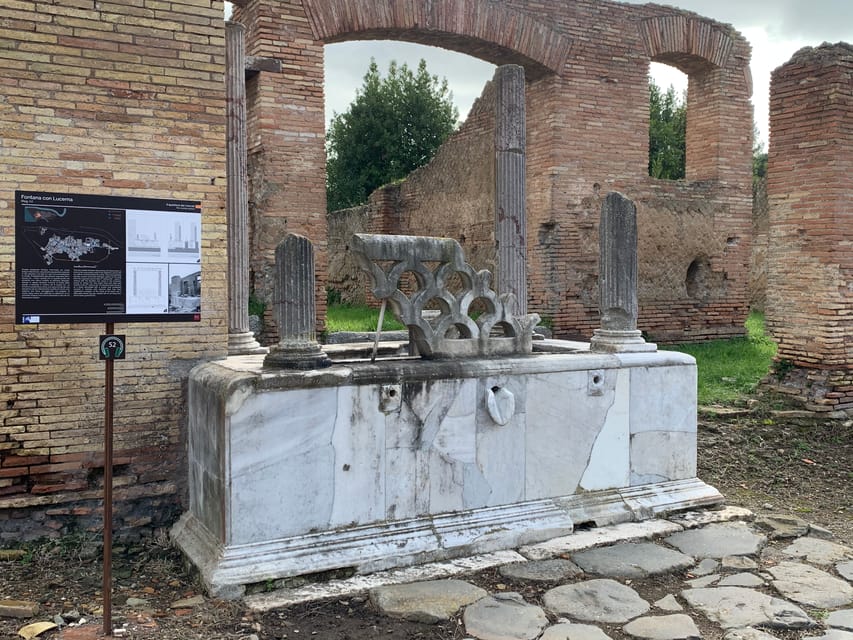
Ostia Antica can feel big, so you need priorities. The good news is that certain stops are consistently worth planning around, because they show off the city’s character.
Decumanus Maximus: the main spine of the city
Decumanus Maximus is the kind of place where the site layout suddenly makes sense. When you stand on or along the main thoroughfare, you understand how the town was arranged and how movement shaped daily life. It is not just a street you walk, it is a navigation tool for the whole site.
If you get tired and your feet start bargaining, spending time here first helps you get orientation quickly. Even with minimal audio, the street hierarchy gives you a sense of what matters and what connects.
Baths of Neptune: public life in stone form
The Baths of Neptune are one of the big public-space highlights. Baths in Roman cities were social and practical, not just for hygiene. In ruins like these, you can still sense the scale of the rooms and the flow of how people used the space.
This is also a great spot to slow down for observation. Look for the layout and how the rooms relate to each other. It is easier to understand the function of a bath when you can see how one area leads to another.
Mosaic houses: where “details” become the point
The mosaic marvels in private homes and building spaces are the kind of feature that rewards time. If you only glance, you miss the work. If you pause, you start noticing patterns and how the artwork would have set the tone for daily life.
I treat mosaics like a museum exhibit, not a roadside stop. Aim to spend extra minutes here, even if you feel you should “keep moving.” Ostia’s mosaics often give you the most immediate feeling of how people lived, not just how the city looked.
Practical tip for pacing these stops
You do not need to hit everything. Pick one “orientation” stop like Decumanus Maximus, one “wow building” stop like the Baths of Neptune, and one “slow detail” stop like the mosaic houses. That mix creates a satisfying visit even if you leave feeling you did not cover every corner.
Using the audio guide app so it adds value
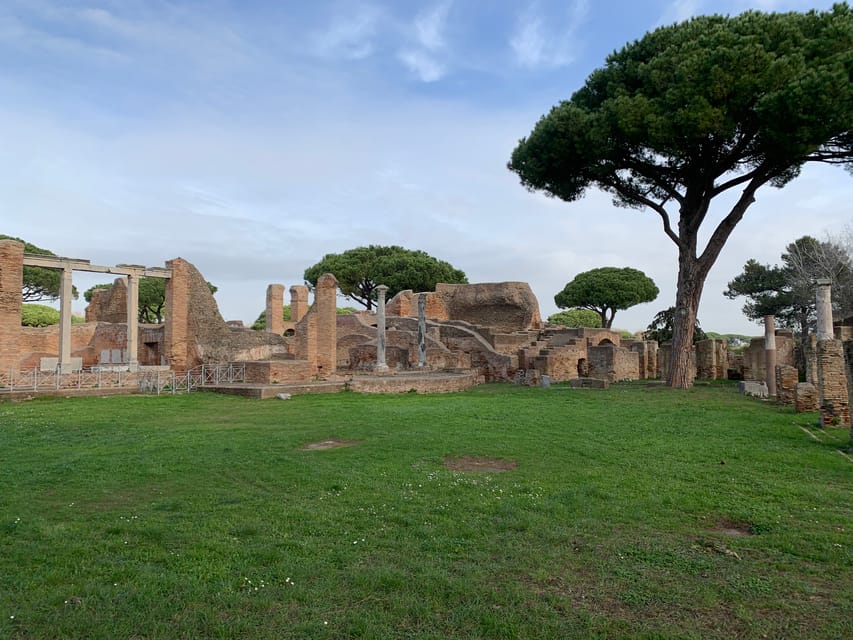
The audio option is delivered through a smartphone app, with multiple languages available, including English, Italian, French, Spanish, and German. If you select the audio package, you also get access to the app that lists more than 170 points of interest.
Here is how to make audio actually work on a ruins site:
- Use it to choose what to look at next, not to replace your eyes.
- Take one short listening stop, then go look around before you hit play again.
- If the app feels brief in a specific area, do not force it. Move to another stop where you are more likely to connect with what you see.
A key expectation setter: because there is no live guide, the audio does the explaining. That can be perfect if you like flexibility. It can feel thin if you wanted a person to answer questions or provide deeper context.
Timing your 2.5 to 5 hour visit on foot
The experience is planned for 2.5 to 5 hours, depending on ticket type and your pace. For most people, that is enough time to see major highlights without feeling like you are sprinting through history.
If you go for the standard self-paced entry, you will likely spend more time walking because you are relying on your feet to cover the site. In that case, build in “attention breaks” every so often. Sit for a few minutes when you find a quiet patch, and then continue.
If you choose the golf cart ride, think of it as an orientation tool. You can use the ride to get your bearings fast, then walk the portions you care about most afterward. That usually creates a better memory than spending all your time in a vehicle.
If you take the aperitivo option, remember it is part of the visit rhythm. A planned drink and snack break can help you reset physically and mentally, especially when you are dealing with sun and uneven surfaces.
What to bring and what to skip on site
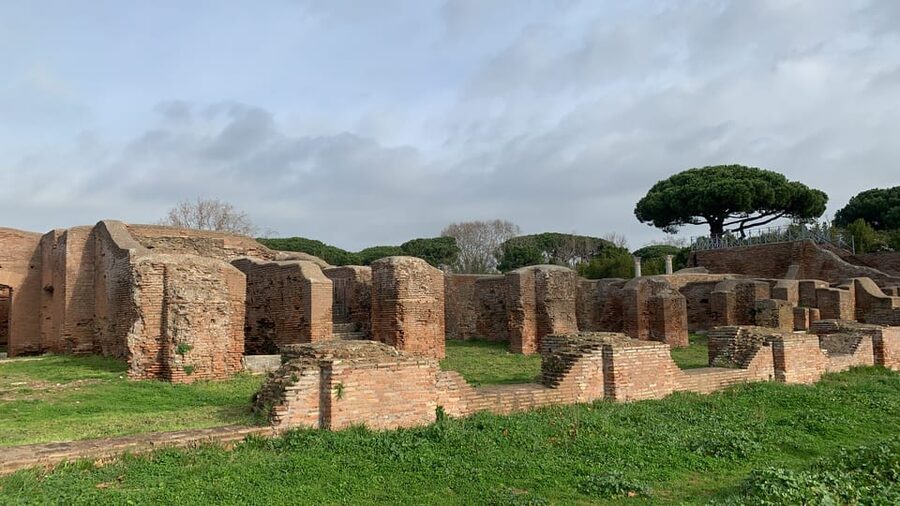
Ostia Antica is outdoors and you will be walking. Bring what makes your feet and body happy:
- Comfortable shoes
- Water
- Sunglasses, sun hat, and sunscreen
- Passport or ID card (a copy accepted)
On the other hand, some things are simply not allowed:
- Pets
- Weapons or sharp objects
- Baby strollers
- Luggage or large bags
- Drones
- Alcohol and drugs
One more practical note: the experience is not suitable for people with mobility impairments, and it is listed as not suitable for wheelchair users. If mobility is a concern, the golf cart option might help with distance, but the site itself is still the same archaeological terrain.
Who this Ostia Antica entry experience suits best
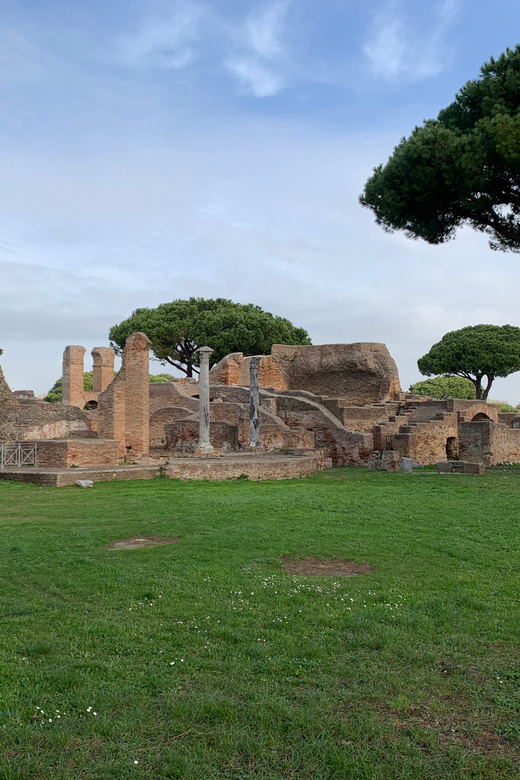
This works best for people who want control. If you like to wander without a schedule, Ostia Antica is ideal, and the fast entry helps you start on time.
I also think it fits well for:
- Adults and older teens who enjoy ruins and mosaics
- Travelers who want a structured add-on (audio) but not a live guide
- Anyone who wants flexibility in timing, since the visit window is set at 2.5 to 5 hours
Choose a different approach if:
- You want a person who can answer questions and provide detailed background on the port and specific contexts
- You cannot manage uneven outdoor walking surfaces, since the experience is not suitable for wheelchair users or people with mobility impairments
Should you book this Ostia Antica entry ticket?
Book it if you want a smooth start and a self-paced way to see one of Rome’s best-preserved ancient towns. The skip-the-line entry is the foundation, and the audio app is a solid upgrade if you like learning in short, stop-and-go chunks. If walking distance could be a problem, the golf cart ride option is the practical cushion, and the aperitivo add-on is the most fun choice when you want history plus a break.
Skip or reconsider if you are expecting a deep, fully explained, live-style guided experience. Since the audio is an app and can be brief in certain areas, you may want to bring your own context if you are picky about historical details.
FAQ
Is the voucher the entry ticket?
No. The voucher you receive is not the entry ticket. An operator will contact you with instructions to coordinate your entry.
How long should I plan to spend at Ostia Antica?
Plan for about 2.5 to 5 hours, depending on the ticket option and your pace. Starting times depend on availability.
Do I get an audio guide automatically?
No, the audio guide is included only if you select the audio guide option. The audio guide is available in English, Italian, French, Spanish, and German.
Is the golf cart ride included in the basic admission?
No. The golf cart ride is included only if you choose the ticket option that explicitly includes it.
Is a live guide included?
No. A live guide is not included.
Can I cancel for a full refund?
Yes. You can cancel up to 24 hours in advance for a full refund.
Is Ostia Antica wheelchair accessible?
No. The activity is listed as not suitable for wheelchair users and people with mobility impairments.
If you tell me which ticket option you are considering, I can suggest a simple, realistic walking plan for that 2.5 to 5 hour window.
More Tour Reviews in Ostia Antica

Not for you? Here's more nearby things to do in Ostia Antica we have reviewed
Ancient Rome Tours, compared.
 ★ 4.7Colosseum: Underground and Ancient Rome TourFrom $16012,691 reviews
 ★ 4.4Colosseum, Ancient Rome Tour or Self AudioGuided TourFrom $392,866 reviews
 ★ 4.9Appian Way, Catacombs, & Roman Aqueducts E-bike TourFrom $851,421 reviews
 ★ 4.9Appian Way E-bike Tour with Catacombs, Aqueducts & FoodFrom $961,210 reviews
 ★ 5.0Appian Way Aqueducts Bike Tour (Catacombs & Lunch Option)From $78975 reviews
 ★ 4.7Appian Way, Aqueducts, and Catacombs TourFrom $64942 reviews
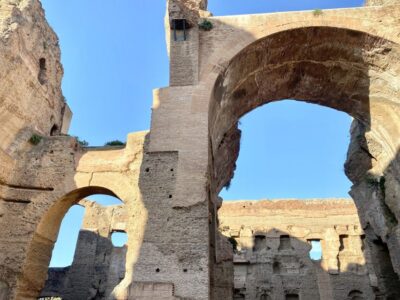 ★ 4.7Caracalla Baths & Circus Maximus — Private or SharedFrom $77835 reviews
 ★ 4.7Colosseum Arena Access and Ancient Rome Guided TourFrom $94774 reviews
Browse the lists this tour appears in