
Reviewed · WALKING TOURS
Alternative Walking Tour of Rome’s City Center & Hidden Gems
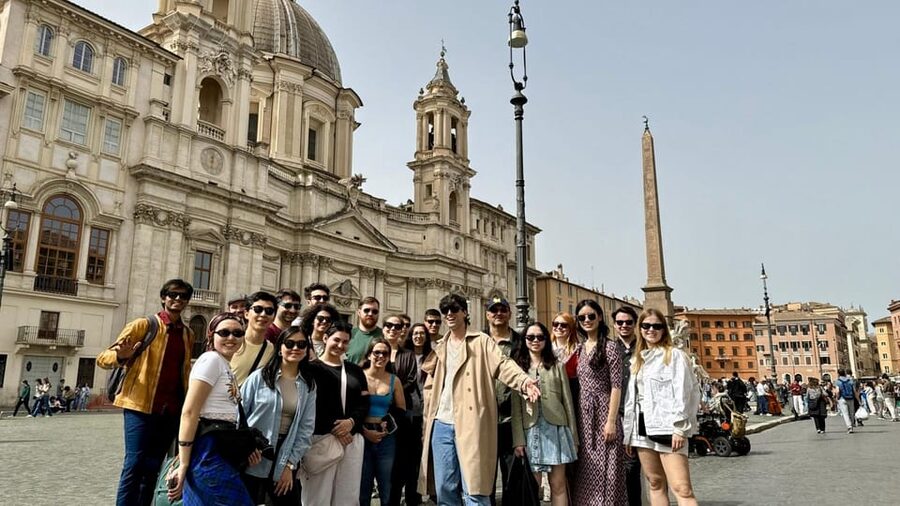
Rome rewards people who look up and listen. This walk turns famous landmarks into evidence of who held power, who fell, and why Rome keeps repeating itself. You hit the usual poster stops, but you also get the kind of side doors, odd corners, and connected stories that make the city feel less like a museum and more like a real place.
I especially love the story-driven angle. The guides focus on dynasties and families behind the stones, so Trevi Fountain or the Pantheon becomes part of a bigger human drama, not just a photo. Second, I like the pace and format, it is a short 2.5 hours and built around walking and stopping at the moments that matter.
One consideration: this is a tip-based, pay-what-you-want style tour, so your total cost depends on what you tip at the end, and the tour tone includes dark humor and politically incorrect jokes.
Key Reasons This Rome Walk Feels Different
- Off-limits and less-known stops you do not see on most quick sightseeing loops
- Power-family storytelling that connects emperors, popes, artists, and inventors to what you are standing in front of
- Crowd sense and smart timing, built for seeing the center without feeling crushed
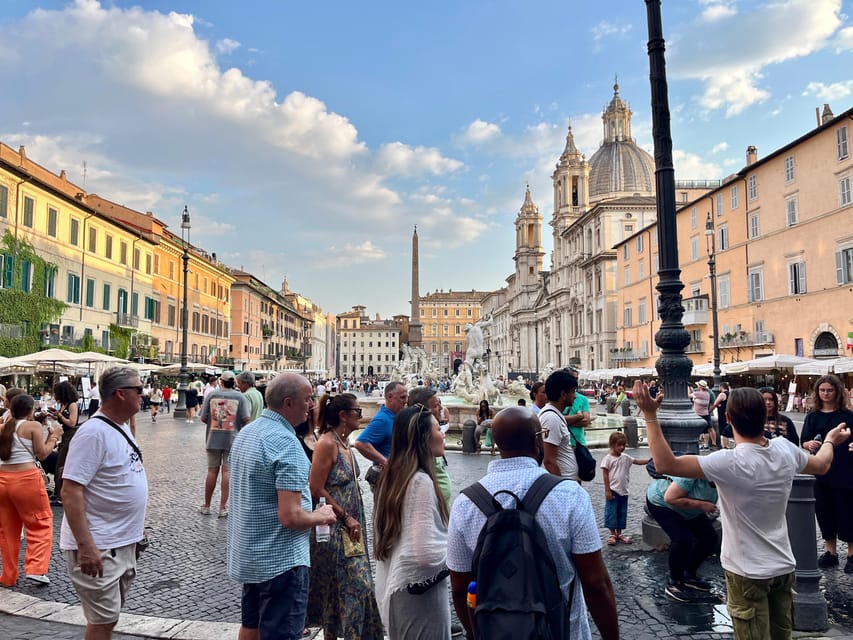
- Big sights plus meaning, Trevi Fountain, the Pantheon, and Piazza Navona all get the backstory
- Guide personality matters, and the roster includes energetic hosts like Iris, Jacopo, Jacobi, Simone, and Jacob
- Papal Private Gardens admission included, which adds a quieter, special-feeling layer to the day
Pay-What-You-Want Rome, and What $3.77 Really Means
The advertised price is $3.77 per person, which is basically the entry ticket to join the walk. The real model is pay-what-you-want at the end, with typical tips landing around 10€ to 50$. If you tip well, you get a guided Rome experience at a cost that is often less than a standard paid tour.
This model also changes the vibe in a good way. Your guide is working for your tips alone, so they tend to lean into storytelling, questions, and attention to the group. In the strongest cases, hosts like Iris and Jacopo bring humor without letting it turn into a gimmick.
Just be honest with yourself about one thing: Rome center walks are not free. You are paying one way up front, and then paying again through your tip, so plan for both. If you only plan to give a small tip, this tour may feel under-rewarding for the time and effort your guide puts in.
You can also read our reviews of more walking tours in Rome


Meeting at Chiesa del Santissimo Nome di Maria al Foro Traiano
You start on the steps of Chiesa del Santissimo Nome di Maria al Foro Traiano, right by Trajan’s Column and the Trajan Forum area. It is an easy landmark to find if you are already looking at that part of the city center, and it helps the tour kick off with instant historical context.
I like meeting points like this because you are not wasting the first 10 minutes in transit. You are already in the Roman “power zone,” where monuments were built to send messages. That matters, because the whole tour is about how Rome’s power moved through institutions, architecture, and propaganda.
One practical tip: arrive a few minutes early. Rome sidewalks around big historic sites can be busy, and it is better to get settled before the group gathers and the guide starts the story.
Trajan’s Column: The Opening Scene of Rome’s Power
Your first proper stop is Trajan’s Column, with a photo pause and guided tour elements. You also get walking and sight-spotting time here, around 15 minutes. This is a smart start, because Trajan’s Column is a monument that reads like a political statement, not a neutral artwork.
In a tour built around families and dynasties, Trajan’s Column sets the theme quickly. The column is not just about Emperor Trajan. It is about how Rome wanted to be remembered, and how rulers used visuals to control the narrative. When your guide explains the scenes, you start noticing how other famous sights also communicate status, legitimacy, and dominance.
Potential drawback: if you are someone who prefers purely visual sightseeing, this first stop can feel story-heavy. But if you like connecting the dots, this is where you will start seeing Rome as one long argument written in stone.
Piazza Venezia: Turning a Square Into a Political Stage
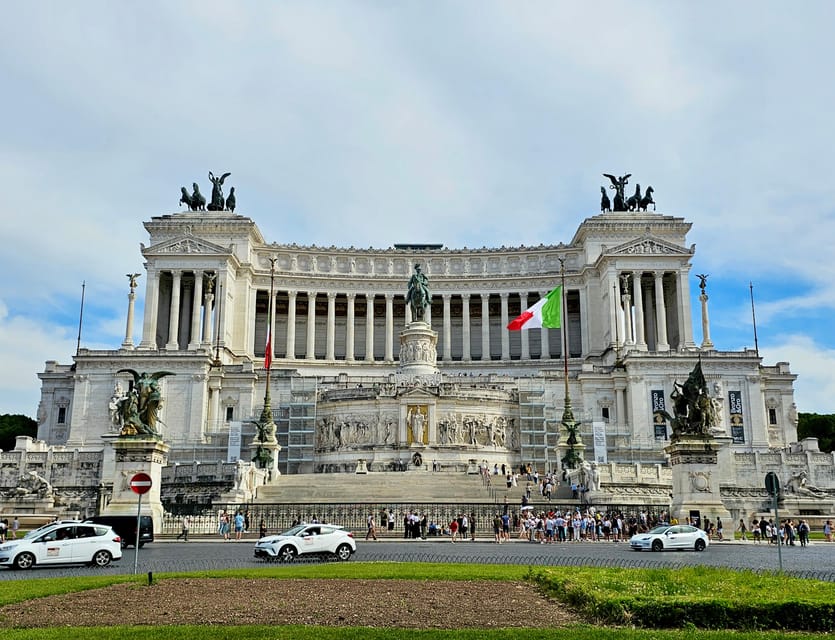
Next up is Piazza Venezia, with a short photo stop and quick sightseeing time. It is only about five minutes in the plan, which tells you something important about how this tour works. Stops are built to hit impact moments, then move on before the crowd crush slows you down.
Even with the quick timing, Piazza Venezia can be a strong “bridge” location. It helps connect the ancient feel of the area to later layers of Roman power and public spectacle. On this walk, the guide links architecture and street space to who used Rome, and why the city kept getting redesigned around authority.
If you are traveling with limited time and want the highlights without a heavy time commitment, the fast stops are a plus. But if you want long rests and slow museum pacing, you may find you are constantly moving.
The Secret Stop and the Monastery Pause: Off-Limits Access and a Breather
Between Piazza Venezia and the Trevi segment, you have two stops that are less straightforward: a secret stop and then a monastery stop.
The itinerary labels these with guided tour time and sight-spotting time, including a longer monastery pause of about 25 minutes. I like this structure because the tour does not just sprint through postcards. You get at least one chunk of time that feels more intimate, like the guide is letting you in on how Romans experience their own city.
This is also where the included Papal Private Gardens admission likely adds value. Even though the walk schedule does not spell out every detail in the text you see, the inclusion is clearly part of the experience package. Gardens in Rome tend to feel cooler, quieter, and more thoughtful than the loud street scenes, and that contrast keeps the 2.5 hours from turning into one nonstop photo line.
One more good sign: several reviews mention guides encouraging questions and adapting based on what the group asks. That flexibility fits well with a monastery-type stop, where the story can branch into art, symbolism, and the daily rhythm of church life.
Possible consideration: you will walk through busy center streets, and some of the pauses depend on access conditions. Rome is Rome, so if you are sensitive to crowding, stay patient and let the guide manage the timing.
You can also read our reviews of more city tours in Rome



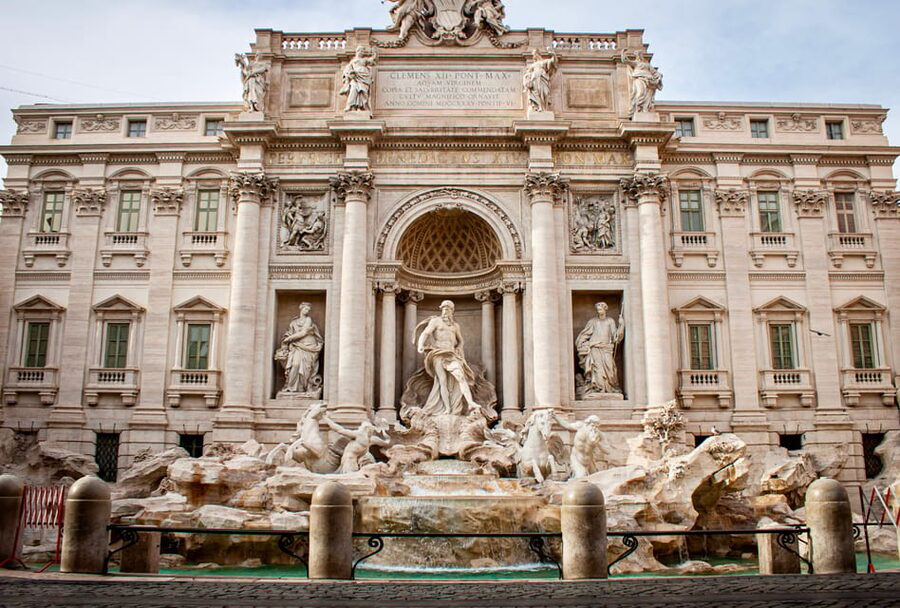
Trevi Fountain With a Break: Power Stories Behind the Most Photographed Water
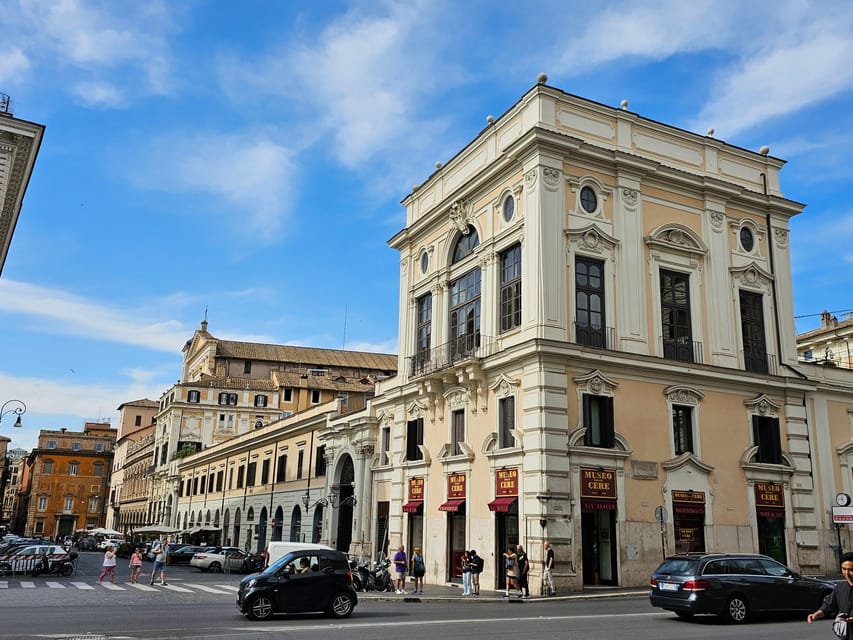
You reach Trevi Fountain with a break time, plus a photo stop, guided tour, free time, and walking time totaling about 15 minutes on the schedule. Trevi is famous for a reason, but the key here is what you learn once you are standing there.
On this tour, Trevi Fountain is treated like a symbol with a job. Your guide explains how fountains functioned like propaganda, and how public waterworks in Rome reflected political messaging and social control. That changes everything, because suddenly you are not just looking at baroque spectacle. You are reading power in the way the sculpture directs attention and myth.
I also like that you get free time in the middle of the tour. It keeps the experience from feeling like a constant information dump. You can grab a quick snack or just stand back and watch how people flow around the fountain before you move on.
Tip-based reality check: since your tip matters, this is a good place to pay attention. If you feel the guide is giving you the “juiciest stories” and tying the monument to broader themes, it is easier to decide on a fair tip when you are seeing value in real time.
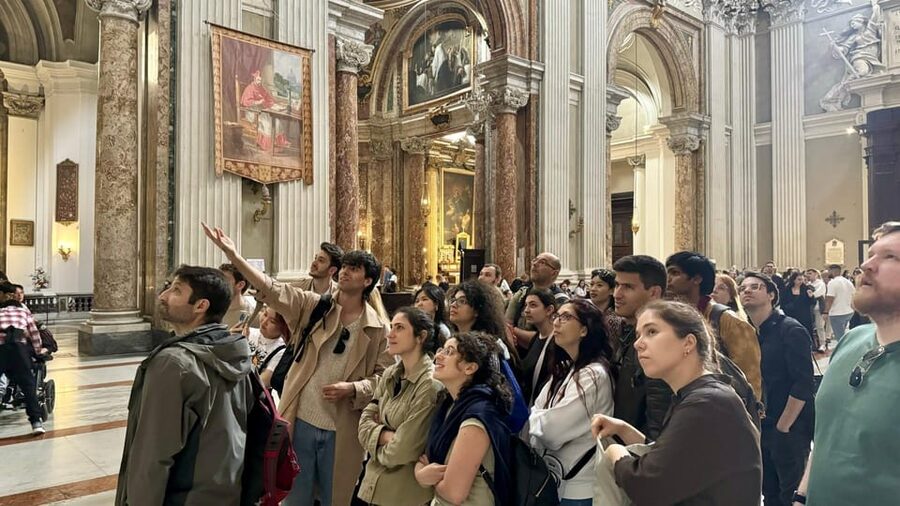
Church of Sant’Ignazio di Loyola and the Pantheon: Where Art Becomes Argument
After Trevi, you stop at Church of Sant’Ignazio di Loyola for a photo stop, visit, and guided tour with sightseeing, around 10 minutes. Then you move to Pantheon, Rome for a shorter guided moment, about five minutes.
This part of the walk is a classic Rome pairing: one church with a reputation for eye-catching art, and one landmark that feels like it sits at the center of the city’s identity. On this tour, the guide connects why Rome has so many churches, and why religious spaces often acted like public stages.
At Sant’Ignazio, the story angle makes sense. The architecture and decoration are not just pretty. They communicate theological ideas and demonstrate institutional confidence. It is the kind of place where your guide’s jokes and sharp explanations help you look at details you might otherwise miss.
At the Pantheon, the value comes from context. Even if you have seen it before, the guide’s framing tends to focus on the “why” behind the form, the way the city keeps reusing its own materials, and how later Rome worked with earlier Roman ideas rather than rejecting them.
Possible drawback: the Pantheon stop is short. If you want time to wander inside slowly on your own, plan to return later. This is a walking tour designed to connect more sites than it is designed to function like a museum visit.
Piazza Navona Finish: The City’s Performance Still Running
You end at Piazza Navona, with about 15 minutes for photo stop, visit, guided tour, sightseeing, and walking. Finishing here works because Piazza Navona is a public stage. It feels like the city is still performing, even after all the history.
In a power-family story format, Piazza Navona fits naturally. It is a place where art, commerce, religion, and politics all intersect in public space. The fountains, facades, and street flow are a reminder that Rome’s big ideas survive by staying visible.
If you finish with time to keep walking afterward, you will likely find yourself drawn deeper into the center. That is a sign the tour did its job. It gave you enough context to make the rest of your day feel less random.
What Kind of Guide Makes This Tour Worth It
The highest praise in the supplied reviews points to one thing: the guides bring personality plus structure. People named Iris, Jacopo, Simone, and Jacob/Jacobi as standouts for being fun, energetic, and professional. Humor shows up again and again, including dark humor and politically incorrect jokes, so you should be comfortable with that tone.
Another big theme is adaptability. One guide’s style reportedly branches off into other topics based on questions from the group, and several reviews mention a focus on the dynasties and families connected to the places you see. You are not just hearing facts. You are getting interpretation.
There is also a standout detail that makes the tour feel more serious: one reviewer mentioned a guide who could read Latin and Ancient Greek and share translations of old marble inscriptions. Even if your guide does not do exactly that in your group, it signals that the storytelling is grounded in more than surface-level script.
Price and Value: When Pay-What-You-Want Works Best
At $3.77 per person, this is priced low, but it is not free. The tour explicitly works on tip-based compensation, and the typical tip range mentioned is 10€ to 50$.
So here is how I think about value. This tour is worth your tip if you leave with:
- a clear sense of how Rome built itself over time
- stories that change how you interpret Trevi, the Pantheon, and Navona
- off-limits access or special admissions that you would not find on your own
- a guide who answers questions and keeps the pace comfortable
If you want a simple checklist of sights with minimal talking, this may not be your best match. But if you want Rome to make sense, the low entry price plus a fair tip can be an unusually good deal.
Who This Tour Is Best For
This walk fits best if:
- you are visiting Rome for the first time and want more meaning than a standard highlights loop
- you have been before and want fresh framing for places you already saw
- you like guided storytelling, including scandals, corruption, crime and murder, war and betrayal type material
- you want a short 2.5-hour plan that still covers major landmarks plus side access
It may feel less ideal if:
- you dislike humor that leans dark or edgy
- you want long, slow museum time at each location
- you prefer a strictly neutral tone without interpretive commentary
Should You Book This Alternative Rome Walk?
I think this is a smart choice if you care about interpretation and not just photos. The tour hits Trajan’s Column, Trevi Fountain, the Pantheon, and Piazza Navona, but it tries to explain the city behind the postcard images, with off-limits locations and included Papal Private Gardens admission.
The deciding factor for me is the guide. Names like Iris, Jacopo, Simone, and Jacob show up repeatedly in the strongest feedback, with praise for storytelling and pacing. If you show up open-minded, comfortable with humor, and ready to tip fairly, this tour is one of the easier ways to turn 2.5 hours into a long memory of Rome.
FAQ
How long is the Rome city center walking tour?
The duration is 2.5 hours.
Where do I meet the guide?
Meet on the steps of Chiesa del Santissimo Nome di Maria al Foro Traiano, by the Trajan Column and Trajan Forum. The guide holds a tour sign with the name of the tour.
What major sights are included?
The route includes Trevi Fountain, the Pantheon, and Piazza Navona, along with stops around Trajan’s Column and Piazza Venezia and the Church of Sant’Ignazio di Loyola.
Does the tour include any special admission?
Yes, Papal Private Gardens admission is included.
What languages is the live guide available in?
The tour is offered with live guides in Spanish and English.
Is this a fixed-price tour?
It is a tip-based tour using a pay-what-you-want model. Typical tips are usually between 10€ and 50$.
Can I get a refund if my plans change?
Free cancellation is available up to 24 hours in advance for a full refund.
More Walking Tours in Rome



More Tours in Rome



More Tour Reviews in Rome
Not for you? Here's more nearby things to do in Rome we have reviewed







Walking Tours, compared.
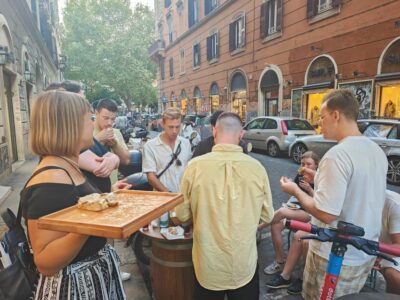 ★ 4.9Trastevere & Campo de Fiori Street Food Walking TourFrom $512,768 reviews
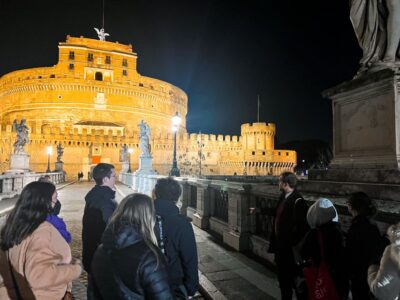 ★ 4.9Paranormal Night Walking Tour & Secret BackstreetsFrom $341,921 reviews
 ★ 4.4Guided City Center Evening Sightseeing Walking TourFrom $46953 reviews
 ★ 4.5Best of Rome Walking Tour including Trevi FountainFrom $4923 reviews
 ★ 4.8Under the Moonlight Evening Walking TourFrom $28852 reviews
 ★ 4.9Forbidden History Walking Tour & Pub Crawl with DrinksFrom $61688 reviews
 ★ 5.0Guided Small Group Walking Tour of City HighlightsFrom $30682 reviews
 ★ 4.5Rome Walking Tour with Piazza Navona, Trevi Fountain and PantheonFrom $35676 reviews
Browse the lists this tour appears in